Work samples
-
 Circular Listening - The Keystone Mandalas
Circular Listening - The Keystone Mandalas, 1975- (2022 - present)
Medium: Archival restoration and curatorial project; fabrics, oil & acrylic paints on particle board; documentation, exhibition, and public programming on jazz History.
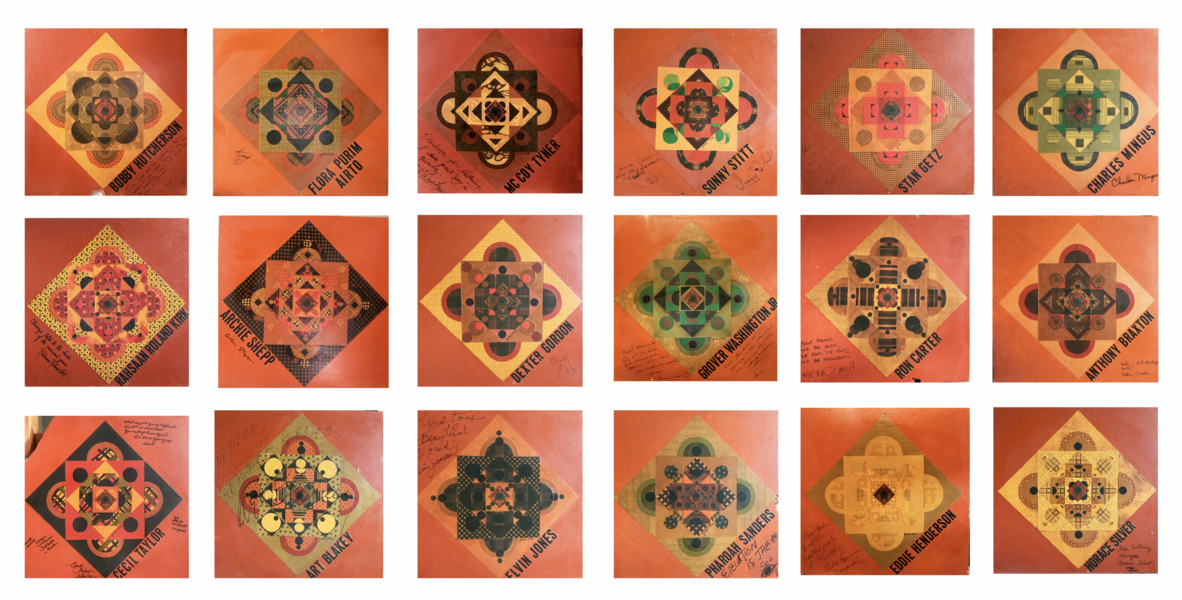
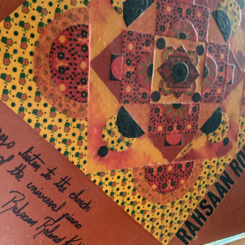
Circular Listening is an ongoing archival and curatorial project centered on the recovery, restoration, and reactivation of the Keystone Mandalas—eighteen handmade artworks originally created in 1975 by textile artist Faith Kark for the walls of the original Keystone Korner in San Francisco. Each measuring roughly 3x3ft and composed using layered textile swatches and oil-painted grounds, the Mandalas were designed to visually translate the sound and spirit of individual jazz musicians. Most of the Mandalas are signed by the artists they honor, Jazz Greats including Dexter Gordon, Art Blakey, McCoy Tyner, Ron Carter, Charles Mingus, Stan Getz, and Bobby Hutcherson among others.
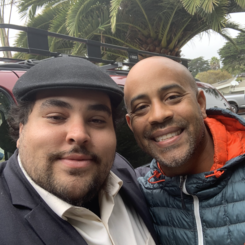
After remaining in storage for over four decades, the mandalas were located in Montara, California, in the care of the Hutcherson family, stored in the basement of Bobby Hutcherson’s home. In 2022, Lucas Novaes brought about their return to public life—personally meeting with Bobby Hutcherson’s son, Teddy Hutcherson in Montara, CA; and transporting the works to Baltimore for conservation, archival documentation, and exhibition. That initial reactivation included an exhibition at the BSO - Baltimore Symphony Orchestra in conjunction with a live concert by the Bill Charlap Trio, featuring Peter Washington and Kenny Washington, on October 20, 2022.
The project culminated in the mandalas’ public reemergence during Juneteenth 2024 at the Reginald F. Lewis Museum of Maryland African American History & Culture and their permanent reunification at Keystone Korner Baltimore. Positioned between visual art, curatorial practice, sound history, and cultural preservation,Circular Listening conjures jazz history as a living visual language—one that continues to resonate across time, place, and community, with future exhibitions envisioned as part of an ongoing continuum of jazz history.
-
 Eroica
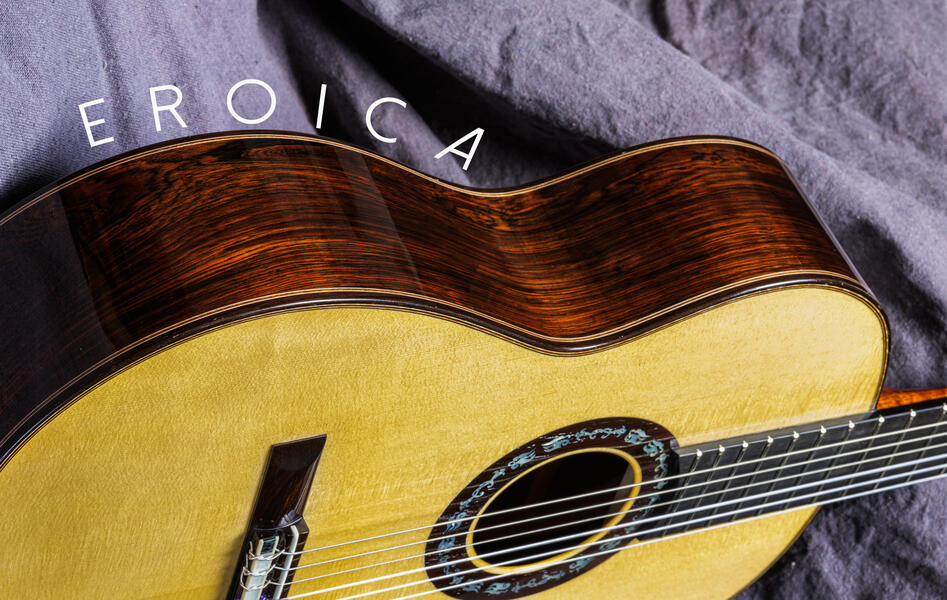
EROICA, 2023.
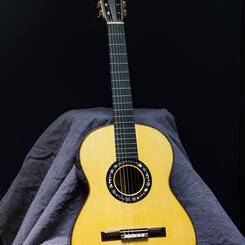
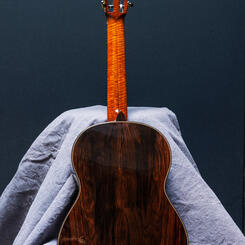
Medium: Handcrafted classical guitar; European spruce, Brazilian rosewood (Dalbergia nigra), Brazilian cedar, ebony, mother-of-pearl inlay, brass, abalone, ivory, nitrocellulose, and shellac French polish.
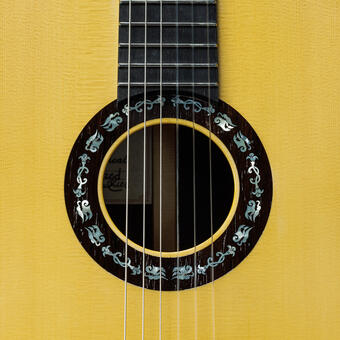
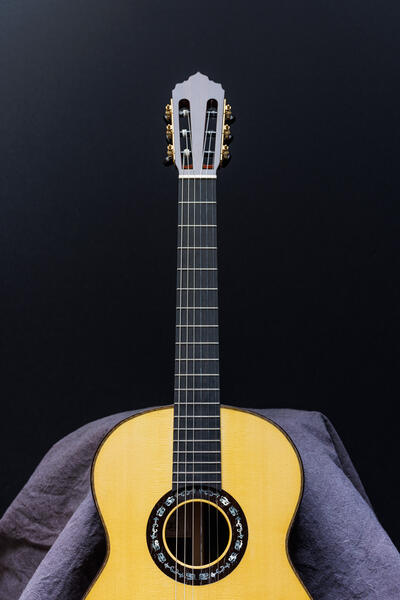
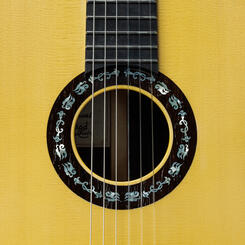
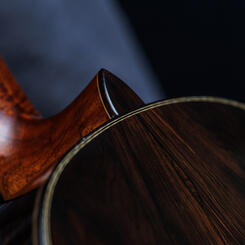
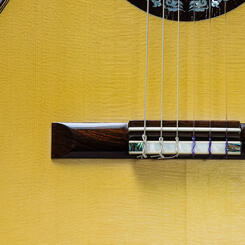
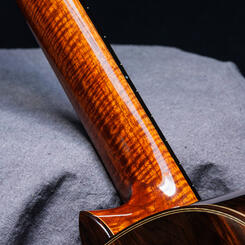
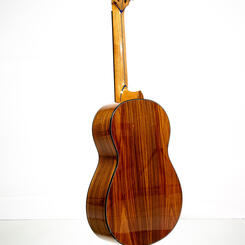
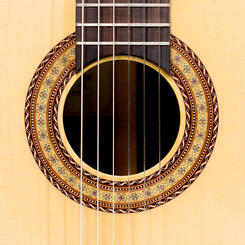
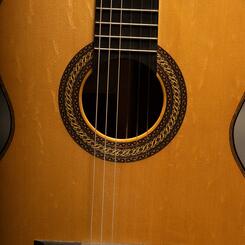
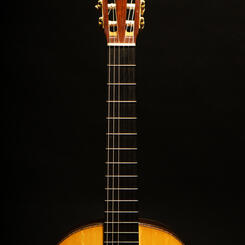
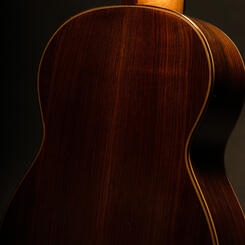
EROICA takes its name from Beethoven’s Symphony No. 3, invoking heroism as quiet endurance, discipline, and transformation over time. This instrument embodies an intergenerational transmission of knowledge, where historical lutherie practices converge with contemporary artistic sensibility. Its asymmetrical harmonic architecture is conceived to unfold multiple tonal planes simultaneously, creating a heightened dialogue between bass, midrange, and treble. Master-grade European spruce and bicentennial Brazilian rosewood were selected not only for their exceptional acoustic performance, but also for their cultural, historical, and ecological resonance within the lineage of classical guitar making. All materials are sourced and employed through a conservation-minded approach, honoring the preservation of natural resources and acknowledging the responsibility inherent in working with rare and historic woods. The rosette—composed of butterfly and floral mother-of-pearl motifs inlaid into black jacaranda—operates as both ornament and symbol, evoking metamorphosis, continuity, and renewal. Every detail reflects a deliberate balance between reverence for tradition and awareness of the natural world from which the instrument emerges. EROICA exists as an acoustic sculpture: a vessel of memory, labor, and lineage, where sound is activated as a living, temporal experience—one that resonates with craftsmanship, sustainability, and the enduring relationship between human creation and nature. The instrument has been blessed by the hands of distinguished musicians including Manuel Barrueco of the Peabody Institute, Douglas Lora of the Brasil Guitar Duo, Carlos Santana, and Andrés Felipe Palacios, each contributing to its living legacy through performance and touch.
(Photos by Yassine El Mansouri )
Available for Purchase -
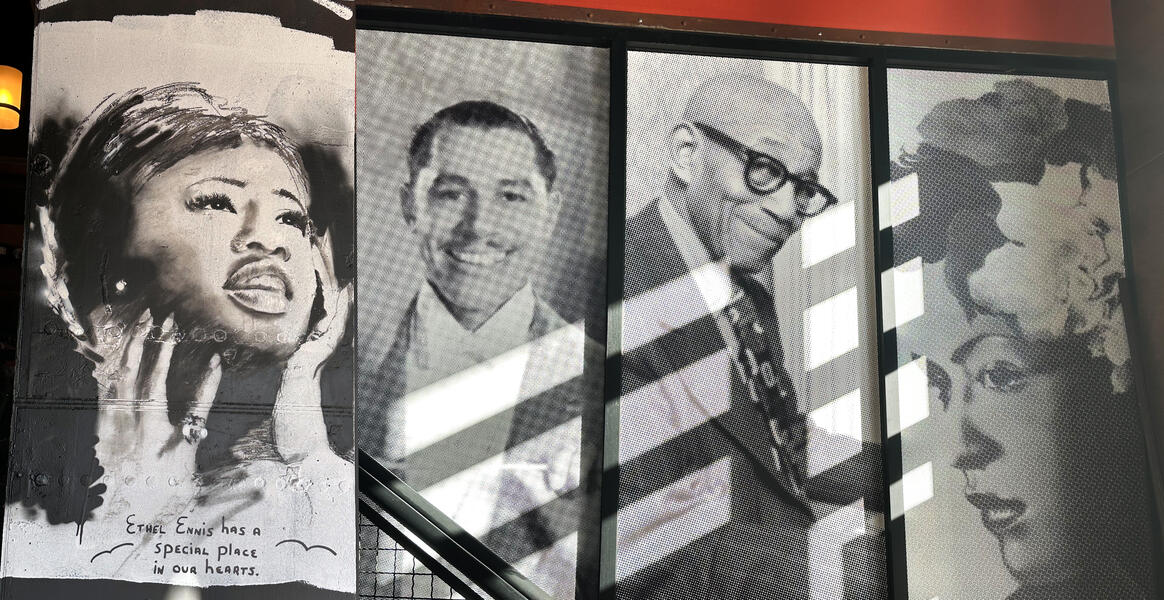 Listening Walls - A Baltimore Jazz Continuum
Listening Walls 2019-2024
Medium - Interior murals, Spray paint, acrylic paint, charcoal, oil paint and mixed media on concrete.
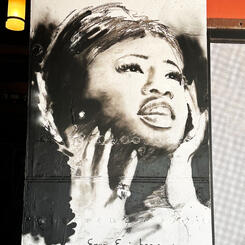
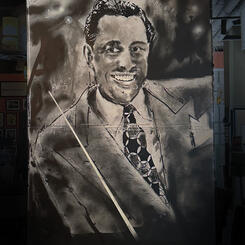
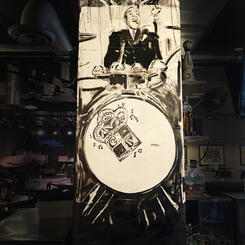
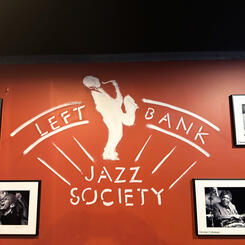
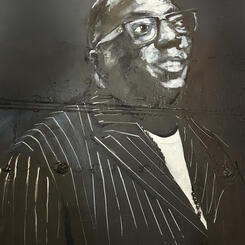
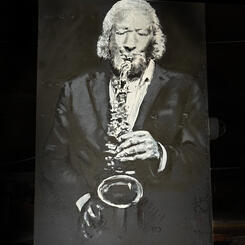
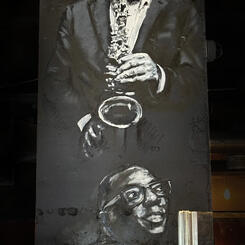
Listening Walls is a series of interior murals created for Keystone Korner Baltimore that honor the city’s deep and ongoing relationship to jazz history. Executed between 2019 and 2024, the works function as visual tributes to musicians, institutions, and cultural figures who shaped Baltimore’s jazz legacy while transforming the club itself into a living archive. The series includes portraits and symbolic representations of Chick Webb, Cab Calloway, Ethel Ennis, Eubie Blake, Billie Holiday, and others, alongside the historic Left Bank Jazz Society logo—once prominently displayed at Baltimore’s Charles Theatre. Rather than operating as static memorials, the murals are activated daily by live performance, audience presence, and sound, allowing history to unfold in real time within the space. Situated inside a working jazz venue, Listening Walls collapses the boundary between visual art, music, and architecture. The project reflects Novaes’ interdisciplinary approach to painting as a form of cultural stewardship, where image, sound, and place collectively sustain memory and community.
Available for Purchase


About Lucas

Lucas Novaes is an interdisciplinary artist based in Baltimore whose practice investigates sound as a material—how it is shaped, stored, transmitted, and reactivated through objects, images, and spaces. Working across luthiery, painting, archival restoration, and public installation, Novaes approaches listening as both method and form.
He is the founder of Novaes & Sons, a father–son lutherie collective rooted in traditional acoustic guitar-making, where handcrafted instruments… more
Circular Listening - The Keystone Mandalas
-
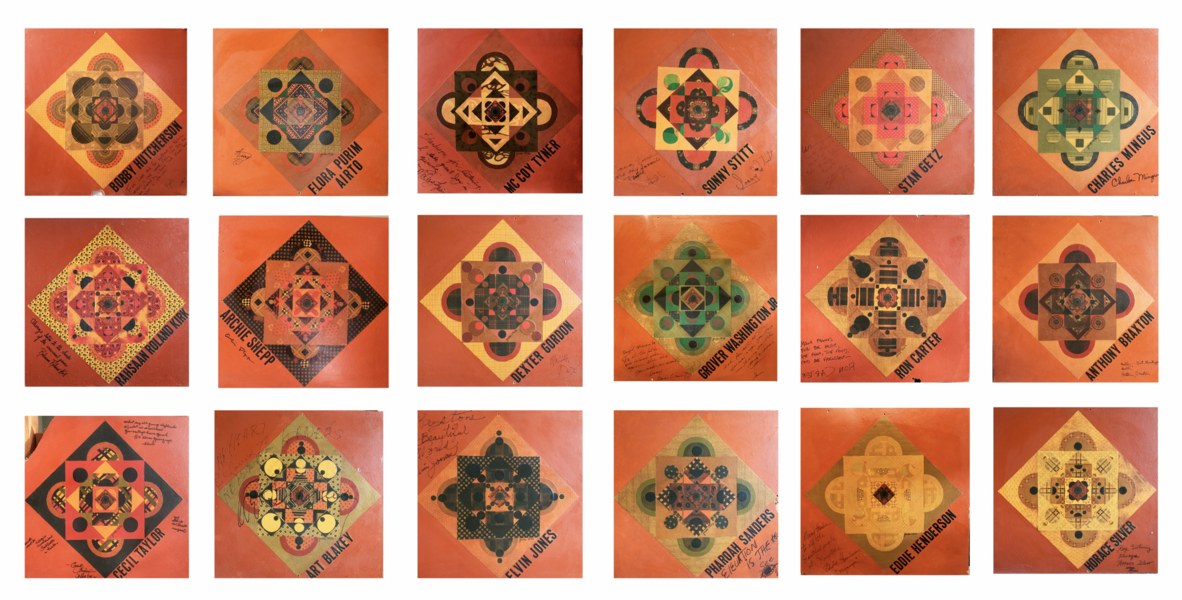 Circular Listening - The Keystone Mandalas,
Circular Listening - The Keystone Mandalas, 1975- Present
Medium: Archival restoration and curatorial project; fabrics, oil & acrylic paints on particle board; documentation, exhibition, and public programming on jazz History.
-
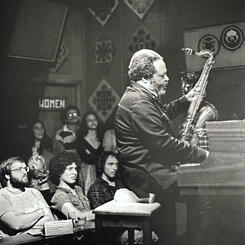
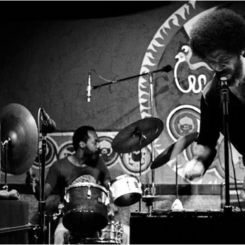
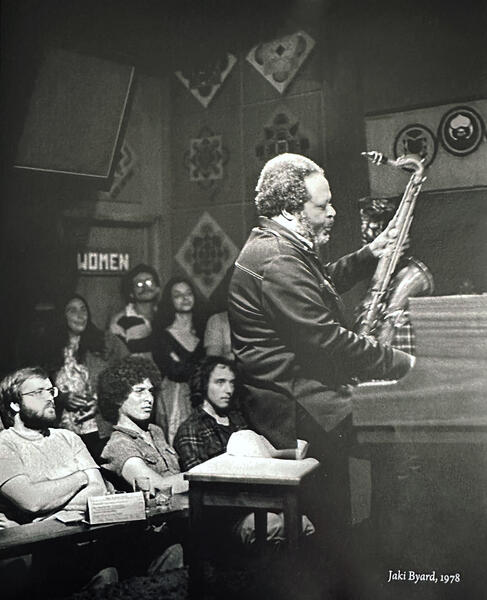 Jaki Byard
The Keystone Mandalas on display at the original San Francisco location, seen here in the background as Jaki Byard performs in 1978. (Photo by Kathy Slone)
-
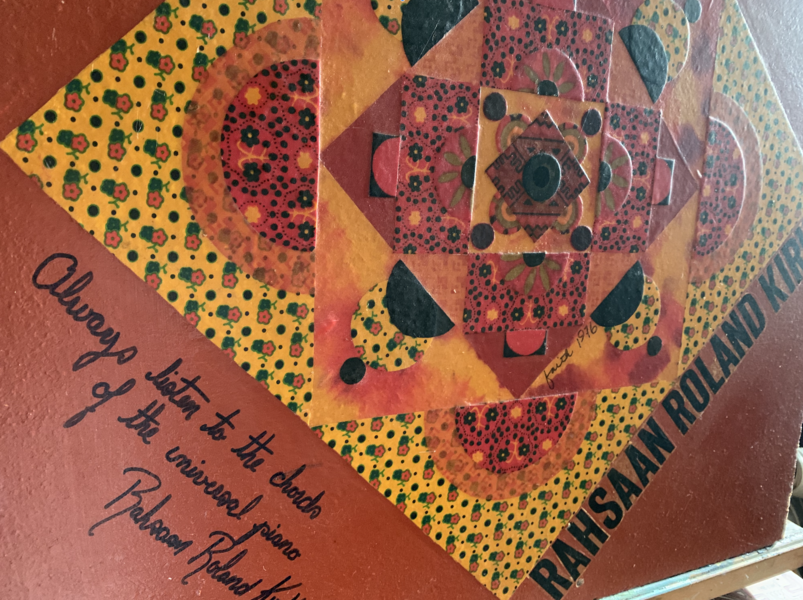 “Always listen to the chords of the universal piano.” — Rahsaan Roland Kirk,
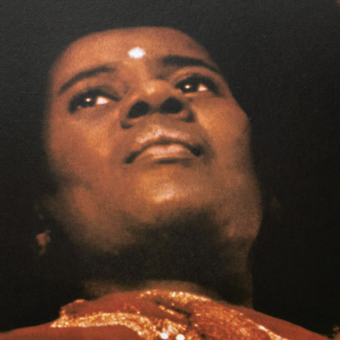
“Always listen to the chords of the universal piano.” — Rahsaan Roland Kirk, shown here in a detail photograph of the Mandala.
-
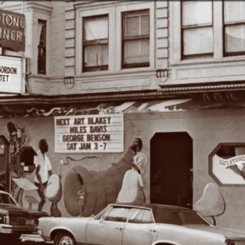
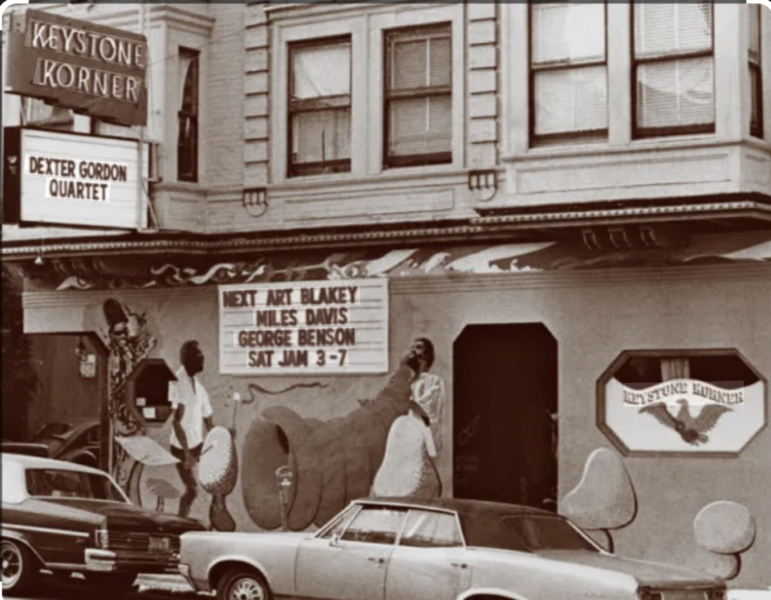 Original KKSF Marquee
This is a picture of the original Keystone Korner jazz club in San Francisco, likely taken in the mid-1970s. It was an internationally-renowned venue often called "the Birdland of the '70s" by pianist Mary Lou Williams.
-
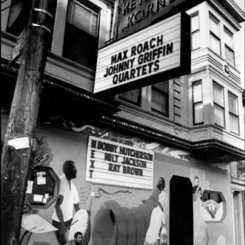
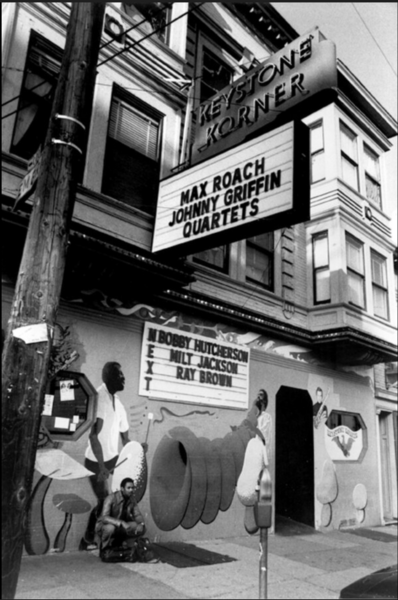 Keystone Marquee 70`s
This is a picture of the original Keystone Korner jazz club in San Francisco, likely taken in the mid-1970s. It was an internationally-renowned venue often called "the Birdland of the '70s" by pianist Mary Lou Williams.
-
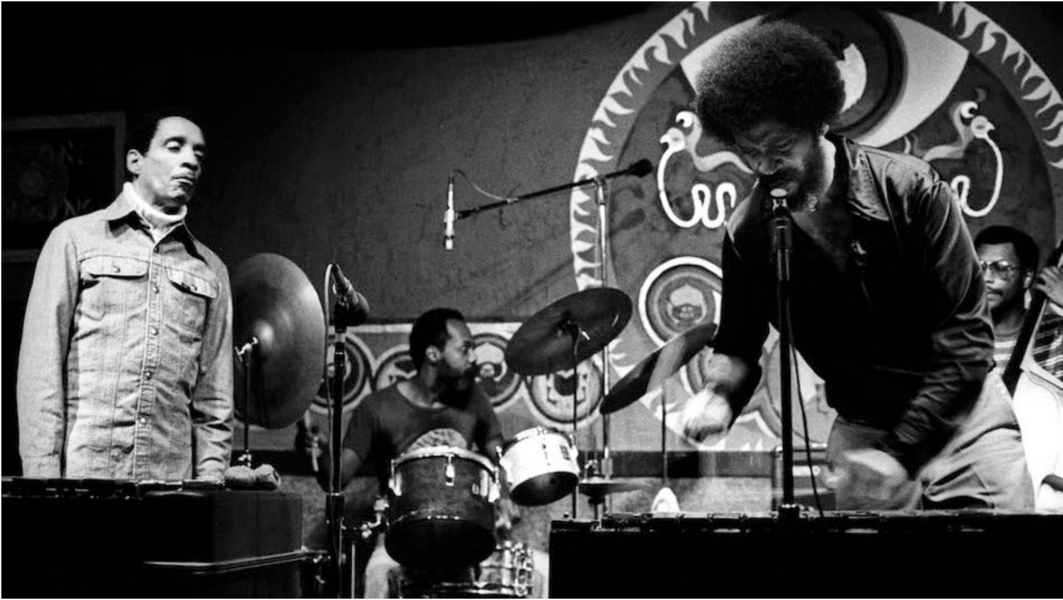 Milt Jackson, Eddie Marshall, Bobby Hutcherson, James Leary - Keystone Korner, 1977 (photo by Kathy Sloane)
Milt Jackson, Eddie Marshall, Bobby Hutcherson, James Leary - Keystone Korner, 1977 (photo by Kathy Sloane)
-
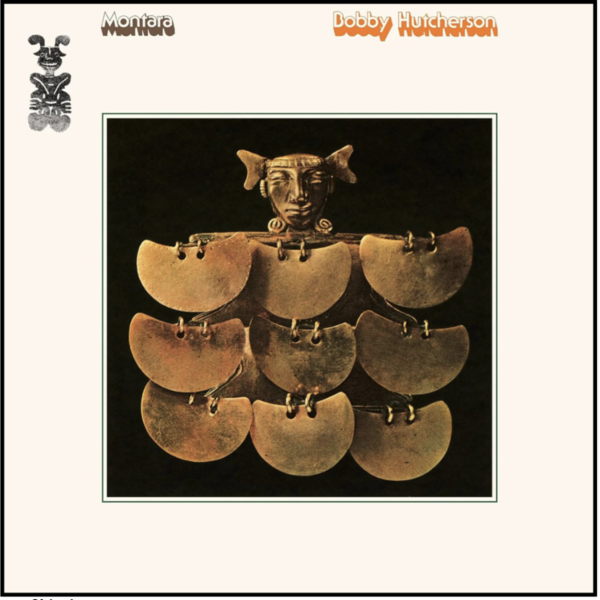 Montara
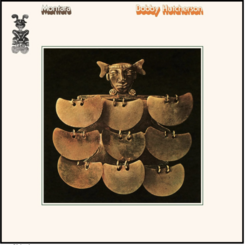
Recorded in 1975 and released on Blue Note, Montara is an album by American jazz vibraphonist Bobby Hutcherson. It takes its name from Montara, the city near the San Francisco Bay where he lived—and where the Keystone Mandalas were stored for more than four decades.
-
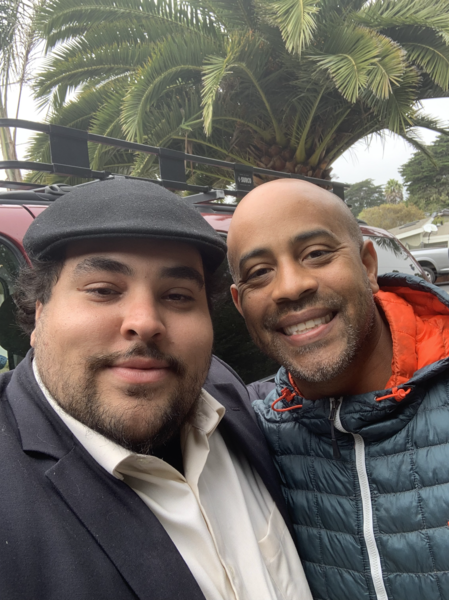 The Meeting
Photo of Lucas Novaes and Teddy Hutcherson, son of Bobby Hutcherson.


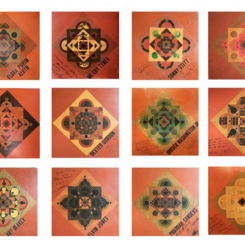
Listening Walls: A Baltimore Jazz Continuum
-
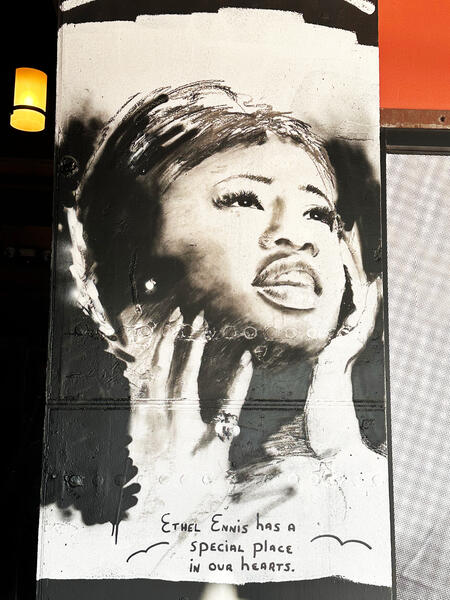 Ethel Ennis
Ethel Ennis 2019, Mixed media on concrete
Ethel Ennis, born and raised in Baltimore, is the essence of the "renaissance woman." Although an international jazz career takes up most of her time, Ennis devotes the remainder of it to community roles as a woman minority entrepreneur, a band leader, a cultural ambassador, and a civic activist.
In 1984, Ennis opened "Ethel's Place" - her own music club located in Baltimore's cultural district across from the Meyerhoff Symphony Hall. A great success, the club actually broadcast live on public television across the country on New Year's Eve in both 1985 and 1987. Ethel performed with Joe Williams, Ray Brown and Milt Jackson, Phil Woods, Gerry Mulligan, Toots Thielemans, Wynton Marsalis, McCoy Turner, and Stephane Grappelli in these memorable broadcasts. In 1988, Ennis and her husband Arnett, made the difficult decision to sell "Ethel's Place" in order to "devote their creative energies to words and music."
-
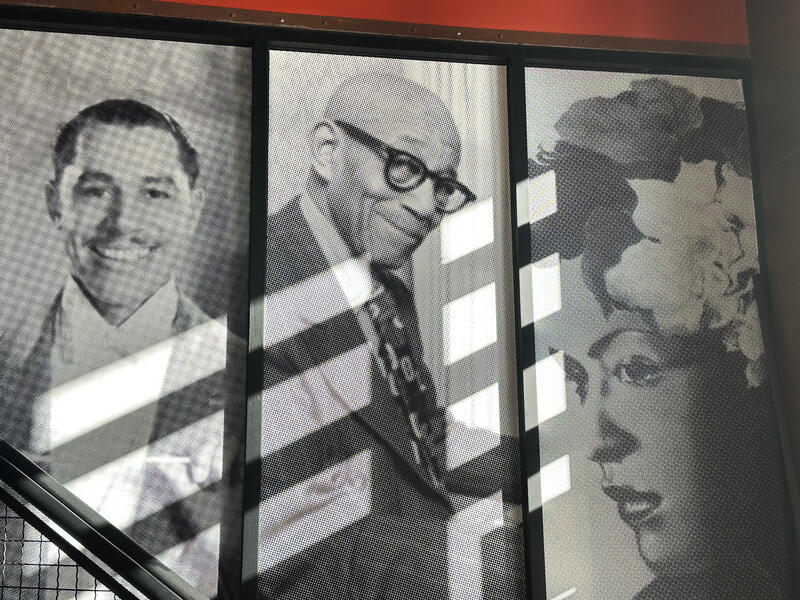 Entrance dressing room
Entrance dressing room designs, Vynil on glass - 2019
From left to right - Cab Calloway, Eubie Blake, Billy Holliday
Cab Calloway (1907-1994) was a legendary American jazz singer, bandleader, and entertainer known as the "King of Hi-De-Ho" for his energetic scat singing, flamboyant style, and groundbreaking performances at Harlem's Cotton Club during the swing era. He achieved massive success with hits like "Minnie the Moocher," pioneered call-and-response with his audience, and was a key figure in popularizing jazz and Harlem culture through music, films, and Broadway. Calloway's influence extended across generations, from early jazz pioneers to younger audiences through films like The Blues Brothers.
Eubie Blake (1887-1983) was a legendary American jazz and ragtime pianist and composer, known for his groundbreaking work on Broadway, most notably the all-Black musical Shuffle Along, and for iconic songs like "I'm Just Wild About Harry" and "The Charleston Rag," bridging the eras of ragtime to jazz and experiencing a major career revival in his later life, becoming a living link to early American music. Born in Baltimore to former slaves, he began playing piano as a child, quickly developing prodigious talent, composing his first rag at 16, and forming a famous partnership with Noble Sissle in 1915.
Billie Holiday (born Eleanora Fagan, 1915-1959) was an iconic American jazz and swing singer, known as "Lady Day," famous for her unique phrasing and emotional depth, revolutionizing pop singing with an instrumental-like approach. Despite a tumultuous childhood marked by poverty, racism, and addiction, she rose from Harlem nightclubs to become a cultural icon, recording influential songs like "Strange Fruit," a powerful anti-lynching protest anthem, and leaving a lasting legacy through her autobiography Lady Sings the Blues and profound influence on music.
-
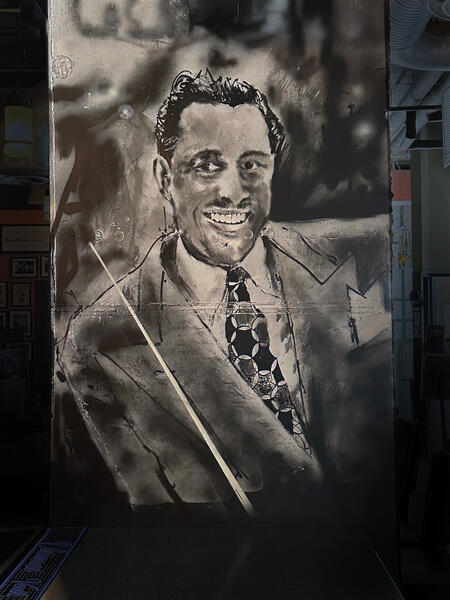 Cab Calloway
Cab Calloway 2019 Mixed media on concrete.
Cab Calloway (1907-1994) was a legendary American jazz singer, bandleader, and entertainer known as the "King of Hi-De-Ho" for his energetic scat singing, flamboyant style, and groundbreaking performances at Harlem's Cotton Club during the swing era. He achieved massive success with hits like "Minnie the Moocher," pioneered call-and-response with his audience, and was a key figure in popularizing jazz and Harlem culture through music, films, and Broadway. Calloway's influence extended across generations, from early jazz pioneers to younger audiences through films like The Blues Brothers.
-
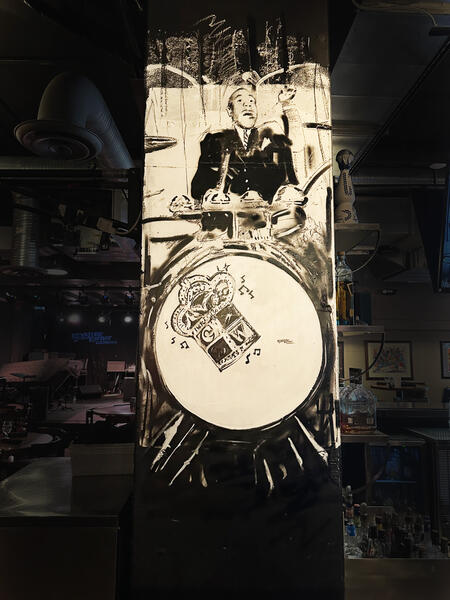 "Chick" Webb
"Chick" Webb - 2019, Mixed media on concrete.
William Henry "Chick" Webb (1905-1939) was a legendary, diminutive drummer and bandleader, nicknamed the "King of the Savoy," who defined the Swing Era at Harlem's Savoy Ballroom, famous for his powerful drumming, charismatic showmanship, and for launching Ella Fitzgerald's career, all while overcoming childhood tuberculosis that left him hunchbacked. Despite never learning to read music, his exceptional memory and innovative technique on custom drums made him a rival to the era's biggest names, a true jazz virtuoso.
-
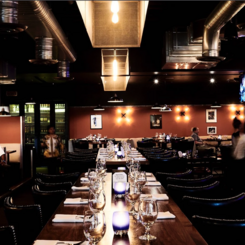
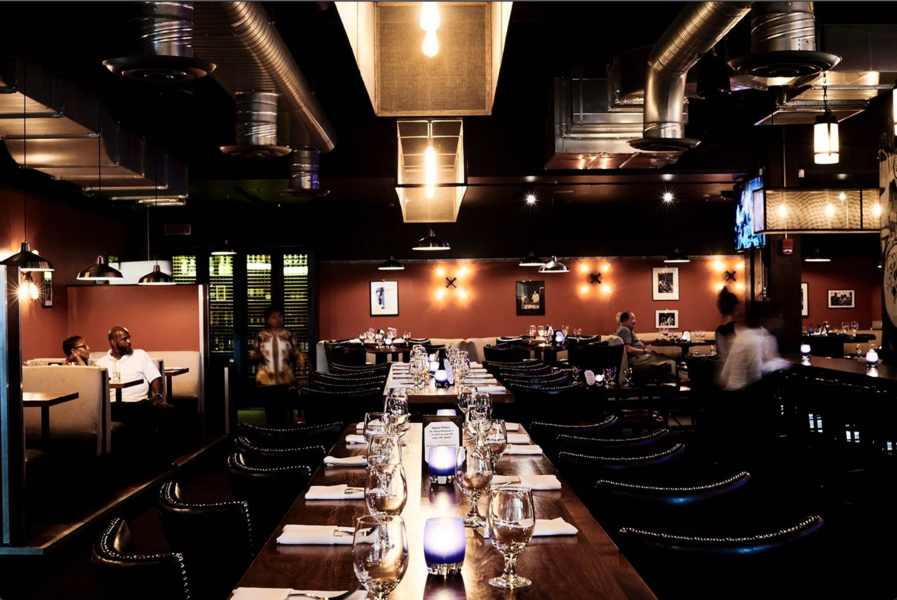 Keystone Korner
Inside of Keystone Korner Baltimore
-
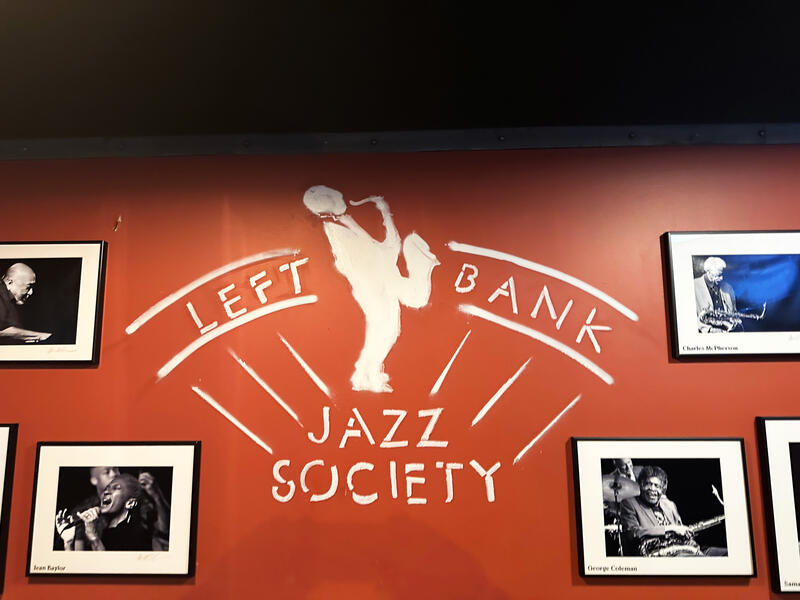 Let bank Jazz Society
Let bank Jazz Society - 201 Acrylic on concrete
Left Bank Jazz Society Inc. was founded by Vernon L. Welsh (10 February 1919- 8 August 2002) and Benny Kearse (16 MArch 1930- 29 June 1999) in 1964. Welsh recorded hundreds of jazz performances at the Famous Ballroom during the 1960s and 1970s. Kearse was president of the group, which sponsored 47 concerts per season at its peak. The Left Bank’s first gig was held at the Al- Ho Club, in the 2500 block of Frederick Ave., the year it was founded. The society established a long run at the Famous Ballroom in 1967. -
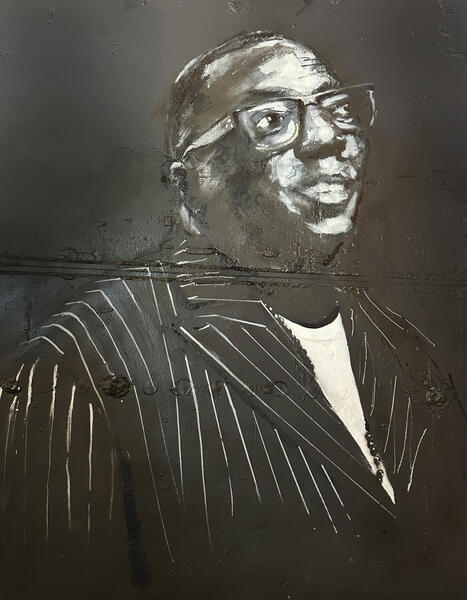 Cyrus Chestnut
Cyrus Chestnut- 2024, Mixed media on concrete.
Cyrus Chestnut is a celebrated American jazz pianist known for his soulful, gospel-infused style, blending classical training with hard bop and swinging jazz, rooted in his Baltimore upbringing and church music. He began piano at age three, studied at Peabody and Berklee, and gained fame as a sideman for legends like Betty Carter and Wynton Marsalis before becoming a prolific leader with his trio, recording acclaimed albums like Earth Stories and My Father's Hands, and performing globally with his signature mix of technical skill and deep emotion.
-
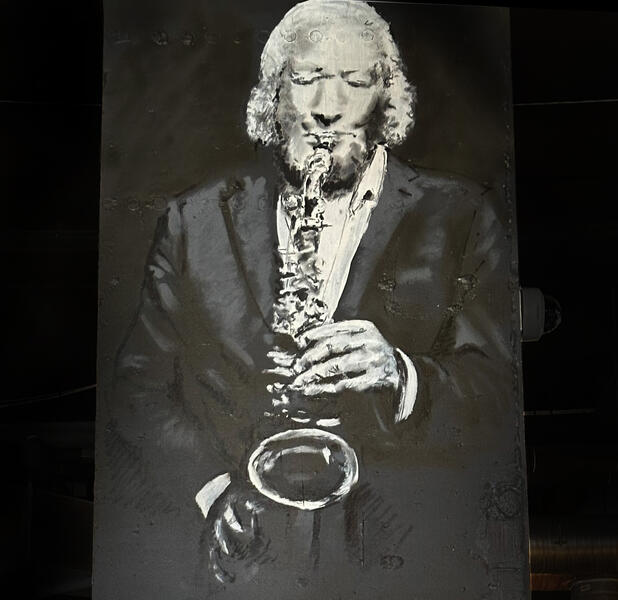 Gary Bartz
Gary Bartz - 2024, Mixed media on concrete.
Gary Bartz is an acclaimed American alto/soprano saxophonist, educator, and NEA Jazz Master (2024) known for his soulful, funky, spiritual jazz, blending hard bop with global influences, and for his influential work with jazz legends like Miles Davis, Charles Mingus, Max Roach, and Art Blakey. Born in Baltimore in 1940, he studied at Juilliard, played with numerous greats, formed his own Ntu Troopband in the 70s, and continues to record and teach, most notably at the Oberlin Conservatory.
-
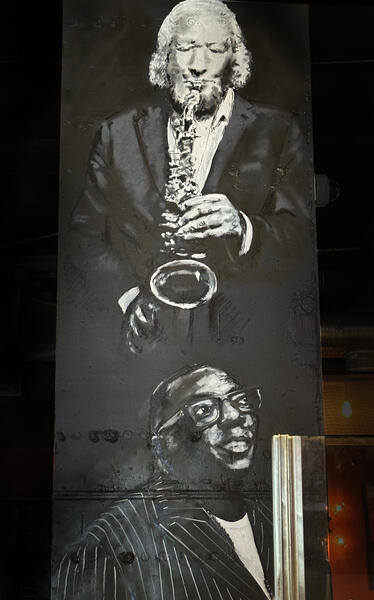 Baltimore Pillars
Baltimore Pillars - 2024, Mixed media on concrete.
Gary Bartz is an acclaimed American alto/soprano saxophonist, educator, and NEA Jazz Master (2024)
known for his soulful, funky, spiritual jazz, blending hard bop with global influences, and for his influential work with jazz legends like Miles Davis, Charles Mingus, max Roach, and Art Blakey. Born in Baltimore in 1940, he studied at Juilliard, played with numerous greats, formed his own Ntu Troopband in the 70s, and continues to record and teach, most notably at the Oberlin Conservatory.
Cyrus Chestnut is a celebrated American jazz pianist known for his soulful, gospel-infused style, blending classical training with hard bop and swinging jazz, rooted in his Baltimore upbringing and church music. He began piano at age three, studied at Peabody and Berklee, and gained fame as a sideman for legends like Betty Carter and Wynton Marsalis before becoming a prolific leader with his trio, recording acclaimed albums like Earth Stories and My Father's Hands, and performing globally with his signature mix of technical skill and deep emotion.
-
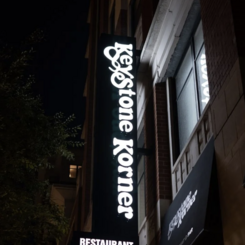
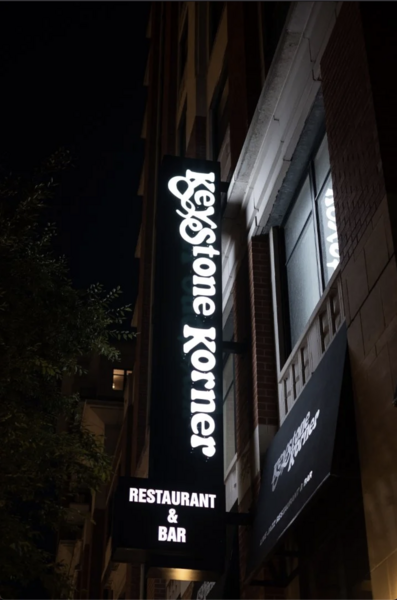 KKB Marquee
Keystone Korner Baltimore Marquee



Eroica
-
 Rossette
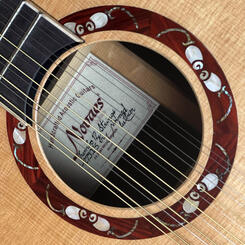
The rosette—composed of butterfly and floral mother-of-pearl motifs inlaid into black jacaranda—operates as both ornament and symbol, evoking metamorphosis, continuity, and renewal.
-
Douglas Lora at the Peabody Institute
Grammy nominee guitarist and composer Douglas Lora transits versatility through the universes of Classical and Popular Music and has established himself as one of the most prominent artists of his generation. in this Video Tries the Classical Novaes Deluxe 2023 at the Peabody Institute summer program in 2024.Member of the awarded Brasil Guitar Duo (winner of the prestigious Concert Artist Guild Competition) for over twenty years, Douglas has performed extensively at the most important theaters and concert halls in the United States, Europe, Asia, and Latin America. He has appeared as a soloist with major orchestras while the latest Brasil Guitar Duo album with the Delaware Symphony (featuring two premiere recordings of concerti by Paulo Bellinati and Leo Brouwer and conducted by David Amado) was nominated for Latin Grammy as “Best Classical Music Album”, in 2018.
-
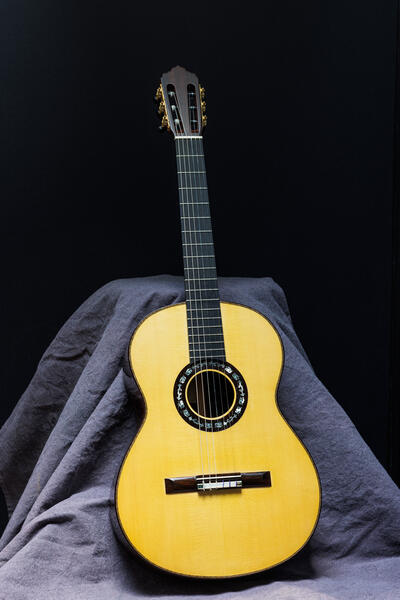 front
frontPhoto Detail - Top Soundboard Spruce
Soundboard and Asymmetric Harmonic Architecture
At the heart of the instrument’s tonal character is its asymmetrical harmonic bar system—a Novaes design staple that distinguishes its sound and projection. Unlike conventional classical guitar bracing, which typically employs symmetrical fan patterns beneath the soundboard, the asymmetric layout intentionally varies bar lengths, thicknesses, and spacing across the lower bout. This engineered irregularity creates differential stiffness and vibrational nodes across the soundboard, allowing energy to propagate in multiple, overlapping modes.
Physically, the asymmetry introduces controlled anisotropy in the spruce top: certain regions vibrate with higher compliance, enhancing low-mid resonance, while stiffer zones increase treble clarity and projection. The result is a simultaneous unfolding of bass, midrange, and treble planes, yielding greater harmonic richness, longer sustain, and more complex overtones than a conventional symmetric design. By calibrating bar placement and tapering with precision, the design maximizes soundboard responsiveness while mitigating wolf tones and uneven frequency peaks.
The top’s asymmetric harmonic architecture effectively transforms the soundboard into a dynamic, multidimensional resonator. It allows the instrument to translate subtle gestures into rich tonal color, creating a living dialogue between player and guitar. In combination with master-grade European spruce and Brazilian rosewood, this architecture enables the instrument to project with both intimacy and power, sustaining clarity and nuance across all registers.
-
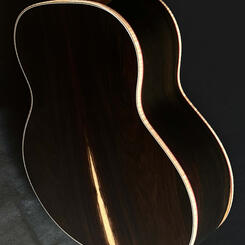
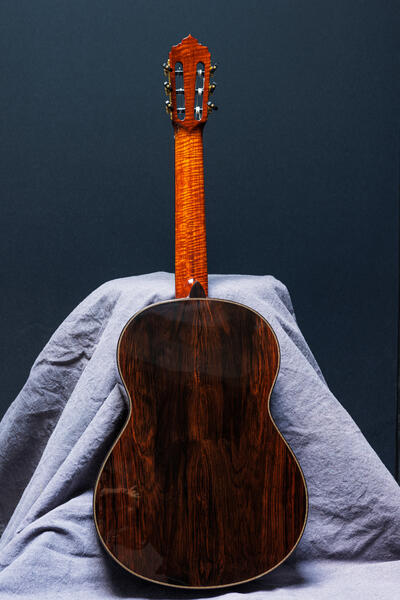 Back
BackBack Detail photo.
-
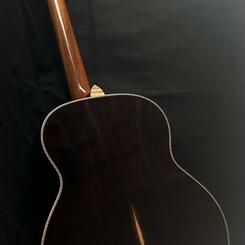
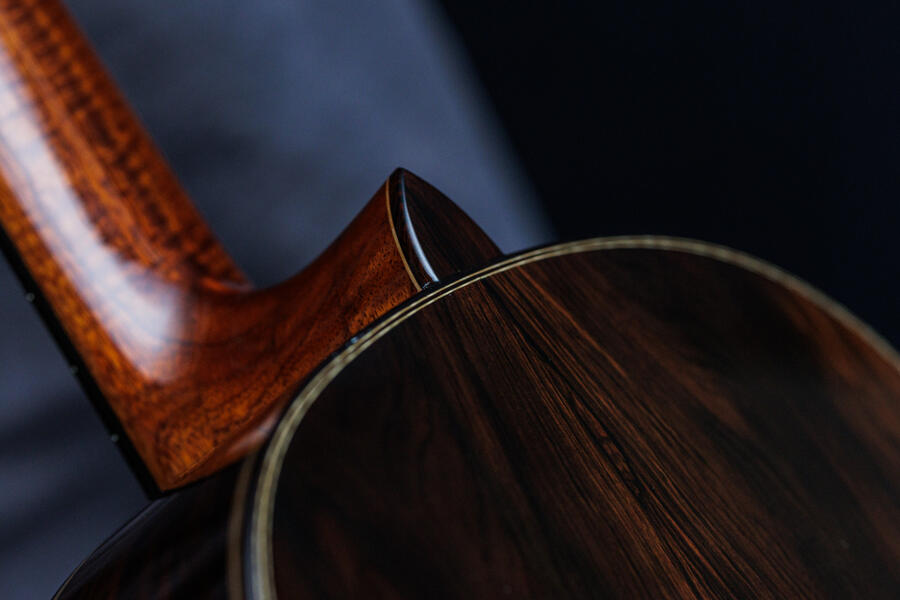 knee
kneeknee detail photo
-
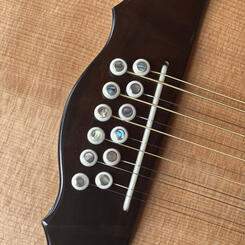
 bridge
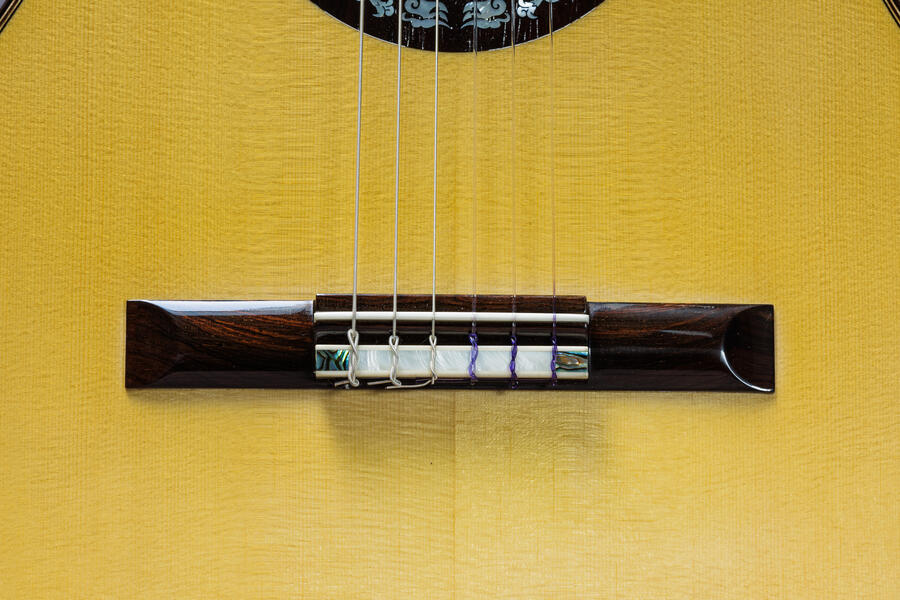
Bridge Detail - Abalone Ivory and Mother of Pearl.
-
 Neck
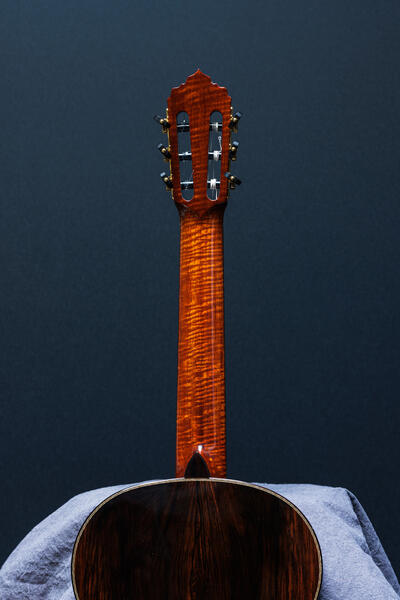
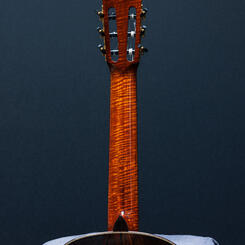
NeckNeck detail photo flammed Brazilian Cedar.
-
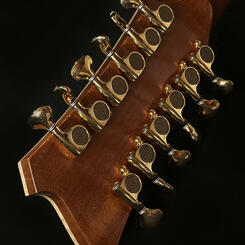
 neck
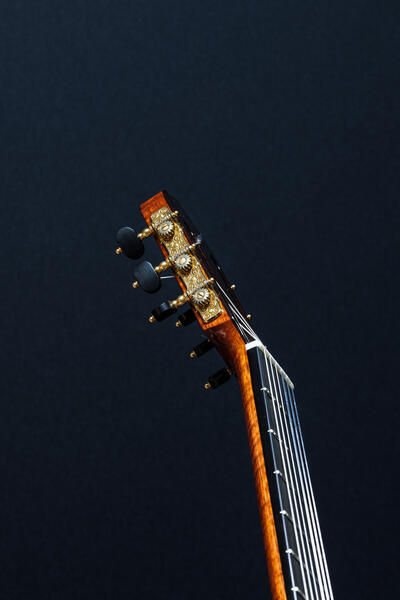
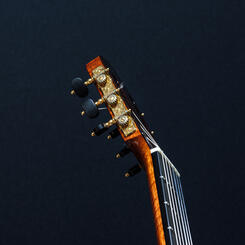
neckHeadstock detail photo
-
 neck
neck -
 front
front



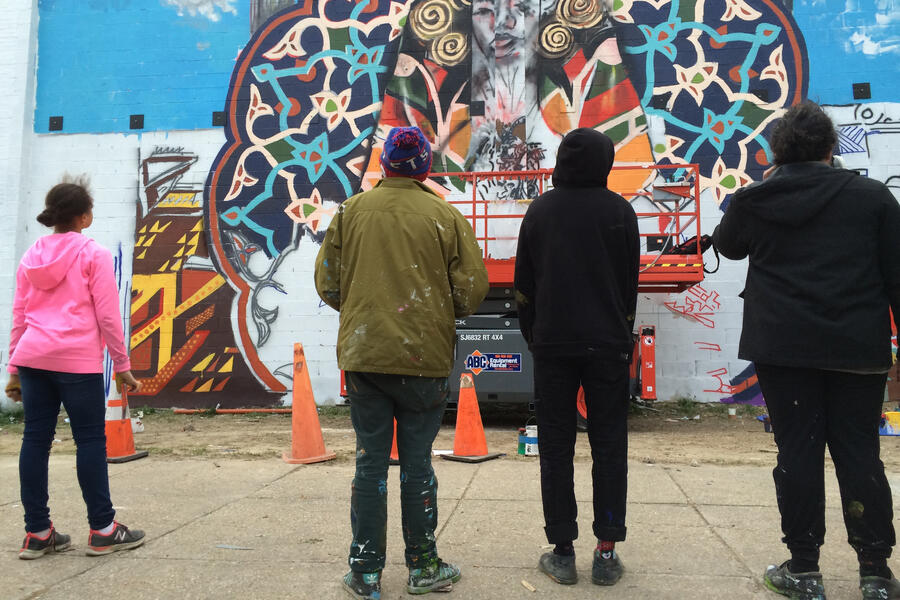
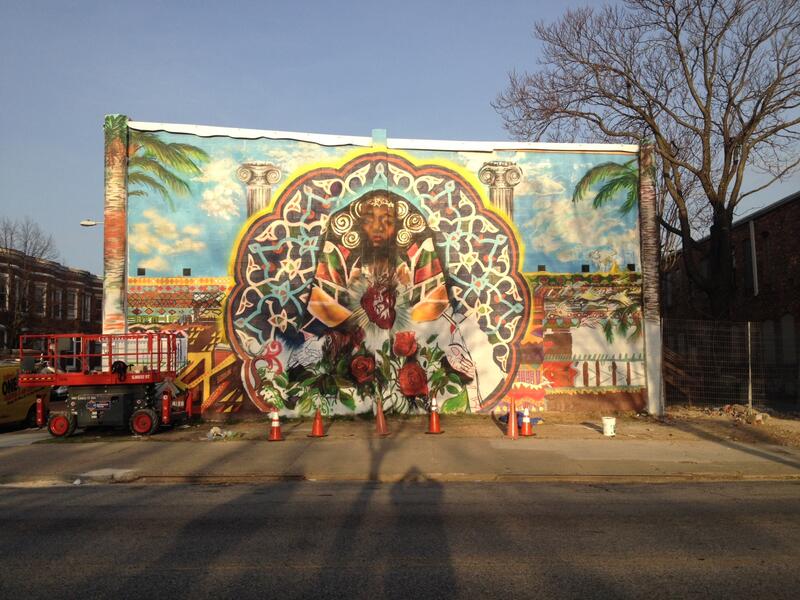
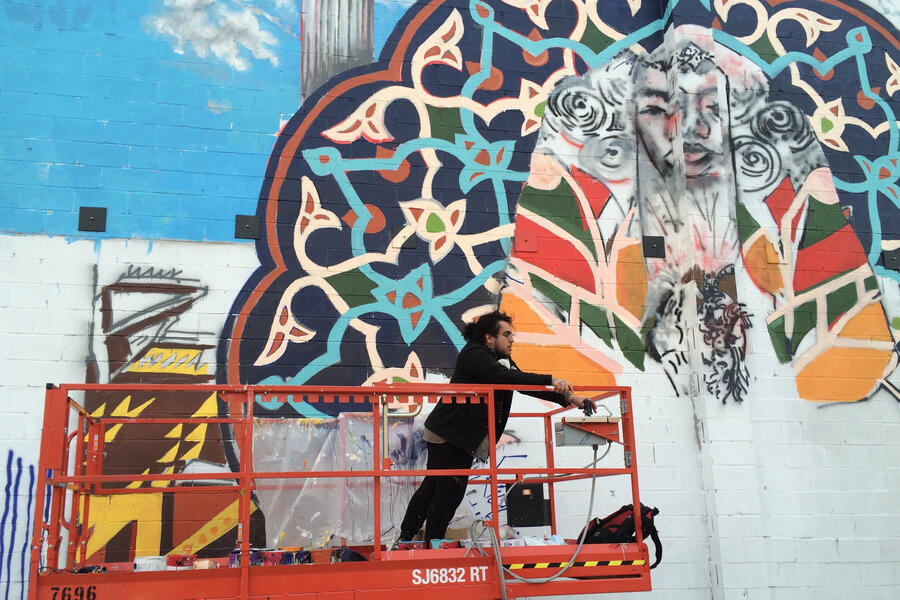
Goddess of Light - Greenmount
-
 Greenmount Greenway
 -
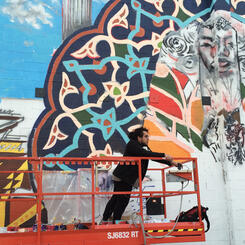
 Mural
Mural -
 Mural
Mural -
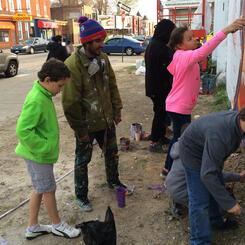
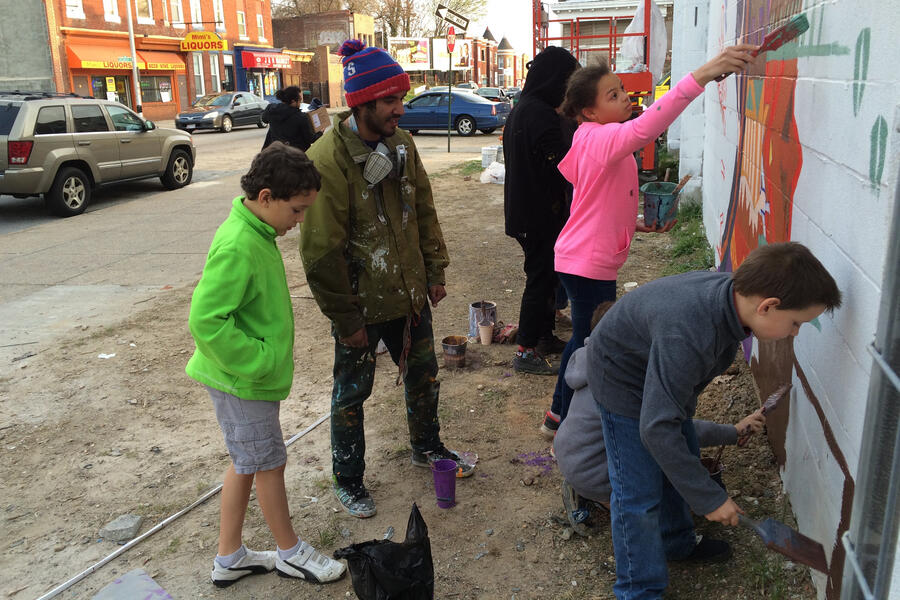 kids Paintitng
 -
 Bike Coalition
 -
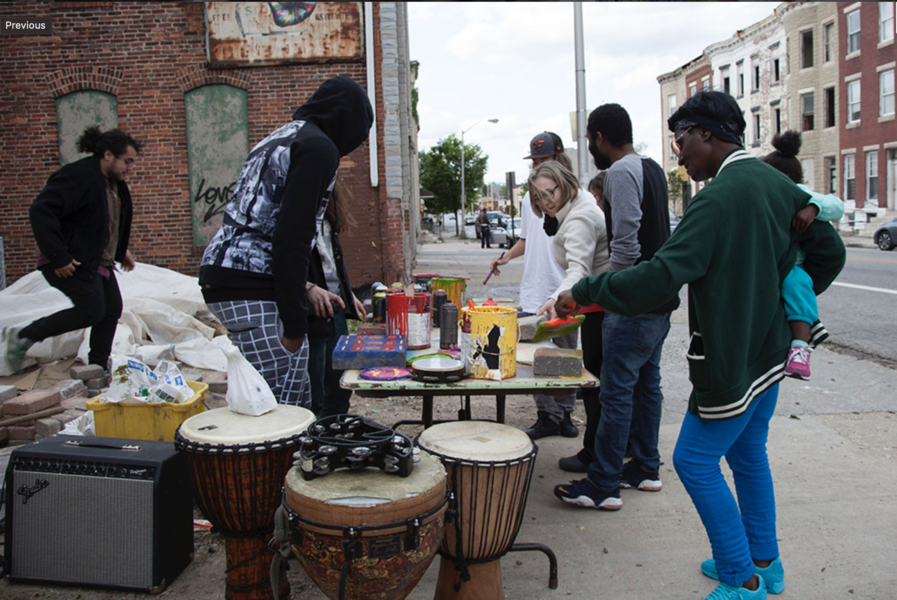 Community
 -
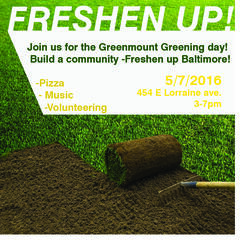
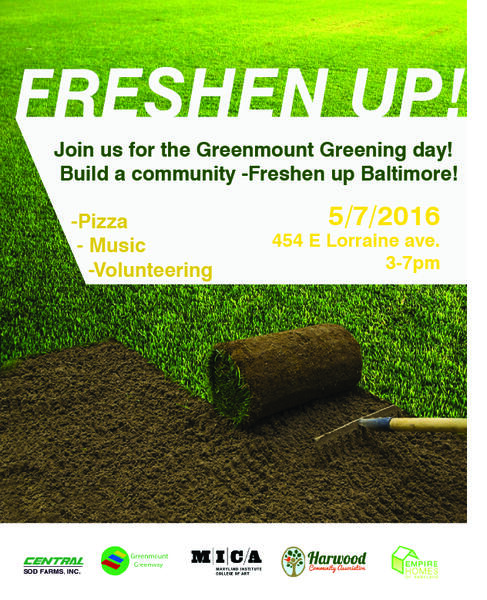 Grass Initiative
 -
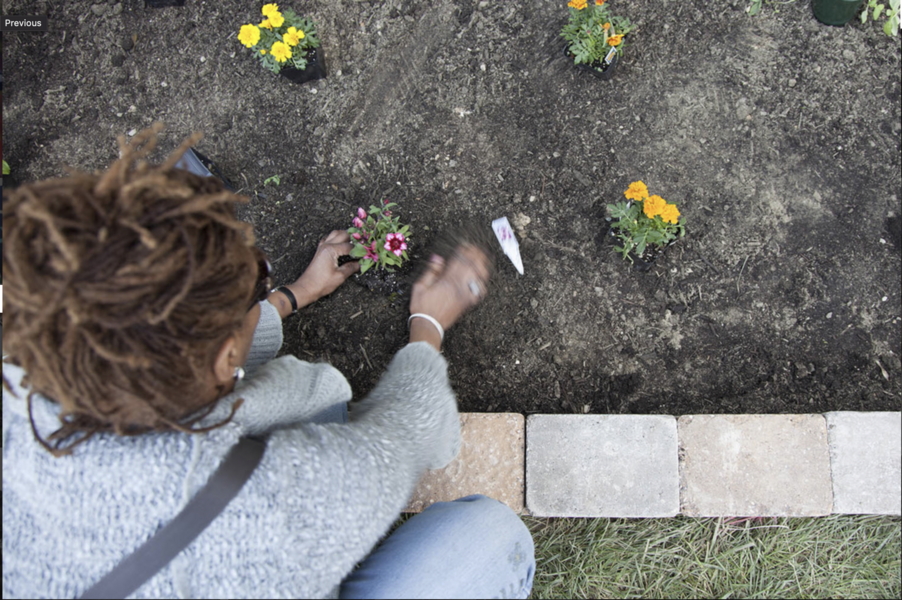 Flower day
 -
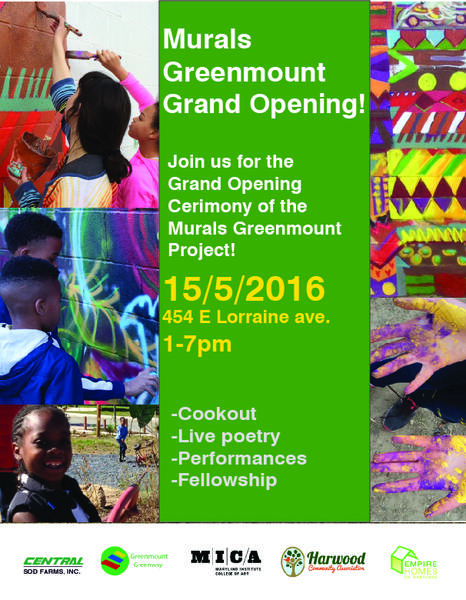 Painting Day
 -
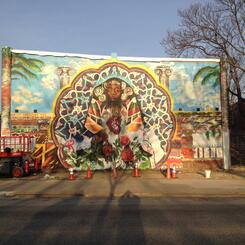
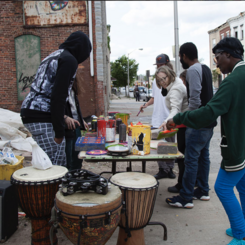
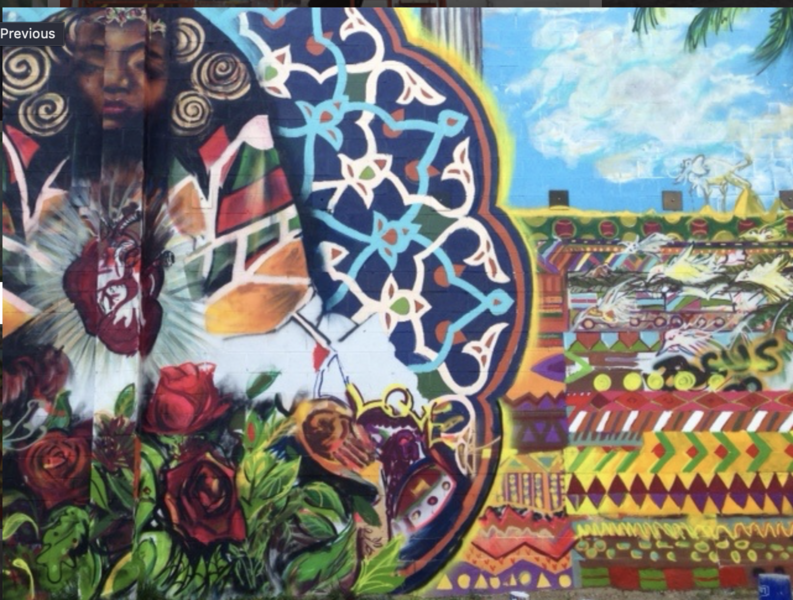 Street Shoot



Chromatic Resonance (Classical concert no 2)
-
Chromatic Resonance (Classical concert no 2)
2024- Medium: Handcrafted classical guitar; aged Engelmann spruce, Bolivian rosewood (pau ferro), Brazilian cedar, macassar ebony,, Yves Klein Blue pigment, Cocobolo, White mother of pearl, nitrocellulose finish.
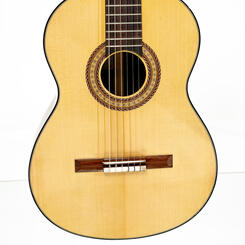
This Classical Concert No. 2 guitar showcases a refined balance of power, clarity, and tonal complexity. It features a resonant aged Engelmann Spruce top paired with Grade A Bolivian Rosewood (Pau Ferro) back and sides, producing a strong, articulate bass response, clear trebles, and exceptional note separation across the register.
The instrument offers excellent playability with a wide dynamic range, allowing for both nuanced expression and commanding projection. Its construction emphasizes acoustic responsiveness and tonal richness, delivering a clean, vibrant sound with depth and sustain.
Finished in nitrocellulose, the guitar resonates freely while highlighting the precision and elegance of its craftsmanship. A Macassar Ebony fretboard provides a smooth, fast feel
-
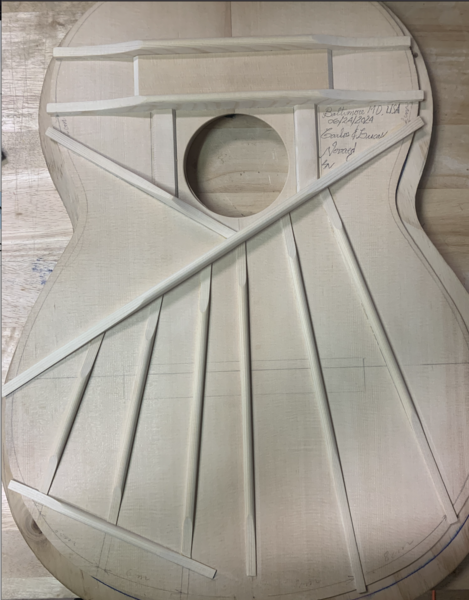 Soundboard and Asymmetric Harmonic Architecture
Photo detail plant soundboard
Soundboard and Asymmetric Harmonic Architecture
At the heart of the instrument’s tonal character is its asymmetrical harmonic bar system—a Novaes design staple that distinguishes its sound and projection. Unlike conventional classical guitar bracing, which typically employs symmetrical fan patterns beneath the soundboard, the asymmetric layout intentionally varies bar lengths, thicknesses, and spacing across the lower bout. This engineered irregularity creates differential stiffness and vibrational nodes across the soundboard, allowing energy to propagate in multiple, overlapping modes.
Physically, the asymmetry introduces controlled anisotropy in the spruce top: certain regions vibrate with higher compliance, enhancing low-mid resonance, while stiffer zones increase treble clarity and projection. The result is a simultaneous unfolding of bass, midrange, and treble planes, yielding greater harmonic richness, longer sustain, and more complex overtones than a conventional symmetric design. By calibrating bar placement and tapering with precision, the design maximizes soundboard responsiveness while mitigating wolf tones and uneven frequency peaks.
The top’s asymmetric harmonic architecture effectively transforms the soundboard into a dynamic, multidimensional resonator. It allows the instrument to translate subtle gestures into rich tonal color, creating a living dialogue between player and guitar. In combination with master-grade European spruce and Brazilian rosewood, this architecture enables the instrument to project with both intimacy and power, sustaining clarity and nuance across all registers.
-
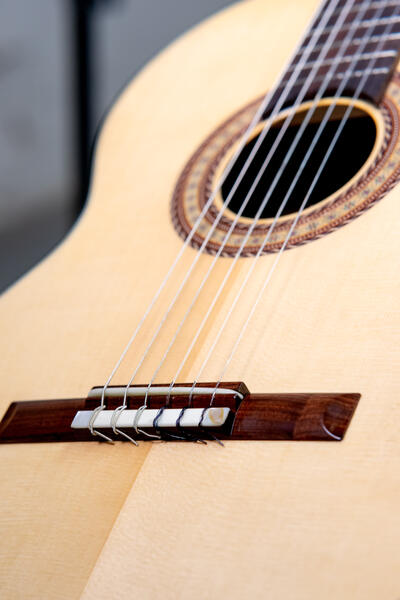 Top & Bridge
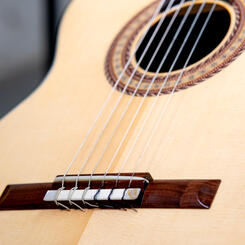
Detail Shot of the Engelman spruce top, Bridge & Rosette
-
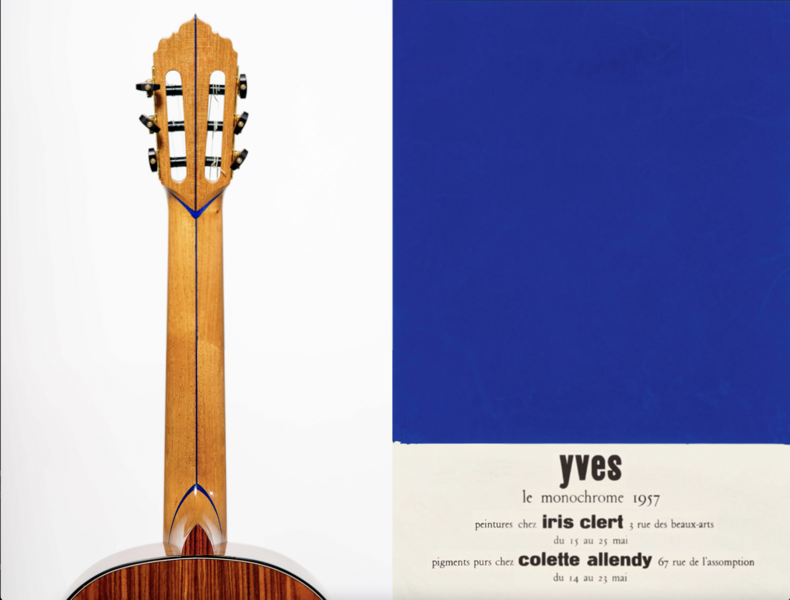 back neck YKB detail
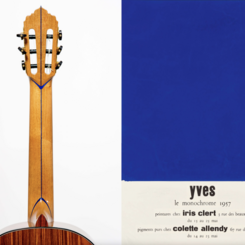
Detail shot of the neck jointery, here shows the use of Yves Klein blue pigment on maple wood die and the "chevron" pattern of jointery design employed in this special model.
-
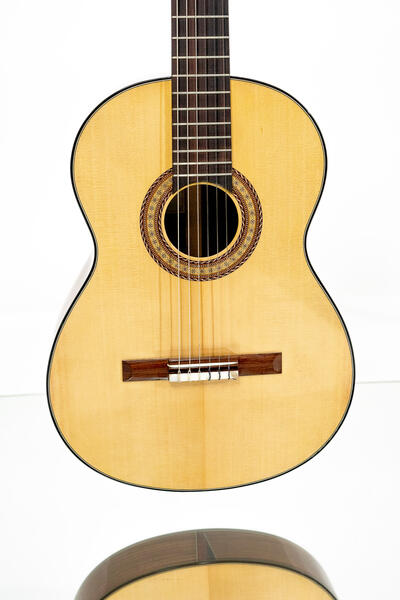 Top
TopDetail shot of the front, top and fretboard.
-
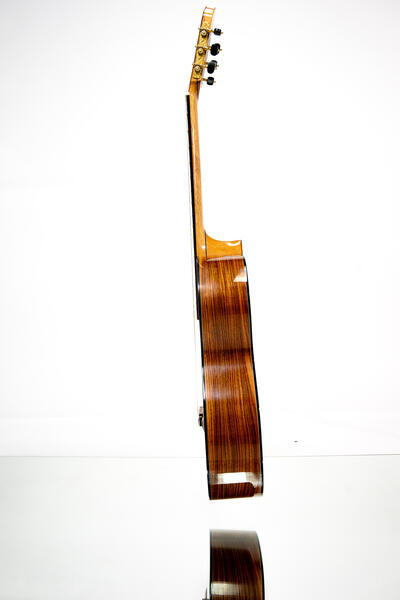 Side detail
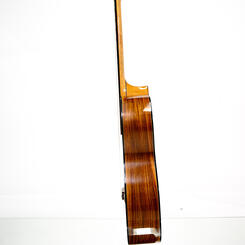
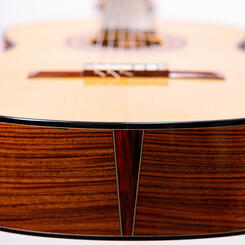
Side detail of Bolivian rosewood (Pau Ferro)
-
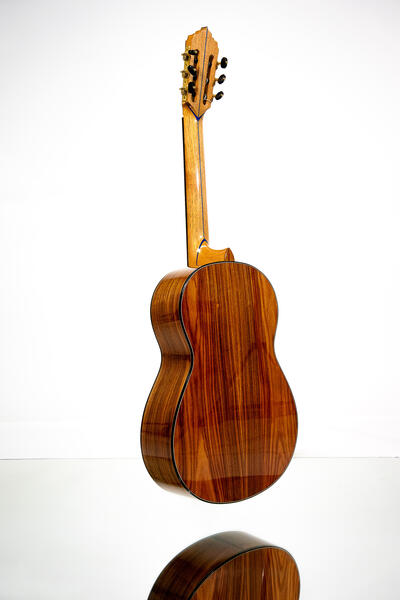 side back
Back and side detail shot showcasing the rare bolivian rosewood patterns.
-
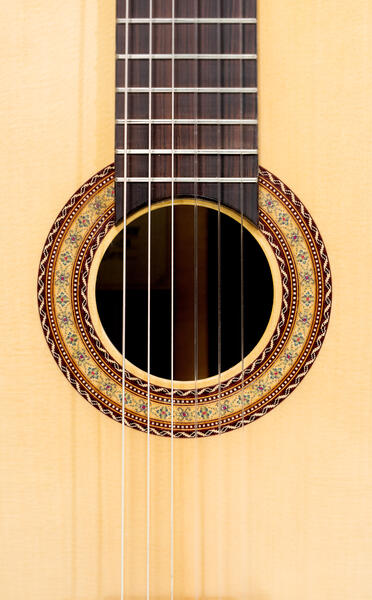 Rossette
Detail of the rosette marchetary shots howcasing several colors present in the guitar`s overal design, plue, pink, maroon, etc.
-
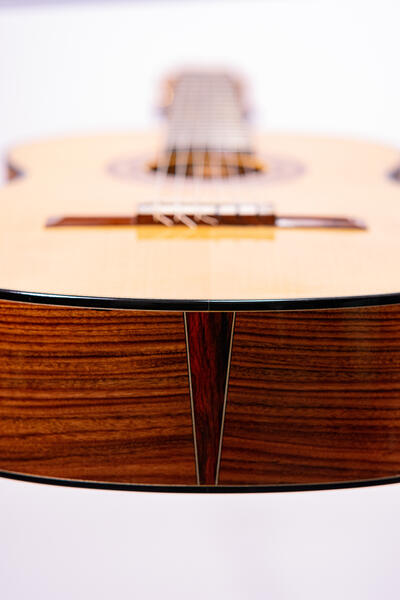 back under
 -
Yves Klein Blue Novaes & Sons Andrés Palacios
Played here by the renowned classical guitarist Andrés Palacios, this Classical Concert No. 2 is a historic model conceived by the Novaes & Son Luthier Collective—Carlos Novaes and Lucas Novaes—in Baltimore, Maryland, during the summer of 2024.
Inspired by Yves Klein and the legendary IKB Blue pigment, the instrument reflects a bold generational design philosophy combined with meticulous acoustic research and wood development. It delivers a powerful, authoritative bass response alongside a brilliantly clean and richly resonant tonal character. Exceptional playability is paired with a wide and complex dynamic range, offering outstanding note separation and harmonic depth.
The guitar features Grade A Bolivian Rosewood (Pau Ferro) back and sides paired with an aged Engelmann Sprucetop, both selected for their superior tonal qualities. True to Novaes’ reputation, the craftsmanship is impeccable in every detail.
Sample audio performed by Andrés Palacios.
Condition: Mint
Specifications:
- Back &


Held Ground: Baltimore City Jail Landscapes
-
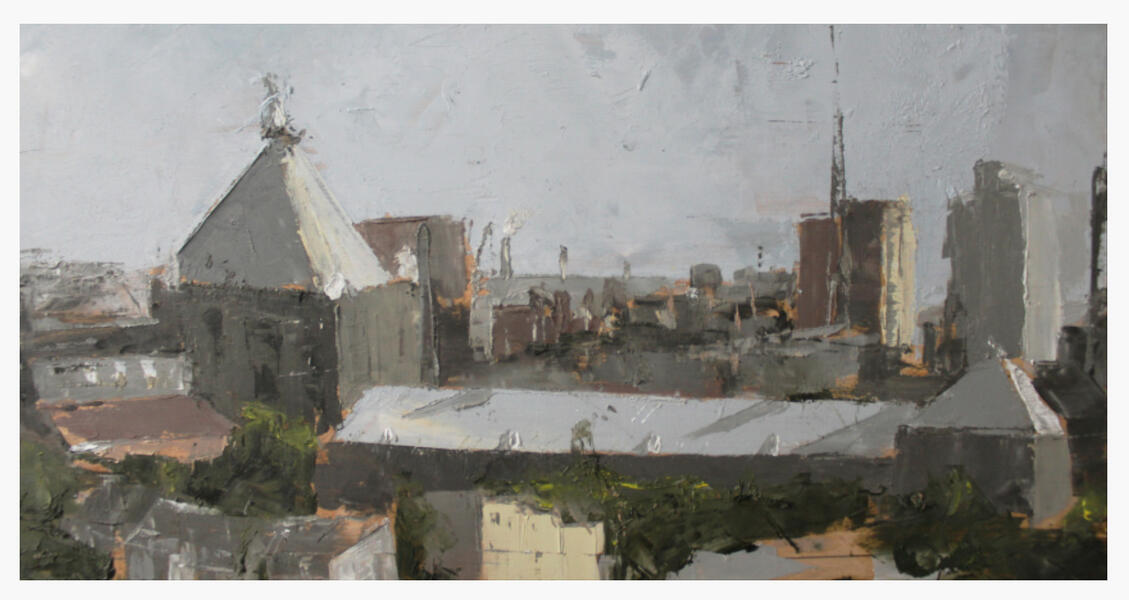 Baltimore City jailAvailable for Purchase
 -
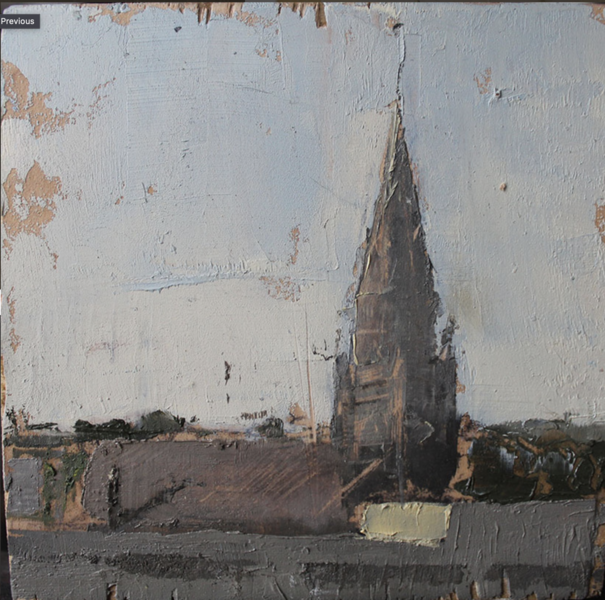 7:20
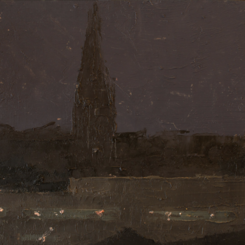
7:207:20 AM
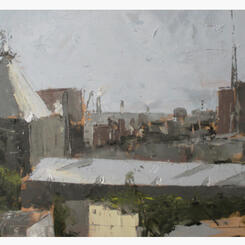
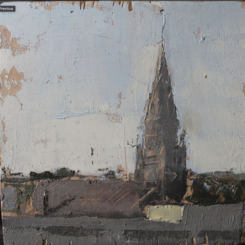
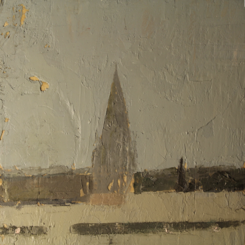
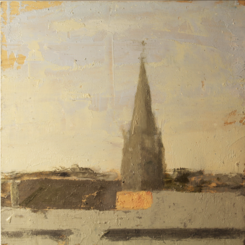
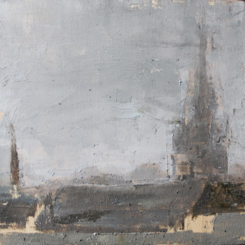
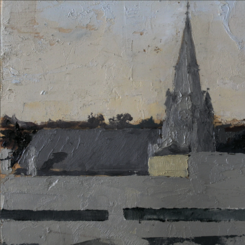
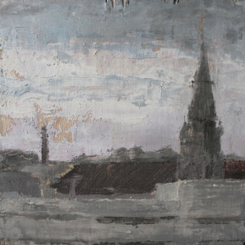
Oil on wood panelsLandscapes 4x4is a series of oil paintings executed on wood panels, each capturing the same subject at different times of day. Through subtle variations in light, color, and atmosphere, the works explore the interplay between natural phenomena and perception, emphasizing the temporal rhythms inherent in a single place. The rigid structure of the 4x4 panels provides a consistent framework, while the painterly handling of oil conveys the shifting qualities of sky, shadow, and form. Collectively, the series investigates continuity and change, offering a meditation on the passage of time and the mutable essence of landscape.
-
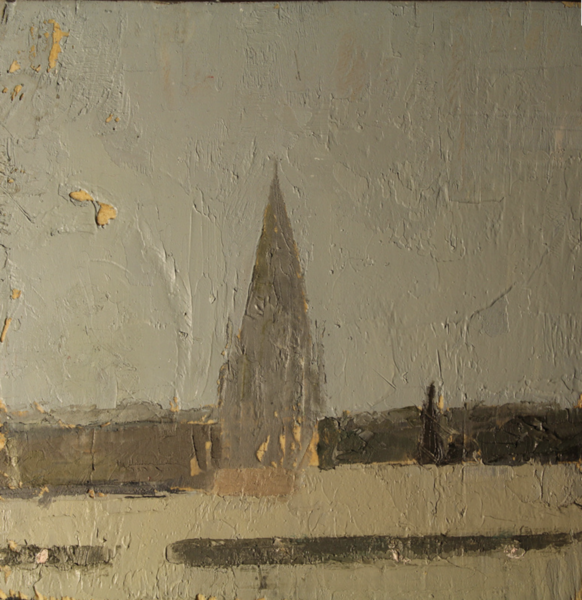 3:45 PM
3:45 PM
Oil on wood panelsLandscapes 4x4is a series of oil paintings executed on wood panels, each capturing the same subject at different times of day. Through subtle variations in light, color, and atmosphere, the works explore the interplay between natural phenomena and perception, emphasizing the temporal rhythms inherent in a single place. The rigid structure of the 4x4 panels provides a consistent framework, while the painterly handling of oil conveys the shifting qualities of sky, shadow, and form. Collectively, the series investigates continuity and change, offering a meditation on the passage of time and the mutable essence of landscape.
-
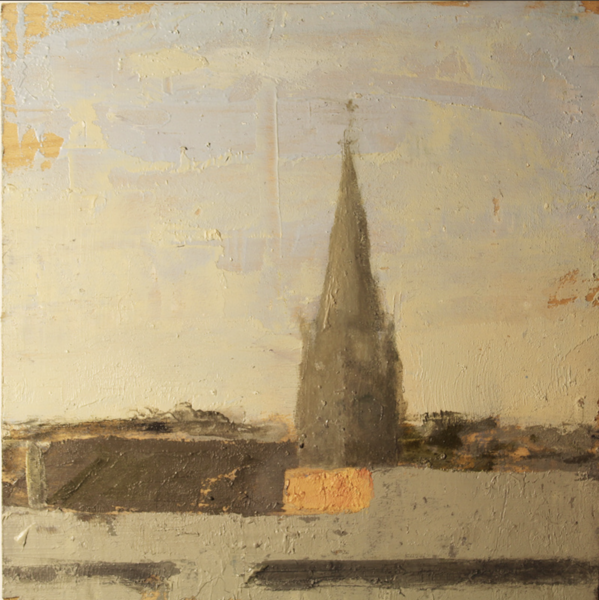 2:05 PM
2:05 PM
Oil on wood panelsLandscapes 4x4is a series of oil paintings executed on wood panels, each capturing the same subject at different times of day. Through subtle variations in light, color, and atmosphere, the works explore the interplay between natural phenomena and perception, emphasizing the temporal rhythms inherent in a single place. The rigid structure of the 4x4 panels provides a consistent framework, while the painterly handling of oil conveys the shifting qualities of sky, shadow, and form. Collectively, the series investigates continuity and change, offering a meditation on the passage of time and the mutable essence of landscape.
-
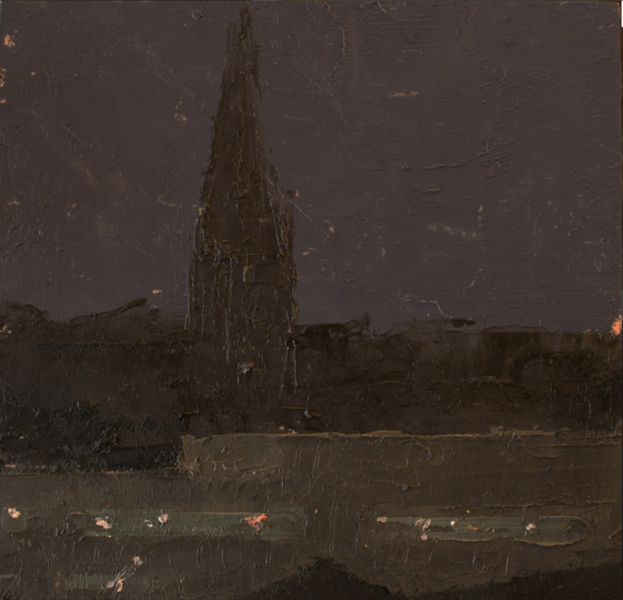 8:12 PM
8:12 PM
Oil on wood panelsLandscapes 4x4is a series of oil paintings executed on wood panels, each capturing the same subject at different times of day. Through subtle variations in light, color, and atmosphere, the works explore the interplay between natural phenomena and perception, emphasizing the temporal rhythms inherent in a single place. The rigid structure of the 4x4 panels provides a consistent framework, while the painterly handling of oil conveys the shifting qualities of sky, shadow, and form. Collectively, the series investigates continuity and change, offering a meditation on the passage of time and the mutable essence of landscape.
-
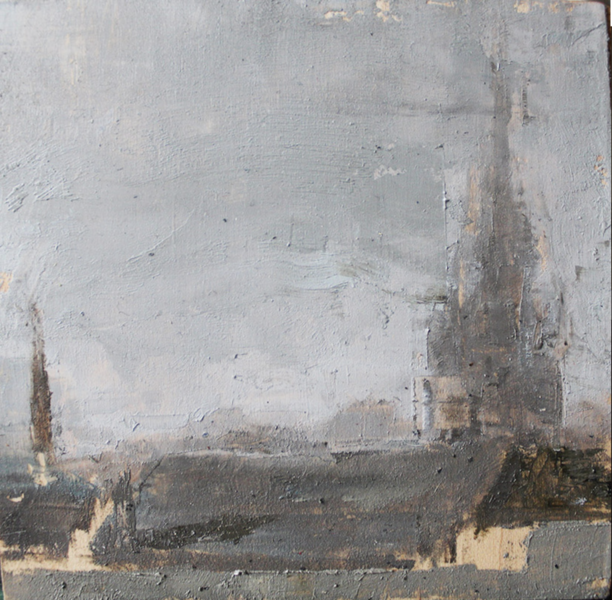 5:03 PM
5:03 PM
Oil on wood panelsLandscapes 4x4is a series of oil paintings executed on wood panels, each capturing the same subject at different times of day. Through subtle variations in light, color, and atmosphere, the works explore the interplay between natural phenomena and perception, emphasizing the temporal rhythms inherent in a single place. The rigid structure of the 4x4 panels provides a consistent framework, while the painterly handling of oil conveys the shifting qualities of sky, shadow, and form. Collectively, the series investigates continuity and change, offering a meditation on the passage of time and the mutable essence of landscape.
-
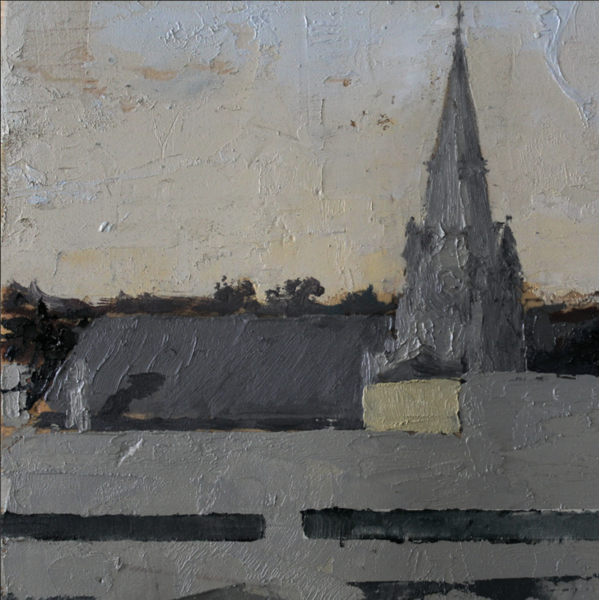 6:02 PM
6:02 AM
Oil on wood panelsLandscapes 4x4is a series of oil paintings executed on wood panels, each capturing the same subject at different times of day. Through subtle variations in light, color, and atmosphere, the works explore the interplay between natural phenomena and perception, emphasizing the temporal rhythms inherent in a single place. The rigid structure of the 4x4 panels provides a consistent framework, while the painterly handling of oil conveys the shifting qualities of sky, shadow, and form. Collectively, the series investigates continuity and change, offering a meditation on the passage of time and the mutable essence of landscape.
-
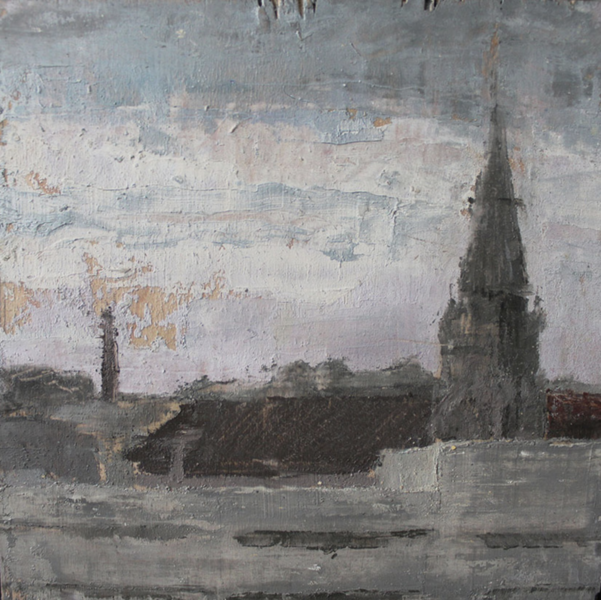 7:13 AM
7:13AM
Oil on wood panelsLandscapes 4x4is a series of oil paintings executed on wood panels, each capturing the same subject at different times of day. Through subtle variations in light, color, and atmosphere, the works explore the interplay between natural phenomena and perception, emphasizing the temporal rhythms inherent in a single place. The rigid structure of the 4x4 panels provides a consistent framework, while the painterly handling of oil conveys the shifting qualities of sky, shadow, and form. Collectively, the series investigates continuity and change, offering a meditation on the passage of time and the mutable essence of landscape.
-
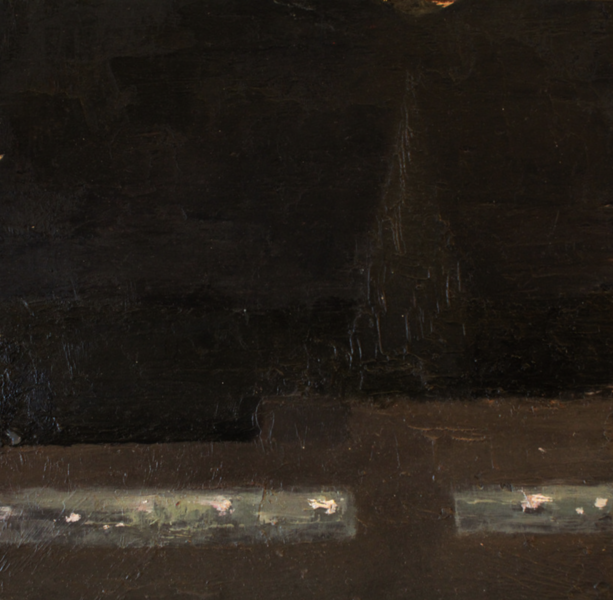 09:50 PM
9:50 PM
Oil on wood panelsLandscapes 4x4is a series of oil paintings executed on wood panels, each capturing the same subject at different times of day. Through subtle variations in light, color, and atmosphere, the works explore the interplay between natural phenomena and perception, emphasizing the temporal rhythms inherent in a single place. The rigid structure of the 4x4 panels provides a consistent framework, while the painterly handling of oil conveys the shifting qualities of sky, shadow, and form. Collectively, the series investigates continuity and change, offering a meditation on the passage of time and the mutable essence of landscape.


Origin - First Resonance
-
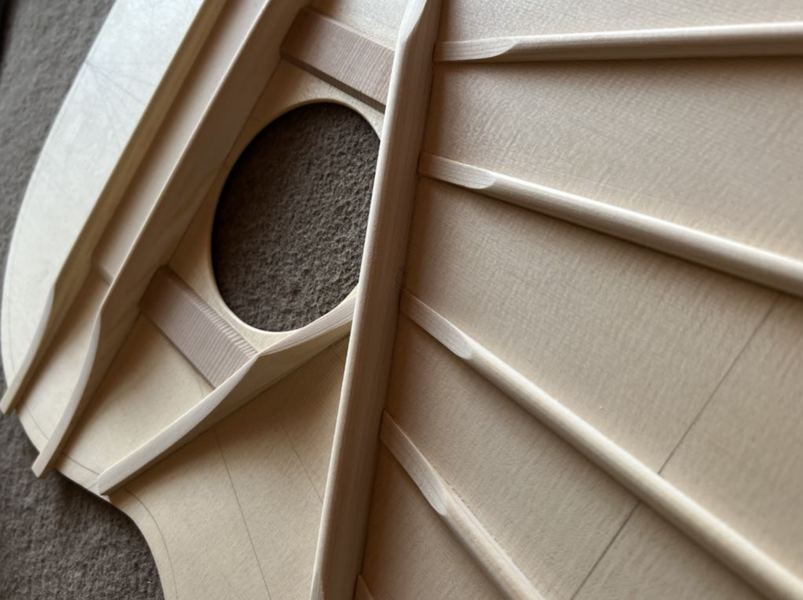 Soundboard and Asymmetric Harmonic Architecture
Soundboard and Asymmetric Harmonic Architecture
At the heart of the instrument’s tonal character is its asymmetrical harmonic bar system—a Novaes design staple that distinguishes its sound and projection. Unlike conventional classical guitar bracing, which typically employs symmetrical fan patterns beneath the soundboard, the asymmetric layout intentionally varies bar lengths, thicknesses, and spacing across the lower bout. This engineered irregularity creates differential stiffness and vibrational nodes across the soundboard, allowing energy to propagate in multiple, overlapping modes.
Physically, the asymmetry introduces controlled anisotropy in the spruce top: certain regions vibrate with higher compliance, enhancing low-mid resonance, while stiffer zones increase treble clarity and projection. The result is a simultaneous unfolding of bass, midrange, and treble planes, yielding greater harmonic richness, longer sustain, and more complex overtones than a conventional symmetric design. By calibrating bar placement and tapering with precision, the design maximizes soundboard responsiveness while mitigating wolf tones and uneven frequency peaks.
The top’s asymmetric harmonic architecture effectively transforms the soundboard into a dynamic, multidimensional resonator. It allows the instrument to translate subtle gestures into rich tonal color, creating a living dialogue between player and guitar. In combination with master-grade European spruce and Brazilian rosewood, this architecture enables the instrument to project with both intimacy and power, sustaining clarity and nuance across all registers.
-
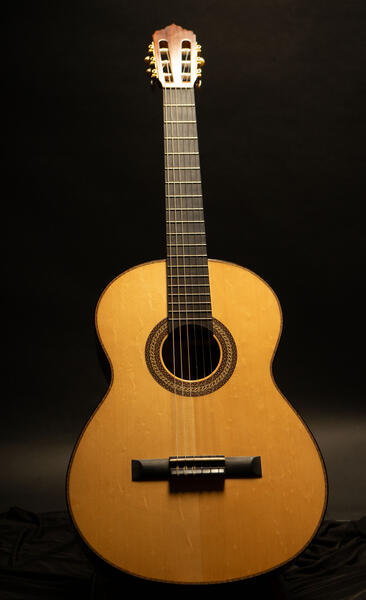 Top Detail
Spruce top detail Photo
-
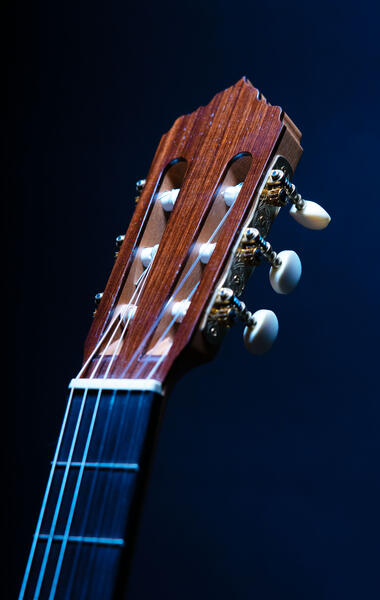 Headstock
Hedstock detail photo
-
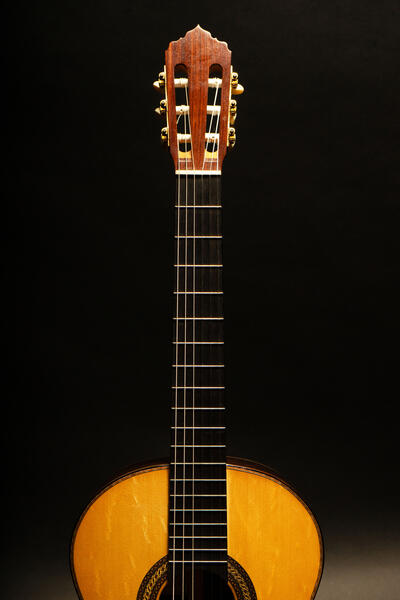 Fretboard
Fretboard
-
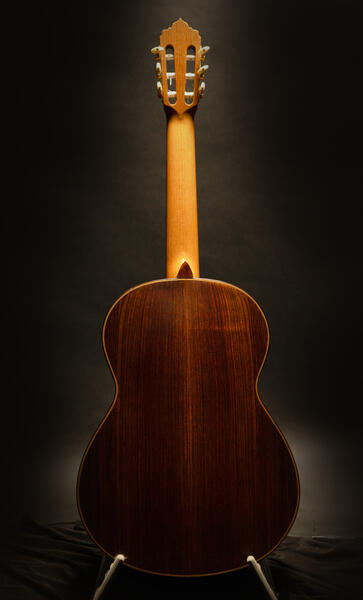 Back Detail
Back detail
-
Felipe Garibaldi Plays Novaes & Sons no 1
-
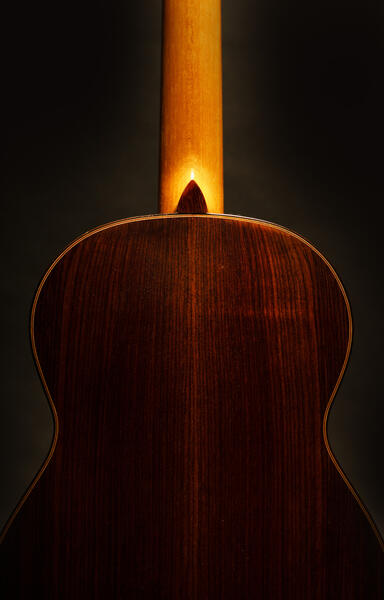 Knee and back detail
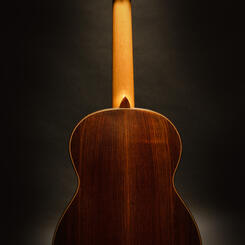
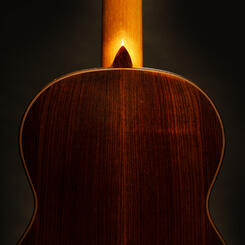
Knee and back detail
Available for Purchase -
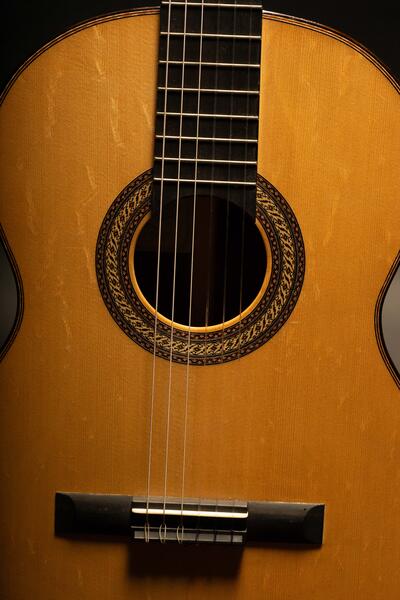 Rossette
Rossette
-
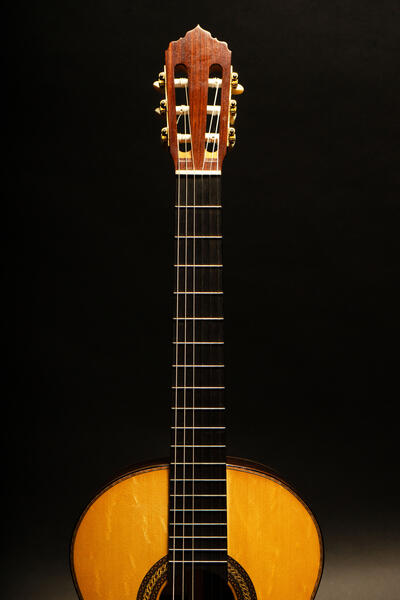 Front Detail
 -
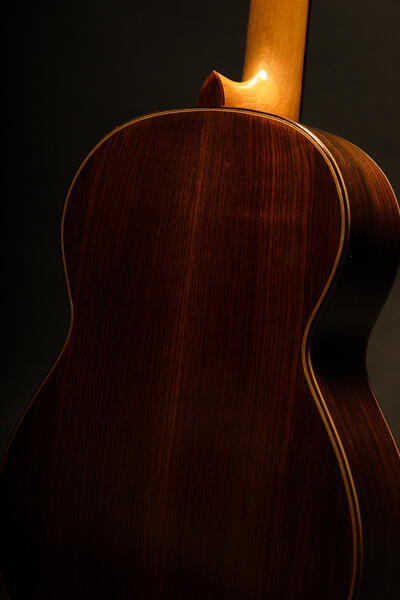 Knee
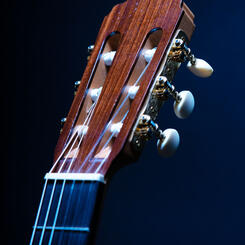
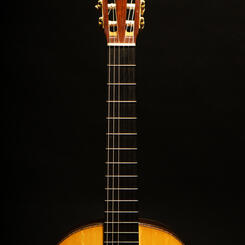
KneeKnee Detail


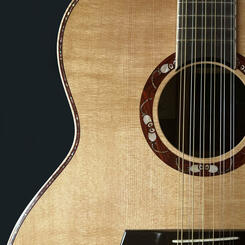
A Vessel for Twelve Voices
-
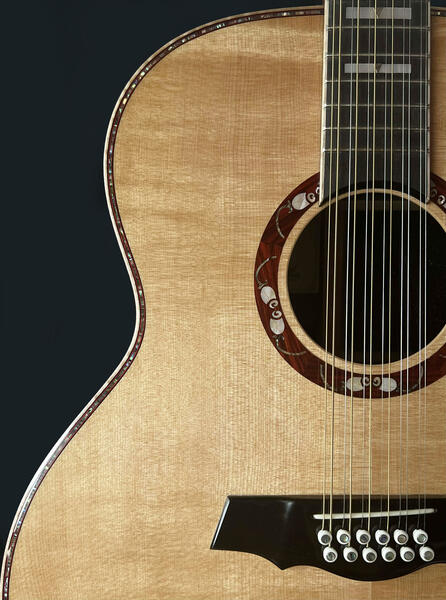 Top Detail
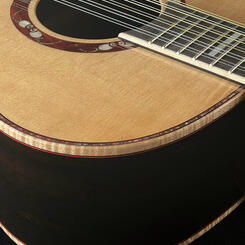
Top Detail
-
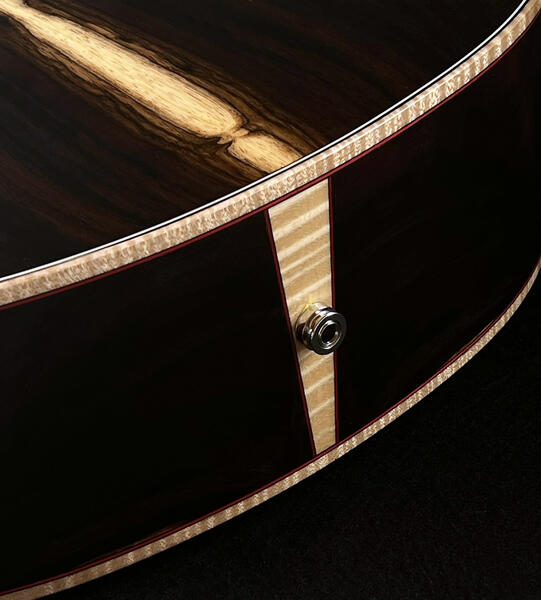 Bottom
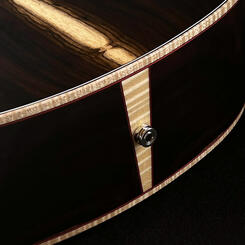
Bottom botoom 1/4" jack input detail
-
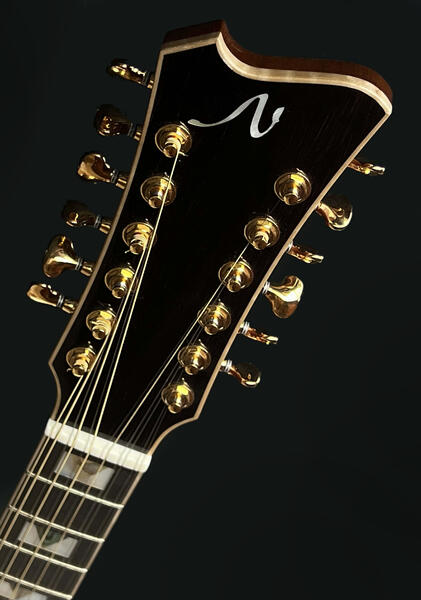 Headstock
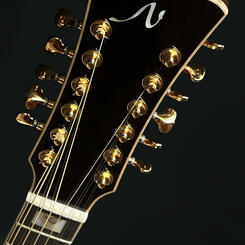
Headstock detail photo
-
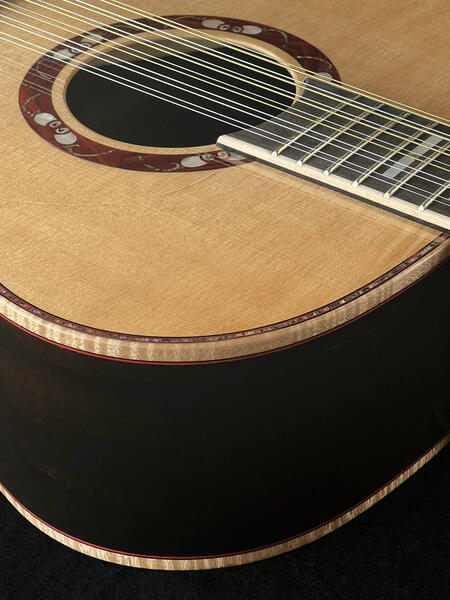 Side
SideSide Detail
-
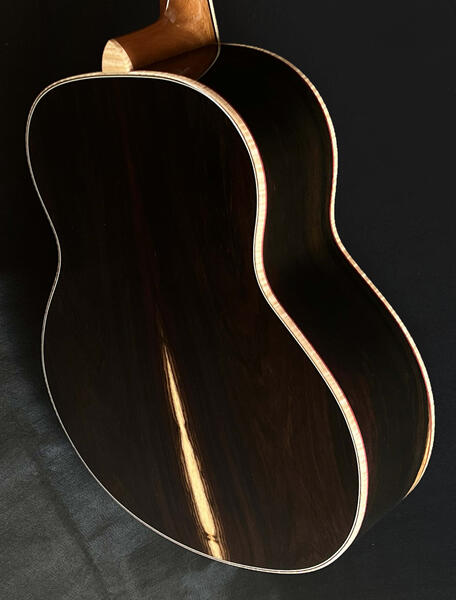 Back and Side
Back and Side
-
 Back of Headstock
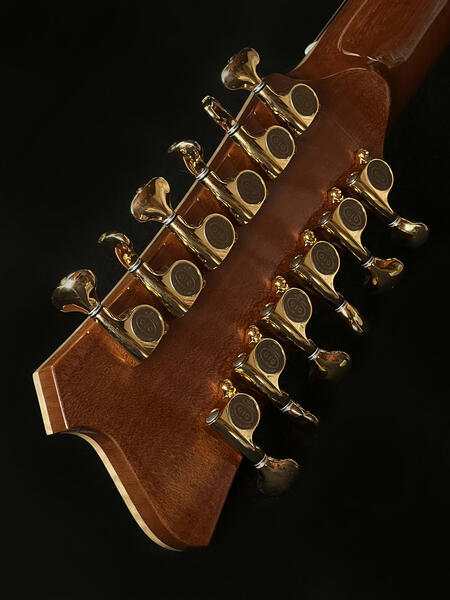
Back of Headstock Detail photo
-
 Back Detail
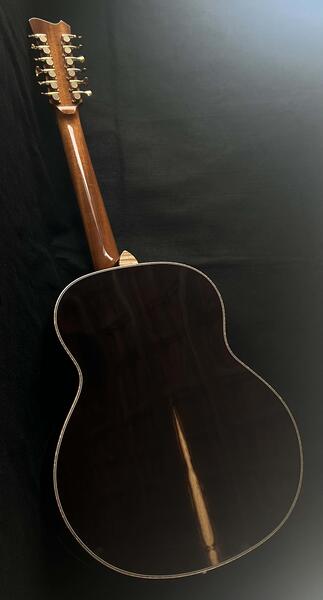
Back Detail
-
 Bridge detail
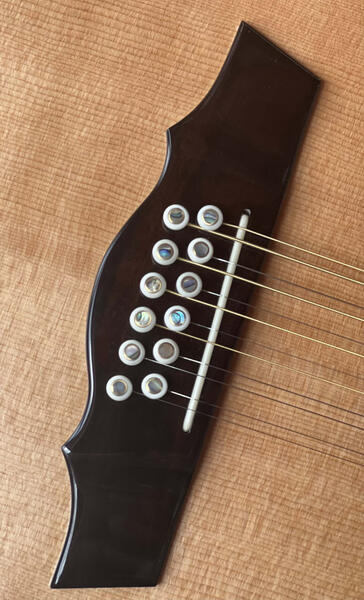
Bridge detail
-
 Rossette
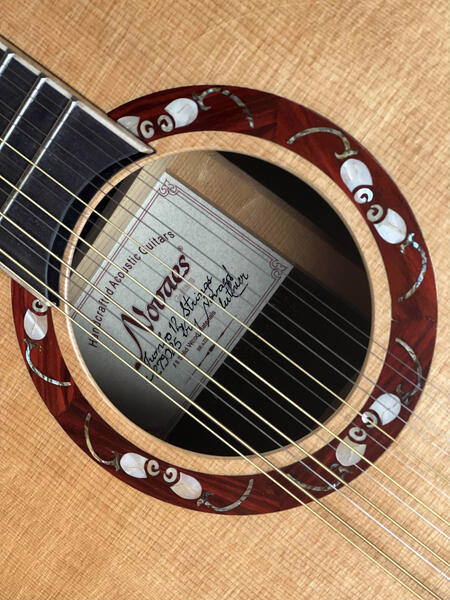
Rossette detail
-
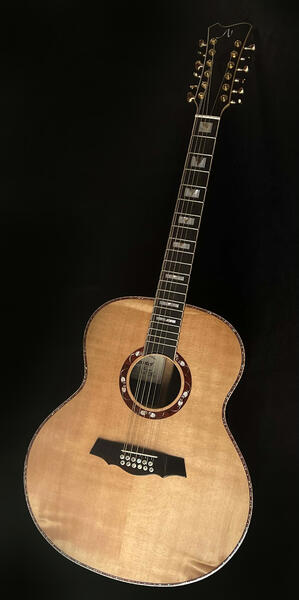 Full Body
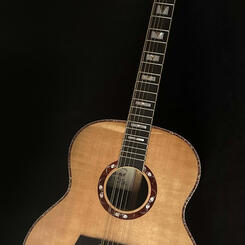
Full Body Photo