Work samples
-
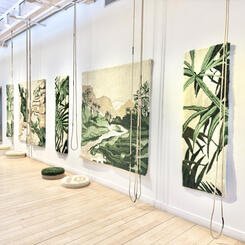
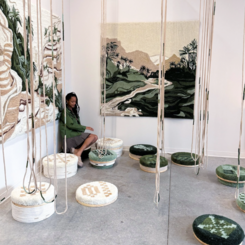
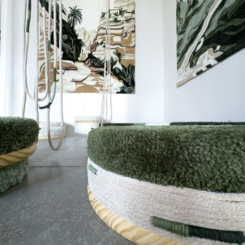
Unfortunately, It Was Paradise | لسوء الحظ كانت جنة
لسوء الحظ كانت جنة | Unfortunately, It Was Paradise, 2025
Acrylic yarn, felt, foam, ancestral wisdom, felt, memory, cotton cord, poplar, embroidery floss
Dimensions variable
An installation of hand tufted and woven works.
-
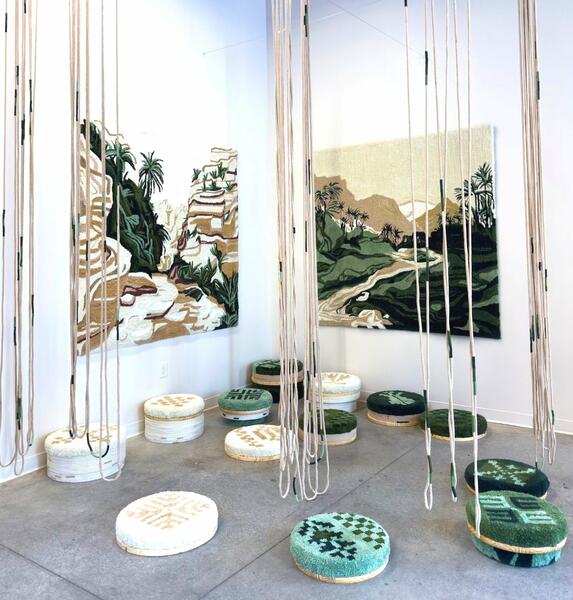 Unfortunately It Was Paradise | لسوء الحظ كانت جنة
لسوء الحظ كانت جنة | Unfortunately, It Was Paradise, 2025
Acrylic yarn, felt, foam, ancestral wisdom, felt, memory, cotton cord, poplar, embroidery floss
Dimensions variable
An installation of hand tufted and woven works.
-
Weaving Performance, Building Steam with a Grain of Wheat & Community Workshop Activations
Weaving Performance & Community Workshop Activations, Building Steam with a Grain of Wheat
Embodied Labor, Acrylic Yarn, Back Strap Loom, Community
Installation variable
-
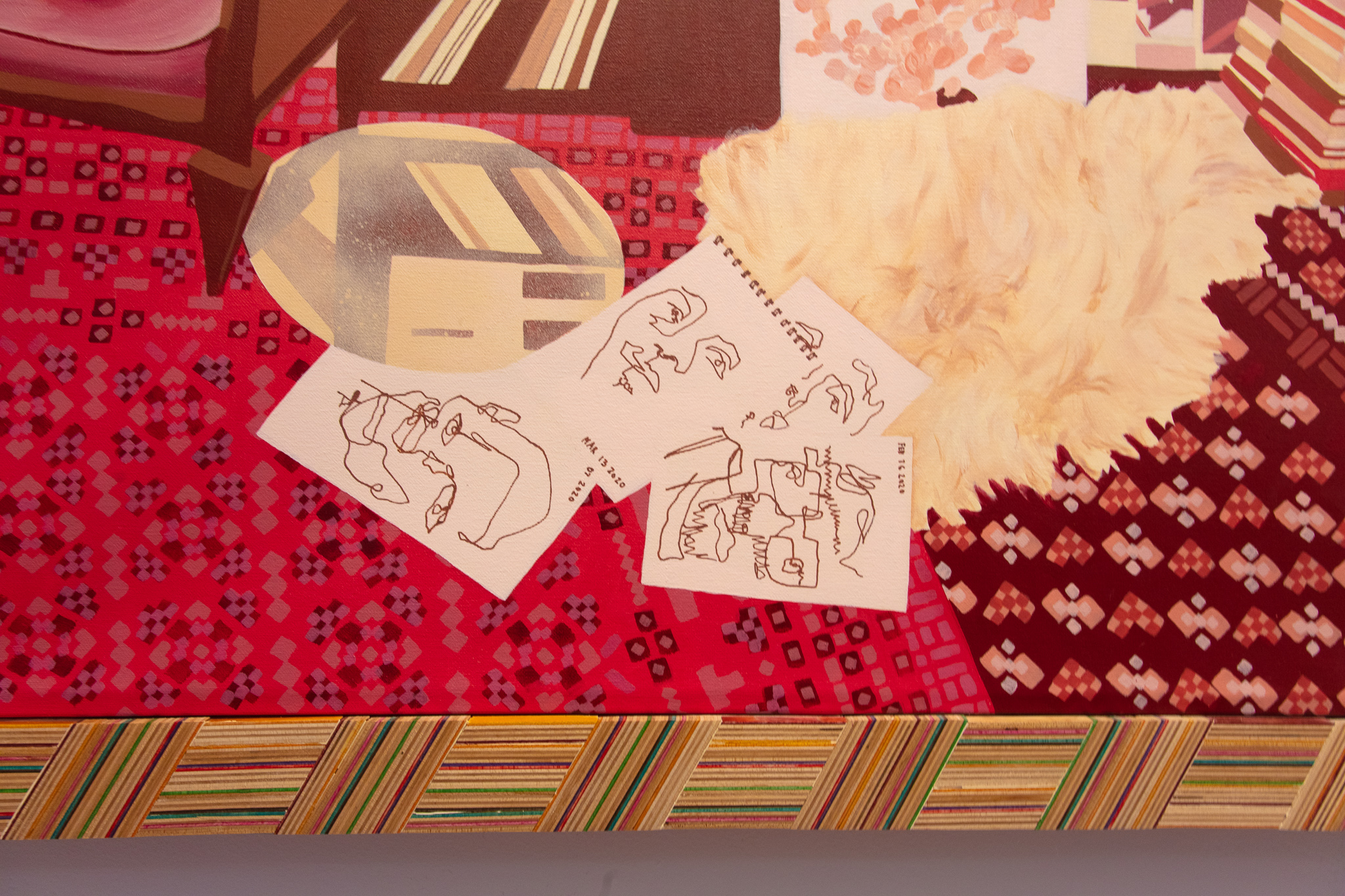
Psalm: A Portrait of Mohammad Zakaria | Skateboard Marquetry & Sculpture
Psalm: A Portrait of Mohammad Zakaria, 2024
Artist marquetry frame made out of recycled skateboards and poplar; Acrylic and aerosol painting on stretched canvas
36 x 51 x 6 in
Acknowledgment, 2024
Recycled Skateboards, Aerosol, and Varnish on Poplar
Installation variable | Smaller Circles: 17 x 17 x 4 in | Larger Circles: 24 x 24 x 4 in
Resolution, 2024
Recycled Skateboards, Latex Paint
33 x 8.5 x 4 in
About Hannah

Hannah Atallah (هانّا عطالله) is a Palestinian-Lebanese-Irish multidisciplinary artist.
Atallah has created murals and exhibited work across Baltimore, the US, Jordan and Mexico, earning her recognition in the form of awards, grants, and public acquisitions.
Through her work, Atallah strives to explore cultural assumptions, embrace historically rich artistic techniques with discarded contemporary materials, and foster connections within local communities through workshops and… more
Unfortunately, It Was Paradise | لسوء الحظ كانت جنة
-
Unfortunately It Was Paradise | لسوء الحظ كانت جنة
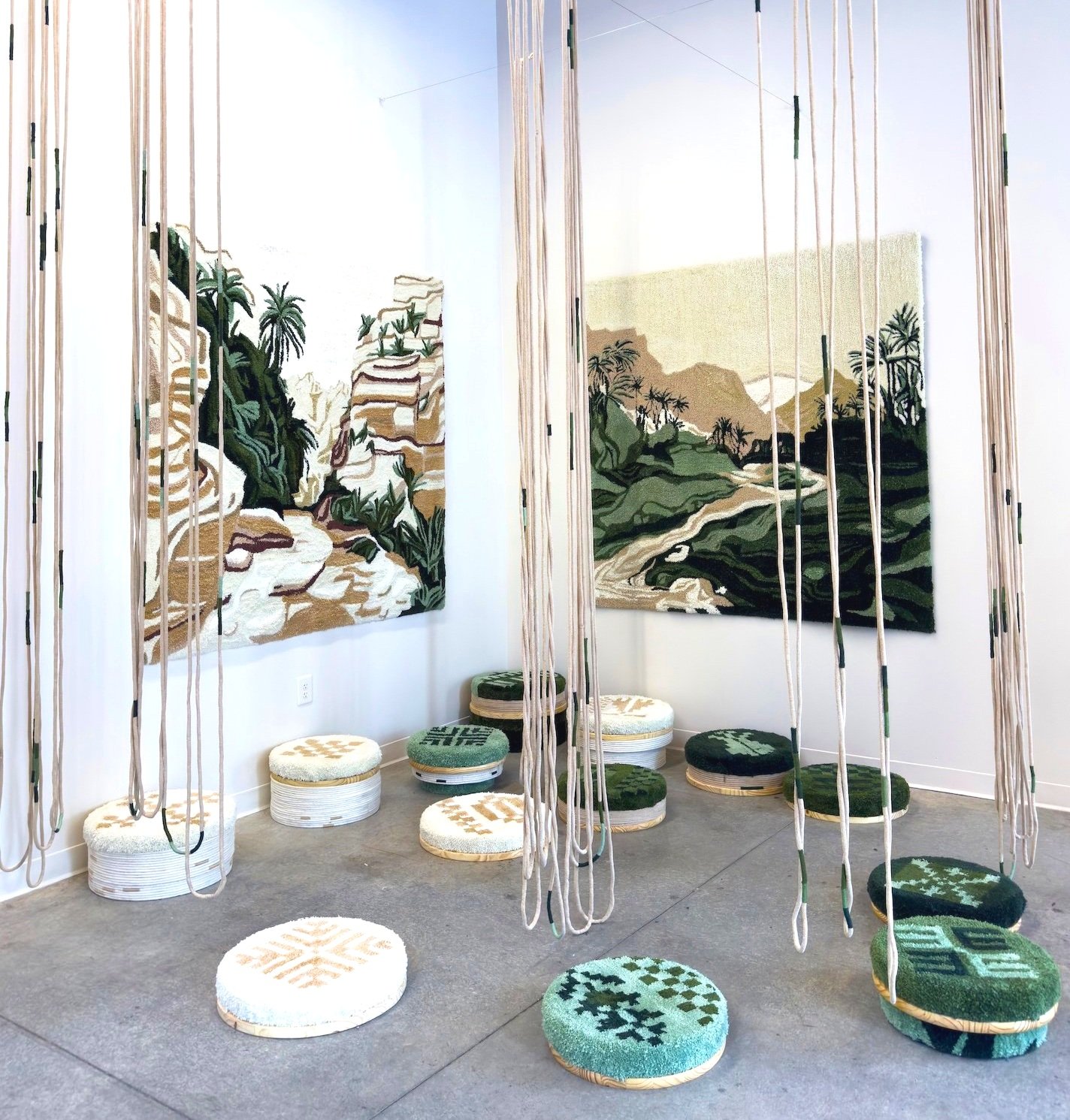
لسوء الحظ كانت جنة | Unfortunately, It Was Paradise, 2025
Acrylic yarn, felt, foam, ancestral wisdom, felt, memory, cotton cord, poplar, embroidery floss
Dimensions variable
An installation of hand tufted and woven works.
-
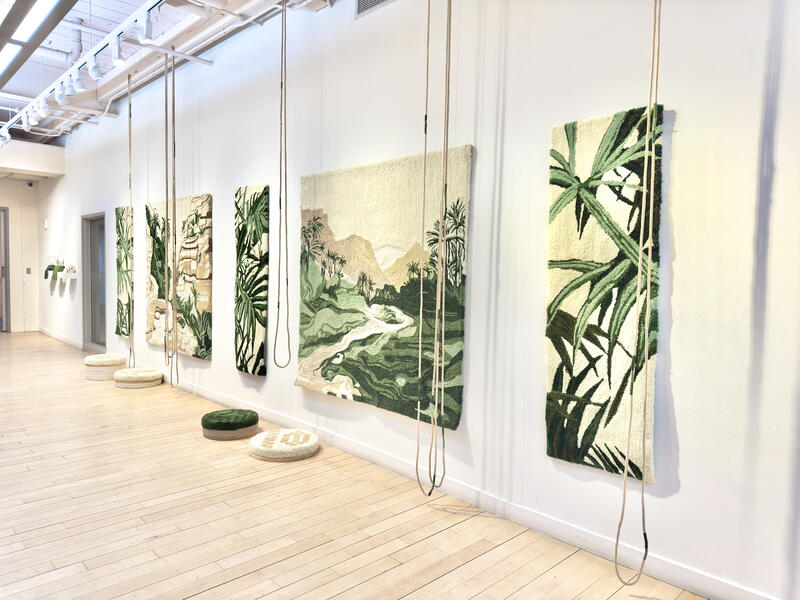 لسوء الحظ كانت جنة | Unfortunately, It Was Paradise, 2025
لسوء الحظ كانت جنة | Unfortunately, It Was Paradise, 2025
Acrylic yarn, felt, foam, ancestral wisdom, felt, memory, cotton cord, poplar, embroidery floss
Dimensions variable
An installation of hand tufted and woven works.
-
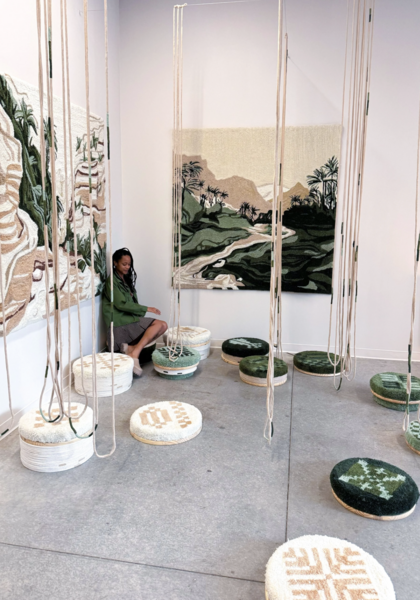 Dwelling Space
 -
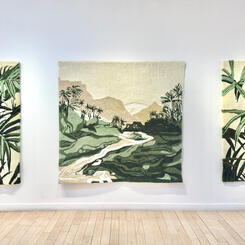
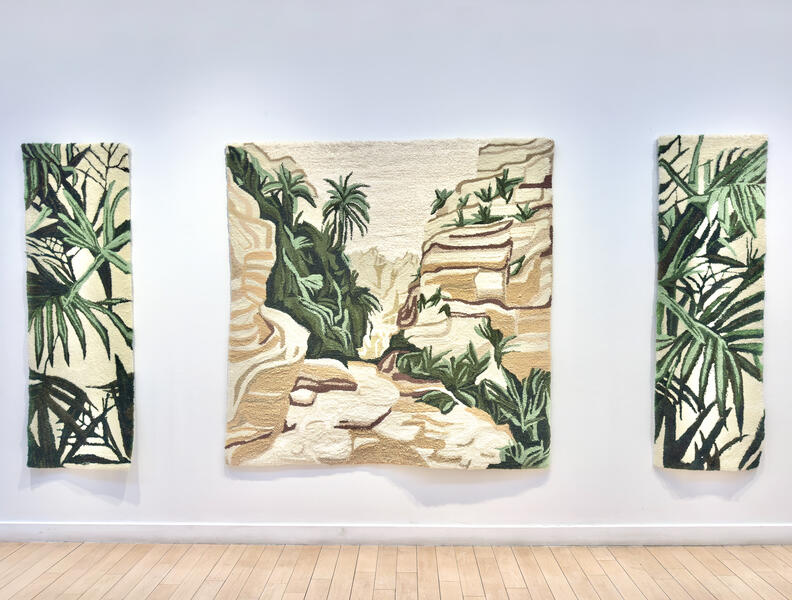 Wadi Bin Hammad & Oasis Tryptic
Wadi Bin Hammad, 2025
Acrylic yarn, felt, foam, ancestral wisdom, felt, memory, cotton cord, poplar, embroidery floss
72 x 72 x 3 in
Oasis Tryptic, 2025
Acrylic yarn, felt, foam, ancestral wisdom, felt, memory, cotton cord, poplar, embroidery floss
72 x 24 x 3 in each
-
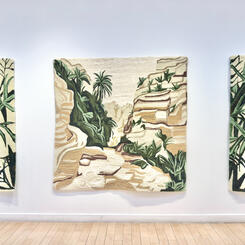
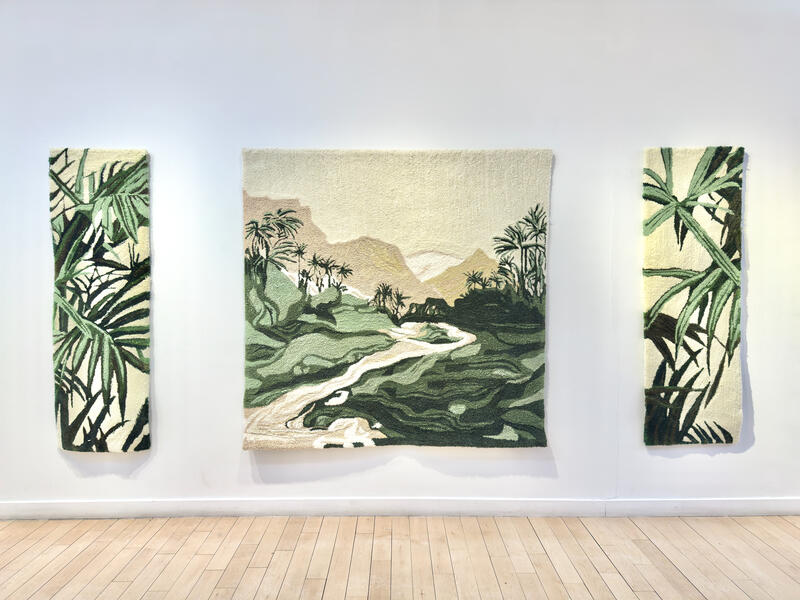 Wadi Feiran & Oasis Tryptic
Wadi Feiran, 2025
Acrylic yarn, felt, foam, ancestral wisdom, felt, memory, cotton cord, poplar, embroidery floss
72 x 72 x 3 in
Oasis Tryptic, 2025
Acrylic yarn, felt, foam, ancestral wisdom, felt, memory, cotton cord, poplar, embroidery floss
72 x 24 x 3 in each
-
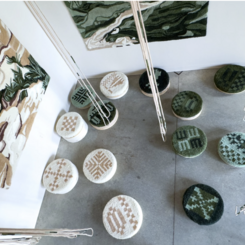
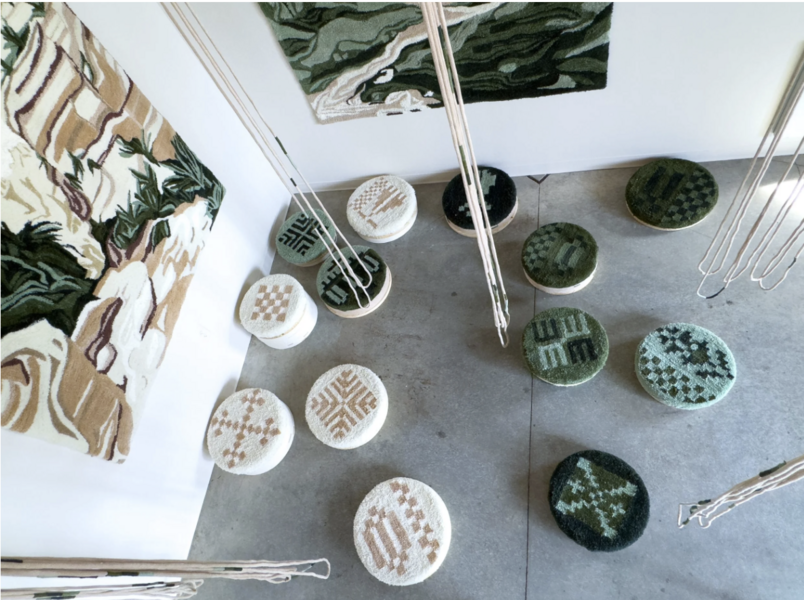 Tatreez Dwelling Spots, Aerial View
 -
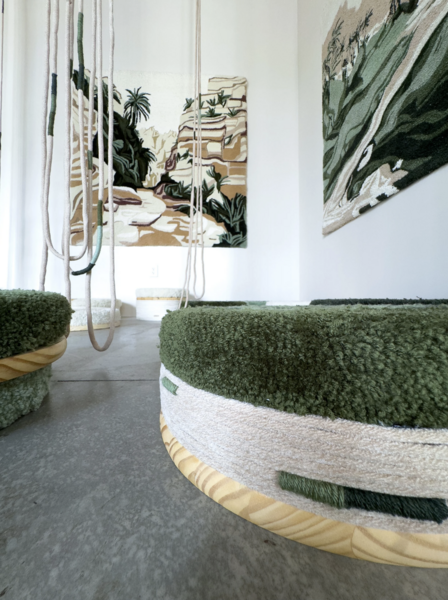 Unfortunately, It Was Paradise
 -
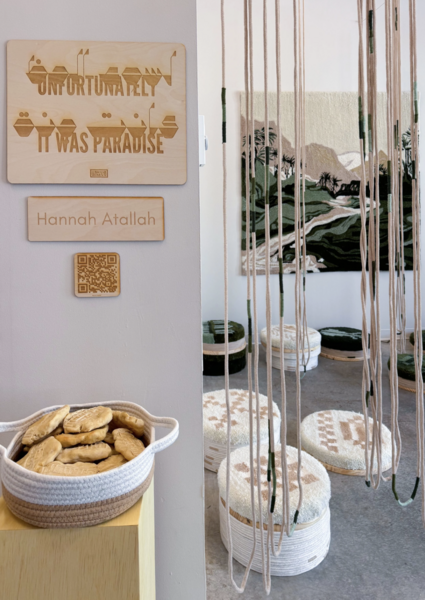 Workshops & Gatherings
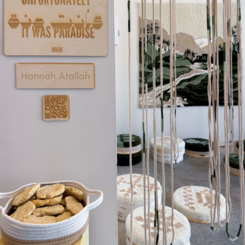
Aeesh, Engraved bread offerings, 2025
Flour, Water, Salt, Heat, Life
Dimensions installation variable (until the bread runs out)
Homemade bread offered at the entrance of the installation.
-
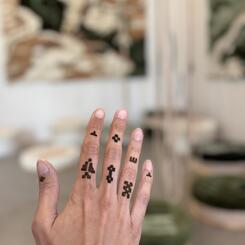
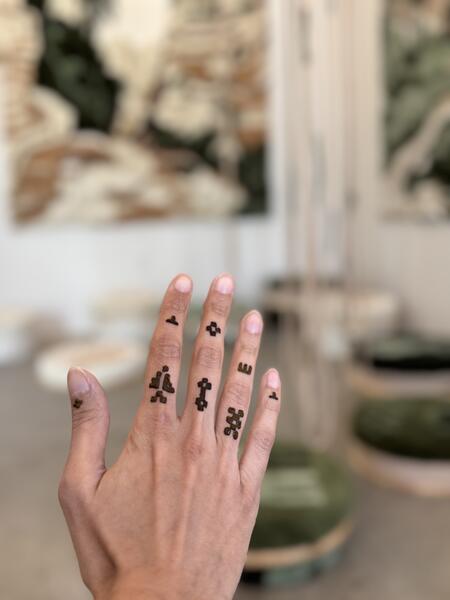 Henna Activation
As part of the installation, people were invited to sit inside the installation and give and receive henna designs inspired by the tatreez symbols on the dwelling spots.
-
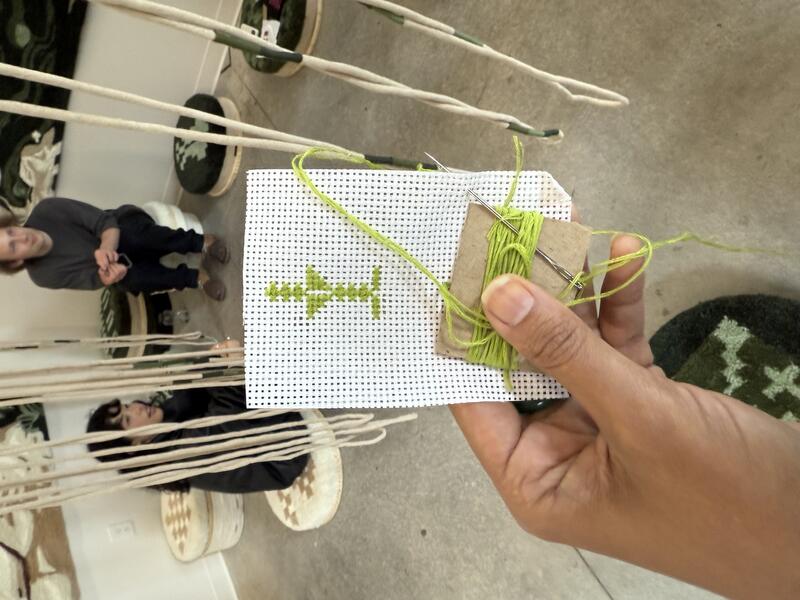 Tatreez (Embroidery) Activation
As part of the installation, people were invited to learn how to embroider the tatreez motifs present in the dwelling spots as they sat in community in the installation.


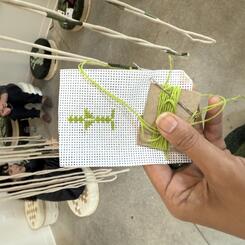
Building Steam With a Grain of Wheat: Handmade Textiles
-
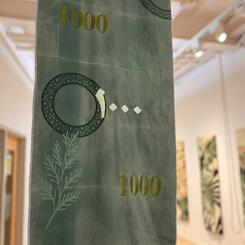
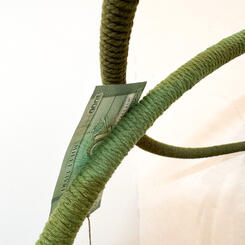
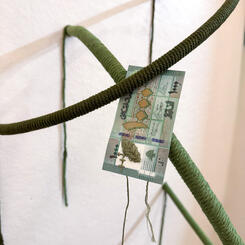
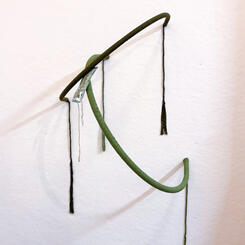
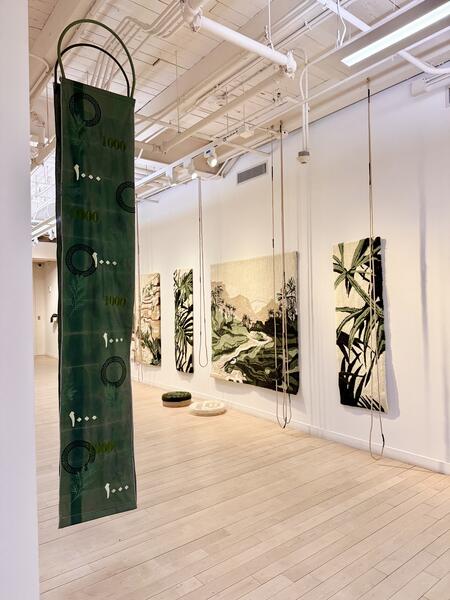 1000 Bank Note | Lebanon to Sudan
1000 Bank Note | Lebanon to Sudan, 2026
Steel, bleach, acrylic cord, embroidery floss, cotton, Lebanese & Sudanese bank notes
144 x 13 x 3 in
-
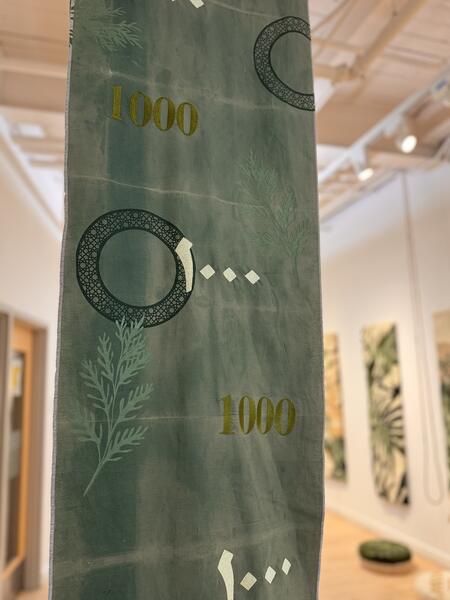 Detail, 1000 Bank Note | Lebanon to Sudan, 2026
1000 Bank Note | Lebanon to Sudan, 2026
Steel, bleach, acrylic cord, embroidery floss, cotton, Lebanese & Sudanese bank notes
144 x 13 x 3 in
-
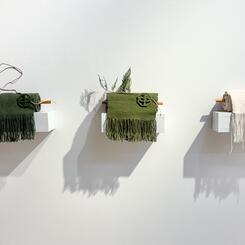
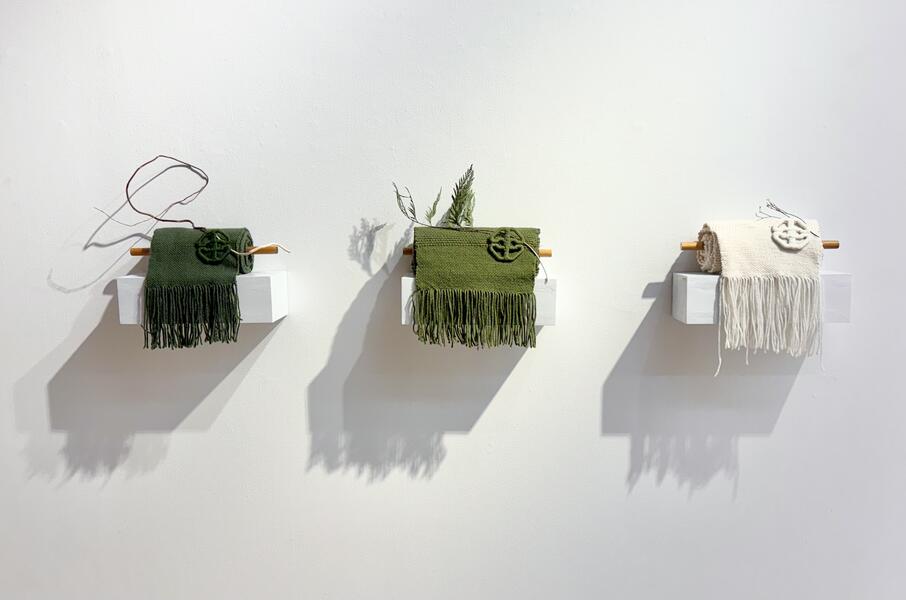 Propagate Through Space & Time, 2026
Handwoven textile sculptures with audio accompaniment
Propagate Through Space & Time, 2026
Acrylic yarn, native plants, discarded materials, audio samples
12 x 5 x 9 in
-
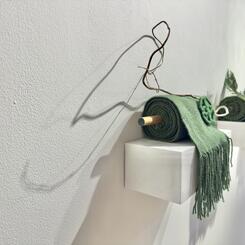
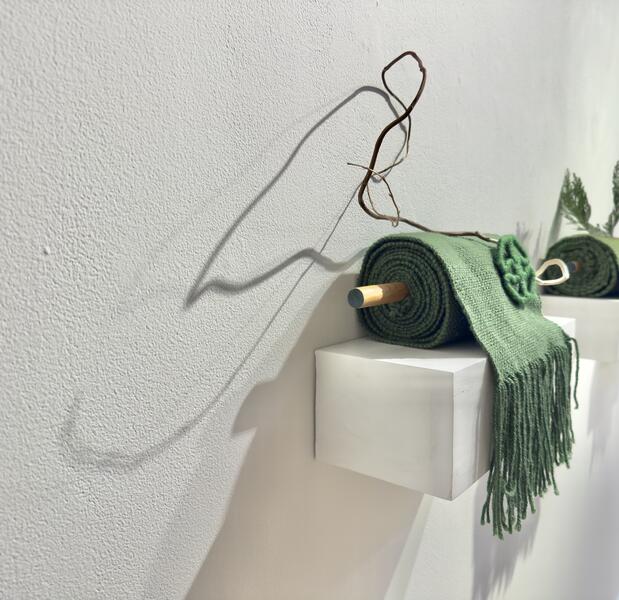 Detail, Propagate Through Space & Time, 2026
Propagate Through Space & Time, 2026
Acrylic yarn, native plants, discarded materials, audio samples
12 x 5 x 9 in
Handwoven textile sculptures with audio accompaniment
-
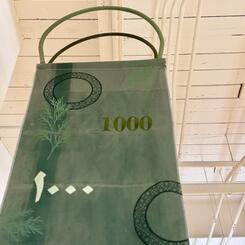
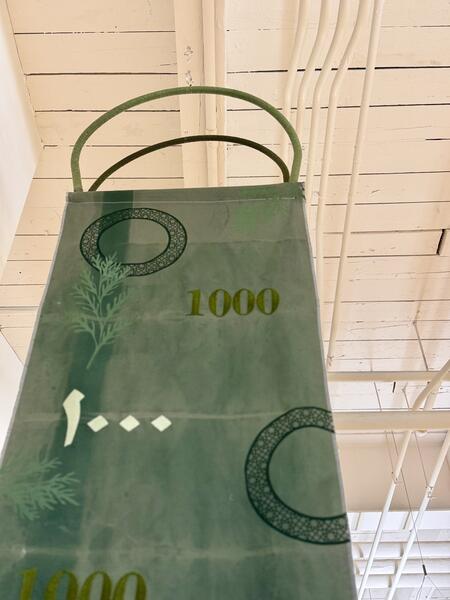 Detail, 1000 Bank Note | Lebanon to Sudan, 2026
Detail of hand wrapped steel arches
1000 Bank Note | Lebanon to Sudan, 2026
Steel, bleach, acrylic cord, embroidery floss, cotton, Lebanese & Sudanese bank notes
144 x 13 x 3 in
-
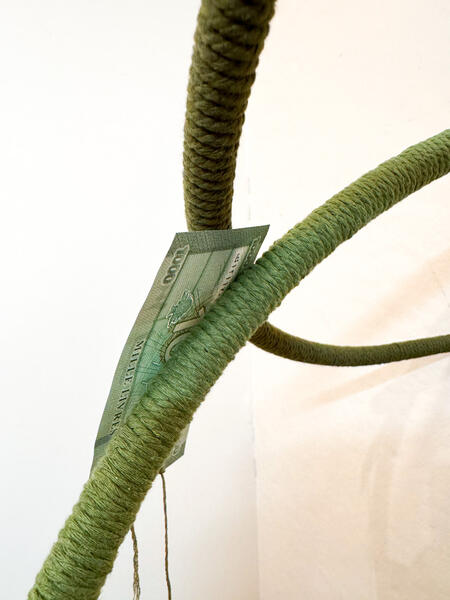 Detail, Building Steam with a Grain of Wheat, 2026
Building Steam with a Grain of Wheat, 2026
Steel, acrylic cord, embroidery floss, Lebanese & Sudanese bank notes
Dimensions variable
Hand embroidered Lebanese & Sudanese bank notes
-
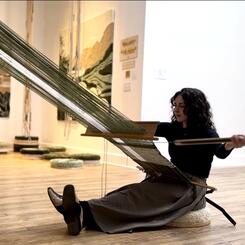
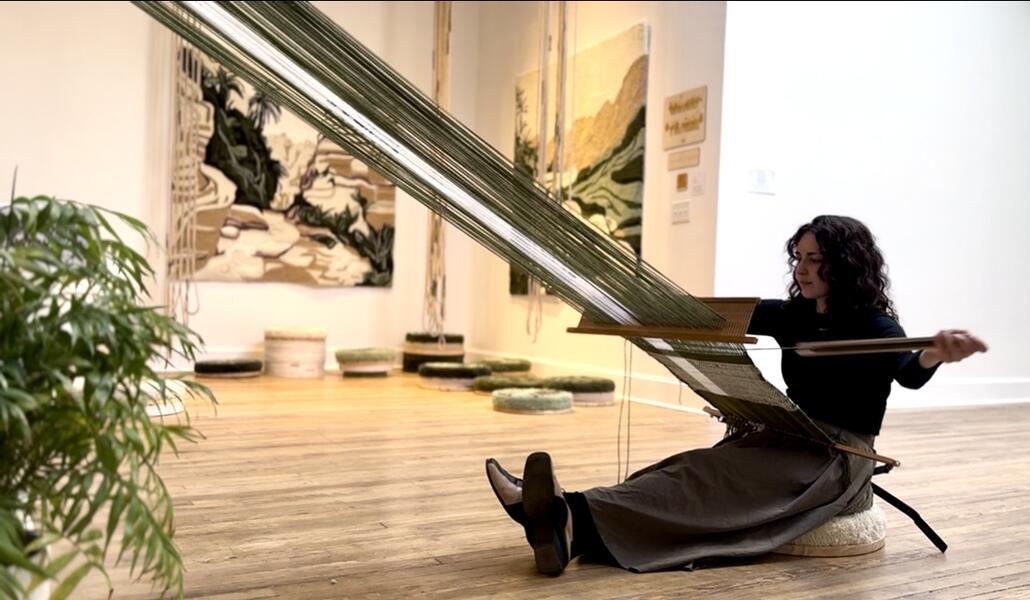 Back Strap Weaving Performance & Workshop
 -
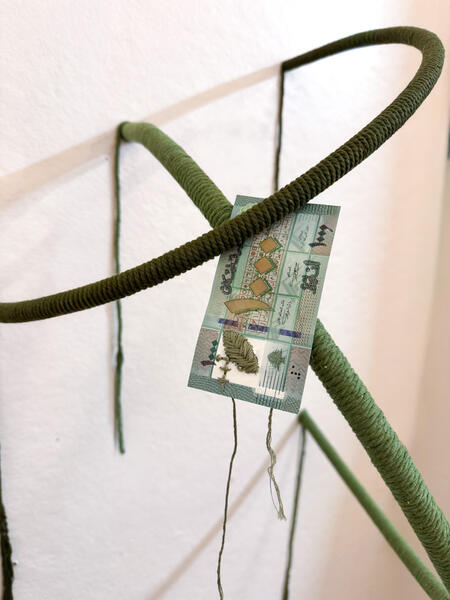 Building Steam with a Grain of Wheat
Building Steam with a Grain of Wheat, 2026
Steel, acrylic cord, embroidery floss, Lebanese & Sudanese bank notes
Dimensions variable
Hand embroidered Lebanese & Sudanese bank notes
-
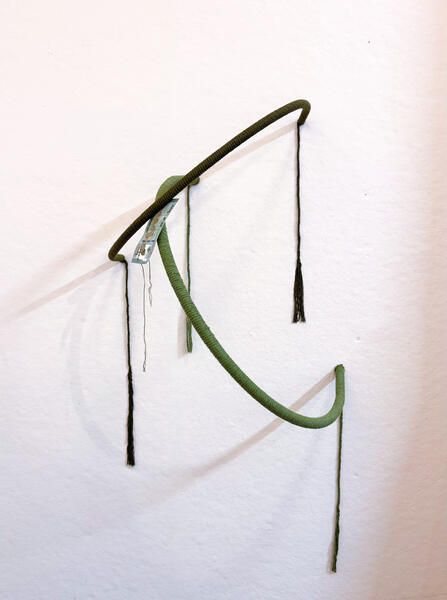 Building Steam with a Grain of Wheat
Building Steam with a Grain of Wheat, 2026
Steel, acrylic cord, embroidery floss, Lebanese & Sudanese bank notes
Dimensions variable
Hand embroidered Lebanese & Sudanese bank notes
-
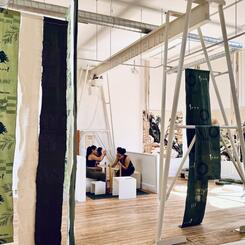
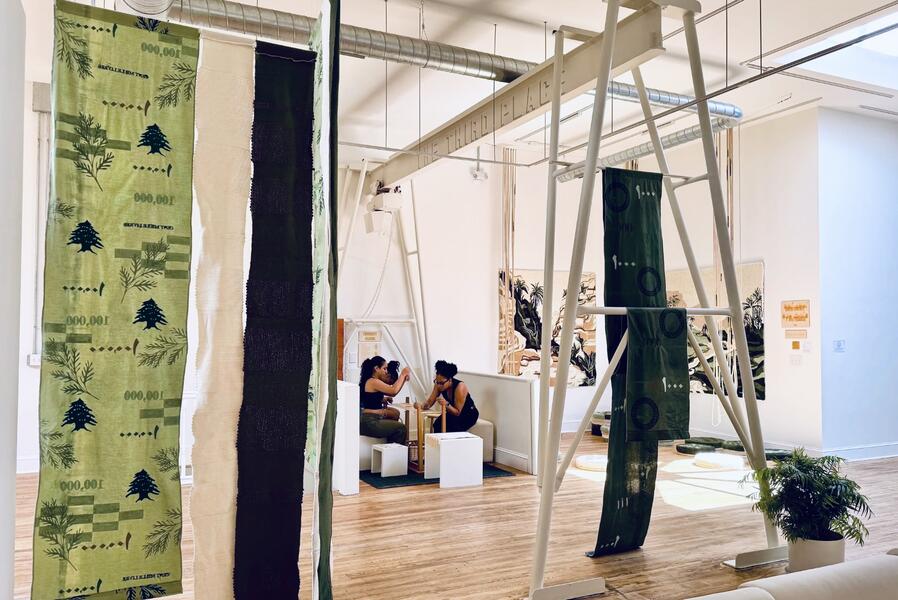 Community Weaving & Installation View
For two months, I facilitated community weaving workshops as part of this body of work.


Exit West: Mixed Media Paintings
-
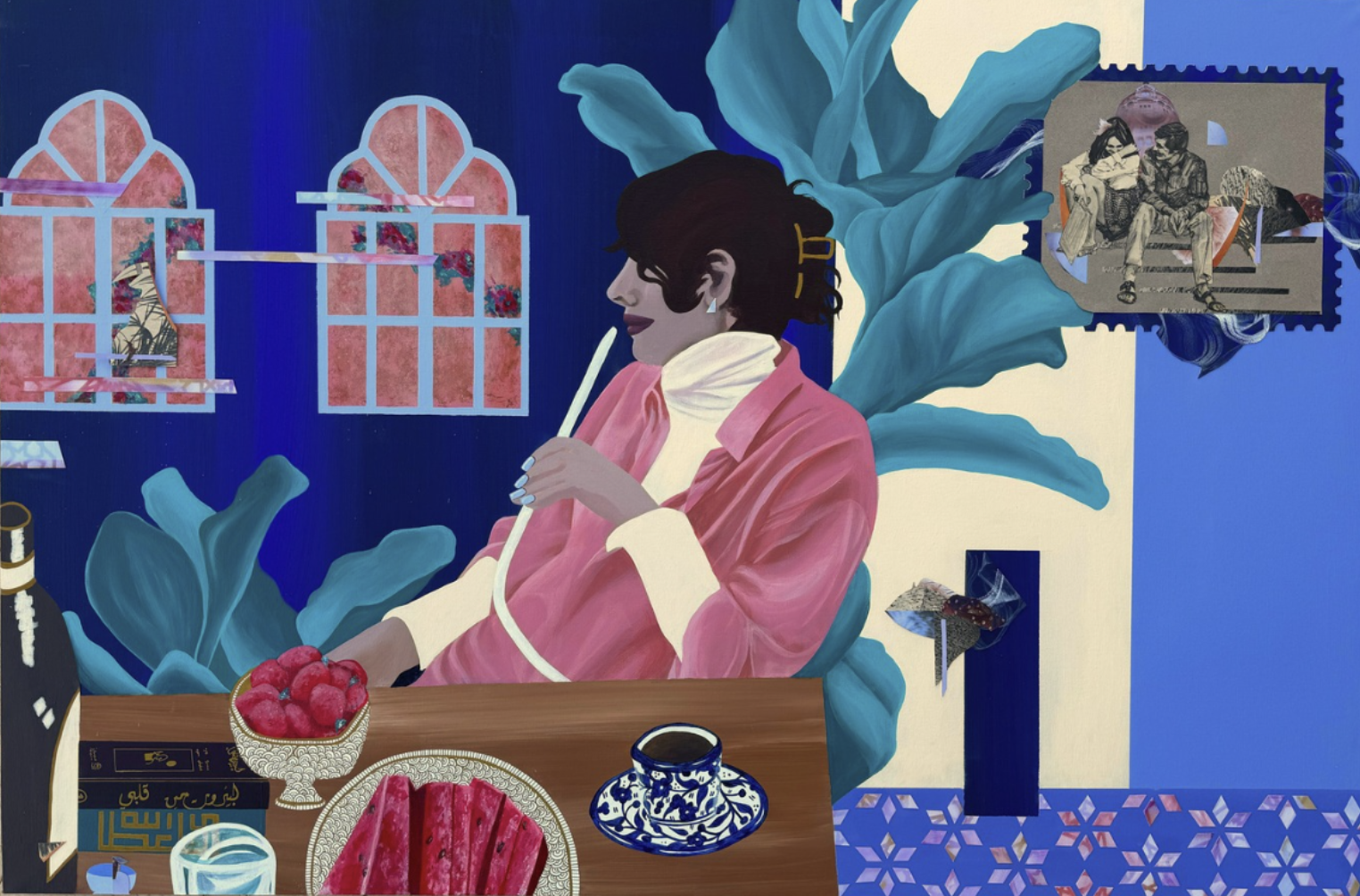
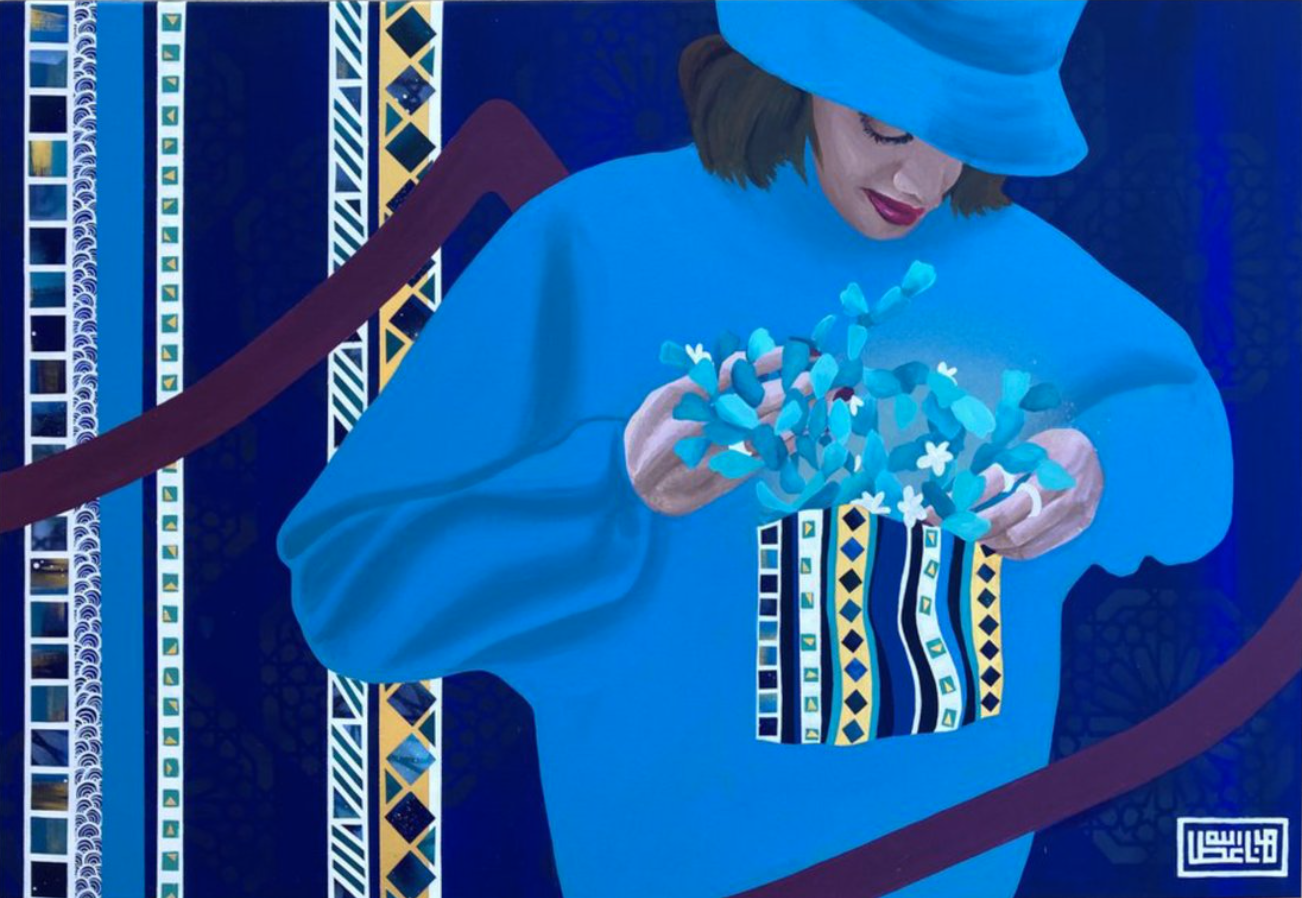
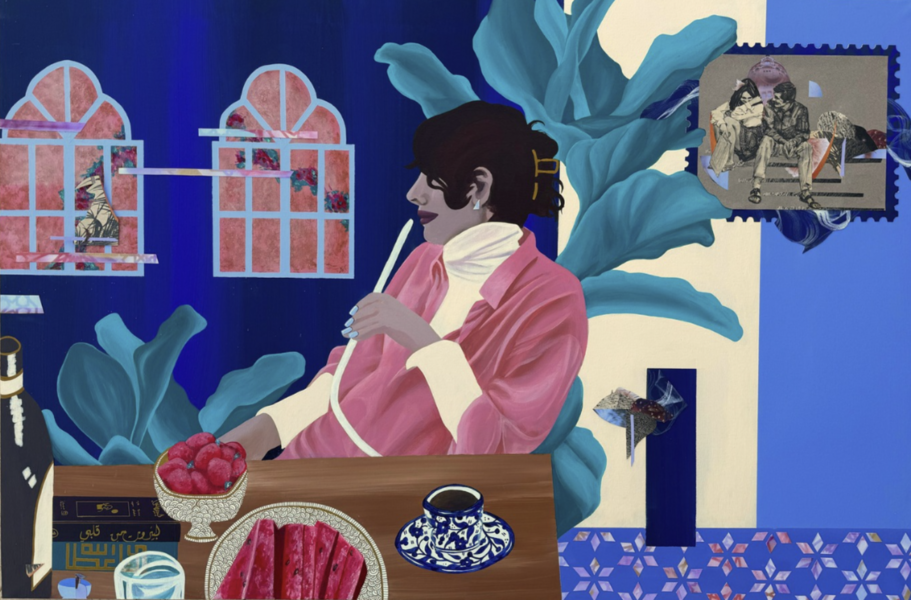 Beirut Blues: Heba Amara
Beirut Blues: Heba Amara, 2024
31 x 47 in
Acrylic, Archival Paper, Canvas
-
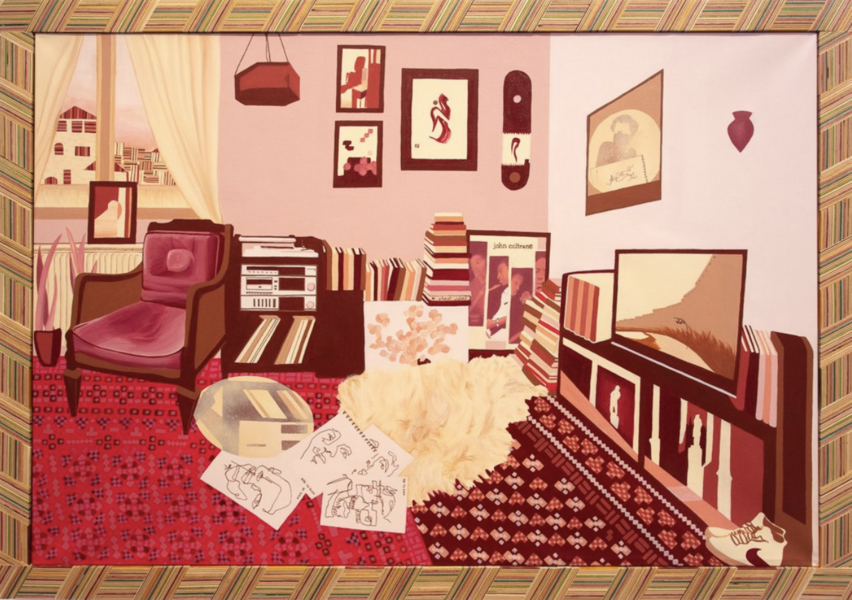 Psalm: Mohammed Zakaria
Psalm: Mohammed Zakaria, 2024
51 x 36 x 6 in
Acrylic, canvas, recycled skateboards, latex paint and pine
Available for Purchase -
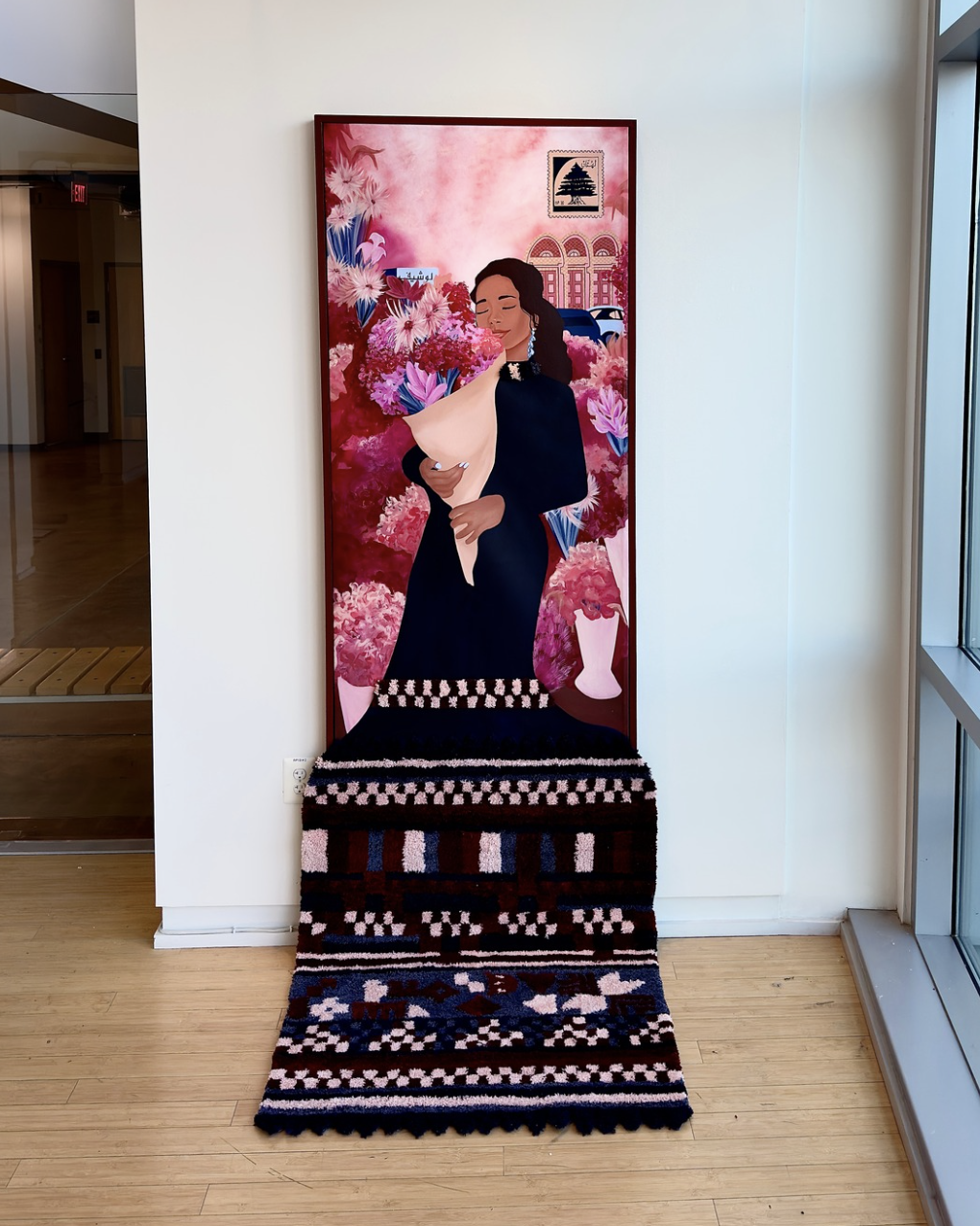
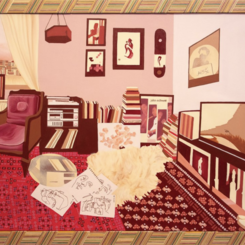
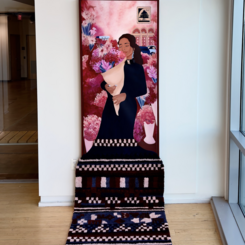
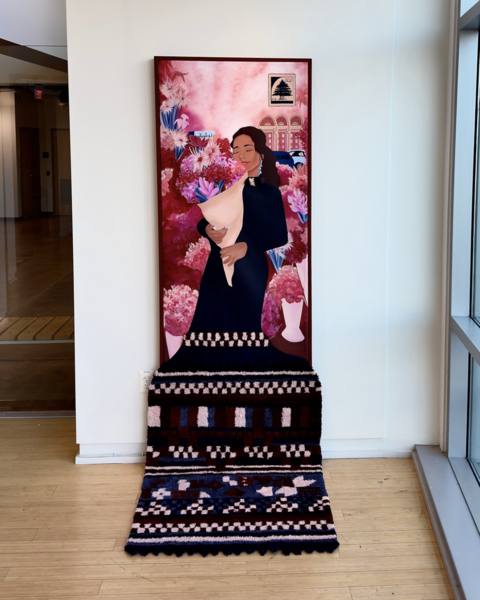 how stunningly beautiful that our sacred respect for earth, for life is deeper than our rage (Portrait of Salua Moussawel)
how stunningly beautiful that our sacred respect for earth, for life is deeper than our rage (Portrait of Salua Moussawel), 2024
31.5 x 94 in
Acrylic, aerosol, canvas, acrylic yarn, muslin, polyester backing
-
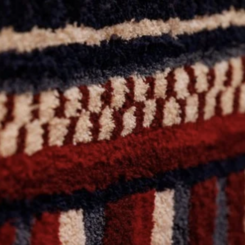
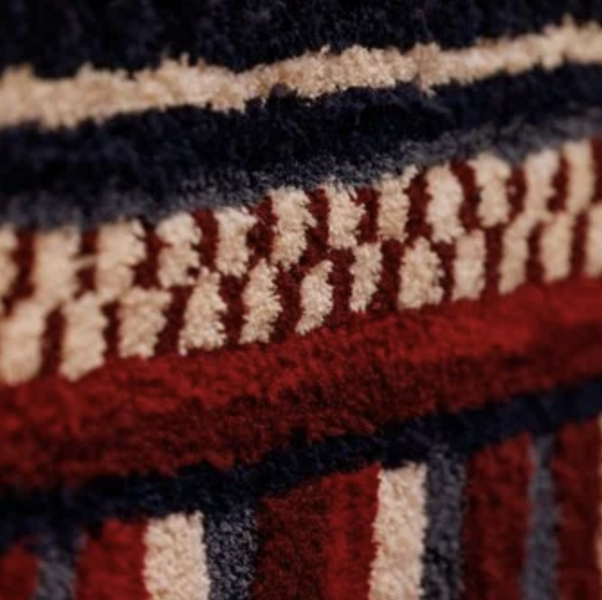 Detail, hand tufted rug, how stunningly beautiful that our sacred respect for earth, for life is deeper than our rage (Portrait of Salua Moussawel)
Detail, hand tufted rug
how stunningly beautiful that our sacred respect for earth, for life is deeper than our rage (Portrait of Salua Moussawel), 2024
-
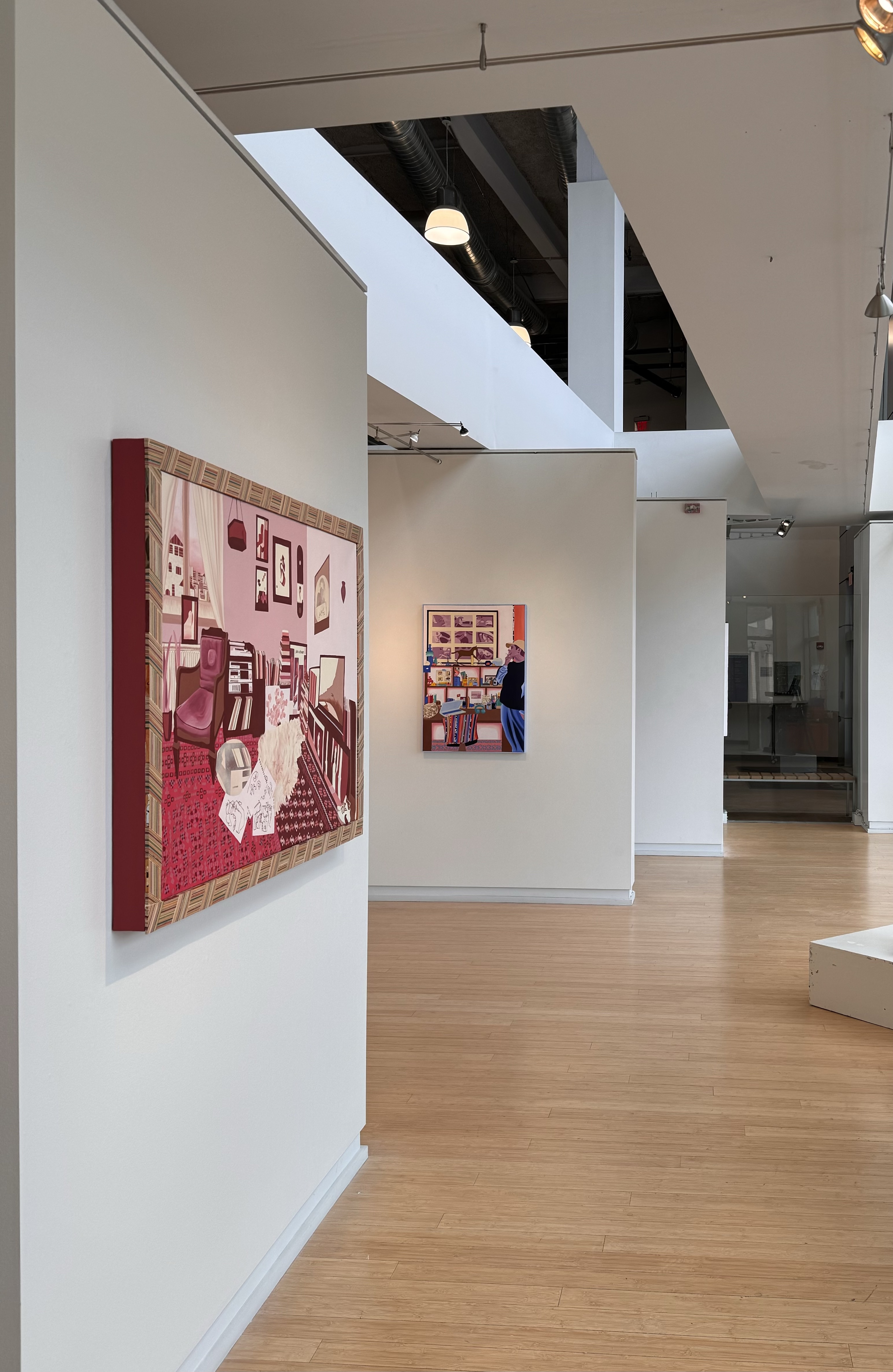
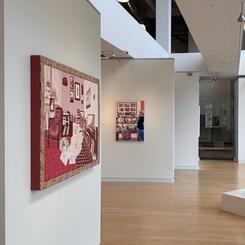
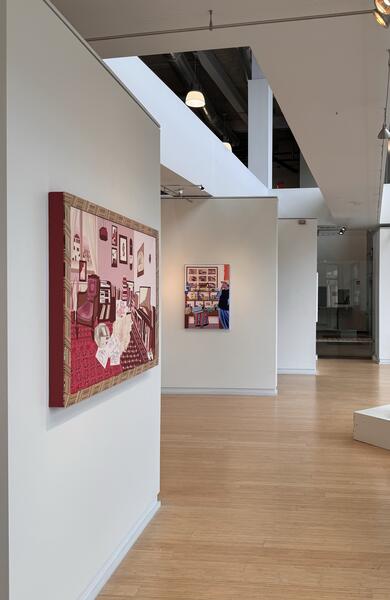 Exhibition View
Exhibition View
2025
Cafritz Foundation Art Center
Silver Spring, MD
-
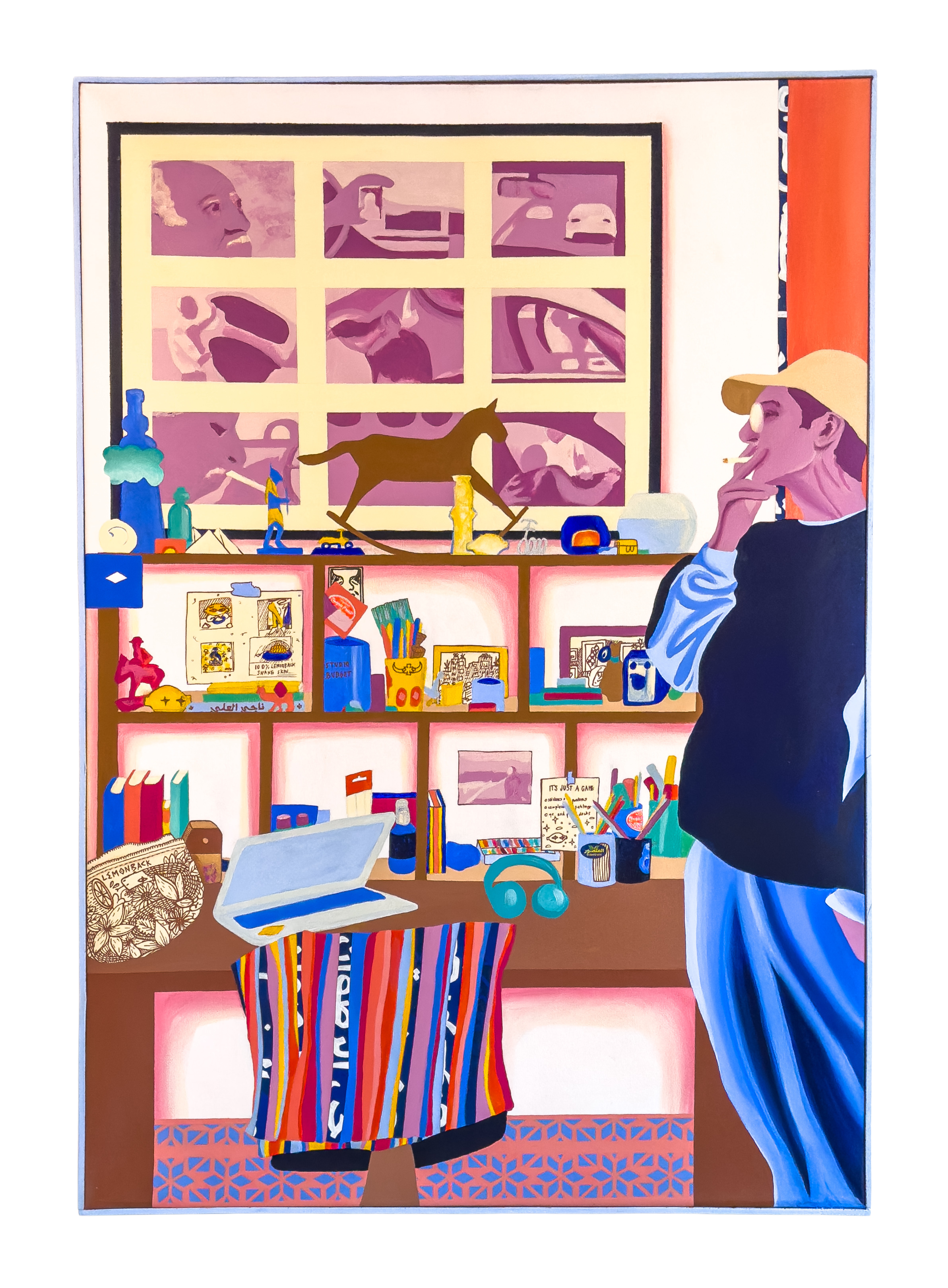
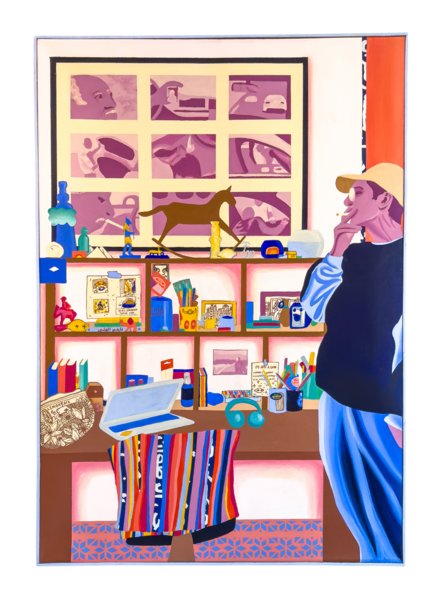 Namesakes: Naji Al Ali
Namesakes (Portrait of Naji Al Ali), 2024
40 x 30 in
Acrylic and Aerosol on Layered Canvas in Artist Frame
-
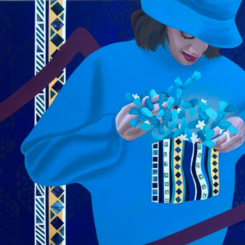
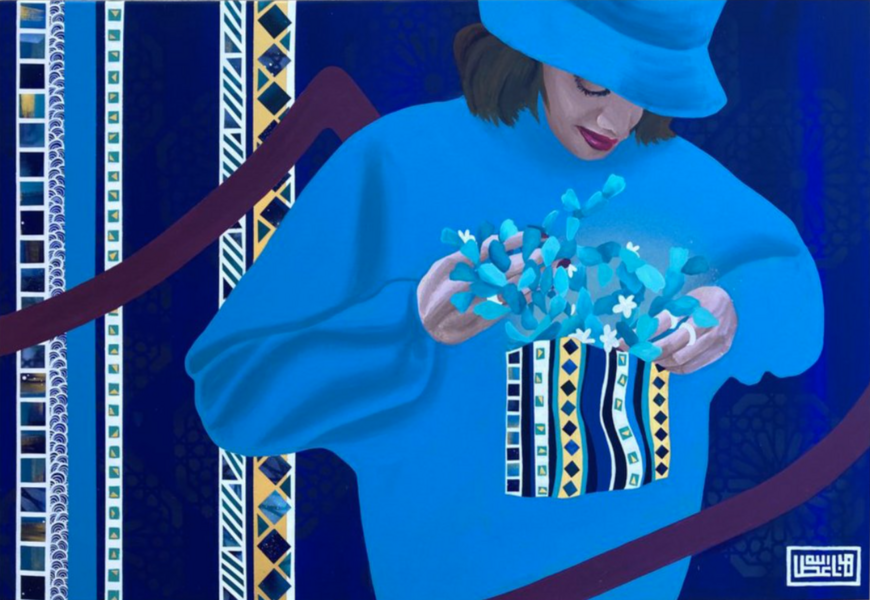 This Jasmine In The July Night Is A Song
This Jasmine In The July Night Is A Song, 2023
24 x 35 in
Acrylic on Layered Canvas
Available for Purchase -
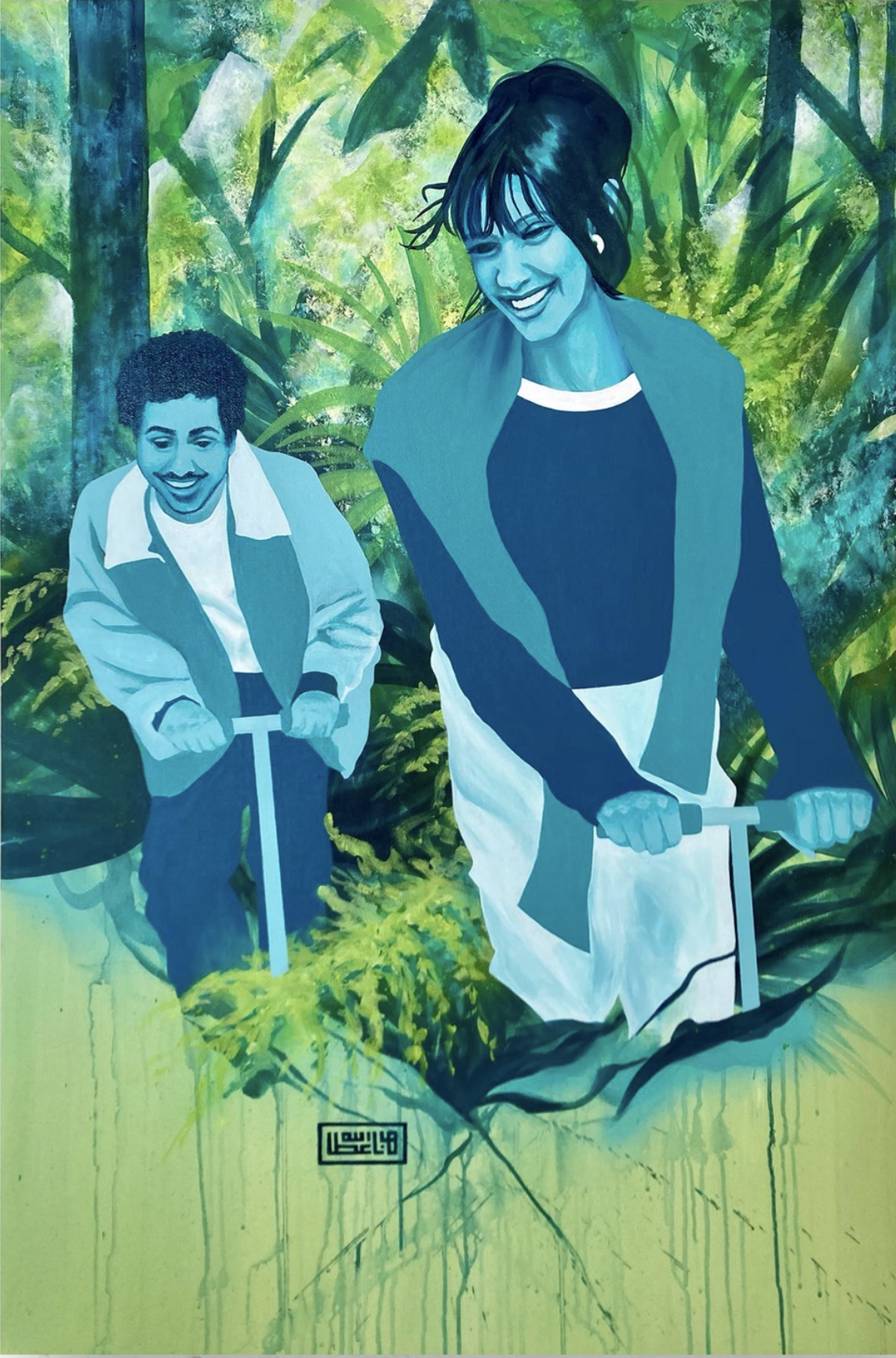
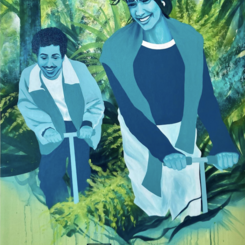
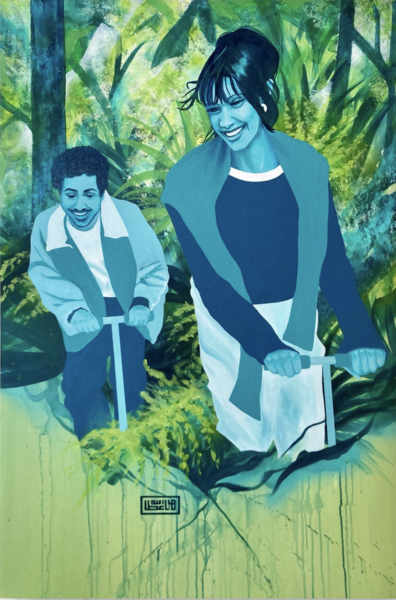 The Island of Missing Trees
The Island of Missing Trees, 2024
47 x 31 in
Aerosol, Acrylic & Varnish
-
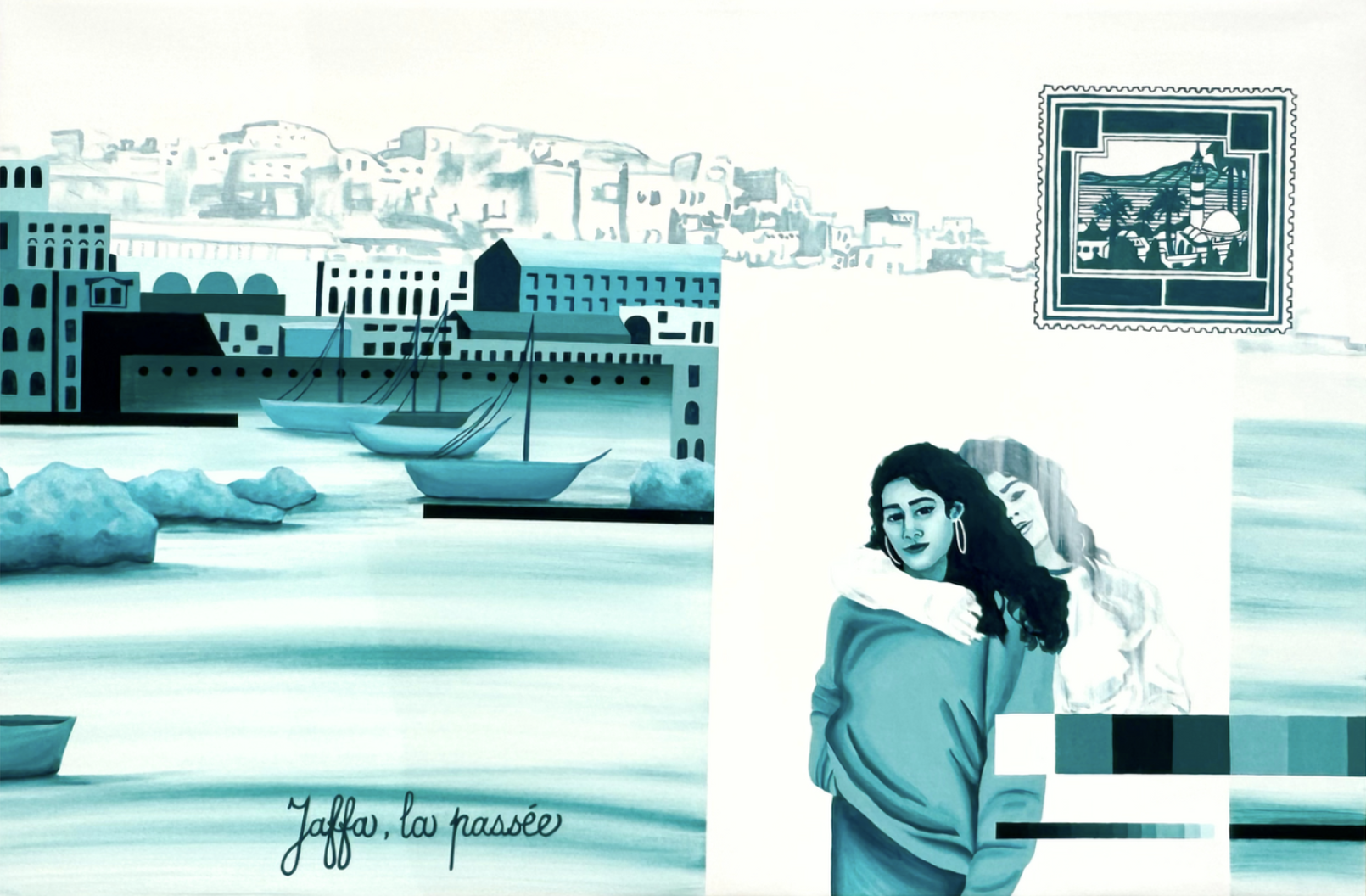
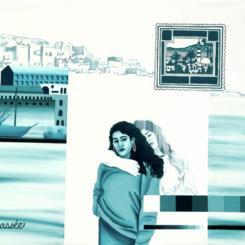
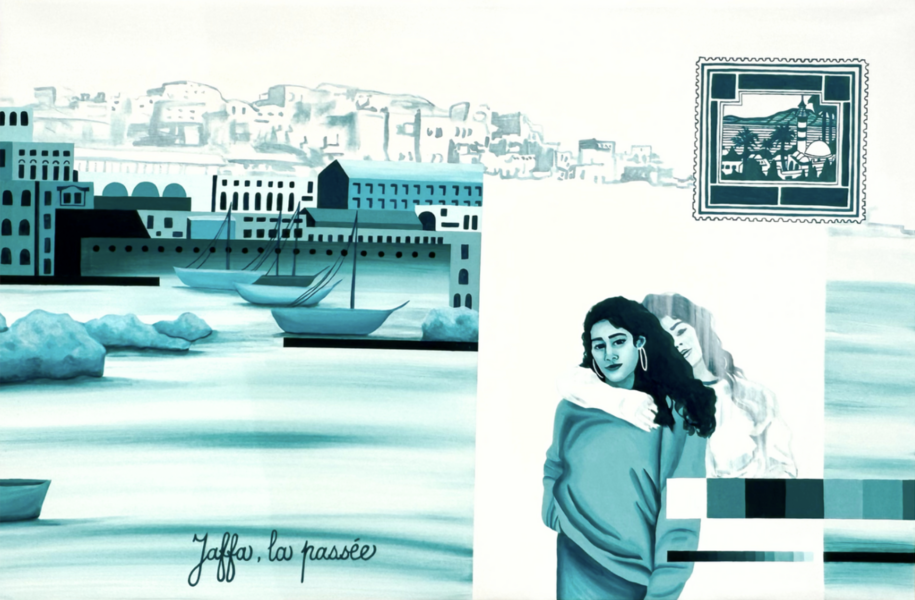 Jaffa, La Passe
Jaffa, La Passe, 2024
31 x 47 in
Acrylic on Canvas
-
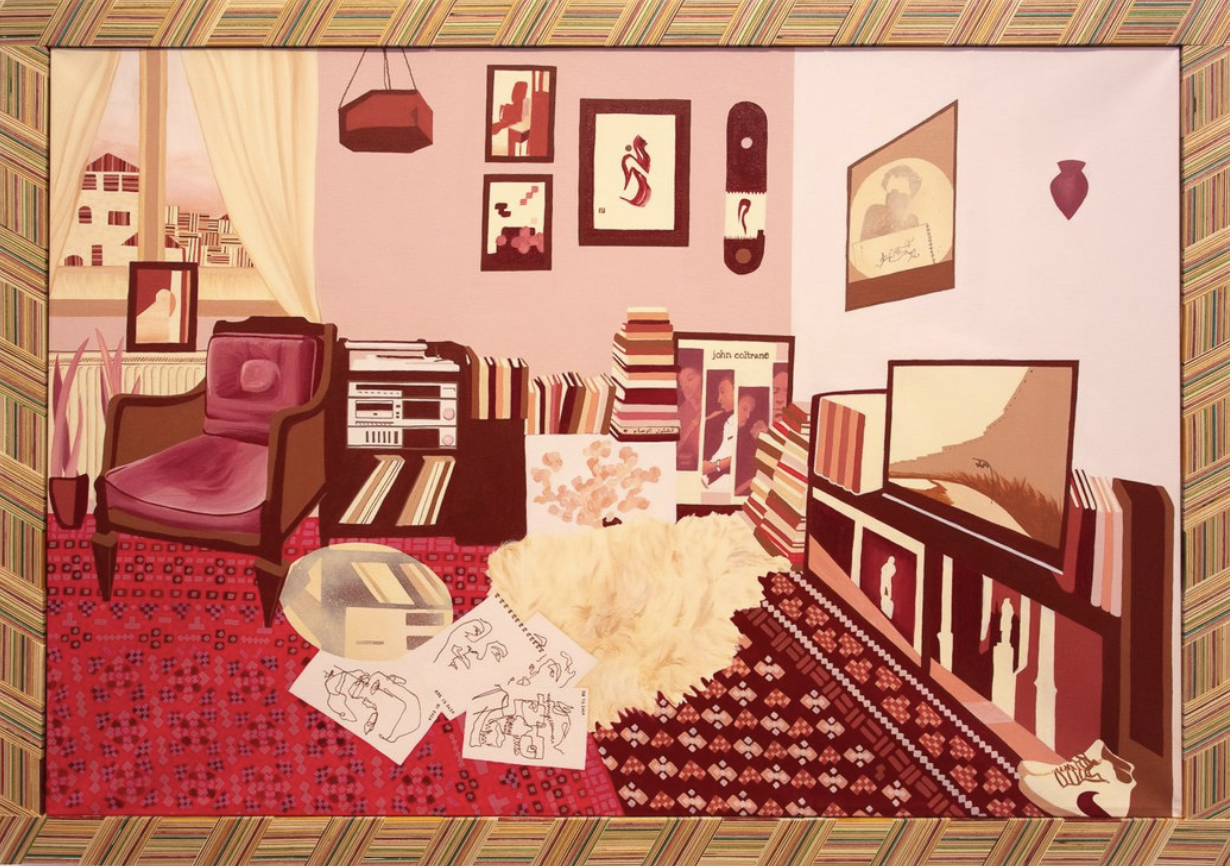
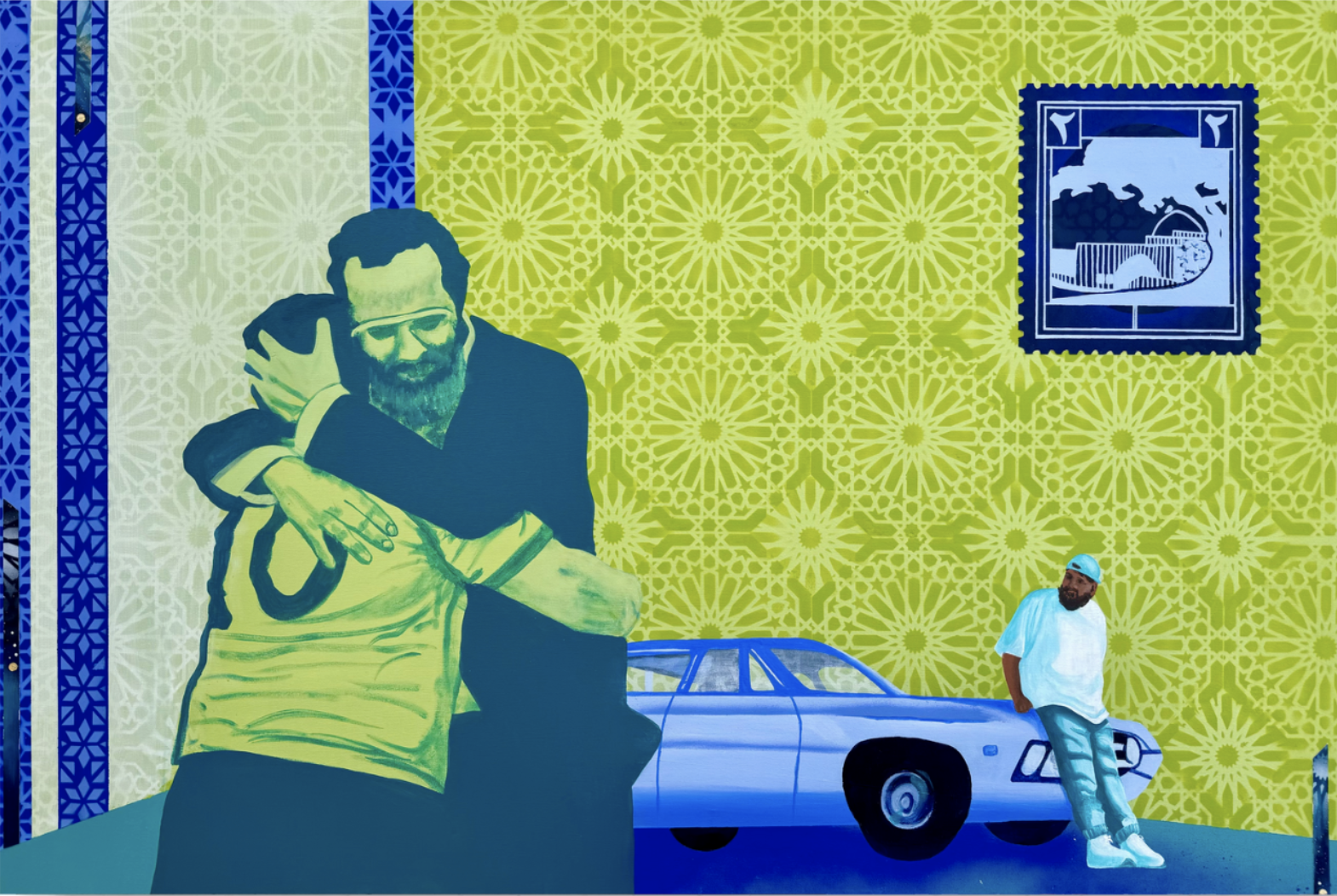
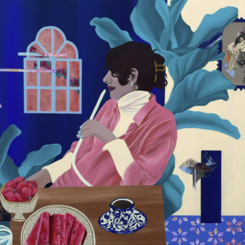
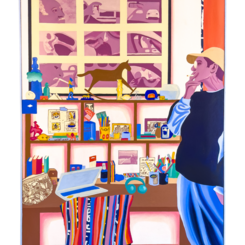
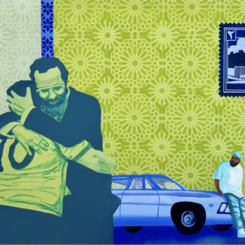
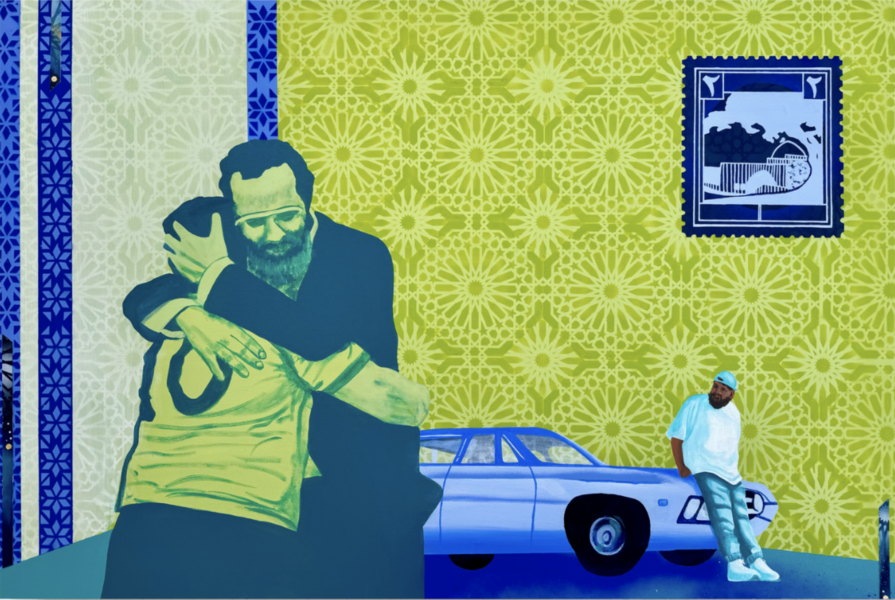 Exit West
Exit West (Portrait of Mo Amer), 2024
39 x 47 in
Acrylic, Aerosol, and Canvas

Acknowledgement: Recycled Skateboard Marquetry
-
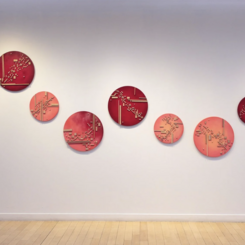
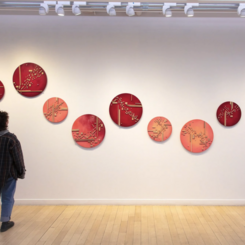
 Acknowledgment
Acknowledgment, 2024
Recycled Skateboards, Aerosol, and Varnish on Poplar
Smaller Circles: 17 x 17 x 4 in
Larger Circles: 24 x 24 x 4 in
Installation variable
-
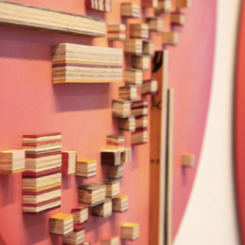
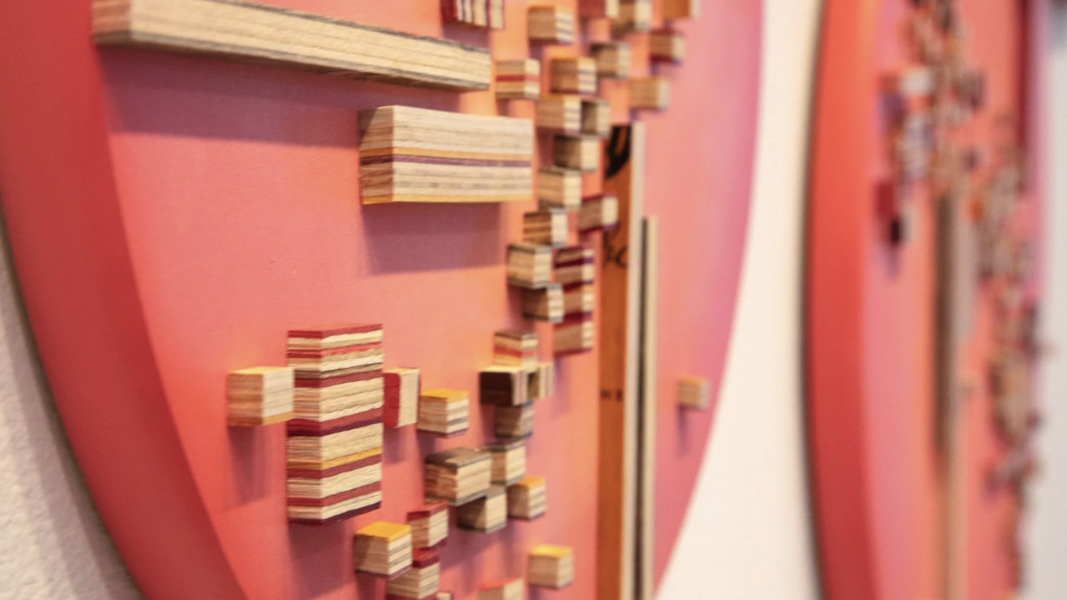 Detail, Hand Painted Skateboard Pieces
Acknowledgment, 2024
Recycled Skateboards, Aerosol, and Varnish on Poplar
Smaller Circles: 17 x 17 x 4 in
Larger Circles: 24 x 24 x 4 in
Installation variable
-
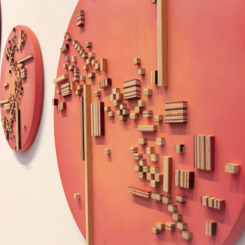
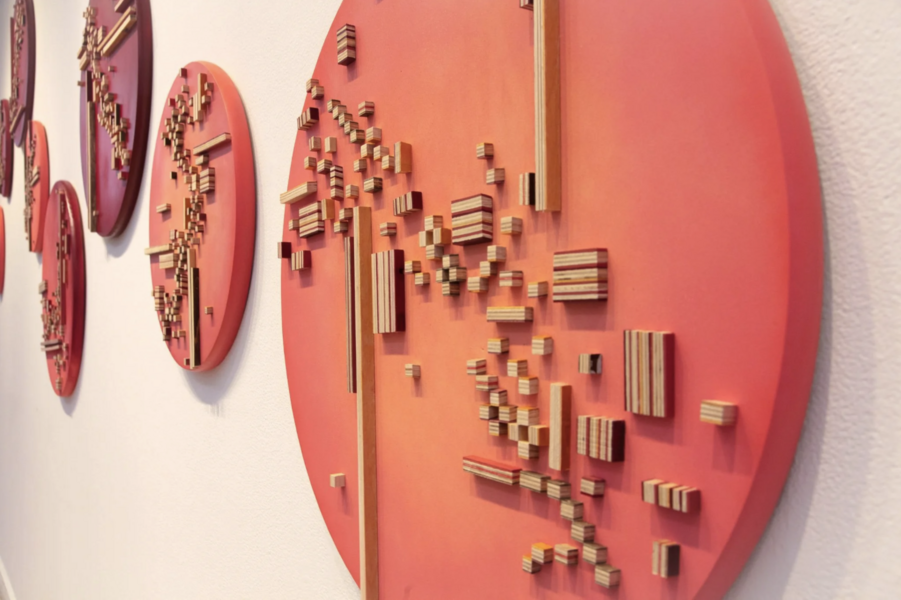 Acknowledgment, Alternate Angle View
Acknowledgment, 2024
Recycled Skateboards, Aerosol, and Varnish on Poplar
Smaller Circles: 17 x 17 x 4 in
Larger Circles: 24 x 24 x 4 in
Installation variable
-
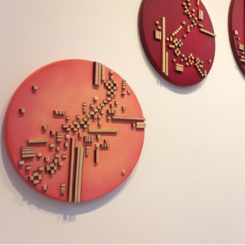
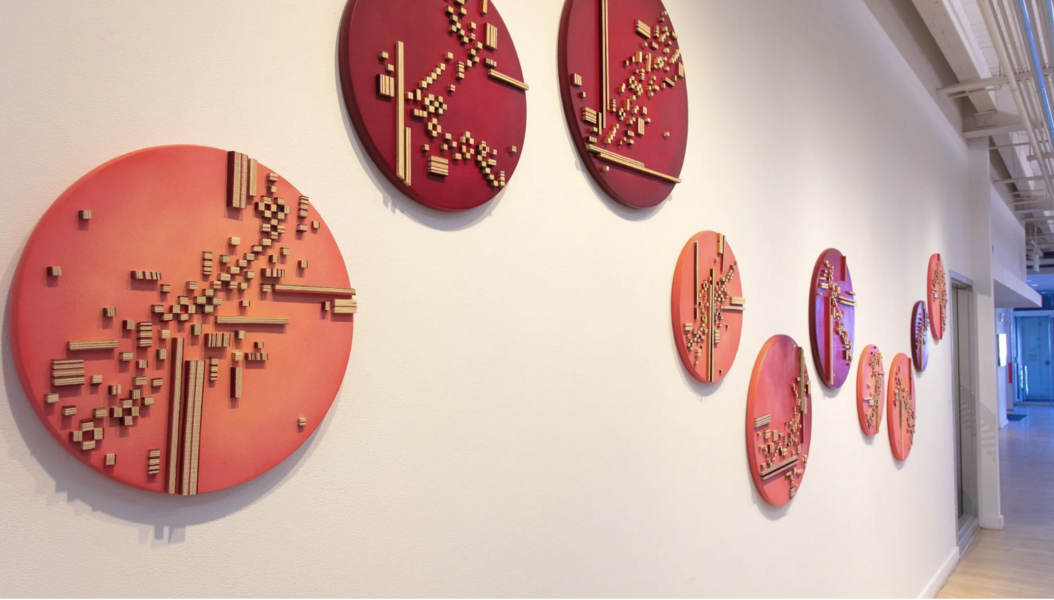 Acknowledgment, Angle View
Acknowledgment, 2024
Recycled Skateboards, Aerosol, and Varnish on Poplar
Smaller Circles: 17 x 17 x 4 in
Larger Circles: 24 x 24 x 4 in
Installation variable
-
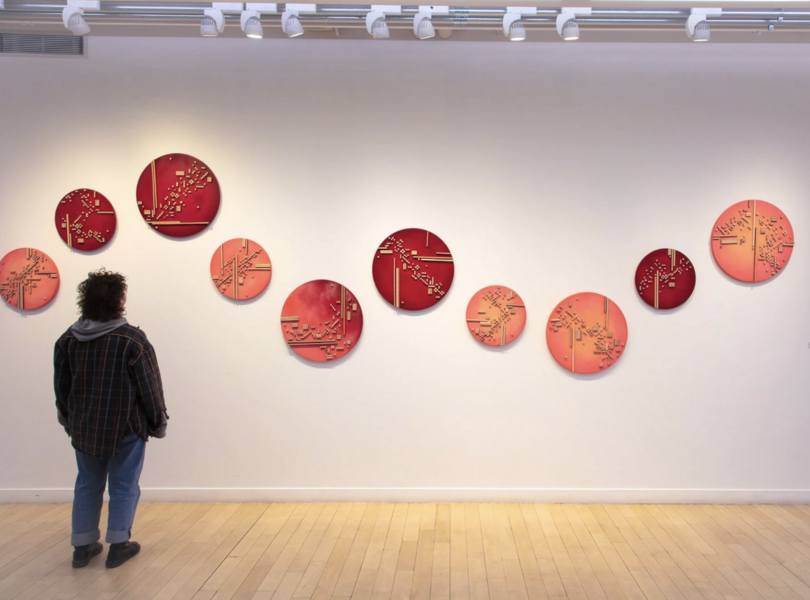 Acknowledgment, 2024
Acknowledgment, 2024
Recycled Skateboards, Aerosol, and Varnish on Poplar
Smaller Circles: 17 x 17 x 4 in
Larger Circles: 24 x 24 x 4 in
Installation variable
-
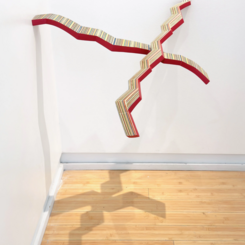
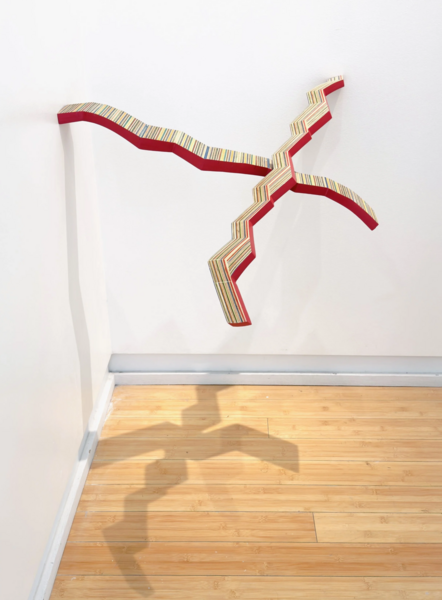 Resolution
Resolution, 2024
Recycled skateboards, Latex paint
33 x 8.5 x 4 in
-
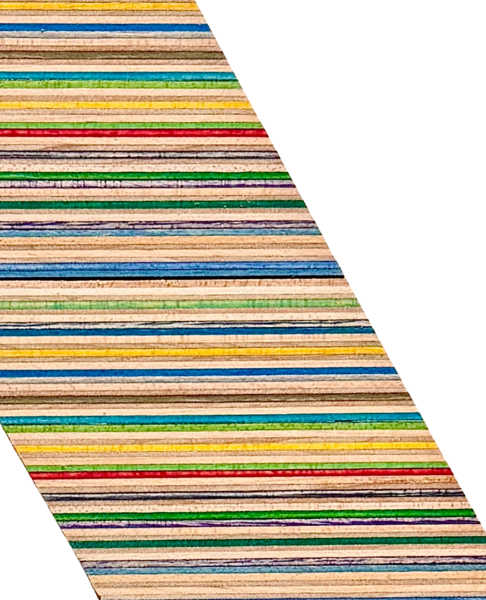 Skateboard Marquetry Detail, Resolution
Resolution, 2024
Recycled skateboards and latex paint
33 x 8.5 x 4 in
Detail shot of the skateboard sculpture surface
-
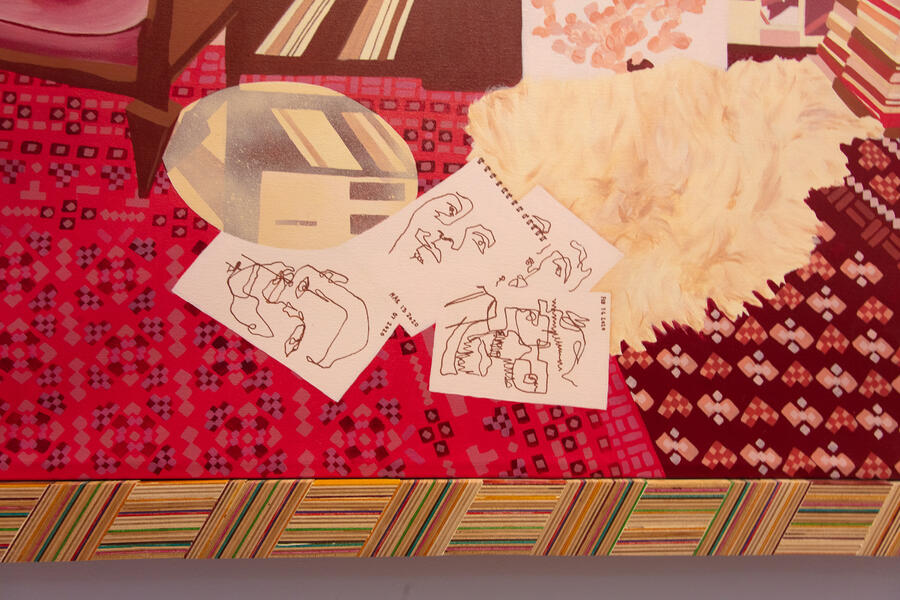 Detail, Marquetry Frame Made of 32 Recycled Skateboards
Detail, Artist Marquetry Frame Made of 32 Recycled Skateboards
51 x 36 x 6 in
32 Recycled Skateboards, Poplar and Varnish
-
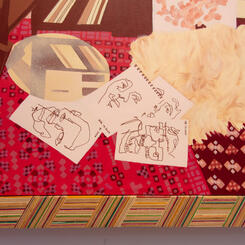
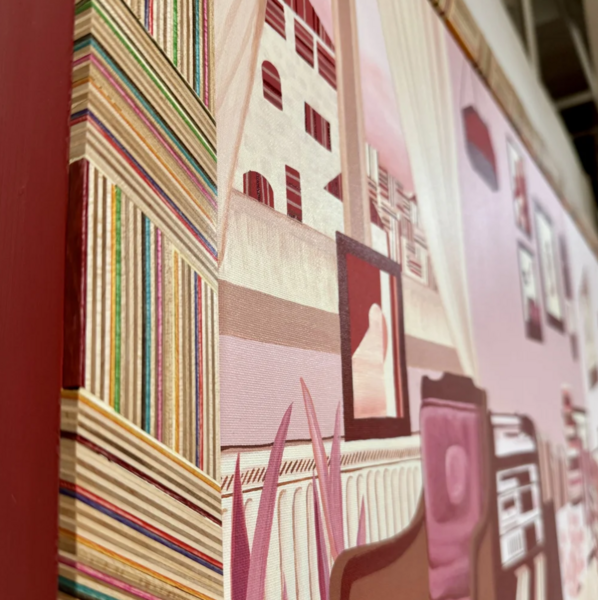 Detail, Skateboard Marquetry Frame (Psalm: Portrait of Mohammad Zakaria)
Detail, Skateboard Marquetry Frame (Psalm: Portrait of Mohammad Zakaria)
Artist marquetry frame made out of recycled skateboards and poplar; Acrylic and aerosol painting on stretched canvas
36 x 51 x 6 in
-
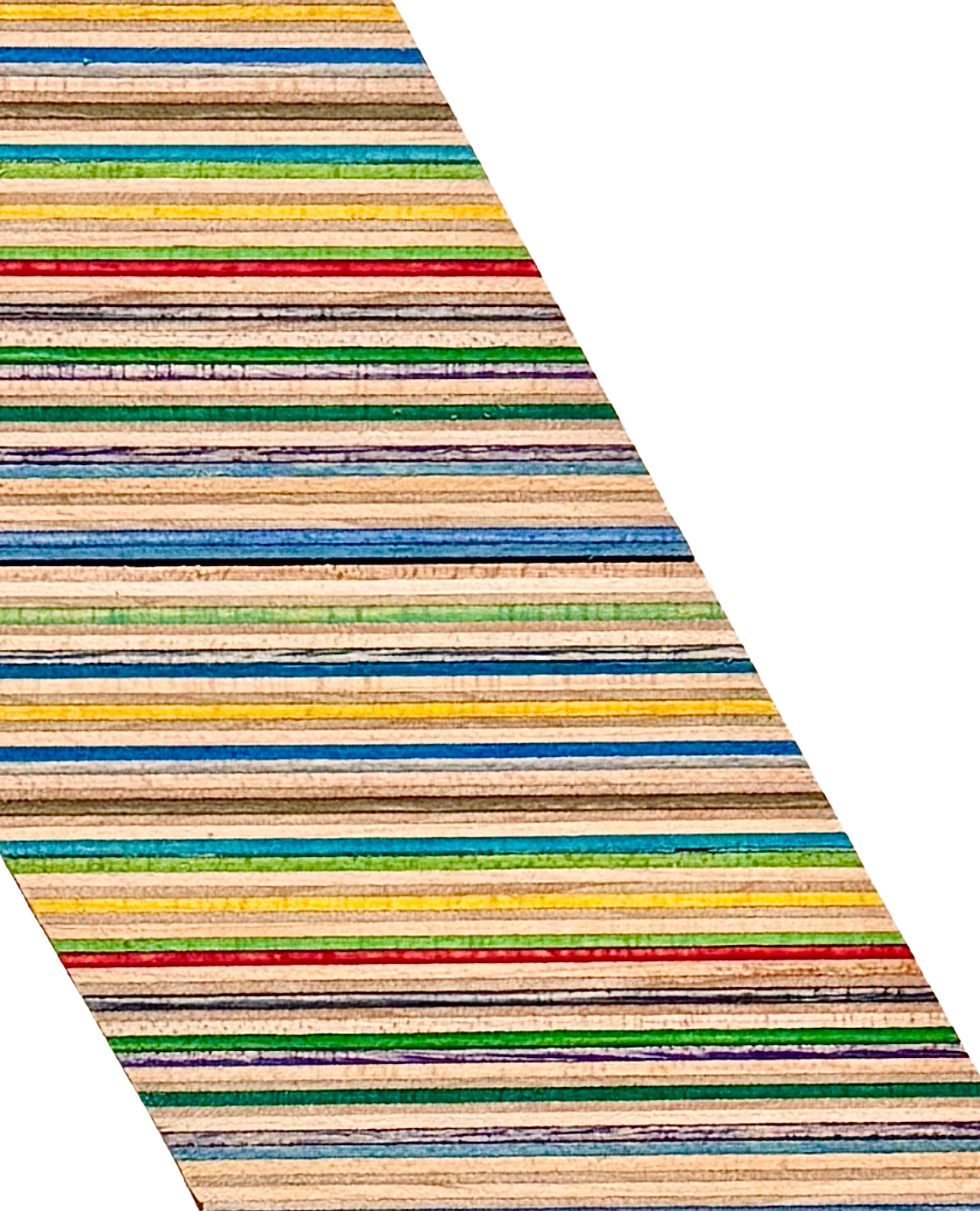
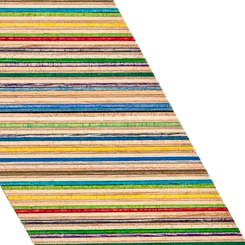
Skate Deck Refurbishing Process
This is a small glimpse into the process I use to recycle skateboards so that I can use them to make marquetry art!



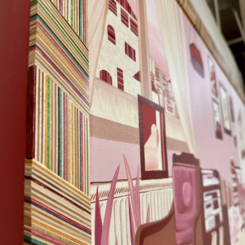

Flood Pulse: Mixed Media Works & Programming
-
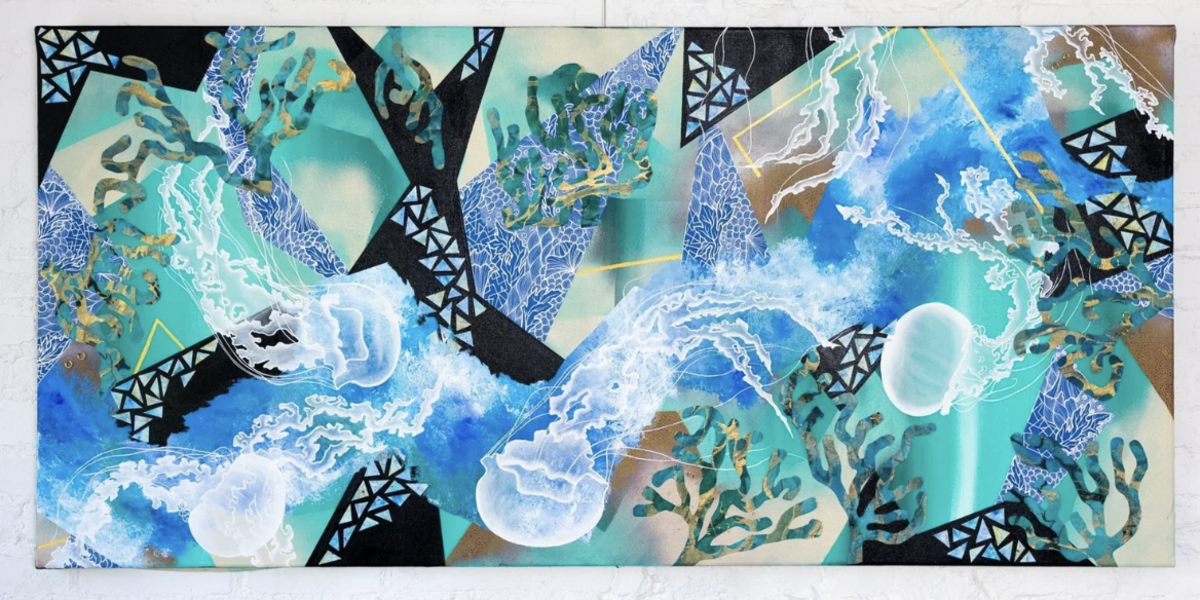 Contemporary Seascape
Contemporary Seascape, 2022
Aerosol, Acrylic, Copper Wire & Varnish
31 x 66 in
-
 Contemporary Seascape, Detail
Detail, Contemporary Seascape, 2022
Aerosol, Acrylic, Copper Wire & Varnish
31 x 66 in
-
 We Return to Each Other in Waves
We Return to Each Other in Waves, 2022
Acrylic on Canvas
60 x 37 in
-
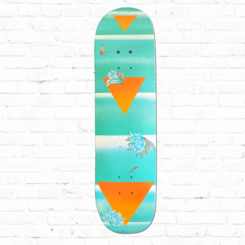
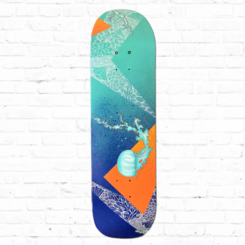
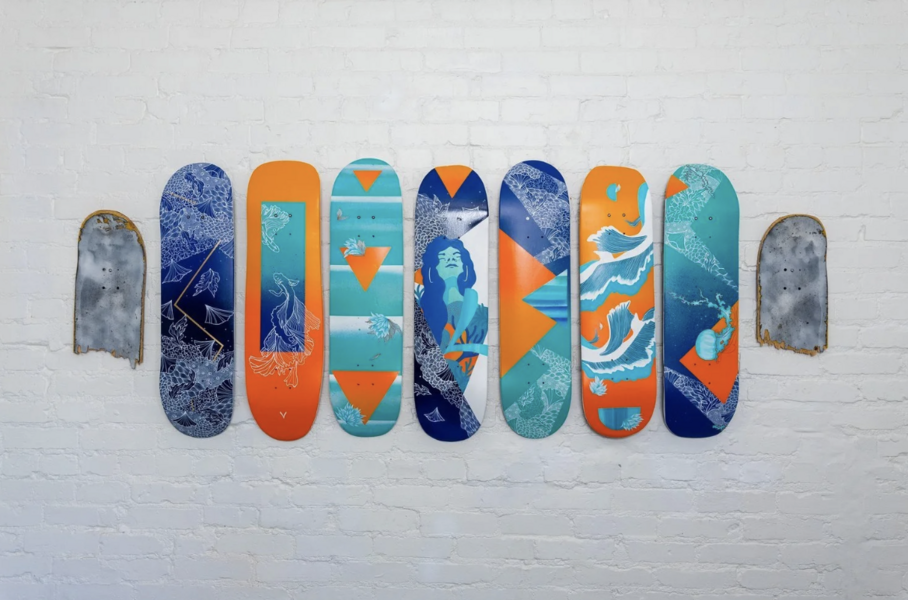 Flood Pulse: Refurbished Painted Skate Decks
Flood Pulse: Refurbished Painted Skate Decks, 2022
Acrylic, Aerosol & Varnish on Refurbished Skate Decks
Installation variable, 8 x 32 in each
-
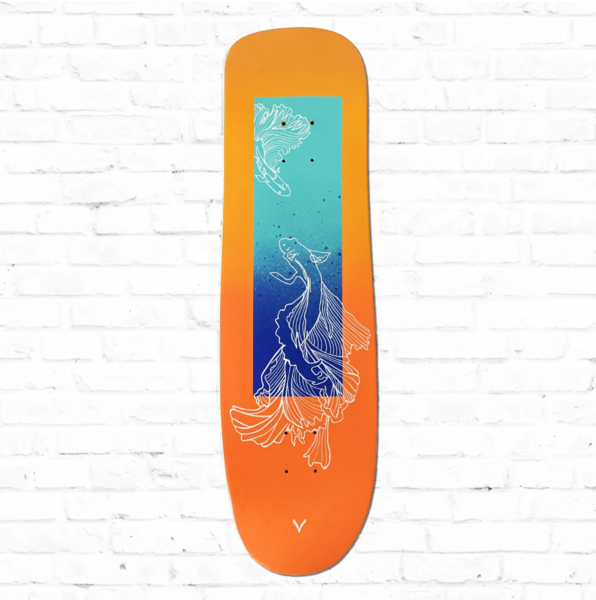 You Broke the Ocean in Half
You Broke the Ocean in Half, 2022
Acrylic, Aerosol & Varnish on Refurbished Skate Deck
8 x 32 in
-
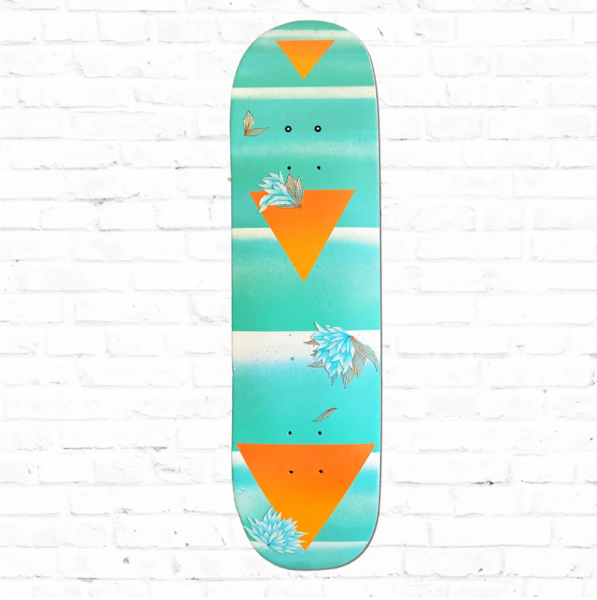 Starting
Starting, 2022
Acrylic, Aerosol & Varnish on Refurbished Skate Deck
8 x 32 in
-
 Thoroughways
Thoroughways, 2022
Acrylic, Aerosol & Varnish on Refurbished Skate Deck
8 x 32 in
-
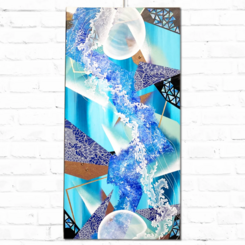
 Vulnerability
Vulnerability, 2022
Aerosol, Acrylic, Copper Wire & Varnish
17 x 34 in
-
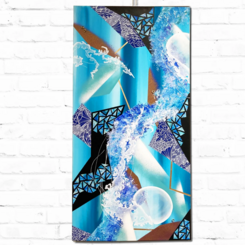
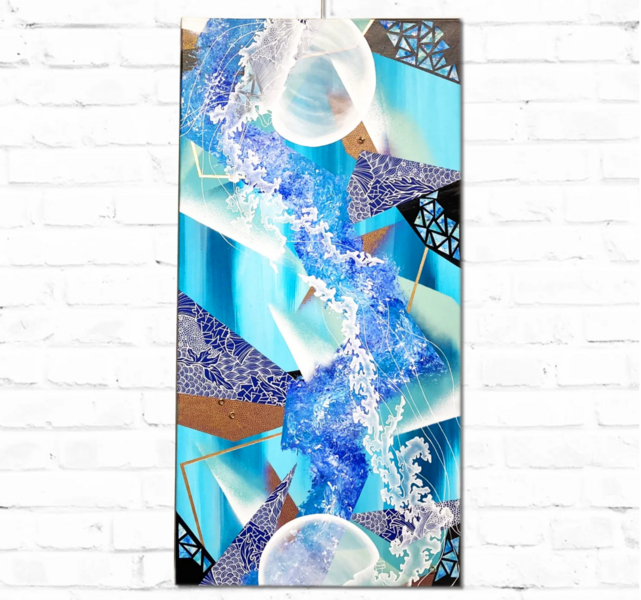 Transparency
Transparency, 2022
Aerosol, Acrylic, Copper Wire & Varnish
17 x 34 in
-
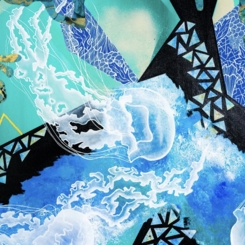
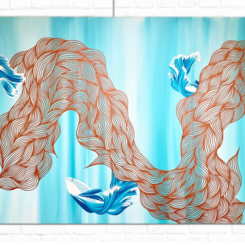
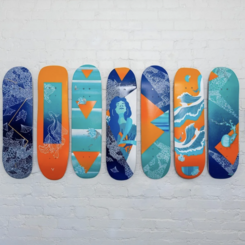
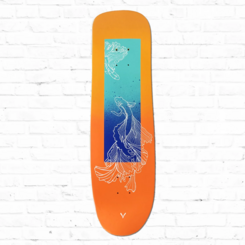
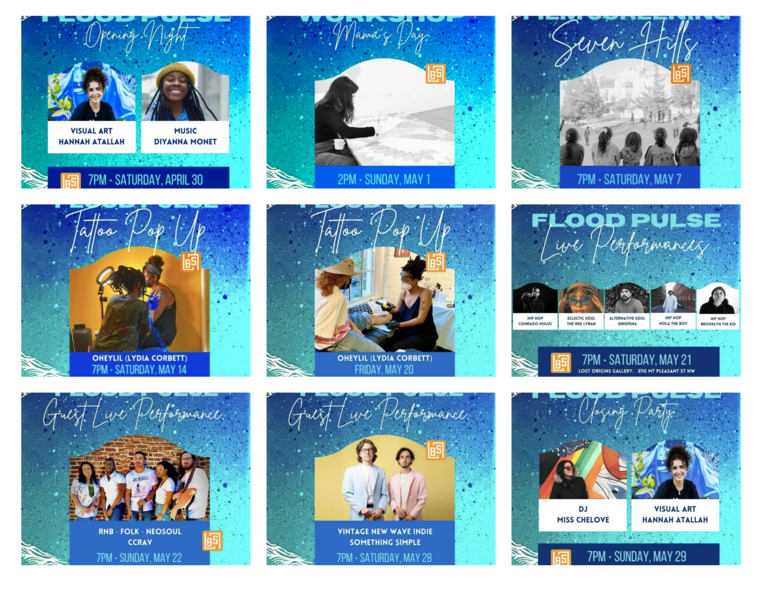 Programming, Flood Pulse
For every exhibition I do, I activate the work with community workshops; invitations for musicians, DJs and tattoo artists to perform; film screenings and food. I consider this work a fundamental part of my artistic practice.


Murals
-
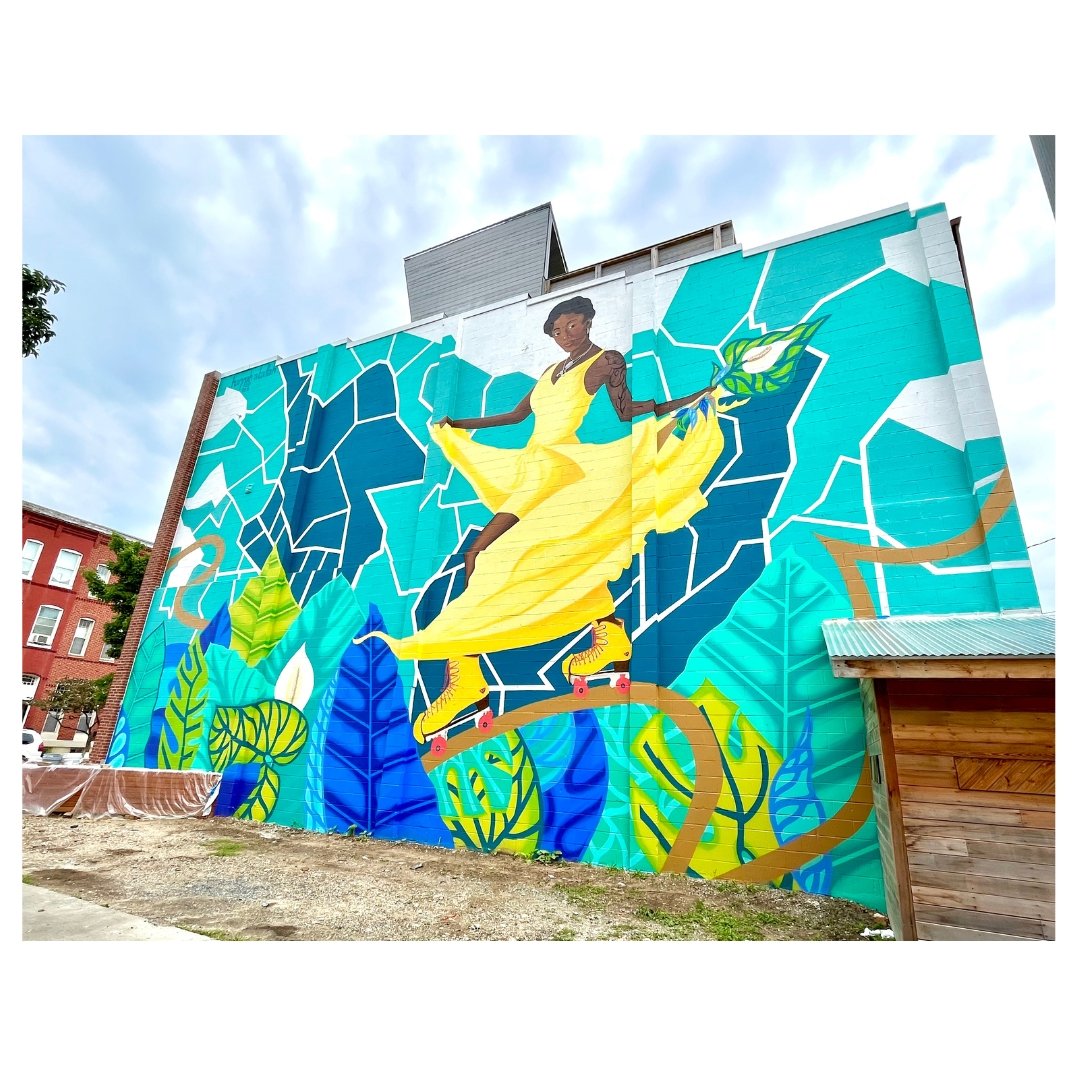
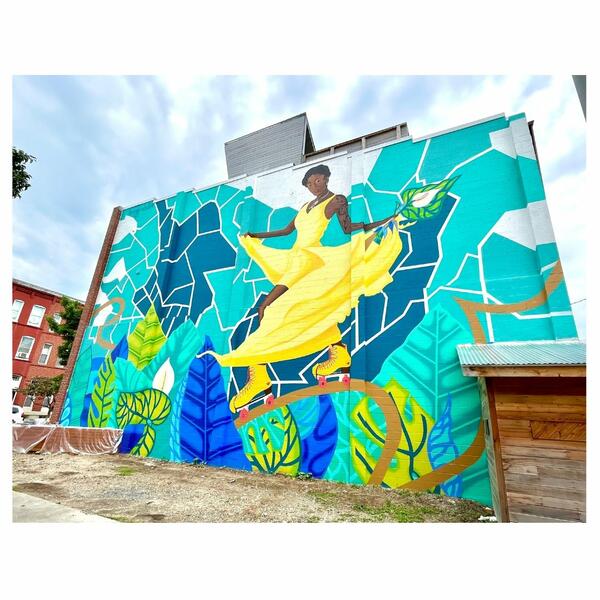 Prosper
Prosper, 2022
84 x 63 ft
Aerosol, Latex Paint, Varnish
305 E Lafayette St Baltimore, MD
-
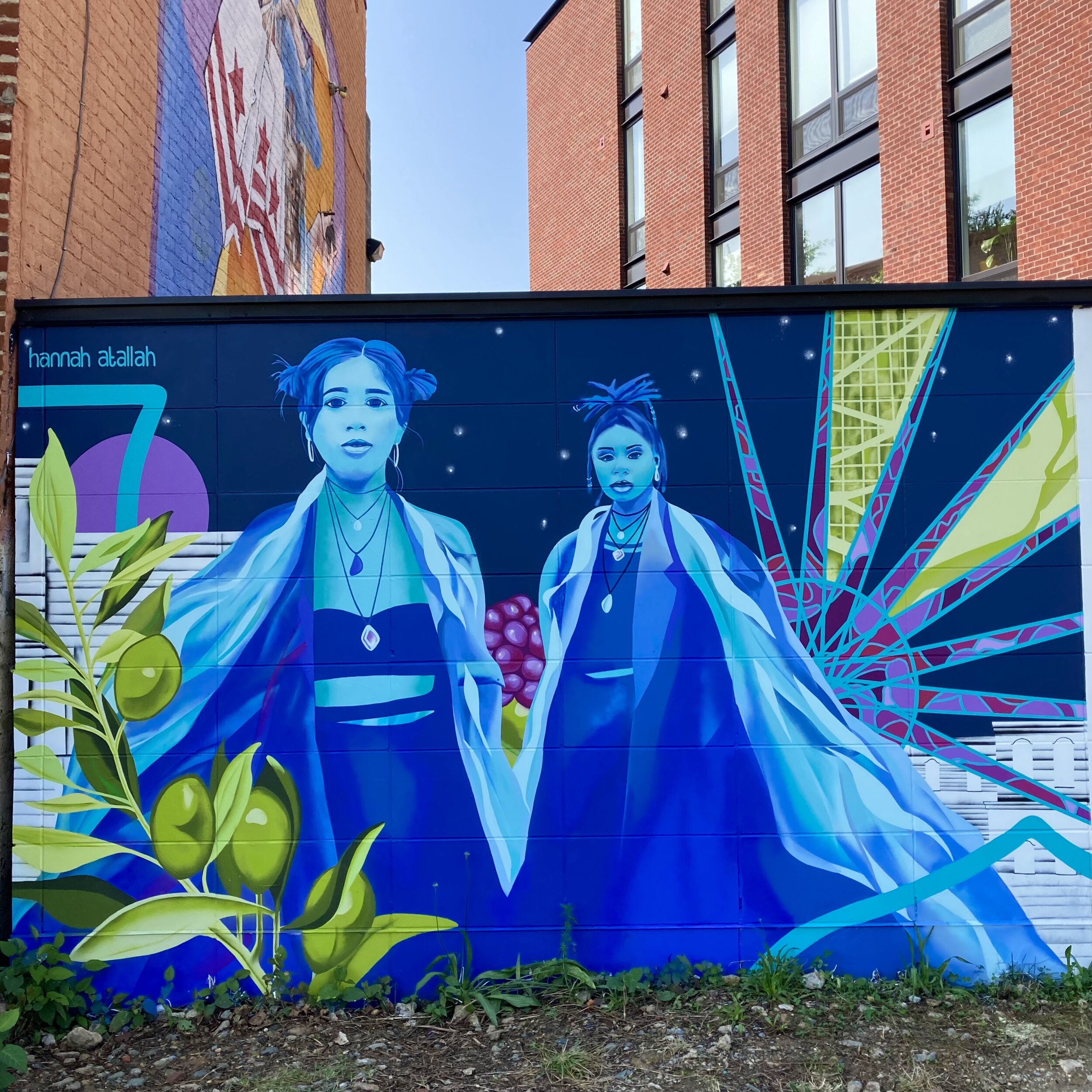
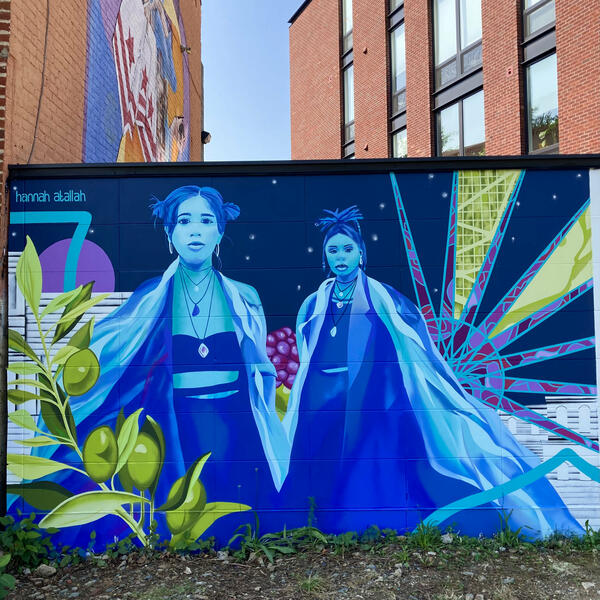 Fractals
Fractals, 2021
12 ft 3 in x 7 ft 3 in
Aerosol, Latex Paint, Varnish
801 Virginia Ave SE Washington, DC
-
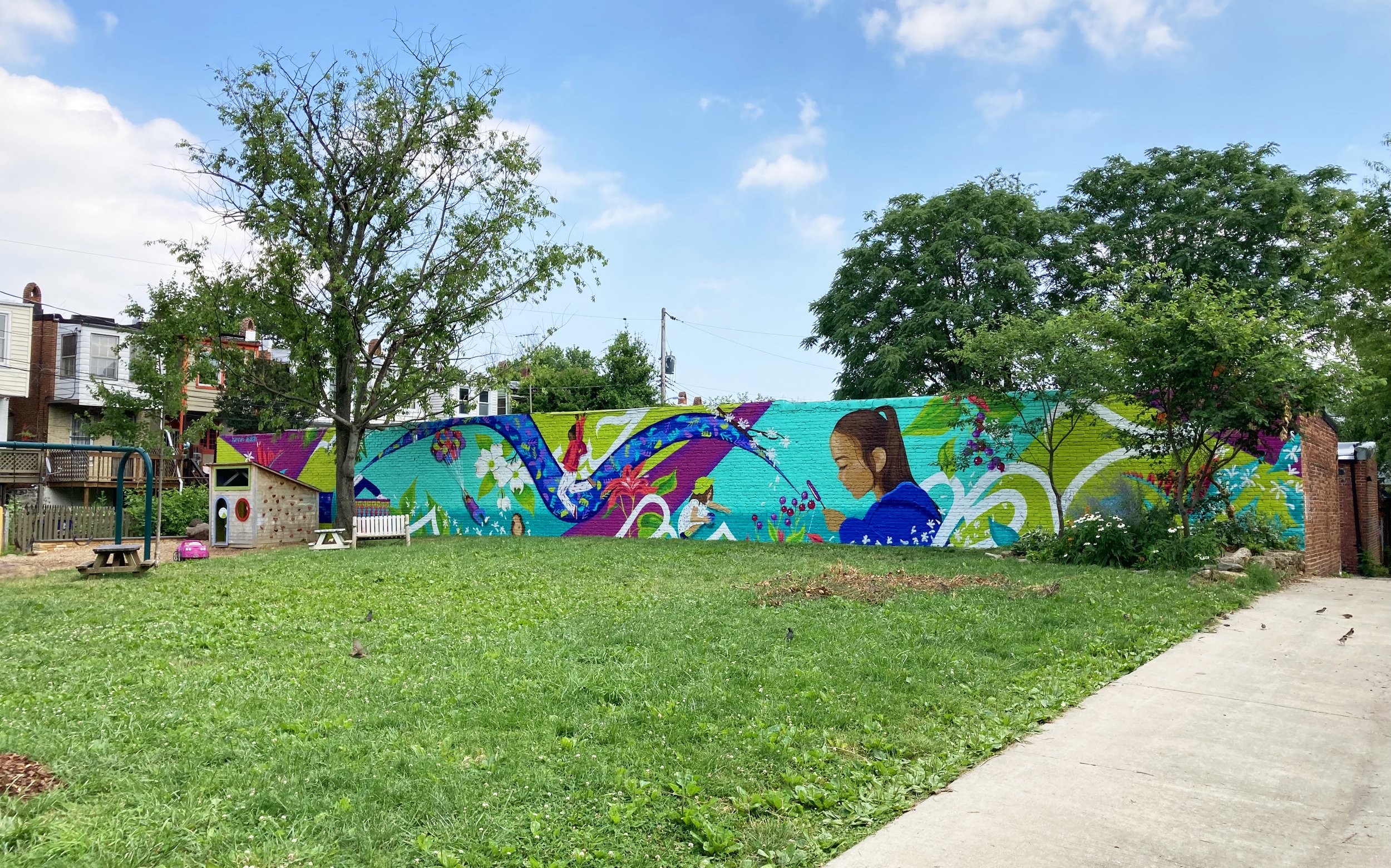
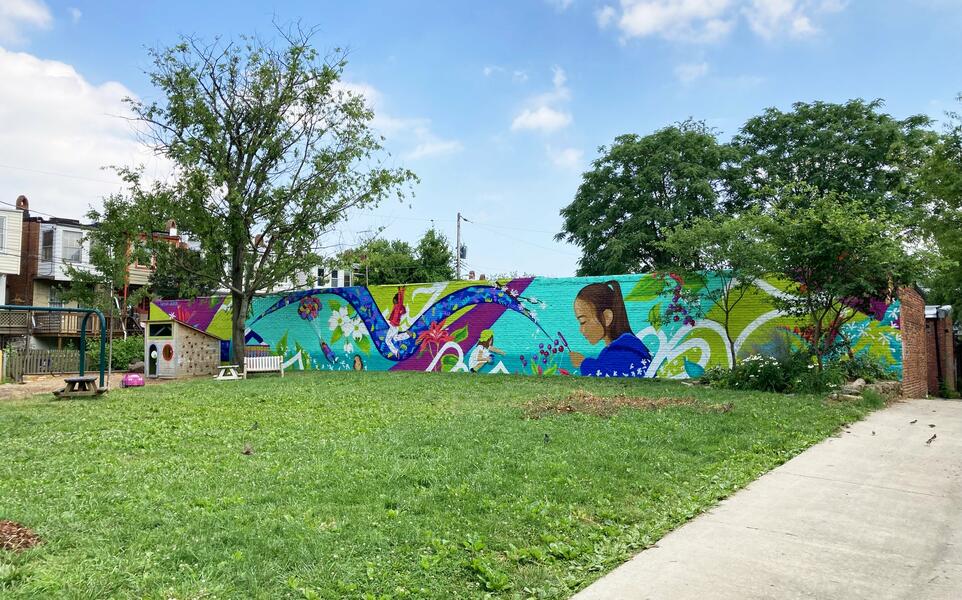 Open Space
Open Space, 2022
90 x 12 in
Aerosol, Latex Paint, Varnish
301 E 32nd St, Baltimore, MD
-
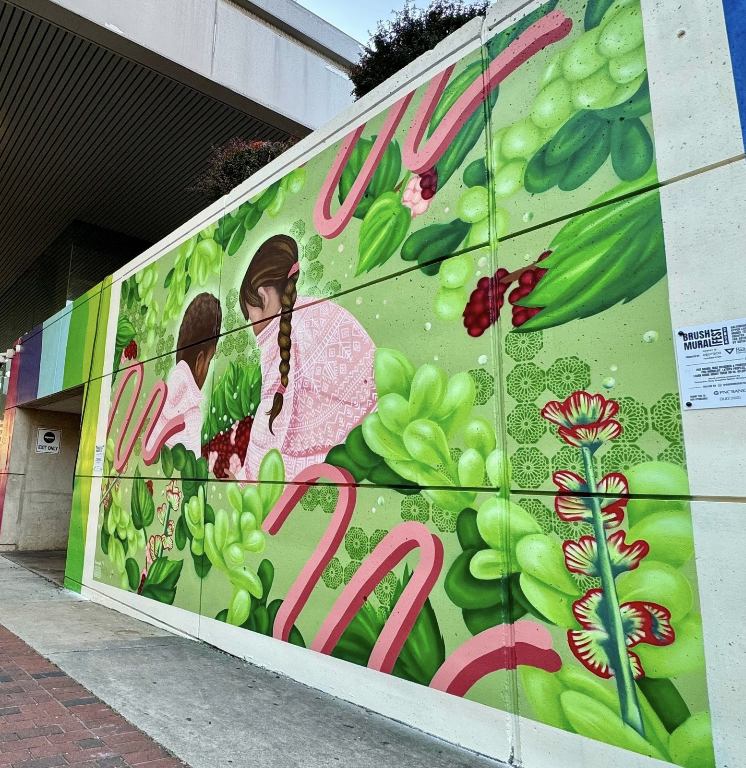
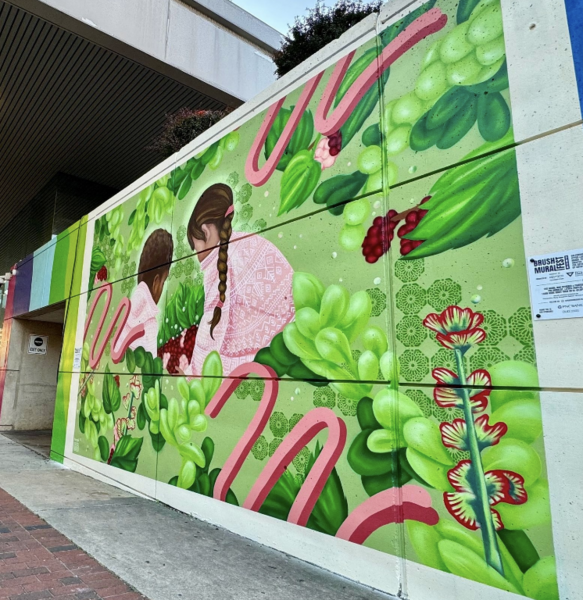 Hidden Gems
Hidden Gems, 2024
11 x 17 ft
Aerosol, Latex Paint, Varnish
1 West Pratt St Baltimore, MD
-
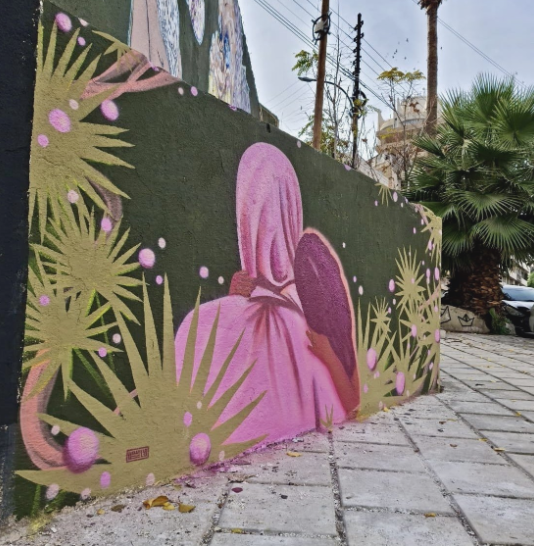
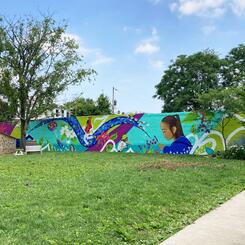
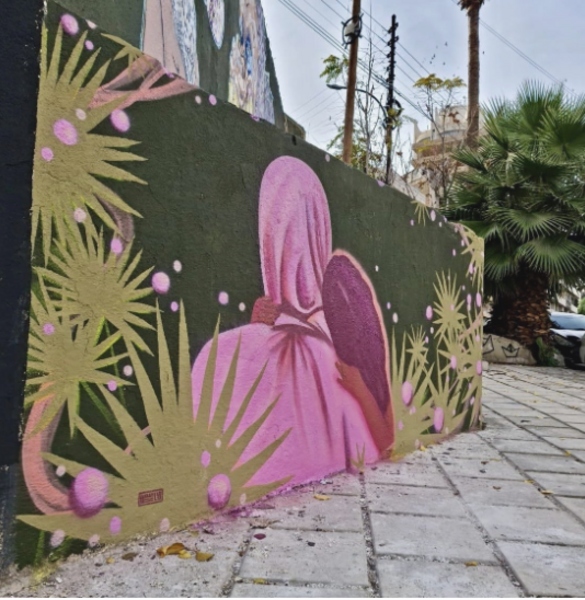 Hold Each Other Close
Hold Each Other Close, 2023
10 x 4 ft
Aerosol, Latex Paint, Varnish
Amman, Jordan
-
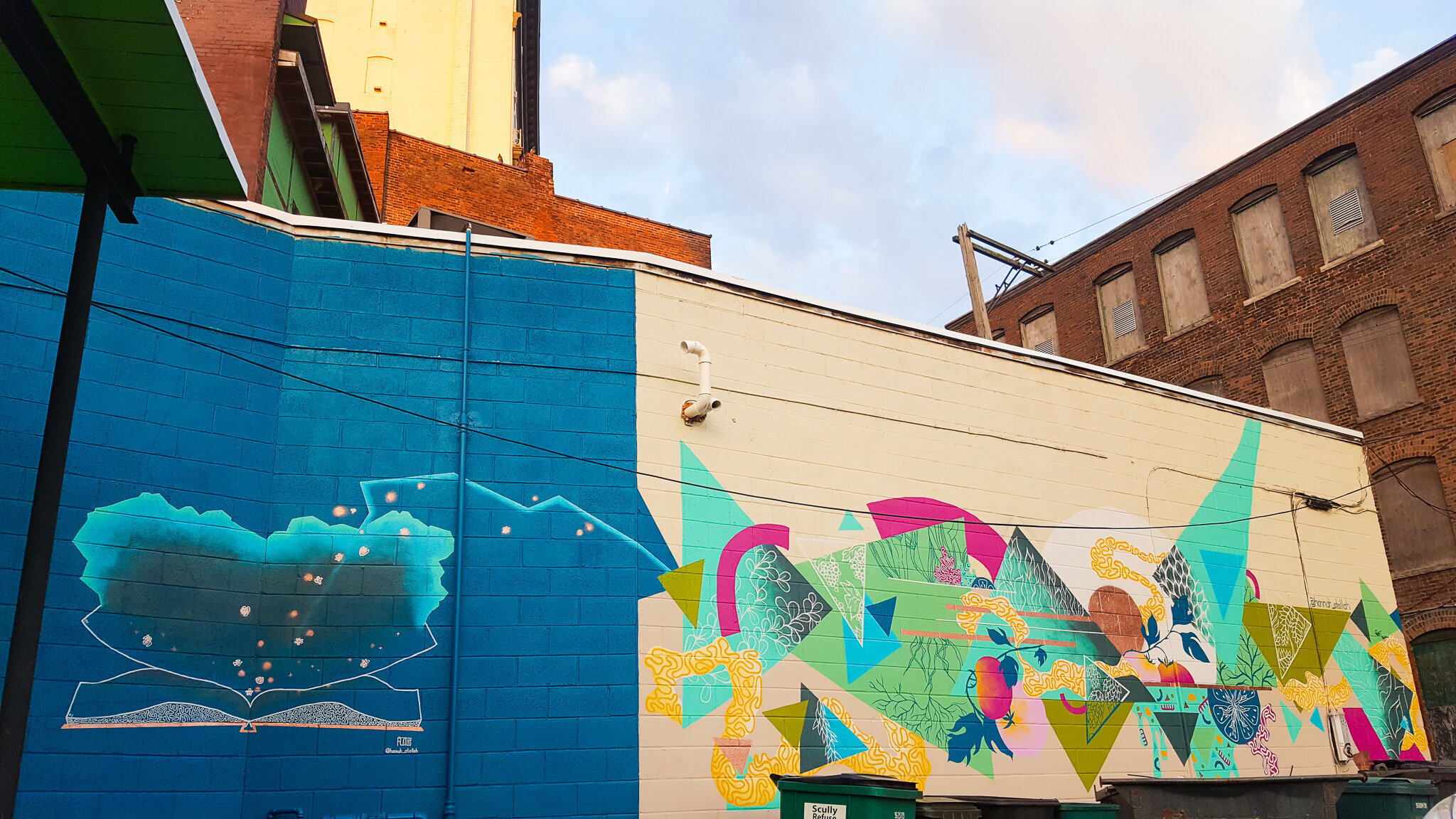
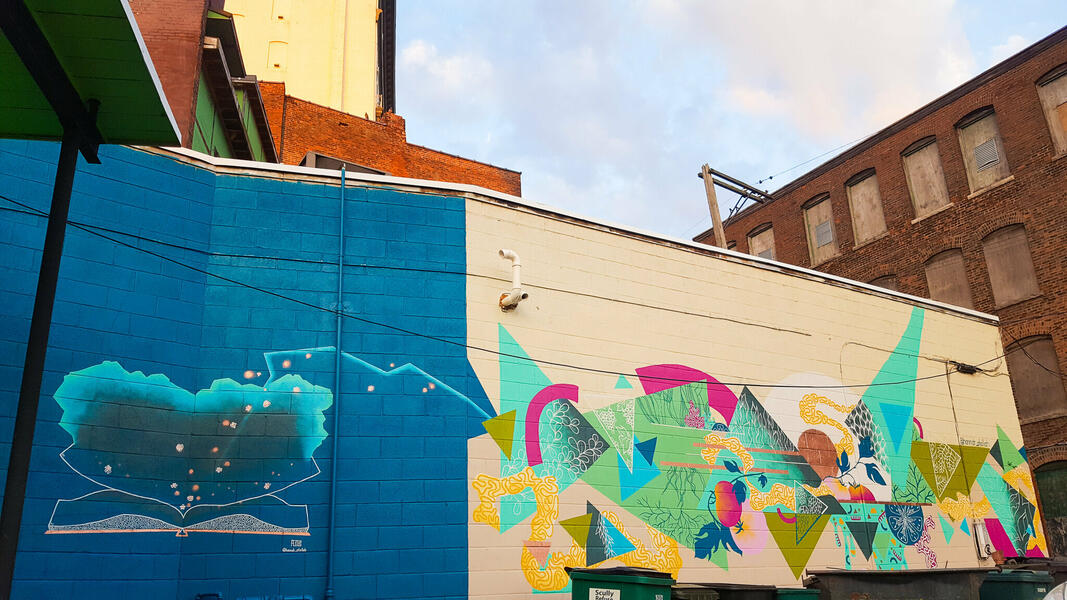 The Source
The Source, 2020
Latex, Aerosol, Varnish
33 x 18 ft
92 Genesee St Utica, NY
-
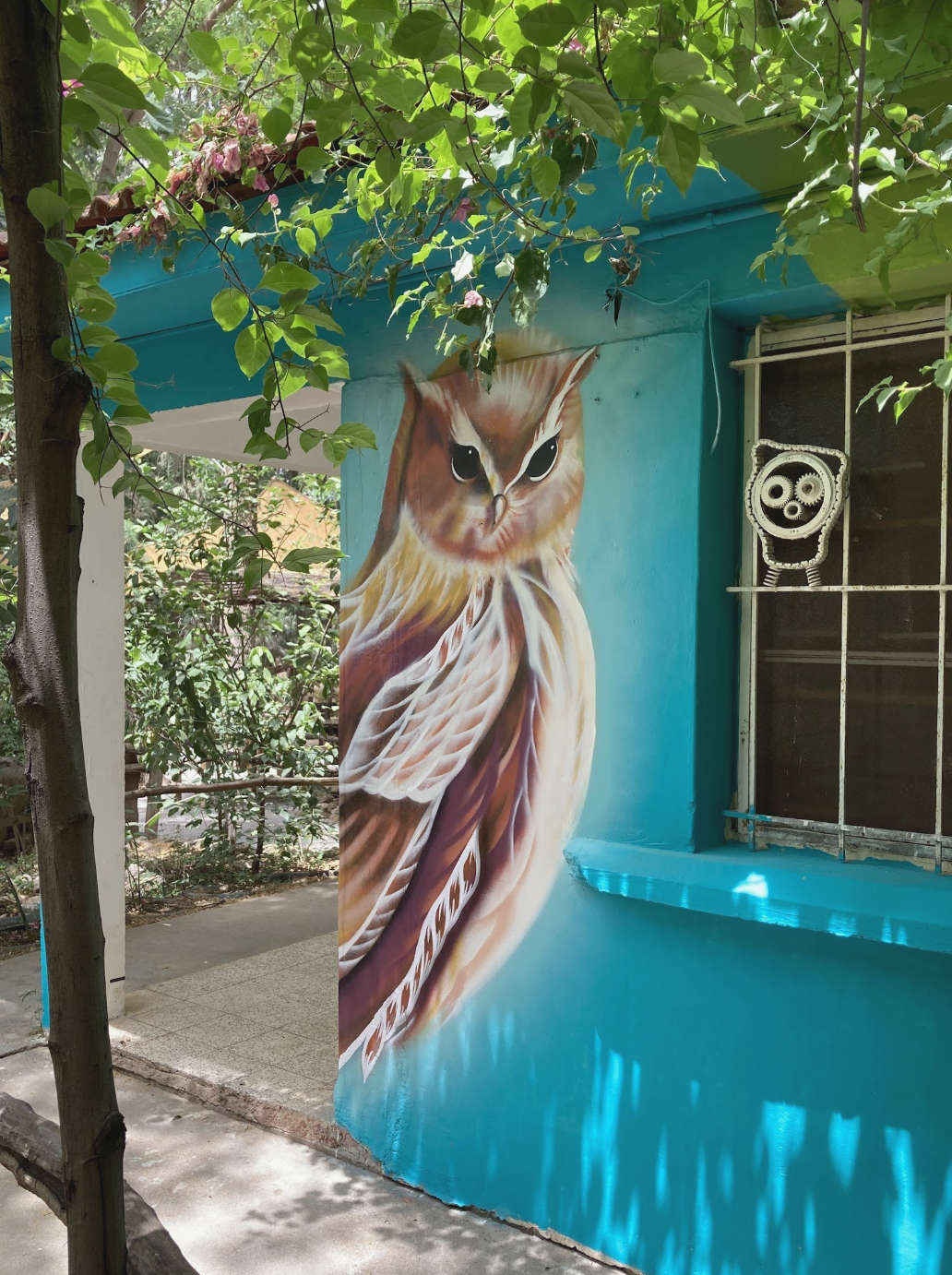
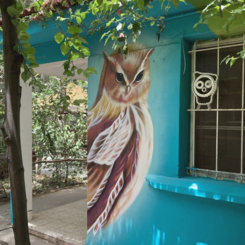
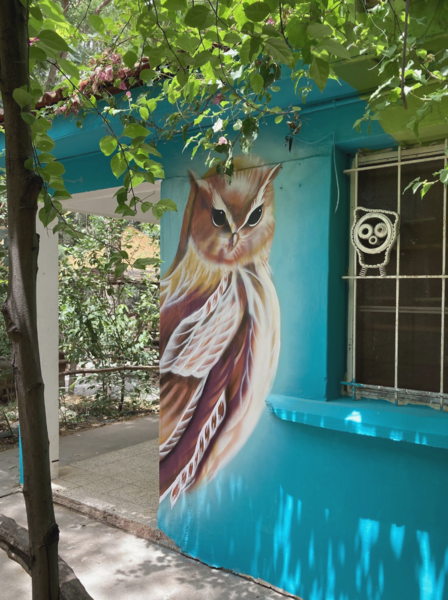 Snowy Owl
Snowy Owl, 2023
Aerosol, Latex & Varnish
Jordan Eco Park: Irbid, Jordan
Part of a larger mural featuring native local species.
-
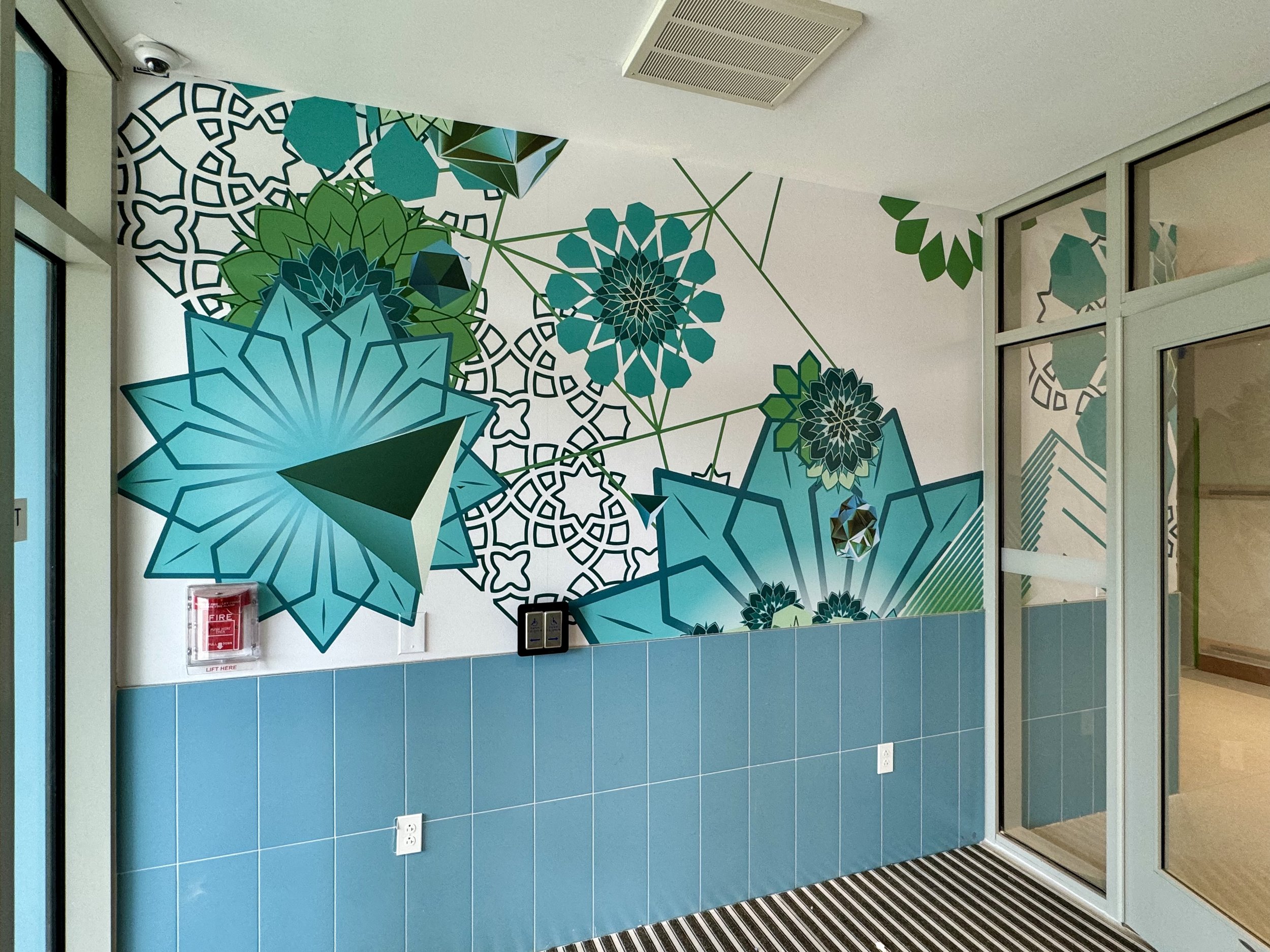
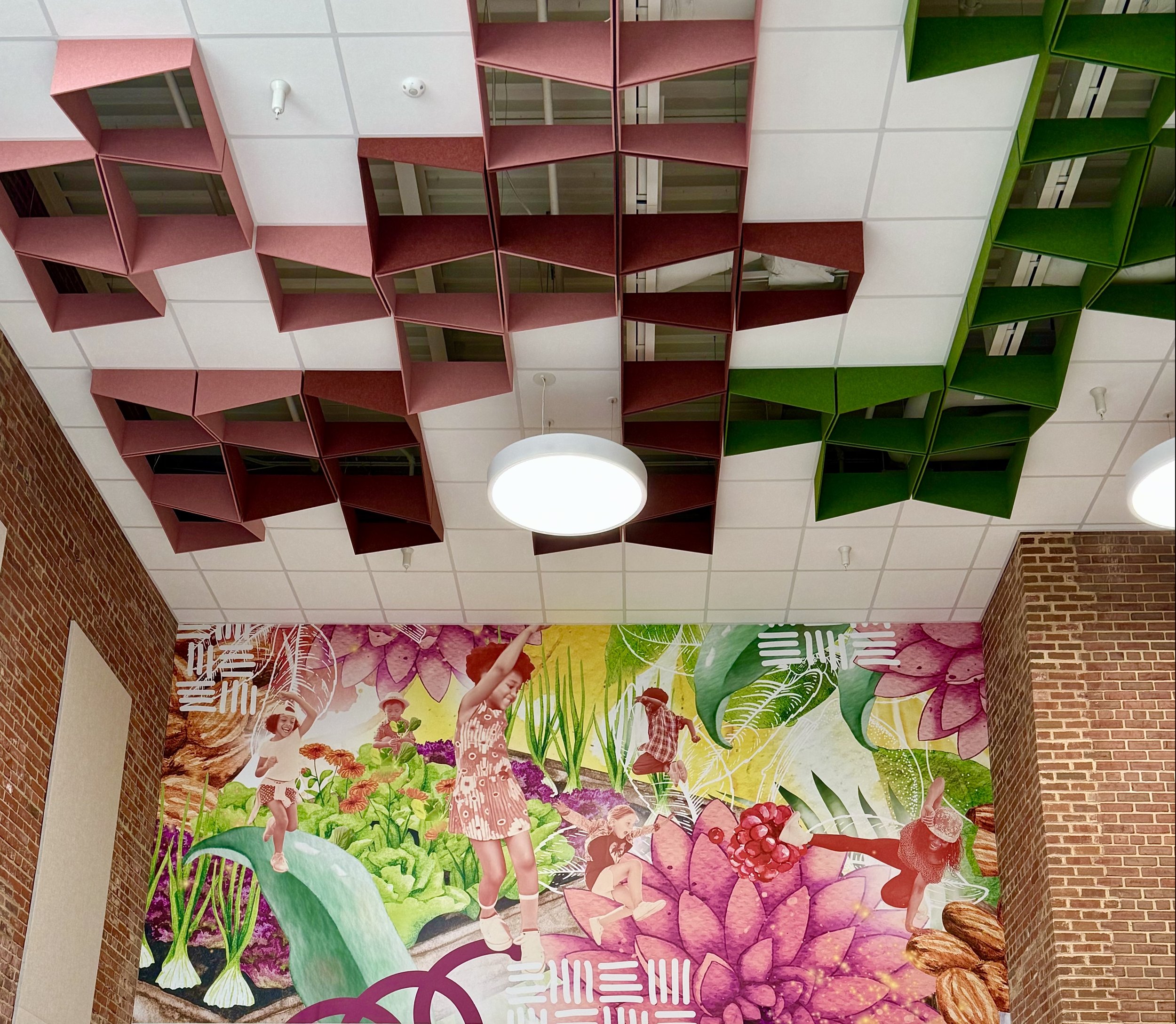
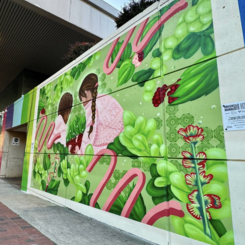
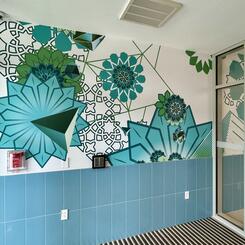
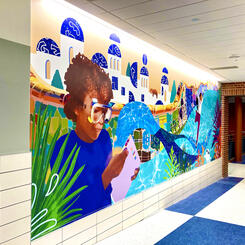
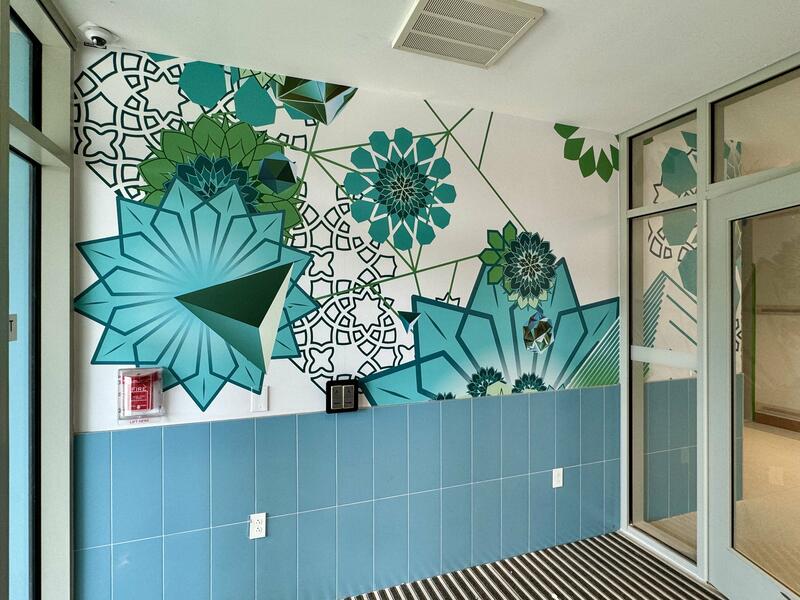 Pittman's Polyhedra
Pittman's Polyhedra, 2024
Vinyl
5.8 x 82.4 ft - Please note that the photo is one section of a longer mural I designed that wraps around the first floor of the school.
Garfield Elementary
2435 Alabama Ave SE, Washington, DC
-
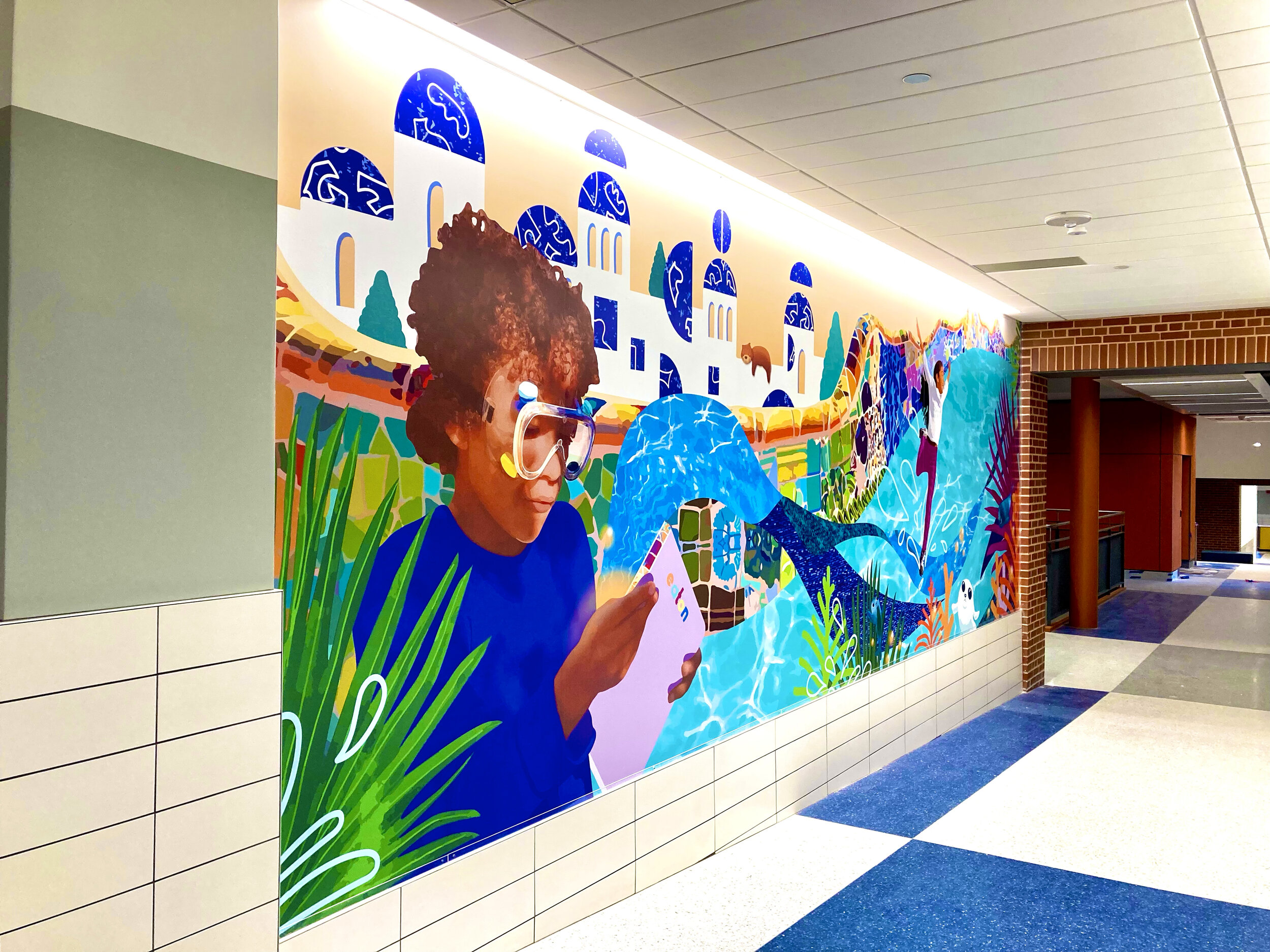
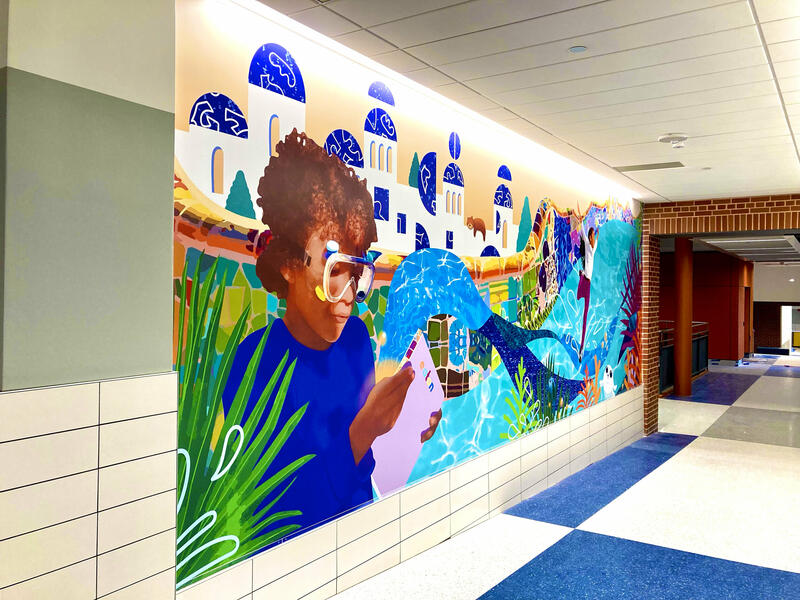 Gaudi Seascape
Gaudi Seascape, 2021
Vinyl
24 x 8 ft
3301 Lowell St NW, Washington, DC
-
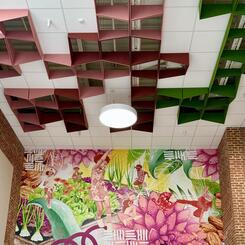
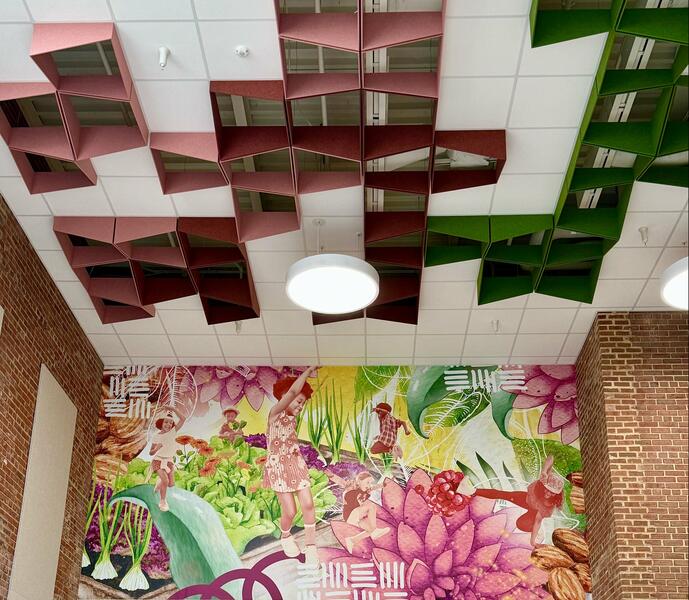 Harmony in Motion
Harmony in Motion, 2024
Vinyl
Two part mural: 10 X 26 ft and 10 X 22 ft
Francis Stevens School Without Walls
2130 G St NW, Washington, DC