Work samples
-
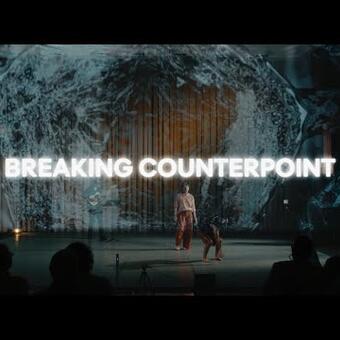
Breaking Counterpoint - Trailer
In a world of infinite scroll, the edges of surprise have been worn smooth.
Even performance, the last refuge of risk, is being stripped of revelation and sold back as content.
So, we asked:
What are we creating that’s worth showing up for?
Breaking Counterpoint is an immersive, algorithmically scored collision of sound, choreography, and computational media.
It’s not built for perfection.
It’s built for volatility.
This is a chamber ensemble where the musicians play, the dancers trigger responses, the machines interrupt—and the audience completes the circuit.
These elements converge into a living score: reactive, unstable, and always on the edge of becoming.
No two performances are the same.
No single moment can be repeated.
Audiences don’t sit outside the work.
We bring you into the experience.
-
Killjoy - III. "Clockwork" by Gene Koshinski
From the composer Gene Koshinski:
When I was approached by Zane Forshee to compose this piece, he asked me to base the work on material or an idea(s) drawn from a book or other form of literature. I found it appropriate to choose a children’s story due to his new found role as a parent himself. This led me to the story of Cinderella, which has stood the test of time, entertaining children and adults alike, generation after generation. At the heart of the story is the clock tower. As the clock strikes midnight, it ends Cinderella’s time at the Prince’s ball and her fairy Godmother’s magical spell. In the story, the clock assumes the role of an antagonist (which, in real life, is something we can all relate to).
The title is derived from the Disney film adaptation of the story. In this version, Cinderella is awaked by the clock - foreshadowing the role of this antagonist. At this moment Cinderella exclaims:
Oh, that clock! Old killjoy.
I hear you.
Come on, get up, you say.
Time to start -
Keanae, HI by Benjamin Verdery
On Classical King’s “Northwest Focus Live” with Sean MacLean, guitarist Zane Forshee performs Keanae, HI by Benjamin Verdery.
The composer had these words to say about his composition. “Keanae is a peninsula on the island of Maui in Hawaii. You will pass it if you drive the extraordinary beautiful road to Hana. It is more of a sleep community than it is a town. It made me think of what old Hawaii must have been like….My wife has relatives on the island of Ohau, and someday we hope to reside there permanently. Oddly enough, I wrote Keanae, HI in New York City and New York, NY in Hawaii.”
-
Round Midnight by Thelonious Monk
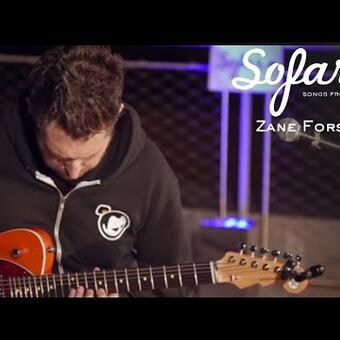
Zane Forshee plays Round Midnight by Thelonious Monk live at the 2019 Classical Guitar Retreat in Scotland.
About Zane
Zane Forshee moves fluidly between worlds—classical and contemporary, analog and digital, performance and provocation. Whether reimagining minimalist soundscapes through amplified guitar or launching bold models for arts education, Forshee’s work expands what a concert, a curriculum, or a career in music can be.
Baltimore City Paper put it simply: “As the old adage goes, those who cannot do, teach. Apparently Zane Forshee didn’t get the memo…”
He has brought new energy to the… more
Breaking Counterpoint: Work in Progress
In a world of infinite scroll, the edges of surprise have been worn smooth.
Even performance, the last refuge of risk, is being stripped of revelation and sold back as content.
So, we asked:
What are we creating that’s worth showing up for?
Breaking Counterpoint is an immersive, algorithmically scored collision of sound, choreography, and computational media.
It’s not built for perfection.
It’s built for volatility.
This is a chamber ensemble where the musicians play, the dancers trigger responses, the machines interrupt—and the audience completes the circuit.
These elements converge into a living score: reactive, unstable, and always on the edge of becoming.
No two performances are the same.
No single moment can be repeated.
Audiences don’t sit outside the work.
We bring you into the experience.
To shape it, to witness what only exists because you are there.
This is performance where presence has stakes, where bodies glitch the system, machines talk back in real-time, and each moment dissolves as soon as it arrives.
Surprise becomes possible again.
Breaking Counterpoint is an experiment in collective presence.
A participatory system. A space for real-time emergence.
Because this kind of art doesn’t live in a feed.
It lives in the room.
And only if you’re there.
Created by
Zane Forshee — Guitarist & Producer
Directed by
Choreography & Performance
Choreography by Colette Krogol and Matt Reeves, in collaboration with the performers
Performers:
London Brison
Levi Coy
Colette Krogol
Matt Reeves
Visual & Interactive Systems
Lighting Design
Associate Lighting Design: Malory Hartman
Developed in collaboration with
-
Breaking Counterpoint - Trailer (extended)
Created by
Zane Forshee — Guitarist, Producer, and Project LeadDirected by
Katherine Helen Fisher — Media Artist & Director, Hyperreal LabsComposed by
Wendel Patrick — Composer, Producer, and CollaboratorWendel’s reinterpretation of Electric Counterpoint forms the musical core of this project, incorporating digital sampling, hip-hop production techniques
Choreography & Performance
Orange Grove DanceChoreography by Colette Krogol and Matt Reeves
Performers: London Brison, Levi Coy, Colette Krogol, Matt Reeves
Visual & Interactive Systems
Mingyong Cheng, Shimmy Boyle, and Katherine Helen FisherResponsible for motion tracking, real-time visuals, and system integration across projection and sensor-based platforms.
Lighting Design
Peter Leibold VISound & Audio Production
Ed Tetreault — Audio Engineer -
Breaking Counterpoint Movement II - Live
Created by
Zane Forshee — Guitarist, Producer, and Project LeadDirected by
Katherine Helen Fisher — Media Artist & Director, Hyperreal LabsComposed by
Wendel Patrick — Composer, Producer, and CollaboratorWendel’s reinterpretation of Electric Counterpoint forms the musical core of this project, incorporating digital sampling, hip-hop production techniques
Choreography & Performance
Orange Grove DanceChoreography by Colette Krogol and Matt Reeves
Performers: London Brison, Levi Coy, Colette Krogol, Matt Reeves
Visual & Interactive Systems
Mingyong Cheng, Shimmy Boyle, and Katherine Helen FisherResponsible for motion tracking, real-time visuals, and system integration across projection and sensor-based platforms.
Lighting Design
Peter Leibold VISound & Audio Production
Ed Tetreault — Audio Engineer

Valenciano: Guitar Works of Asencio, Esplá & Rodrigo
Valenciano:
adj. Of or relating to the region or the city of Valencia, its people, their language, their culture.
n. 1. A native or inhabitant of the region of or the city of Valencia.
2. A person of Valencian ancestry.
3. A collection of works for solo guitar that capture the spirit, intimacy, and character of the 20th century musical composition in the province of Valencia.
It gives me great pleasure to share with you a project that had many stages of exploration, trial & error, revision, and finally the finish line: Valenciano: Guitar Works of Asencio, Esplá, & Rodrigo
This endeavor began with a simple observation regarding the Collectici íntim by Vicente Asencio. I noticed that guitarists performing this piece frequently made changes to certain passages without any consistency. This made me ask why? Why did each artist change particular bits of the score? As I studied the work it became apparent that each performer was adjusting the piece to fit their hands and their playing. The published score was edited by Narcisso Yepes (and I’m incredibly thankful that he developed a relationship with Asencio–without this guitarist, there wouldn’t be this body of work created by Asencio…but that’s a topic for a different day). This edition caused me to ask the question: Did Yepe’s change or alter Asencio’s work? Did he make editorial decisions other than suggested fingerings?
The answer is yes.
These questions led me to reconnect with the great guitaristIgnacio Rodes (whom I first met in 1996 at the GFA that was held in St. Louis, Missouri). My teacher, John McClellan, asked me to pickup Ignacio at the airport (you could meet people at the gate back then) and shuttle him around as needed. It was a great opportunity to get to know him and learn about his world. It was a time when people actually had conversations.
Flash forward to the summer of 2008 and I found myself visiting Ignacio’s home in Alicante, and playing for him to see if we would sponsor my application for a Fulbright. He agreed to write a letter of support and over the course of my visit I asked if me might have any information regarding the Valencian composer Vicente Asencio. To my surprise, he not only knew of Asencio, he had a close connection to Matilde Salvador (Asencio’s wife). In addition, he happened to have copies of the manuscripts of the Collectici íntim as well as a wealth of information regarding the composer. Ignacio also had a tremendous understanding of the connection between Asencio and the other composers that were his contemporaries–it was a chance to understand the compositional “scene.”
With much work and support, I was able to move to Spain from 2009-2010 and work with Rodes on this project.
Here are a few takeaways from this experience:
- Asencio’s music is beautiful, intimate, colorful, and expressive.
- It was both exciting and informative to see the manuscripts. It is a process that I hope every musician has the opportunity to experience. To climb in and see what the composer wrote, compare it with the published score and form your own decisions/opinions. There are differences and they are significant!
- The music of Asencio, Esplá, & Rodrigo is challenging to perform both musically & technically.
- Researching a composer’s life can offer new insight into their compositional evolution. It also provides you with a glimpse, if you’re paying attention, into their personality, their struggles, and their achievements. You also begin to see how that may impact the artistic work they produce.
- Sometimes projects take a while to complete. (Visit here & this post, too).
The performances that comprise this recording are informed by my research in Spain working with Ignacio in the province of Valencia, my time writing my final DMA document, Vicente Asencio and his Collectici íntim : in search of a text : the role of creation, collaboration, and textual comparison to create a performer’s edition of Ascencio’s guitar masterwork, and the time I spent thinking about, living with, and performing these pieces.
-
Valenciano: Guitar Works of Asencio, Esplá & Rodrigo
-
Preludi by Vicente Asencio from Valenciano: Guitar Works of Asencio, Esplá & Rodrigo
Vicente Asencio (1908-1979) Preludi from "Suite Valenciana"
from the Album: Valenciano: Solo Guitar Works of Asencio, Espla & Rodrigo: https://orcd.co/v0oebnv

my heart comes undone
Progress is never a straight line:
A little over 9 years ago, I contacted my friend and colleague, Judah Adashi, about a piece he’d recently written: my heart comes undone. I was familiar with the string ensemble version of this work that was commissioned and premiered by the Peabody Preparatory Strings Department and had become acquainted with the version he made for solo cello and loop pedal that was premiered and recorded by Lavena Johanson.
As I set to work, several discoveries were made:
- The guitar is NOT the cello or any other bowed instrument.
- The quest for the perfect tone on an electric guitar is a challenging task that requires as much focus, detail, and study as creating it on a classical guitar.
- Working with a loop pedal shows you at your best and your worst…in the beginning you hear yourself primarily at your worst.
- Key Signatures are important.
There was a learning curve. I had to figure out a way to make the long lines of each part sustain and connect similarly to that of a bowed instrument while still remaining true to the guitar. Also, how could I create a sound that was as full as a cello and yet as clear and transparent as I imagined in my head? You can hear my early attempts at this here. My setup was simple: Guitar + Tube Screamer TS9 (that’s an effect pedal—yeah, I like the name, too) + Loop Pedal + Amplifier = Sound.
More about this journey can be found in my blog.
BLOG POSTS ABOUT THIS RECORDING:
my heart comes undone by Judah Adashi
-
my heart comes undone
my heart comes undone by Judah Adashi
Arranged by Zane Forshee for electric guitar & loop pedal
-
my heart comes undone - live performance