Work samples
-
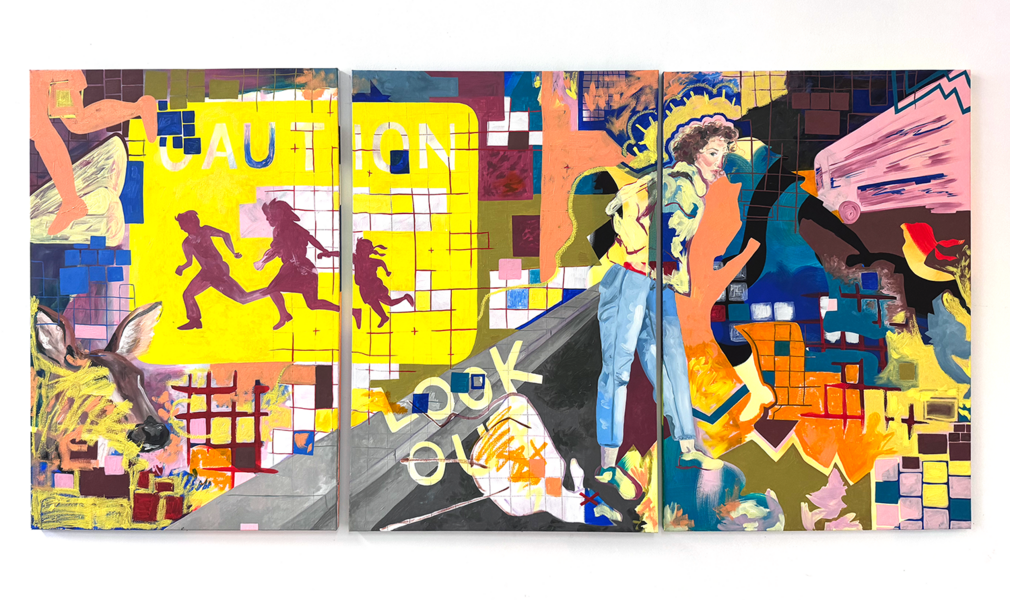
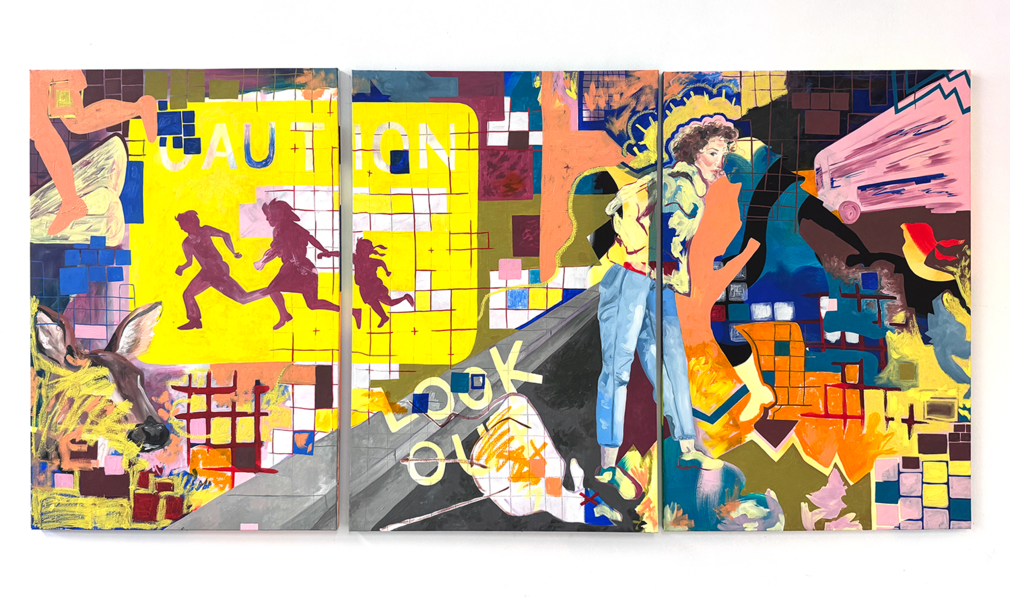 Don't Look
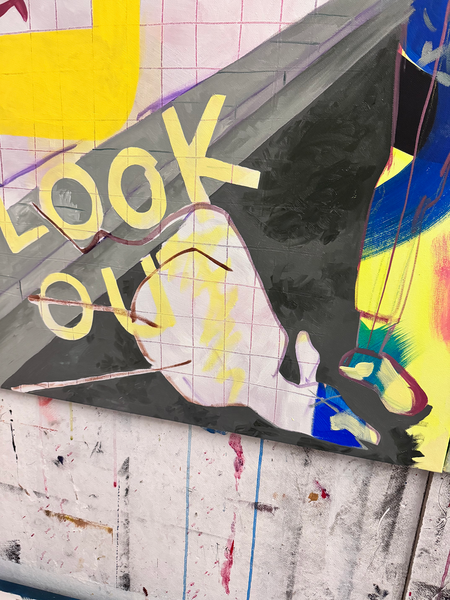
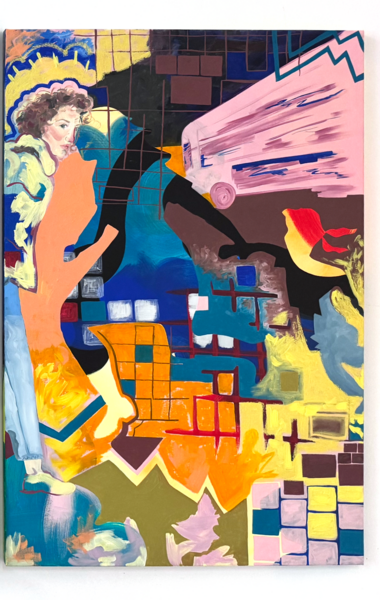
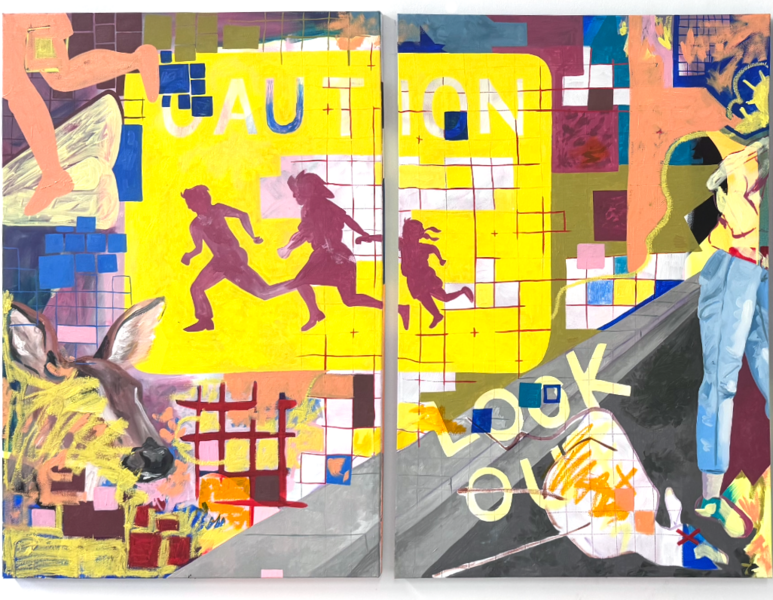
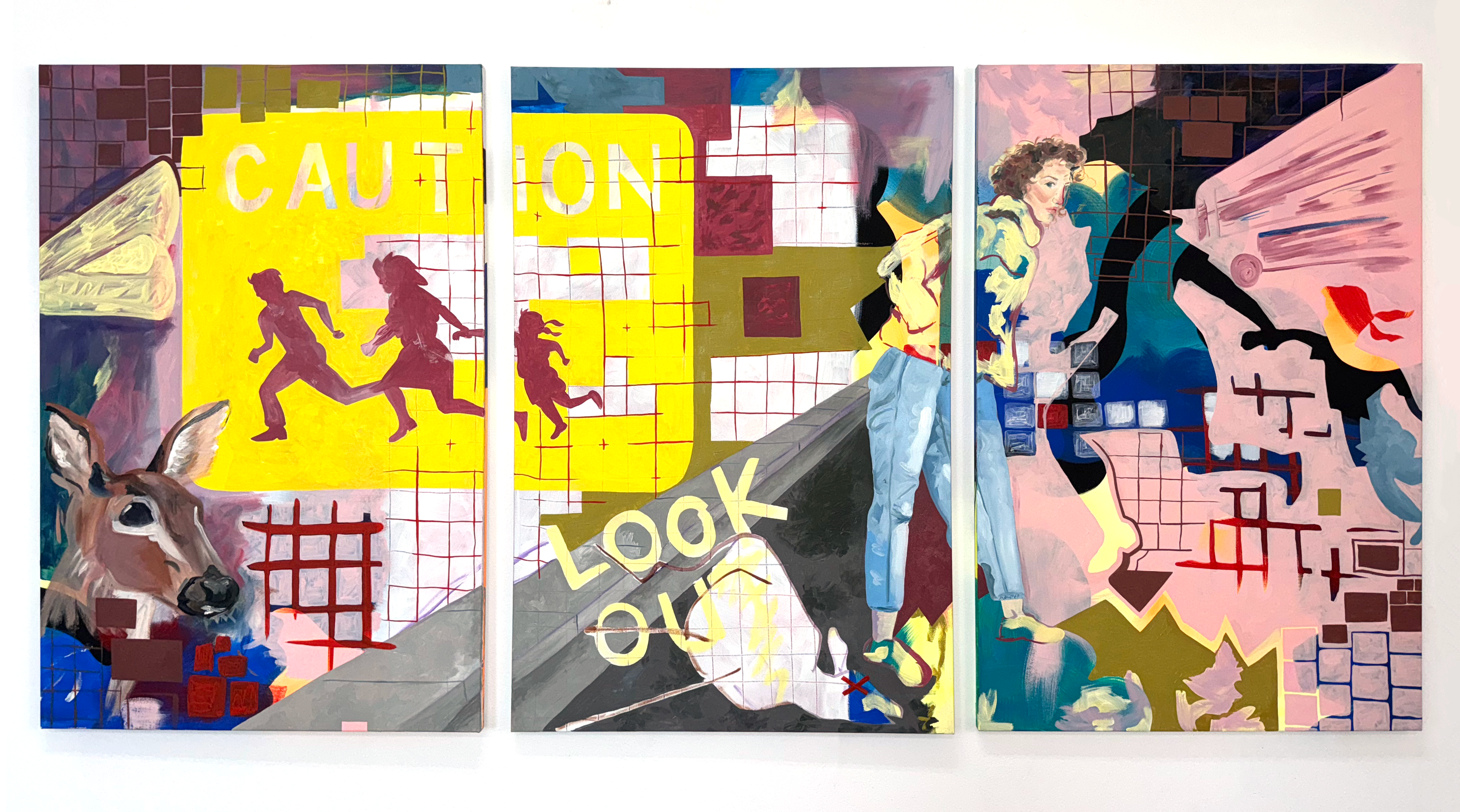
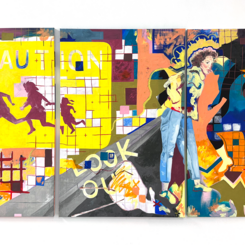
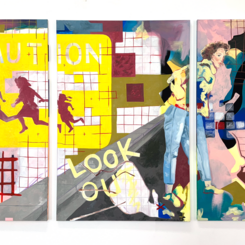
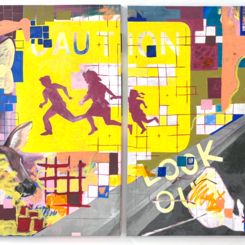
This triptych explores the collision of the periphery. Growing up in Chula Vista, California, Tijuana existed not as a foreign place, separated by a national border, but as a neighboring town. However, the dehumanization of immigrants was smothering and highly visible. On southern California freeways the “Caution” sign with a family running (referenced in this piece) was so commonplace that I became desensitized to seeing it. Once I started deconstructing the politics of transportation and our border, I recalled the sign and was horrified at its ubiquity.
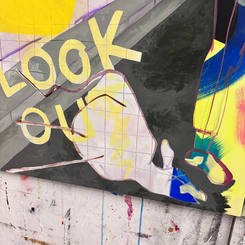
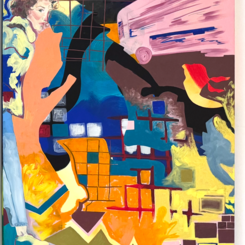
This piece was a grand experiment, focused on the crassness of our vehicular lives. Attempting to cross a street as a pedestrian and exist in spaces that are designed for large, multi-ton boxes whose inhabitants often seem to be texting or focused on the larger risk posed to them (other cars) feels fraught. Encountering tragic and horrifying roadkill, seeing a deer and reconciling with the terror you experience is a common practice while driving and something so ordinary it’s hardly discussed. All of these realities are explored in three panels that allows the the viewer to feel disoriented, nauseous and ill at ease.
-
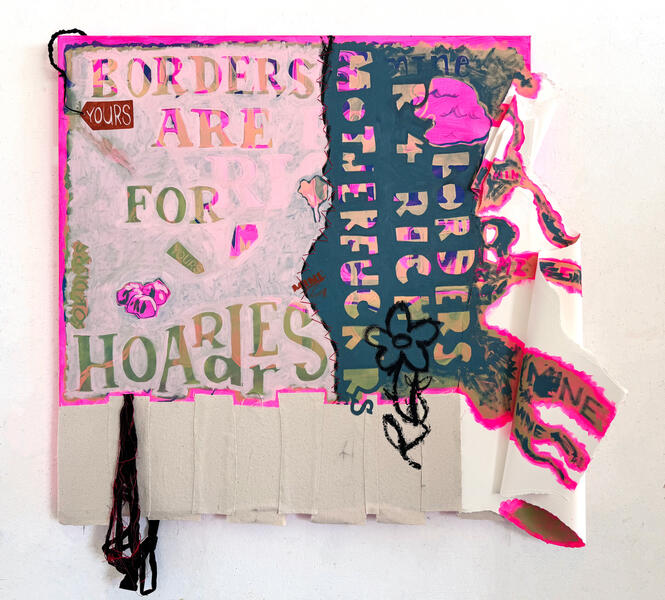 Bordersland
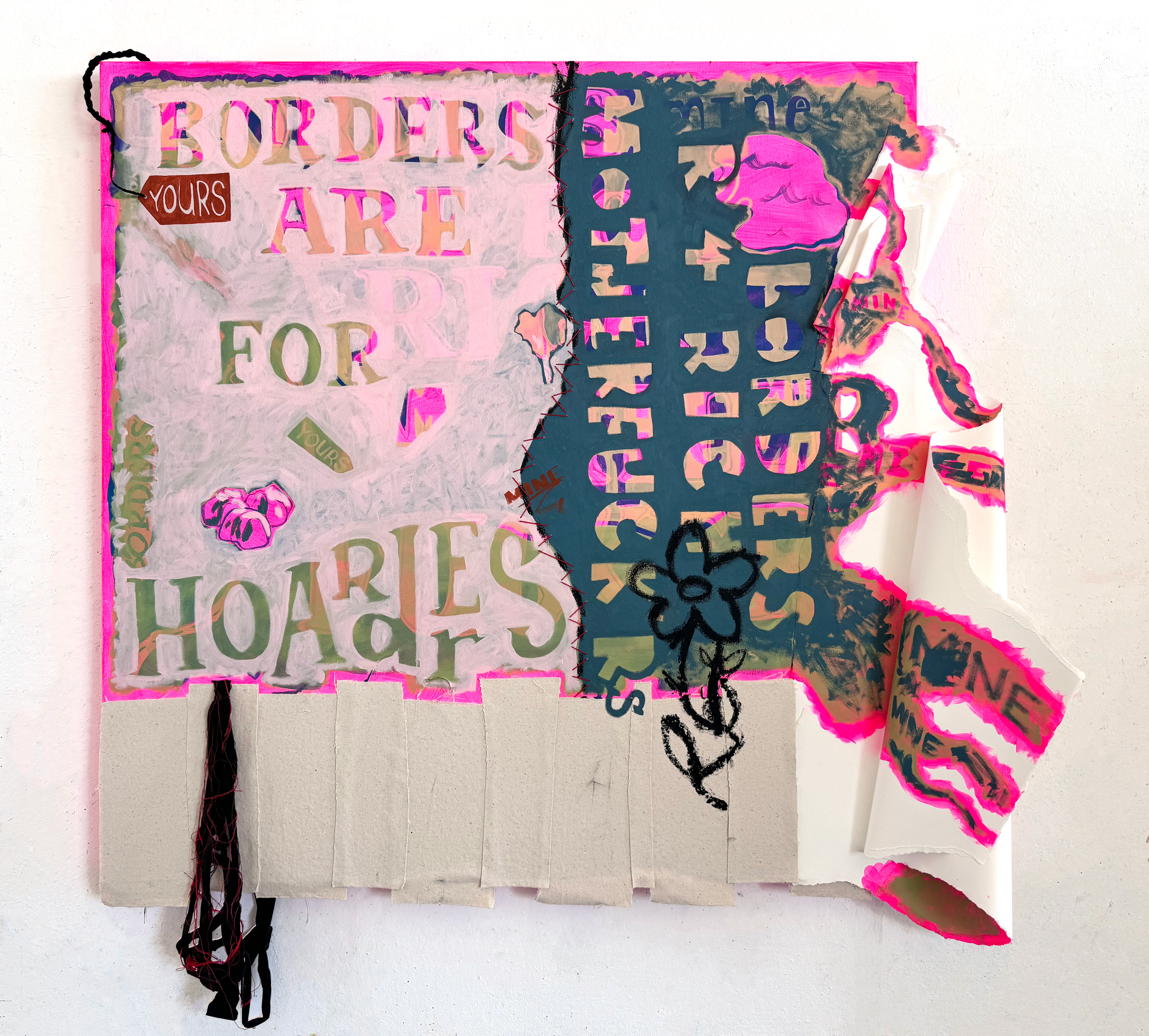
After growing up in Chula Vista, California, I experienced Tijuana, not as a different country divorced from my society, but as a neighboring town that friends and I would travel back and forth from. Moving to Indiana, the politics around "The Border" was my first brush with the violence and fueled rhetoric surrounding this aspect of zoning. In the lead-up to the 2024 election, the disdain around immigration had me turning to "The Land of Open Graves" and "The Case for Open Borders".
This piece has multiple layers of redrawn fictional lines with "mine. mine. mine." and "yours. yours." written on it. Taking over water resources, it being reclaimed, only for the border to gobble up rocks and minerals- the statement "borders are for hoarders" and "borders are for rich motherfuckers" making their appearance every iteration.
2024Acrylic, oil, clothing scraps, thread, stongehenge paper and oil stick on canvas
36 x 36 inches

About Sierra
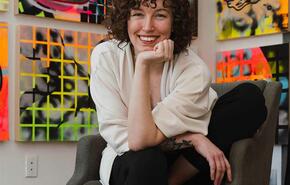
Sierra was born in Florida but grew up in Chula Vista, California and has moved 26 times in her life. She had a successful illustration and graphic design business selling wholesale across the country before going back to school to study science. Focusing on biochemistry, her plans unraveled after taking a painting class where she switched disciplines and began formally studying oil painting which has allowed her to combine her interests of car-centric infrastructure, neoimperialism and… more
Don't Look, 2025
-
 Don't Look, 2025
 -
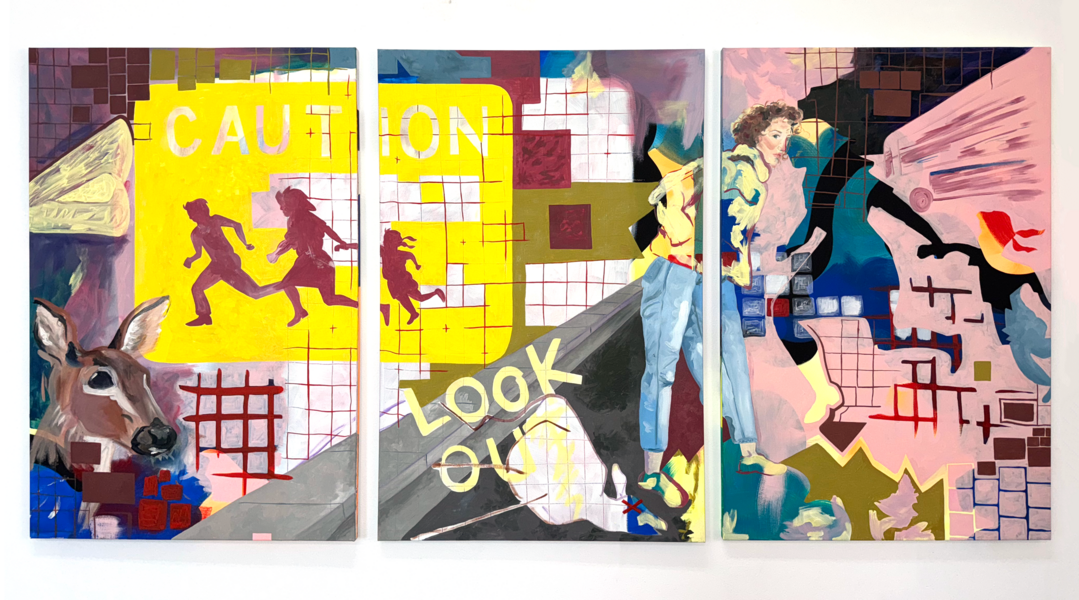 Work in Progress
 -
 Don't Look, In progress of deer
 -
 Close Up- Last Panel
 -
 Two Panels- Close Up



Comfort Consumption, 2024
-
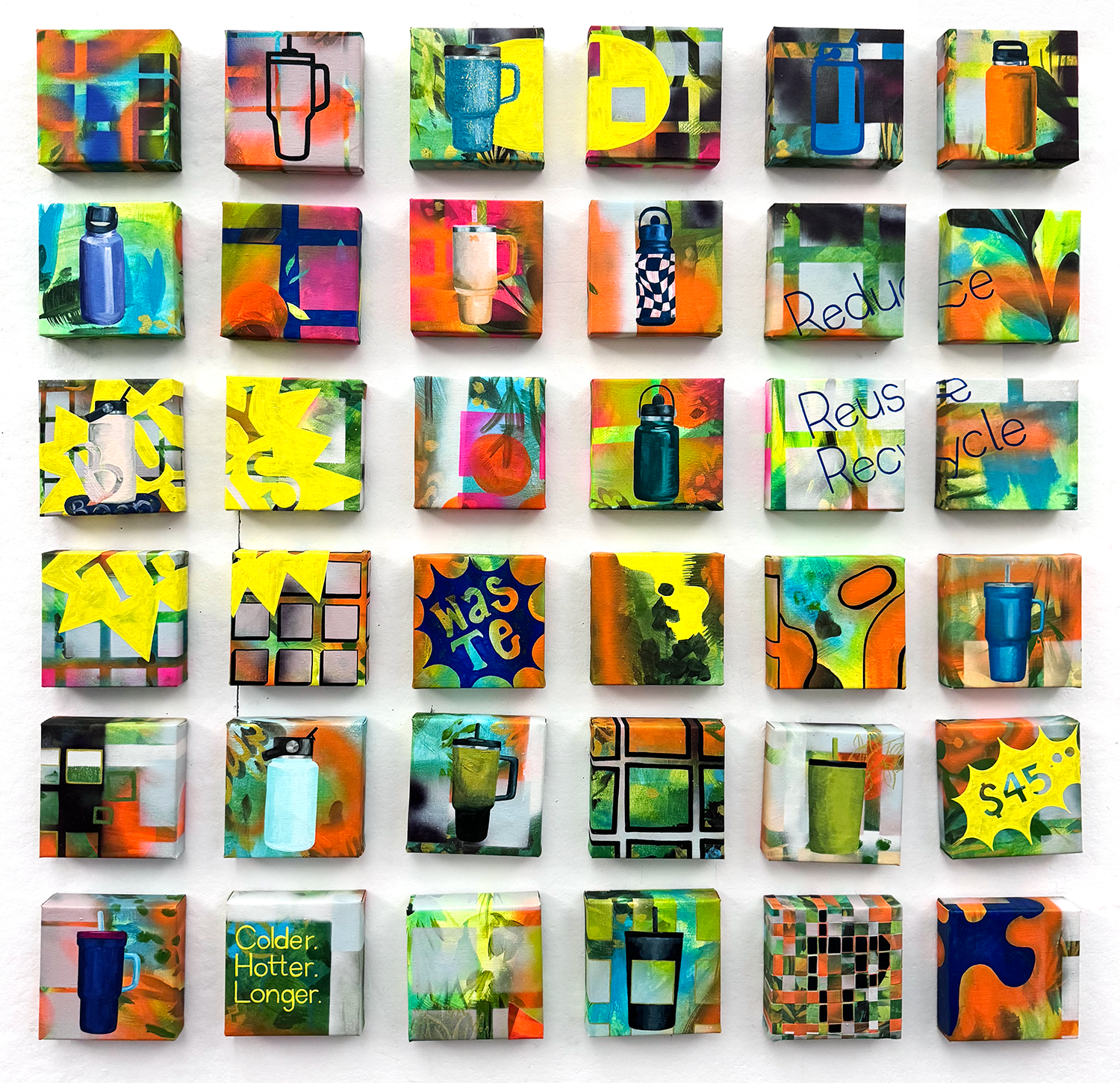
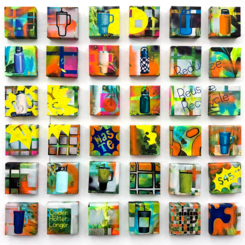
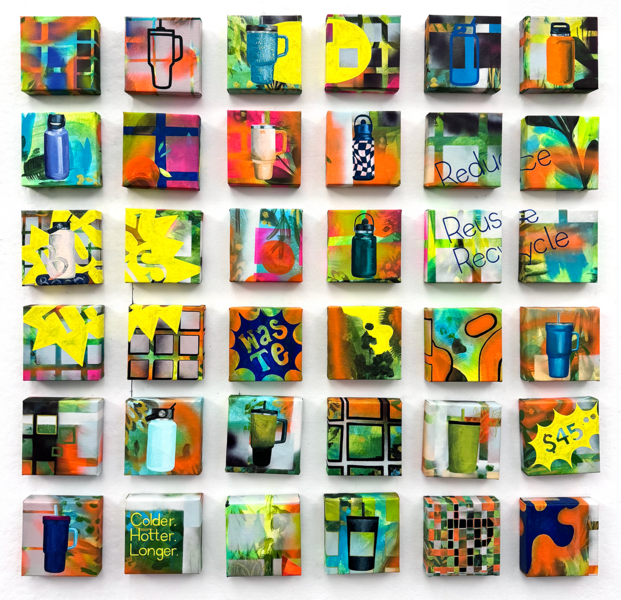 Comfort Consumption 1-36
These pieces can be displayed together or separate. Titling this 1-36 represents the individual pieces that make up this work and as pieces are sold or go off to new homes, new cups and mugs will appear. I have not displayed this piece yet, but when I do, I plan to have shelves set up next to the piece, where guests can trifle through, pick up, touch and rearrange these small consumables.
Questioning our consumption, trends, and the degradation we help accelerate leaves room for viewers to imagine solutions within their block, their city or society at large.
6 x 6 inch linen works arranged in a 6 x 6 gridacrylic, spraypaint, flashe and oil on linen
2024
-
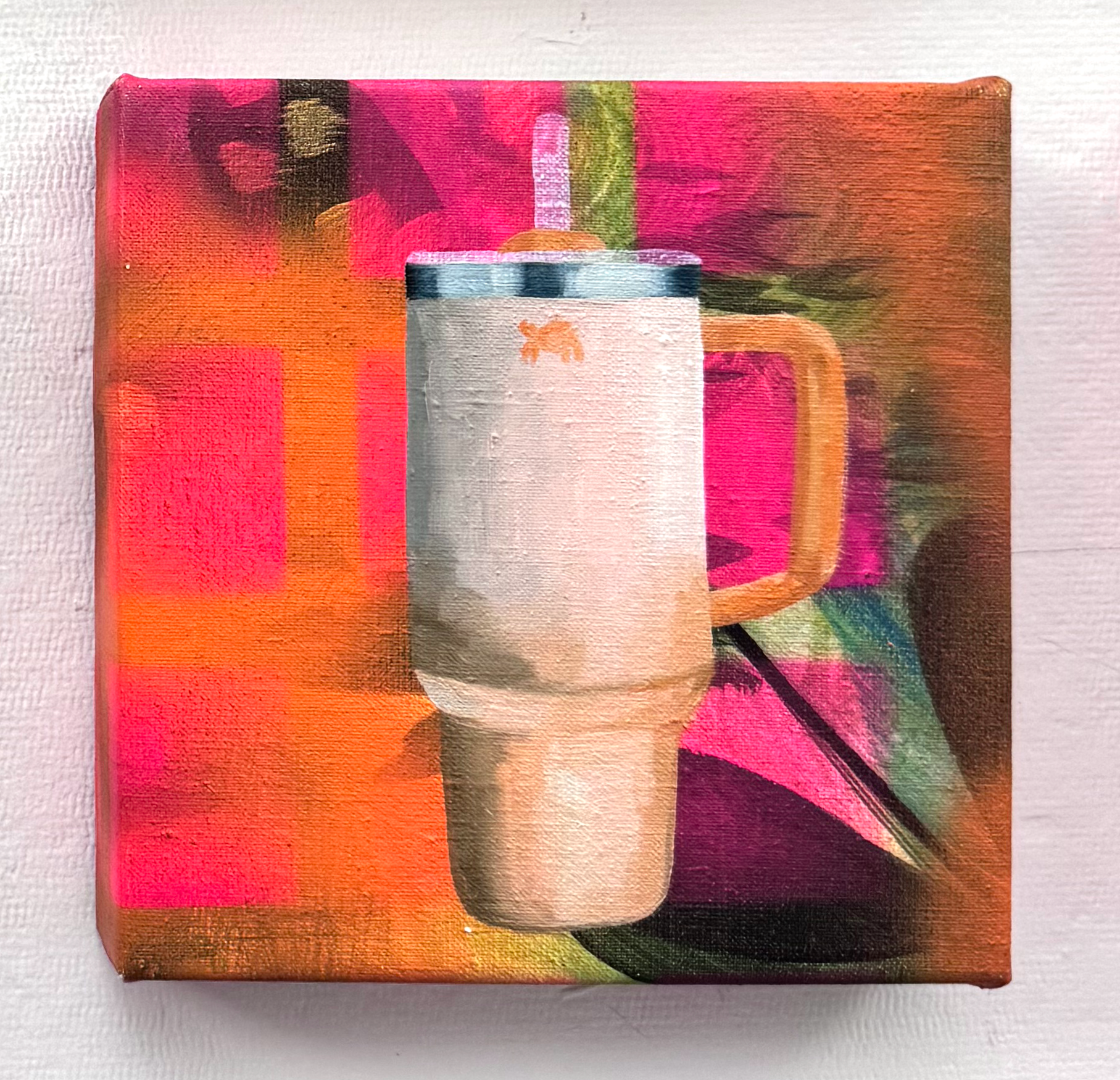
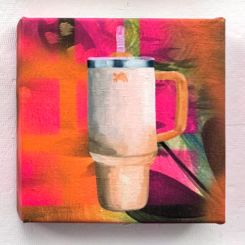
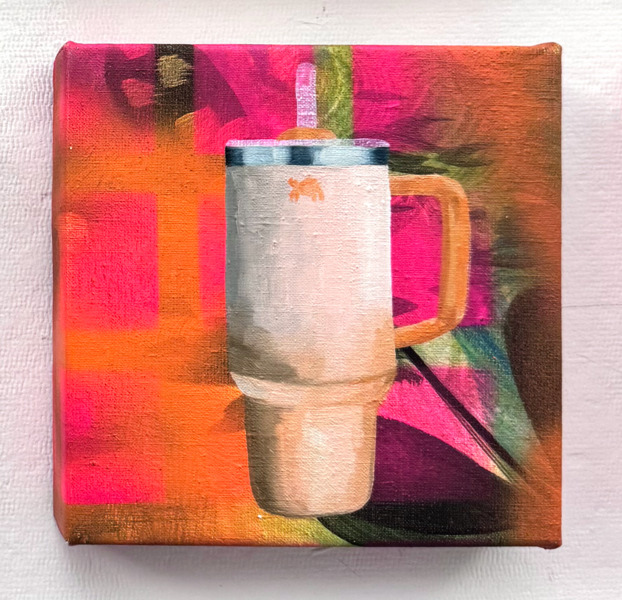 Comfort Consumption #9
6 x 6 inch
acrylic, spraypaint, flashe and oil on linen
2024
-
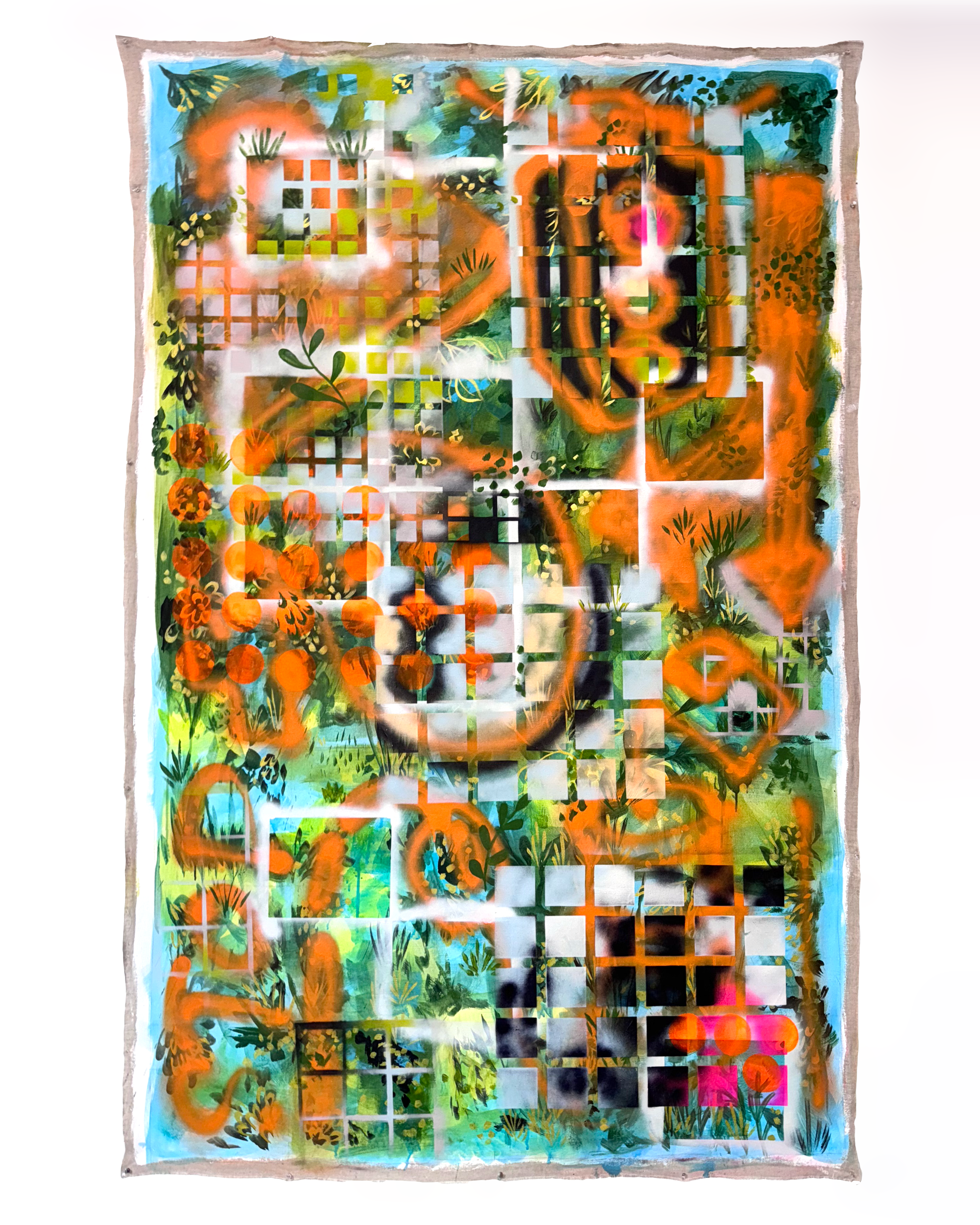
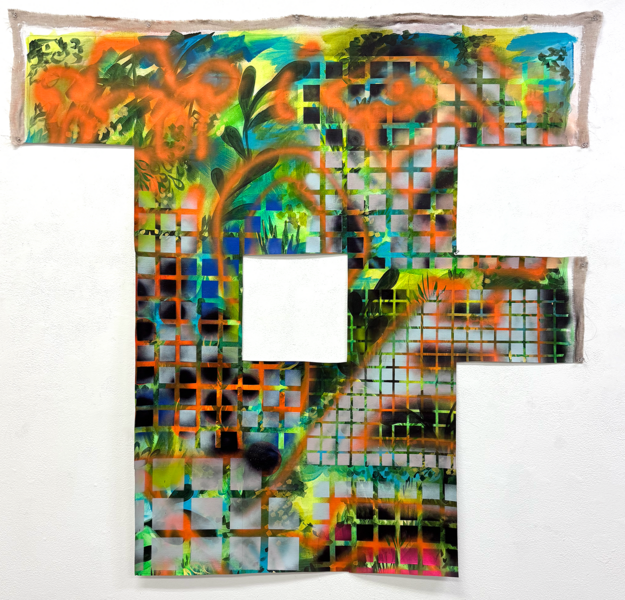 Harvested Garden of EV
A snapshot of some of sections being "harvested" from the larger panel to make the small consumable paintings.
-
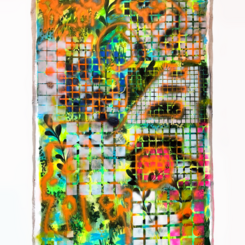
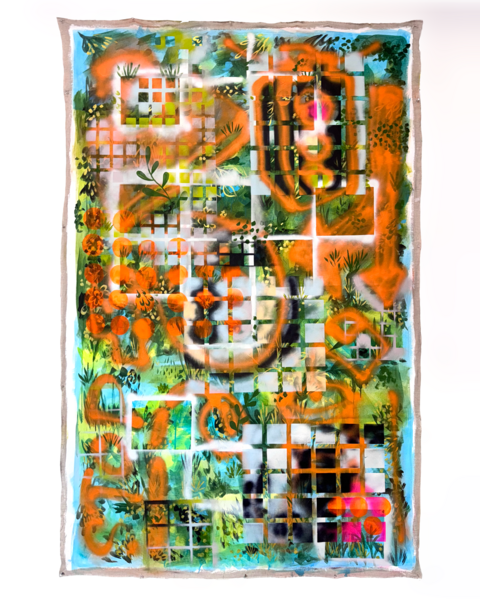 Garden of EV 2
Large linen grounds were stretched and painted to create a lush garden scene that was slowly obfuscated by carchitecture and grids. Representing our isolation and prioritization of cars and sprawl at the expense of all else.
These panels were harvested to create the small, consumable grids that make up the final piece.
84 x 54 inchesacrylic, spraypaint and flashe on linen
2024
-
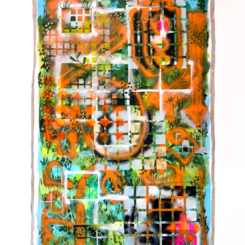
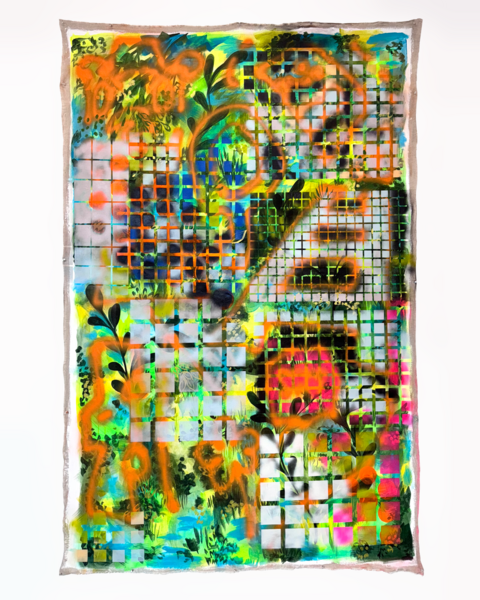 Garden of EV
Large linen grounds were stretched and painted to create a lush garden scene that was slowly obfuscated by carchitecture and grids. Representing our isolation and prioritization of cars and sprawl at the expense of all else.
These panels were harvested to create the small, consumable grids that make up the final piece.
84 x 53 inchesacrylic, spraypaint and flashe on linen
2024


Beyond the Pavement, 2024
-
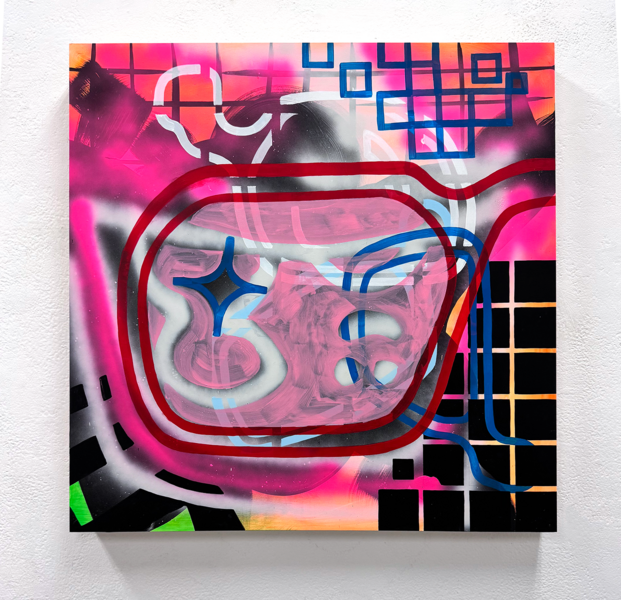 Only Us
I became interested in the idea of how we see other people while we motor around our society. The dehumanization of pedestrians and other drivers as obstructions to our end goal fascinated me and I explored that idea in this piece and in subsequent projects.
2024acrylic, spraypaint and flashe on gessoboard
24 x 24 inches
-
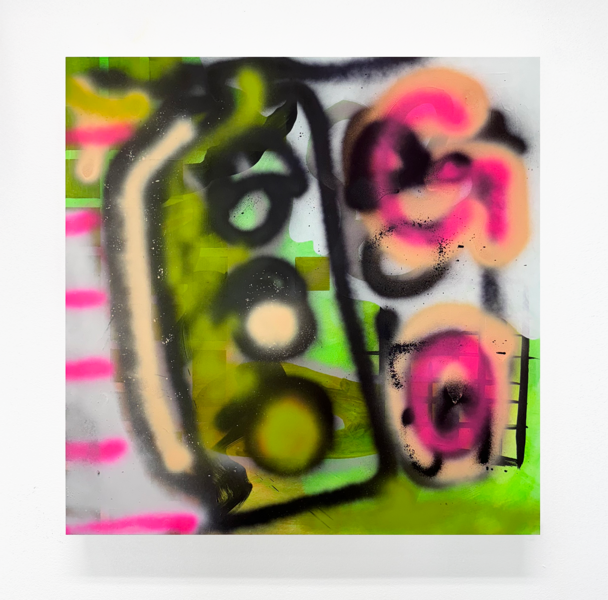 Natural Cycles
After reading, "Confessions of a Recovering Engineer," Charles Marohn discusses traffic lights and the flow of traffic in cities. From being dead stopped to accelerating 30 miles per hour, learning about how the average speed in cities is 10- I began reconciling how ubiquitous stoplights are in cities and whether they're conducive to the health of our infrastructure at large. Risk of severe pedestrian injury is 50% at 30mph, and at almost 0% at 10mph- is the natural cycle of stoplights what should orchestrate our cities?
24 x 24 inchesAcrylic and spraypaint on gessoboard
2024
-
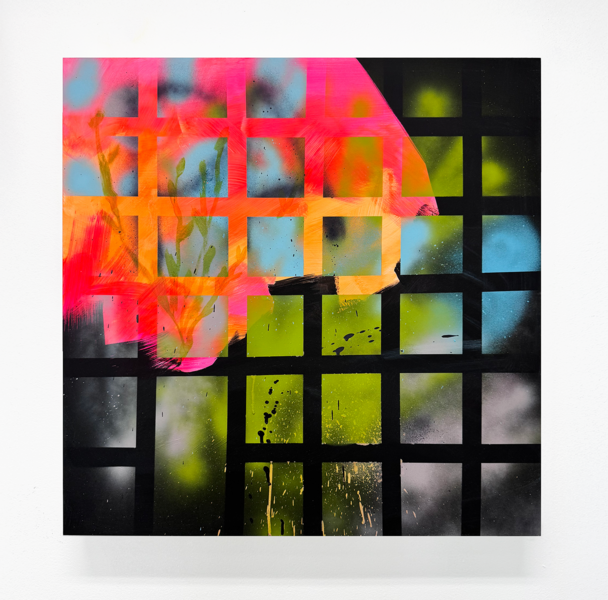 Greenspace
24 x 24 inches
acrylic and spraypaint on gessoboard
-
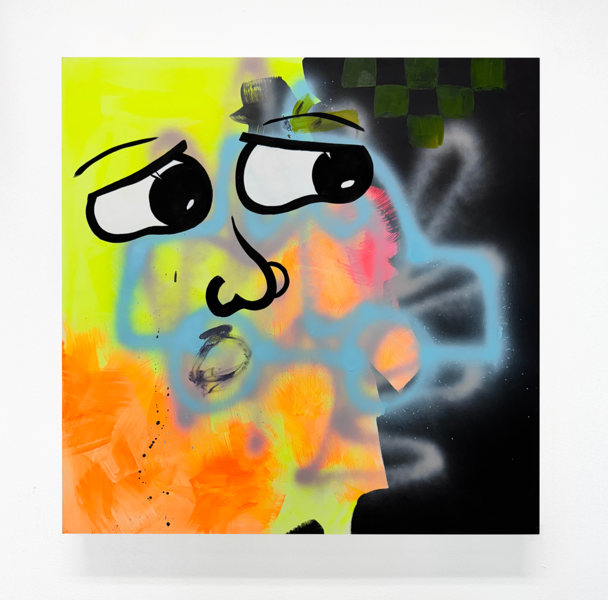 Interloper
24 X 24 inches
acrylic, spraypaint and flashe on gessoboard
2024
-
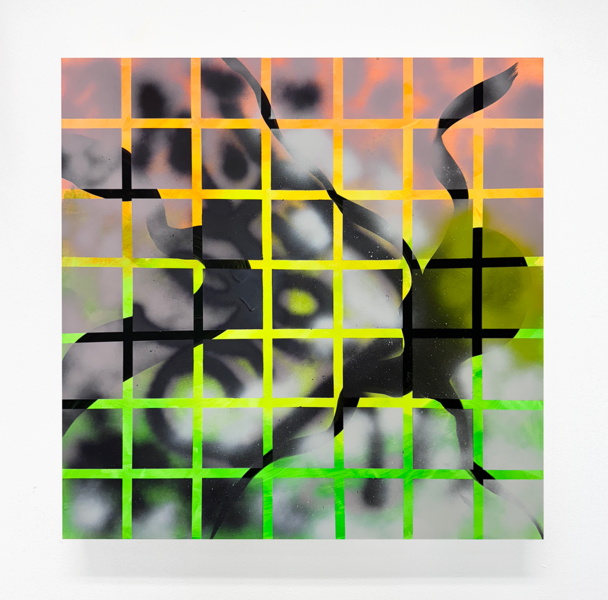 Cities are for Cars, Not People
24 x 24 inches
Acrylic and spraypaint on gessoboard
2024
-
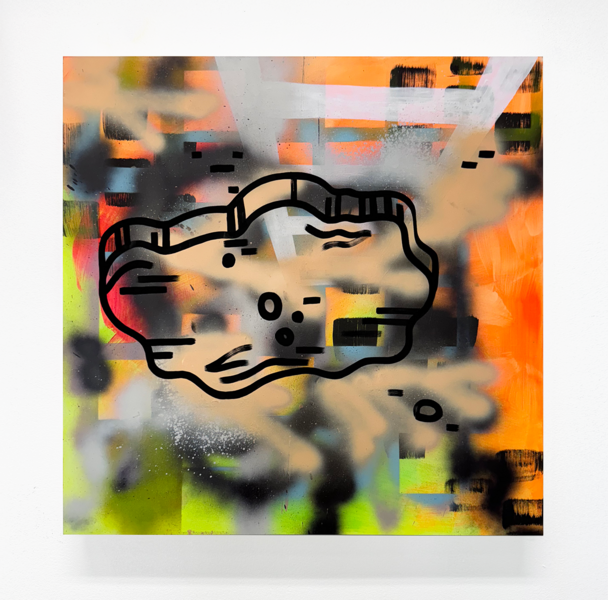 Potholes/Oil Slick
24 x 24 inches
Acrylic, spraypaint and flashe on gessoboard
2024
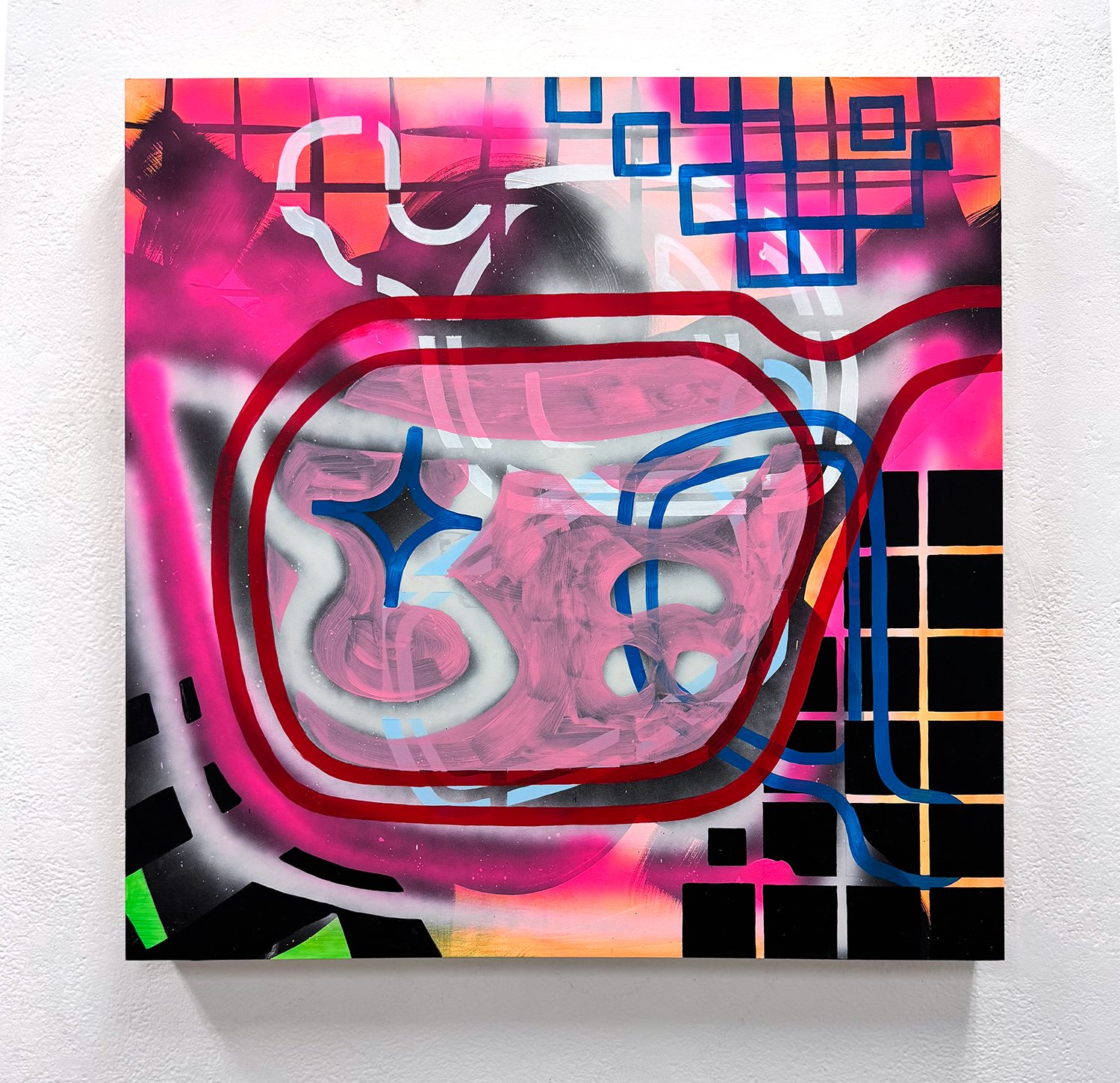
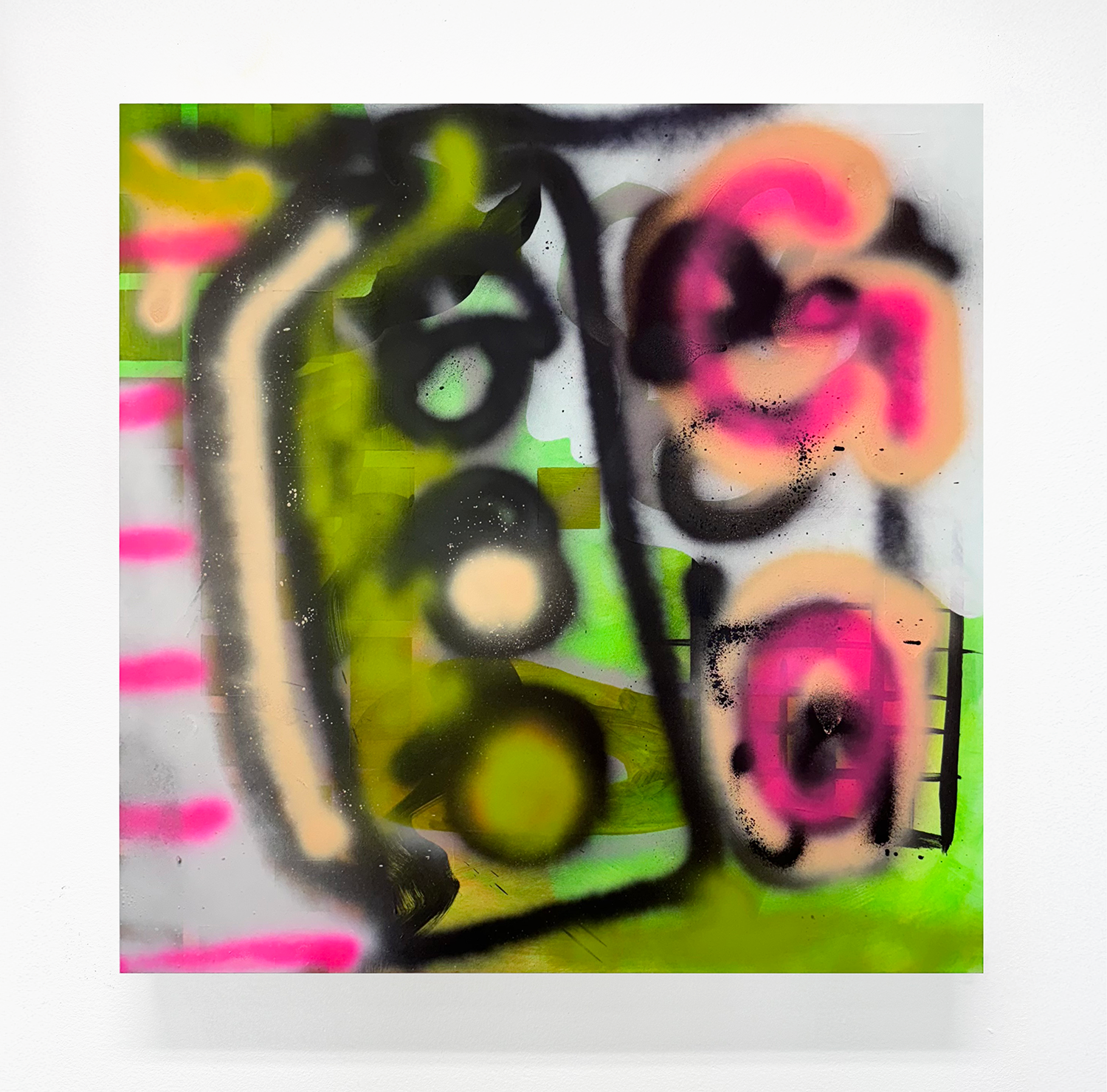
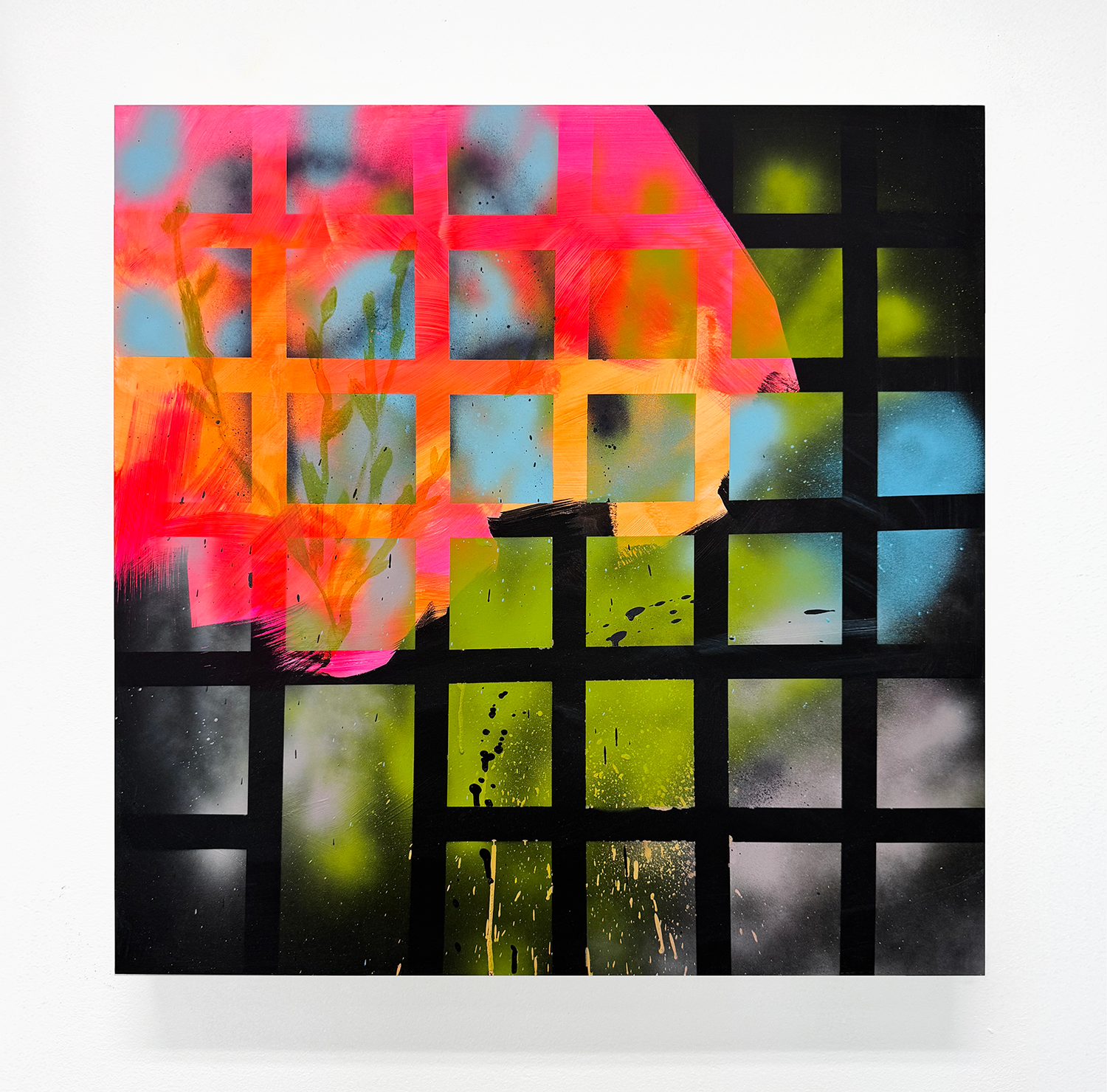
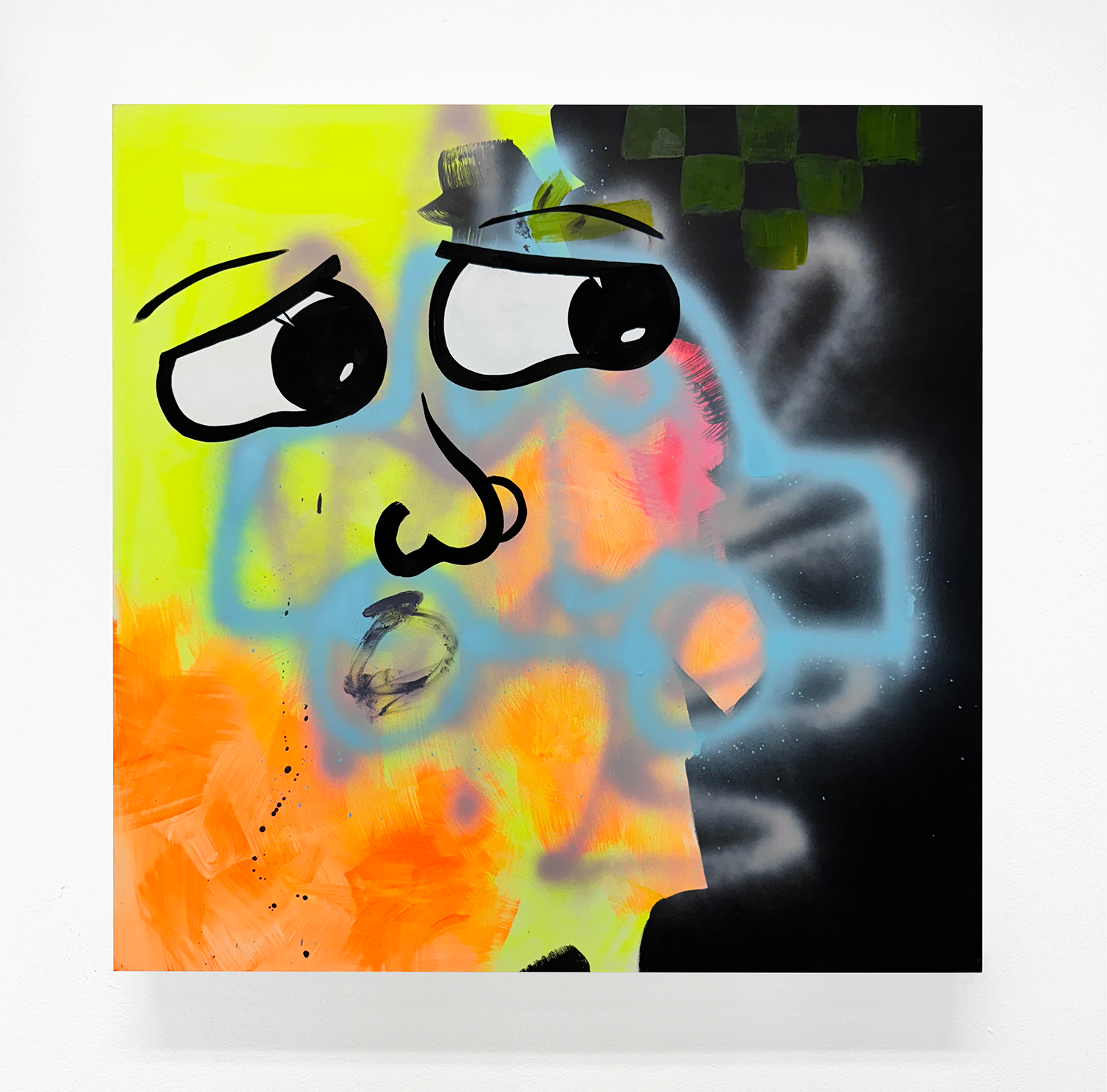
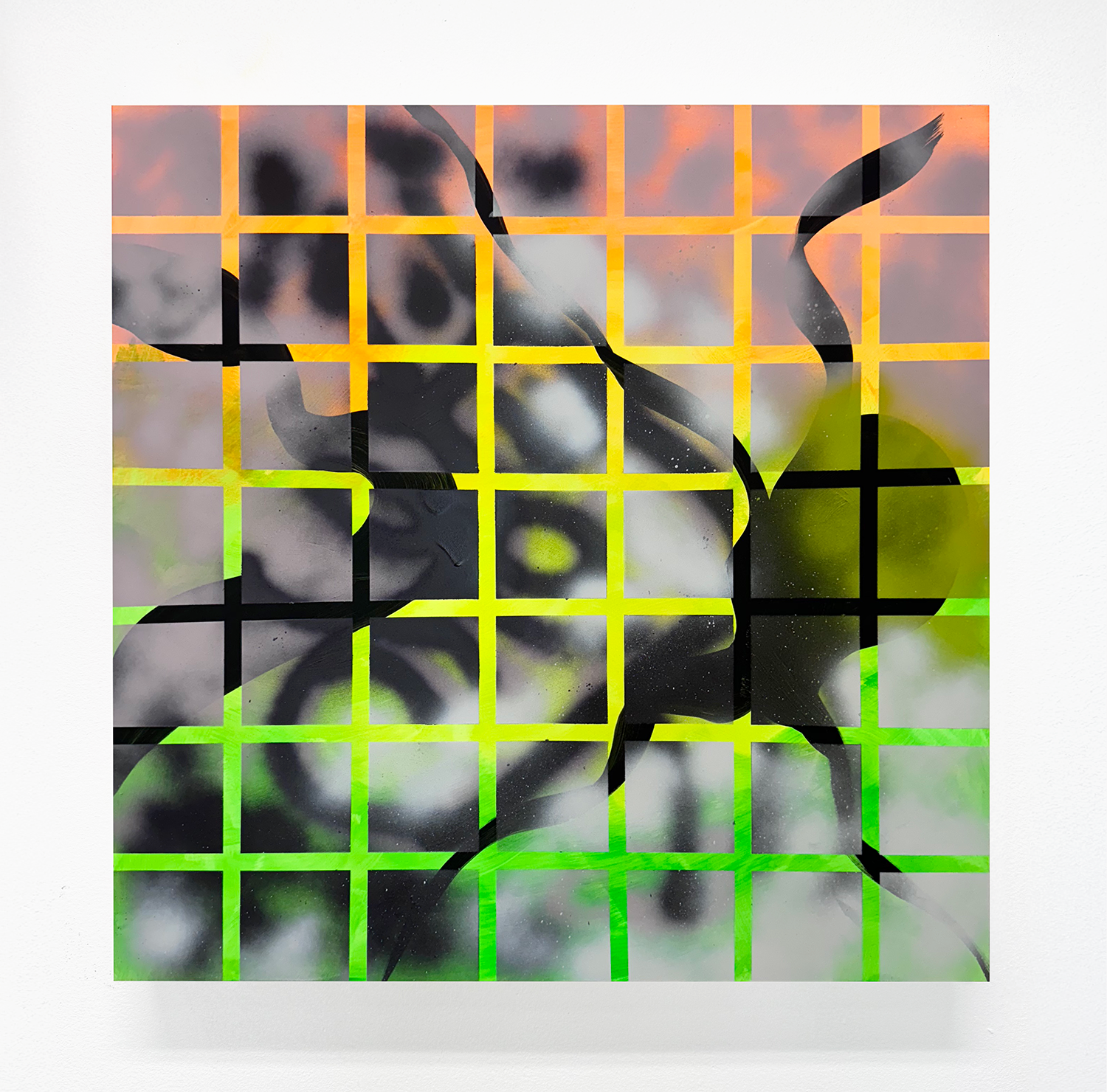
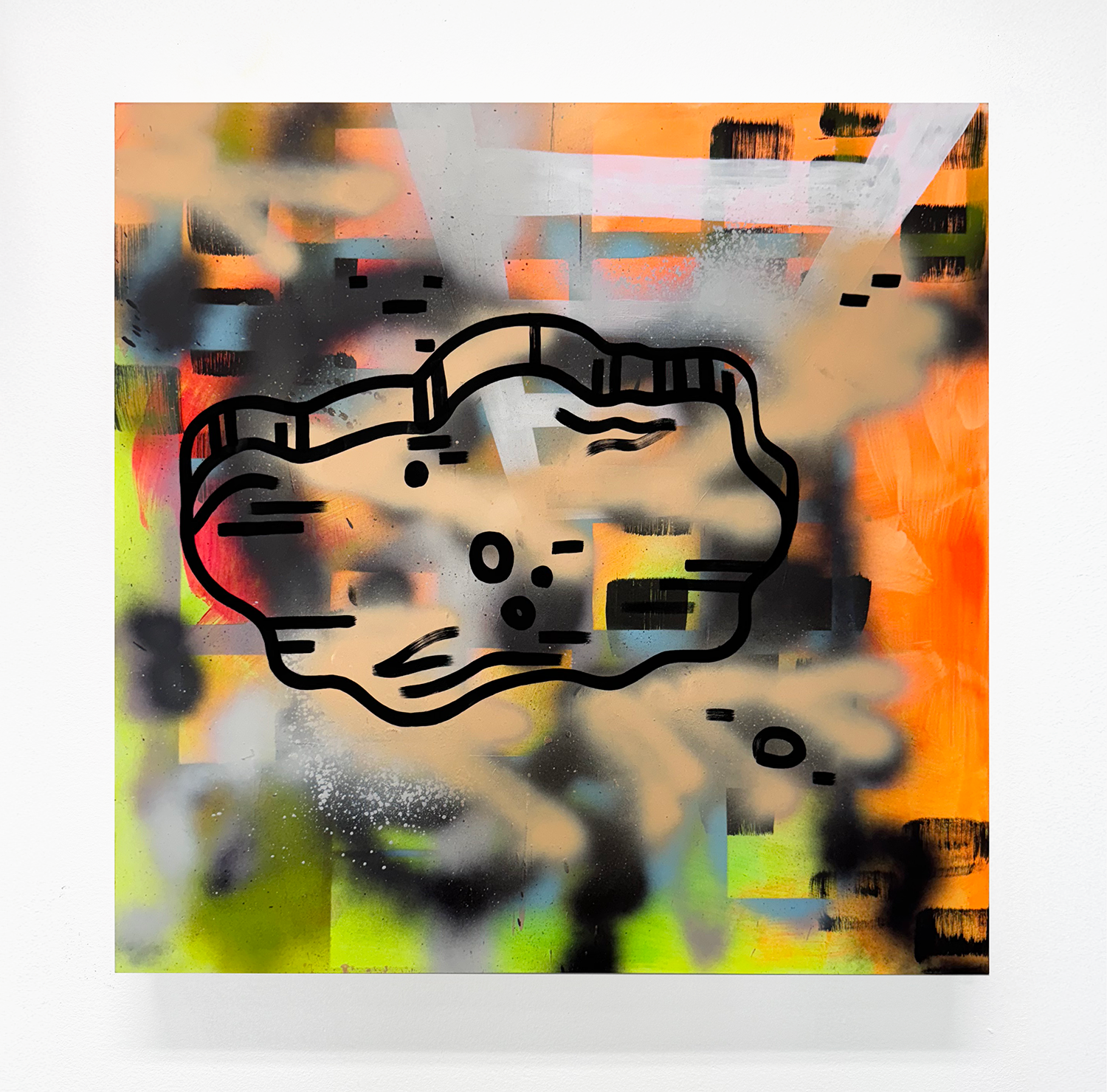
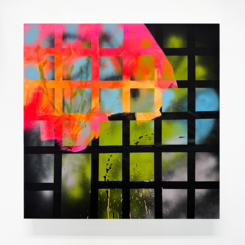
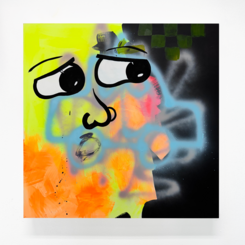
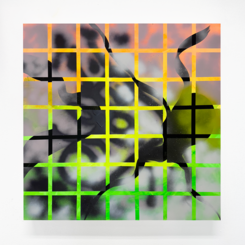
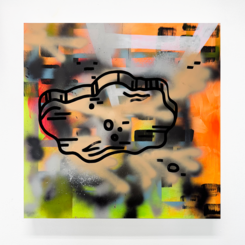
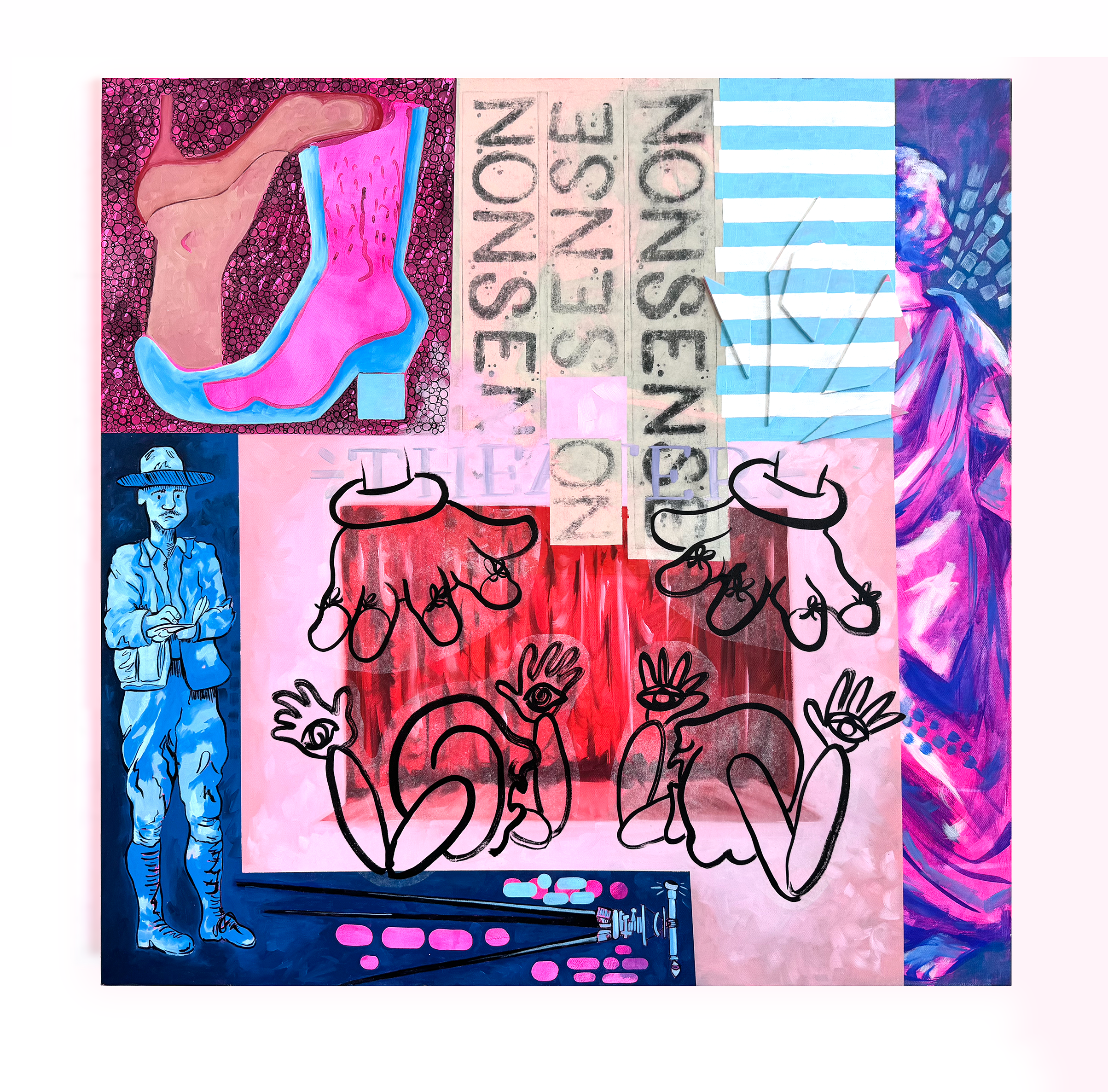
Nonsense, 2024
-
Bordersland
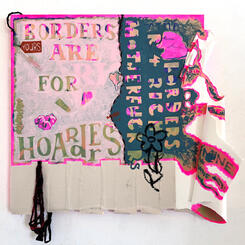
After growing up in Chula Vista, California, I experienced Tijuana, not as a different country divorced from my society, but as a neighboring town that friends and I would travel back and forth from. Moving to Indiana, the politics around "The Border" was my first brush with the violence and fueled rhetoric surrounding this aspect of zoning. In the lead-up to the 2024 election, the disdain around immigration had me turning to "The Land of Open Graves" and "The Case for Open Borders".
This piece has multiple layers of redrawn fictional lines with "mine. mine. mine." and "yours. yours." written on it. Taking over water resources, it being reclaimed, only for the border to gobble up rocks and minerals- the statement "borders are for hoarders" and "borders are for rich motherfuckers" making their appearance every iteration.
2024Acrylic, oil, clothing scraps, thread, stongehenge paper and oil stick on canvas
36 x 36 inches
-
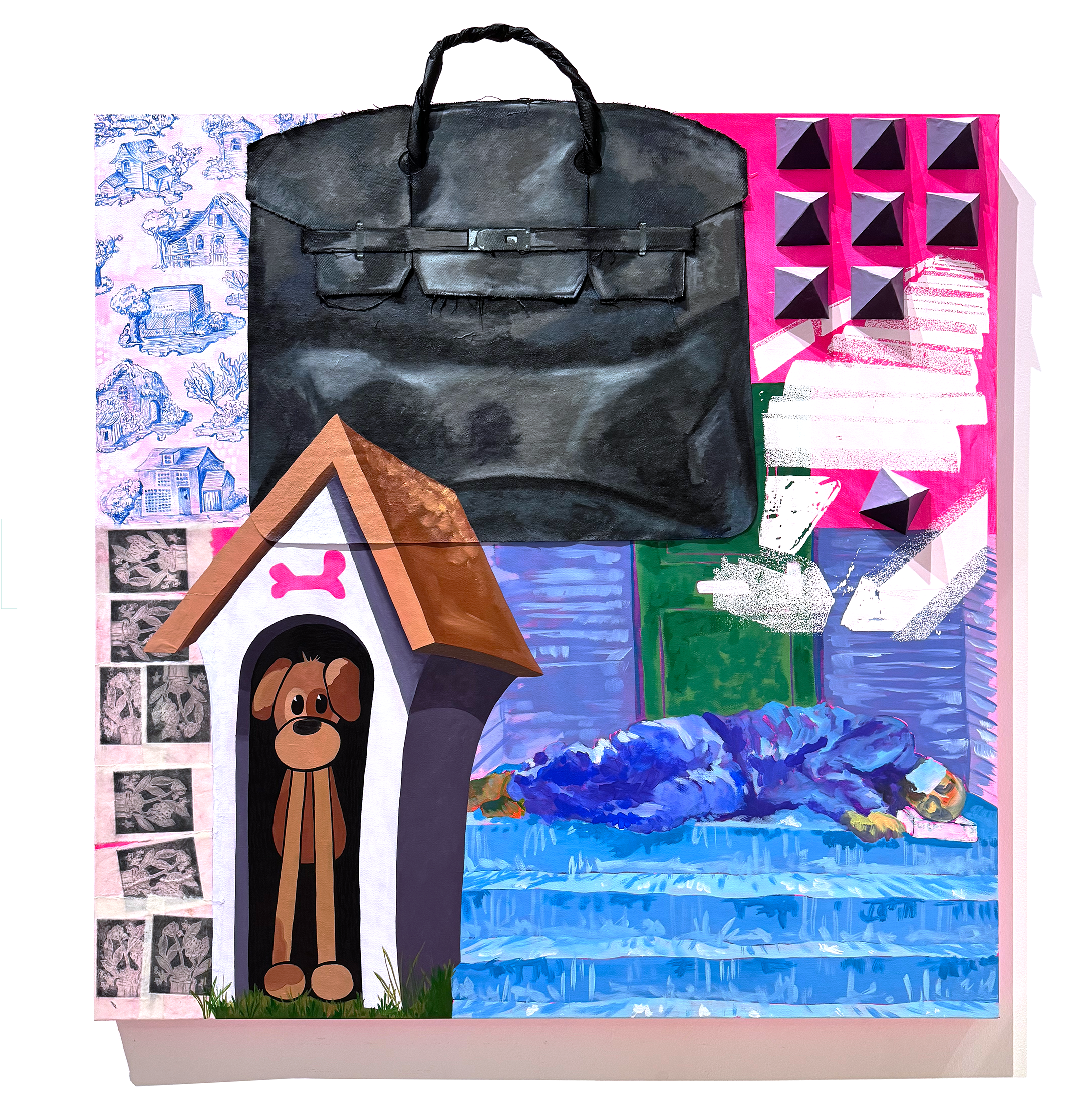
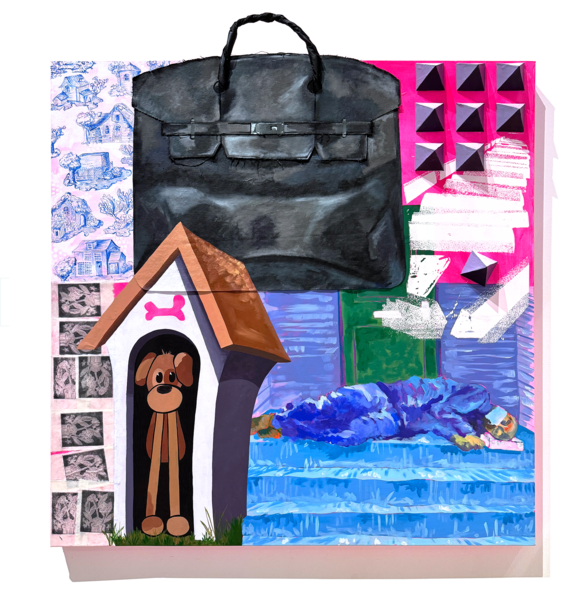 Not in Nottingham
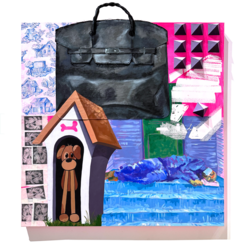
The dichotomy of luxury and hostil architecture takes center stage. Inviting viewers to ask questions about why we think it's okay to house an animal, but seeing human being sleeping on streets is normal in our society. The commodification of handbags (that is a representation of a $60,000 purse) and prints, where a small prison hides amongst quiant cozy homes (in the toile section). I imagined this as a scraped together collage of modern society. Where every scroll on social media brings you somewhere new and jarring and we begin to become desensitive to the dehumanization of other people while we sit our cars, look at grids and stay safe and isolated in our single-family homes.
2024Oil and acrylic on canvas, papier-mâché, canvas scraps, recycled grocery bag, intaglio prints, screen-print
36 x 36 inches
-
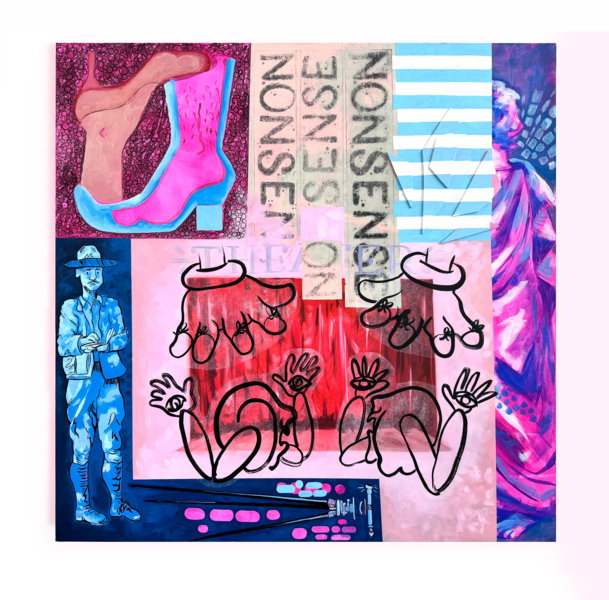 The Puppets
2024
oil, tissue paper, cold wax, wood scraps, intaglio prints on canvas
36 x 36 inches
-
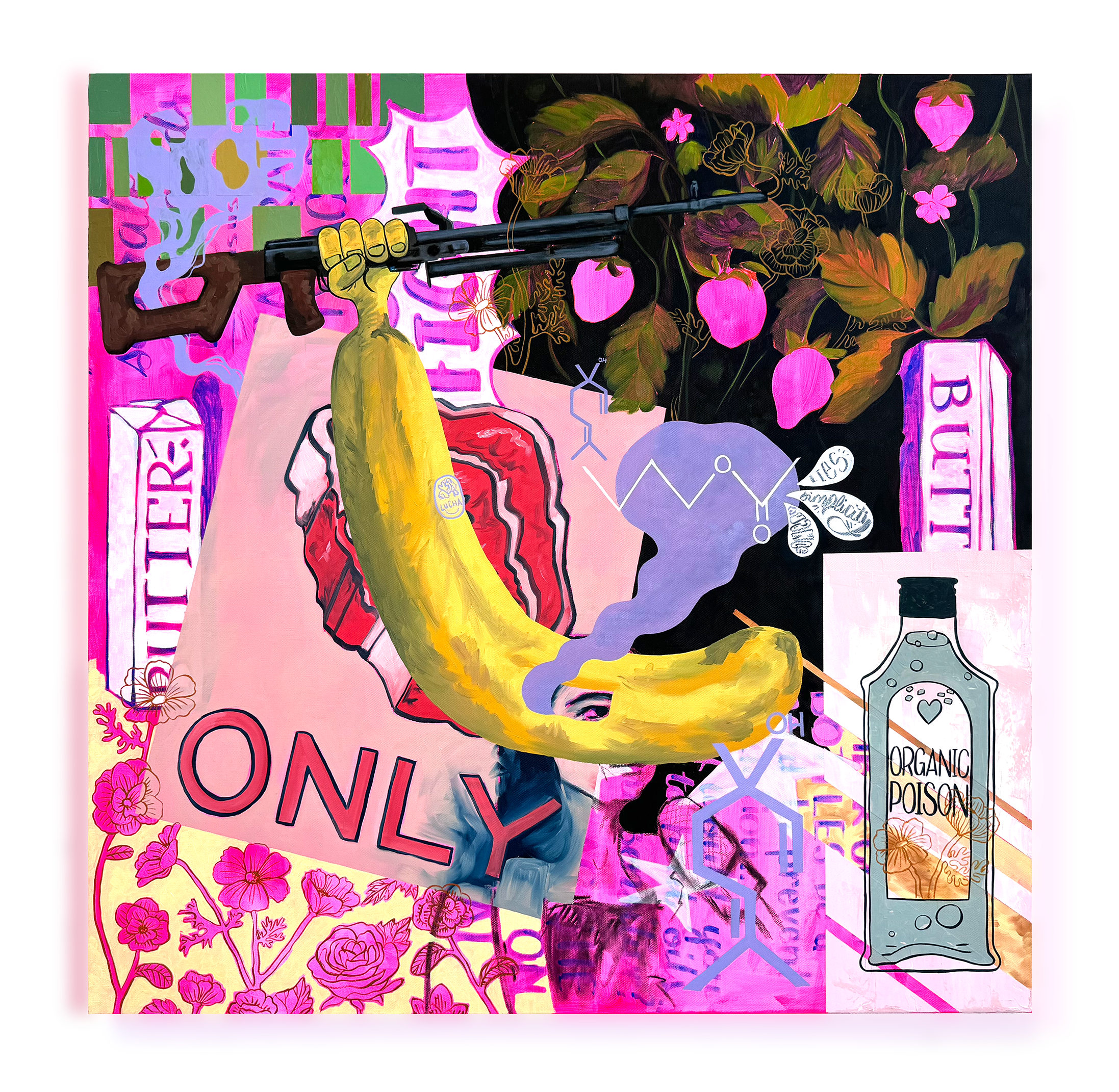
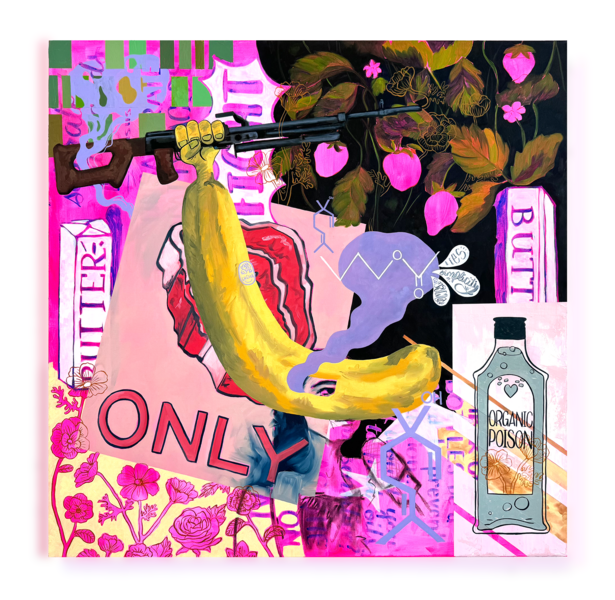 Chemophobia
2024
Acrylic and oil on canvas
36 x 36 inches
Just One More Lane
-
 Block/Busting
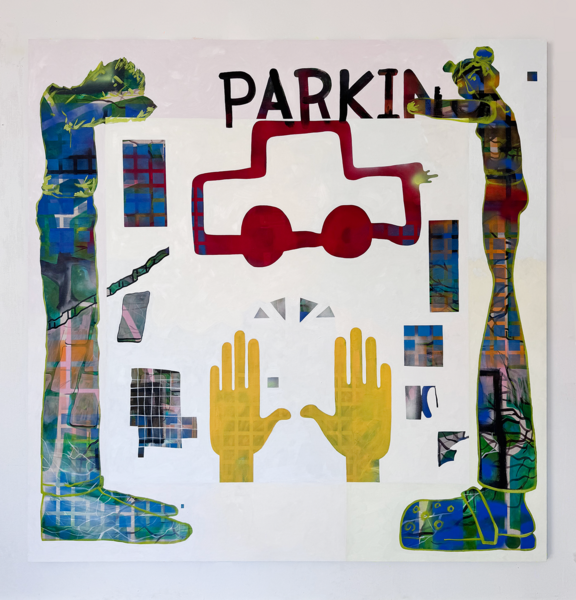
This is a 72 x 72 inch painting whose underlayers go from organic to artificial until a giganitc white block takes over the painting. The people get pushed to the side and the car is elevated above all else.
-
 Encroach
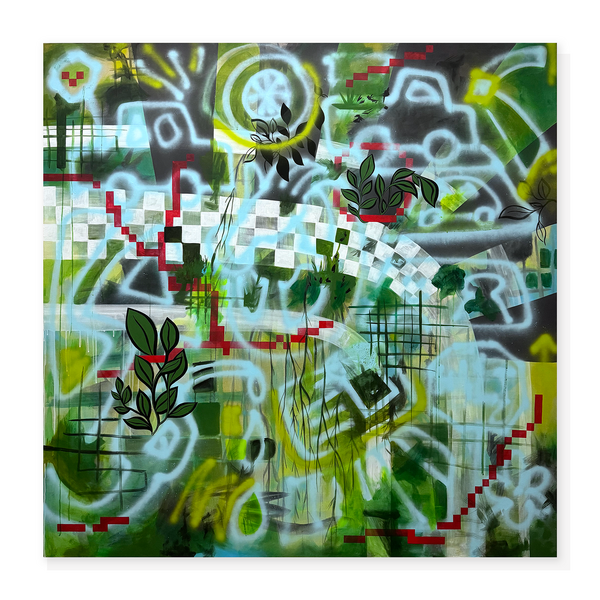
A 72 x 72 inch painting that fights organic to artificial in every layer. Inspired by the conversations surrounding the water of the harbor being swimmable, I began to deep-dive on what can be done to improve water quality in our cities. The massive expanse of roads and concrete allows for water to wash our oil into gutters, sewers and harbor where an alternative city structure could prioritize green spaces over grey concrete, and plant native grasses that have 6' root systems, allowing for the absorption of water, that helps with flooding, helps to fight the heat islands and assists with water going into soil that acts as a filter before ending up in our bodies of water.
How can we imagine a better world? What does it look like if we start small and envision a better block? City? Region?