Work samples
-
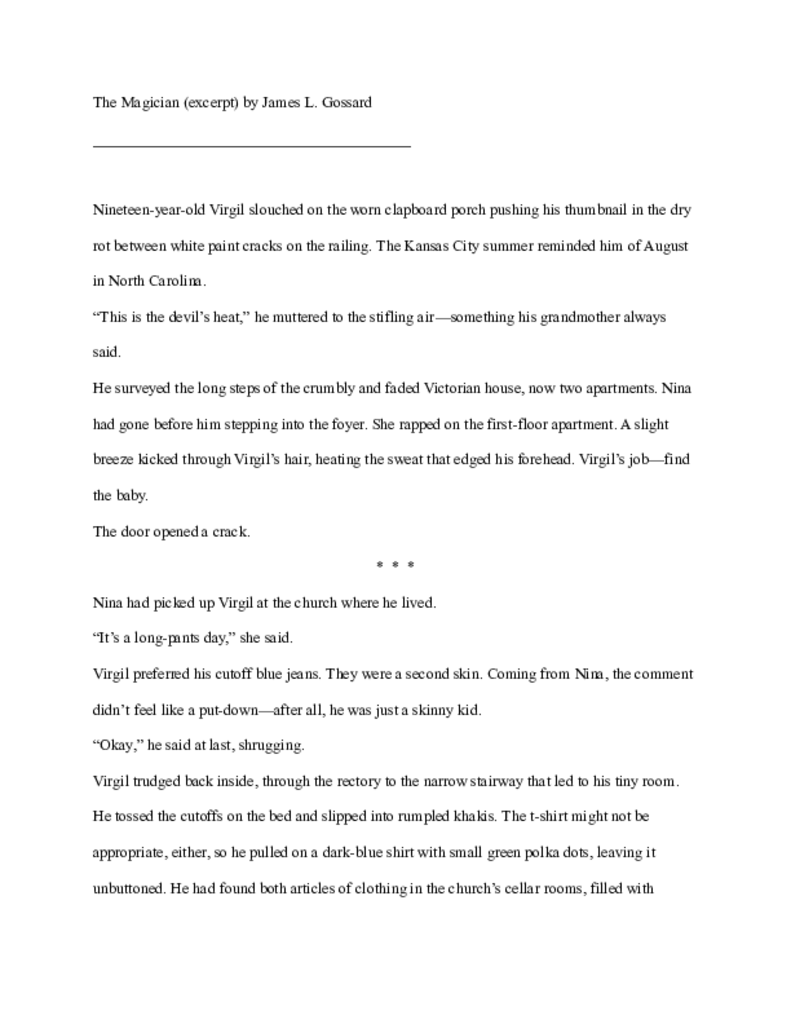 The Magician (an excerpt)
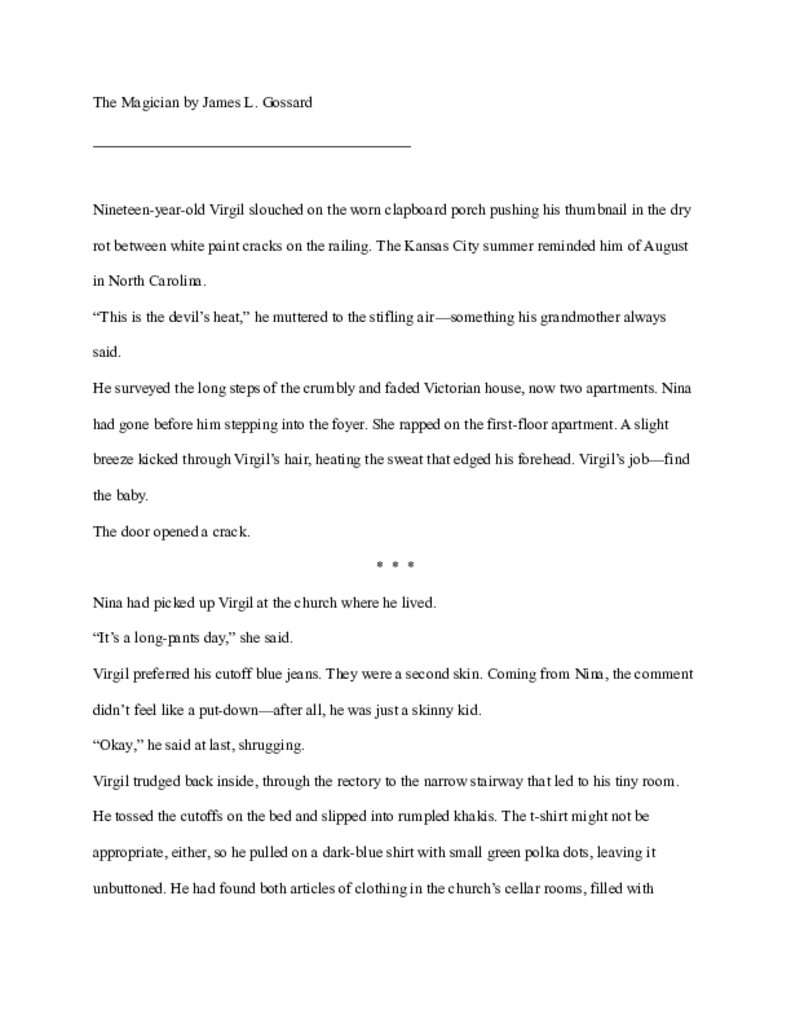
The Magician is a short story set in the 1969 world of inner-city church work in the Midwest, told through the eyes of a nineteen-year-old volunteer. It examines the uneasy space between compassion and reality, and the often-sad consequences of good intentions in a failing system.
-
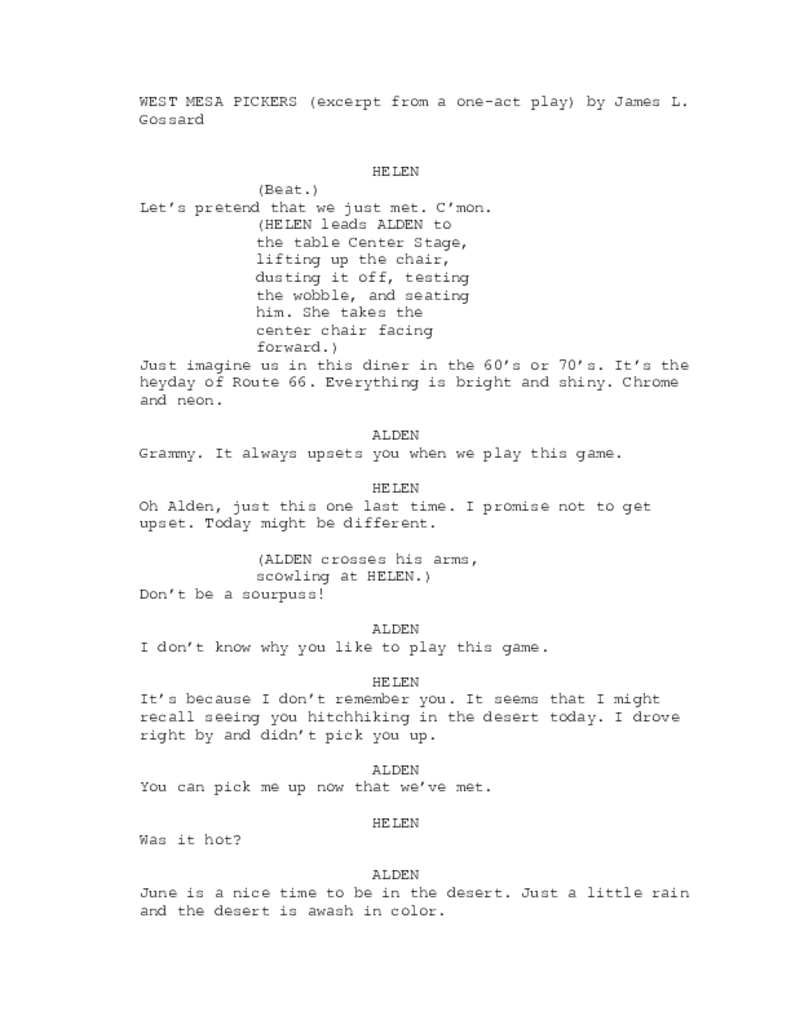 West Mesa Pickers (an excerpt)
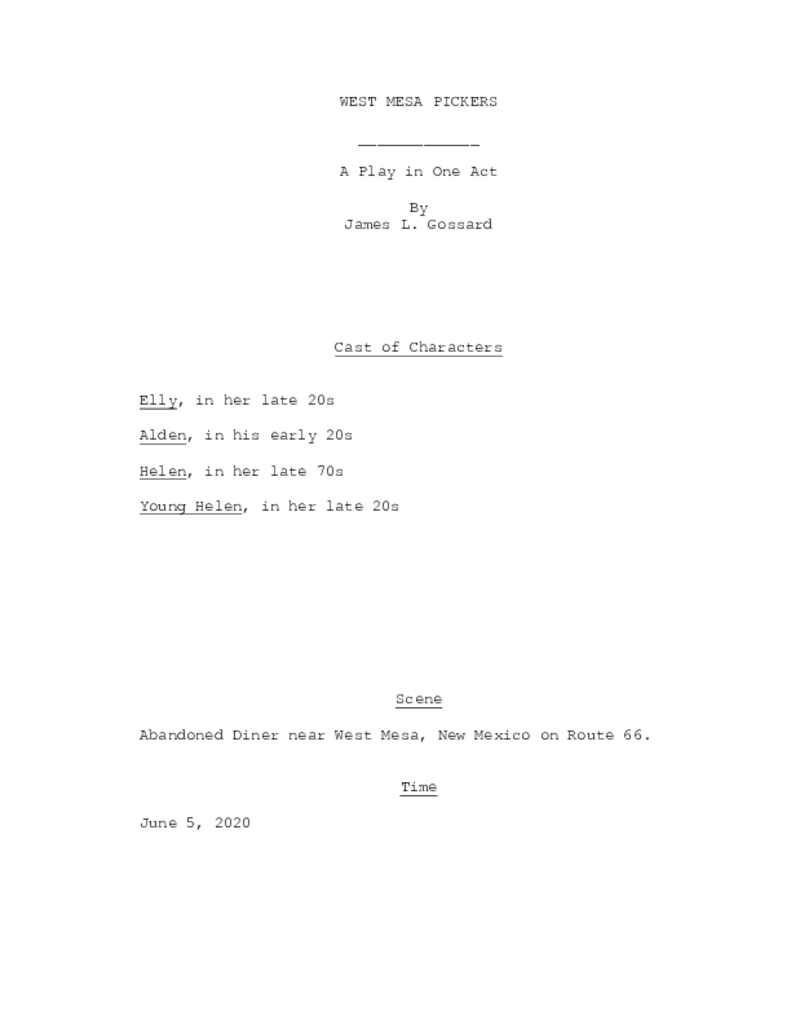
West Mesa Pickers is a one-act stage play set in an abandoned diner on Route 66 near West Mesa, New Mexico. Through the wandering conversation of an elderly woman and her grandson, the play explores memory, loss, and disappearance, and the stories people tell themselves in order to live with what cannot be easily resolved.
-
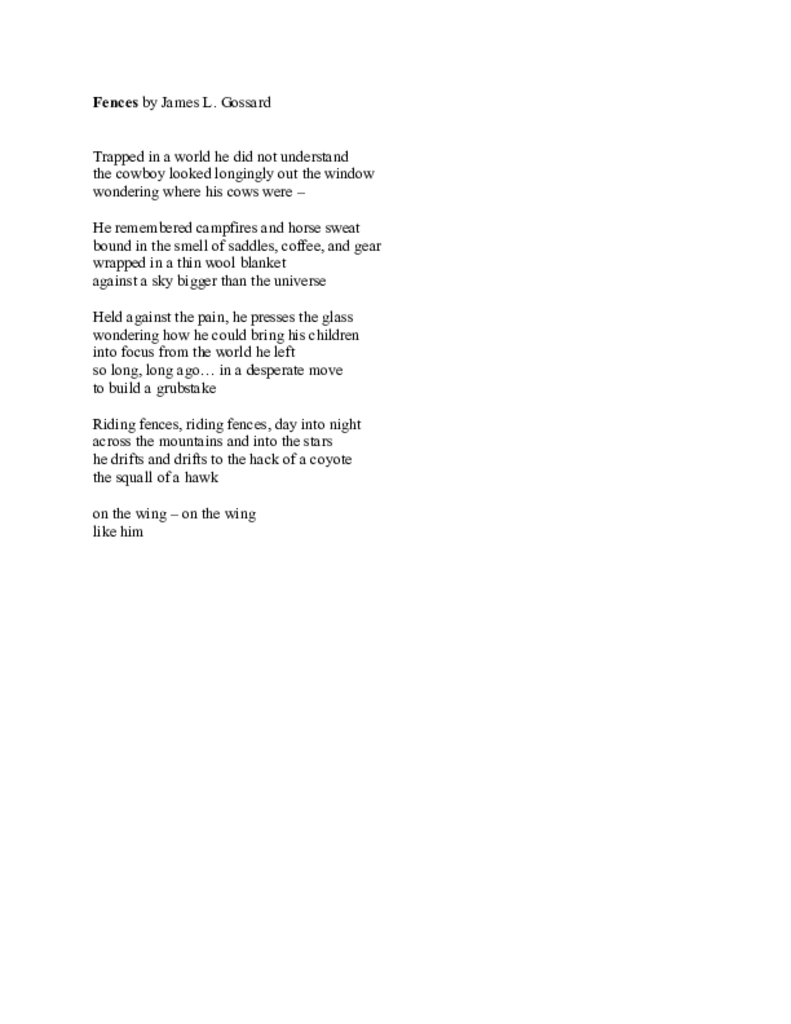 Fences
“Fences” appears in Selected Poems from Archipelago, a collection centered on memory and displacement and the interior lives shaped by American landscapes. Moving between personal history and social observation, the poems reflect on what is carried forward and what is left behind, and how people endure within systems that often fail them.
-
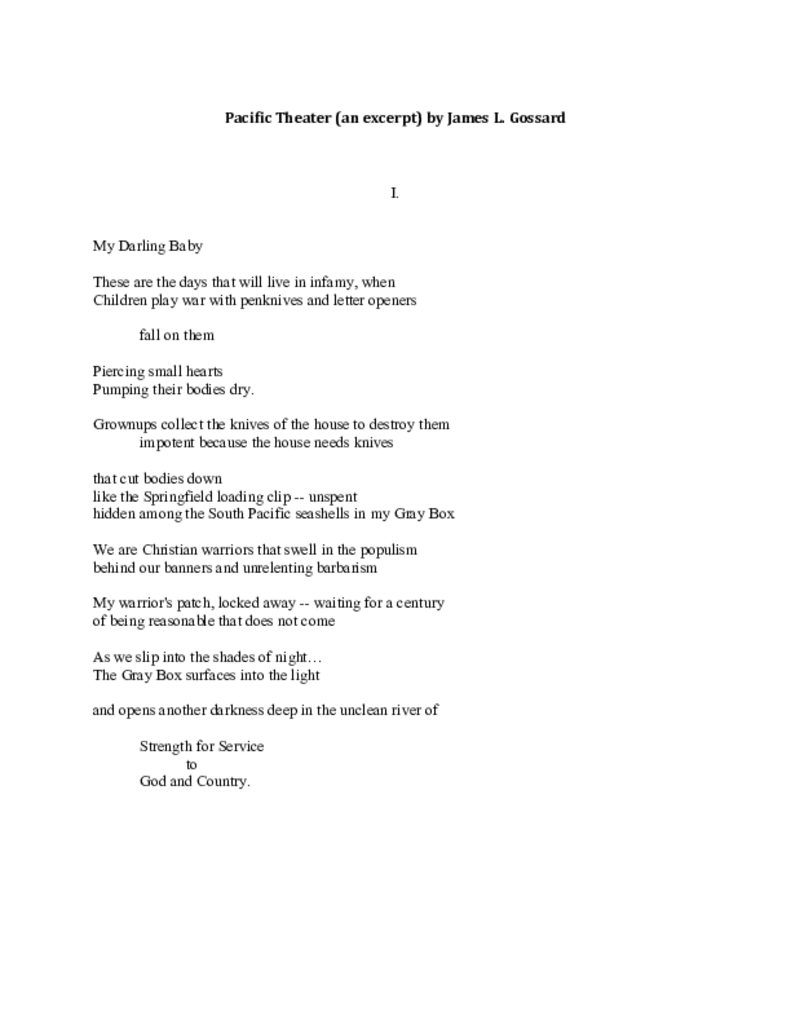 Pacific-Theater-Excerpt_0.pdf
Pacific Theater (an excerpt) introduces a speaker addressing letters from the South Pacific during World War II, using a small military keepsake box as a central metaphor. The excerpt explores memory, violence, desire, and self-definition as they surface through the language of war and correspondence.
About James

James L. Gossard is a Maryland-based writer, director, and producer working across film, stage, and literary forms. His work often explores memory, place, identity, and the tension between interior lives and public histories.
In 2024, Gossard published "Archipelago: Selected Works," a collection of short stories, poetry, stage plays, and a screenplay. In 2025, Gossard presented free readings and discussion from "Archipelago" in an effort to bring free literary… more
The Magician
-
 The Magician
West Mesa Pickers
-
 West Mesa Pickers
West Mesa Pickers is a one-act stage play set in an abandoned diner on Route 66 near West Mesa, New Mexico. Through the wandering conversation of an elderly woman and her grandson, the play explores memory, loss, and disappearance, and the stories people tell themselves in order to live with what cannot be resolved.
Selected Poems from Archipelago
-
 Selected Poems from Archipelago
Selected Poems from Archipelago is a collection centered on memory and displacement and the interior lives shaped by American landscapes. Moving between personal history and social observation, the poems reflect on what is carried forward and what is left behind, and how people endure within systems that often fail them.
Pacific Theater
-
 Pacific-Theater_0.pdf
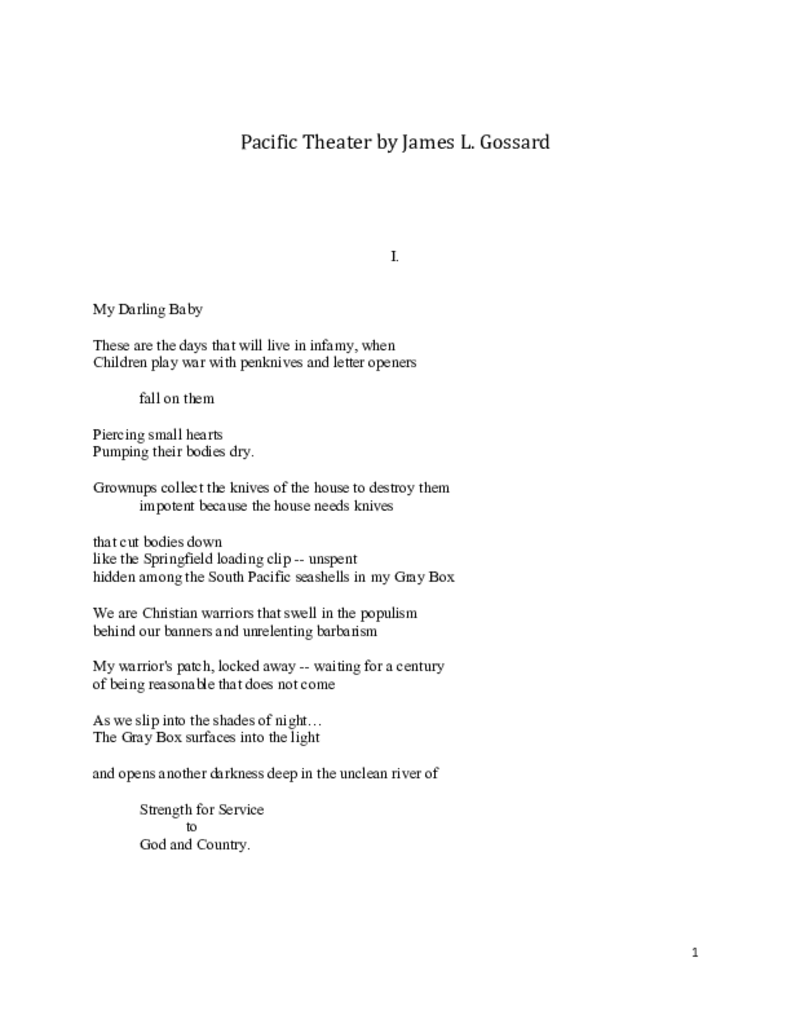
Pacific Theater is a nine-part mini-epic poem built from imagined wartime letters written during the Pacific campaign of World War II. Moving between intimacy and brutality, the poem examines how memory, sexuality, patriotism, and violence coexist within a single life, and how the artifacts of war are carried forward long after the fighting ends.
The Falling Tower
-
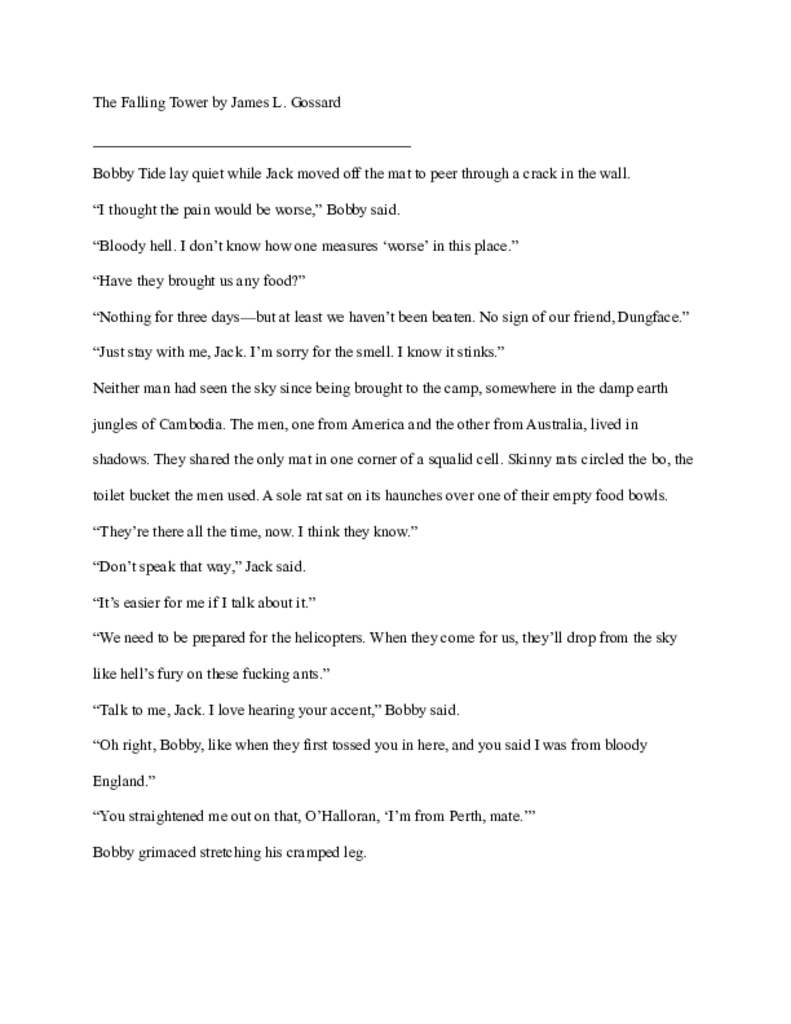 The Falling Tower
The Falling Tower is a short story set across memory, captivity, and intimate recollection, following a young American soldier held in a prisoner-of-war camp during the Vietnam era. Moving between brutal present conditions and formative moments of love, desire, and regret, the story examines how identity fractures under extreme pressure and how human connection persists even as the structures that once gave meaning begin to collapse.
Book
-
 Book
BookBook is a one-act absurdist play that examines censorship, compliance, and psychological coercion through the lens of an institutional intake process. Set in a sparse office where unhoused youth are promised safety and nourishment, the play explores how language, surveillance, and ritualized questioning are manipulated to enforce conformity and suppress dissent.
Epitaph
-
 Epitaph
Epitaph is a one-act stage play that unfolds in the aftermath of a young person’s death, as a series of conversations between the deceased and those tasked with interpreting their final moments. Moving between memory, identity, and imagined reconciliation, the play explores grief, ambiguity, and the limits of understanding when a life is reduced to evidence.
Shakespeare’s Alley
-
 Shakespeare’s Alley
Shakespeare’s Alley is a one-act play set in an urban alleyway, where an aging former actor and a young unhoused woman form an unlikely connection through shared language. Drawing on scenes from Romeo and Juliet, the play explores love, displacement, aging, and the fragile ways people care for one another at the margins of public life.
Divine Instinct — an authored cinematic essay on art, silence, and inner worlds
-
Divine Instinct Trailer #2
A later Divine Instinct trailer version that foregrounds narrative clarity and accessibility while maintaining the film’s reflective core.
-
Divine Instinct Trailer #1 (Original Score)
An early "Divine Instinct" trailer interpretation with a haunting original score that emphasizes the film’s interior atmosphere and emotional terrain.
-
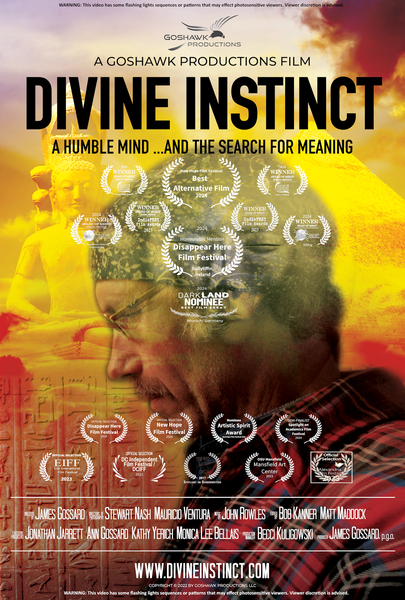 Divine Instinct Poster
Poster image for the 2023-2026 festival run of the feature-length essay film, Divine Instinct.


Divide Creek (short fiction/work in progress)
-
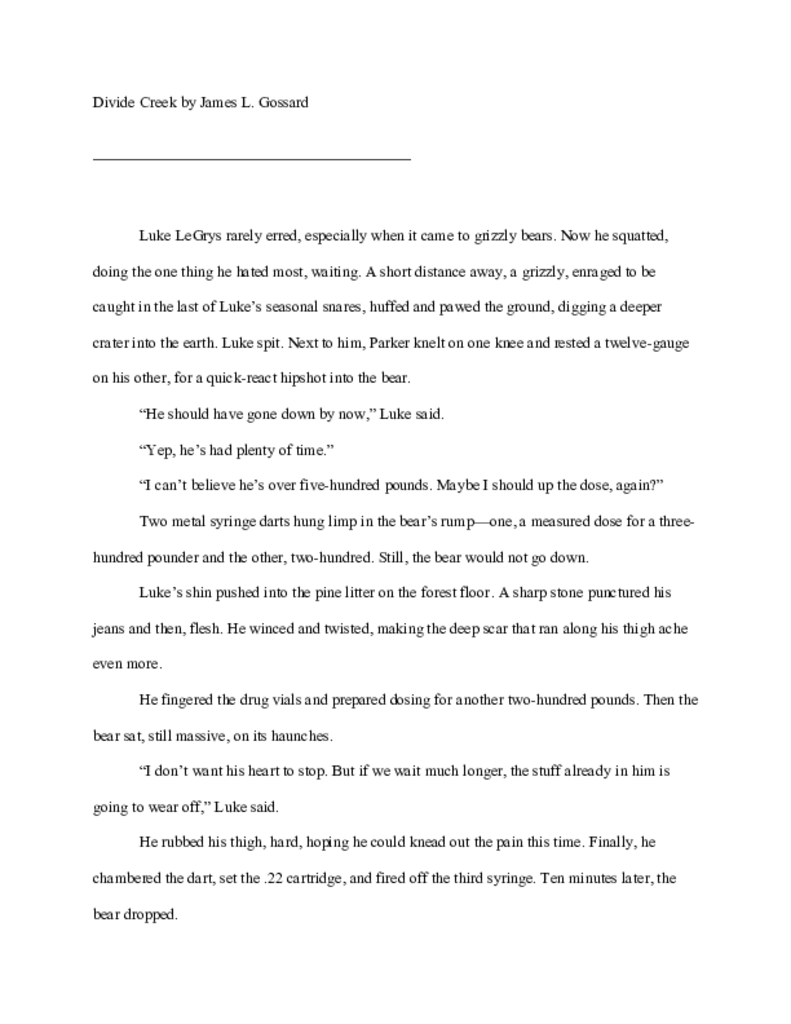 Divide Creek (work in progress)
Divide Creek is a prose work I am revisiting and developing as part of a larger body of fiction set in the American West. The piece explores grief, moral responsibility, and the aftermath of violence through a character whose professional expertise becomes inseparable from personal loss. The landscape is not a backdrop but an active force, shaping both action and consequence.