Work samples
-
Ekki Hugsa, Piano and Loop Station x Video Performance
This video documents a video art and piano/loop station performance in the Earl and Darielle Linehan Concert Hall, where we debuted our collaboration built around pianist Liana Harron’s arrangement of Ekki Hugsa (Don’t Think) by Ólafur Arnalds. The performance took place on February 4, 2026 at the University of Maryland, Baltimore County.
Liana performs the arrangement by building layered piano phrases through a loop station, shaping the piece in real time. In dialogue with that structure, we perform live video alongside the music using a custom effects chain that processes live camera feeds through feedback, distortion, and glitch, sending the visuals to projection in the hall. The result is a one-time audiovisual composition where image and sound push and respond to each other throughout the excerpt.
-
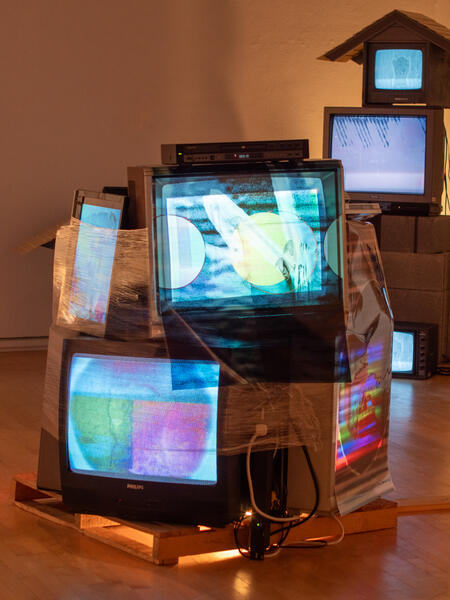 Electronic Pallet, 2024 - Ongoing
Wooden pallet, multi-channel video sculpture, multi-channel audio, inkjet on acetate film, LCDs, CRTs, Portable Car Screens.
All Electronics were found and salvaged from across the Baltimore and greater DMV area
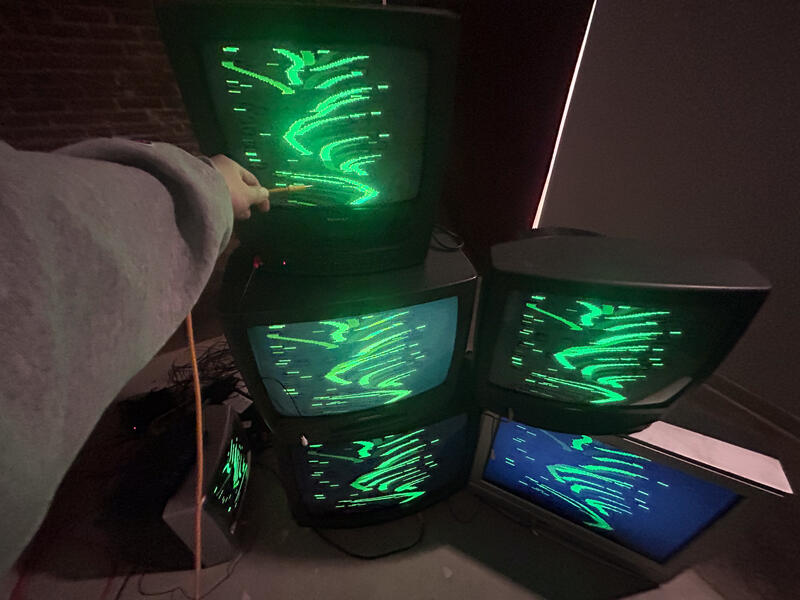
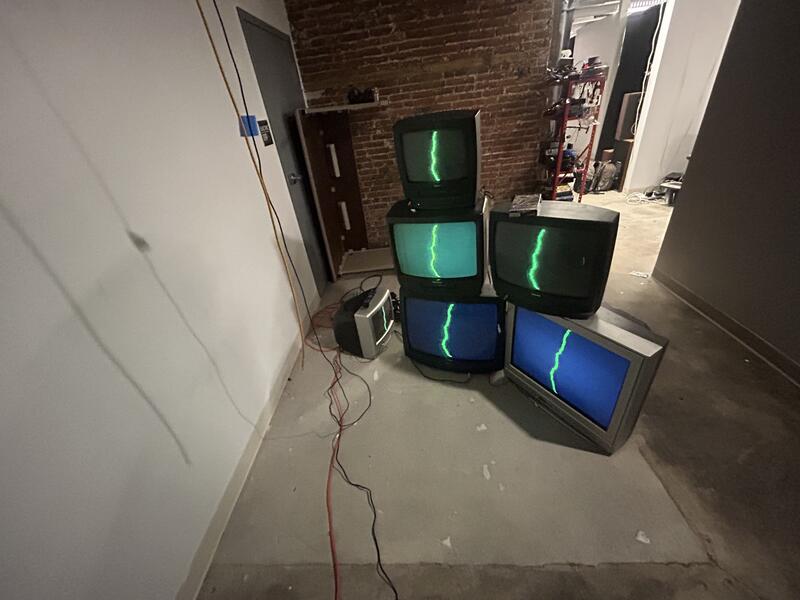
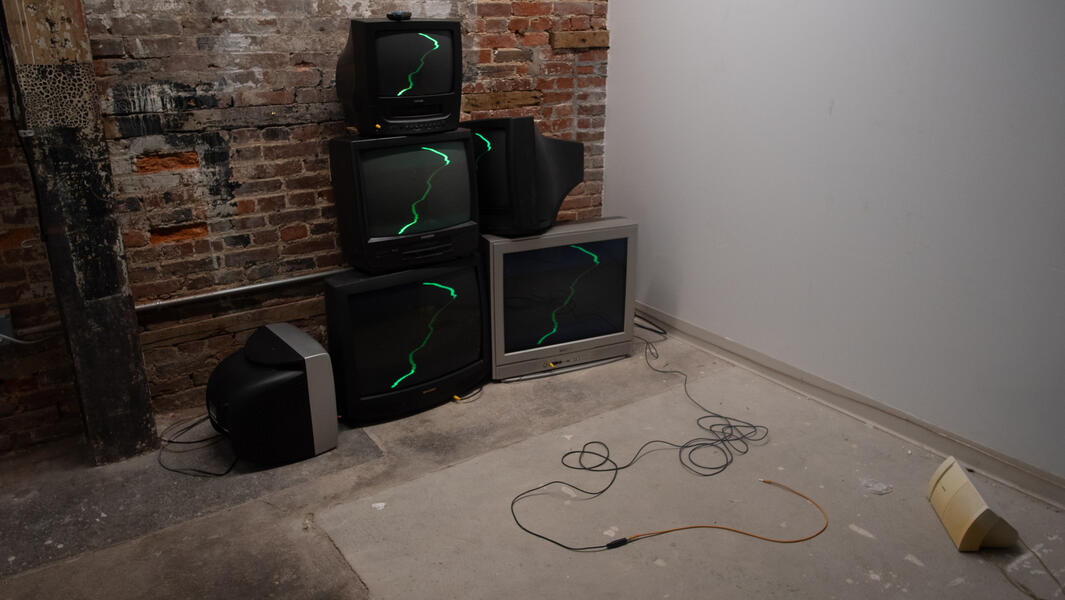
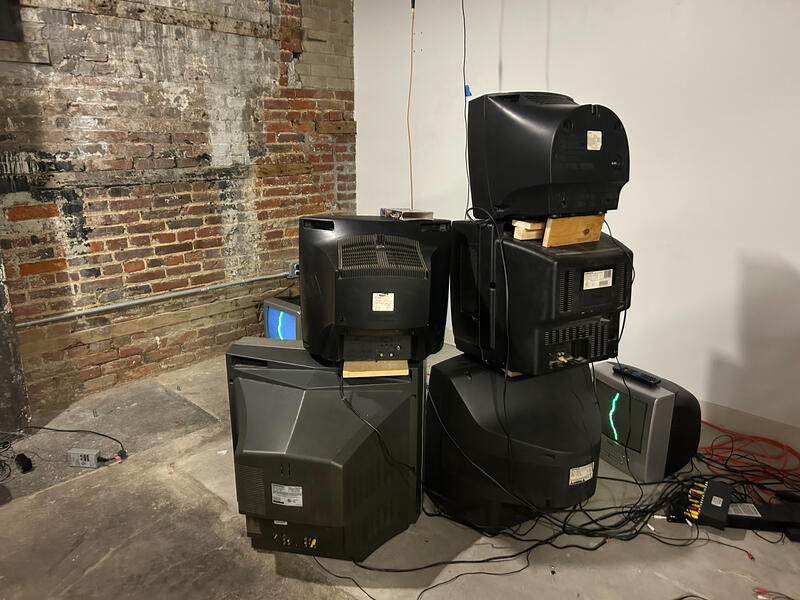
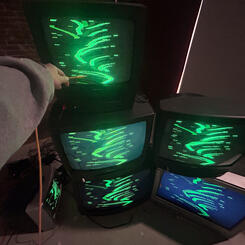
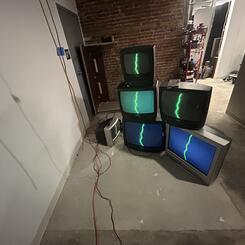
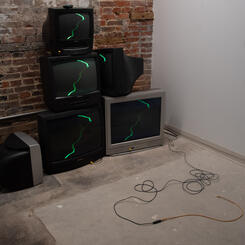
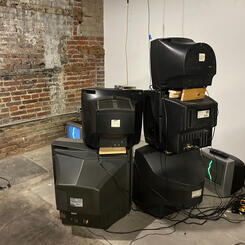
Electronic Pallet is an ongoing project that grew from my research into electronic recycling systems and global waste circulation. The title references the practice of stacking CRT and LCD screens onto pallets for "recycling," often leading to export rather than renewal. Inspired by the Basel Action Network and MIT's electronic tracking studies, the piece reimagines these pallets as sculptural forms made of wrapped, discarded devices. The installation changes with each presentation, combining Living, Injured, and Dead electronics in layered arrangements that expose the cycles of consumption, concealment, and displacement.
The videos on the Living screens are just one component, extending this inquiry through multi-screen improvisation and signal feedback, revealing the environmental and ethical dimensions of technological excess.
The audio for the videos on the screens allows the viewer to walk 360 degrees around the piece and experience different audio at different times in the room
-
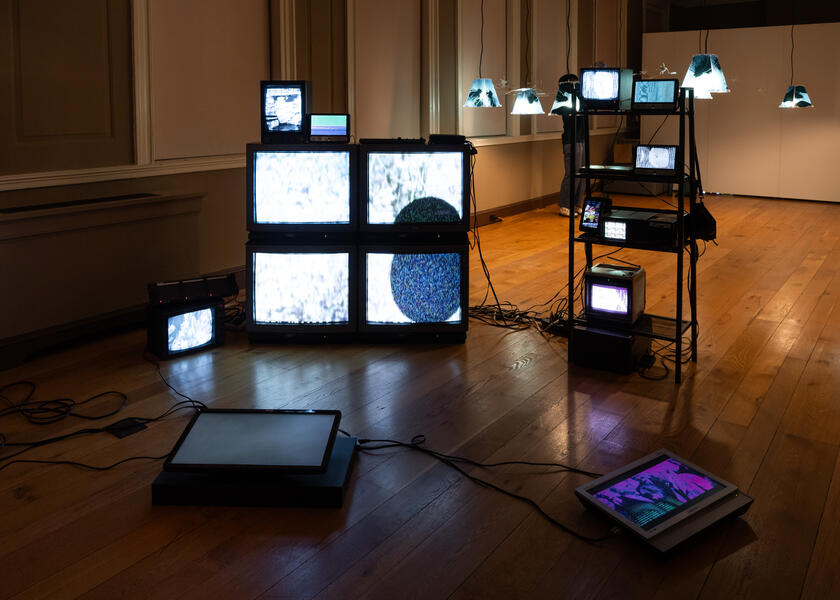 Signal Remains, Gallery view of the installation
Signal Remains
Video Field Notes from Living, Injured, and Dead Electronics: A Catalogue of the City’s AfterimageSignal Remains is a site-specific installation created for The Peale Museum as part of SPARK Baltimore’s Industrial Afterglow. It is a living network of CRTs, LCDs, and other screen-based devices collected from Baltimore and the greater DMV region. Many originated from former industrial and commercial sites before being restored and revived in collaboration with Baltimore television repair professional Calvin Adler. The work traces the technological and industrial histories embedded in these materials, reanimating the city’s past through light, signal, and feedback. Each screen functions as both archive and collaborator, carrying an afterimage of place while revealing how obsolescence and repair remain present in the circuitry.
During the opening of the exhibition, the piece expanded into a live improvisation performance featuring Jeremy Keaton on cello and Ida Dierker on synthesizer. Performing in direct dialogue with the multichannel installation, they responded to the shifting imagery on the screens in real time, treating the CRT signal as a collaborator rather than a backdrop. The set moved with the visuals as they flickered, drifted, and reconfigured, translating motion, texture, and interference into evolving tone, rhythm, and density.
-
Feedback For Nature
Feedback for Nature
2023
3:30
Short Film and CRT Installation
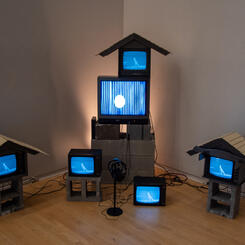
Materials: Restored analog televisions, video mixers, prosumer analog devices, CRT monitors, generative video feedback loops, and original soundtrack
Feedback for Nature is a visually compelling short film and sound composition by McCoy Chance that merges analog feedback loops, generative textures, and imagery inspired by the natural world. Premiered with New Works in Baltimore, MD, the piece will also be featured as a CRT installation at the Center for Art, Design, and Visual Culture (CADVC) in 2025.
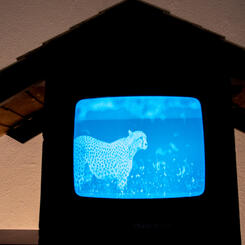
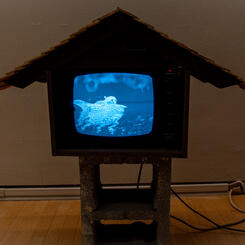
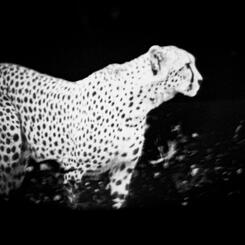
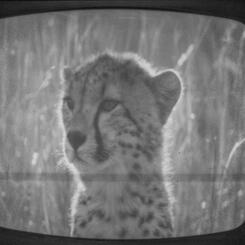
The film employs restored prosumer analog devices from the 1980s, homemade video mixers, and CRT televisions to create dynamic visuals that explore the connections between technology and nature. Imagery from the natural world serves as a recurring motif, with the cheetah symbolizing resilience amidst a rapidly changing technological landscape. The cheetah reflects the struggles and adaptability required to navigate


About McCoy
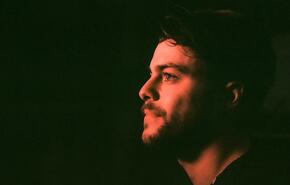
McCoy Chance is a Baltimore-based interdisciplinary artist, musician, and educator working across experimental video, hybrid analog and digital media, installation, film, archival material, and live performance. His practice centers on hybrid video systems and repair-based collaboration, treating discarded and abandoned electronics as active, Living objects rather than obsolete things from another time. Through electronic signal chains, hands-on intervention, and collective making, Chance… more
Video Art X Piano Duo
-
Ekki Hugsa Excerpt
This video captures an excerpt from my live collaboration with pianist Liana Harron performing Ólafur Arnalds’ Ekki Hugsa (Don’t Think) in Liana’s arrangement for piano and loop station. As she builds the piece through layered loops, I perform live video in real time using a custom effects chain that processes camera feeds through feedback, distortion, and glitch. The projected visuals evolve with the music’s repeating phrases, creating a one-time audiovisual composition shaped by the performance.
-
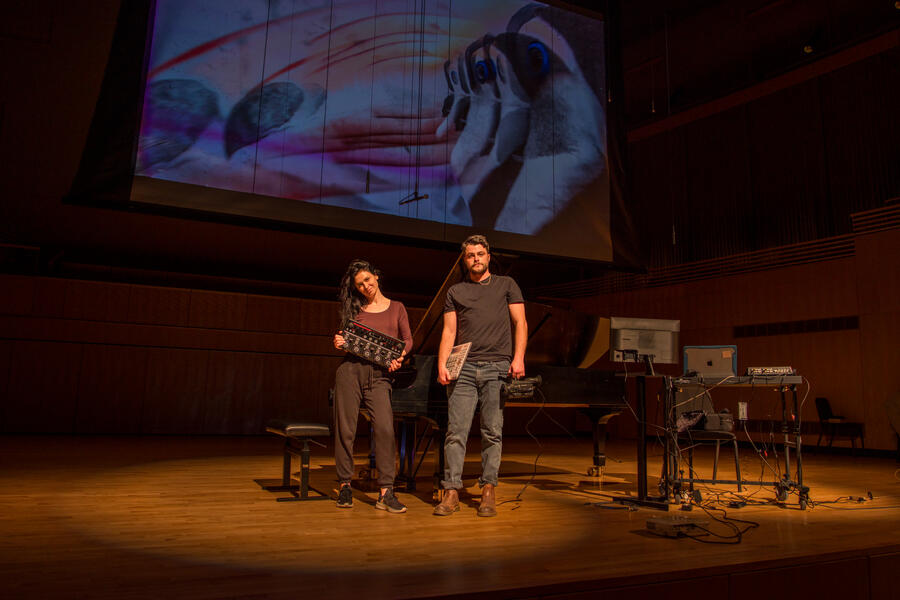 Liana Harron and McCoy Chance Promo Photo
Promotional Photo of Harron and Chance for their collaboration on Ekki Hugsa.
-
Ekki Hugsa Performance Excerpt 2
This excerpt captures another section of our live collaboration on Ólafur Arnalds’ Ekki Hugsa (Don’t Think), performed in Liana Harron’s arrangement for piano and loop station. As Liana reshapes the material through layered loops and shifts in dynamics, we perform live video in real time through a custom effects chain that manipulates camera feeds with feedback, distortion, and glitch.
-
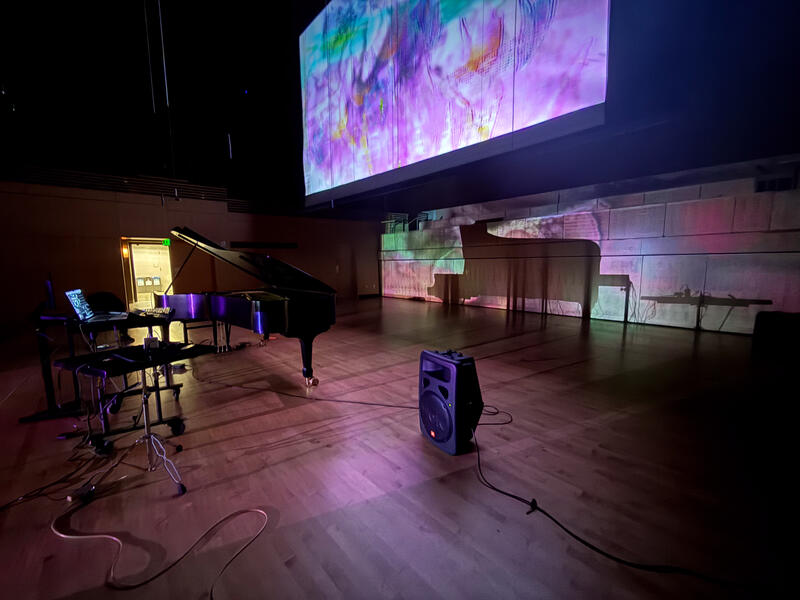 Linehan Concert Hall Stage Setup
This photo captures some of our early setup and exploration with light in the Linehan Concert Hall
-
Ekki Hugsa Performance Excerpt, McCoy Chance and Liana Harron
This video captures an excerpt from my live collaboration with pianist Liana Harron performing Ólafur Arnalds’ Ekki Hugsa (Don’t Think) in Liana’s arrangement for piano and loop station. As she builds the piece through layered loops, I perform live video in real time using a custom effects chain that processes camera feeds through feedback, distortion, and glitch. The projected visuals evolve with the music’s repeating phrases, creating a one-time audiovisual composition shaped by the performance.
This performance happened on February 4th, 2026, Earl and Danielle Linehan Concert Hall as part of UMBC's professional concert series.



Electronic Pallet, 2024 - Ongoing
-
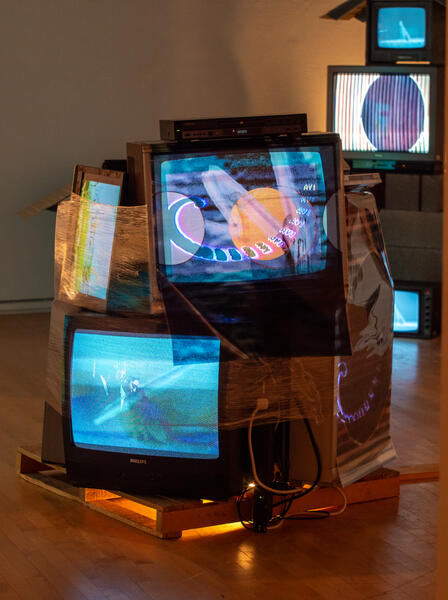 Gallery view of Electronic Pallet, 2024, CADVC, UMBC
 -
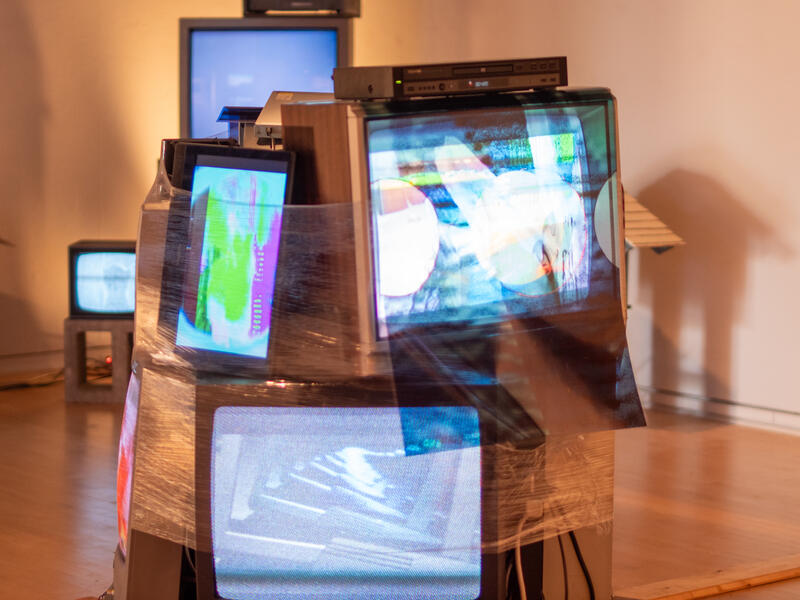 Gallery view of Electronic Pallet, 2024, CADVC, UMBC
 -
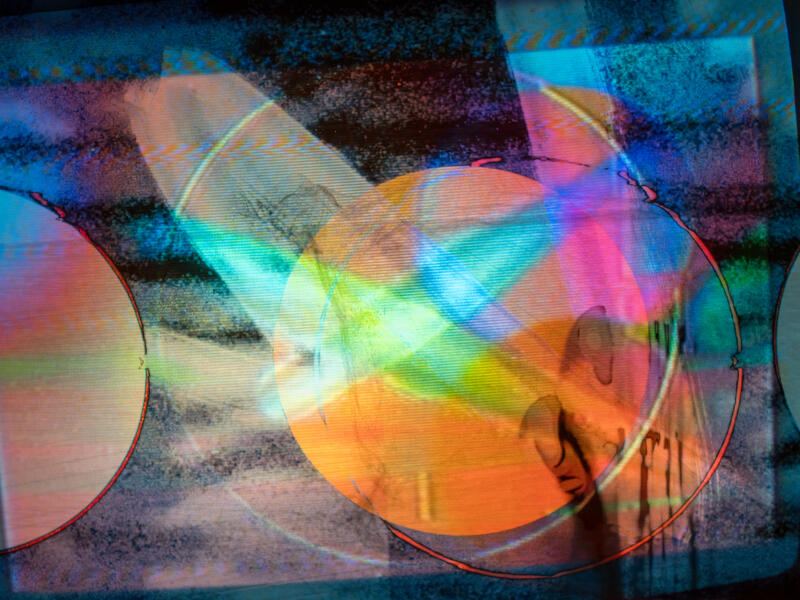 Detail shot of one of the screens covered by the film prints
 -
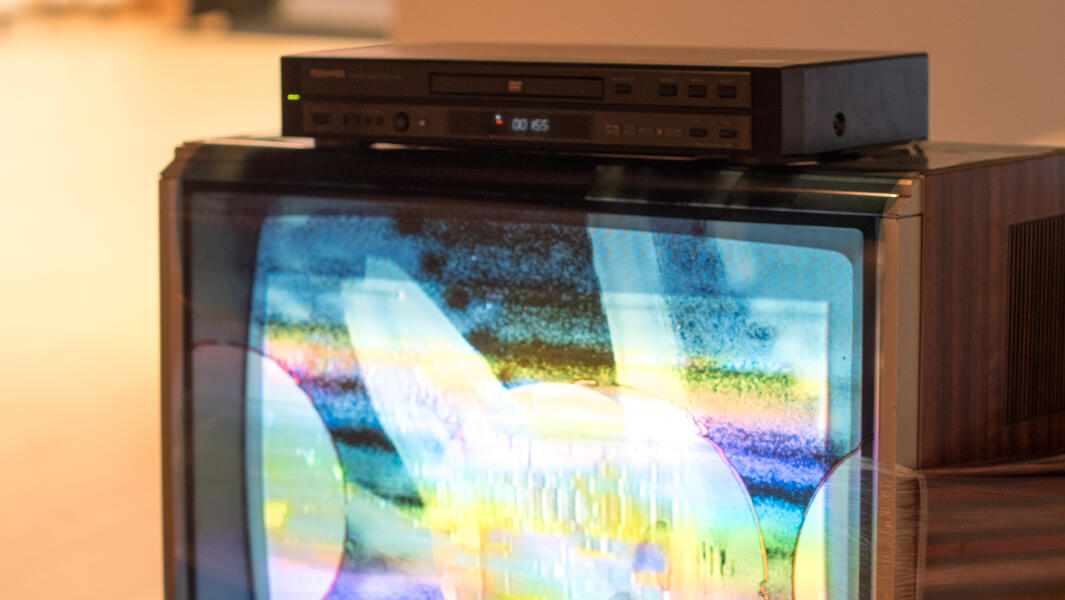 Detail shot of one the televisions in the installation
 -
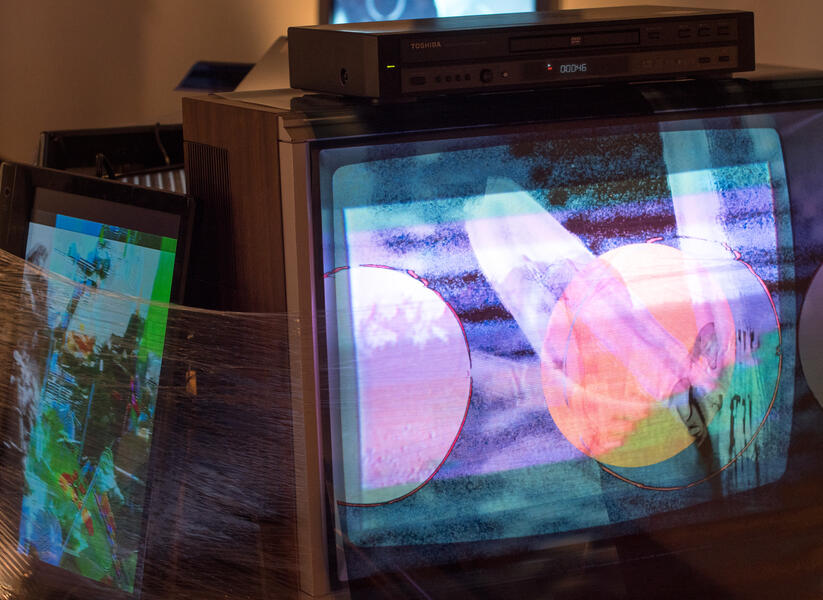 Detail shot of the oldest television (CRT) in the installation
 -
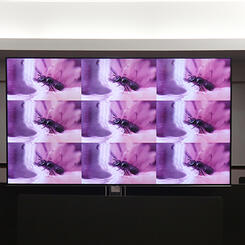
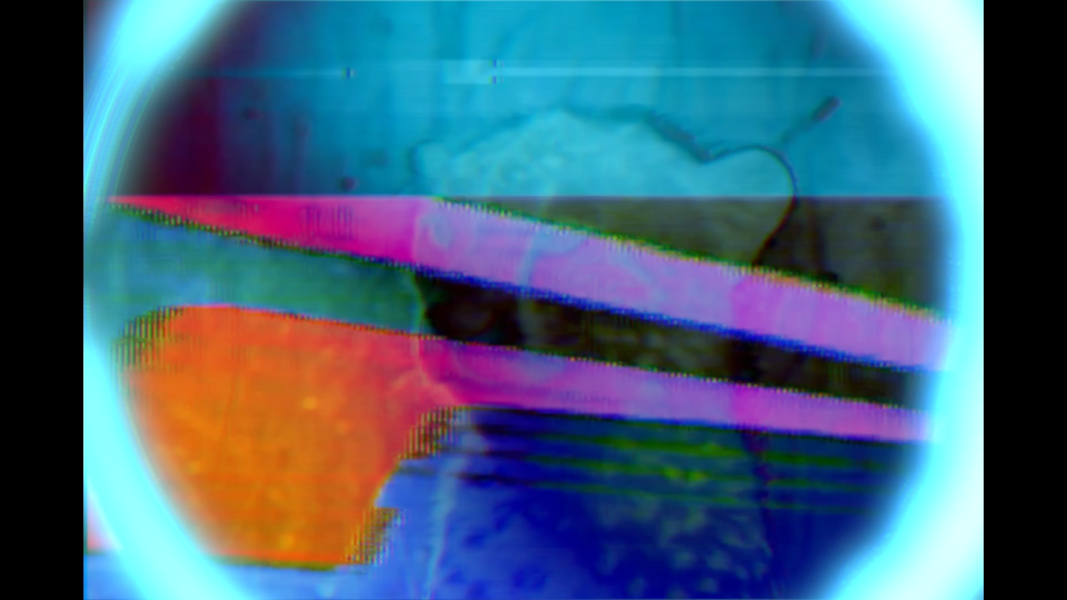 Still from one of the many videos of the installation
A cheetah is framed inside a circular window, set against a vivid field of color created by video feedback loops.
-
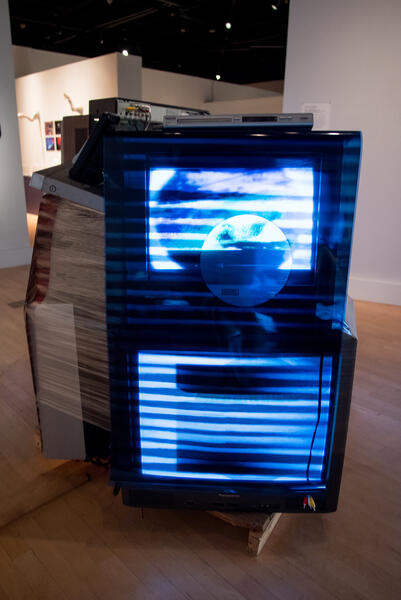 Electronic Pallet, Another angle
Film prints cover the televisions on the electronic pallet, draped across the screens while they still emit light and moving image. The glowing monitors backlight the prints, layering photographic frames over flicker and signal.
-
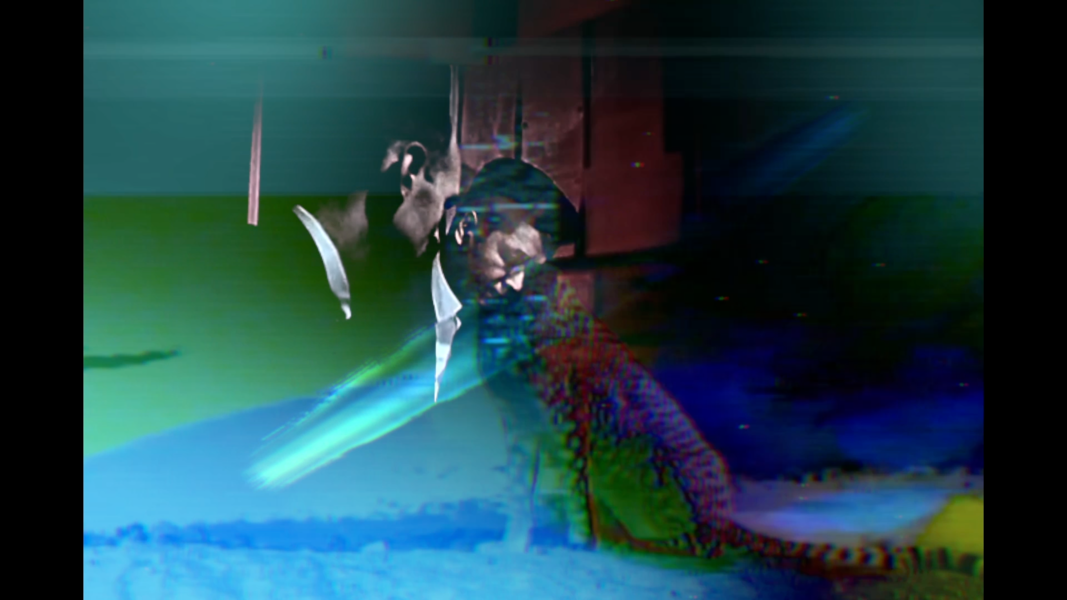 Still from one of the televisions on the Pallet
Two Bell Labs scientists in conversation about research are blended with an image of an adult cheetah standing watch. One of the videos in the installation focuses heavily on the optimism of Bell Lab Scienctists to create juxtaposition to the pallet of Living electronics


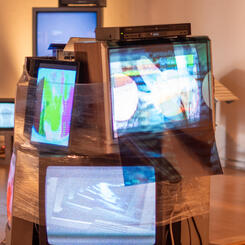
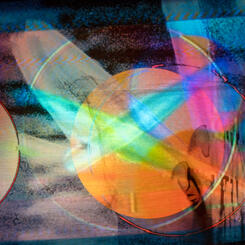
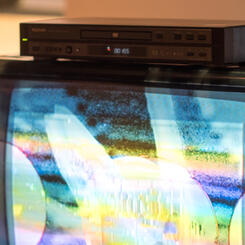
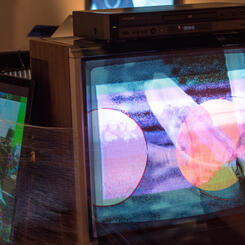
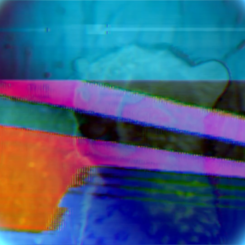
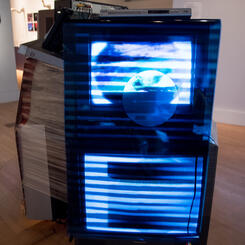
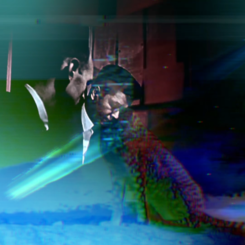
Signal Remains, A Catalogue of the City's Afterimage, 2025
-
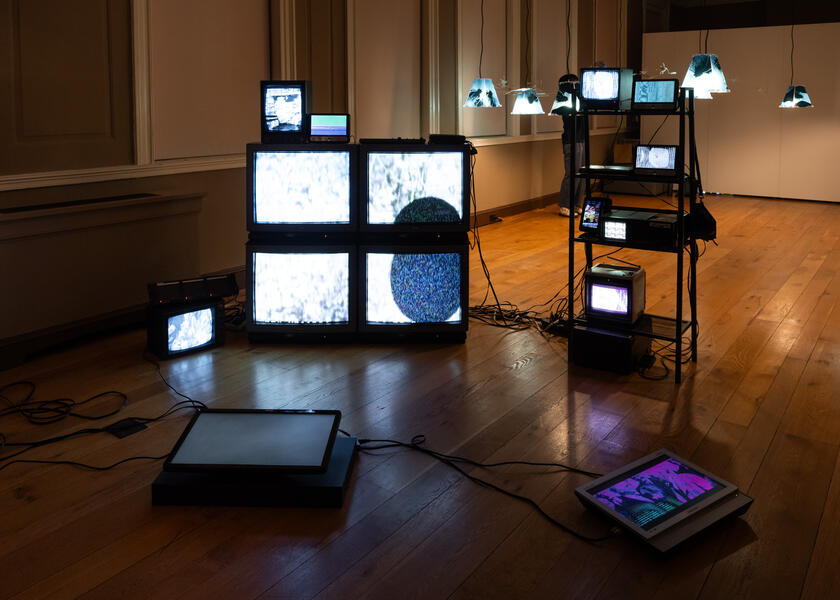 Signal Remains, A Catalogue of the City's Afterimage, 2025, Gallery View at the Peale Museum in Baltimore as part of Spark: Industrial Afterglow
CRTs and LCDs glow with animation, distortion, and images from Baltimores Industrial past
-
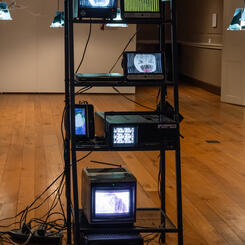
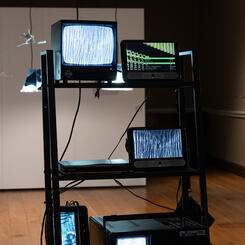
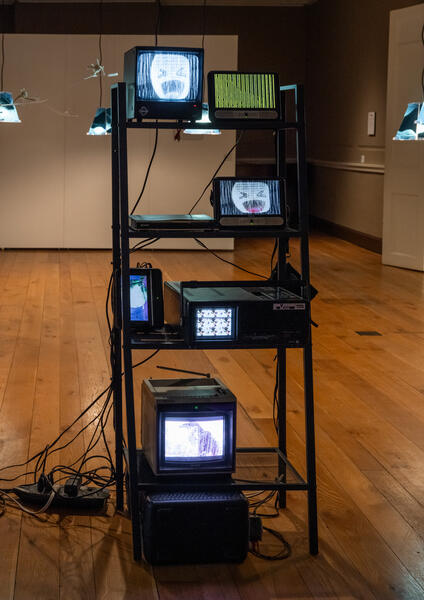 Detail shot of a reclaimed metal shelf used in the installation with the found and salvaged/repaired televisions
Detail shot of a reclaimed metal shelf used in the installation, holding found and salvaged televisions
-
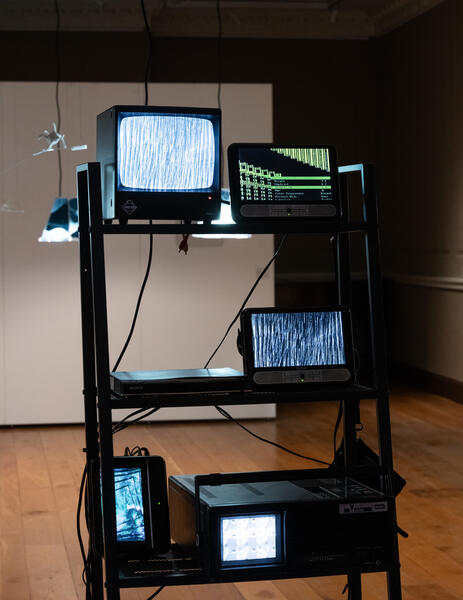 Detail shot of reclaimed metal shelf
 -
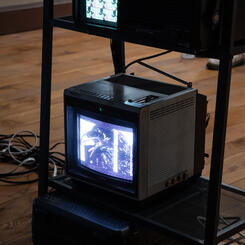
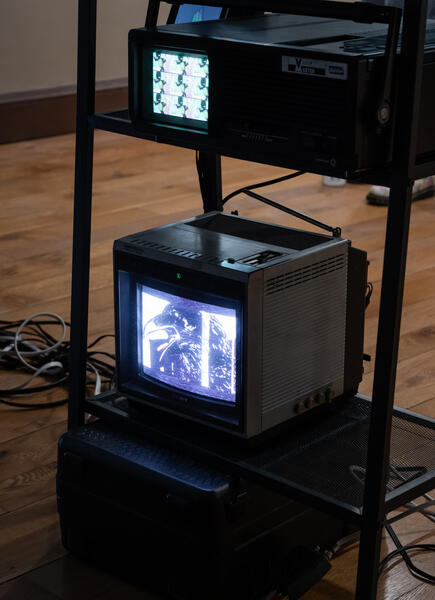 Detail Shot of the square Sony television that I salvaged before it went to a landfill
 -
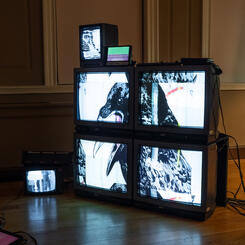
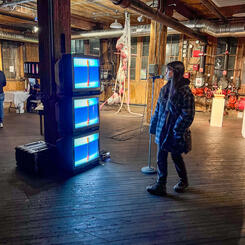
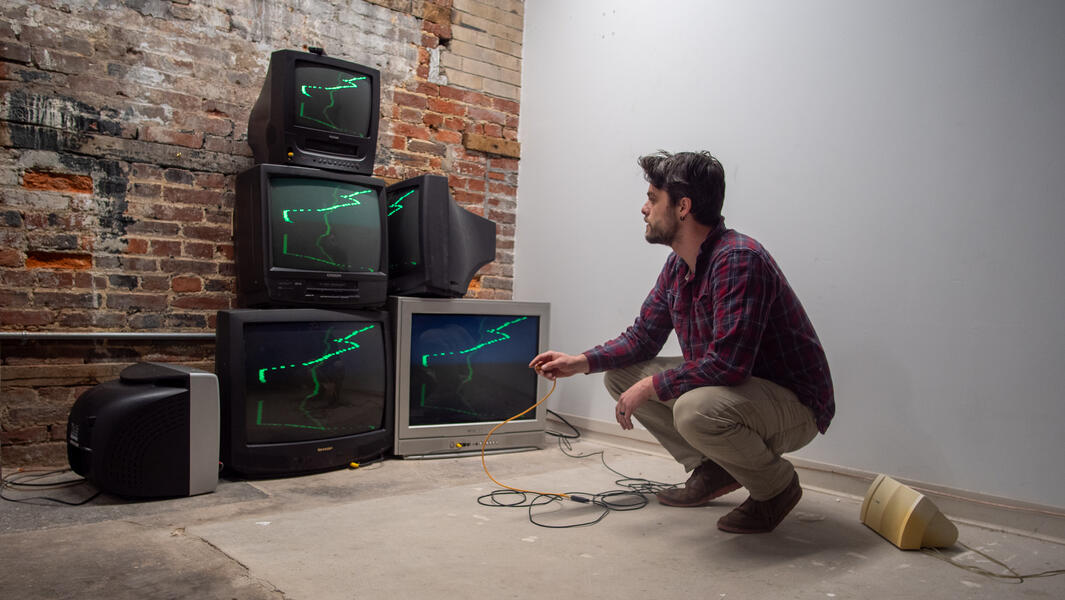
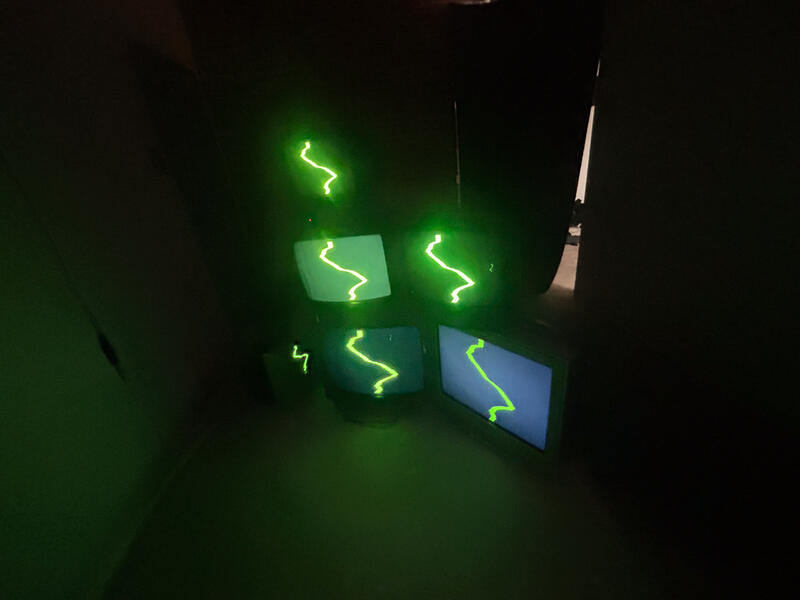
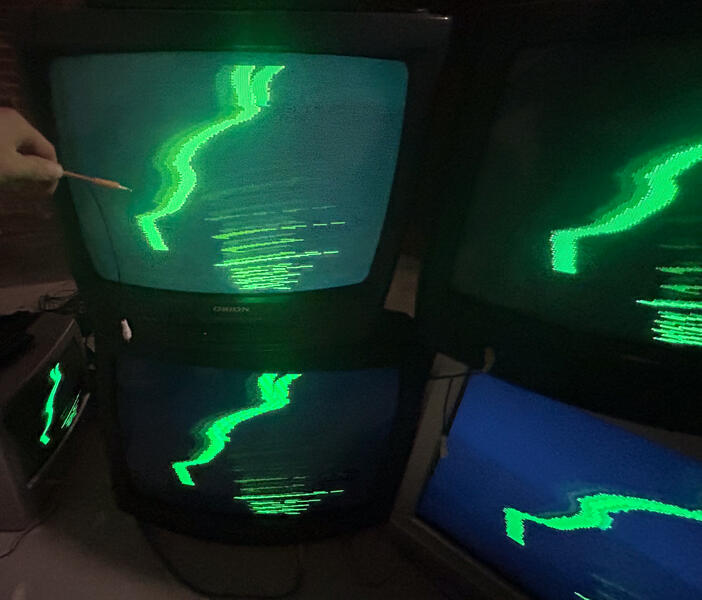
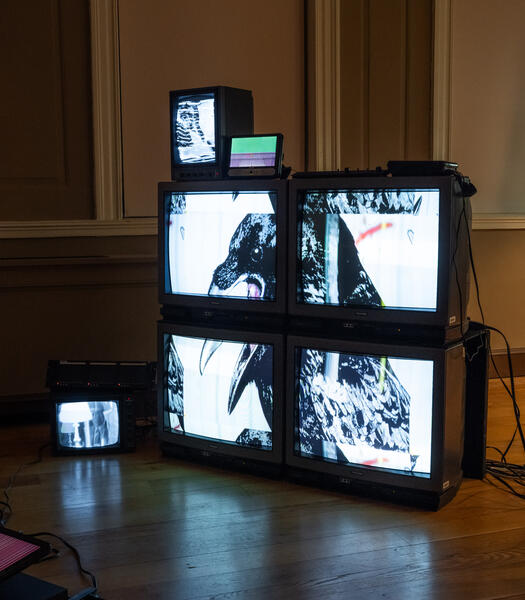 Detail shot of the main 1x4 video wall in the installation
Detail shot of the main 1 x 4 video wall I made for this installation. This video wall is a made up of a family of four televisions, 2 of which I resurected with the help of local Baltimore repair professional Calvin Adler. All four of the tvs are stamped from a Xerox facility nearby and wear the year 1988.
-
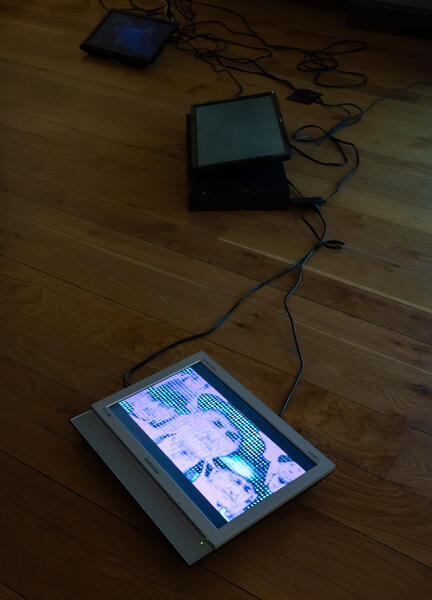 A glitched portrait of a General Motors executive opening the assembly line/plant in baltimore
A glitched, color-saturated portrait of a General Motors executive at the opening of Baltimore’s GM assembly plant—the site that would go on to build Chevrolet vehicles. The image fractures into bands of neon interference and analog noise, pushing the figure between corporate ceremony and signal collapse, as if the broadcast itself can’t hold the story steady. The distortion turns a moment of industrial optimism into a haunted transmission: authority rendered unstable, history rewritten through drift, misalignment, and electronic static.
-
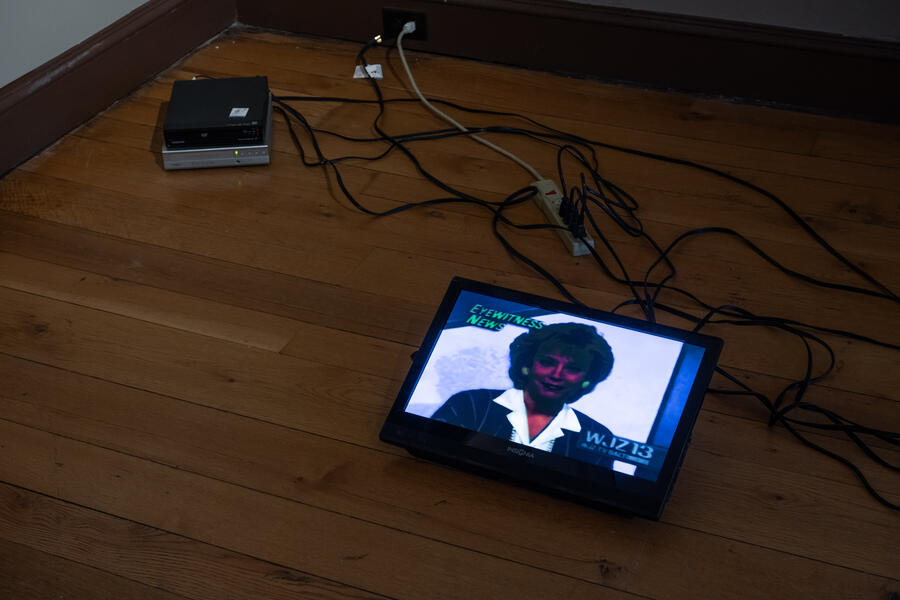 WJZ13 Eyewitness News
Archival WJZ13 Eyewitness News footage is cut into a fast-moving montage of popular brands and commercials with roots in Baltimore. Logos, jingles, and ad fragments collide with local broadcast texture—scanlines, jump cuts, and signal noise—blurring civic memory with consumer history. The edit moves like channel-surfing through time, stitching together hometown industry, regional identity, and the glossy promises that once aired between headlines.
-
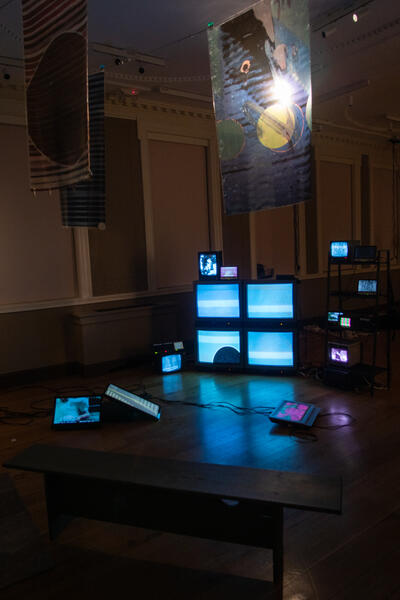 Alternative view of the installation
 -
Jeremy Keaton and Ida Dierker Performance Clip within the installation
A live improvisation performance within Signal Remains, A Catalogue of the City’s Afterimage (2025), featuring Jeremy Keaton on cello and Ida Dierker on synthesizer. Performing in direct dialogue with the multichannel installation, they musically responded to the shifting imagery on the screens in real time, treating the CRT signal as a collaborator. The set moved with the visuals as they flickered, drifted, and reconfigured, translating motion, texture, and interference into evolving tone, rhythm, and density.
-
Signal Remains (Video for 1 x 4 Video Wall)
Signal Remains (Video for 1x4 VideoWall) is a video made specifically for this site-specific installation. It layers an animated crow behind the city of Baltimore with emojis cycling through different emotions, Baltimore Colts imagery, and references to National Bohemian commercials. The video also threads in iconic parks and Baltimore locations drawn from film. Built through analog and hybrid workflows, the piece embraces signal texture, drift, and modulation as part of its visual language. This is also one of the many sound components within the installation that talks about a selected Baltimore history from archival film.


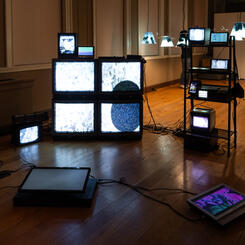
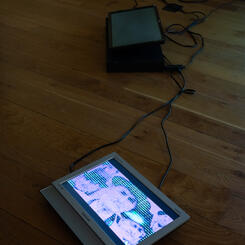
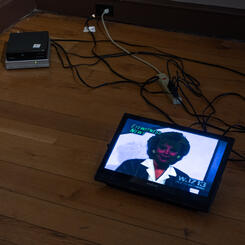
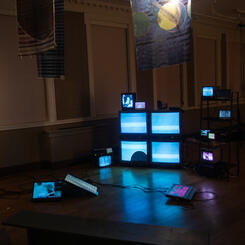
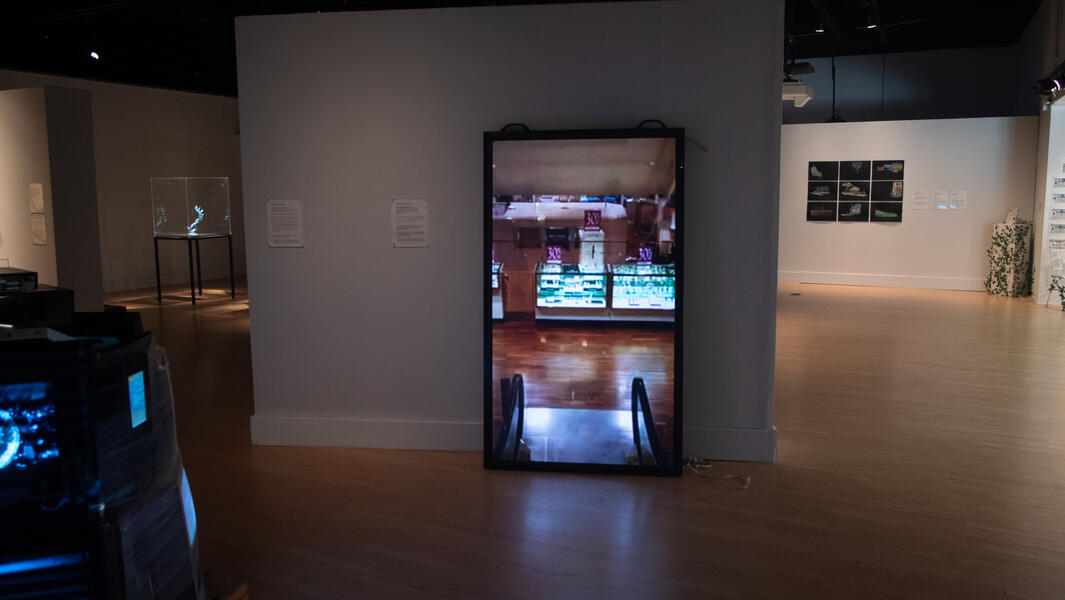
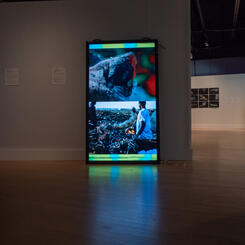
Abandoned Mall Monitor, 2024
-
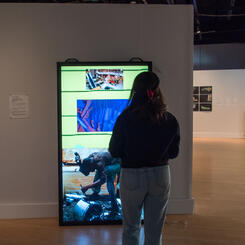
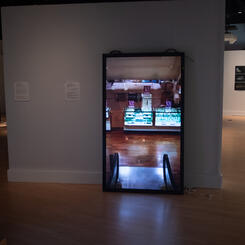
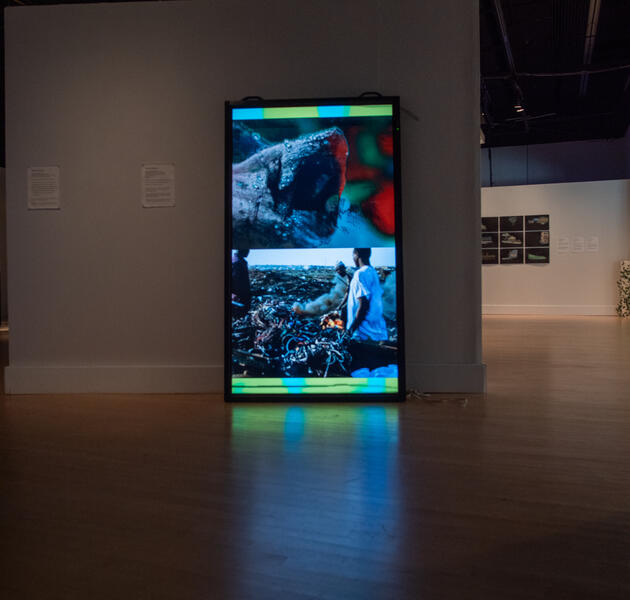 Gallery view of the abandoned mall monitor juxtaposing two of the multiple videos of an urban mining site and an enlarged flower
 -
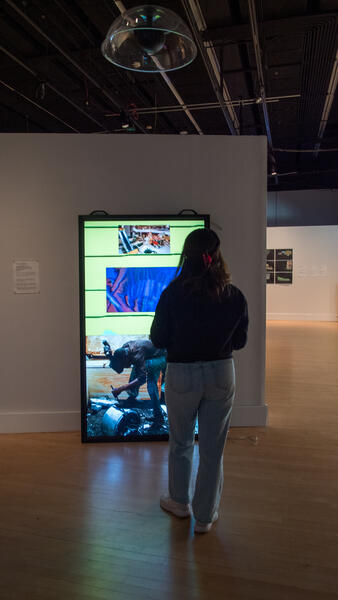 Viewer taking in the images of the mall monitor.
 -
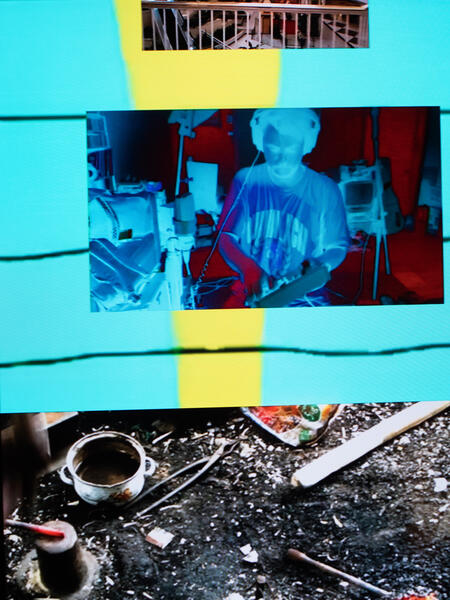 Detail shot of the video for the installation
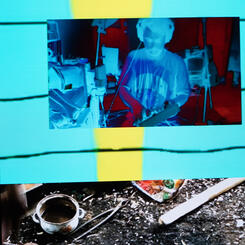
In this image, I am mining parts from a broken DVD player in my studio to make something new. The background is a generative animation made from these broken parts as well as a global urban mining site
-
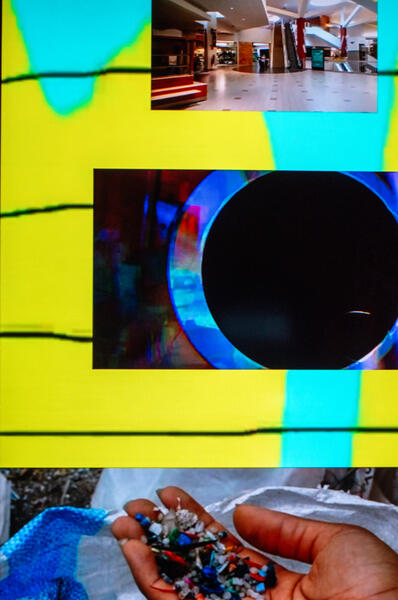 Detail shot of Abandoned Mall Monitor
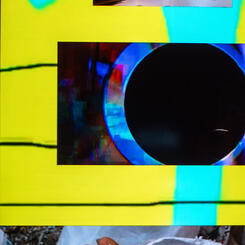
This screen capture from the video shows three videos playing over generative feedback loops. Video shows an active Maryland mall before being abandoned, McCoy mining for materials in his art studio, and an urban mining site in Accra, Ghana
-
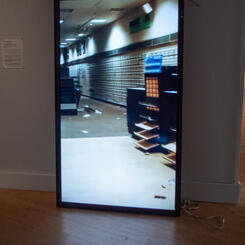
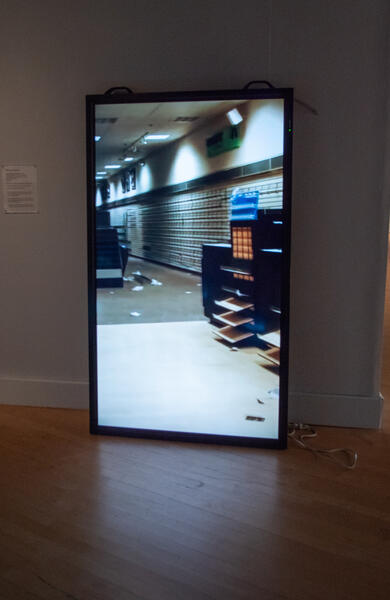 Abandoned media store inside the abandoned Owings Mills Mall in MD
The abandoned media store closes out the video where you see nothing on the shelves, glass on the floors, and remnants of a past where physical media mattered.
-
 The escalator at Macys department store before it closed down
An esclator inside of a Macys takes you into a fully stocked department store before it shuts down for good.
-
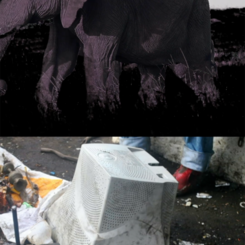
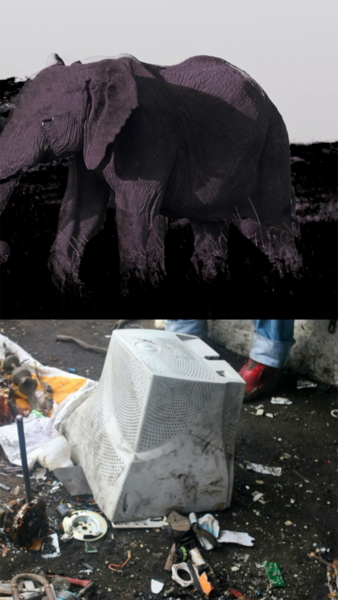 Still from Abandoned Mall Monitor
A still image from the video shows an elephant beside a computer within a global urban mining site, where discarded electronics are sorted and processed.
-
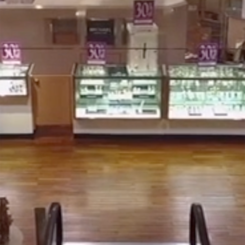
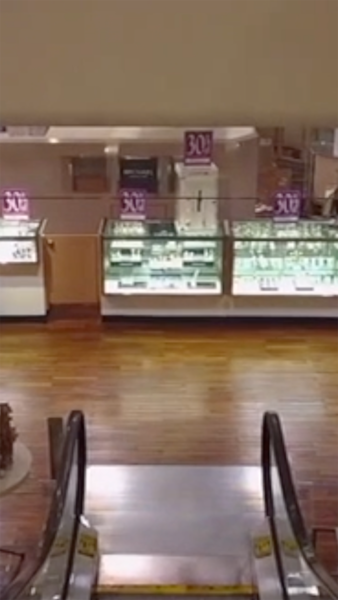 Macys Escelator
A point-of-view shot descending an escalator inside Macy’s at Owings Mills Mall in Maryland while the store is still open but nearly empty. The camera looks down the rails into sparsely lit floors with few fixtures and no shoppers, capturing the quiet in-between state of a functioning space that already feels abandoned.
-
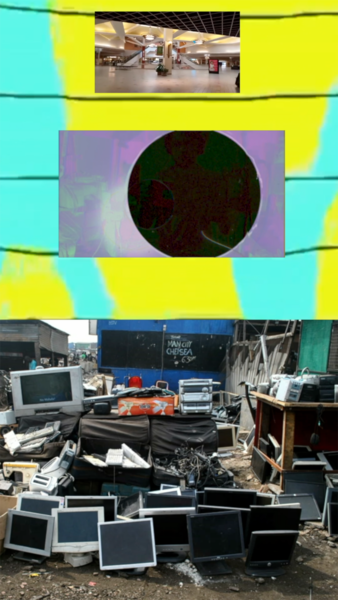 Still from Abandoned Mall Monitor
Three documentary images are embedded within a generative, playful animation of shifting color fields and geometric shapes. At the top, an empty mall interior glows with its lights still on. In the middle, the artist mines a DVD player in a basement workspace as an abstract form partially obstructs the scene. At the bottom, a cluster of computer monitors sits in an urban mining site, staged for dismantling and reuse, suggesting parts pulled to repair other screens.


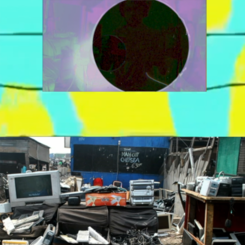
Dead Set 1988 - Feedback For Nature, 2025
-
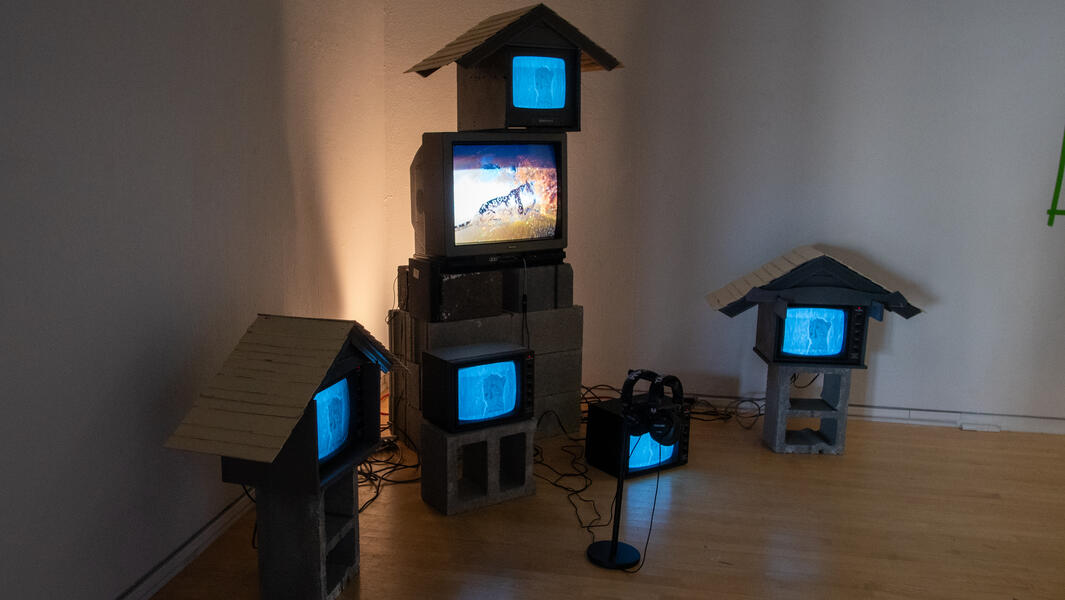 The Dead The Living And The injured-19_0.jpg
 -
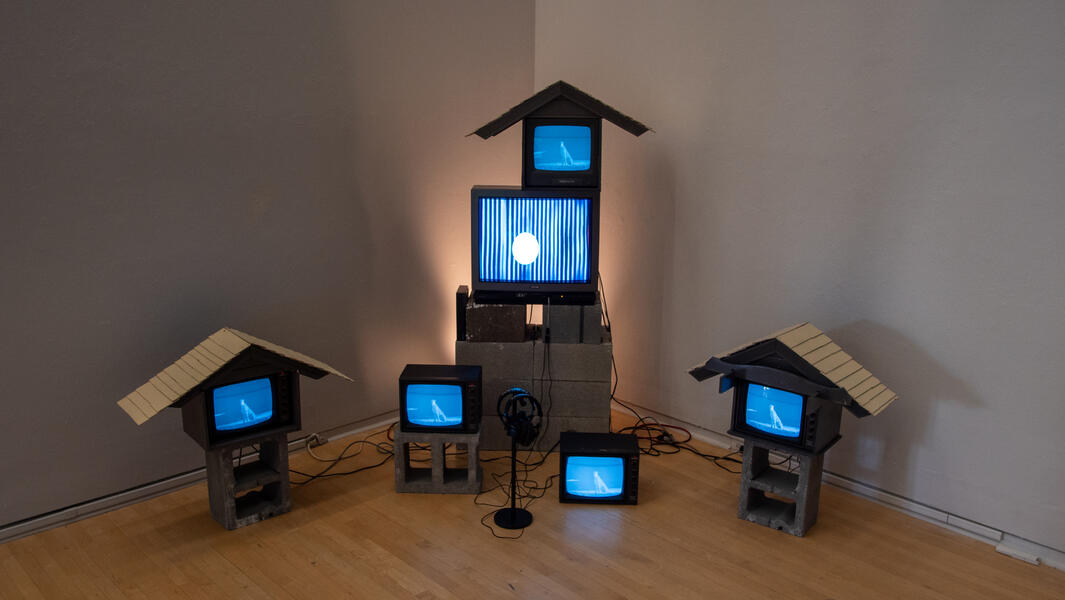 The Dead The Living And The injured-25.jpg
 -
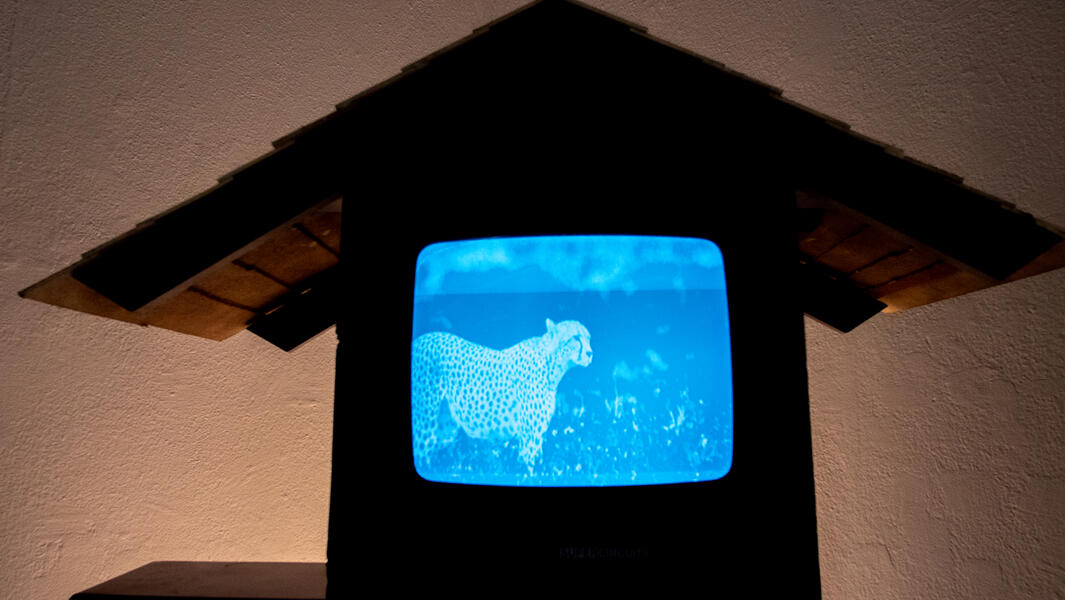 The Dead The Living And The injured-20.jpg
 -
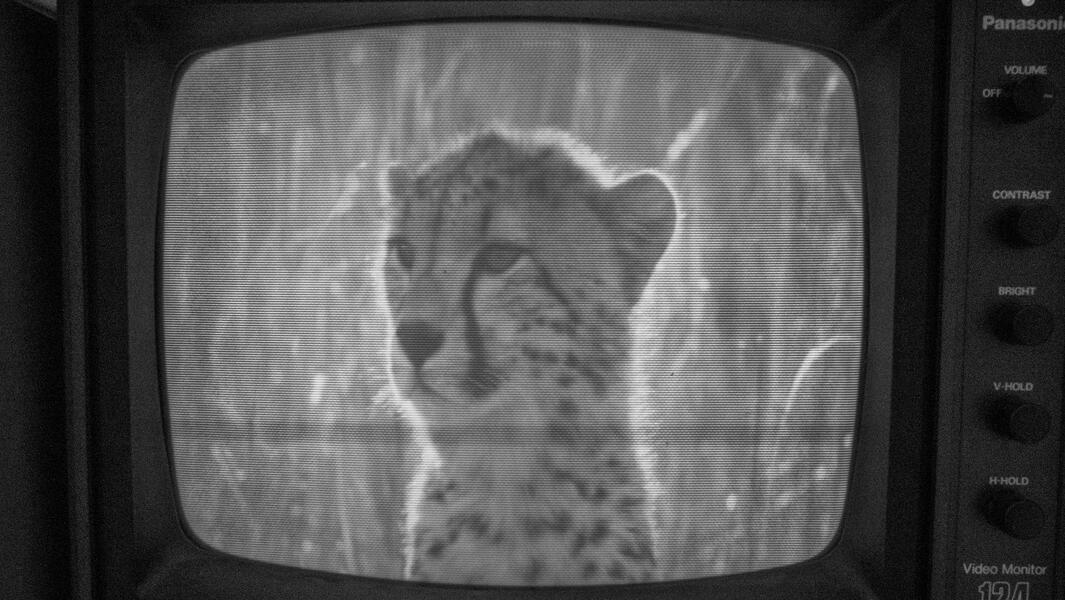
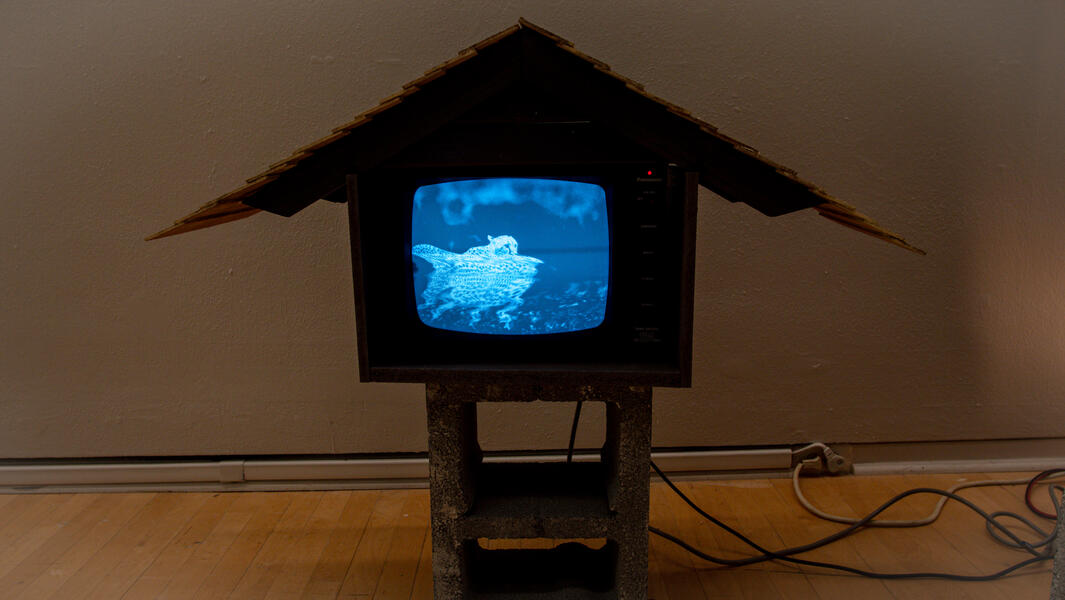 Detail shot of image distortion in the black and white security monitor system.
 -
 The Dead The Living And The injured-27.jpg
 -
 Cheetah Security-1.jpg
 -
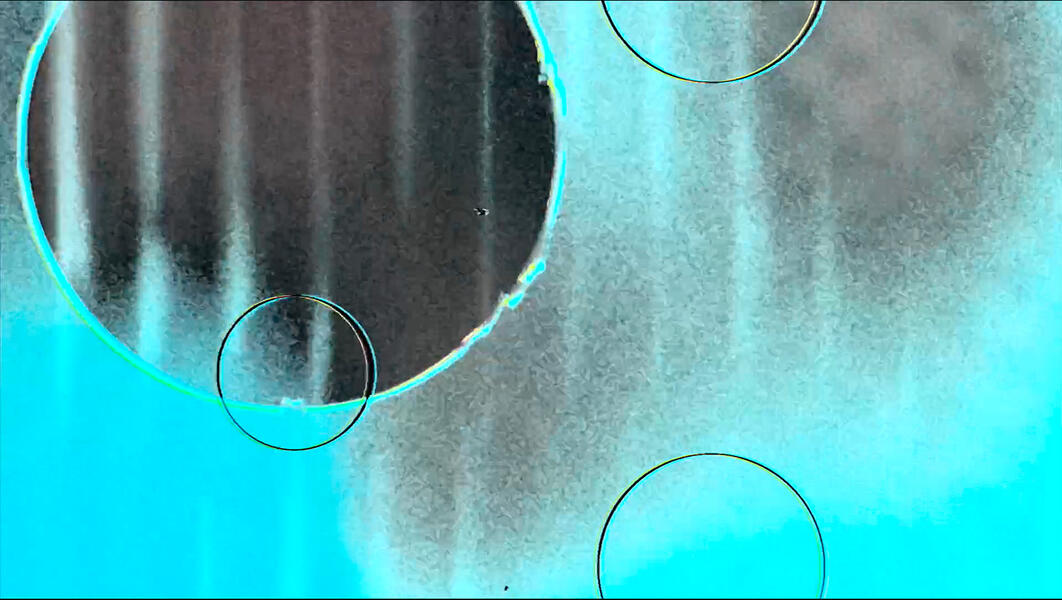 Still from the film Feedback For Nature
This still is from Feedback For Nature, the film shown in the installation on the Dead, now resurrected, 1988 Toshiba Blackstripe television. The image carries CRT signal texture and feedback-driven artifacts
-
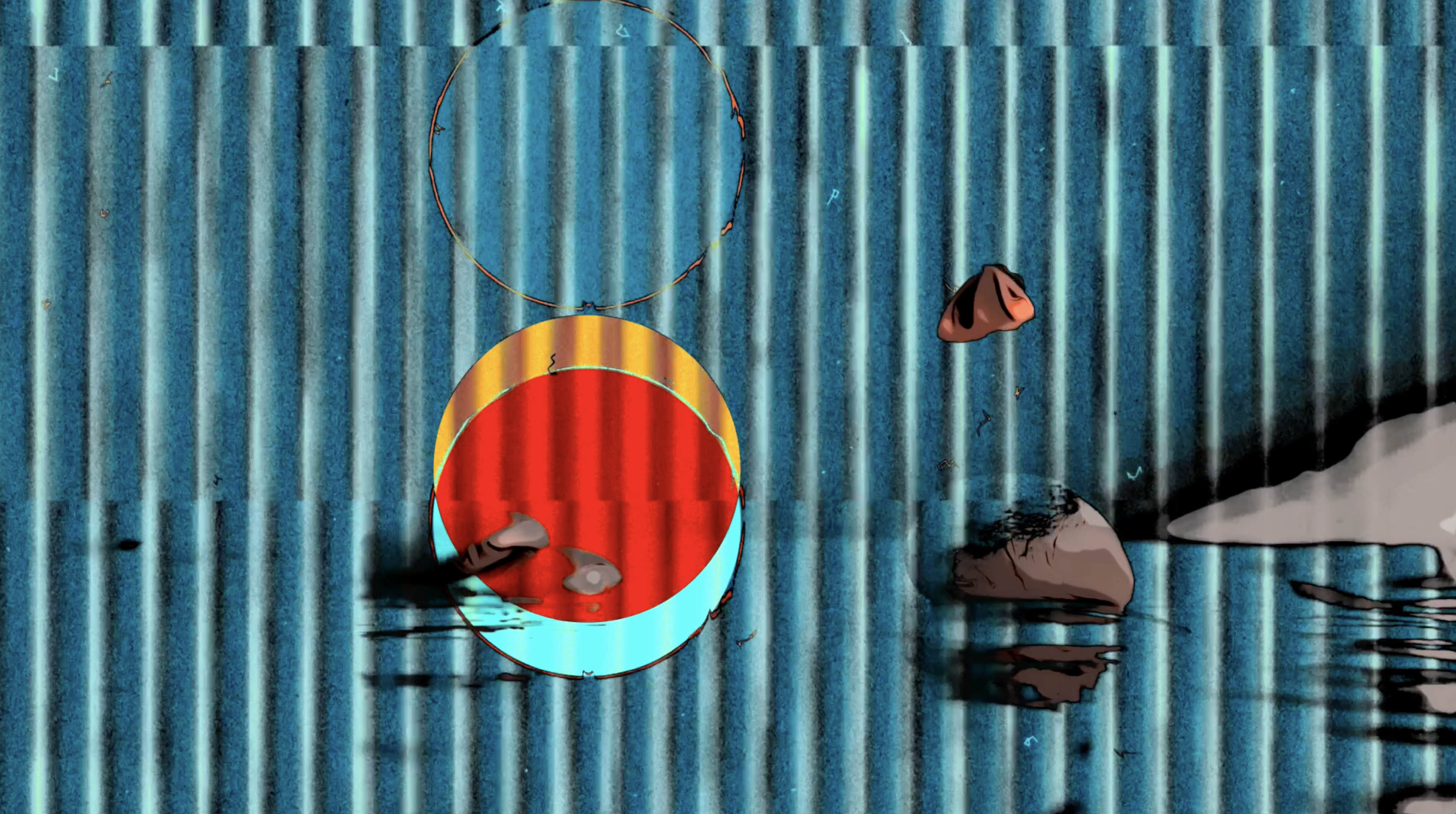
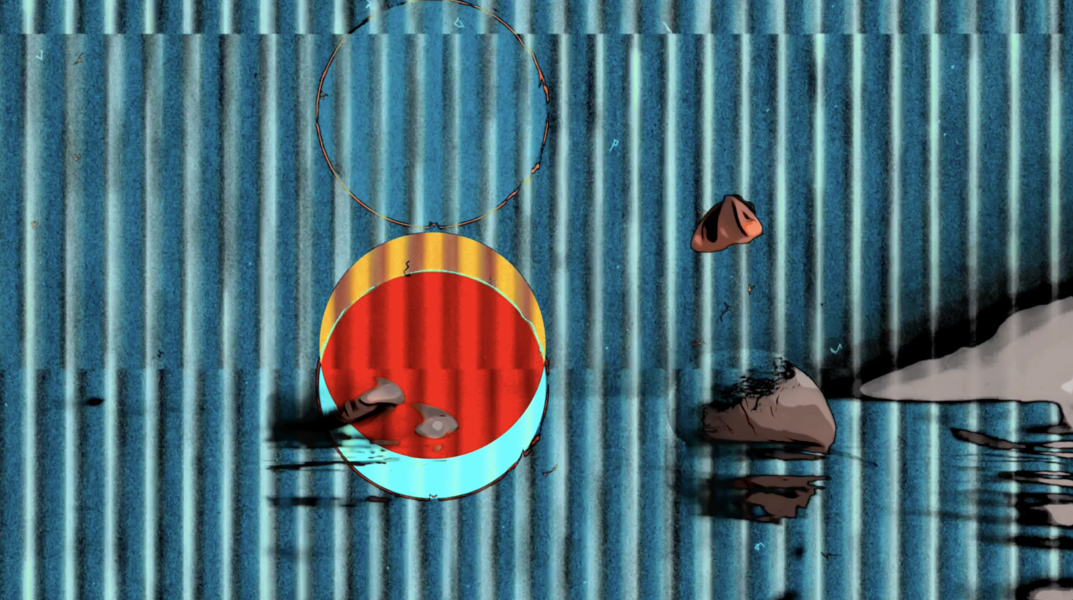 Still from the film Feedback For Nature
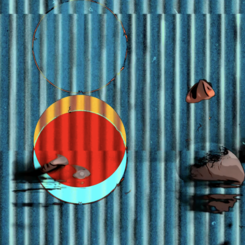
A butterfly flaps its wings against a backdrop of circular forms and vertical lines generated by an analog feedback device I built by cutting and rewiring VGA cords.
-
Feedback For Nature


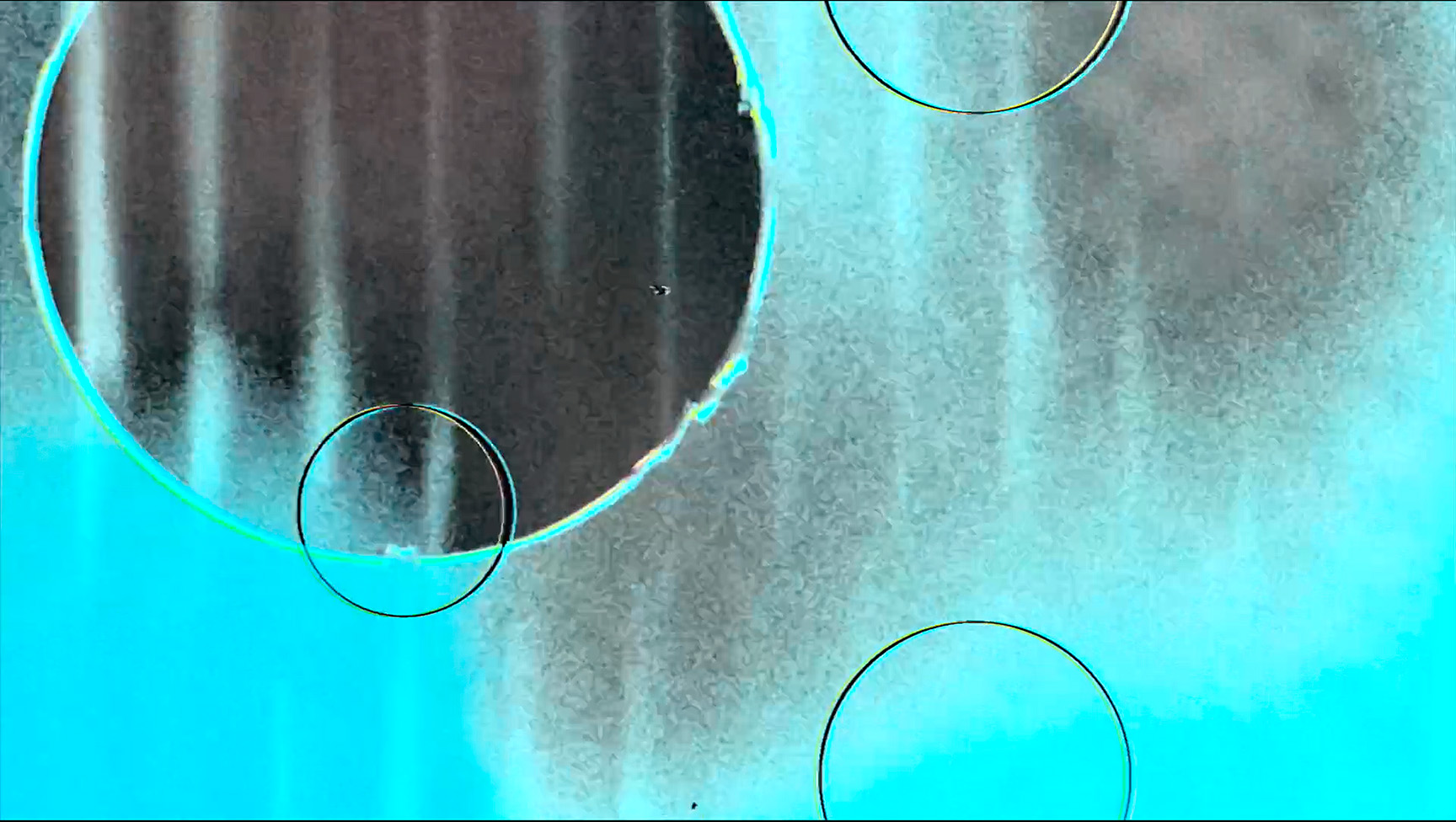
Transmission Override
-
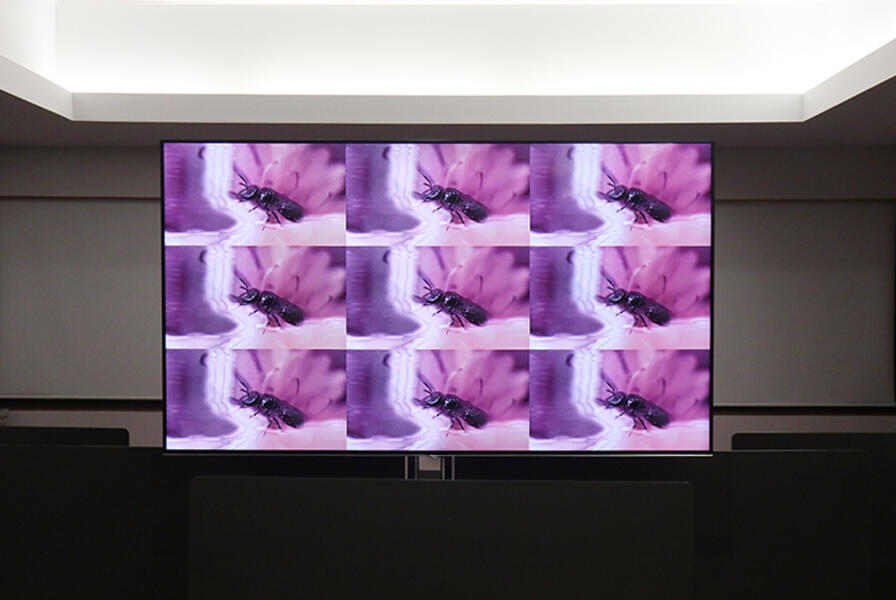 Transmission Override, Binnar 2025, Portugal, International Festival of the Arts, Video Installation. Ten_Y25 Group Exhibition.
Transmission Override was presented at Binnar 2025 in Portugal as part of the International Festival of the Arts in the Ten_Y25 group exhibition. Shown as a video installation, the work uses hybrid analog and digital workflows and CRT-based signal processes to explore transmission, decay, and regeneration through layered feedback, collected footage, and an original synthesizer score.
-
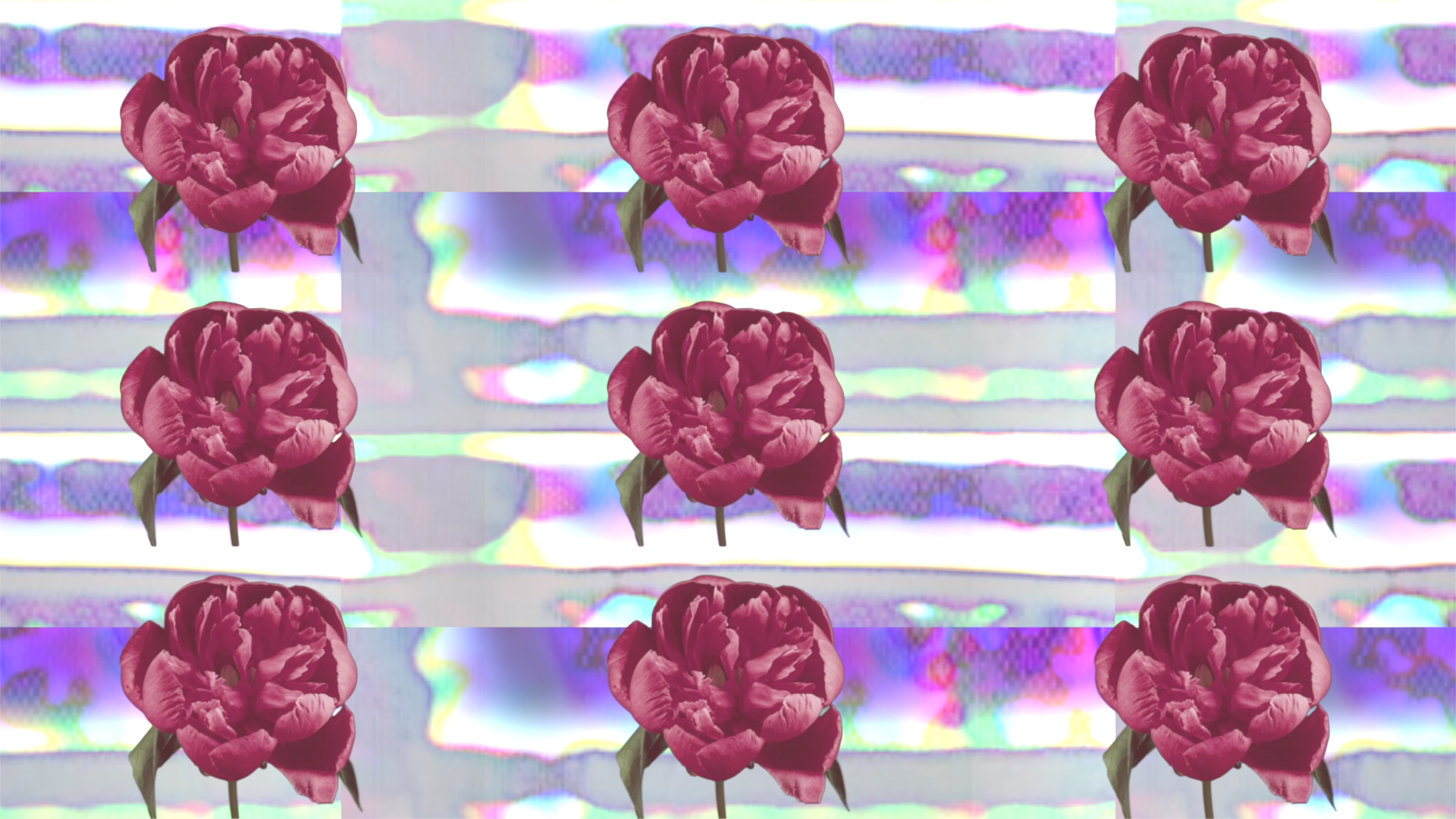
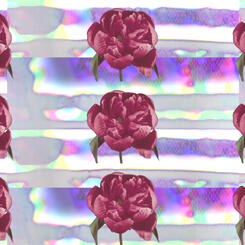
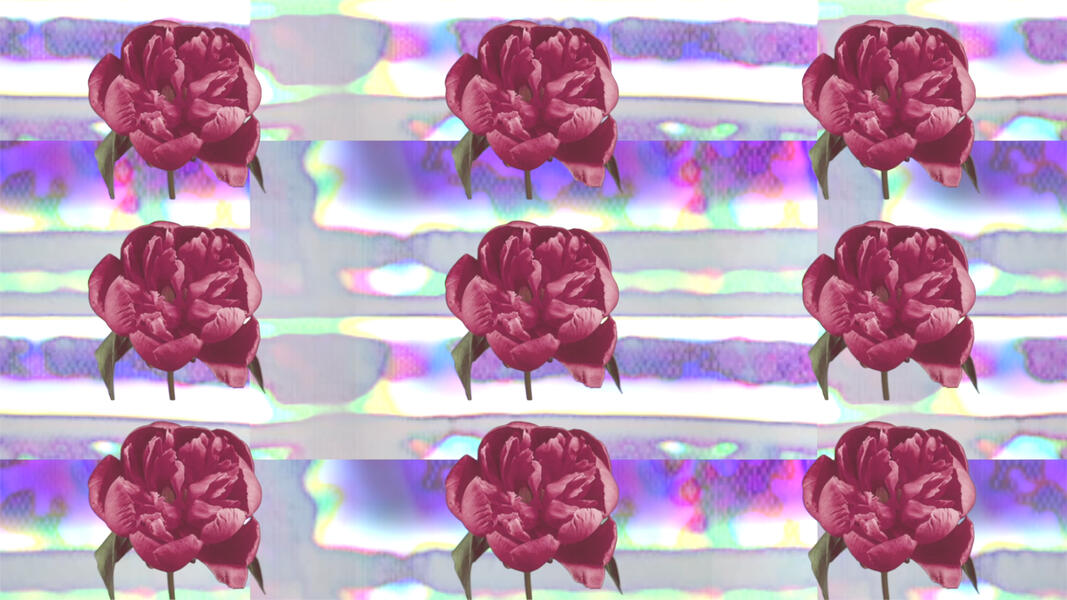 Still 2 of rotating flowers
In the film, these flowers symbolize the growth and decay of our natural world surrounded by the signals and data we put out
-
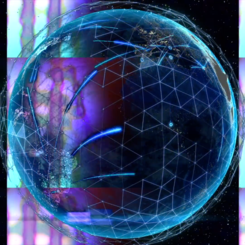
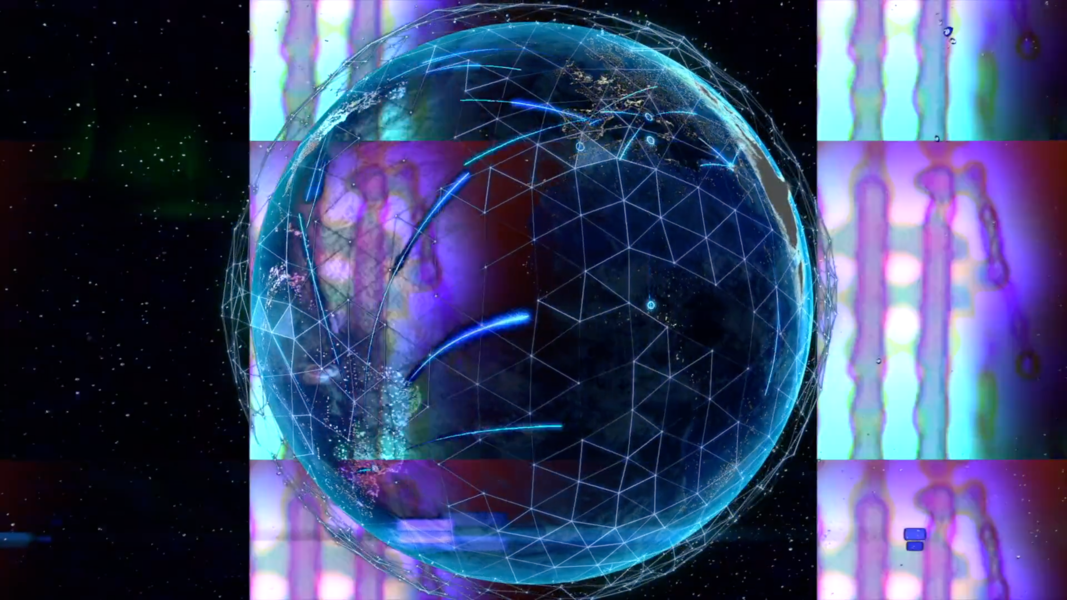 Still from Transmission Override, 2023
A still image of an animated world transmitting signals over generative feedback animations.
-
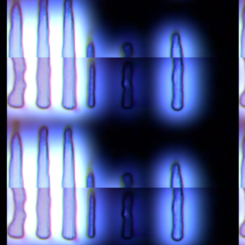
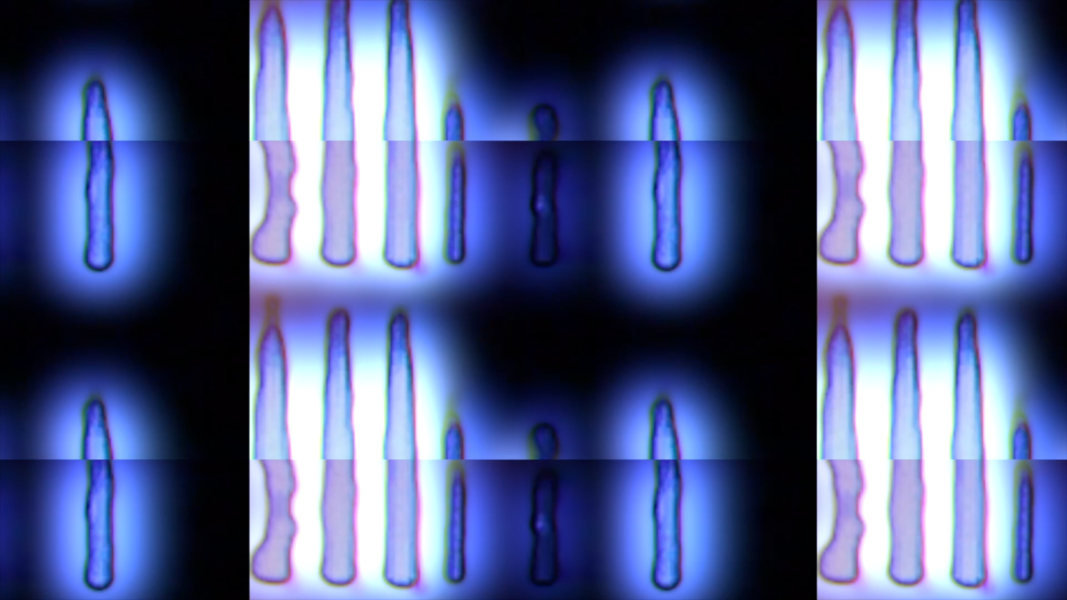 Still Image from Transmission Override of the background textures used in the film
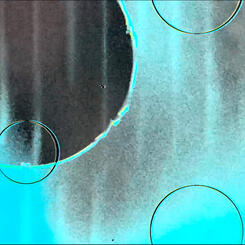
Bright lines of analog video feedback streak across a black backdrop, forming sharp bands and shimmering interference. I imagine the feedback as glowing signals in our world against the back drop of pollinators
-
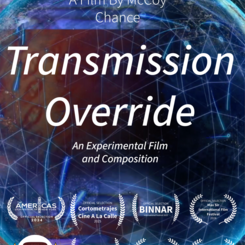
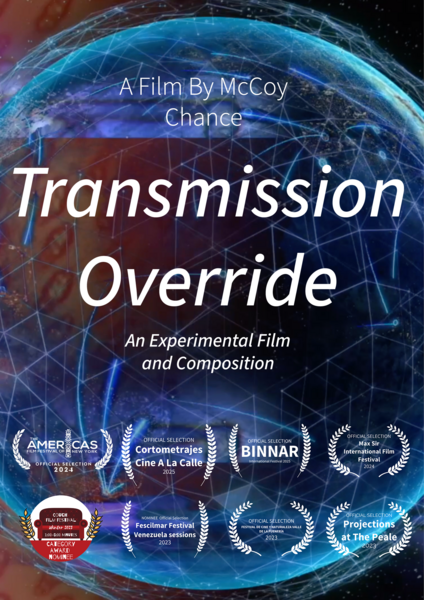 Transmission Override Poster 2025
 -
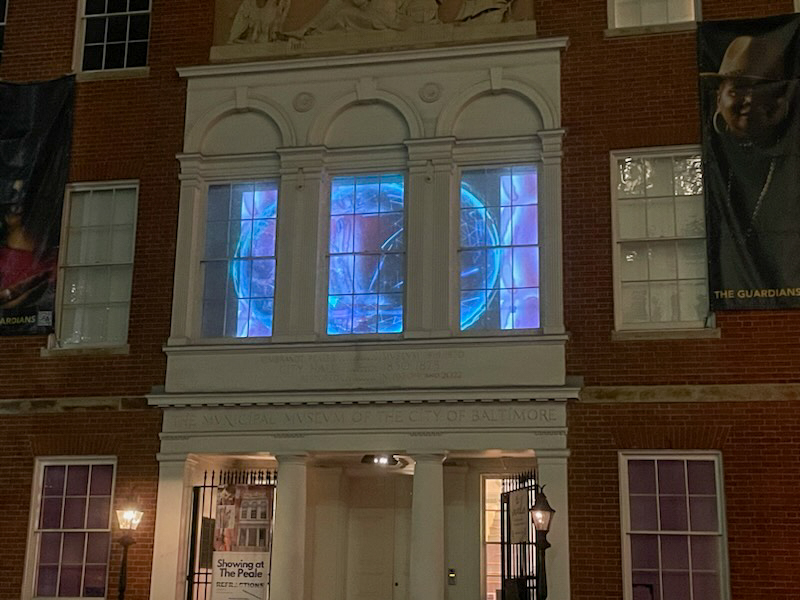
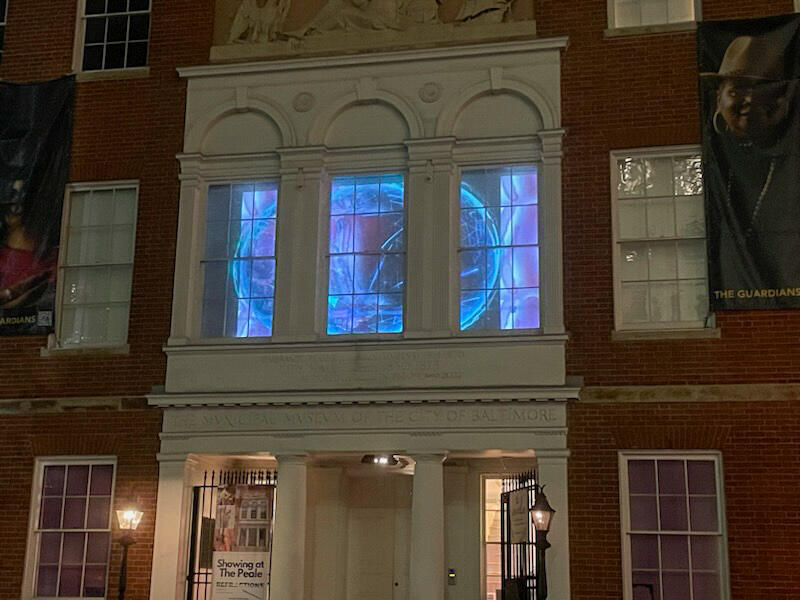 Projections at the Peale Photo
 -
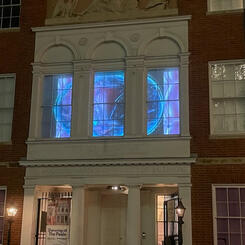
Projections at the Peale
"Transmission Override" at Spark 6 - Projections at the Peale
-
Transmission Override
-
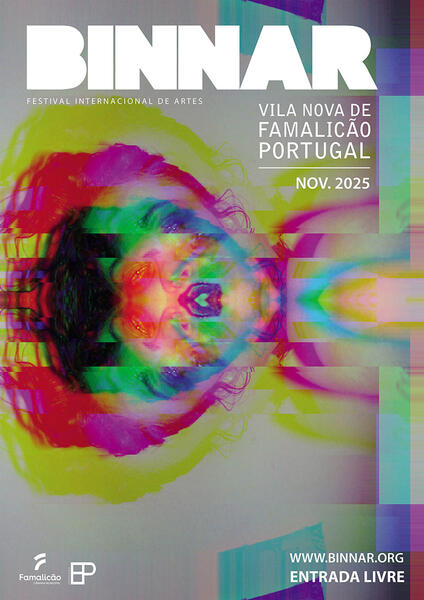 Binnar 2025, International Festival of the Arts
A poster of the 2025 BINNAR festival of the arts where Transmission Override was presented in the month of November 2025





Active Listening 1: Room, Voice, and Discarded Technology
-
 Active Listening 1: Media Example
 -
Gallery Attendees Interacting!
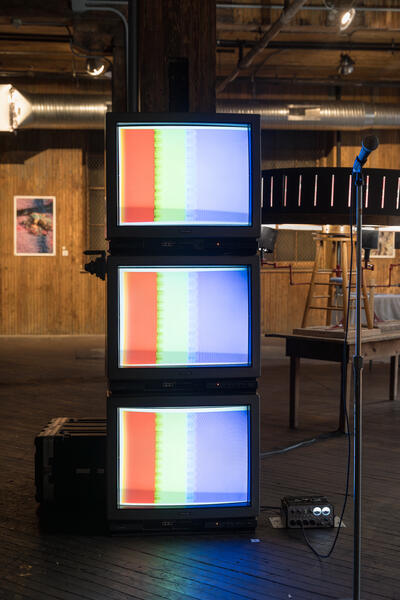
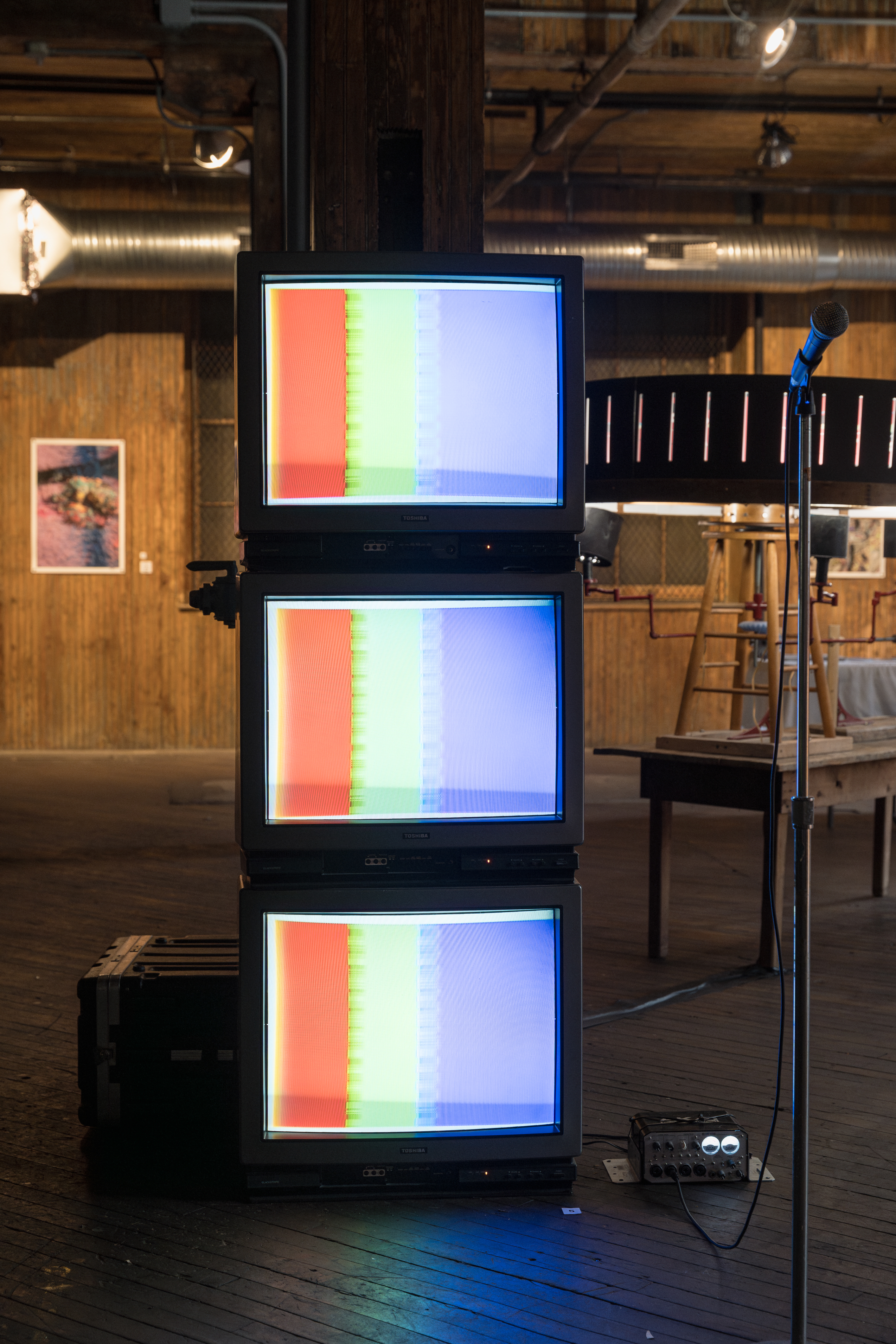
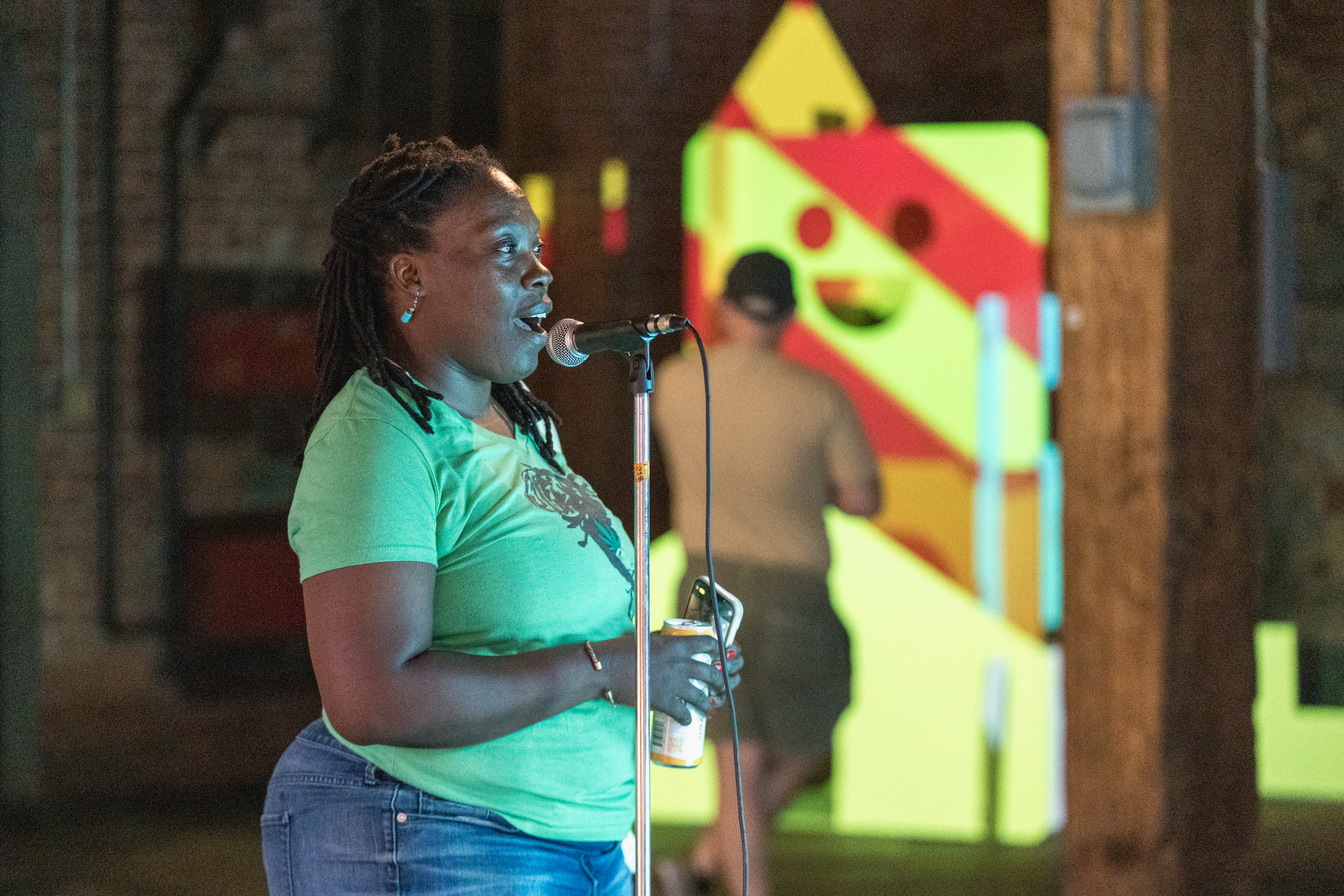
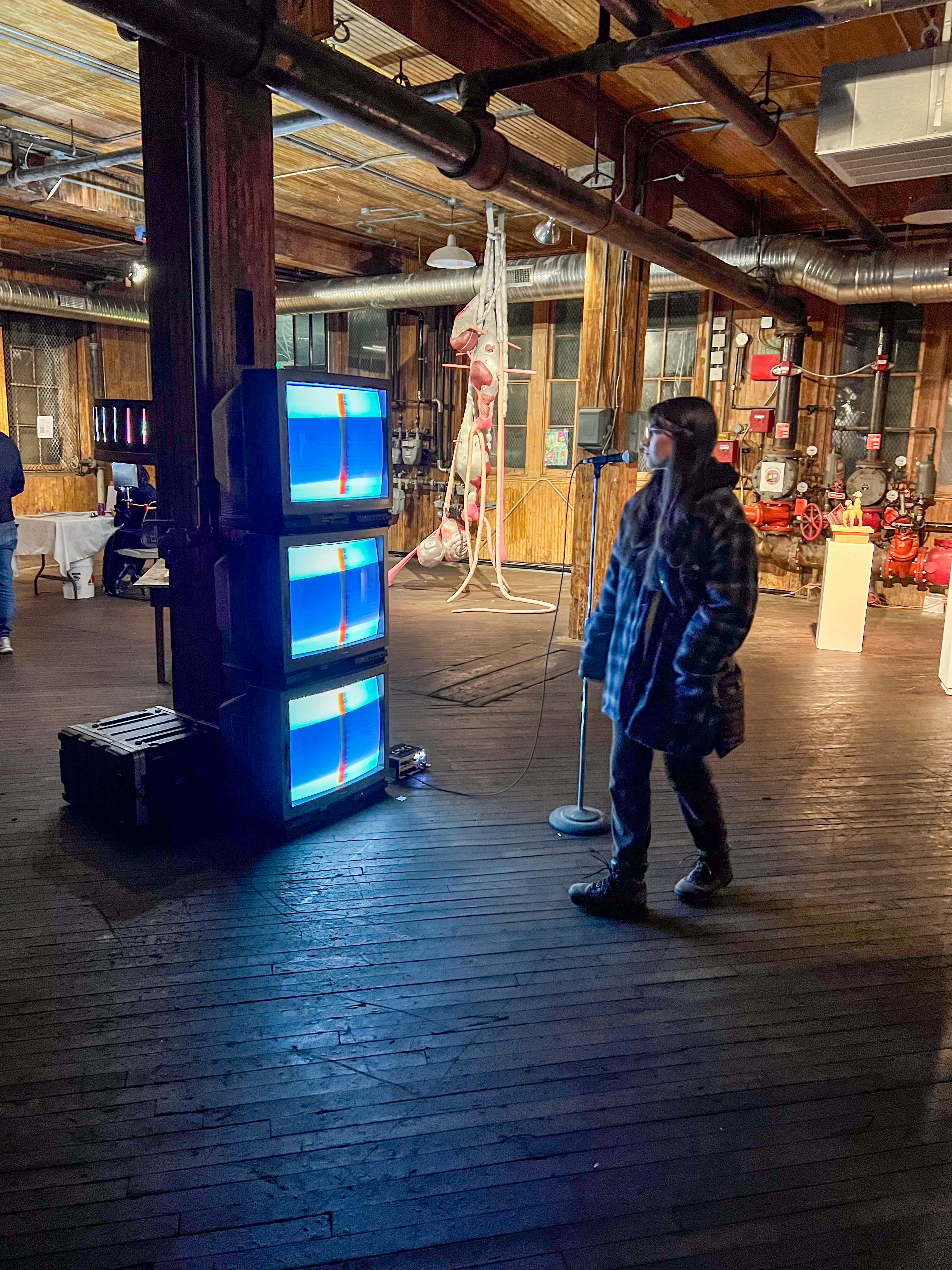
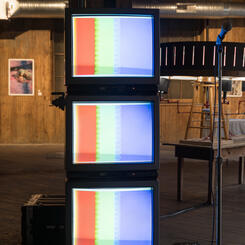
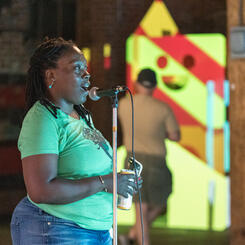
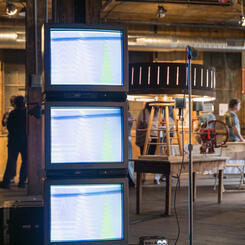
This video shows one of the attendees of the gallery during one of the event nights interacting with the sculptural CRT installation and singing into it. You can see the sculpture and installation responding to the person as they use different tonalities and vocals
-
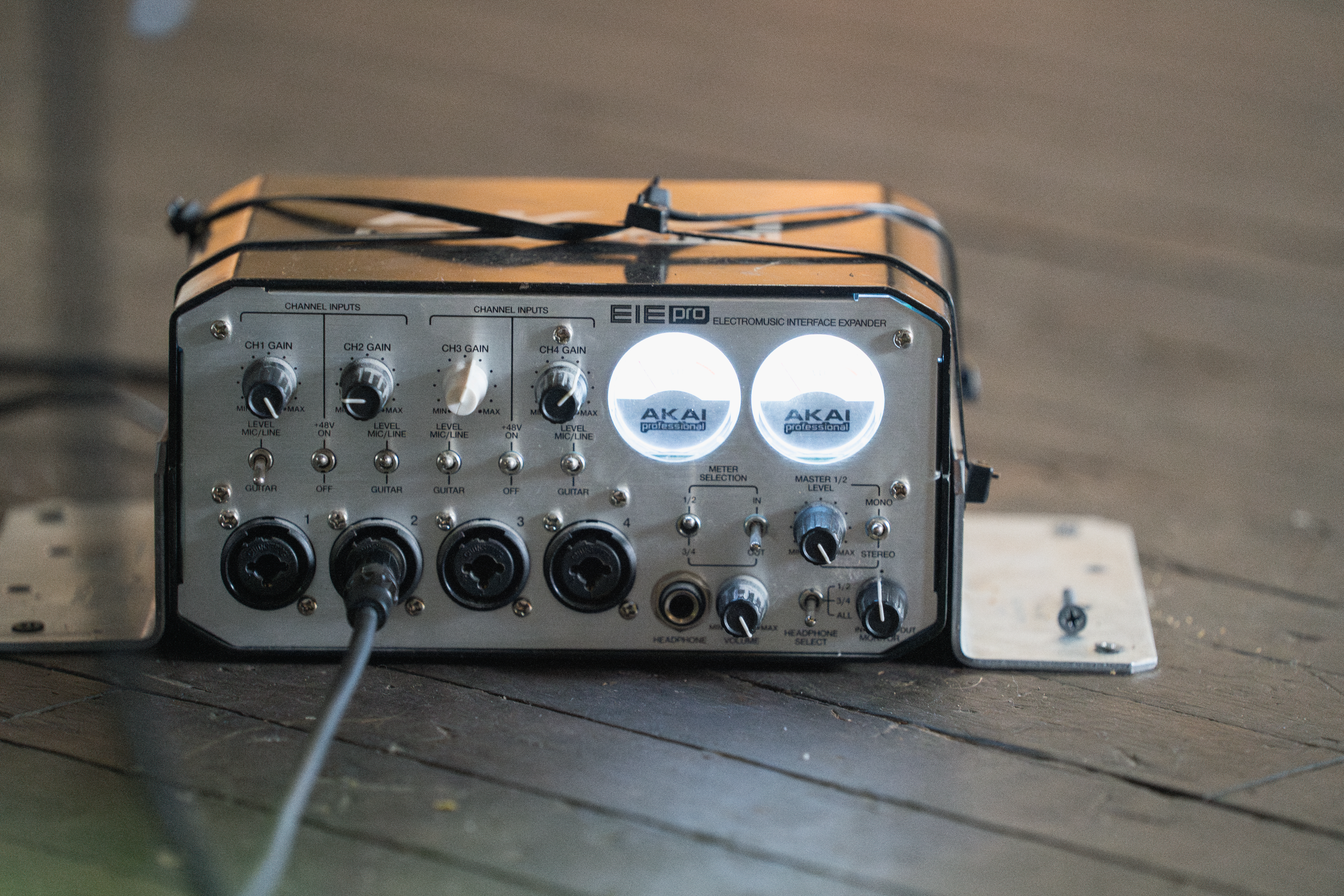
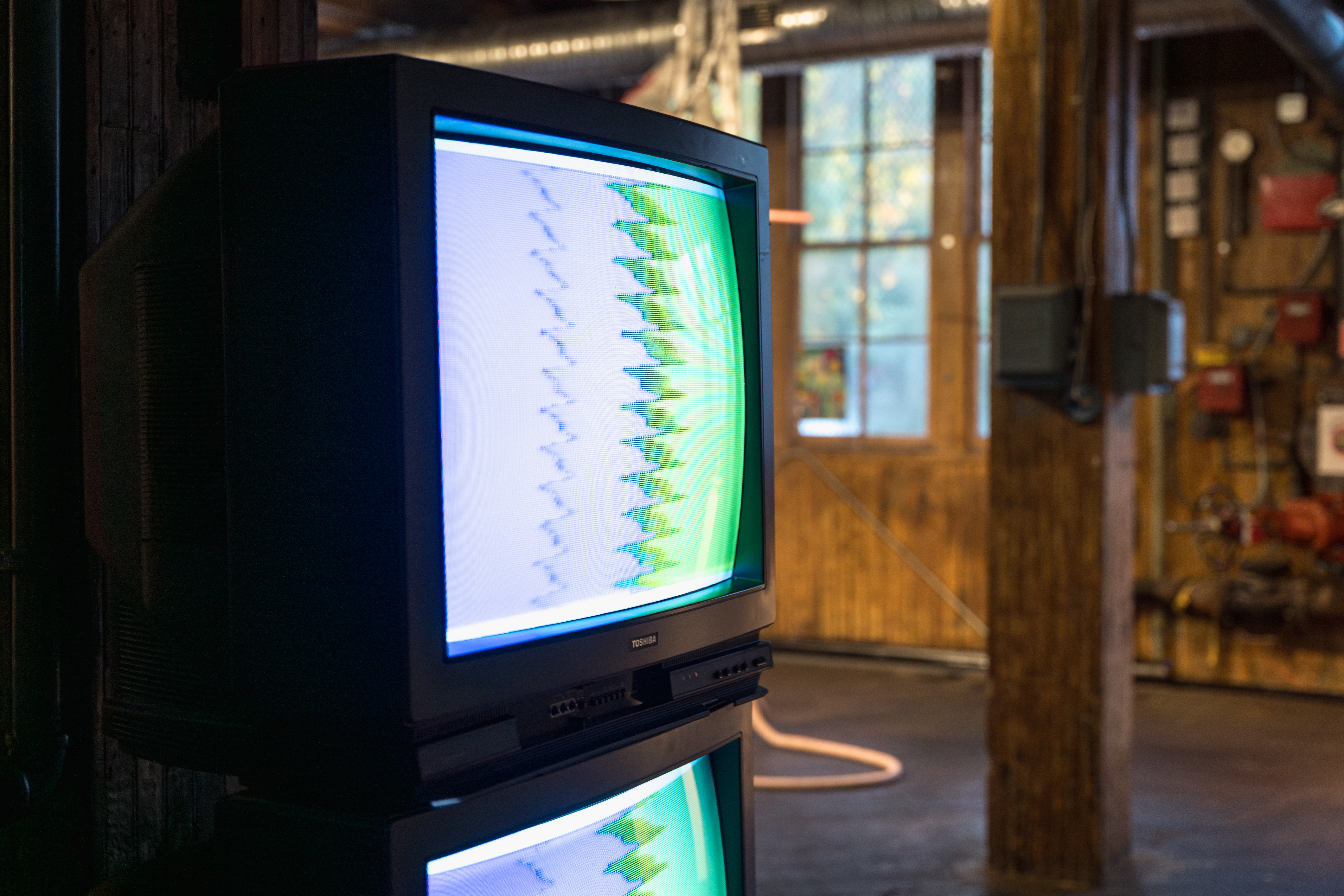
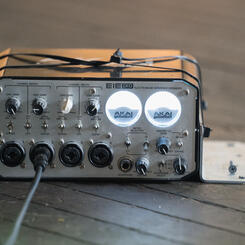
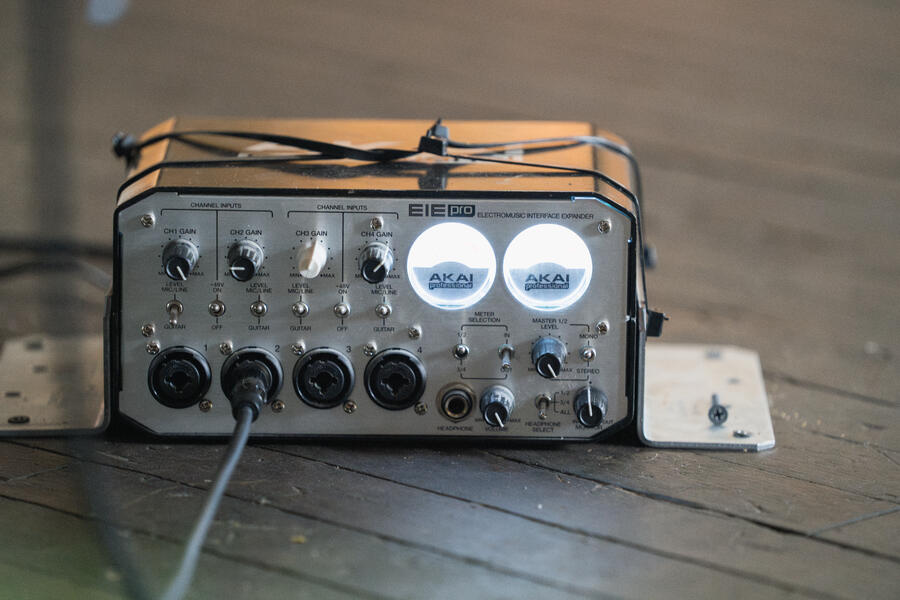 Audio Interface/Expander used in the installation
 -
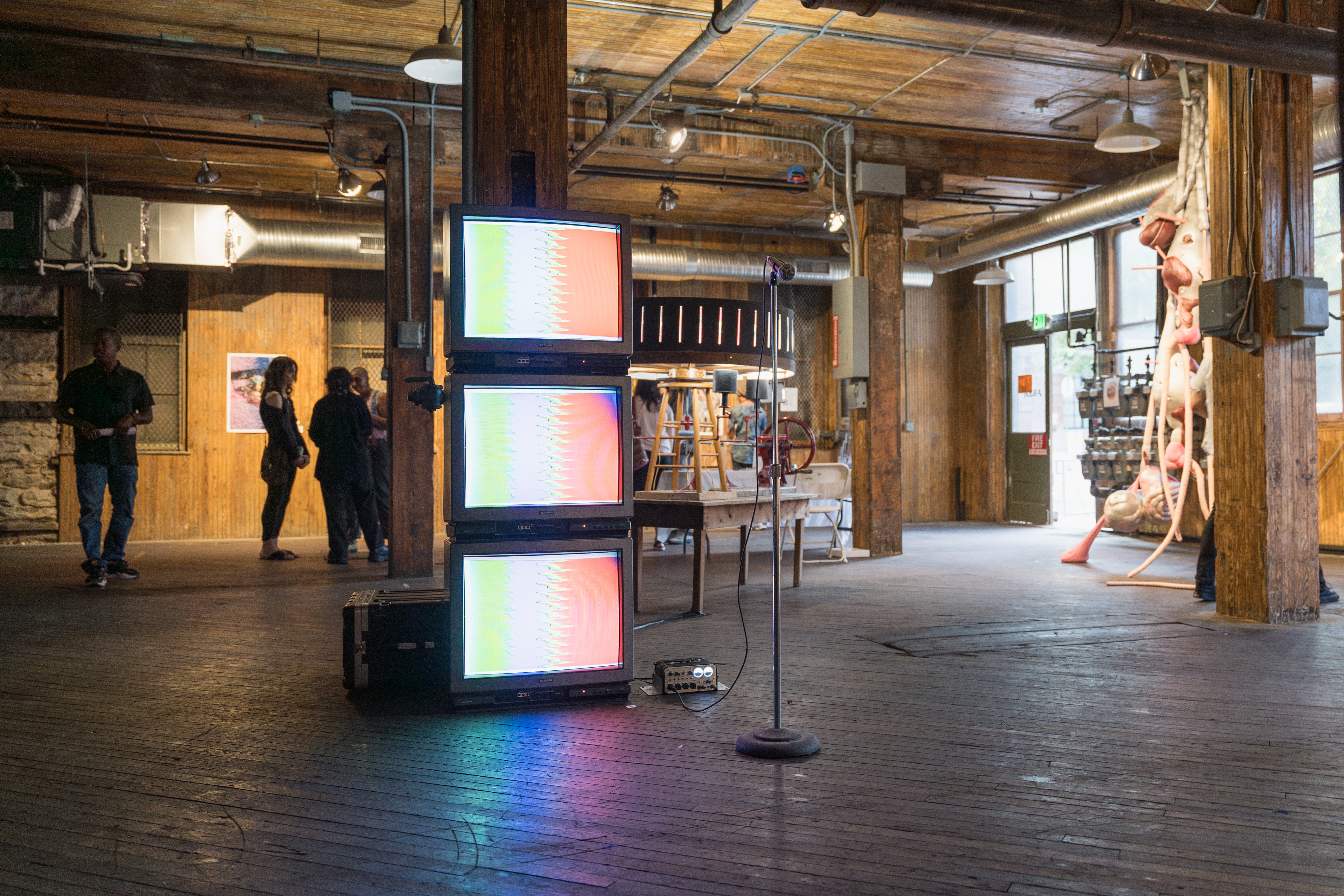
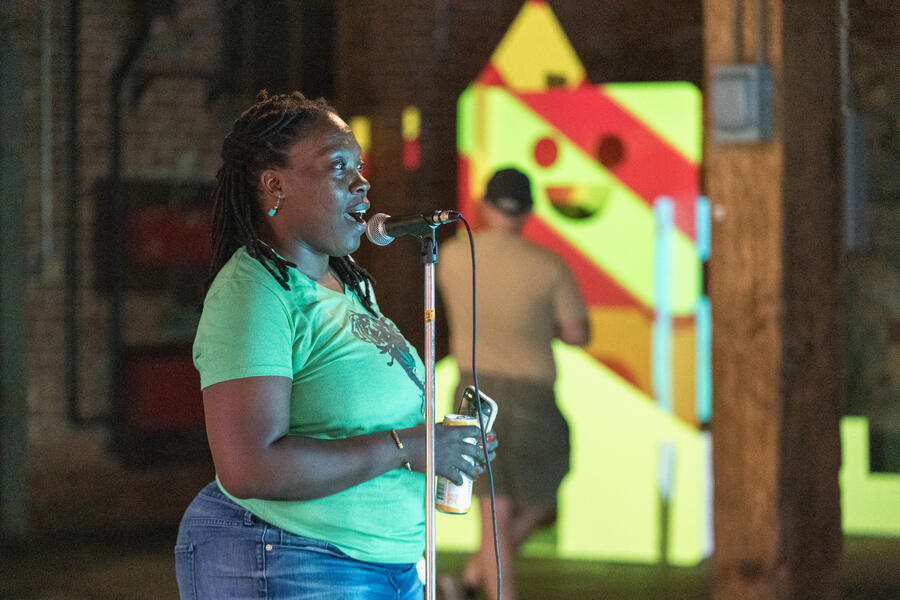 Gallery attendee interacting with the CRT Video Installation.
 -
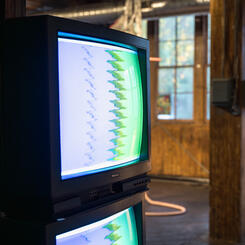
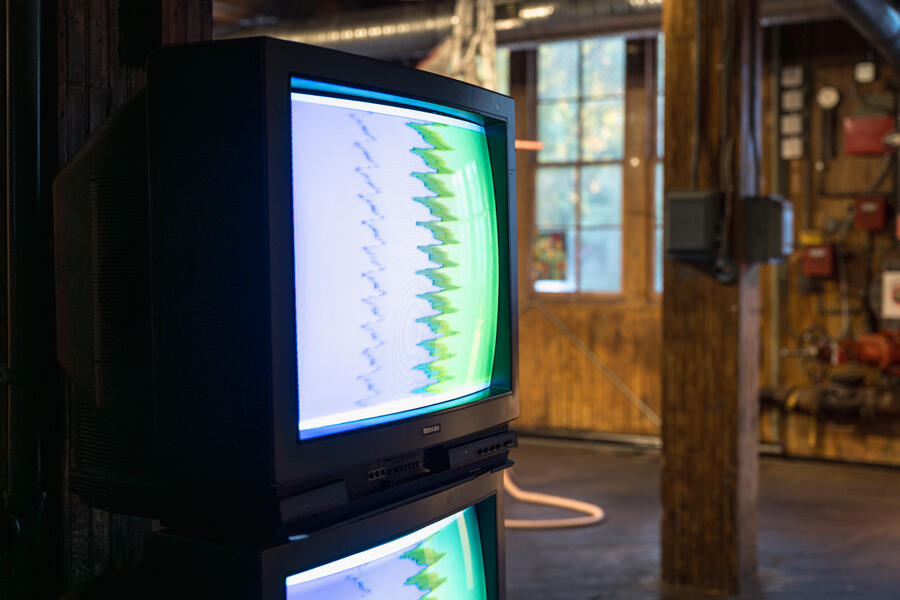 Active Listening 1
 -
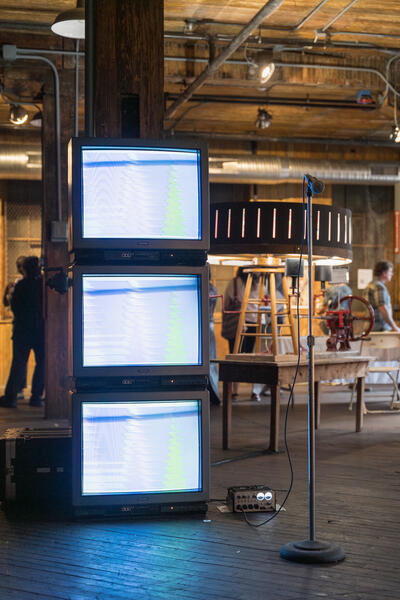 Active Listening 1, visual media changing based on the sound in the room
 -
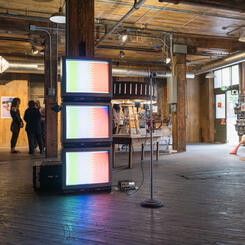
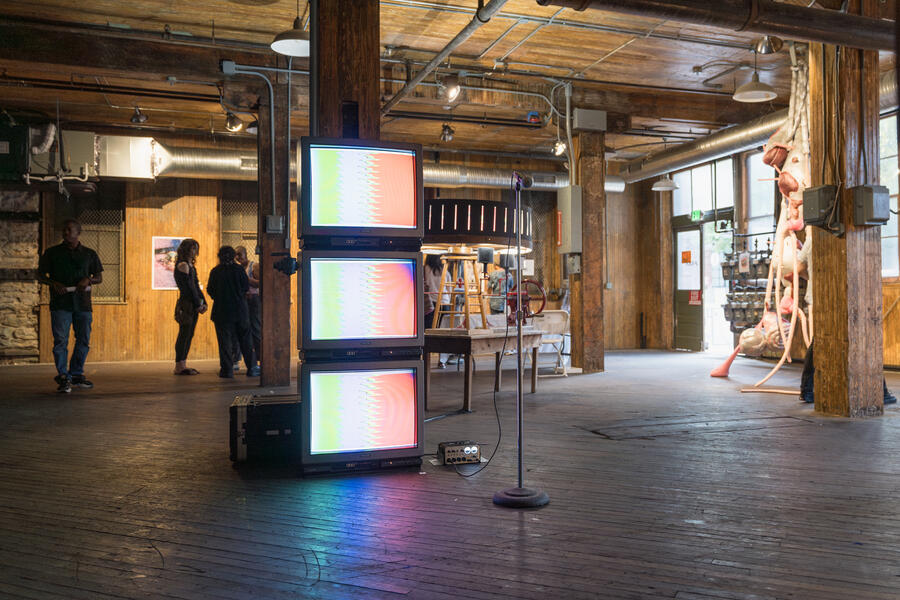 Installation at Area 405 Gallery
 -
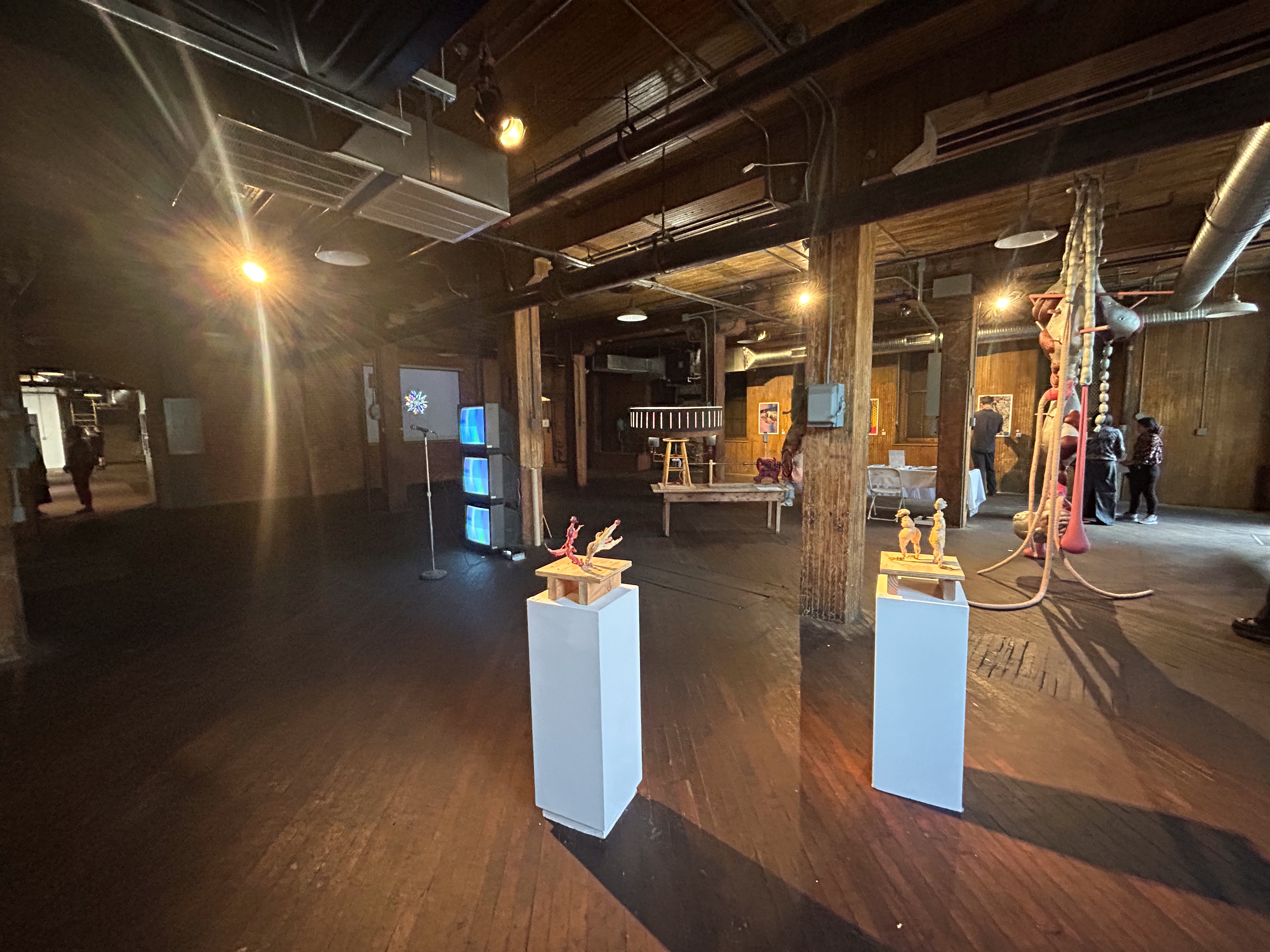
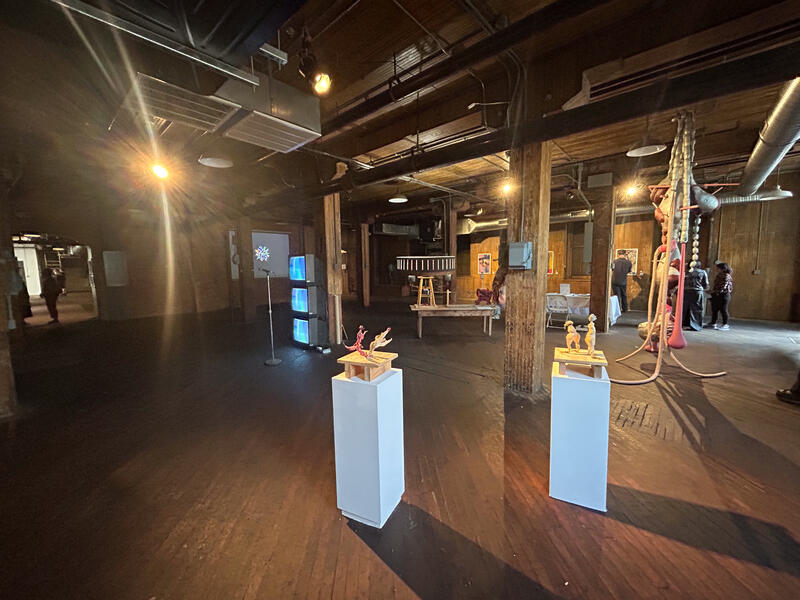 Full Gallery View
 -
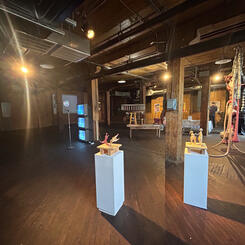
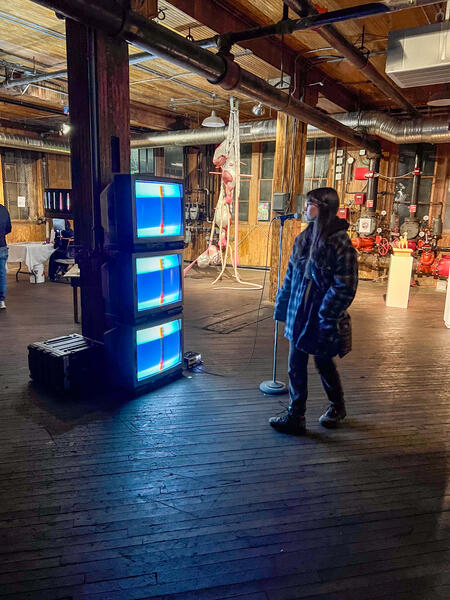 Gallery Visit

Electric Body
-
Electric Body
-
 Electric Body Portrait
 -
 "Electric Body" a modular installation that can come off the wall and be installed in different areas in the room
 -
 Electric Body interaction with environment and Installation
 -
 "Electric Body" producing different patterns based on the amount of static charged up
 -
 Electric Body
 -
 Electric Body Iteration 1
 -
 The Back of the body
 -
 Back side of Electric Body in Lion Bros Studio
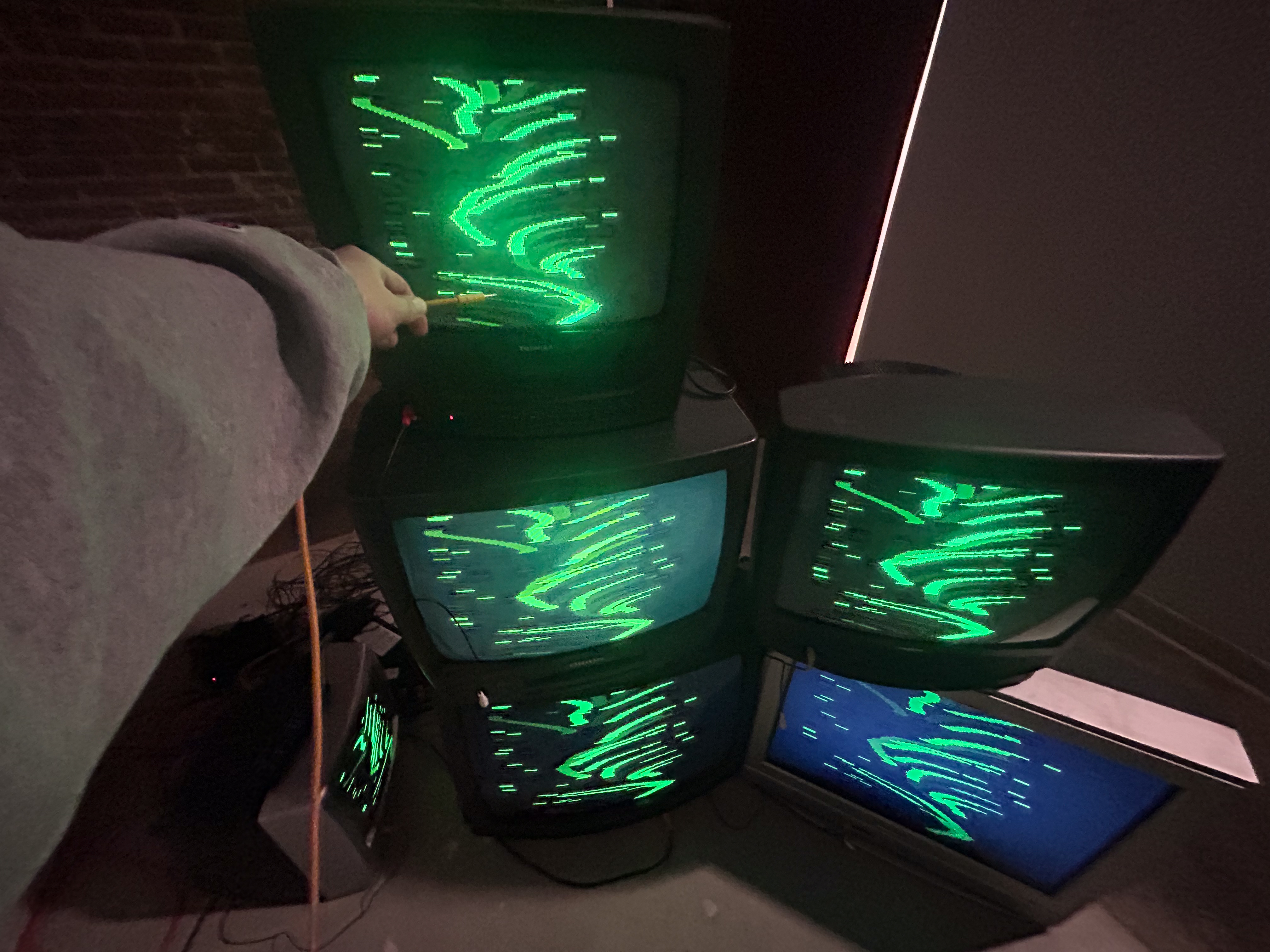
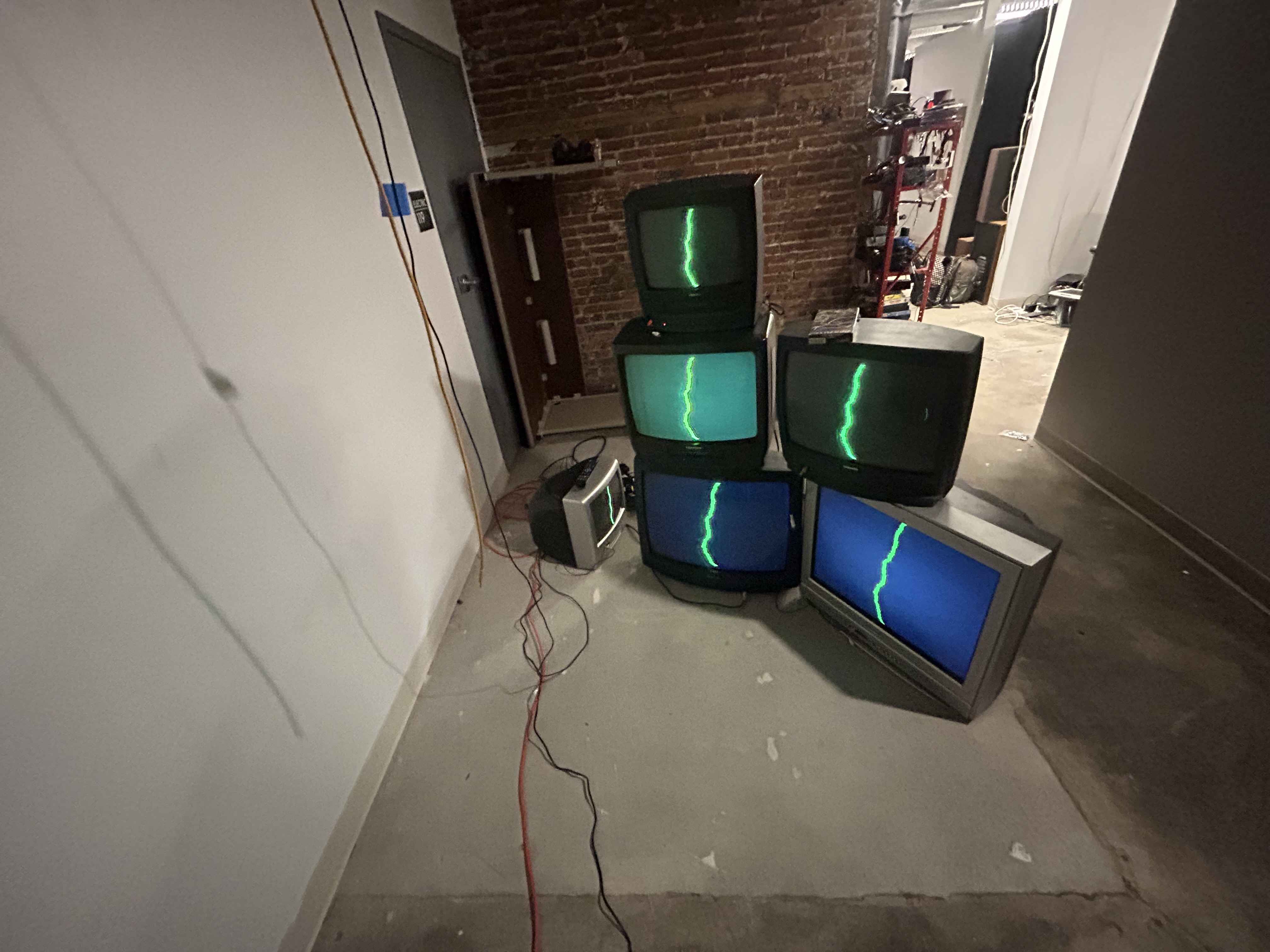
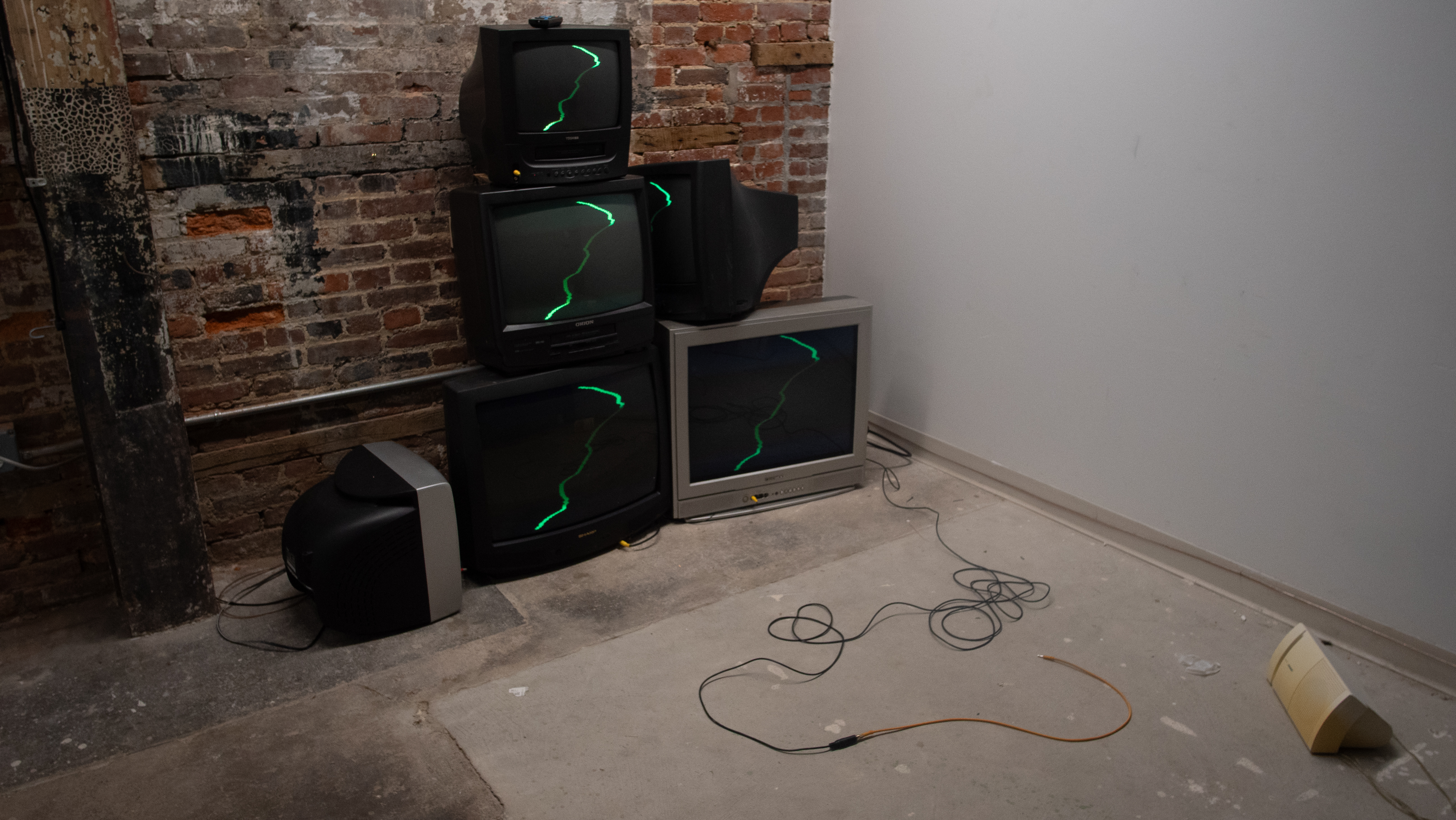
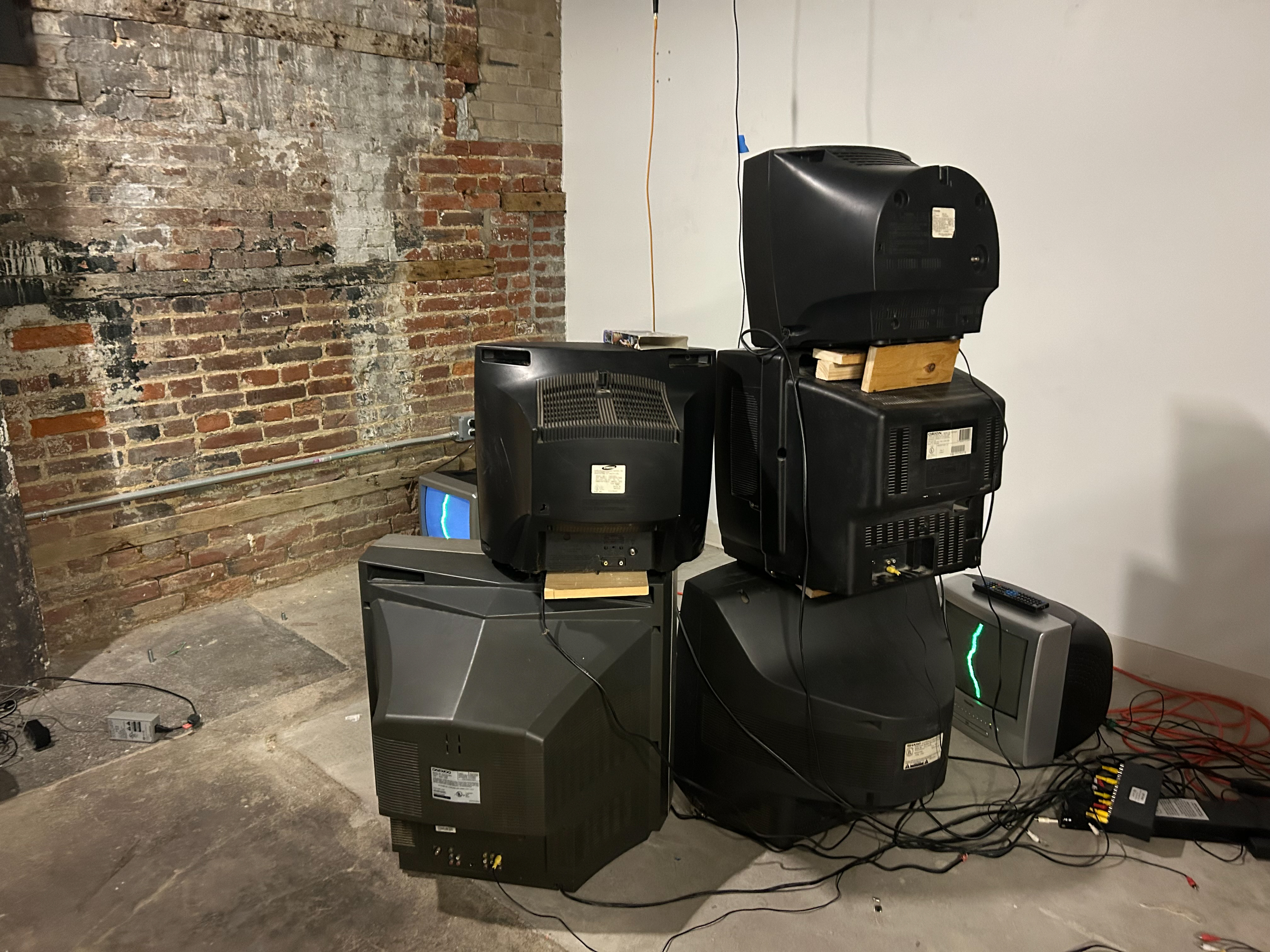
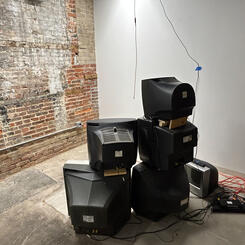
Roll For Punishment
-
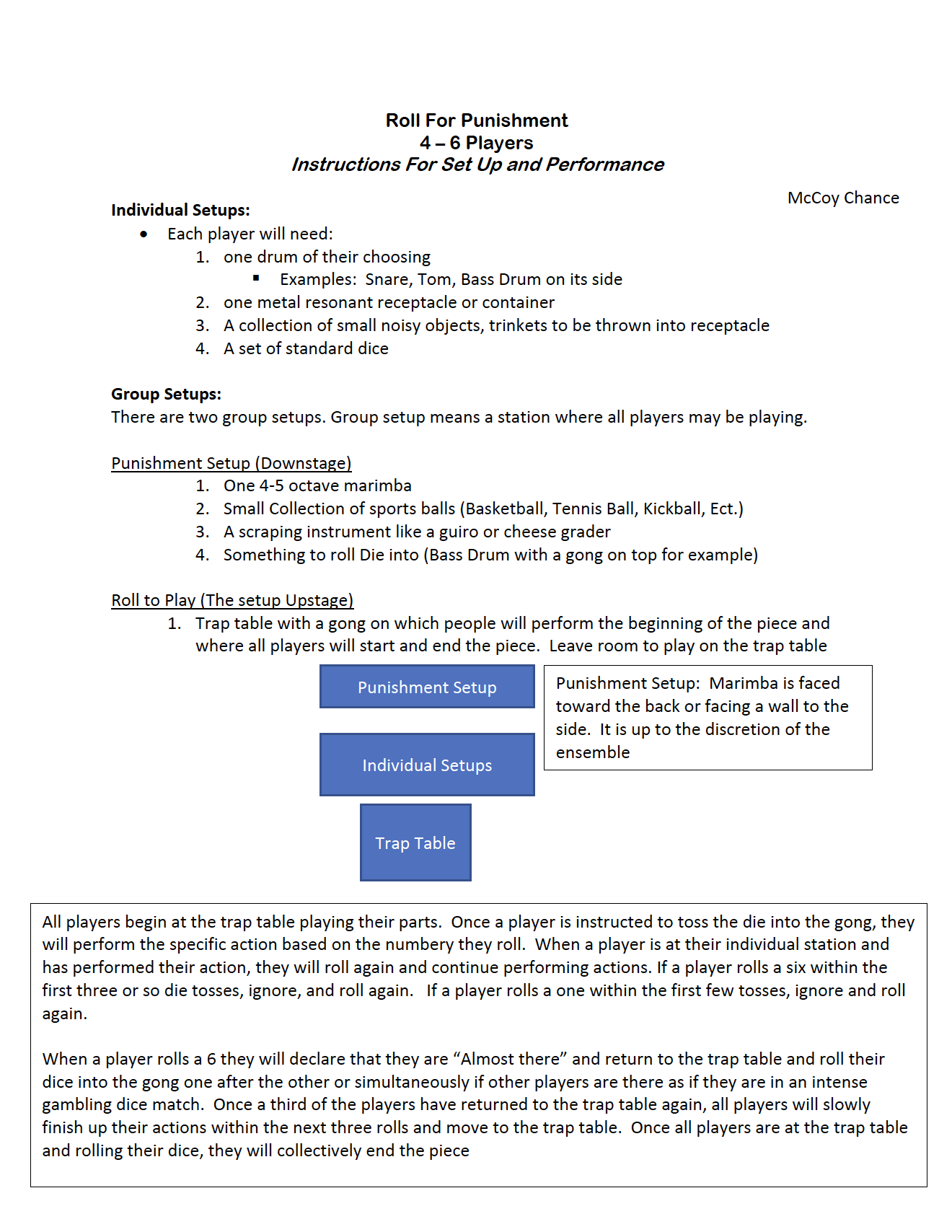
"Roll For Punishment", by McCoy Chance
-
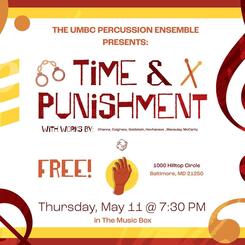
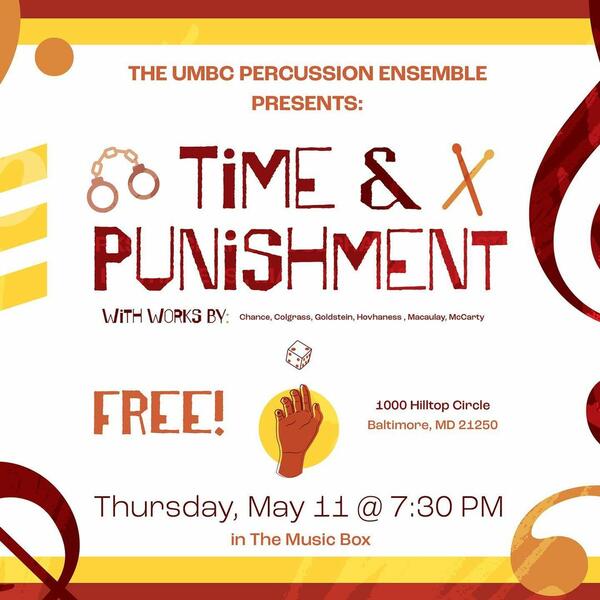 Time X Punishment Concert Poster
 -
Clip from beginning phase of the composition
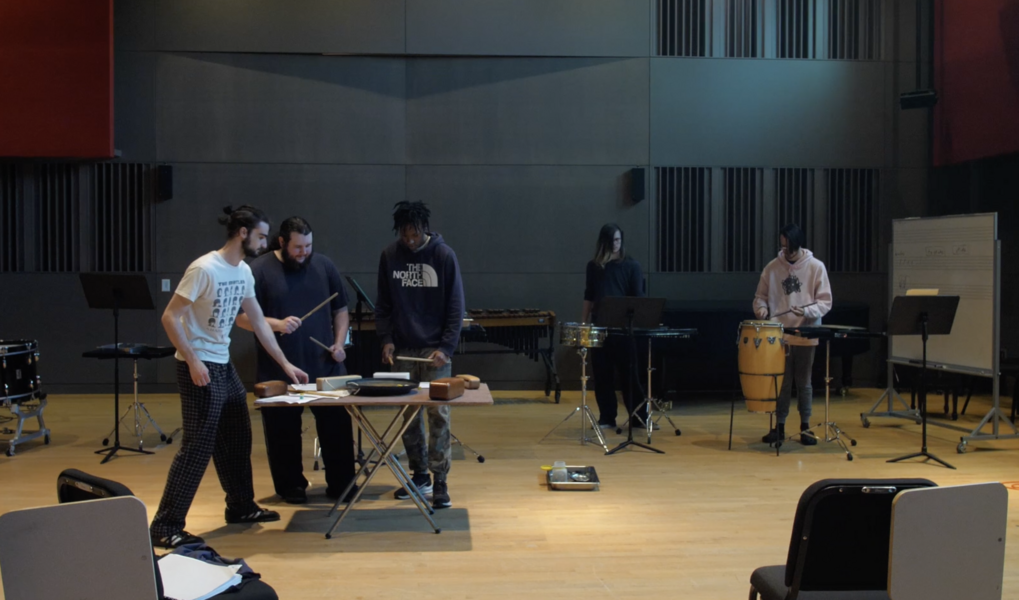
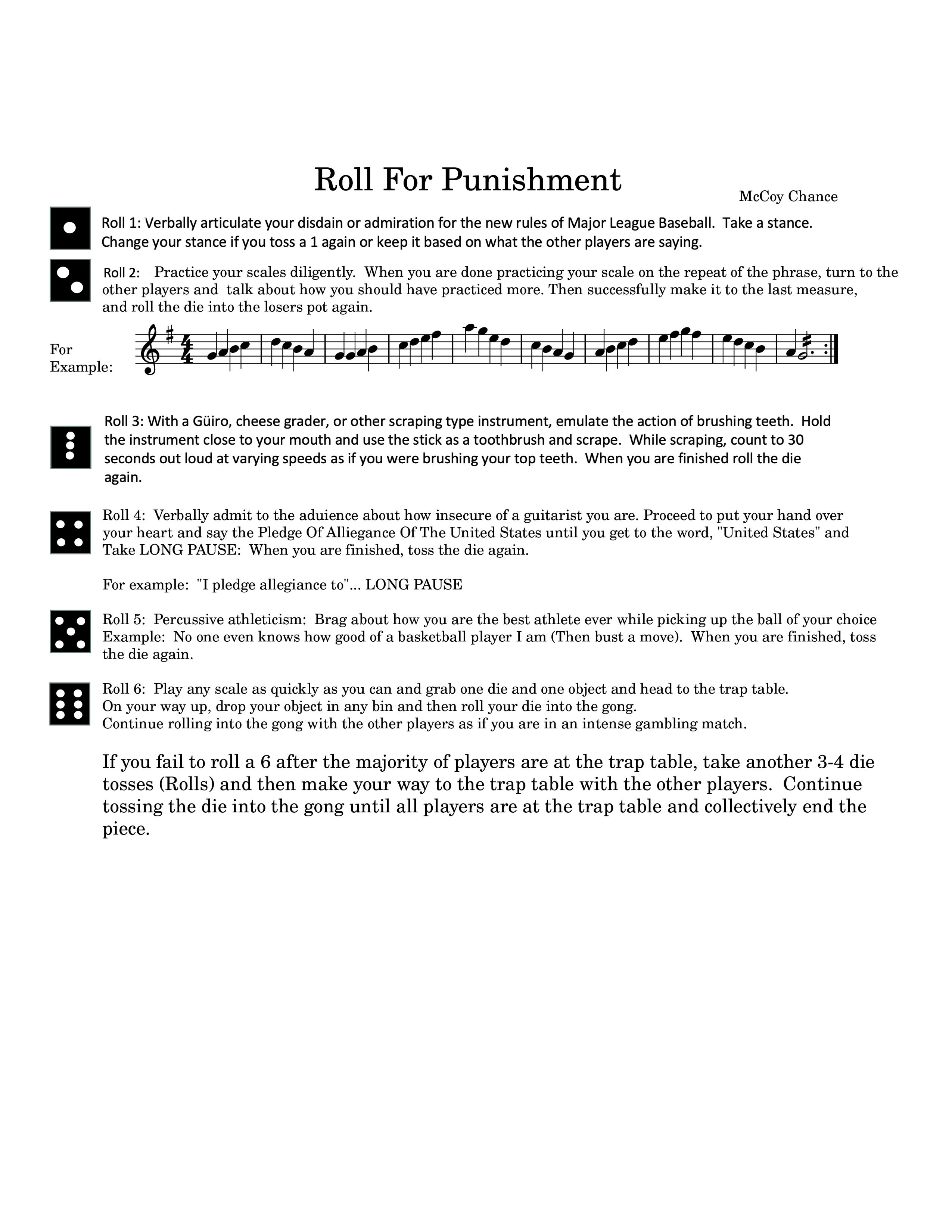
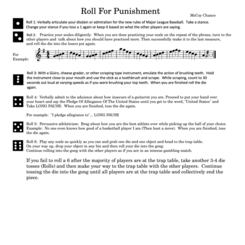
This is the beginning and first phase of "Roll For Punishment" where the artists are only playing the percussion instruments they choose with the instructions given on what number they role.
-
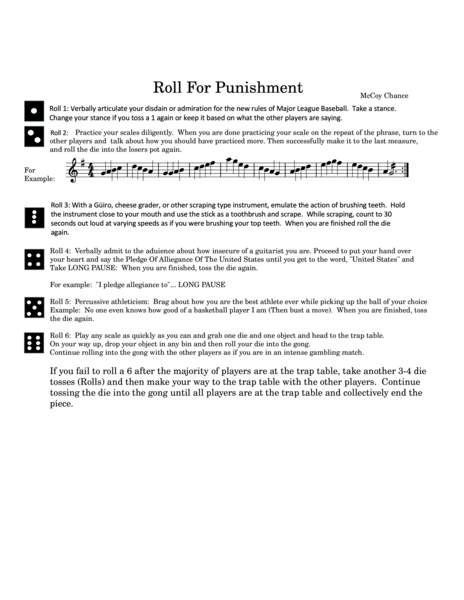 Score and Directions
 -
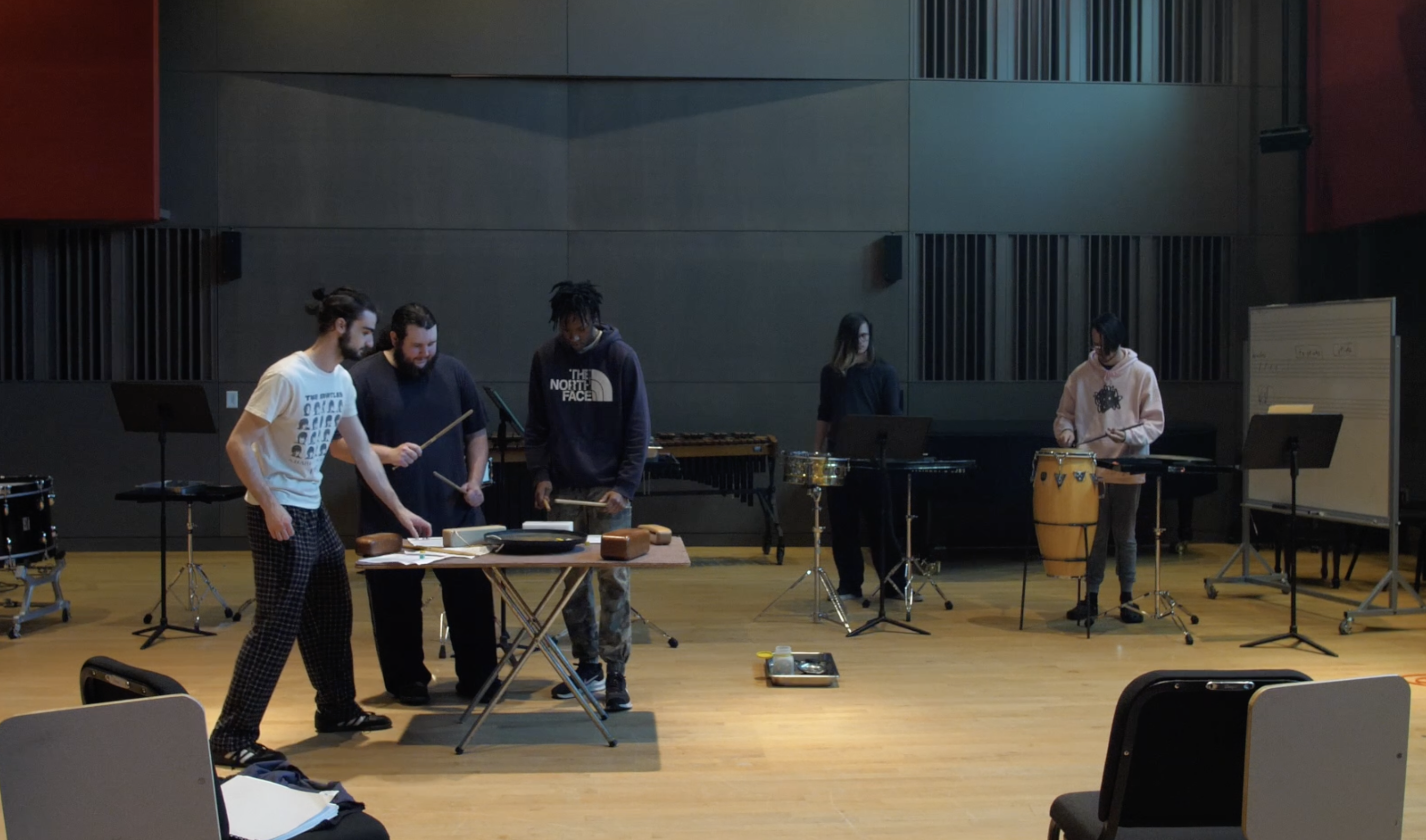
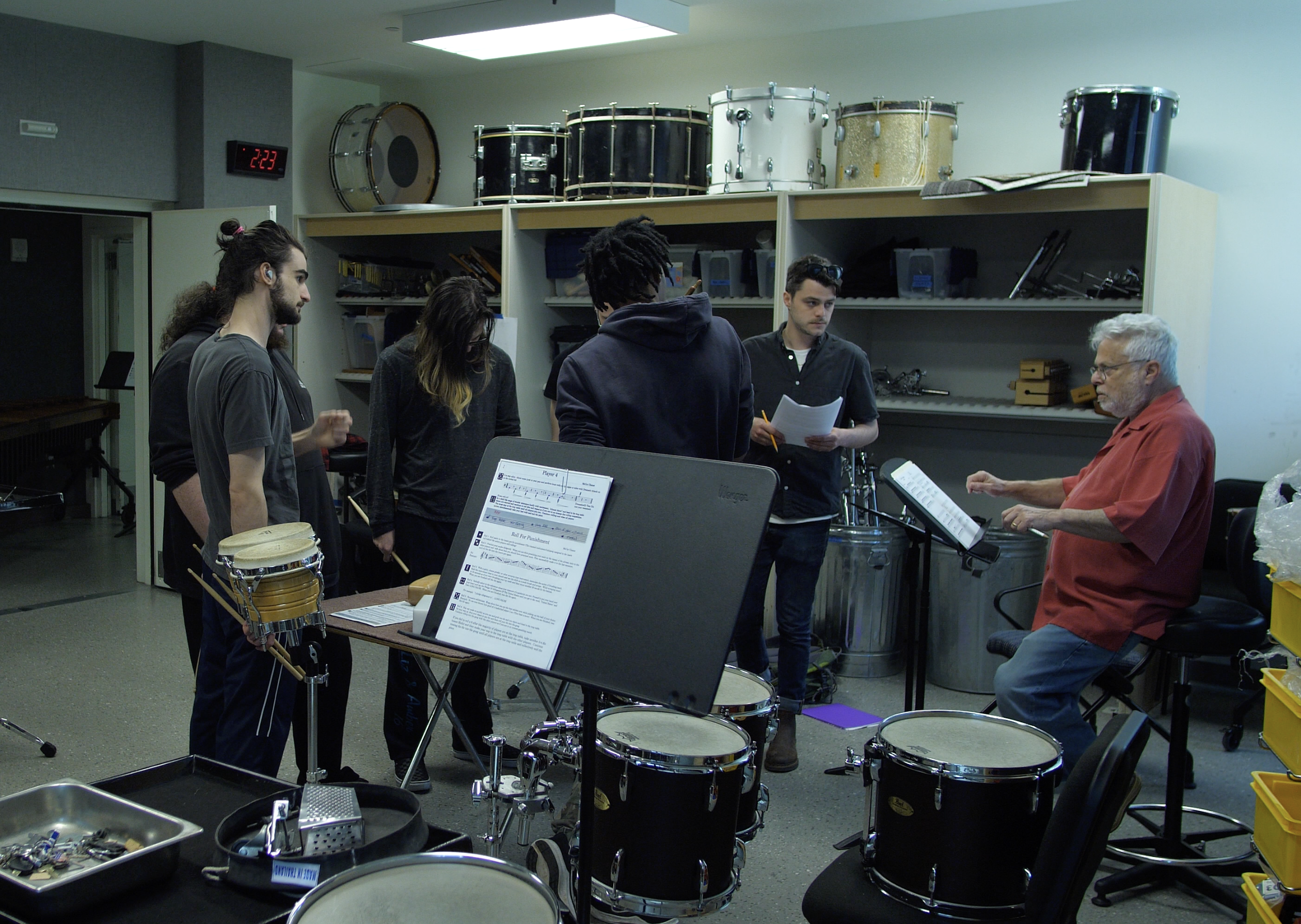
Rehearsal 2
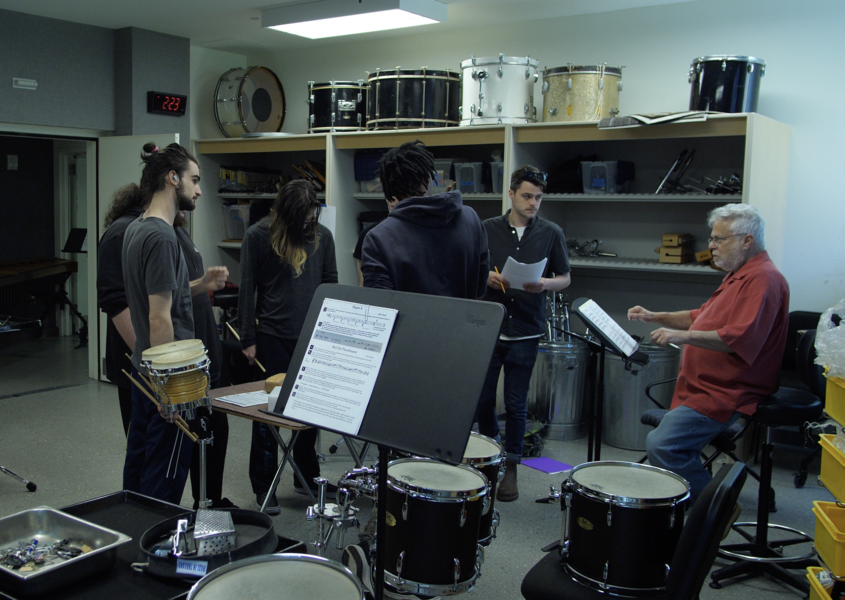
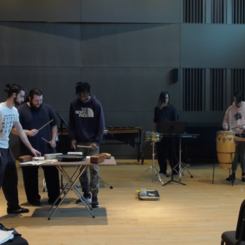
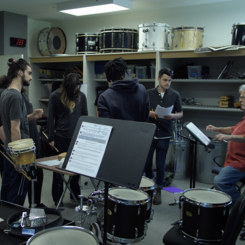
This was the second time I got to work with the students at UMBC in the percussion Ensemble to make this piece come to life.
-
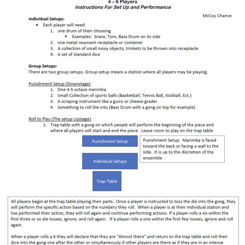
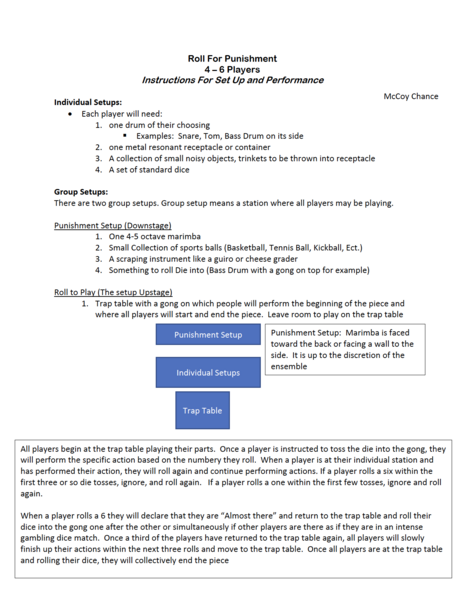 Instructions for Performance
 -
 Opening Score
 -
 Rehearsal 2
 -
 Rehearsal


Improvising The Image
-
Audio and Video from Improvisations
At times, I would send the musicians footage of themselves to view while improvising, offering a different perspective and encouraging a new layer of engagement. Occasionally, I would take the camera and carry it around the space, placing it in significant spots to influence their performance. For example, I might focus the camera on the keys of the piano, subtly limiting the player’s visual range, or zoom in closely on the cello to highlight its physicality.
The musicians responded musically to the visual language presented on their screens, interpreting the imagery in real time. This dynamic interplay between the visuals and their musical responses added depth and unpredictability to the improvisation, creating a constantly evolving exchange of sound and image.
-
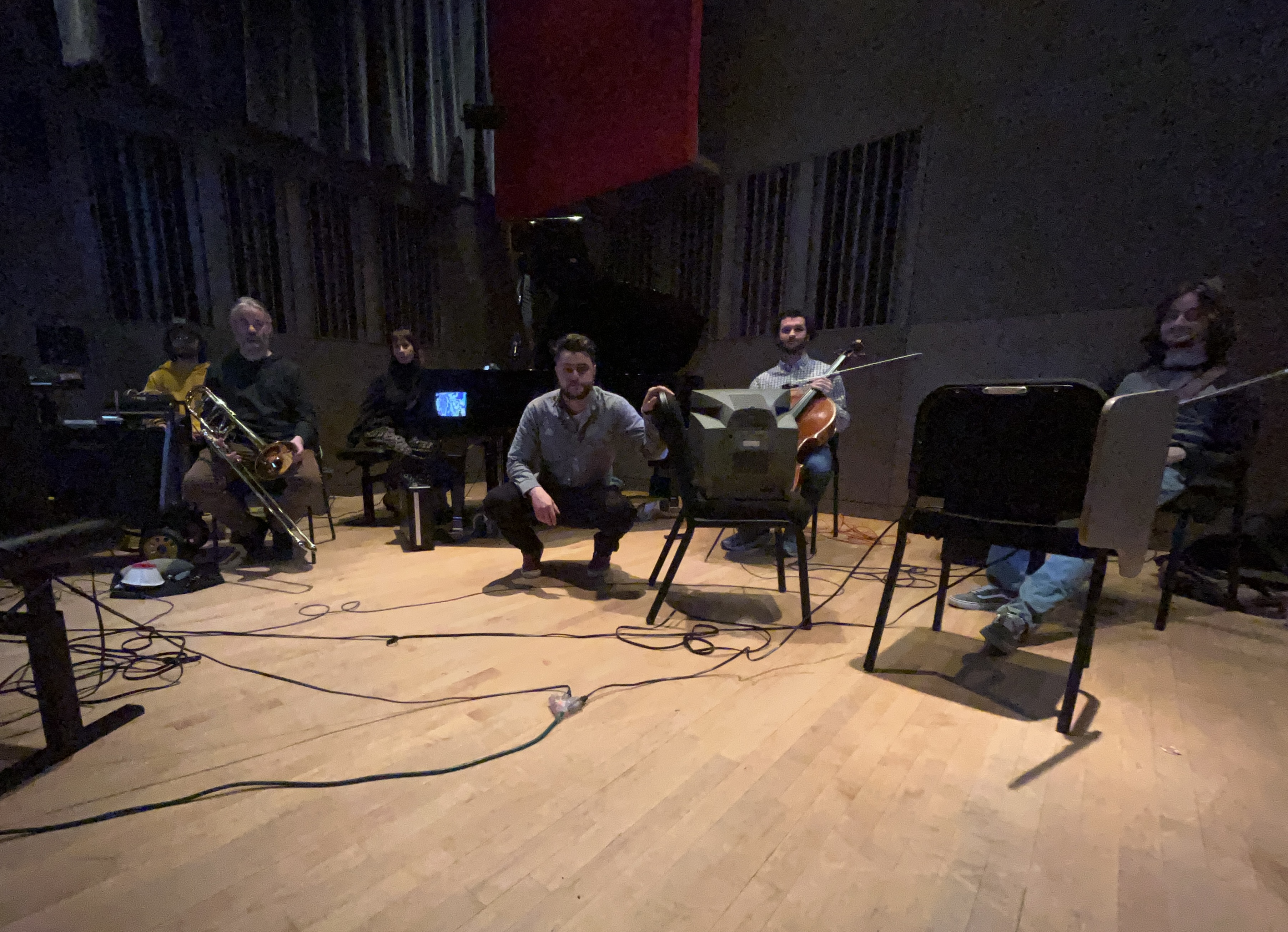
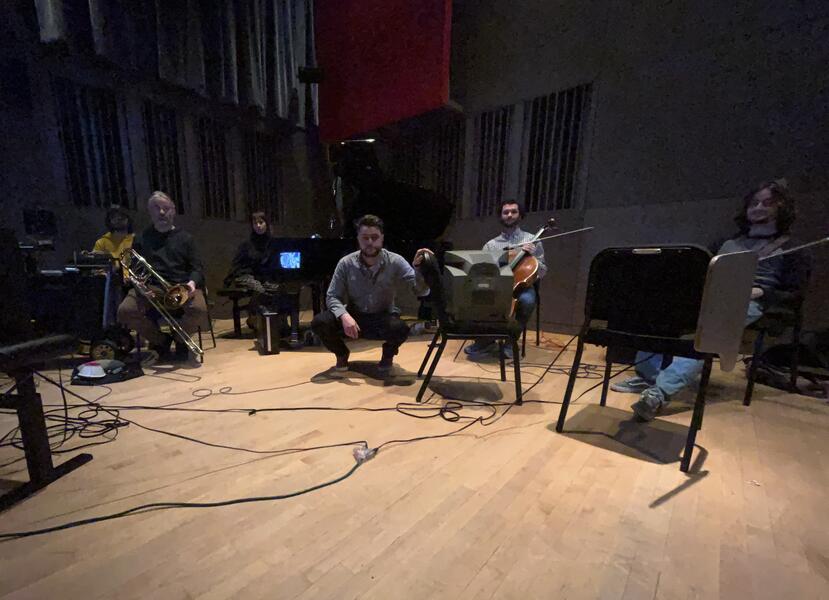 Picture of our last rehearsal before our public performance
Featuring:
McCoy Chance
Patrick Crossland
Ida Dierker
Jeremy Keaton
Joshua Webb
-
Improvised Video and Audio from Rehearsals
The musicians’ screens displayed a constantly shifting array of visuals, creating an open-ended canvas for their improvisation. These visuals—abstract shapes, layered textures, feedback loops, and scenes of nature—provided inspiration for the music, which could range from spacious and melodic to noisy and dynamic. Since the performance was entirely improvised, there were no boundaries to the dynamic range or possibilities for the audio and visuals. The interplay between what was seen and heard created a fluid and unpredictable dialogue, with the musicians responding to the visuals as I adjusted and improvised them in real time.
-
Visual Improviser Setup
Central to this collaboration was my analog video setup, which consisted of one laptop alongside analog video processing equipment from the 1980s to 2000s. This included a Videonics analog video mixer, a video enhancer, and two analog video cameras, as well as an improvised video feed. All of this analog gear was either salvaged, restored by me, or found in working condition and repurposed for this project.
Through experimentation, I discovered new ways to integrate these devices into contemporary art, breathing new life into equipment that many would consider outdated. The restored and repurposed gear proved to be essential in creating the visuals, underscoring their continued relevance in modern creative practices. This setup not only bridged past and present technologies but also embodied the themes of care and sustainability that are central to my work.
-
Concert Clip Audience Perspective
-
Concert Clip Audience Perspective 2
-
Visual Improviser Clip 2
Central to this collaboration was my analog video setup, which consisted of one laptop alongside analog video processing equipment from the 1980s to 2000s. This included a Videonics analog video mixer, a video enhancer, and two analog video cameras, as well as an improvised video feed. All of this analog gear was either salvaged, restored by me, or found in working condition and repurposed for this project.
Through experimentation, I discovered new ways to integrate these devices into contemporary art, breathing new life into equipment that many would consider outdated. The restored and repurposed gear proved to be essential in creating the visuals, underscoring their continued relevance in modern creative practices. This setup not only bridged past and present technologies but also embodied the themes of care and sustainability that are central to my work.
-
Audio and Video Short Clip from Improvisations and Collaboration
this video and audio is taken directly from a screen capture from an improvisation we did during our collaboration
-
Video View and Analog Setup Clip 3
Another Clip of the analog setup
-
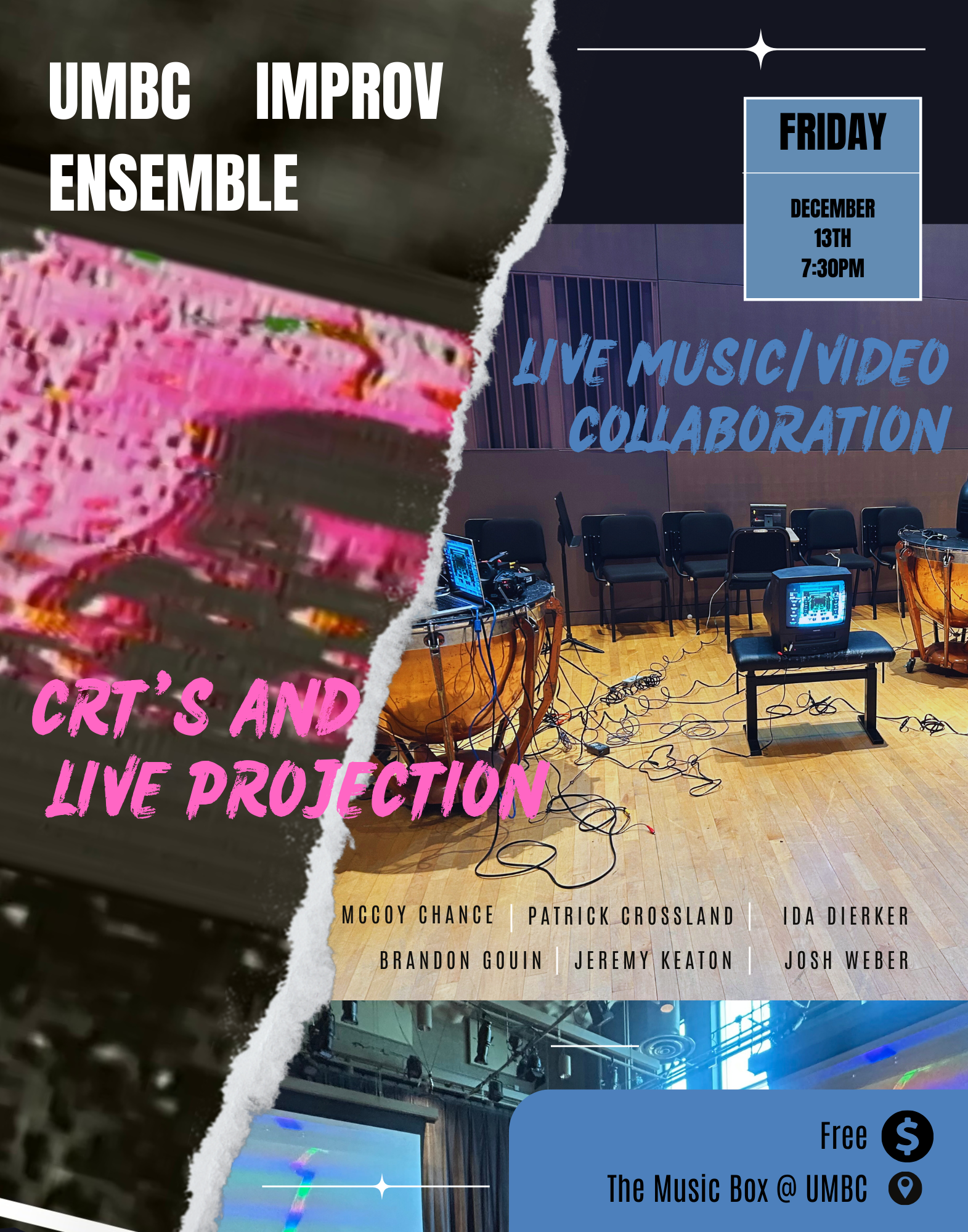
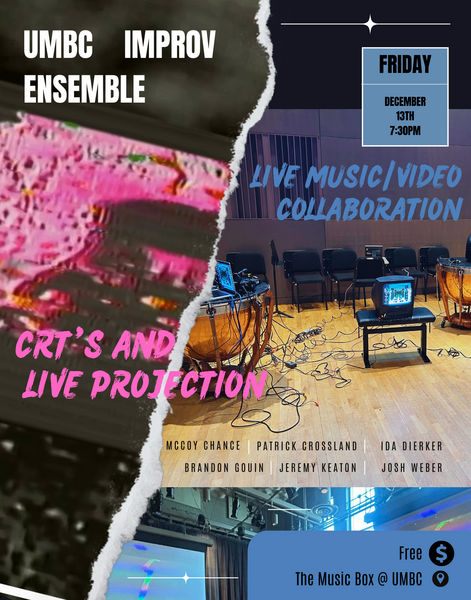 Concert Flyer for Performance