-
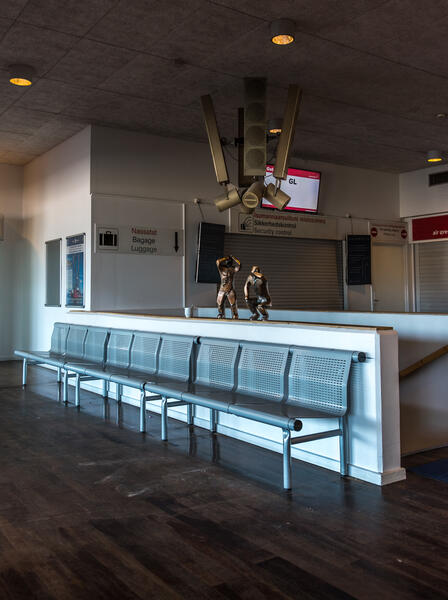 Kangerlussuaq Airport Departure Lounge (2021)
Small bronze sculptures by Heike Arndt, a German artist with a studio in Denmark, decorate the departure lunge. Kangerlussuaq's status as Greenland's international air hub became the engine of the local economy in 1992, although during 2025, Air Greenland moved its hub to a newly expanded airport in the capital, Nuuk, which has had a major impact on the community. About 30% of the citizens left, but those who remain have met the challenges with passion, pride and determination to find a way forward in a place they see as home.
-
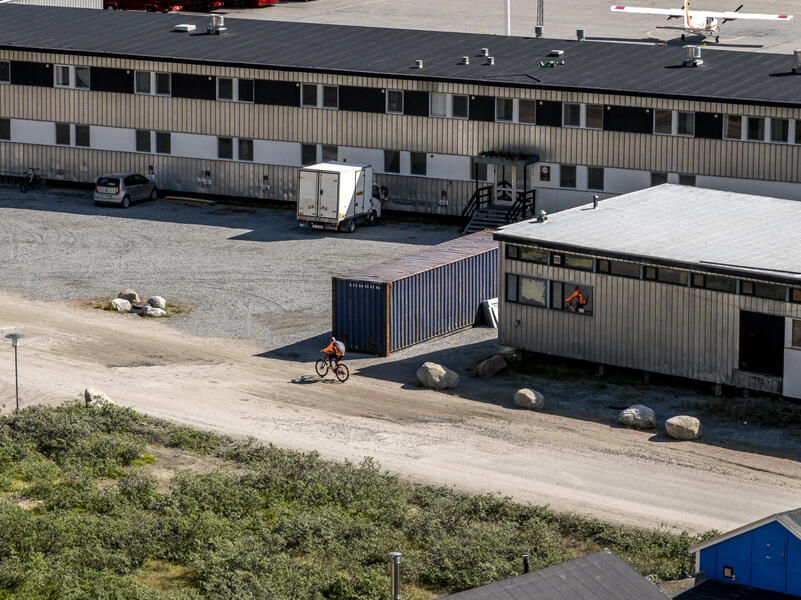 Cyclist Passing Airport Terminal (2022)
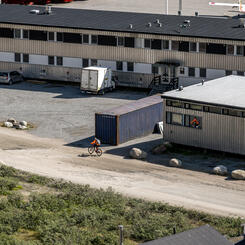
After 1992, Kangerlussuaq transitioned from military installation to Greenland’s international civilian air hub, with regular flights to and from Copenhagen via Air Greenland and a steady stream of connecting flights to other Greenlandic airports throughout the day. The airport and businesses serving travelers dominated the economy until late 2024 when the hub was moved to Nuuk.
-
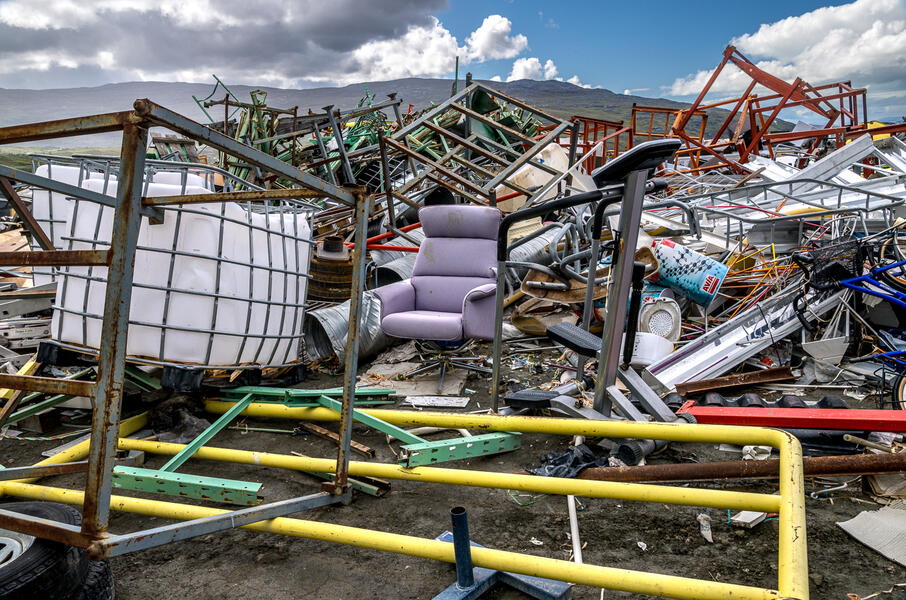 Kangerlussuaq Junkyard (2022)
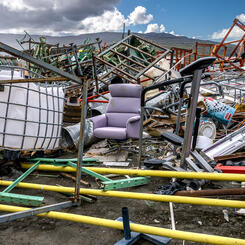
The Kangerlussuaq junkyard is an astonishing place, a semi-organized conglomeration of the discarded appliances and household items you’d see in any town dump alongside decades-old relics of the US military base closed 30 years ago: obsolete vehicles and machinery; dozens of telephone poles, empty oil drums, and fuel tanks; and stacks of scrap metal.
-
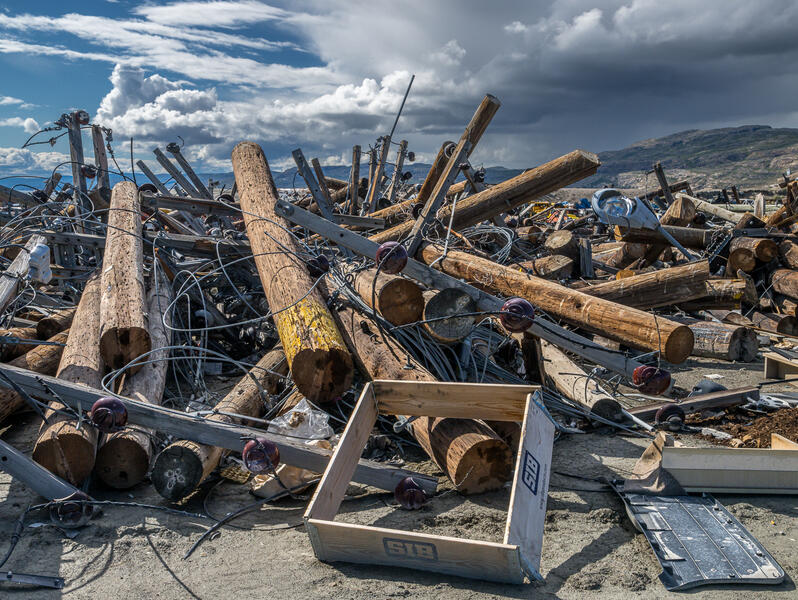 Utility Poles, Kangerlussuaq Junkyard (2022)
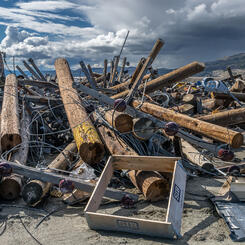
Disconnected wood utility poles, wires cut, still line long stretches of road, remnants of the former base. Gradually they are being cut down and hauled to the junkyard, where they are piled like oversized Lincoln Logs jumped from a box. Greenland largely lacks waste disposal and recycling facilities, so most of the base infrastructure remains.
-
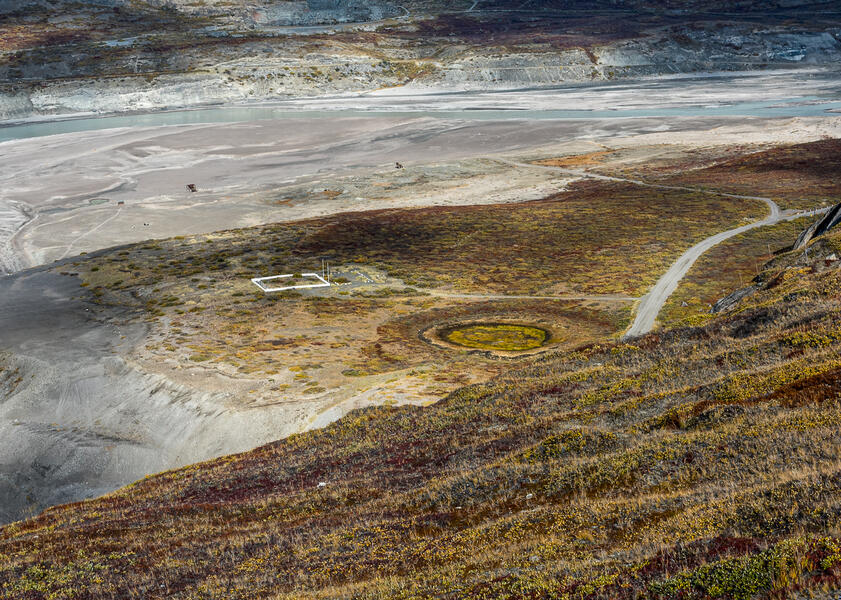 Kangerlussuaq Cemetery from Black Ridge (2021)
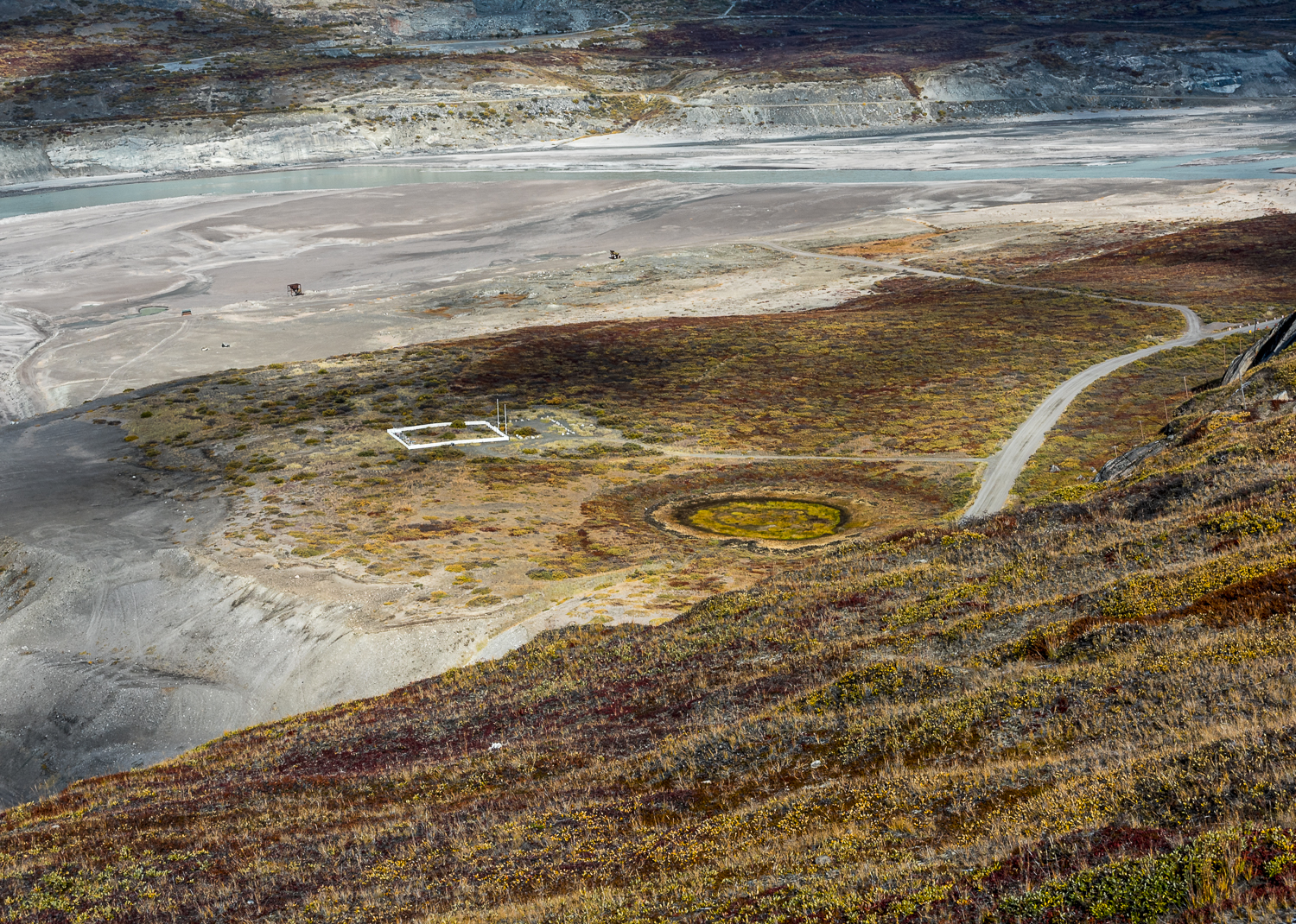
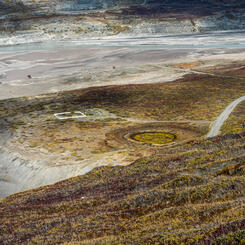
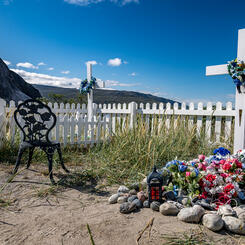
Before the American Air Base was established in 1941, Kangerlussuaq was an annual hunting ground for indigenous Greenlanders who lived on the coast some 80 to 120 miles away, but not a place with permanent structures that they identified as home. The establishment of the town cemetery in 2012 represented a shift. Surrounded by a white picket fence typical in Arctic villages in Greenland and Canada, as of 11 years later it had just nine graves decorated with artificial flowers, framed photos, lanterns, and other objects bordered by stones. The nearby dark circle was the former site of an air base fuel tank; beyond is an expanse of gravel and glacial silt dubbed "Dust City" during base days and still called that. Photographed from Black Ridge, a hill approximately 300 feet in elevation.
-
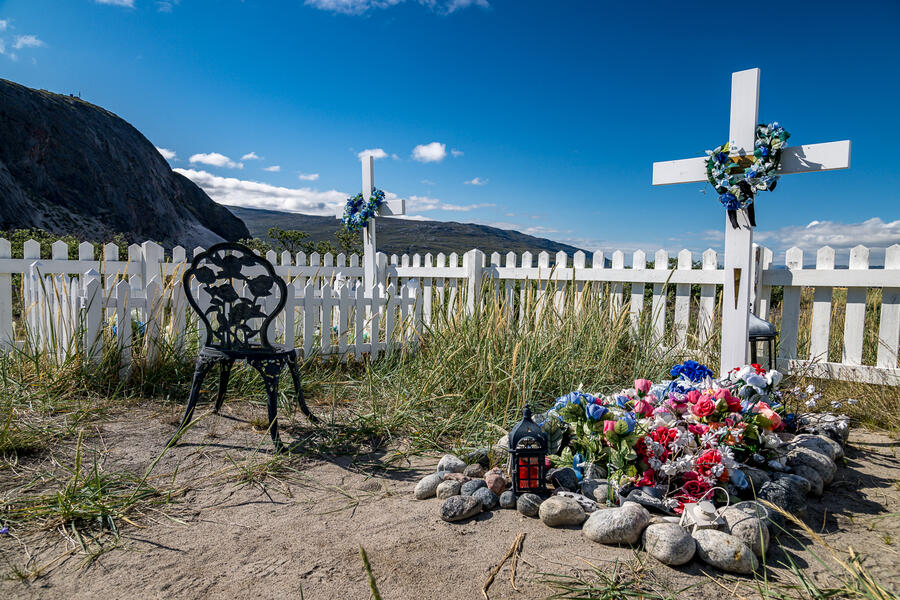 Kangerlussuaq Cemetery (2022)
The graves are marked with white wooden crosses with metal plates bearing names of the deceased. Most are decorated with artificial flowers, framed photos, lanterns, and other objects, bordered by a low fence or stones.
-
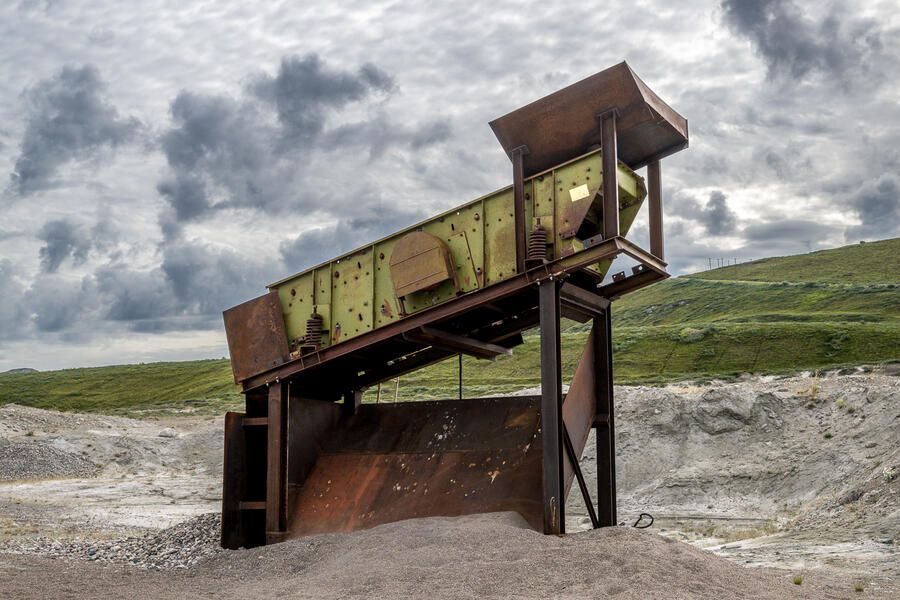 Stone Sorter, "Dust City" (2022)
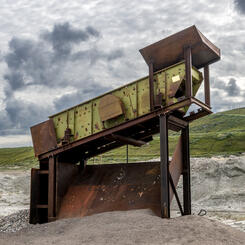
Airmen called the broad sandy riverbank just west of town "Dust City." This vintage stone sorter and two other nearby pieces of equipment were used by the base — and still sometimes today — for sifting gravel for road repair.
-
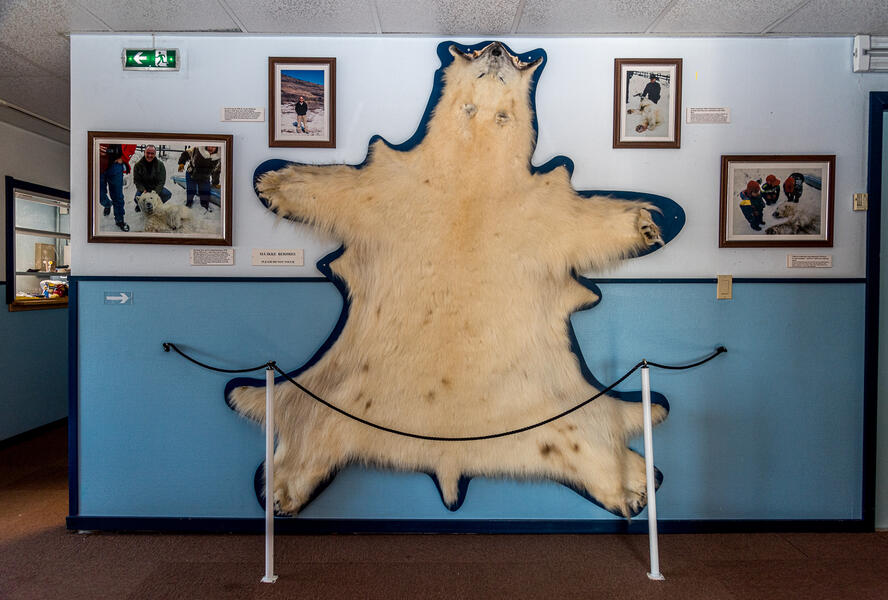 Polar Bear Shot Near Town, Kangerlussuaq Museum (2021)
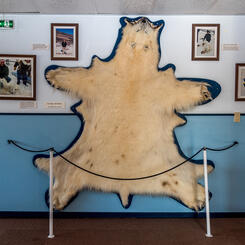
Polar bears rarely venture as far south as Kangerlussuaq. In 1998, this bear was spotted a couple of miles from the settlement, considered dangerous, and shot. The taxidermied skin was mounted on the wall with photographs taken the day it was killed.
-
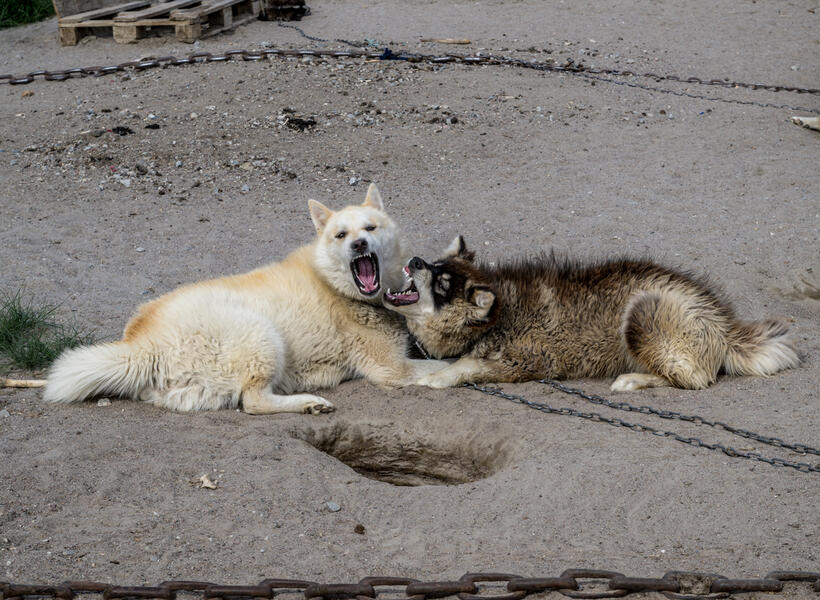 Young Greenland Dogs (2022)
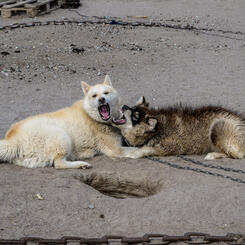
Residents’ sled dogs, a breed known as the Greenland dog, are not house pets, but are kept year-round in adjoining fenced outdoor yards on the outskirts of town, as is typical of Arctic villages. This pair were interacting playfully.
-
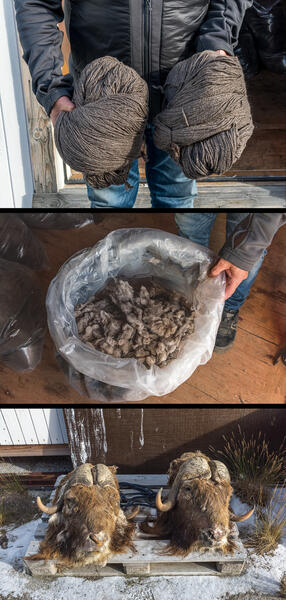 Qiviut Workshop (2021)
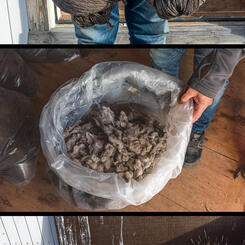
Muskoxen have become part of the local Inuit hunting culture Evald Minik Thybo works as a private tour guide. During the winter months of 24-hour darkness when tourism slows, he operates a small workshop to produce qiviut— the soft underwool beneath the longer outer wool of the muskox that is highly prized for its softness. A young man who worked for him explained to me that harvesting the wool is a laborious and strenuous process in which the hides are draped over large rubber-covered cylinders and combed with wire brushes. Evald sends the raw wool (center) to Germany to be spun into yarn (top), which he then takes to Nuuk, to sell.