Work samples

  • Returning... as...

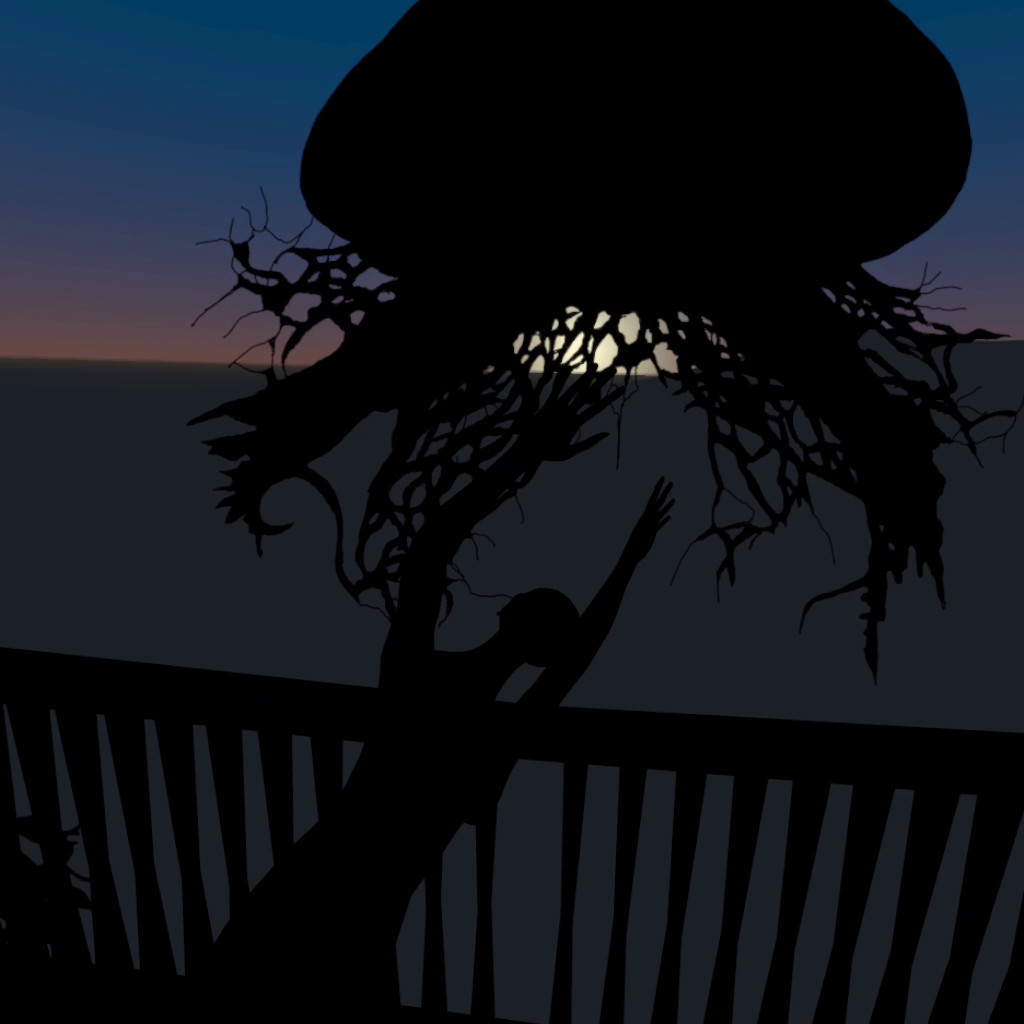
    room-scale* interactive virtual reality videogame, 2023

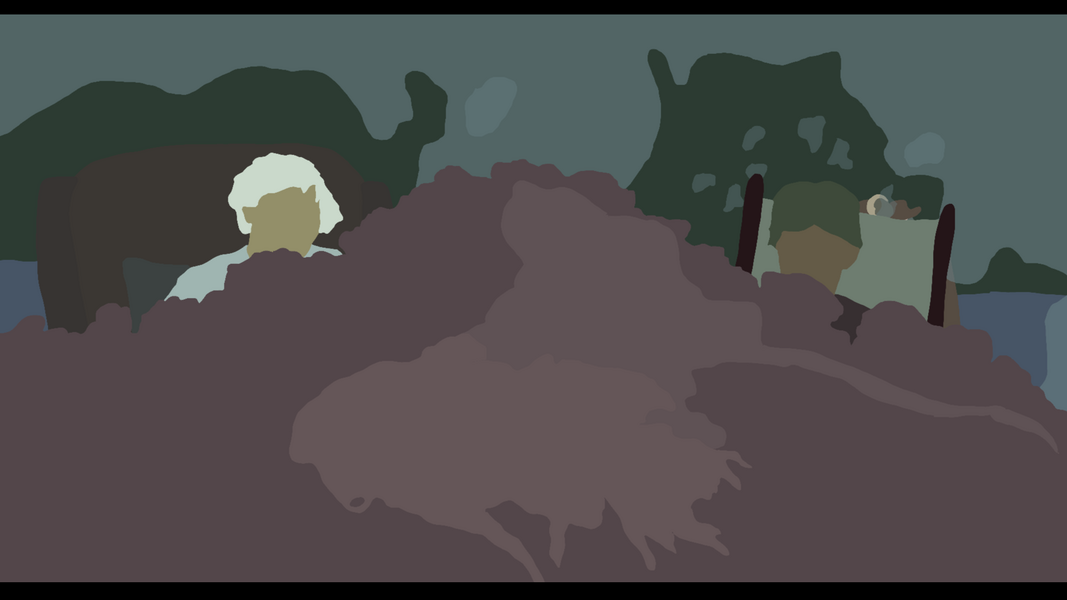
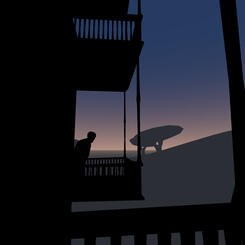
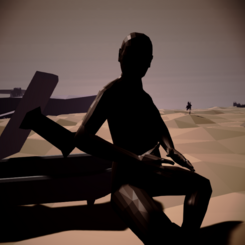
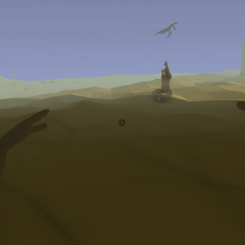
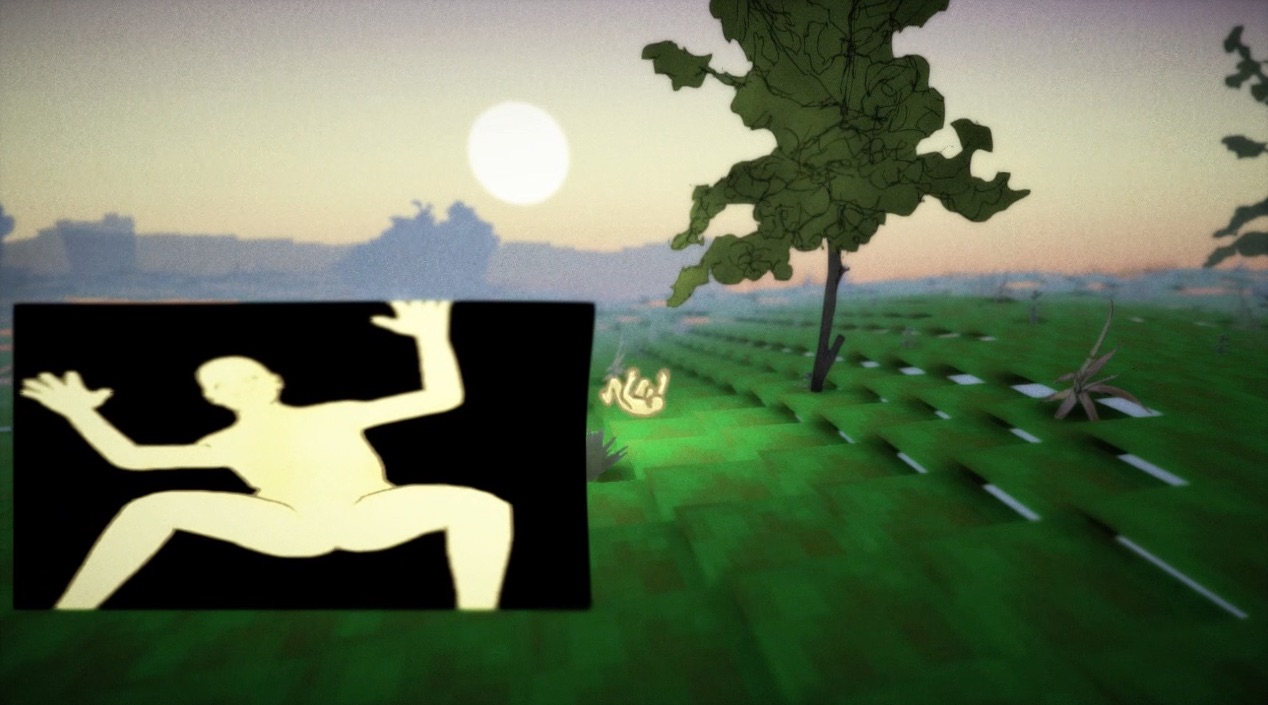
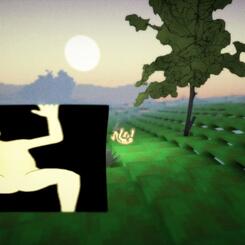
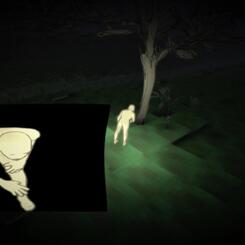
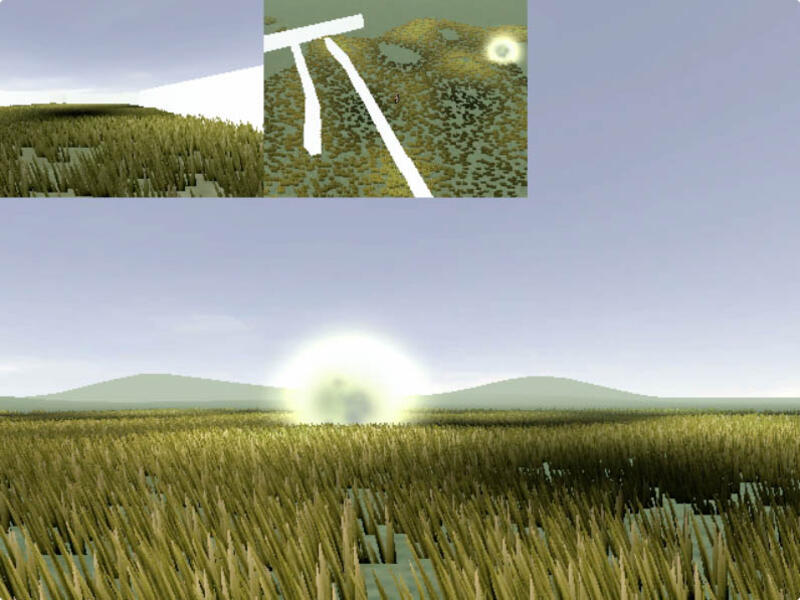
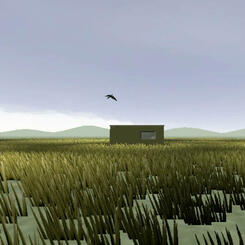
    This is a world observed and manipulated from a virtual balcony. Swarms of entities become figures that wash away in the black waves. Alter the landscape, then become engulfed by it. It's an experiment with partial sensory deprivation and environmental destabilization that came out of feelings of isolation and climate grief.

    The video is one example of software that will be experienced differently for every person who uses it, dependent on the player's choices and random events.

  • Desert Mothers trailer with installation documentation

    multiplayer virtual reality videogame installation, 2019


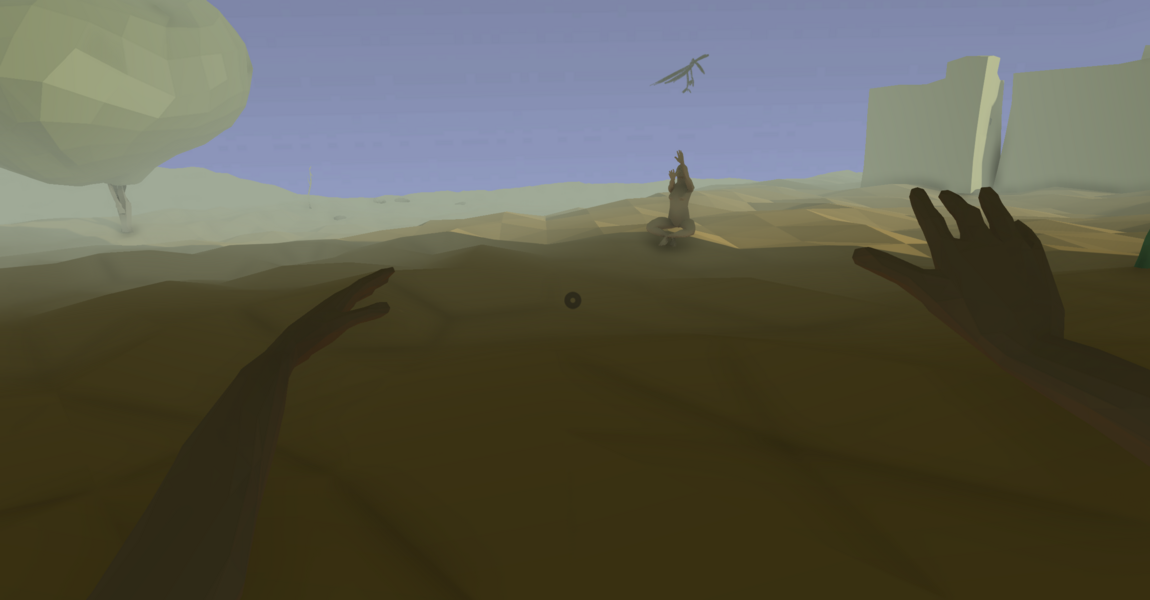
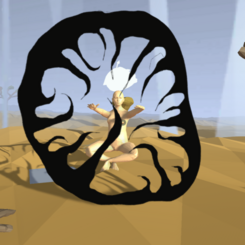
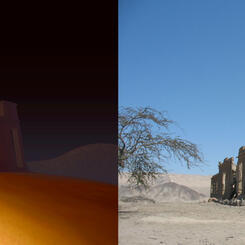
    Desert Mothers is a multiplayer virtual reality meditation circle. Players begin in the same procedurally-generated environment.  This diverges for each as their personal environment, composed of individualized weather and hallucinations, responds emotionally to the player's actions.

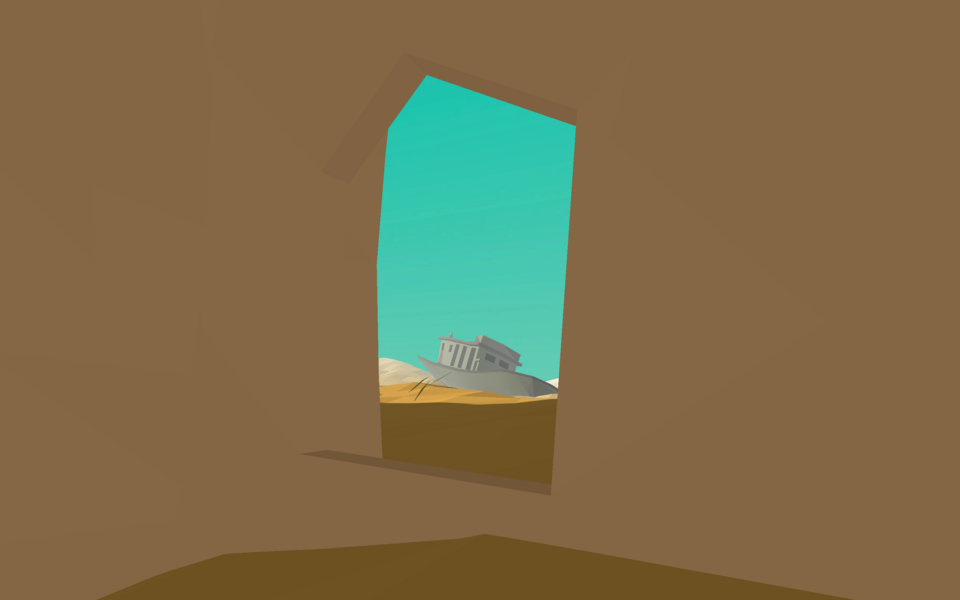
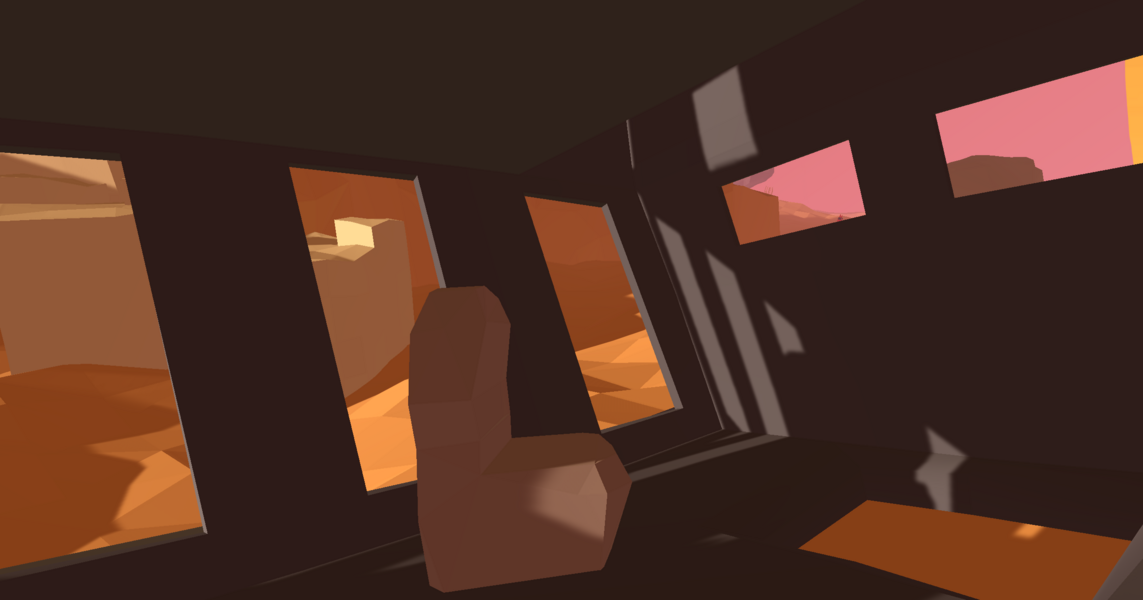
    The constraints within which the players interact are discovered during play, and revolve around the body, simulated breath, drawing in the air, and out-of-body exploration of flora, fauna, and abandoned human habitations.

    In the installation, players sit across from one another on round yoga bolsters.

  • Cho-Am

    videogame, 2016


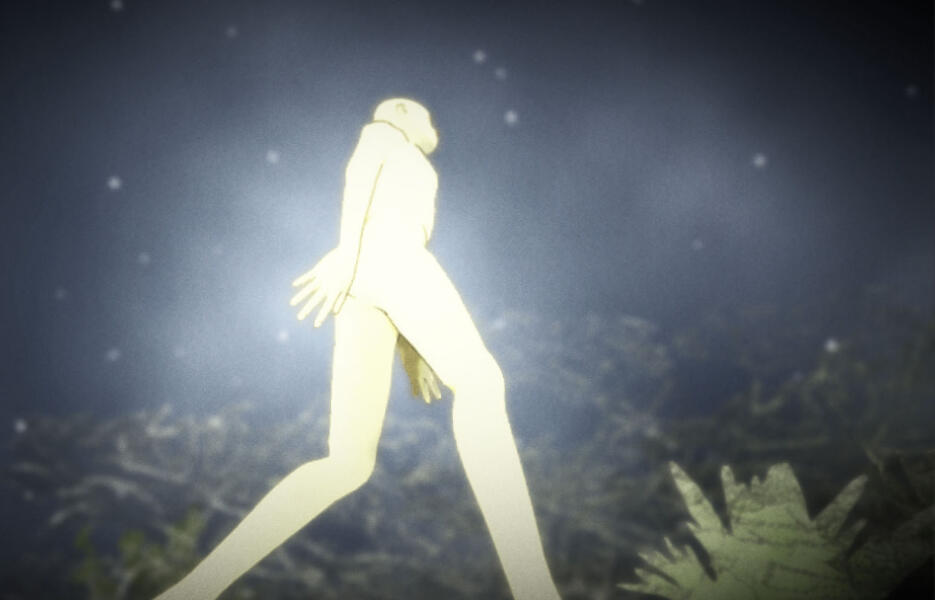
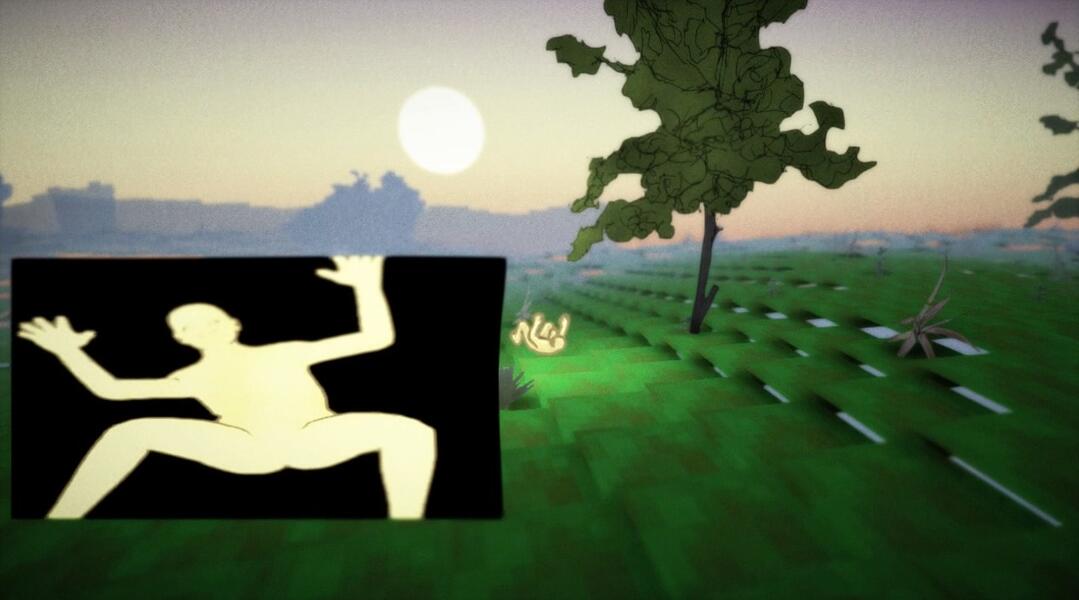
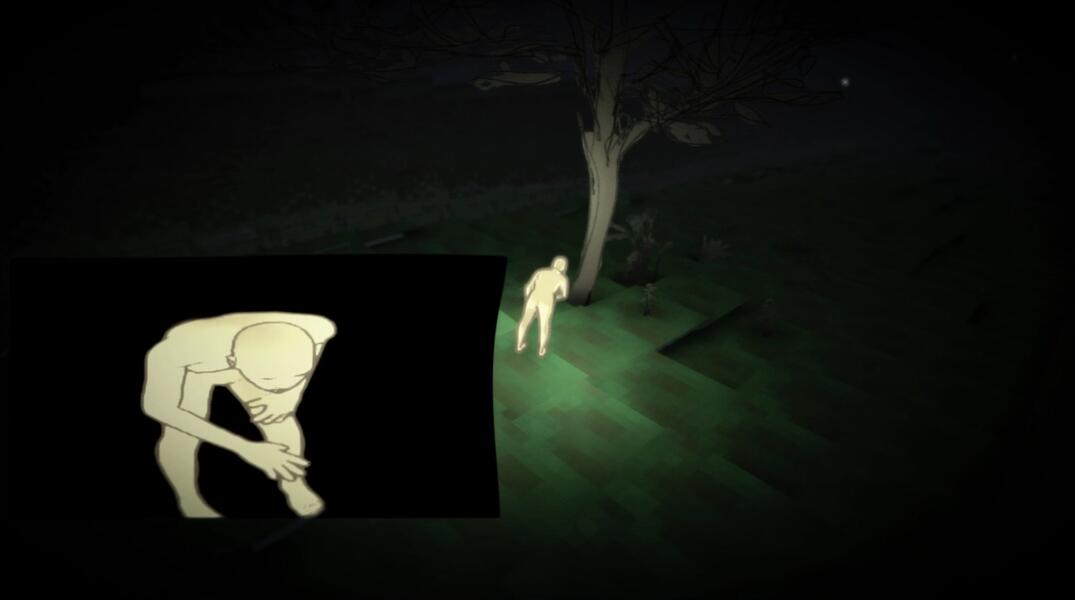
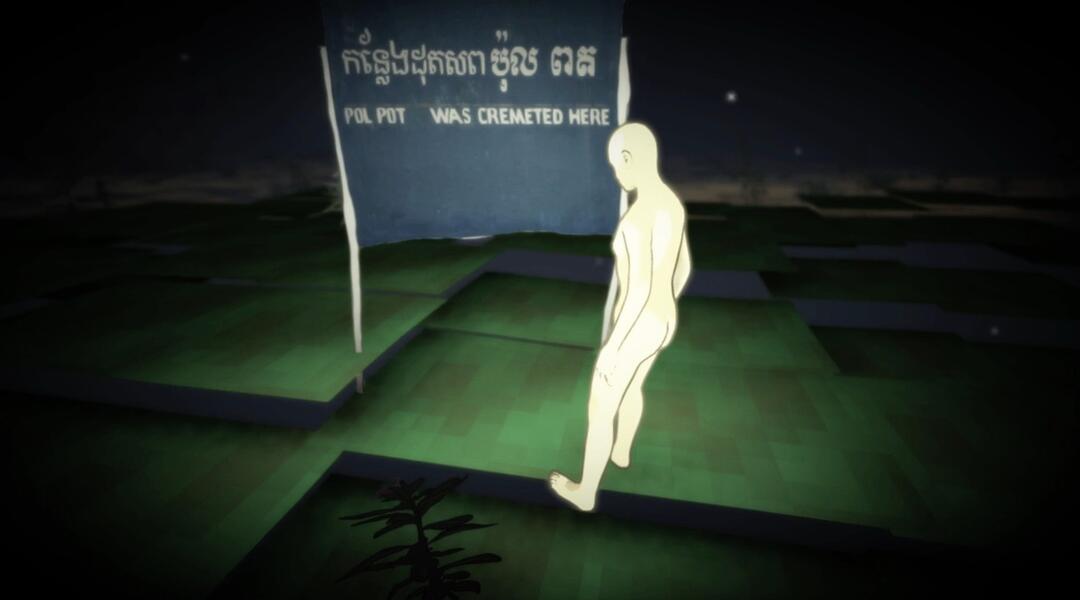
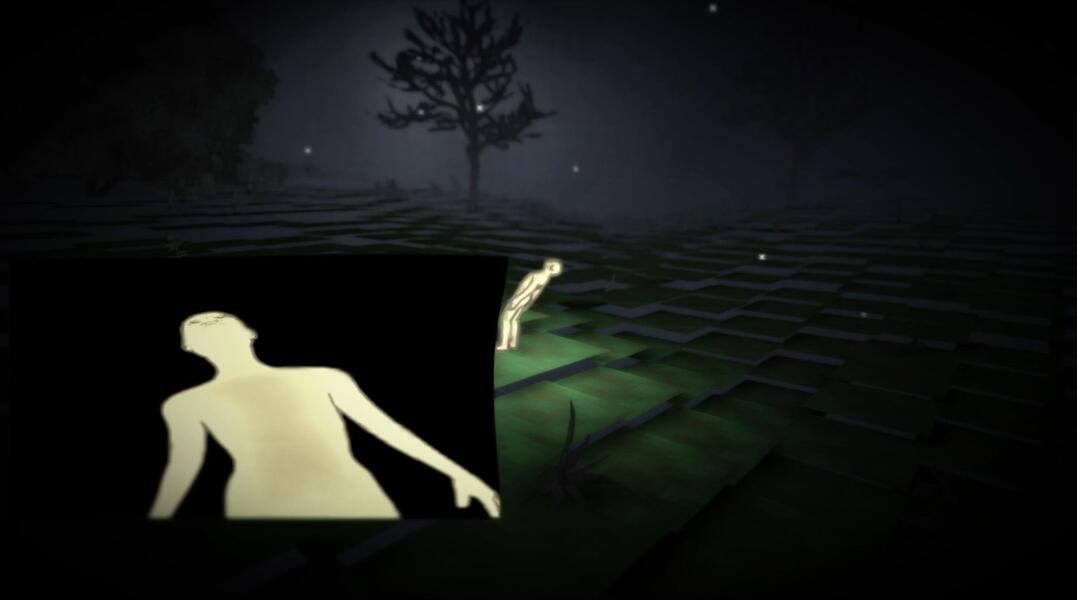
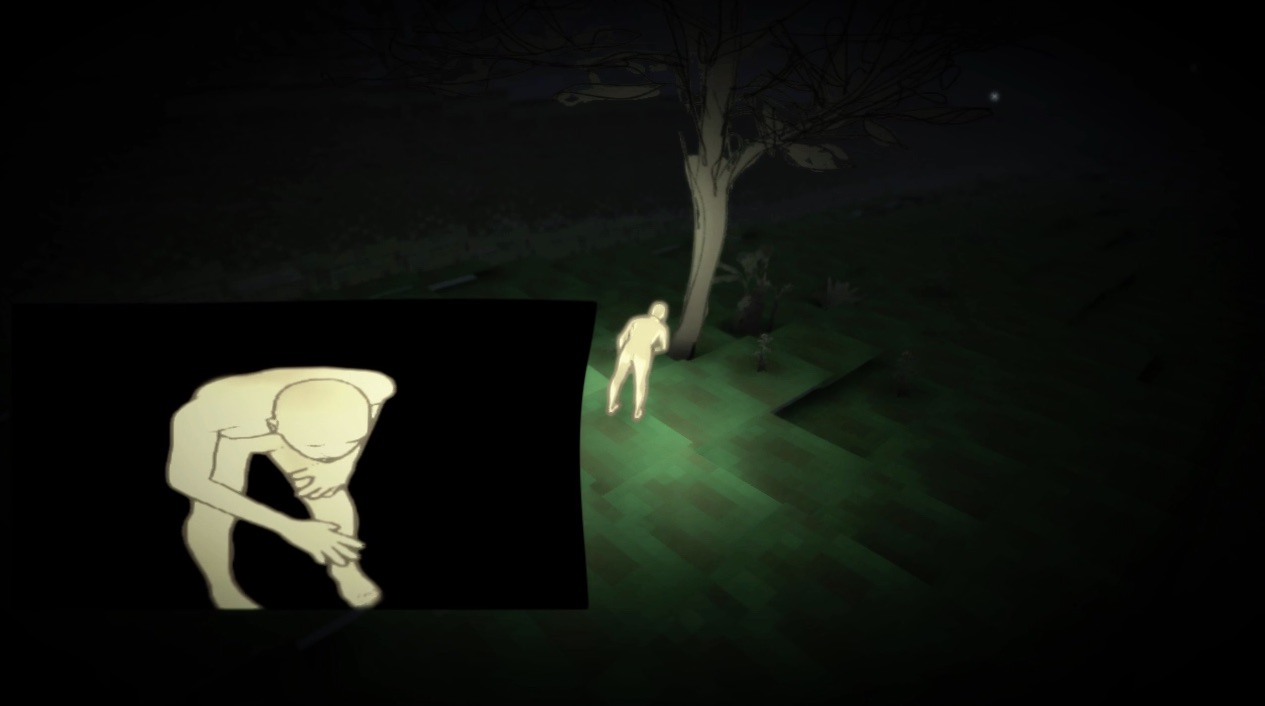
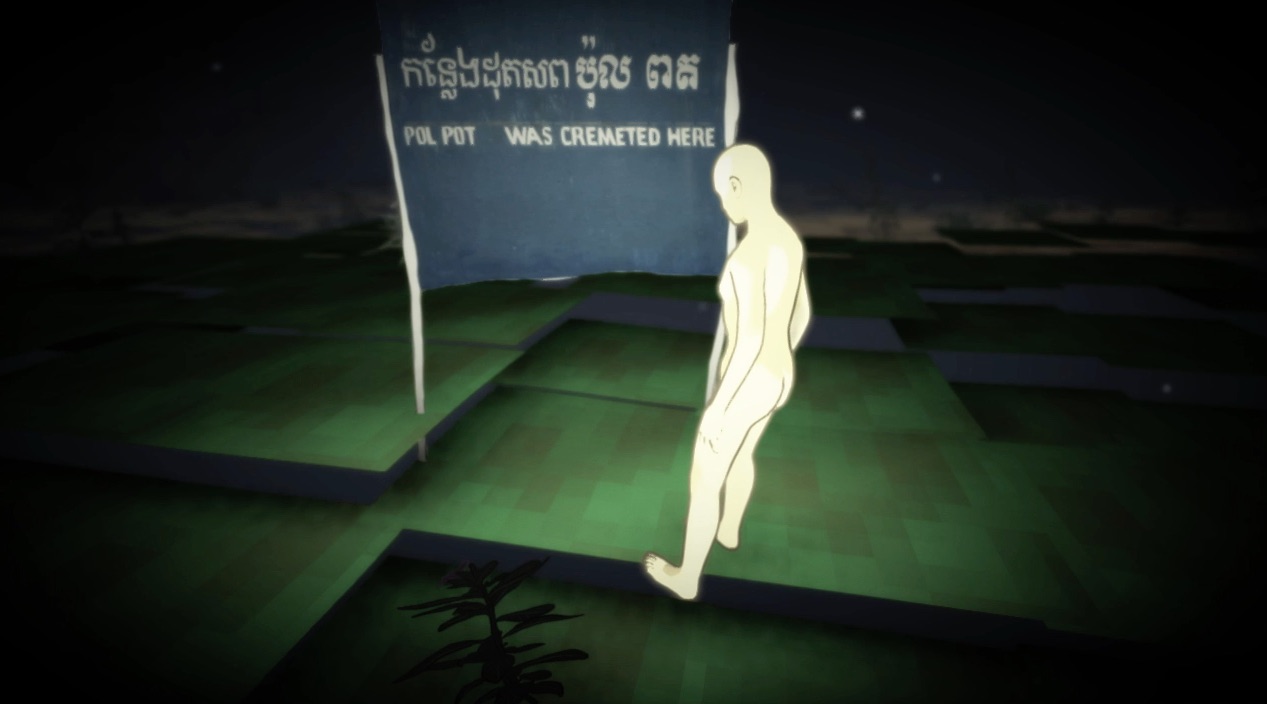
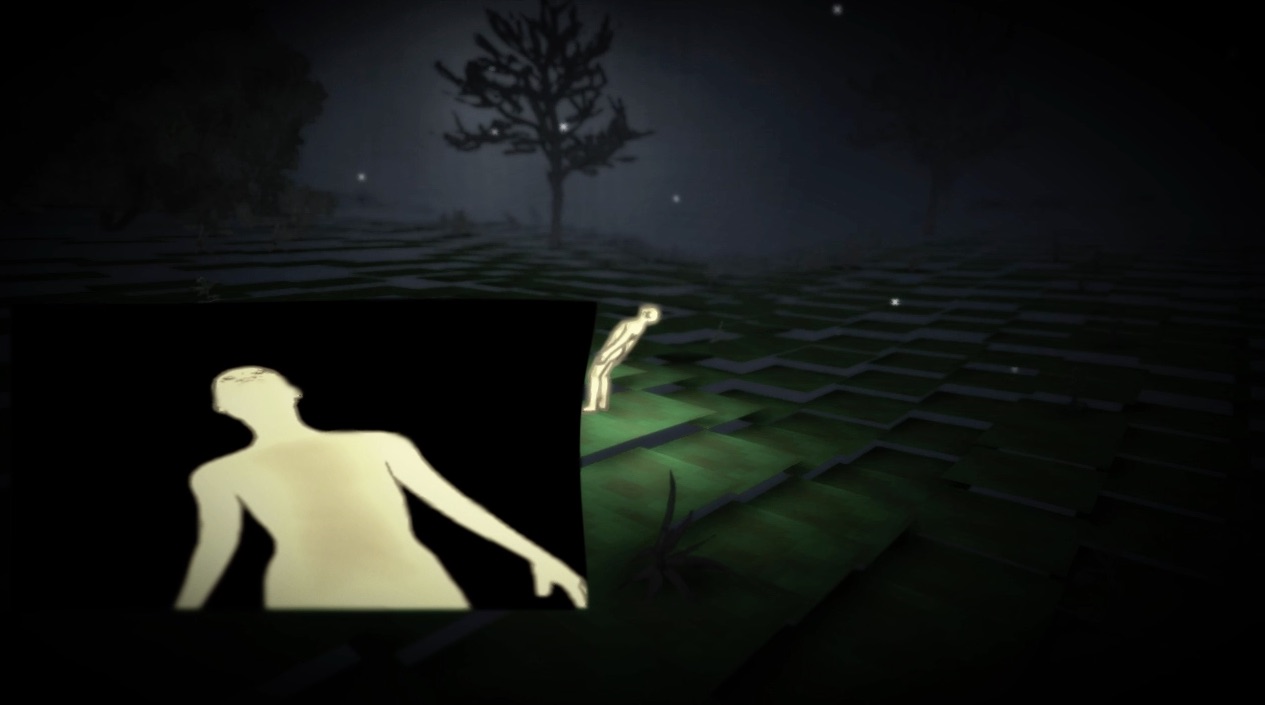
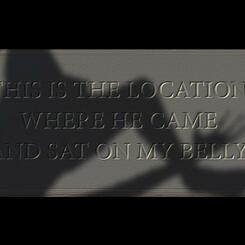
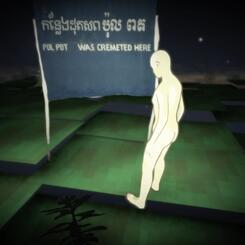
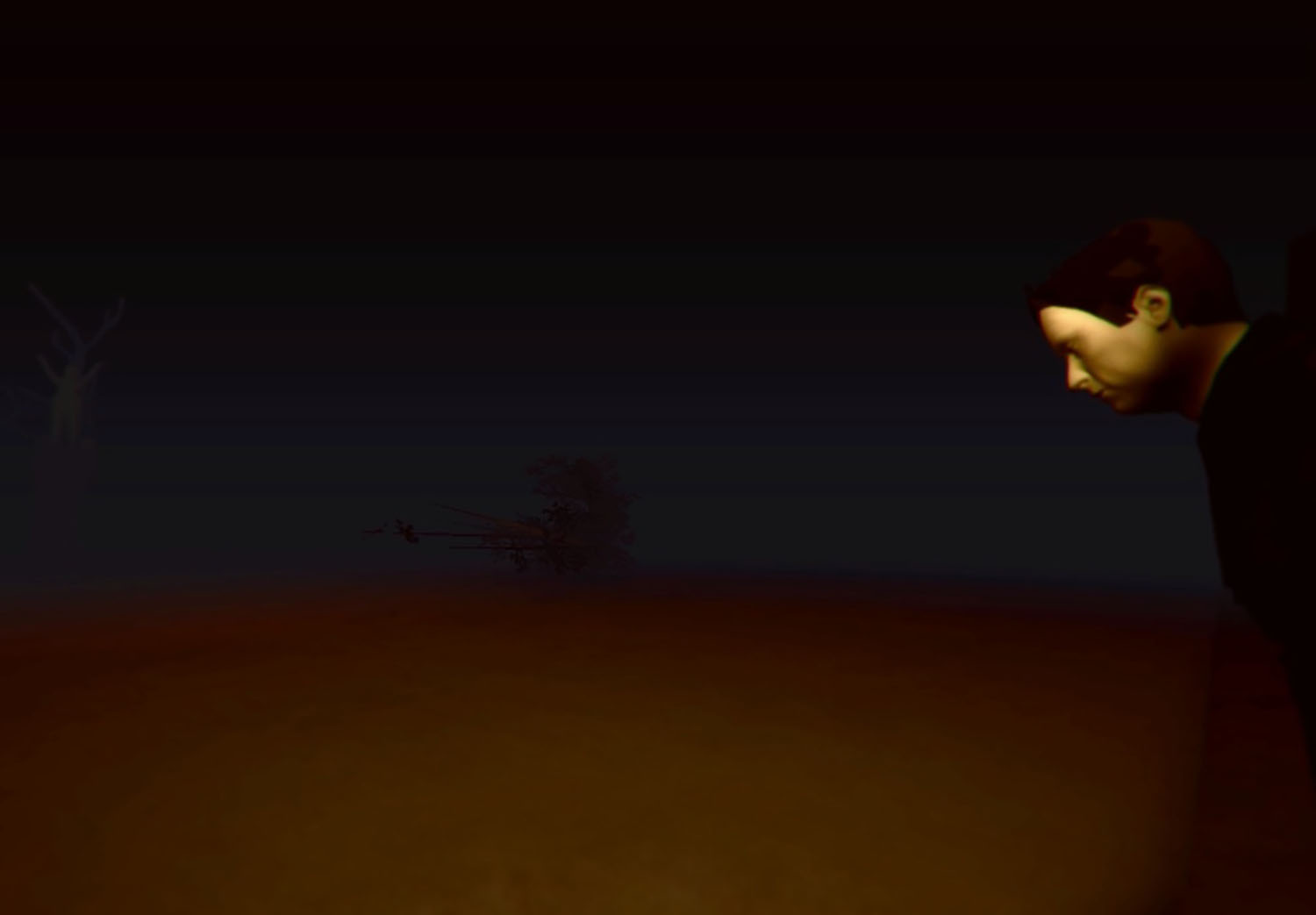
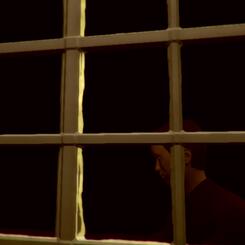
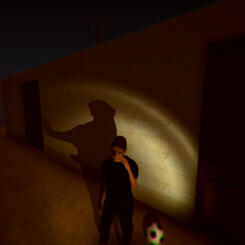
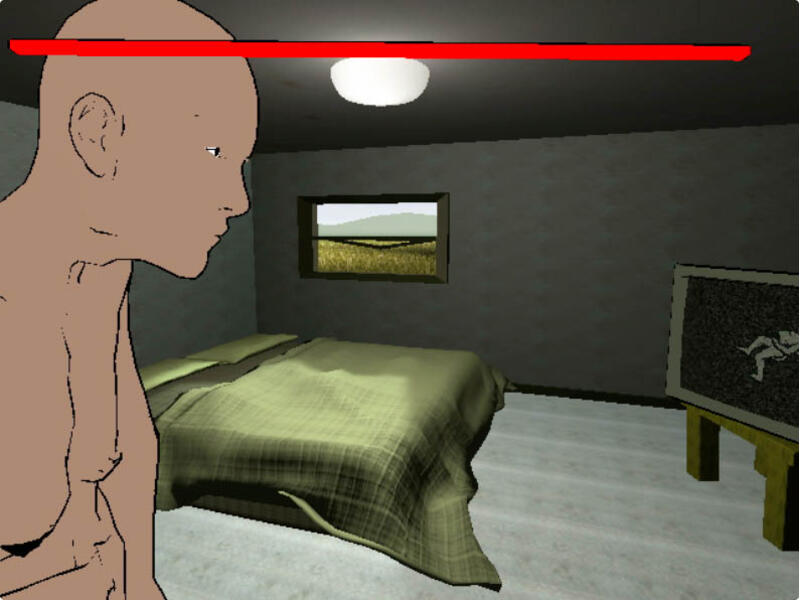
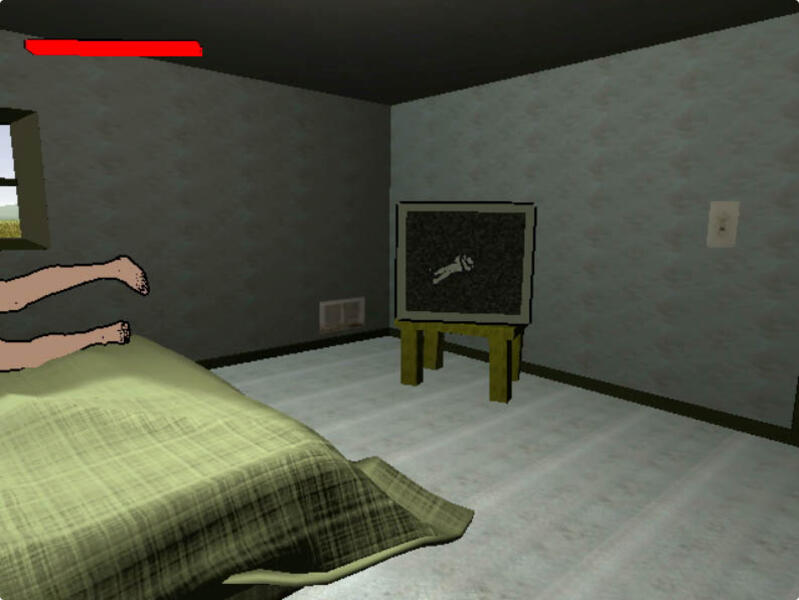
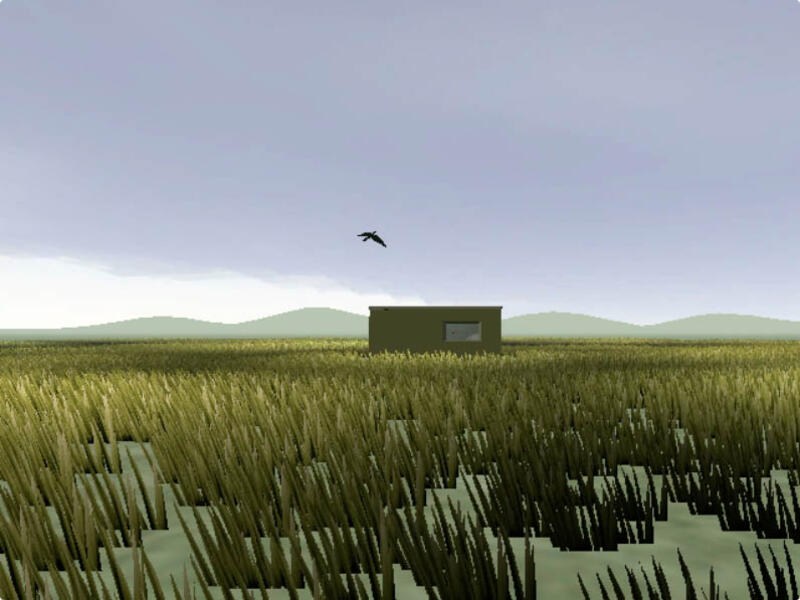
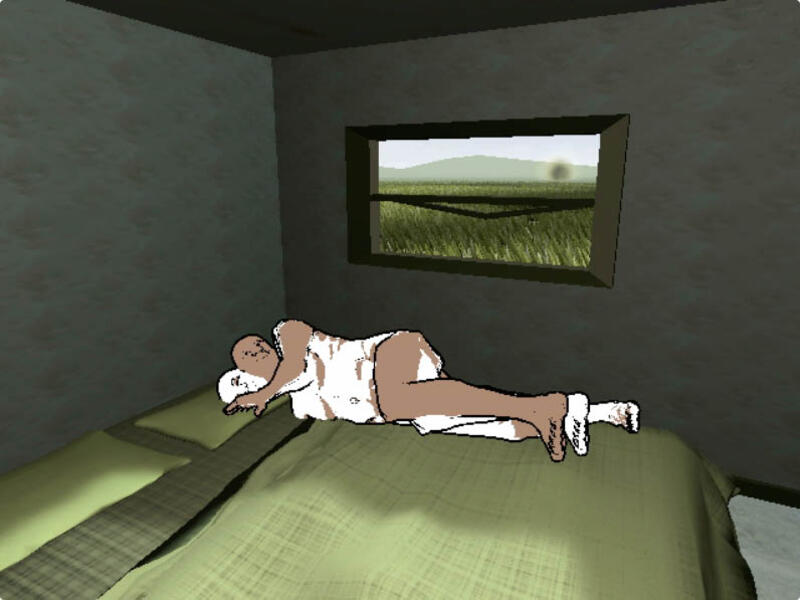
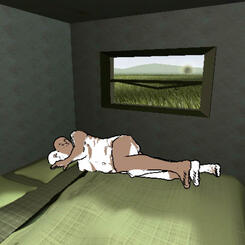
    In Cho-Am, the player visits the cremation site of Pol Pot as a sleepwalker. They interpret the world their character is inhabiting by their gestures and brief glimpses inside their head. This game does not have an ending until the player decides to leave. Game time is connected to the current real time in Cambodia. 

    I created this by visiting the actual site, collecting audiovisual documentation, as well as feelings from spending time in the space, then developing the game mechanics and abstracted narrative over a subsequent sabbatical. This was a solo project where I coded a semi-randomly-generated environment, drew 2D art and modeled and animated 3D, provided ambient noises and performed the musical score on guitar.

  • 1000 Heads Among the Trees

    videogame, 2015

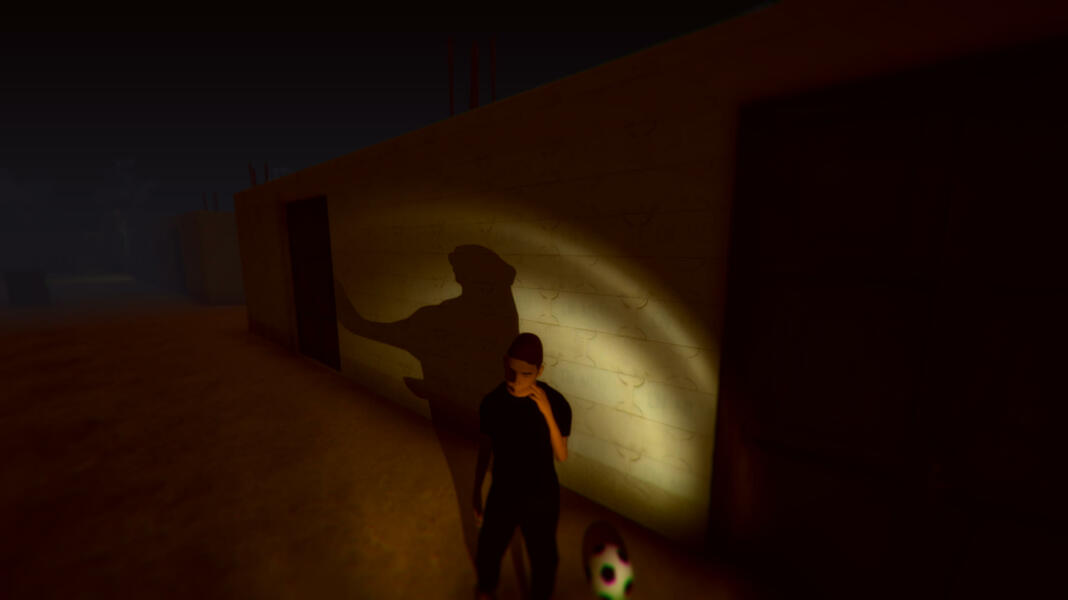
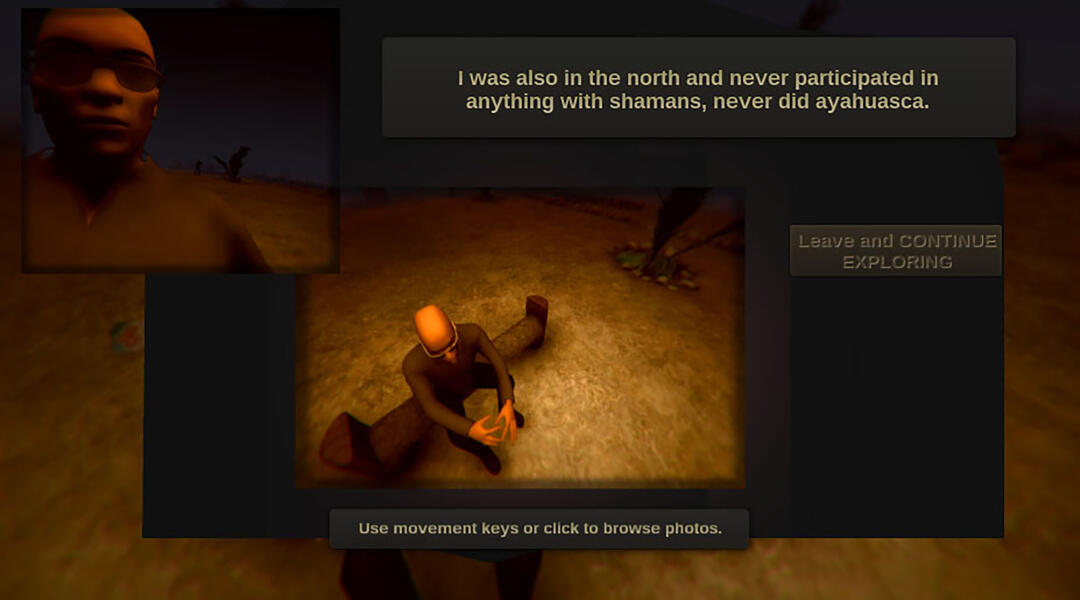
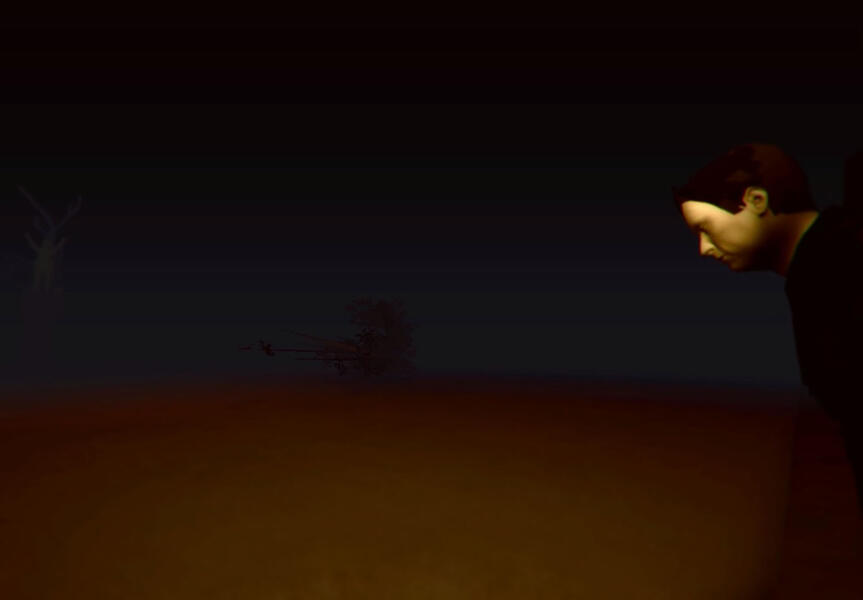
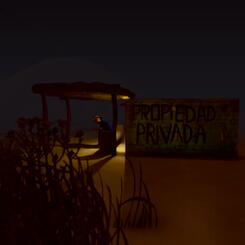
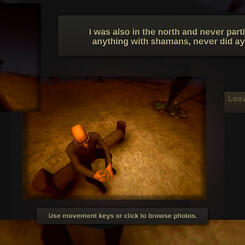
    In this project, visit a quiet town in the Peruvian desert at night searching for spirits and taking photos, then sharing these pictures with locals who free-associate based on them. This game is based on time I spent with a brujo in the desert suburb of Cachiche, a town that was founded by witches during the Peruvian Inquisition. Here descendants of witches still live and continue to practice traditional healing and fortune-telling. The game is based around the interviews I conducted, experiences had, and audiovisual material collected at the site.

    (The video is titled Night in Cachiche, but it consists of footage of the game 1000 Heads Among the Trees)

About Aaron

Aaron Oldenburg is a Baltimore-based game, interactive and video artist. His work has exhibited in festivals and galleries in New York, Johannesburg, London, Buenos Aires, São Paulo and Los Angeles, including SIGGRAPH, A MAZE. International Games and Playful Media Festival, the LeftField Collection at EGX Rezzed, Slamdance DIG, Game On! - El arte en el juego, and FILE Electronic Language International Festival. His games have been written about in Kill Screen, Baltimore City Paper, BmoreArt… more

A Stabilizing Loop

software, 2023

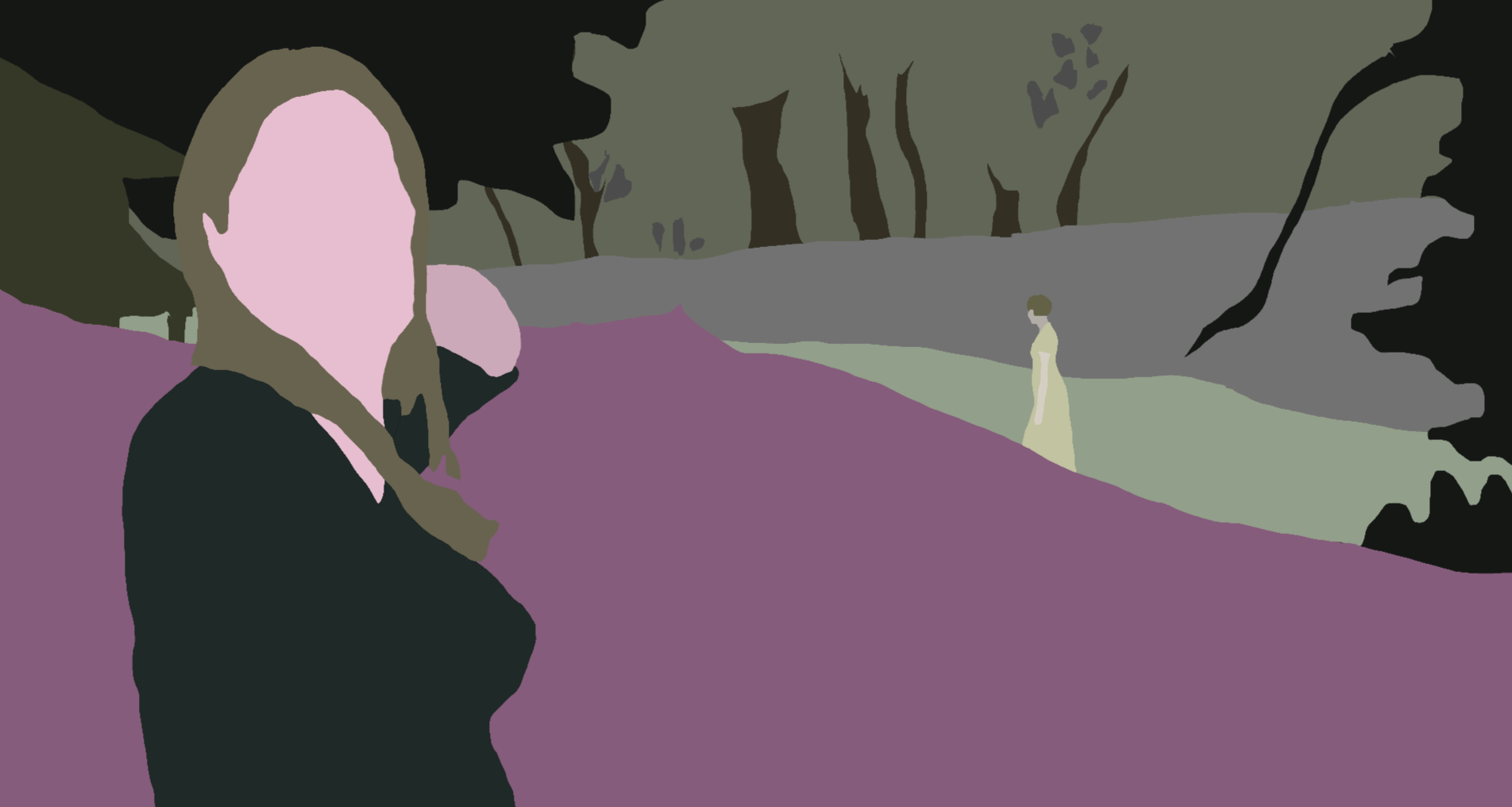
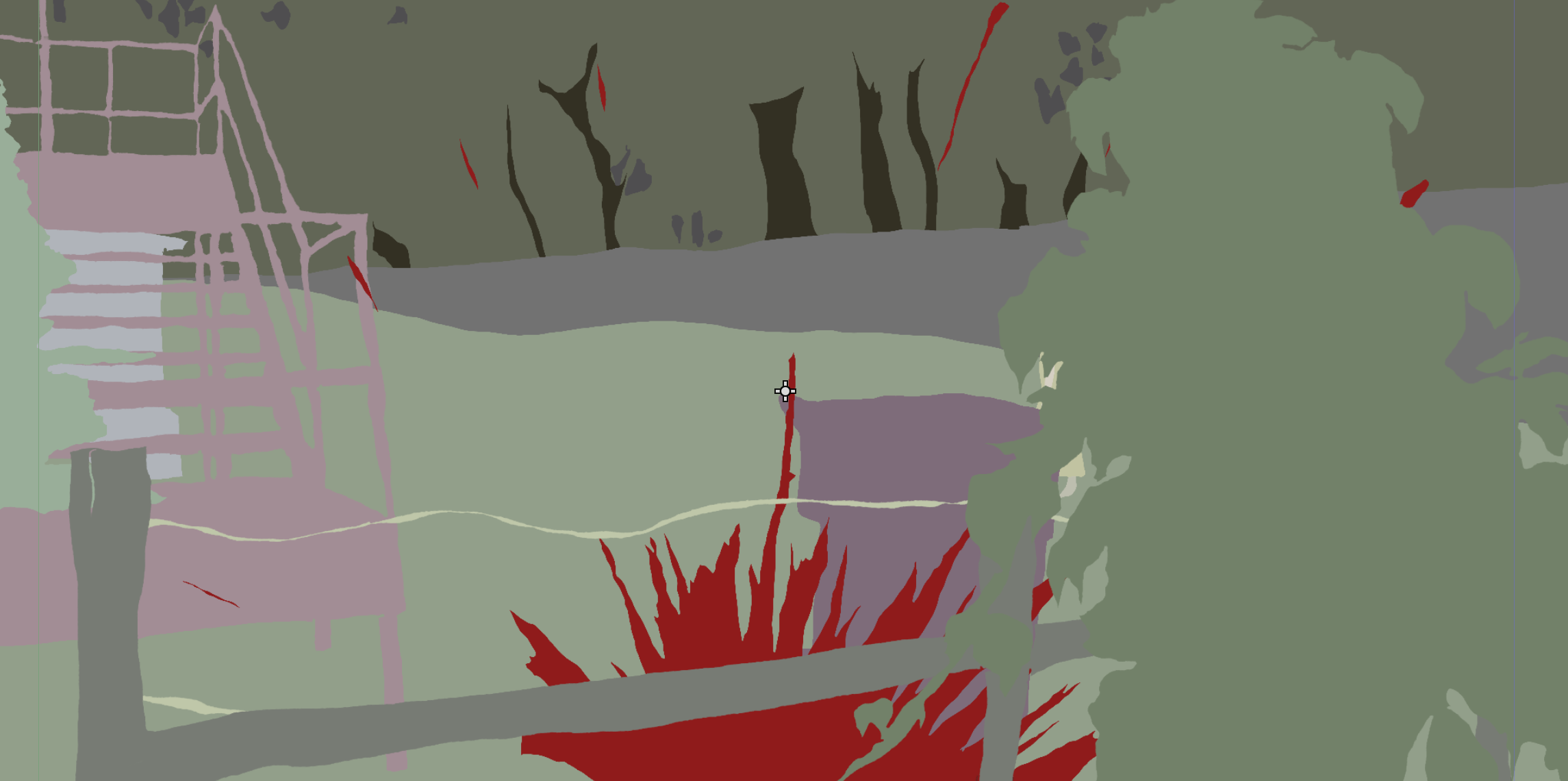
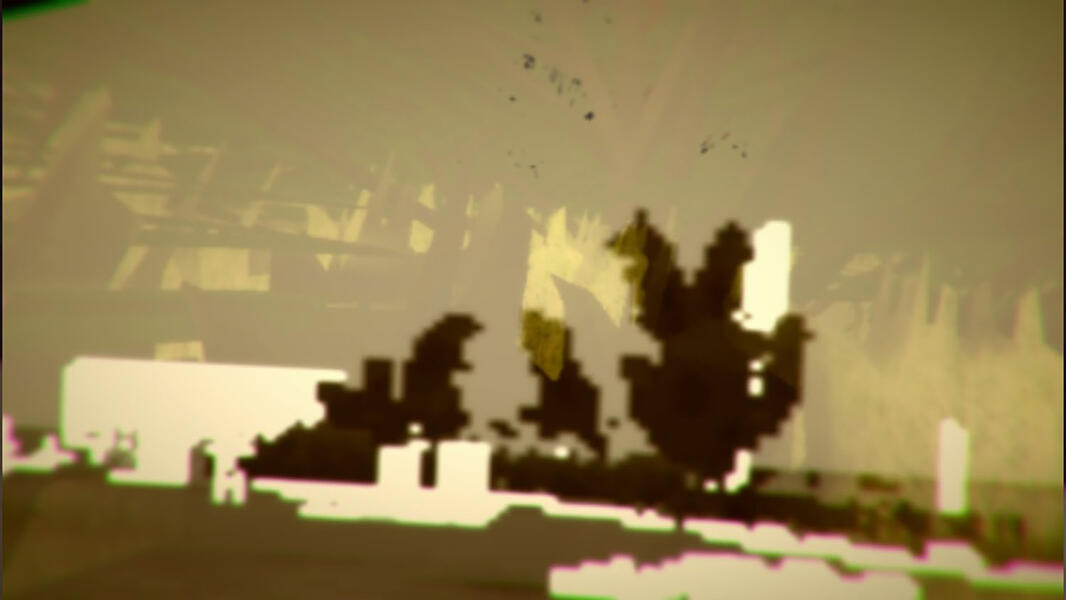
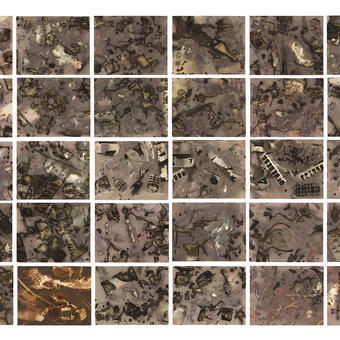
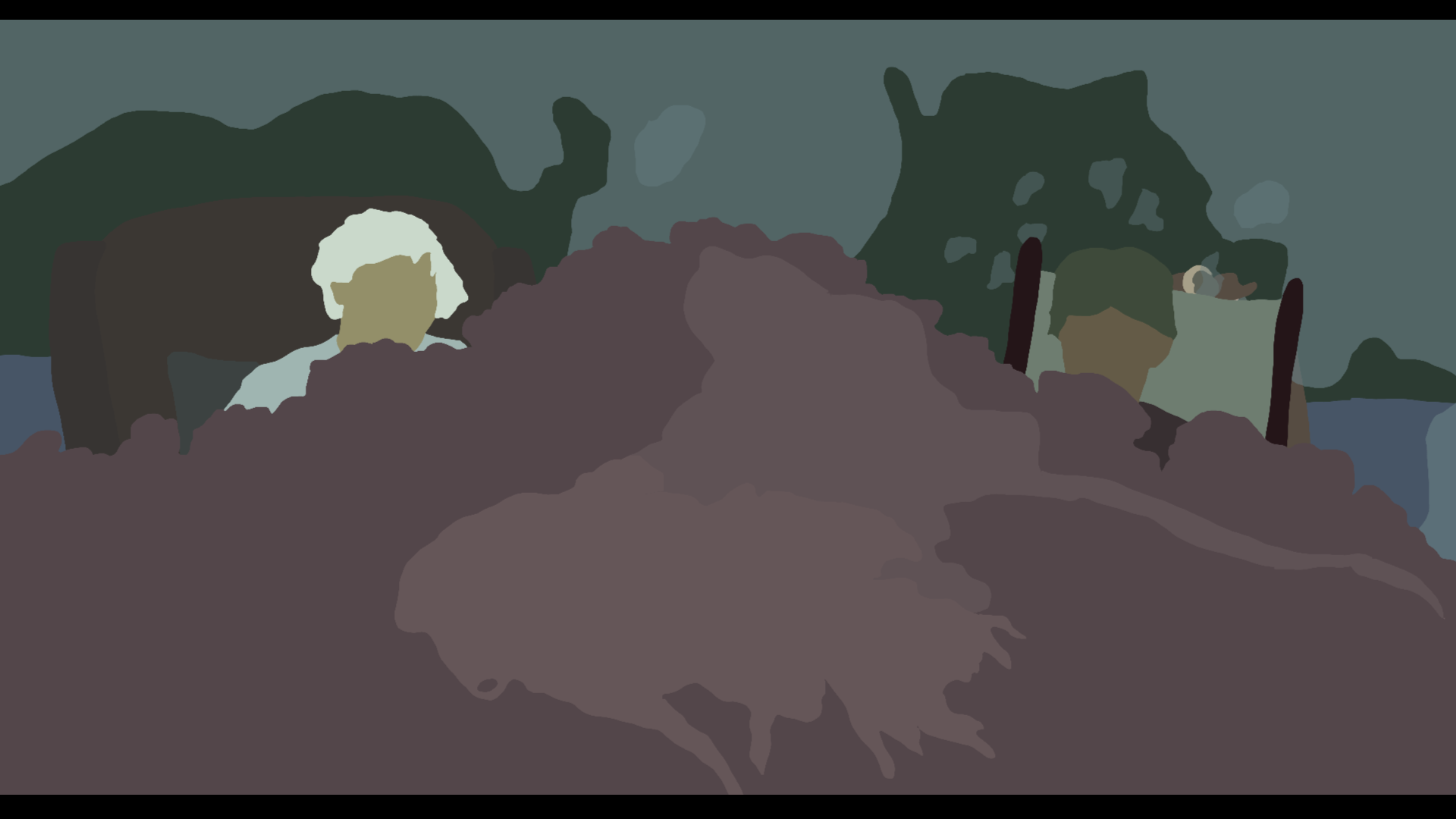
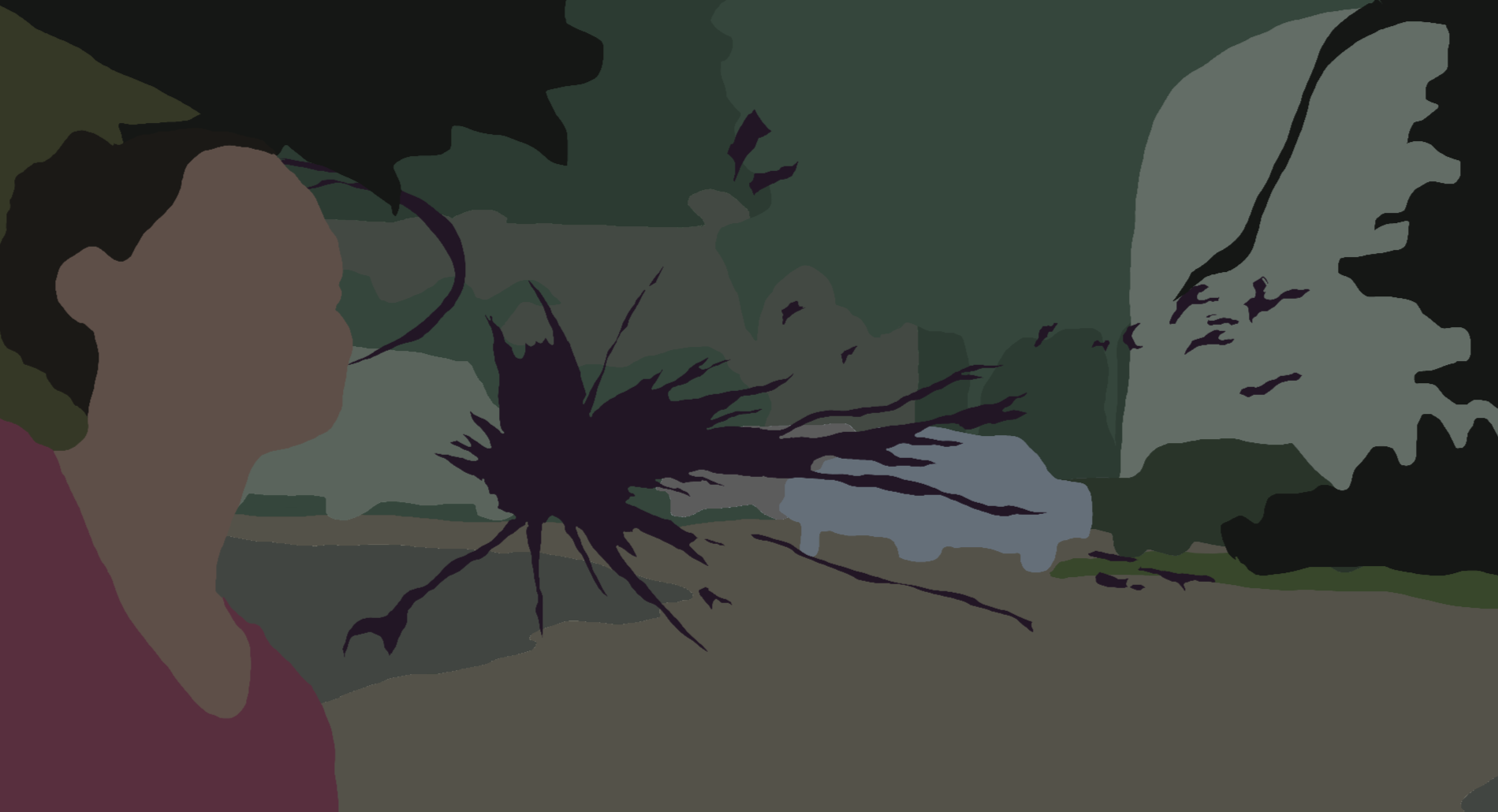
This is a continuous auto-arranging scene.

Images are hand-traced from original photography, including friends, family and landscapes from Tallahassee, Florida, and Mali, West Africa, from 1997-2003, as well as public domain images of extinct flora and fauna. They are layered and combined randomly and automatically via software created using the Godot game engine and coded via GDScript.

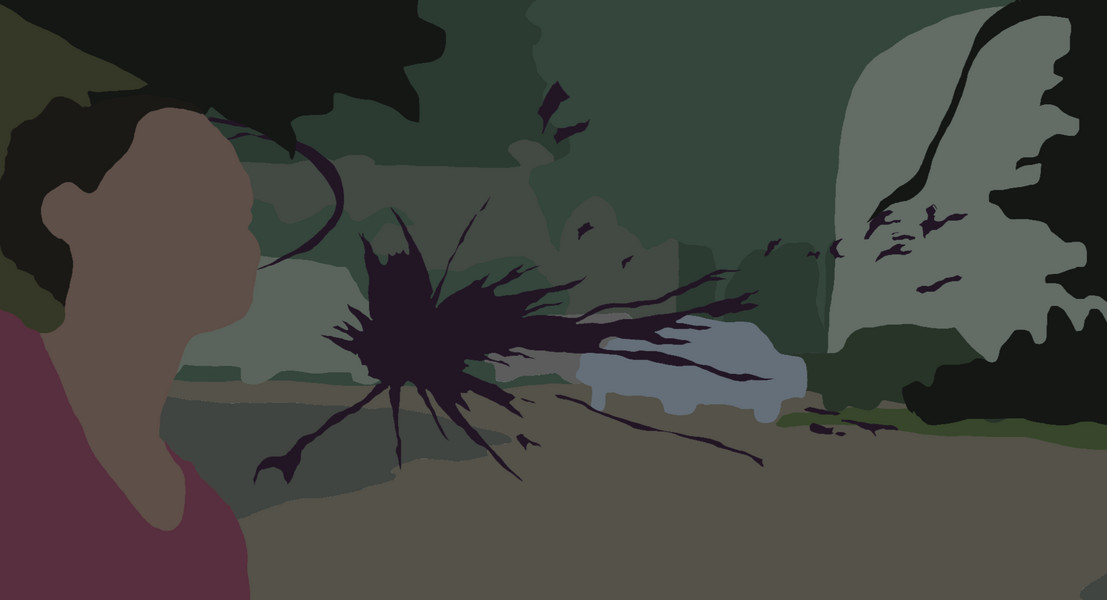
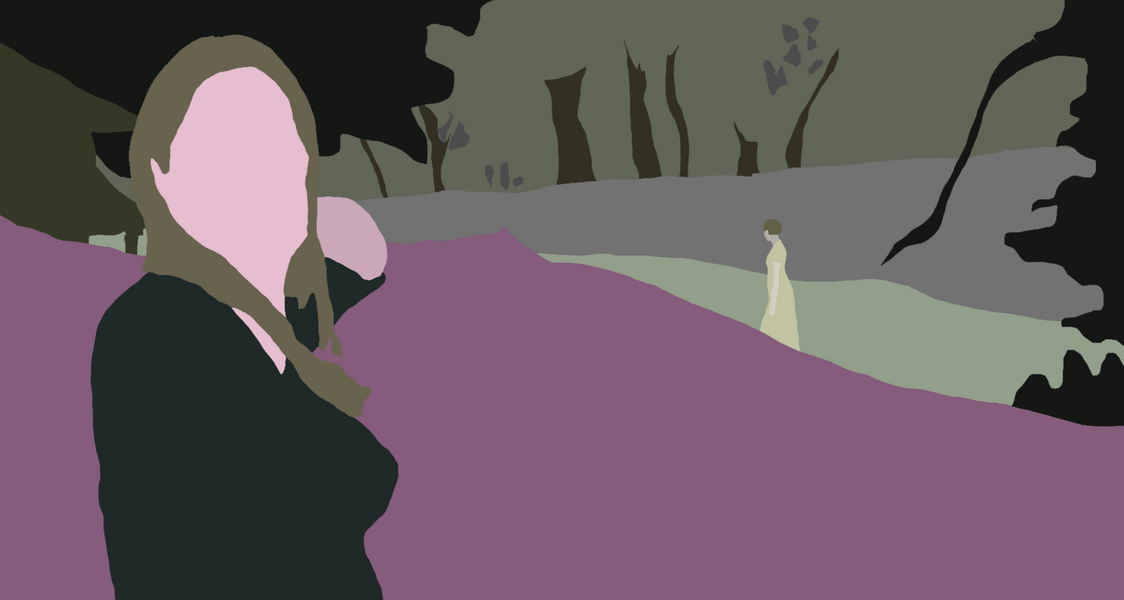
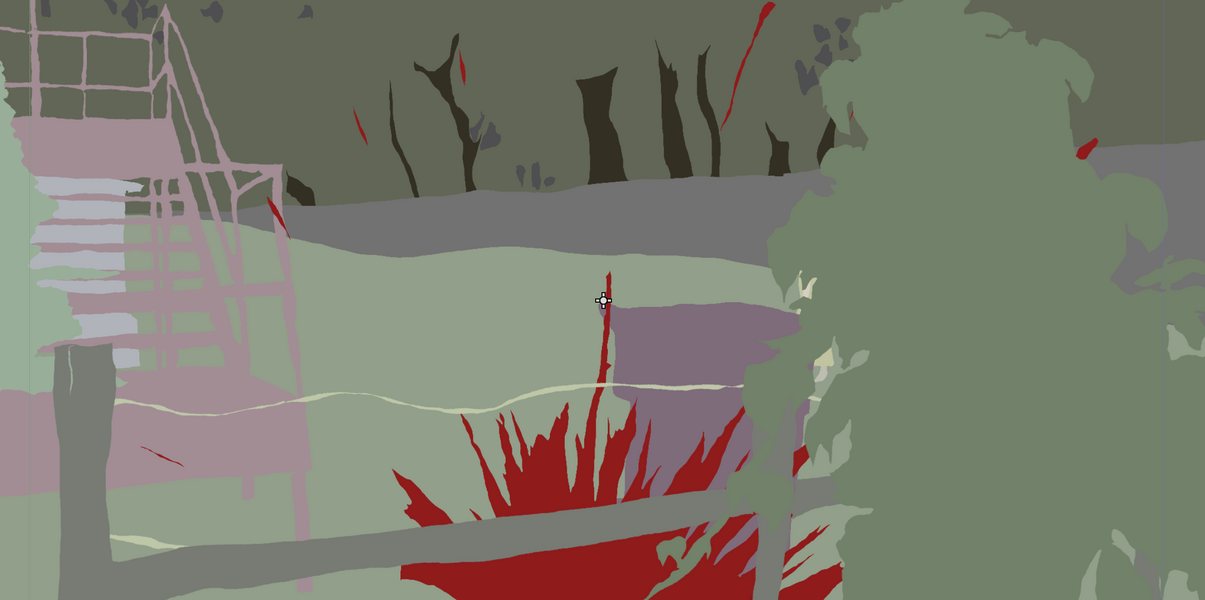
The environments created in these vignettes are unpredictable and often chaotic. The figures are both overwhelmed by this and participate in it. The elements that make up the collage were chosen as they aligned with a sense of uncertainty and loss. The colors used in the traced imagery reflect a muted, melancholy color palette. There is a feeling for me, in the collision of the semi-random images, of the chaos of earth in a period of late humankind. It is the momentum of natural disasters birthed from our energy usage. It's a constant state of rupture interspersed with moments of new equilibria.

The video is one example of software that plays out in many varied permutations. It can be played in real time within the browser or downloaded here.

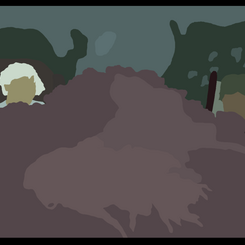
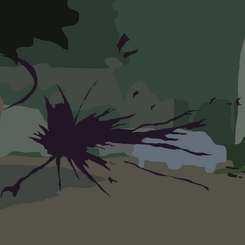
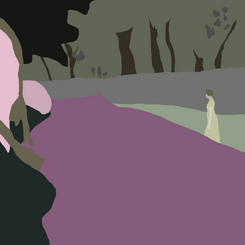
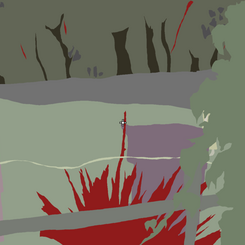
  • Screenshot of one moment in the work, A Stabilizing Loop, where layers of hand-drawn images have come together to form a scene, a pause before breaking apart and forming the next scene.
    Screenshot of one moment in the work, A Stabilizing Loop, where layers of hand-drawn images have come together to form a scene, a pause before breaking apart and forming the next scene.

    2023

  • A Stabilizing Loop documentation

    2023

  • Screenshot of one moment in the work, A Stabilizing Loop, where layers of hand-drawn images have come together to form a scene, a pause before breaking apart and forming the next scene.
    Screenshot of one moment in the work, A Stabilizing Loop, where layers of hand-drawn images have come together to form a scene, a pause before breaking apart and forming the next scene.

    2023

  • Screenshot of one moment in the work, A Stabilizing Loop, where layers of hand-drawn images have come together to form a scene, a pause before breaking apart and forming the next scene.
    Screenshot of one moment in the work, A Stabilizing Loop, where layers of hand-drawn images have come together to form a scene, a pause before breaking apart and forming the next scene.

    2023

  • Screenshot of one moment in the work, A Stabilizing Loop, where layers of hand-drawn images have come together to form a scene, a pause before breaking apart and forming the next scene.
    Screenshot of one moment in the work, A Stabilizing Loop, where layers of hand-drawn images have come together to form a scene, a pause before breaking apart and forming the next scene.

    2023

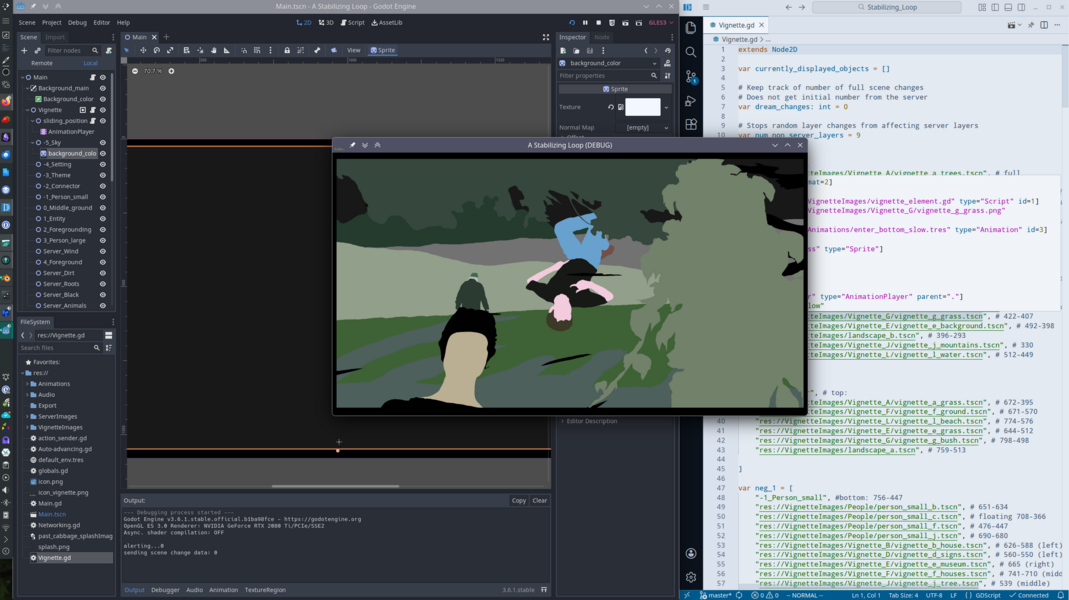
  • Screenshot of game engine workspace
    Screenshot of game engine workspace

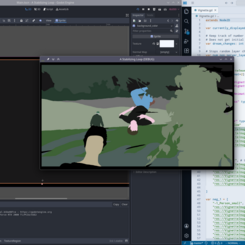
    This is an image showing work within the Godot game engine on the left-hand side, and some of the game's code on the right. It is to give some small insight into my process and how I worked to combine creative code, hand-drawn artwork, and a collage sensibility to this concept. 

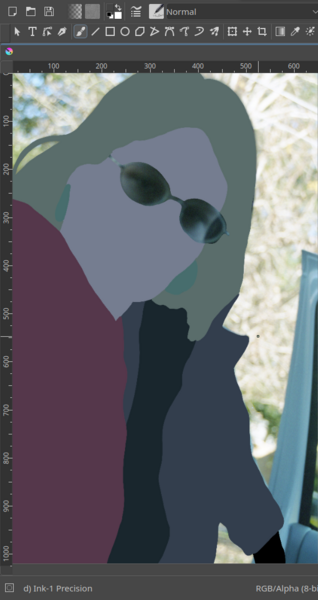
  • Screenshot of work within Krita (open source drawing and animation software)
    Screenshot of work within Krita (open source drawing and animation software)

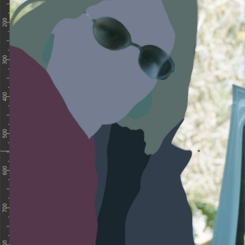
    This shows part of my workflow where I drew over old photos to create layers of images in similar color palettes to arrange dynamically within the game engine.
Returning... as...

room-scale* interactive virtual reality videogame, 2023


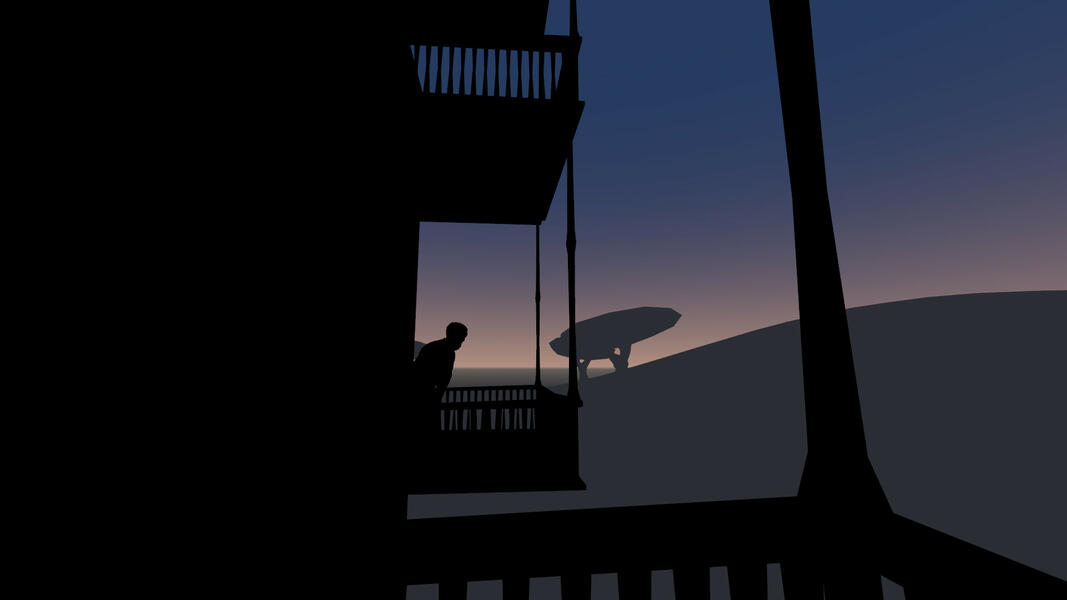
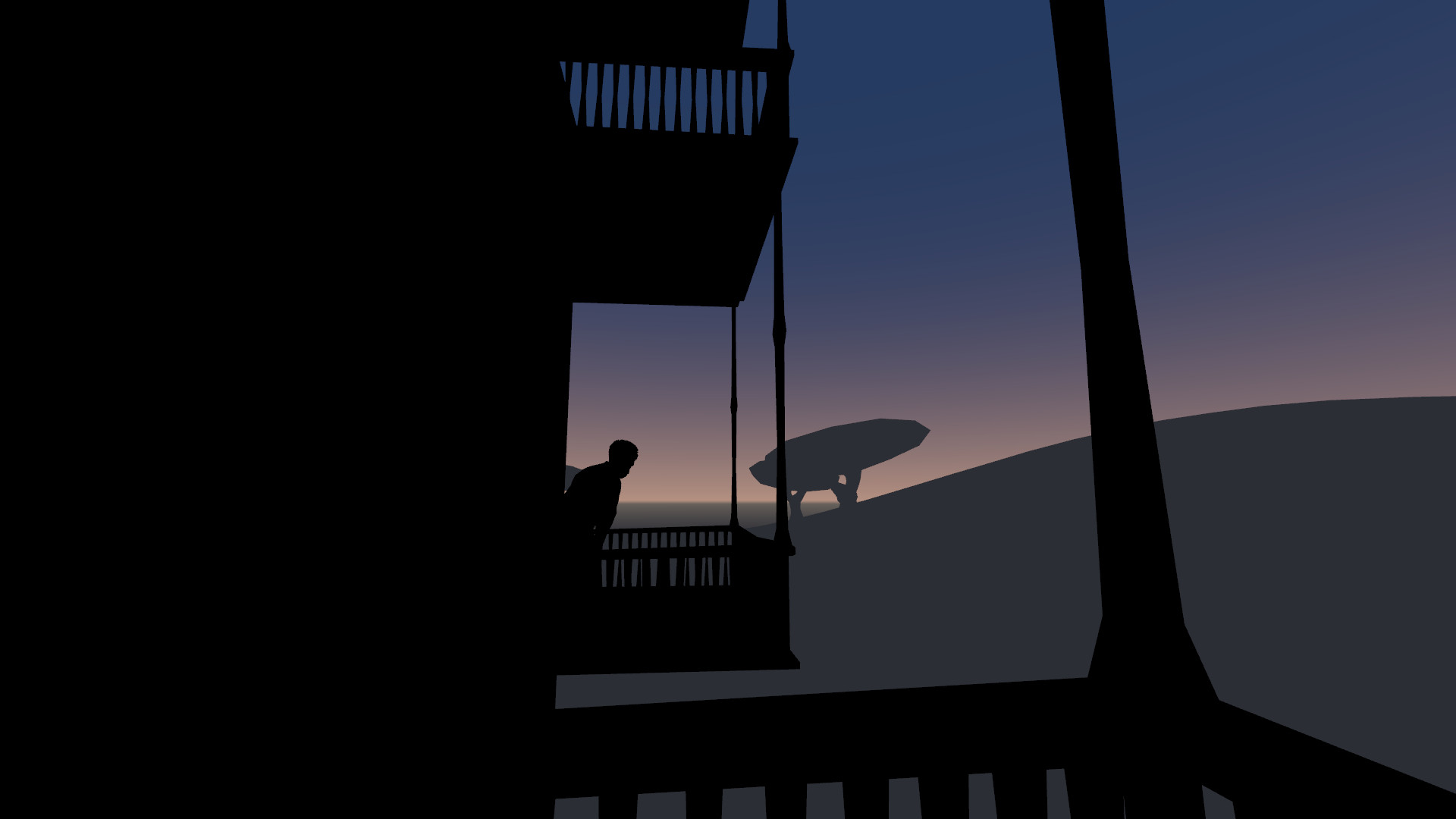
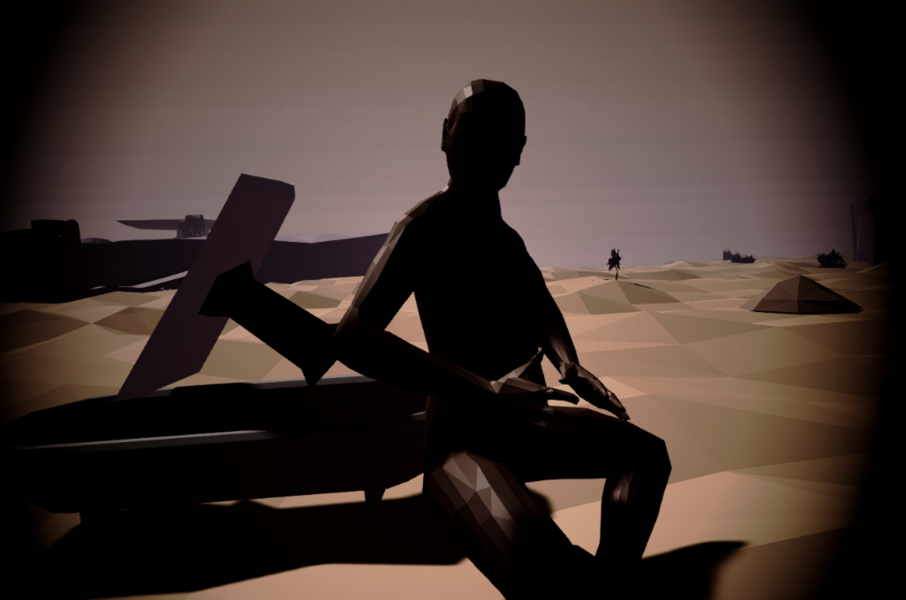
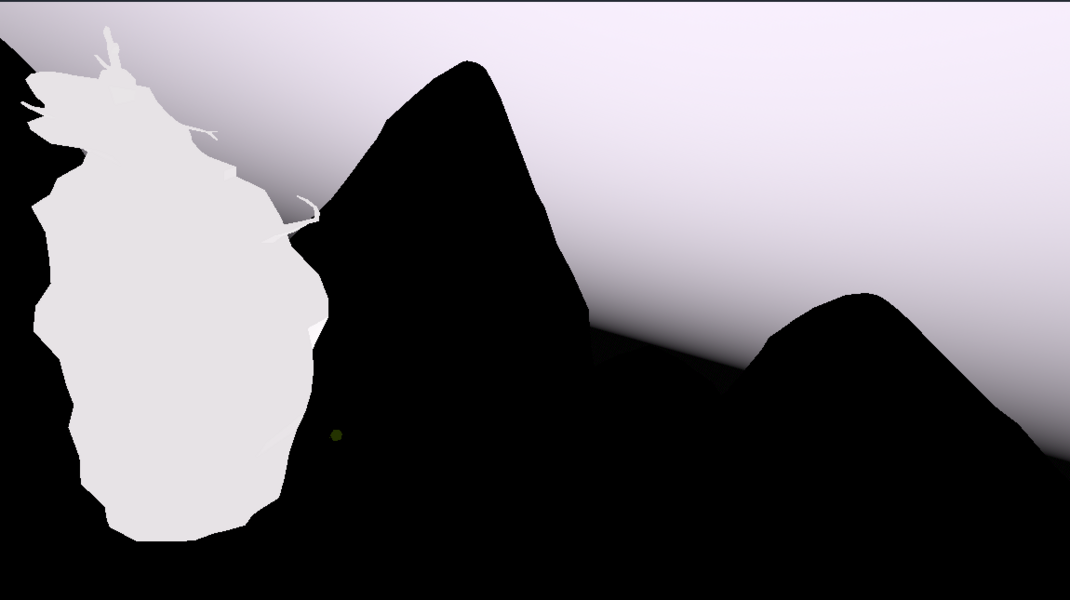
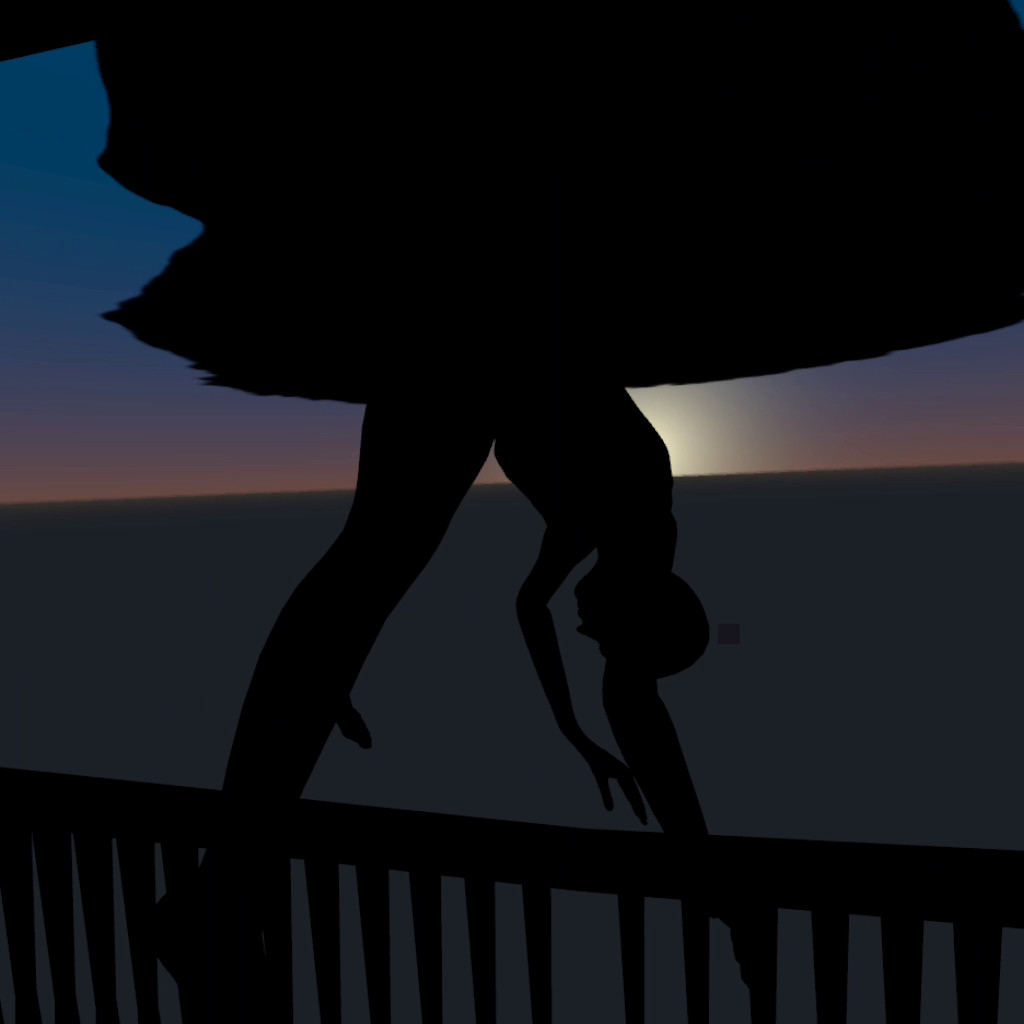
You are viewing the work on a balcony. Around you, all people and objects are in silhouette. Sometimes the silhouettes blend into a mass of darkness.

You are joined by neighbors on each side and you are all looking out onto a vast, empty, hilly landscape at sunrise or sunset. You observe your neighbors moving about.

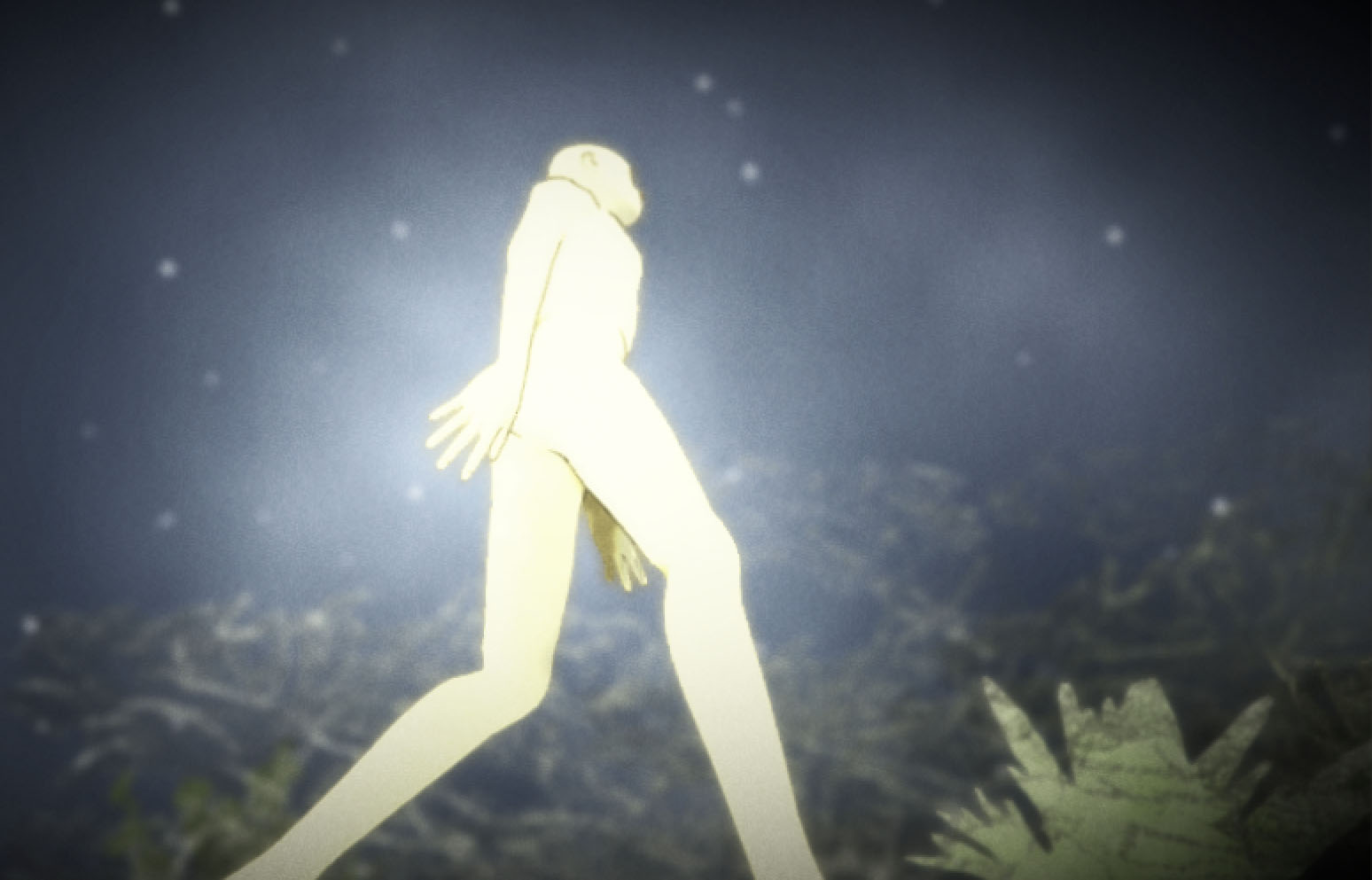
There is a swarm of pixels buzzing around you. Your hand vibrates when you touch one. You grab it and it turns into a humanoid form which grows and flies away to a resting point in space. Each one you grab is a different form, with a different behavior.

The hills of the landscape are moving toward you. They envelope you like a wave and then everything is black. A bright figure rushes by you and then a total  darkness. When it's gone, some of the figures you had found have disappeared.

The waves keep coming. You and your neighbors repeatedly emerge from the darkness. You can look around to see if you lost anything. Your hand will likely keep buzzing and you can continue to discover more mysterious figures while the landscape relentlessly pounds and immerses your community.

The project was created in Godot game engine, exported for Meta Quest. I created 3D models using Blender. Some elements are 2D images I created in Krita, rendered in 3D space. The human models were generated by the open source software MakeHuman, rigged with bones and then either hand-animated in Blender, or I acted out their behaviors with my own body and motion captured them. I coded gameplay and in-game events using GDScript. The one ambient sound is an original audio recording.

The video is one example of software that will be experienced differently for every person who uses it, dependent on the player's choices and random events.

*room-scale: the player's body moves around within a physical space instead of being stationary.

  • Returning... as... (addictional documentation)

    2023

  • A screenshot of Returning... as... from the player's perspective, within the VR headset.
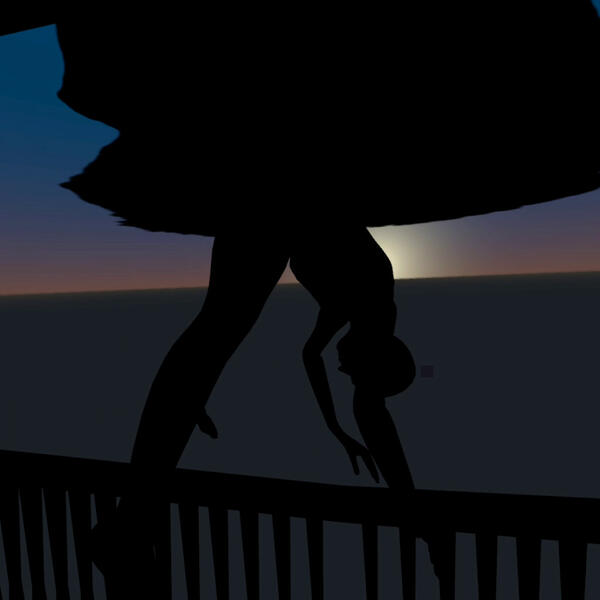
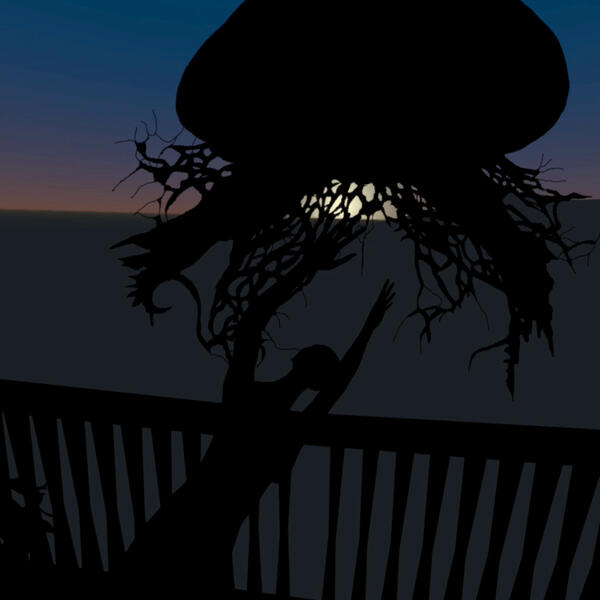
    A screenshot of Returning... as... from the player's perspective, within the VR headset.

    2023

  • A screenshot of Returning... as... from the player's perspective, within the VR headset.
    A screenshot of Returning... as... from the player's perspective, within the VR headset.

    2023

  • A screenshot of Returning... as... from the player's perspective, within the VR headset.
    A screenshot of Returning... as... from the player's perspective, within the VR headset.

    2023

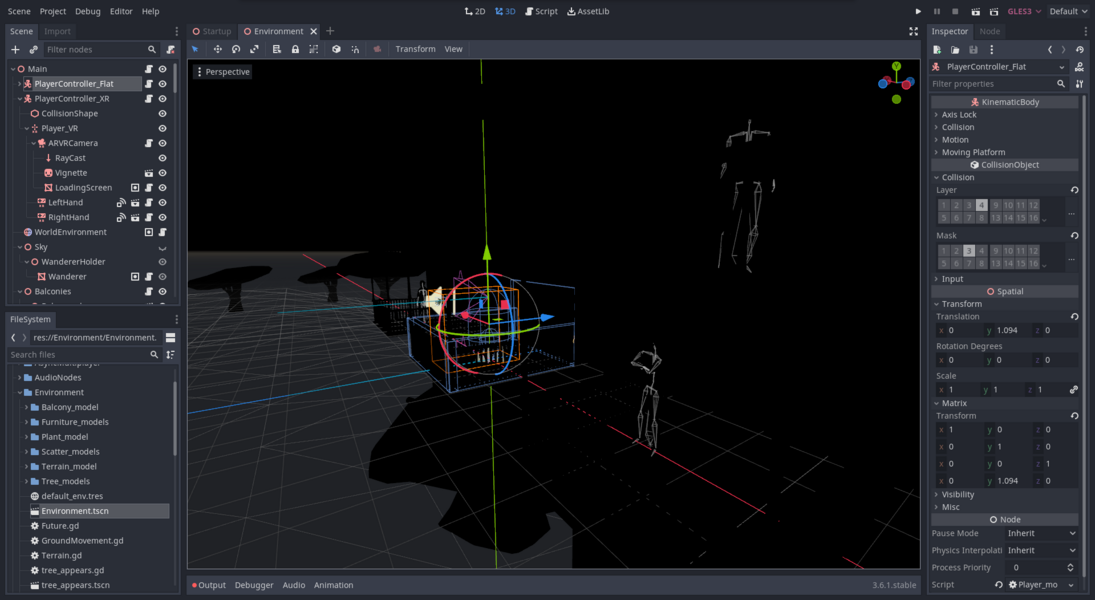
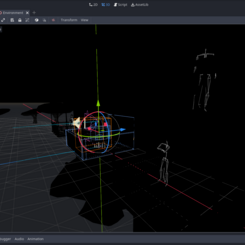
  • Screenshot from within the game editor
    Screenshot from within the game editor

    Shows the arrangement of balconies and neighbor character (the bone outlines).

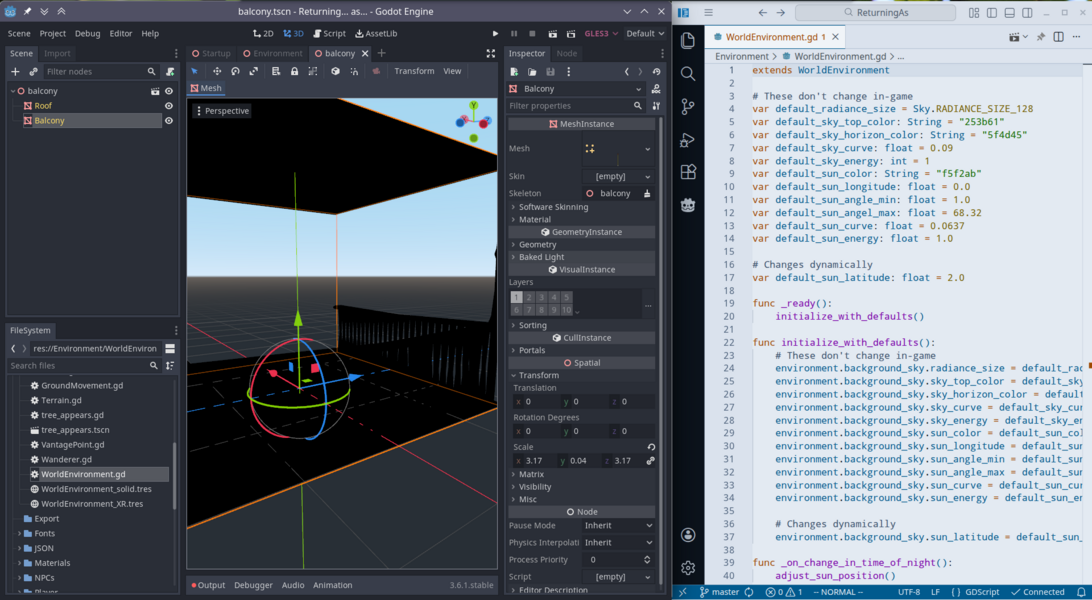
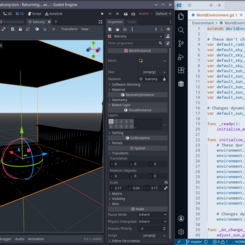
  • Side-by-side view of editor and code
    Side-by-side view of editor and code

    A view of one of the balconies in isolation next to GDScript code for the world environment.

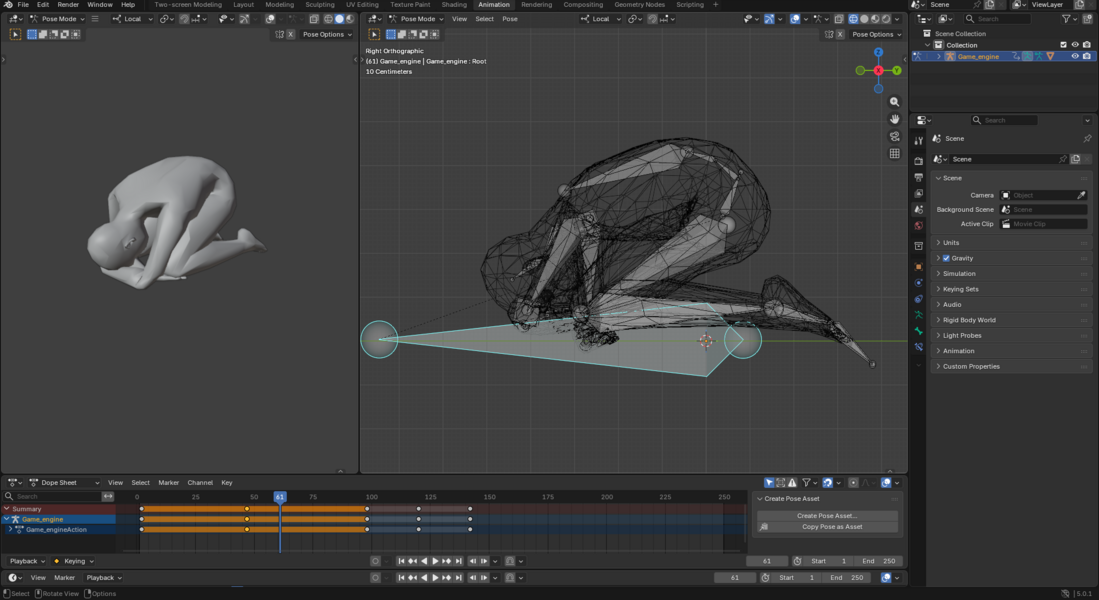
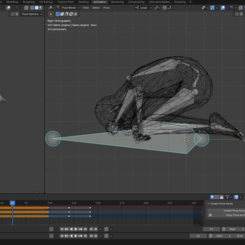
  • Animating a human
    Animating a human

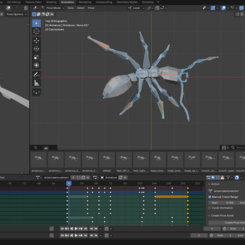
    Animation in the software Blender of a human for the player to find within the game.
Desert Mothers

multiplayer virtual reality videogame, 2019

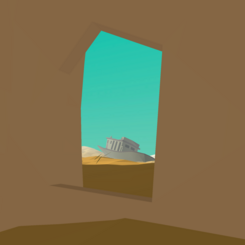
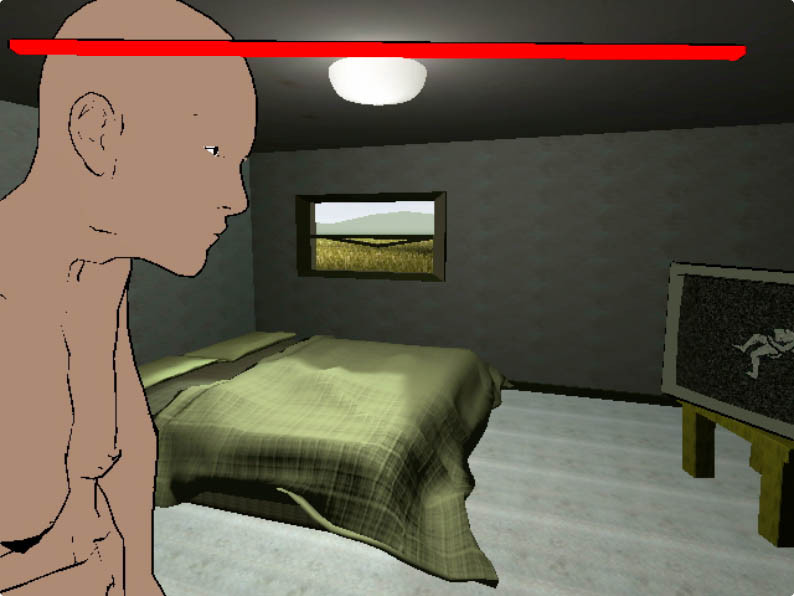
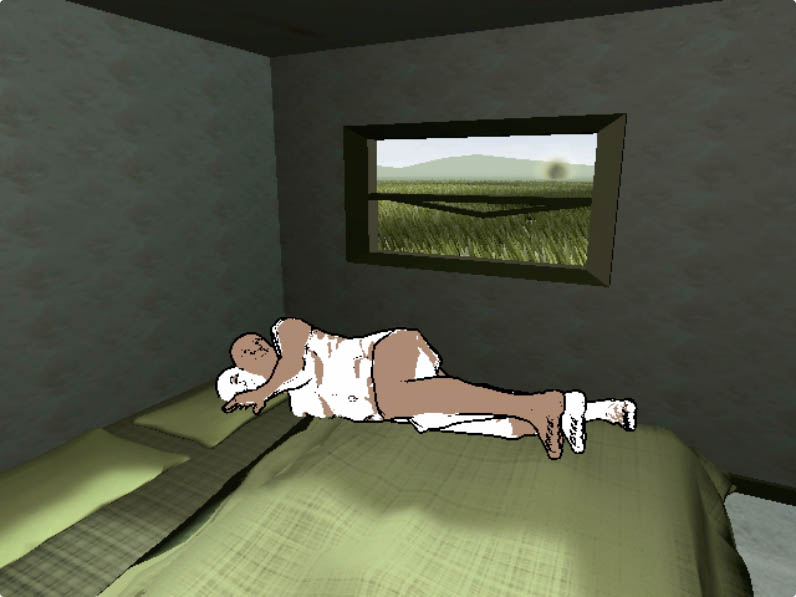
Desert Mothers is a game where players are connected across a network, and each individually interact with an environment that expresses its emotions through weather. 

Players begin in the same randomly-generated environment. This diverges for each as their personal environment, composed of individualized weather and hallucinations, responds to the player's actions. 

The constraints within which the players interact are discovered during play, and revolve around the body, simulated breath, drawing in the air, and out-of-body exploration of flora, fauna, and abandoned human habitations. 

Participants are invited to sit on cushions on the floor while playing. In an in-person exhibition, they would be facing each other. In the proposed virtual exhibition, they will be at home. They use either desktop virtual reality (VR) devices, or non-VR (flat) systems with monitors and Xbox controllers.

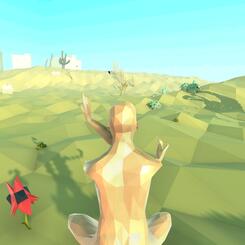
In the game world, they are also sitting, either looking out across the desert at one another or lost in an exploration from the perspective of an environmental object. They see one another's drawings and any two players are rewarded for returning each other's gazes. 

The intelligent landscape watches the manner in which the player draws with their hands in the air, the frequency of their simulated breath, and other movements. The world enters a mood based on what it has observed and expresses itself abstractly by changing the environment in a manner similar to weather. All environmental objects move expressively based on the entire system's current mood. The player can attempt to provoke changes in behavior from this entity, or explore interactions with other players while the environment reacts. Although the player might not interpret the game environment as having a mind that responds to their actions, it's a feature of the game's reality, and a logic that underlies the gameplay.

There is a slippery relationship between the player and their body as separate from elements in the environment, as they explore the landscape from the perspectives of other environmental entities. The player can select a plant, animal, or human-built structure and view the environment from its perspective. They can also leave their body sitting in the sand and roam freely around the latter structures.

There is also a tension between the stillness of meditation and the preoccupation with activity in an interactive space.

This is a multiplayer game where players can discover ways to communicate and interact over the network, but the individualized environmental behavior pushes the experience inward. The game has its inspiration in group psychedelic and meditative experiences, such as Ayahuasca ceremonies. Although it is ostensibly a group experience, it is intensely personalized.

  • Desert Mothers Gameplay

    This video shows more examples of how a play session might go.

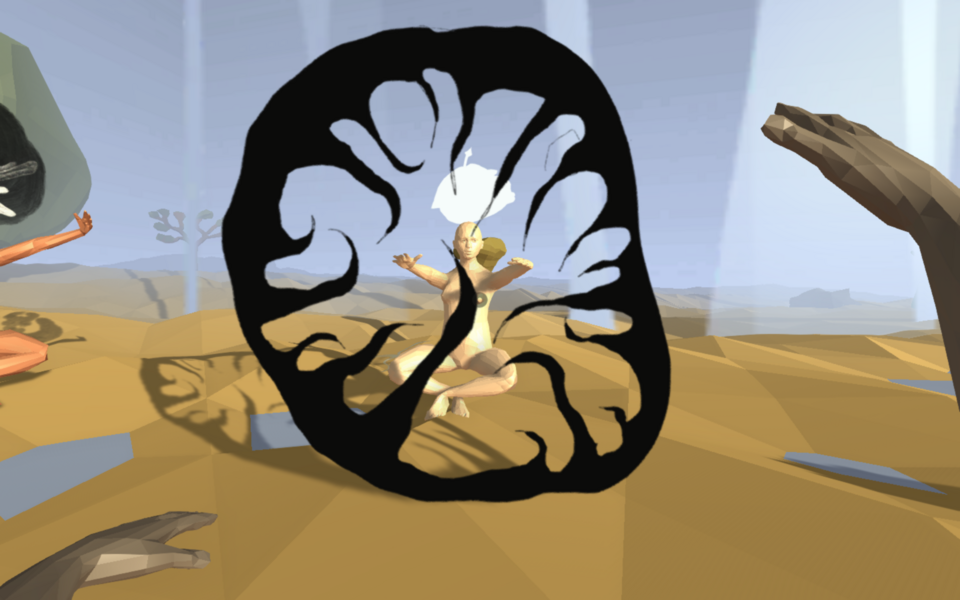
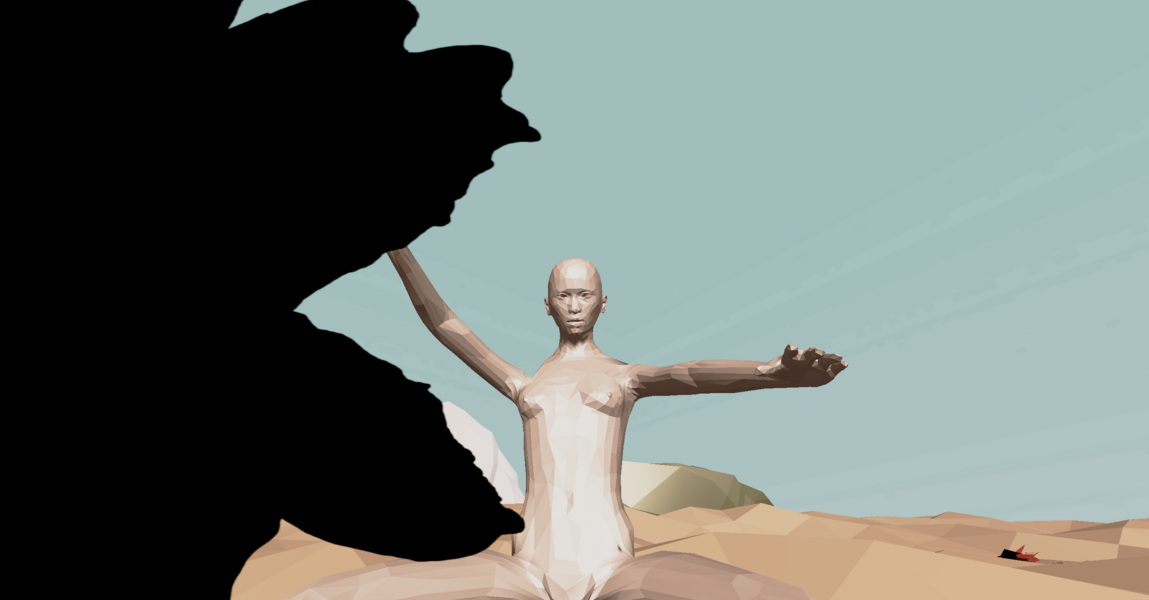
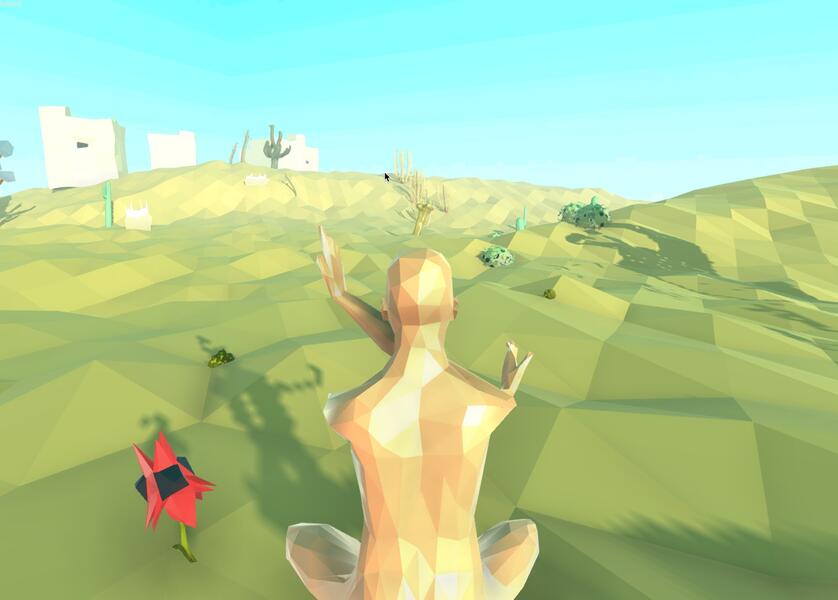
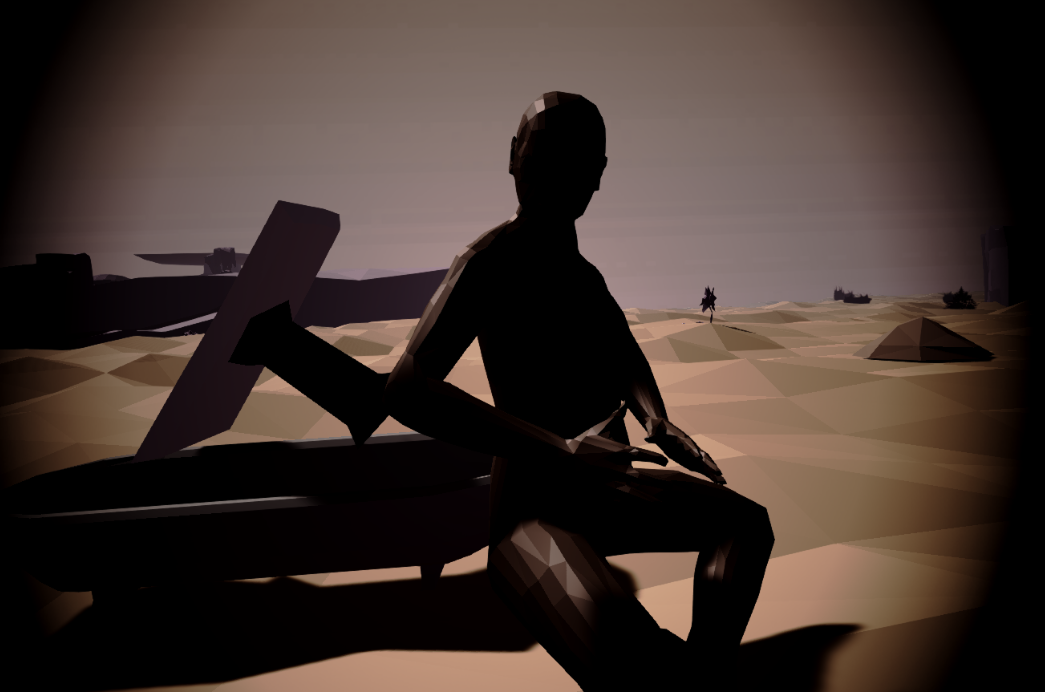
  • Desert Mothers, an image taken from a player's perspective
    Desert Mothers, an image taken from a player's perspective

    Here a player is viewing their avatar from out-of-body.

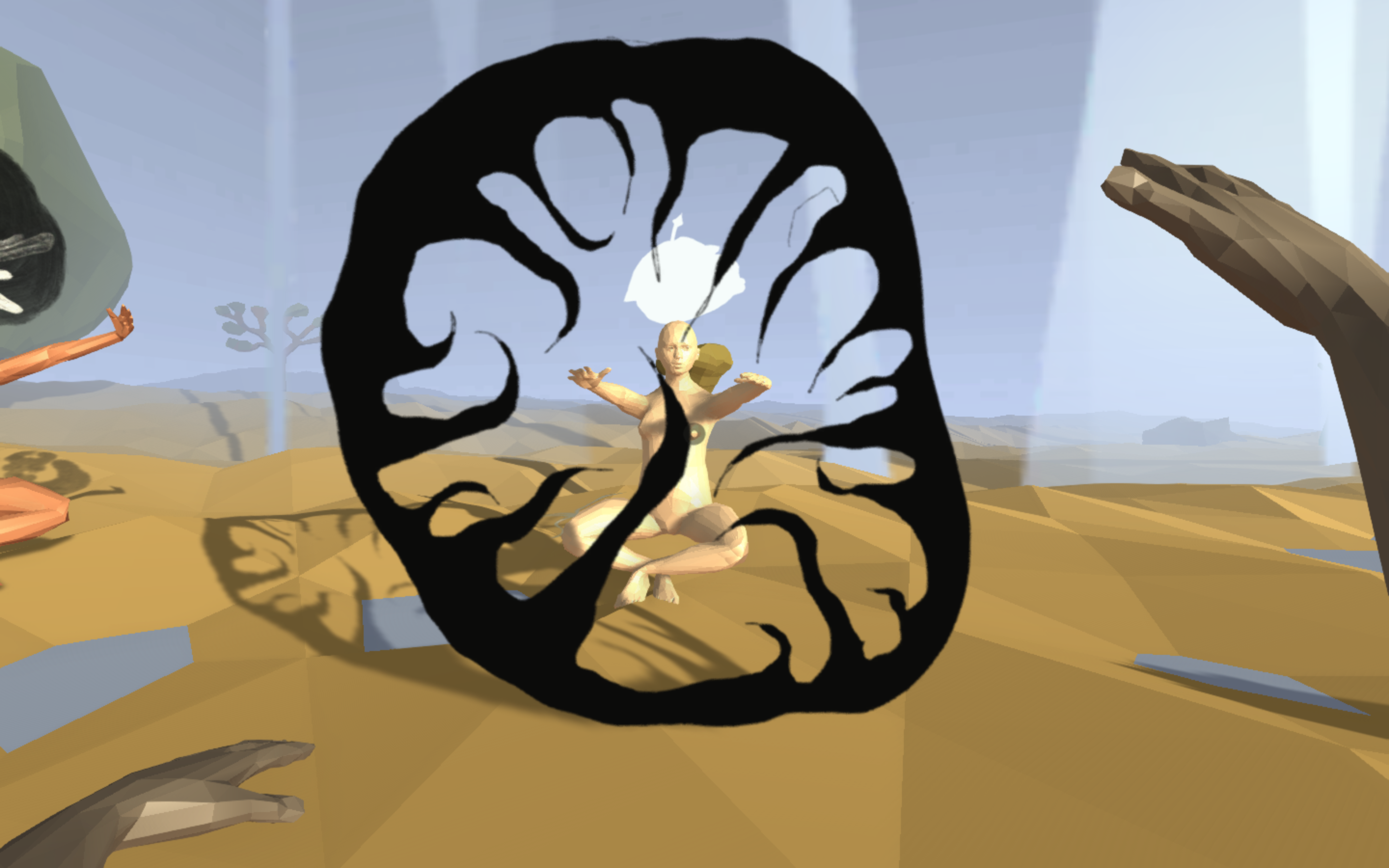
  • Desert Mothers, an image taken from a player's perspective
    Desert Mothers, an image taken from a player's perspective

    A player is experiencing a hallucination triggered by meeting the gaze of another player.

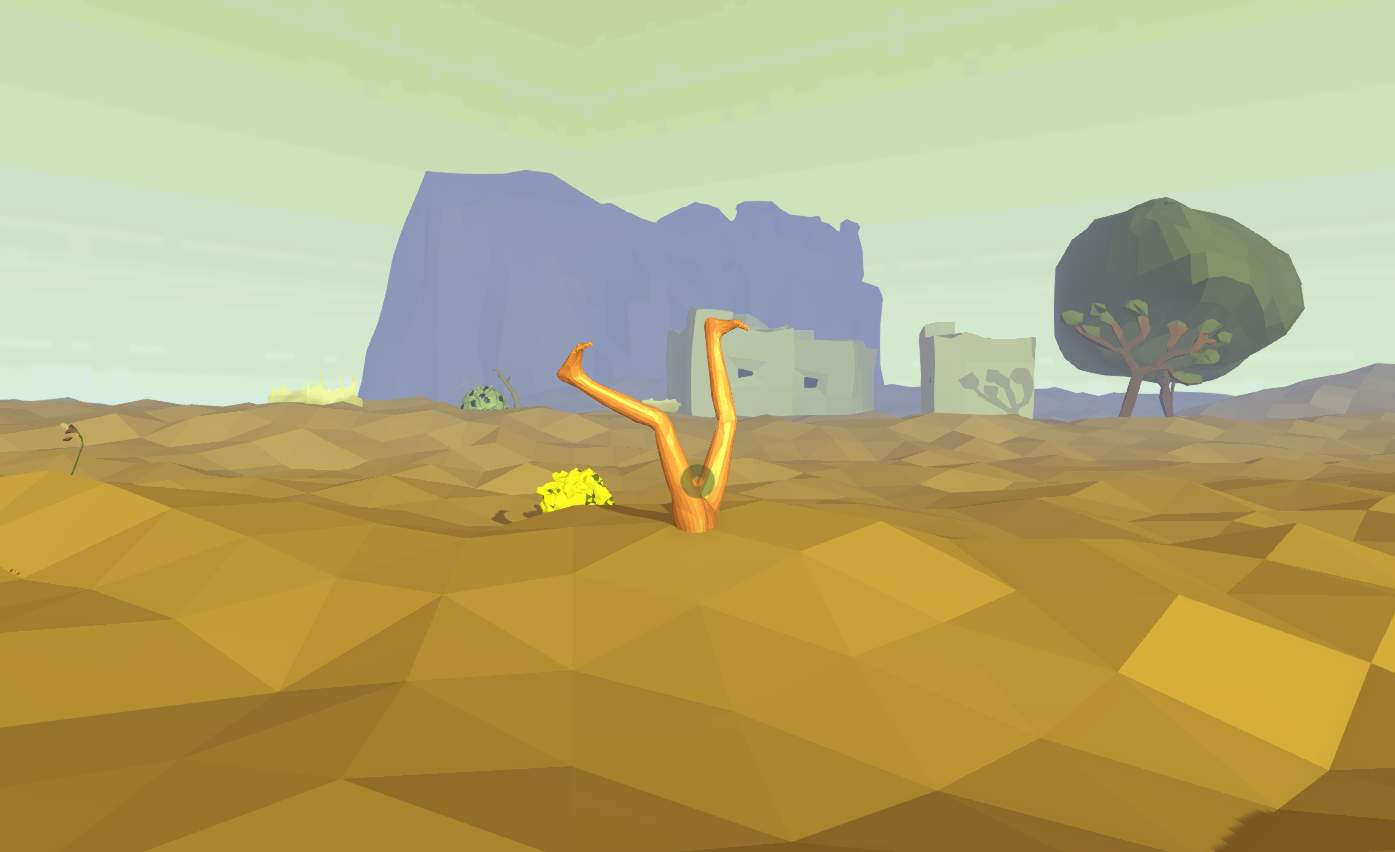
  • Desert Mothers, an image taken from a player's perspective
    Desert Mothers, an image taken from a player's perspective

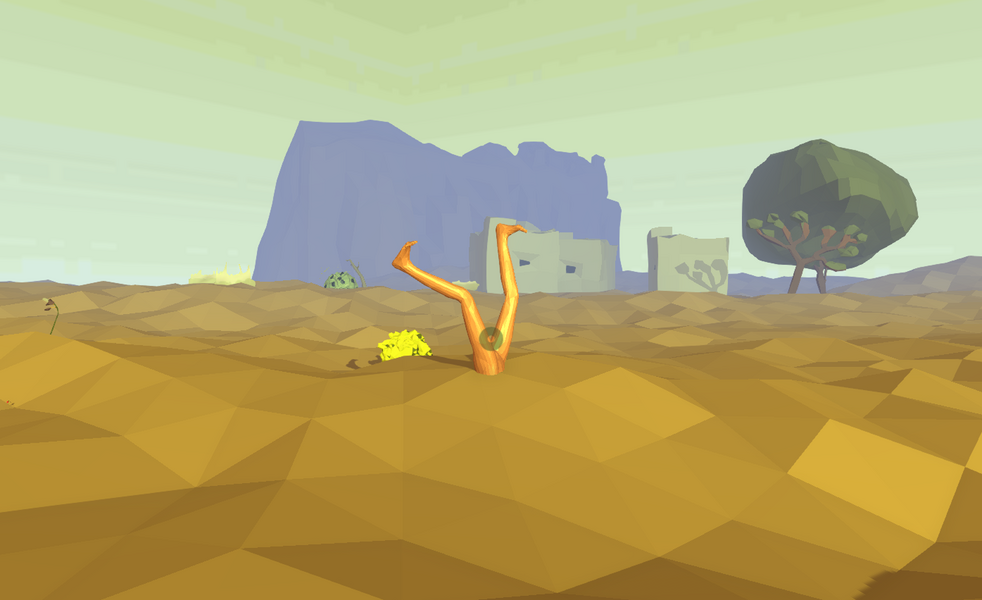
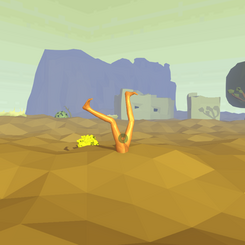
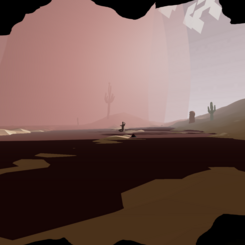
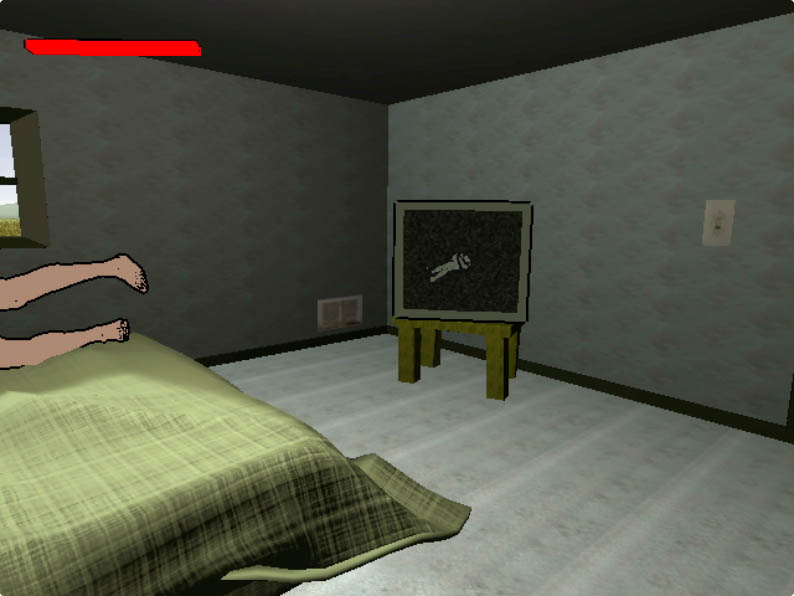
    A player leaves the game; limbs stick out of the sand for the rest of the session.

  • Desert Mothers, an image taken from a player's perspective
    Desert Mothers, an image taken from a player's perspective

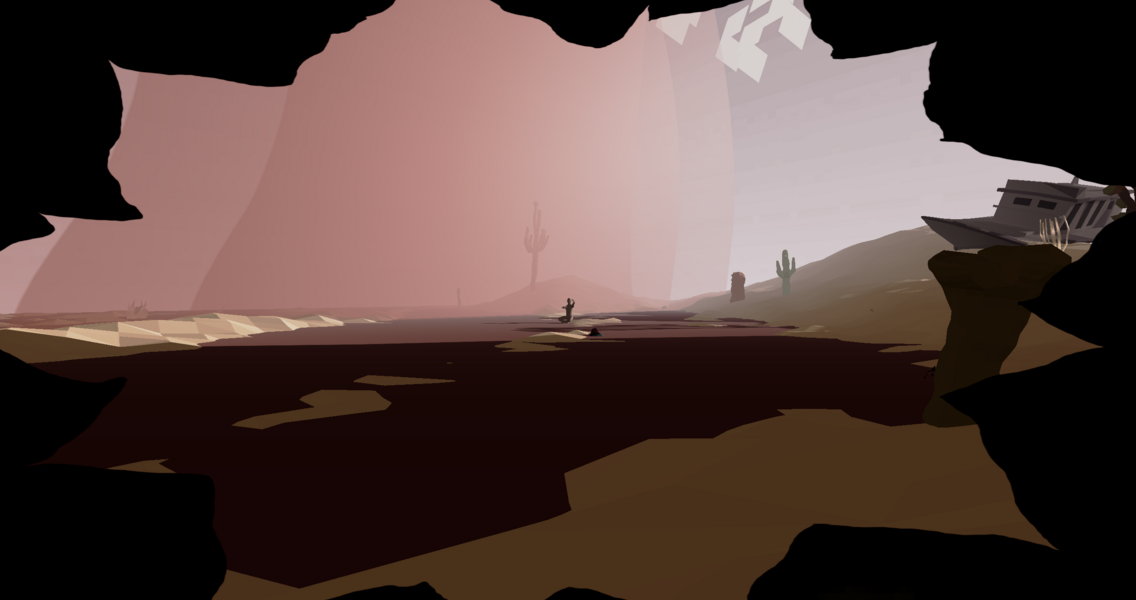
    A player views themself from the perspective of a plant.

  • Desert Mothers, an image taken from a player's perspective
    Desert Mothers, an image taken from a player's perspective

    Viewing another player with a dramatic environmental shift.

  • Desert Mothers, an image taken from a player's perspective
    Desert Mothers, an image taken from a player's perspective

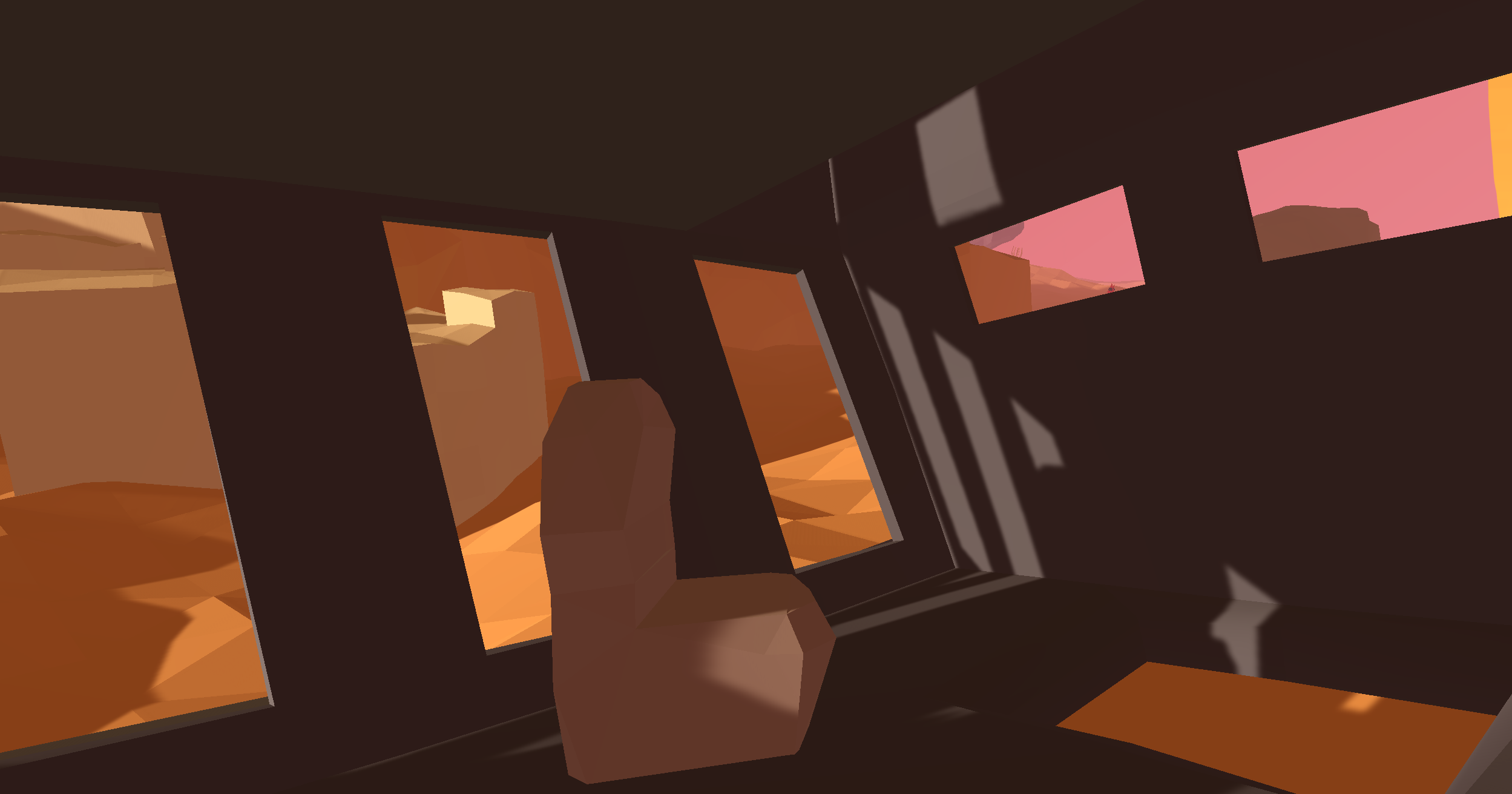
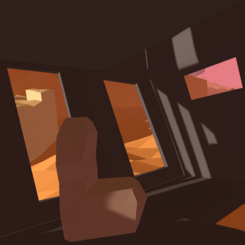
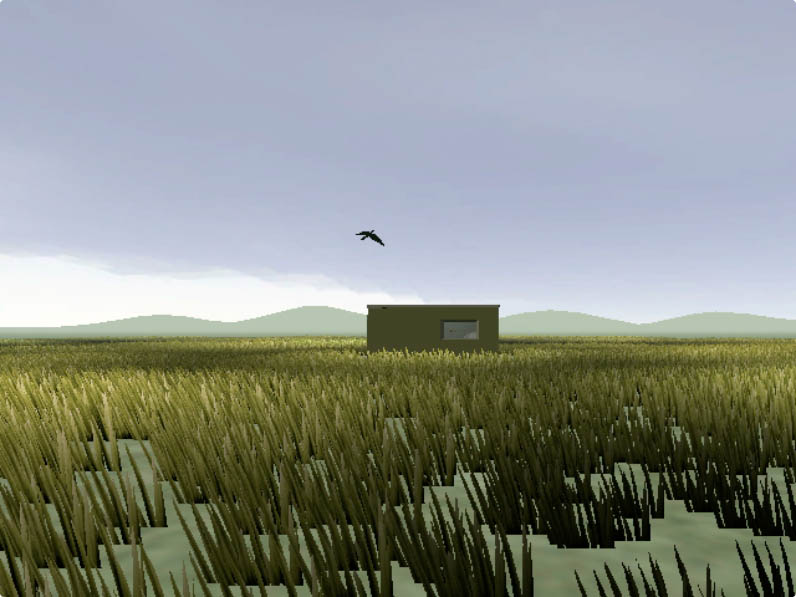
    Out-of-body roaming through an abandoned structure.

  • Desert Mothers, an image taken from a player's perspective
    Desert Mothers, an image taken from a player's perspective

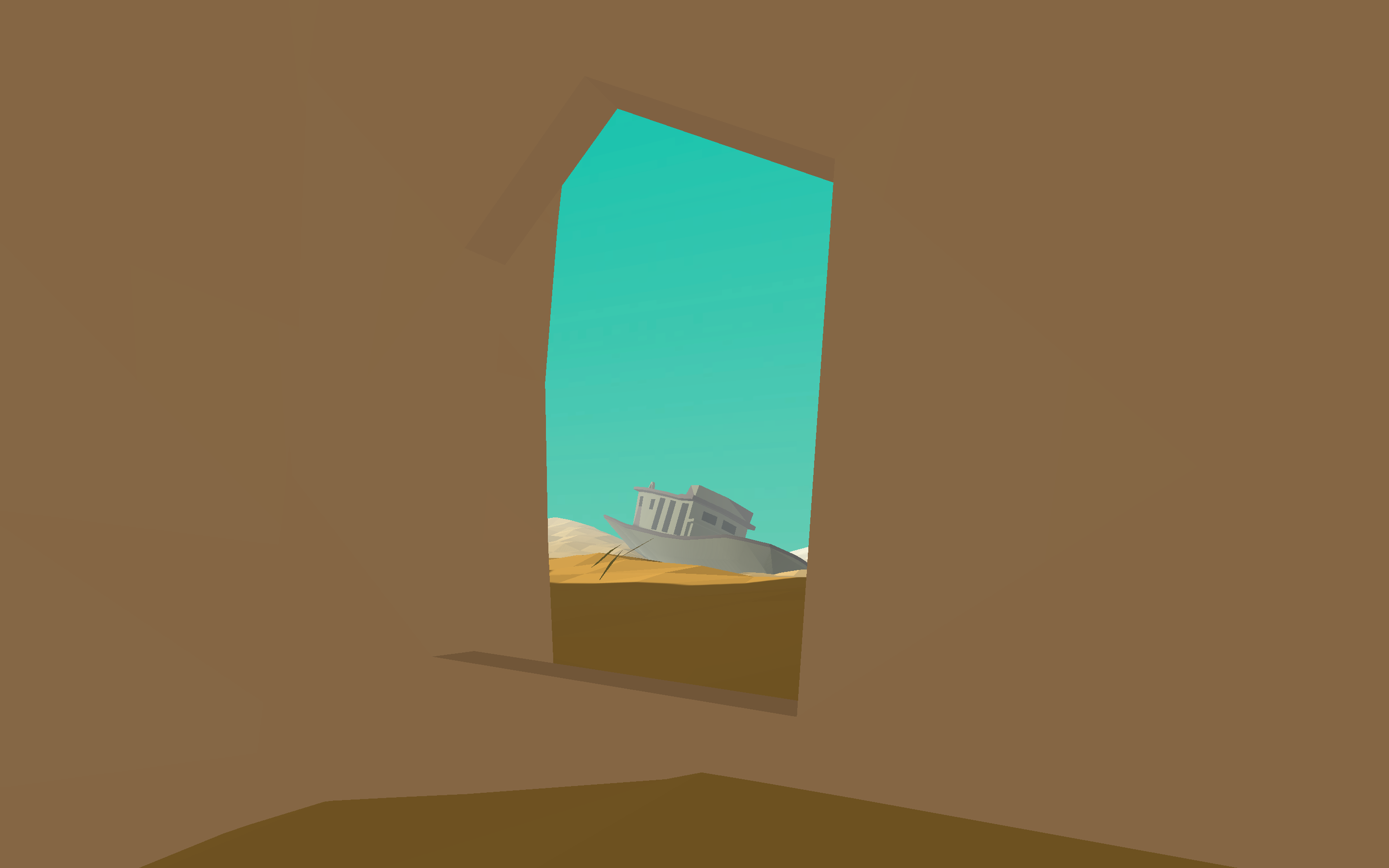
    Out-of-body roaming through an abandoned boat.

  • Desert Mothers, an image taken from a player's perspective
    Desert Mothers, an image taken from a player's perspective

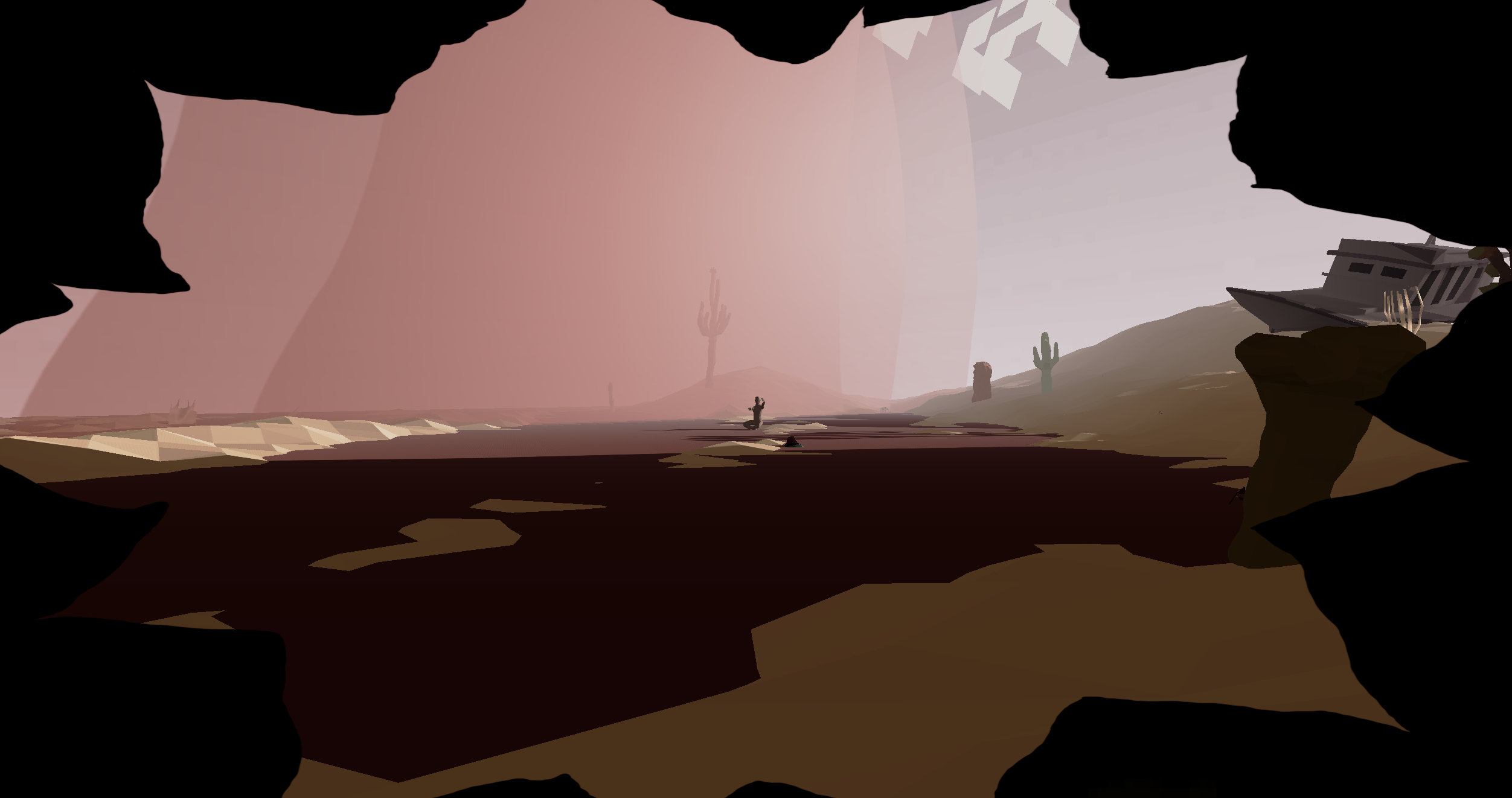
    Viewing oneself from the perspective of a plant during a red storm.

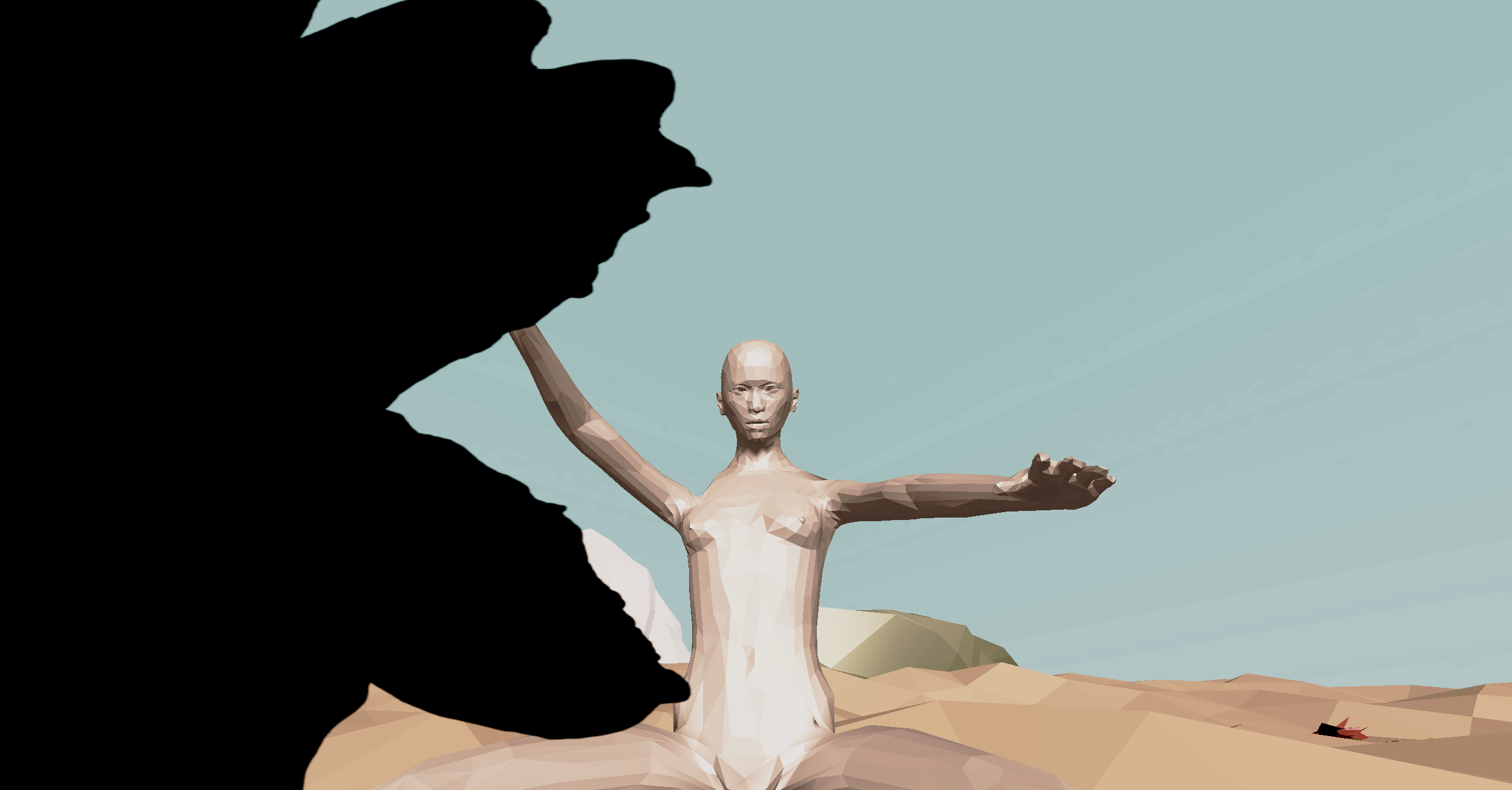
  • Desert Mothers, an image taken from a player's perspective
    Desert Mothers, an image taken from a player's perspective

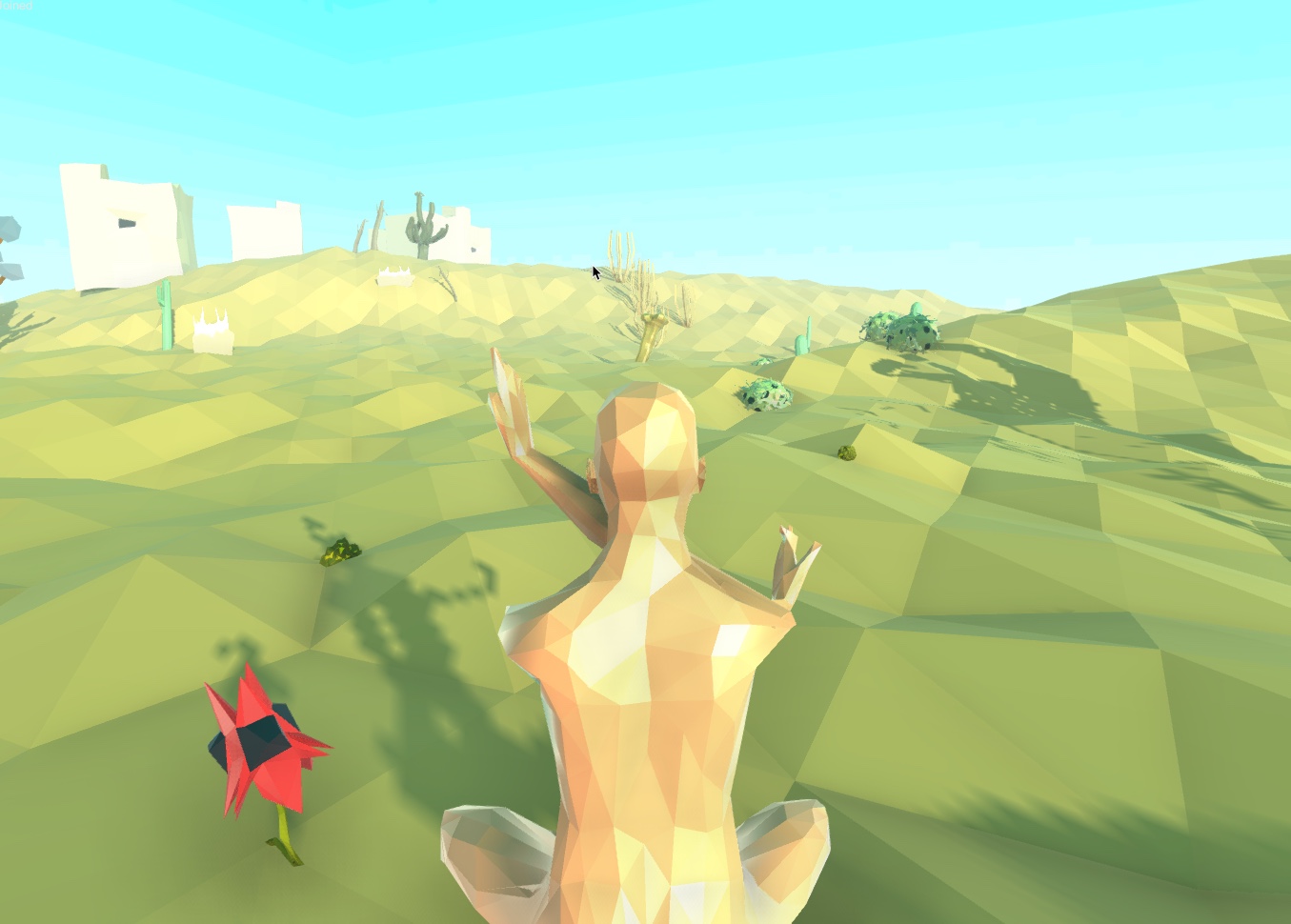
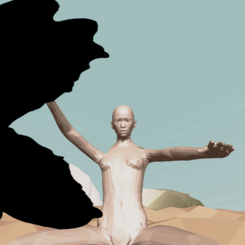
    Viewing oneself from behind. Arm movements are controlled by the player.
Islid

videogame, 2016

The world of Islid is one that emulates the ephemeral images of hypnagogia, the visions passing before one’s eyelids before sleep. On a two-dimensional plane, the player guides a flickering speck through randomly-arranging visions. I created these visions by shining a light into my eyes, closing them, then drawing and animating the mutating shapes from memory. The world the player is traversing has the texture of the dark inner lining of the eyelid, and the shapes come in and out of vision with the peripheral persistence of the hypnagogic state. 

Although this is inspired by a landscape that one encounters internally, the patterns formed by the brain in a state of play mirror those that the outside, natural world produces in its own procedural generation. Neuroscientist Oliver Sacks draws a comparison between the “spontaneous self-organization” of populations of visual neurons as a part of perception, and the geometric formation of snow crystals. In the latter example, “self-organization can produce geometries and patterns in space and time very similar to what one may see in a migraine aura. In this sense, the geometrical hallucinations of migraine allow us to experience in ourselves not only a universal of neural functioning but a universal of nature itself”. Whether creating hypnagogic visions or migraine auras, our brains produce geometric landscapes in a manner similar to that of the physical world. In a nod to its connection to external, earthly formations, the title of the game is a combination of “island” and “eyelid.”

The medium of digital play-spaces is also appropriate as a metaphor for this state, as hypnagogia is described by Sacks in his book, Hallucinations, as:

the visual cortex playing with every permutation, playing with no goal, no focus, no meanings—a random activity or perhaps an activity with so many microdeterminants that no pattern is ever repeated.  Few phenomena give such a sense of the brain's creativity and computational power as the almost infinitely varied, ever-changing torrent of patterns and forms which may be seen in hypnagogic states.

It is essentially interactive, procedural seeing, with little information required from the outside world. It is a reminder of how much of sight is created by the brain in a response to stimulus. In the case of hypnagogic sight, the required stimulus is essentially a random seed.

(The above text is from my article "Heaven and Hellscapes: Exploring Altered Mind States through Procedural Environments", presented at the International Symposium on Electronic Art, 2018)

Tools used: Procreate and iPad Pro, Unity game engine, C# programming language.

Selected for the LeftField Collection at EGX Rezzed 2018. Also exhibited at solo and 3-person shows in Rockville, MD:  Procedural Experience at VisArts (2017), and In Play, Flow, and Ritual at King Street Gallery (2018). It was a part of the group exhibition Art of Mind at Imurj in Raleigh, NC, in 2019.

  • Islid screenshot
    Islid screenshot

    This shows one moment in gameplay that is different for every player. 

  • Islid screenshot
    Islid screenshot
    Islid screenshot
  • Islid video documentation
    Islid video documentation

Cho-Am

videogame, 2016

I created this work in the Unity game engine after a visit to the site of Pol Pot's cremation in Cambodia. The visuals and audio consist of photos and ambient sound collected at the site. I programmed the gameplay and the procedurally-generated environment that is slightly different each time it is played. I also played the guitar for the small bits of soundtrack, and acted out the player character's pantomime via motion capture.

Visit the cremation site of Pol Pot as a sleepwalker. Interpret the world your character is inhabiting by their gestures and brief glimpses inside their head.

This game does not have an ending until you decide to leave. Game time is connected to the current real time in Cambodia, which affects the sun's position in the sky.

The real life cremation site of Pol Pot in Cho-Am* is a place of contradictory spiritual and political significance. As a "good-luck" shrine, offerings are continuously left by visitors who hope to have assistance in their prayers from a main architect of the Cambodian auto-genocide. One of these visitors, a Thai businessman, constructed a hand-made spirit house at the site as thanks for Pol Pot appearing in a dream to him and giving him winning lottery numbers.

This is a way of dealing with the memory and presence of someone responsible for pain and destruction that is outside of the realm of forgiveness and punishment.

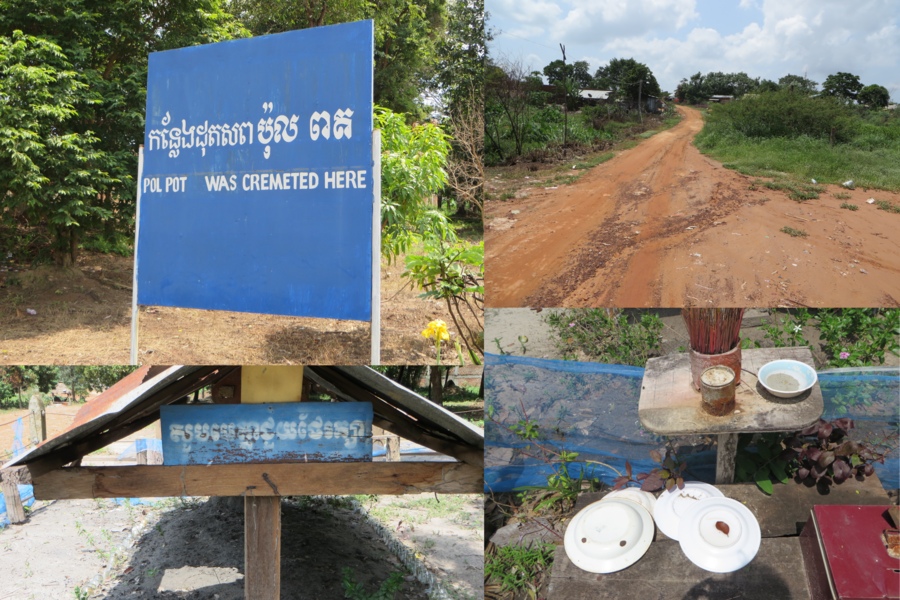
The site itself, across from a casino in a small town on the border with Thailand, in the region of Anlong Veng (a previous base of the Khmer Rouge), has very little aside from a tin roof covering a mound of dirt where Pol Pot's ashes used to be, a burn bin, a couple of spirit houses, and a hut near the entrance where a guard (the wife of a former Khmer Rouge general) sits and takes admission payment. It is an otherwise empty area with a powerful history.

Much of the experience of the site takes place in one's head.

Selected for Games and Playful Media Exhibition at A MAZE. / Johannesburg 2016 and Signification exhibit at A1LabArts in Knoxville, TN.

* Normally transliterated as Choam, this less common spelling helps with pronunciation. Also CHOAM appears to be thing in the world of Dune.
 

  • Cho-Am video documentation
    Cho-Am video documentation
  • Cho-Am screenshot 01
    Cho-Am screenshot 01

    The player character walks toward the location the player has clicked. The camera has jumped to a temporary location and angle in the process.

  • Cho-Am screenshot 02
    Cho-Am screenshot 02

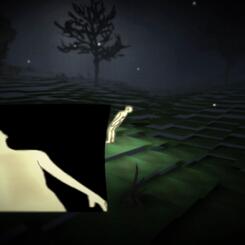
    A brief glimpse of the world inside of the player character's head.

  • Cho-Am screenshot 03
    Cho-Am screenshot 03

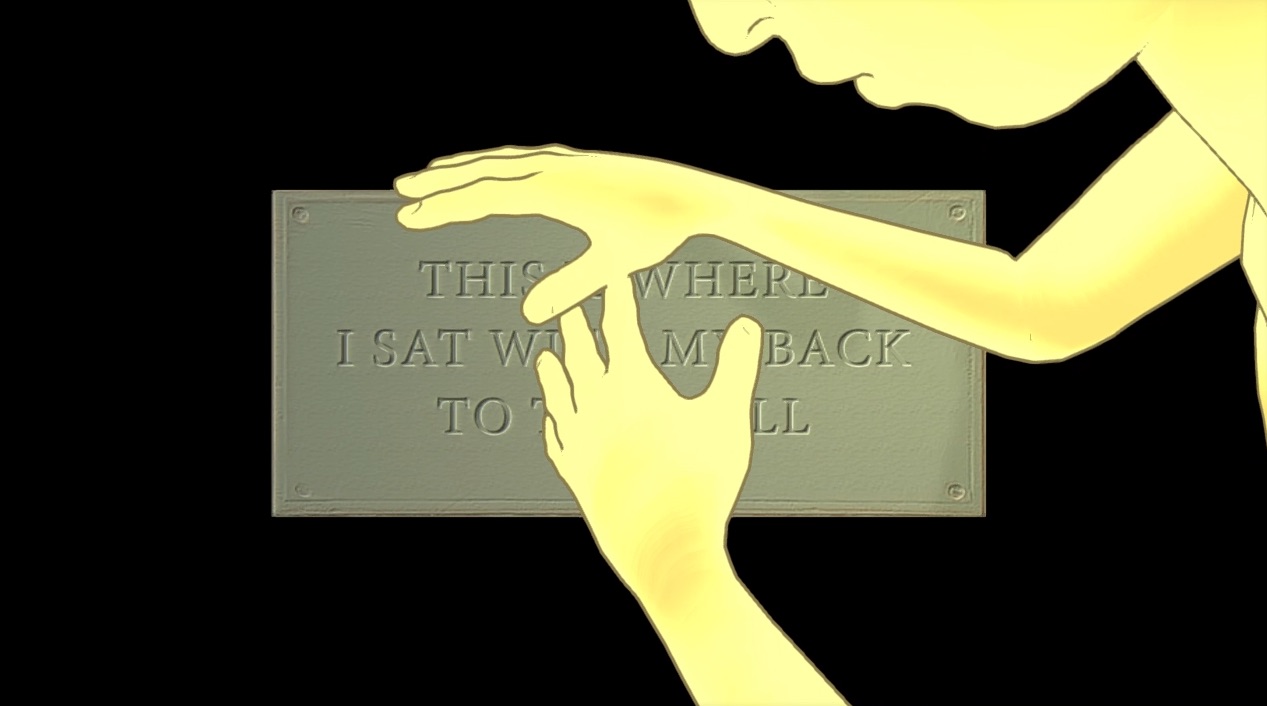
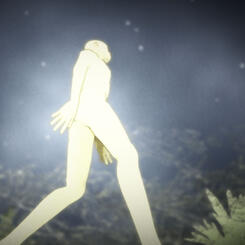
    The sleepwalking player encounters a vision and pantomimes what they are experiencing inside of their head.

  • Cho-Am screenshot 04
    Cho-Am screenshot 04

    A brief glimpse of a scene inside the character's head.

  • Cho-Am screenshot 05
    Cho-Am screenshot 05

    The player character's sleepwalk is interrupted by something they encountered inside of their head. Their pantomime (motion capture that I acted out bodily) shows their grappling with the dream event.

  • Cho-Am screenshot 06
    Cho-Am screenshot 06

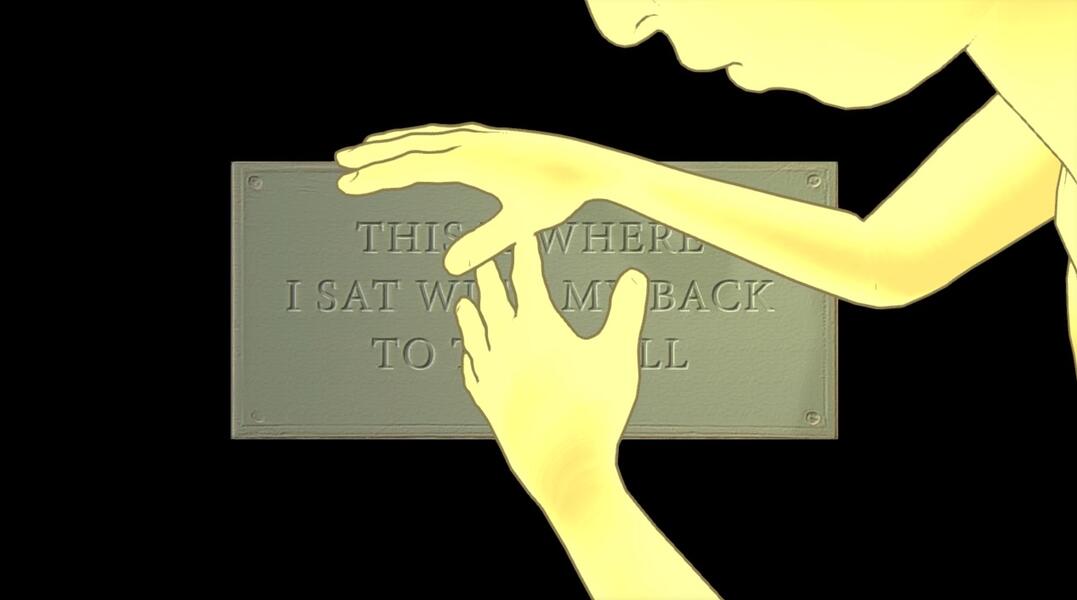
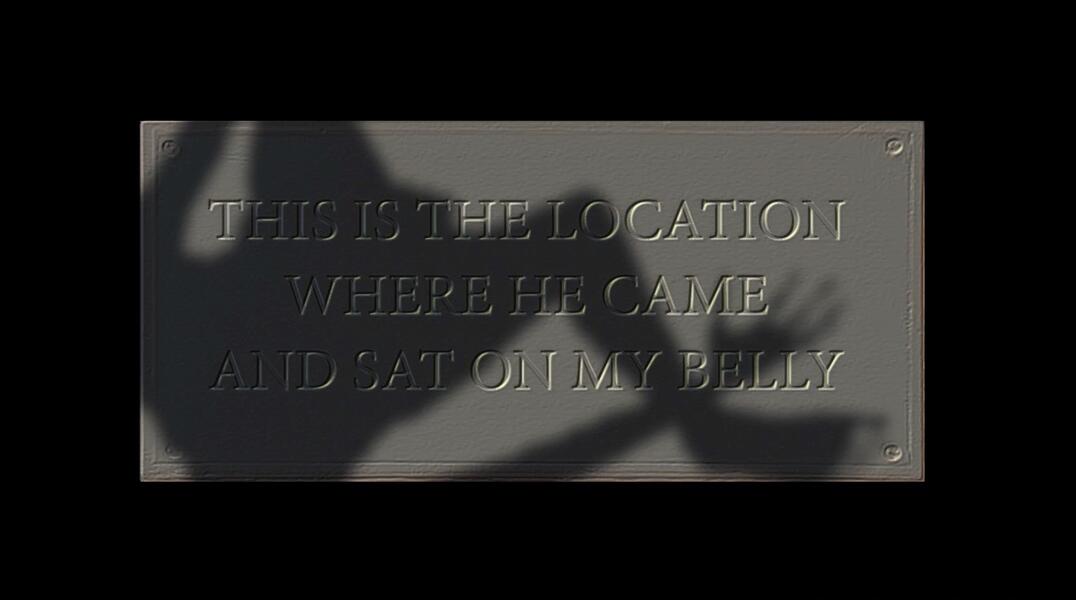
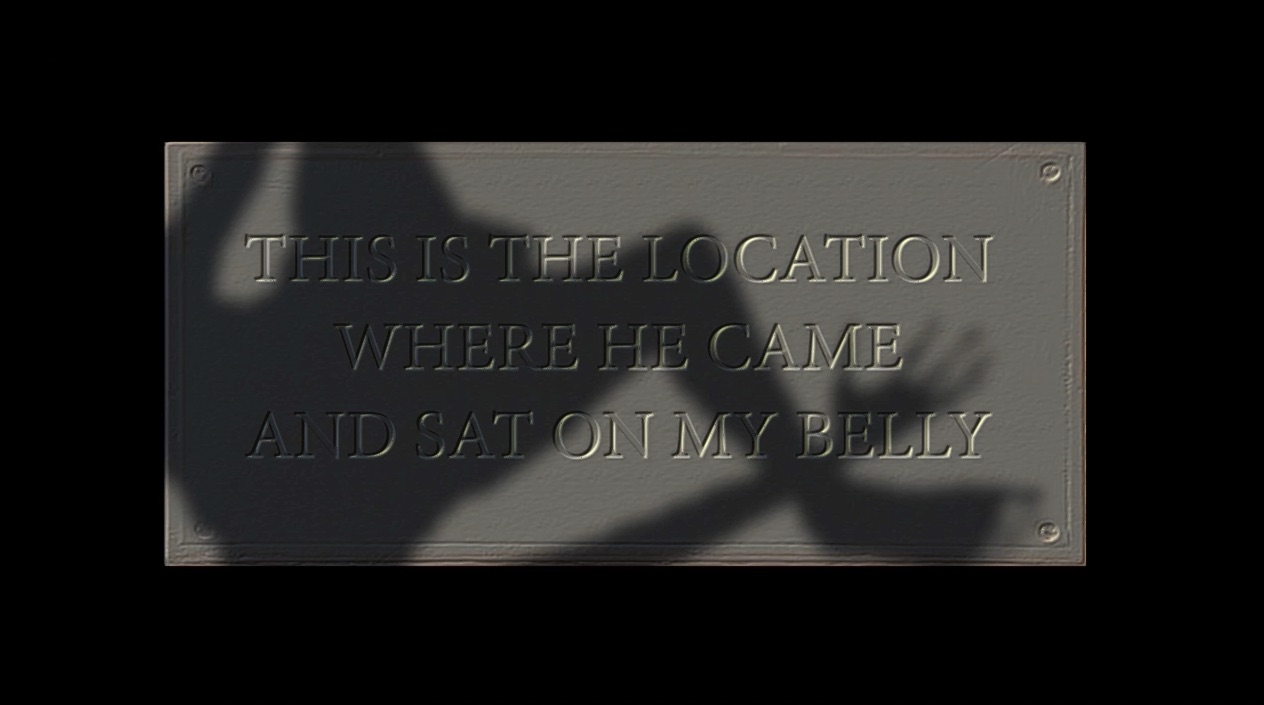
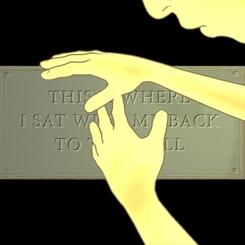
    A brief glimpse inside the player character's head. The character encounters a written sign.

  • Cho-Am screenshot 07
    Cho-Am screenshot 07

    The player character stands in front of a sign. This 3D model was created using images photographed at the site.

  • Cho-Am screenshot 08
    Cho-Am screenshot 08

    The player character encounters an internal event during their sleepwalk.

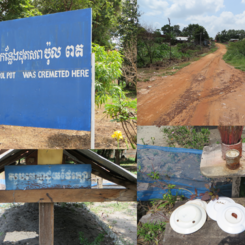
  • Image references
    Image references

    These are images collected from the site from which I created the scene.
Brief Excursion

videogame with neural headset and Arduino microcontroller, 2016

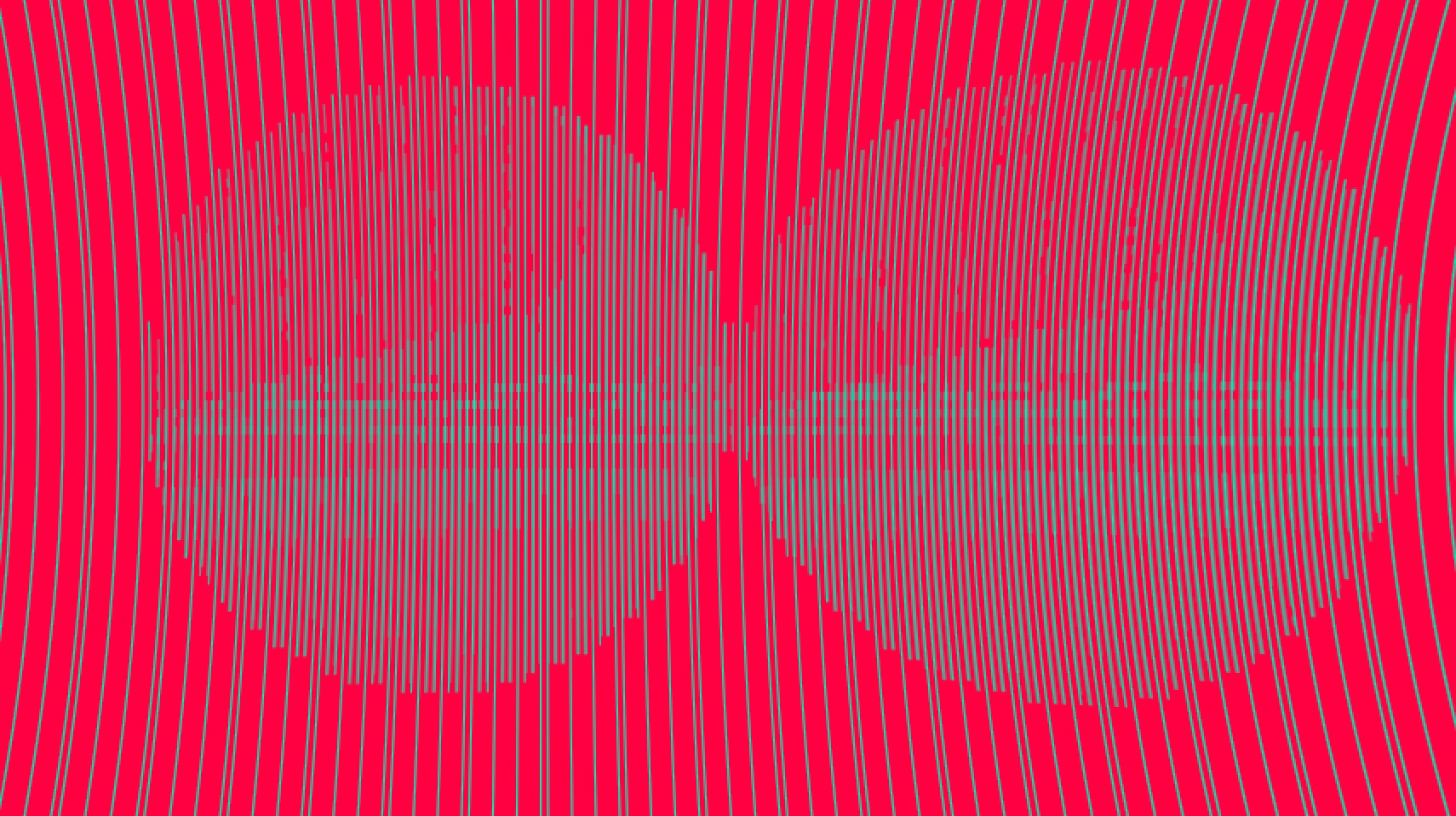
The player wanders a dynamically-generated environment where elements of nature are visually and behaviorally altered based on their brain’s gamma wave readings from a hacked MindSky neural headset.  Gamma waves are thought to be responsible for the brain’s unity of conscious perception, or “binding,” the brain’s interpretation of individual parts as a coherent object.  While attempting to guide the experience through their thoughts, the player explores an experience created through the often uncontrollable behavior of their brain.

  • Brief Excursion
    Brief Excursion

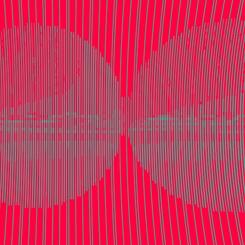
    What the player views on screen. The bending of the lines and shapes of circles are all dependent on data received from the device. The image within the circles is of the environment before the player, which they navigate using the arrow keys.

  • Brief Excursion
    Brief Excursion

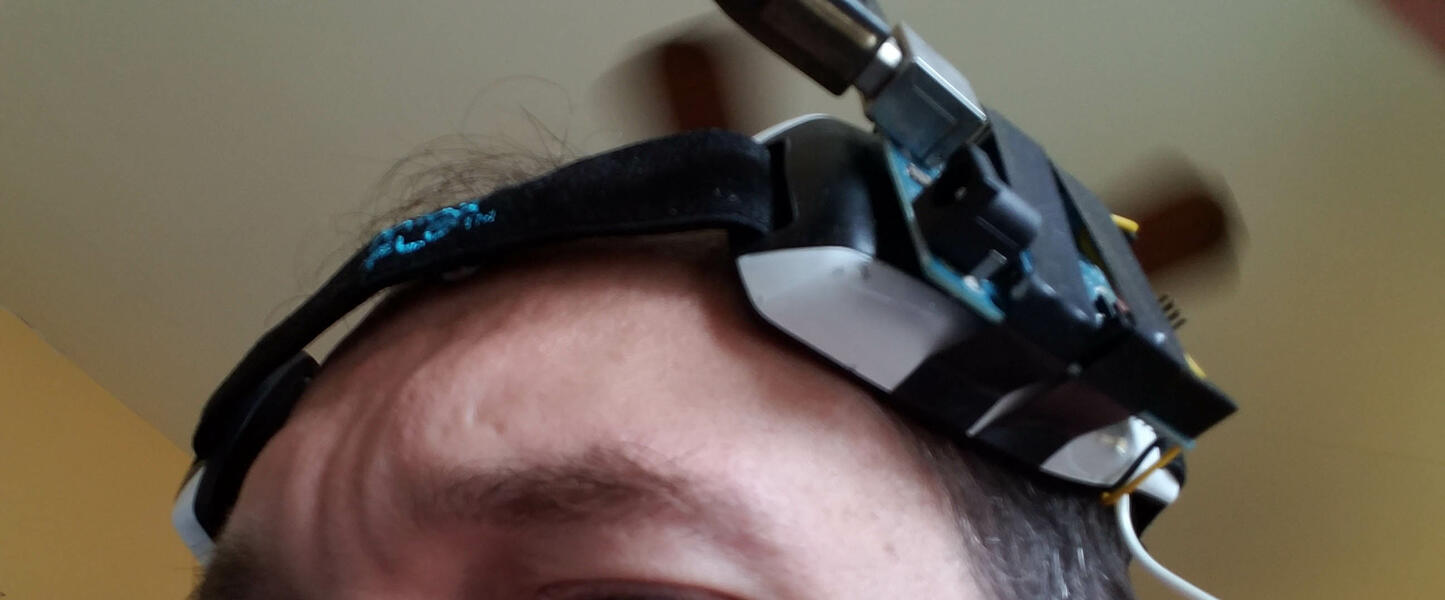
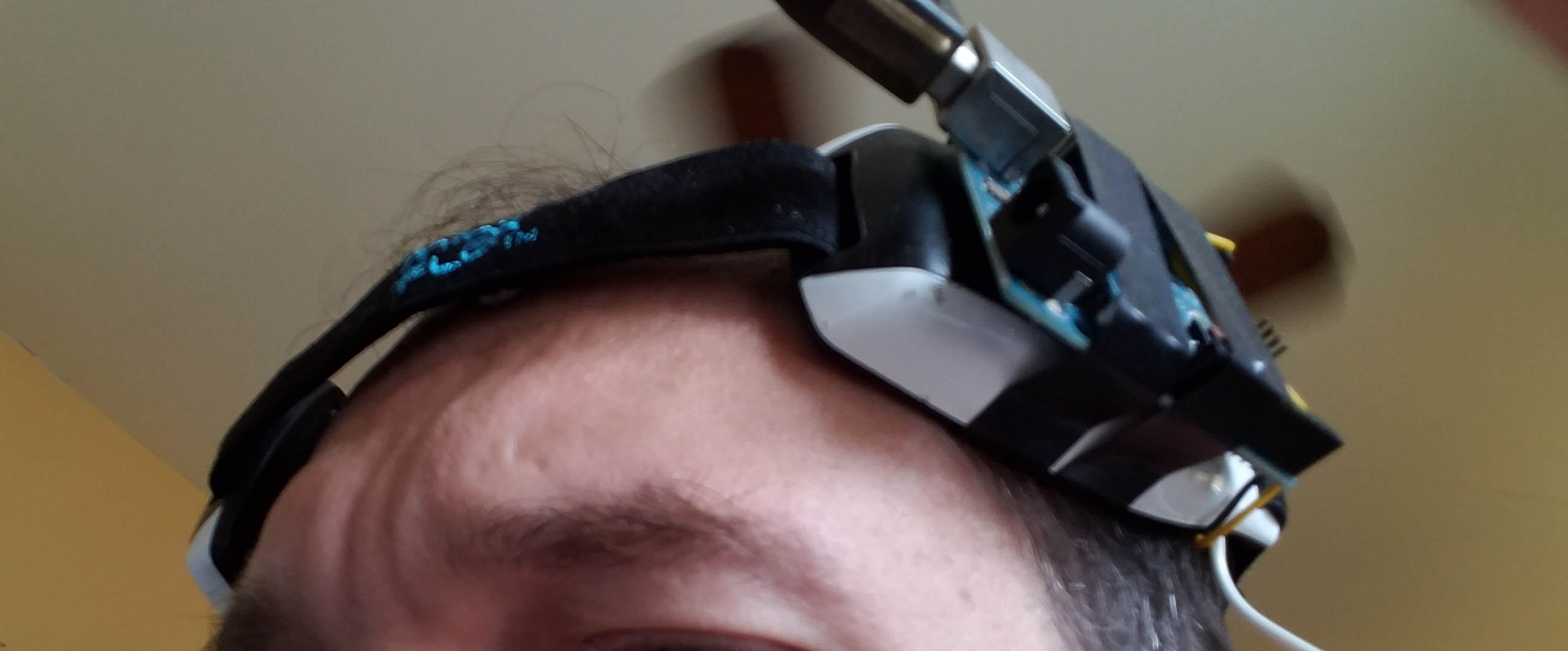
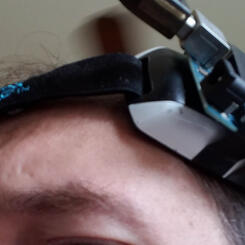
    A close-up view of the artist wearing the headset hacked to communicate via Arduino microcontroller.

  • Brief Excursion (2016)
    Video screen capture of the game, as well as documentation of the game being played within the editor, with readings from the neural headset displayed as a graph.
  • Exhibition view
    Exhibition view

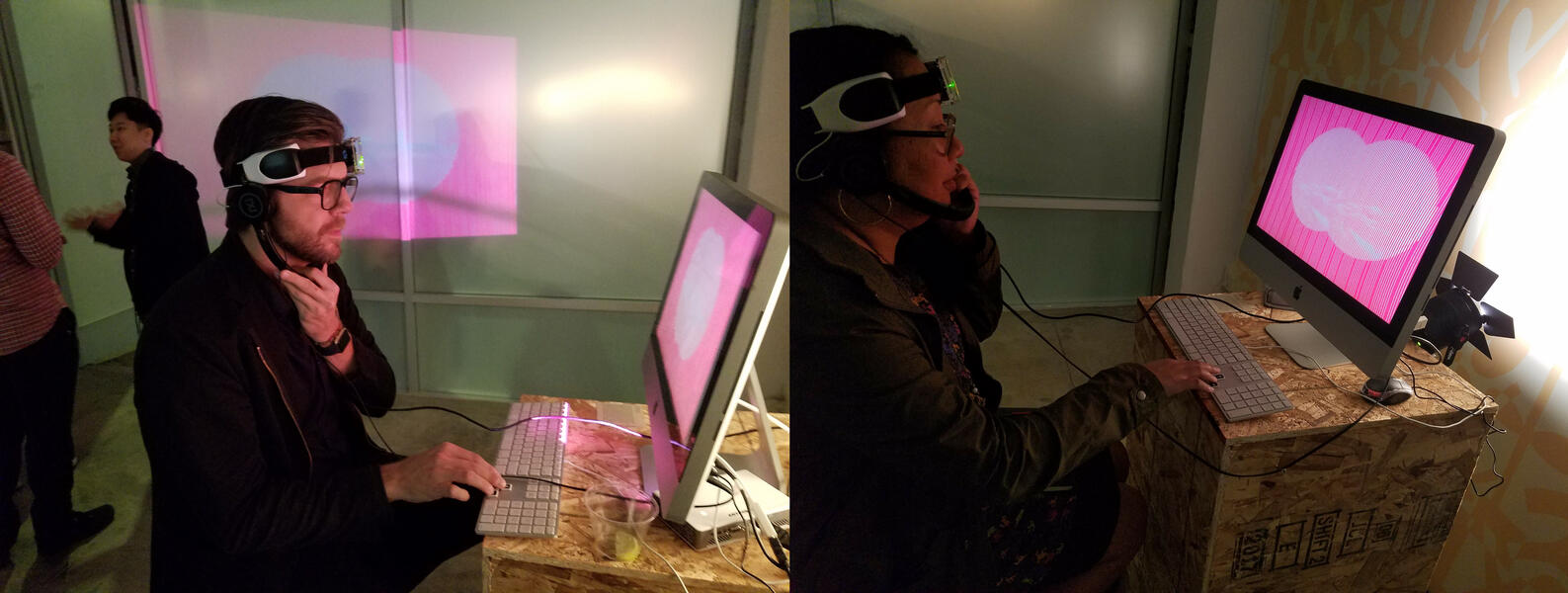
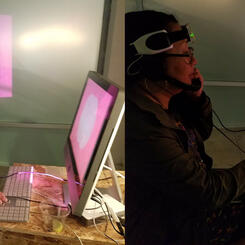
    Participants at exhibition of Slamdance DIG, Los Angeles, 2017.
1,000 Heads Among the Trees

videogame, 2015

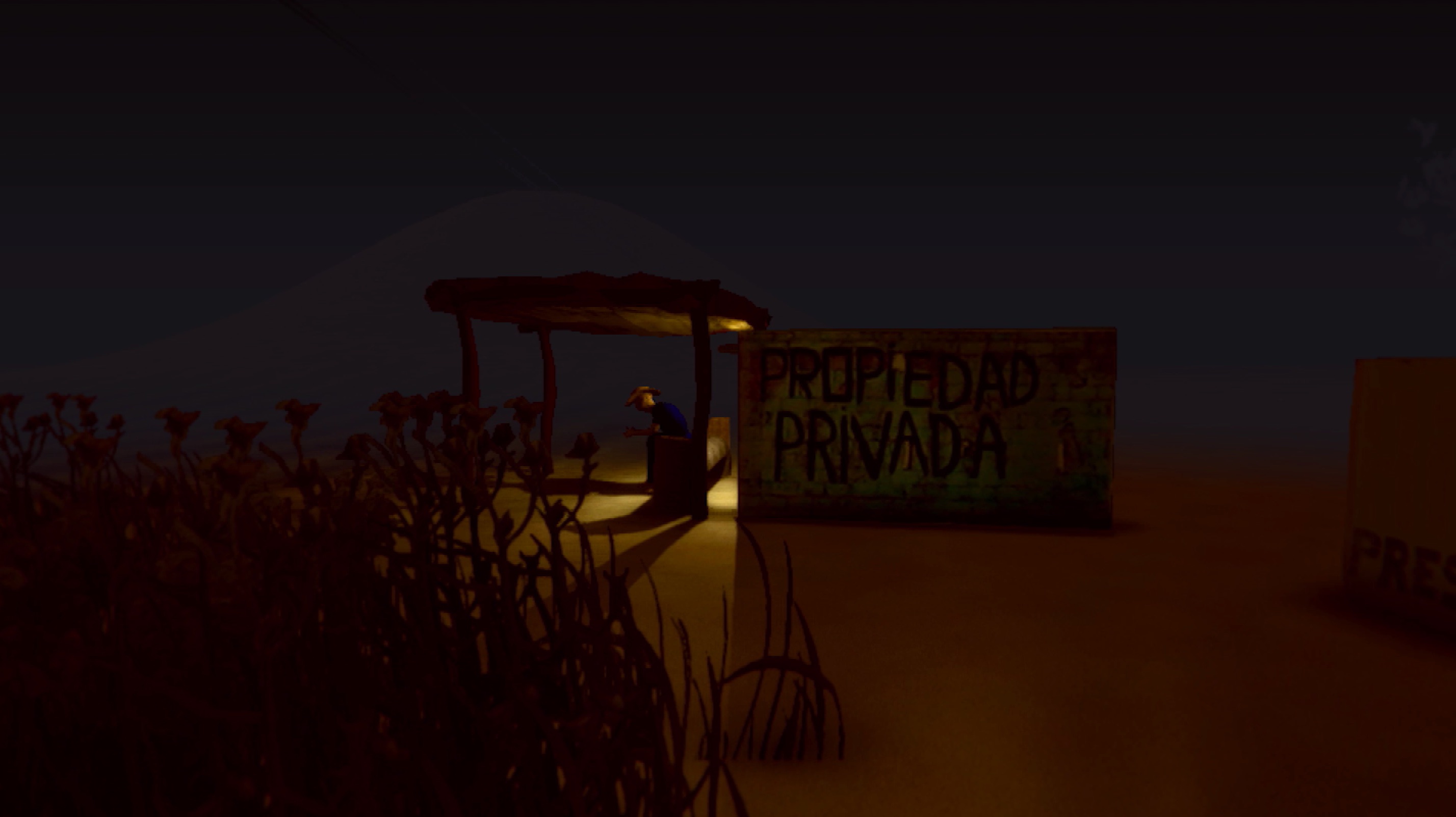
This is an impressionistic game that began with documentary research on a small town in Peru that was founded by witches during the Peruvian Inquisition.  The player takes photos and shows them to local characters, who weave stories about them.  The main game mechanic is that of photographing characters, environmental objects and events in this town, then showing them to characters who give both literal and stream-of-consciousness abstract descriptions of the photos based on what they see in them.  This creates a generative narrative for the player, allowing them to cognitively build a story about the town, with multiple truths exposed by different characters.  In a way, it is a conversation mechanic:  the player asks "questions" through their choice of photography, and the characters answer through their descriptions, which often point the player in new directions.

In this project, I spent time at the site recording interviews and performing other types of documentation. I told folks that the final purpose was for a documentary videogame. I transcribed these interviews, and some are present in the game as audio clips with English translation. On my return, I pulled ideas for game mechanics from what I had documented and reconstructed parts of the town from my photographs and satellite imagery from Google Earth. The environment is composed of ambient sound I recorded on site, and models are textured with photographs of the same objects in Cachiche. 

Selected for the International Indie Den Showcase at Game Happens! in Genova Cornigliano, Italy. Exhibited at Synthetic Zero Event at BronxArtSpace, New York (2015) and the Maryland Artist Registry Juried Exhibition at Maryland Art Place, Baltimore (2016).

A full discussion of this process was published in the article Abstracting Evidence: Documentary Process in the Service of Fictional Gameworlds, in the academic journal Game Studies.

  • 1,000 Heads Among the Trees screenshot 01
    1,000 Heads Among the Trees screenshot 01

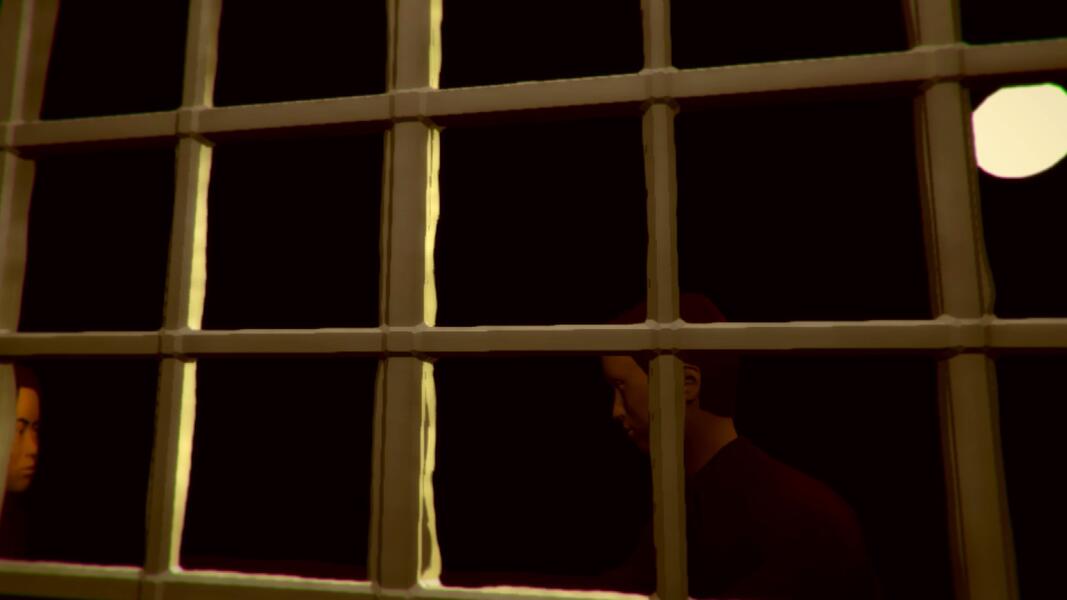
    The player eavesdrops on a conversation.

  • 1,000 Heads Among the Trees screenshot 02
    1,000 Heads Among the Trees screenshot 02

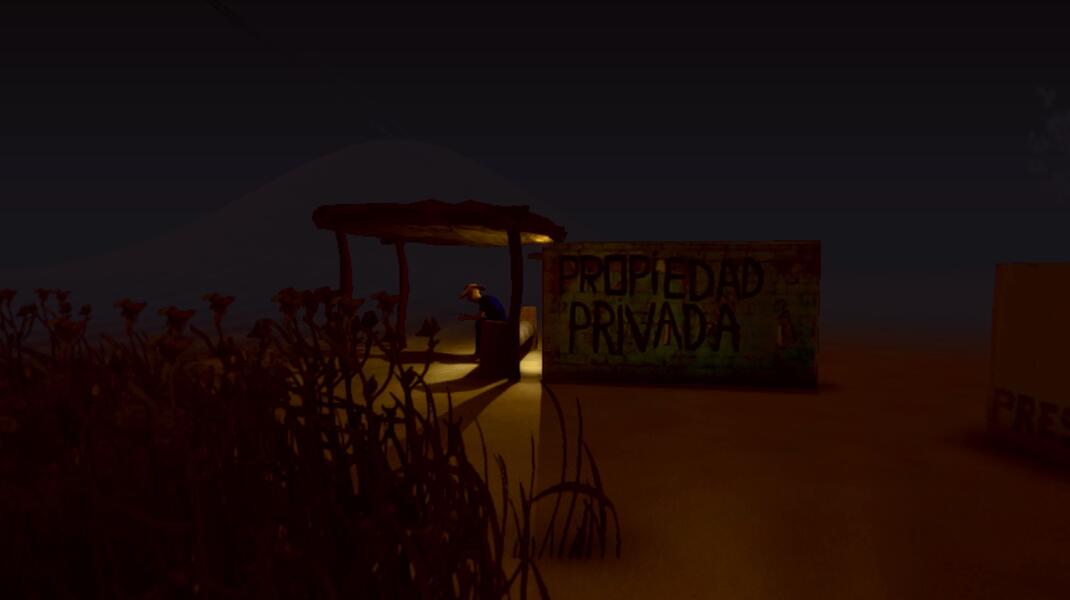
    Exploring the town and observing inhabitants.

  • 1,000 Heads Among the Trees screenshot 03
    1,000 Heads Among the Trees screenshot 03

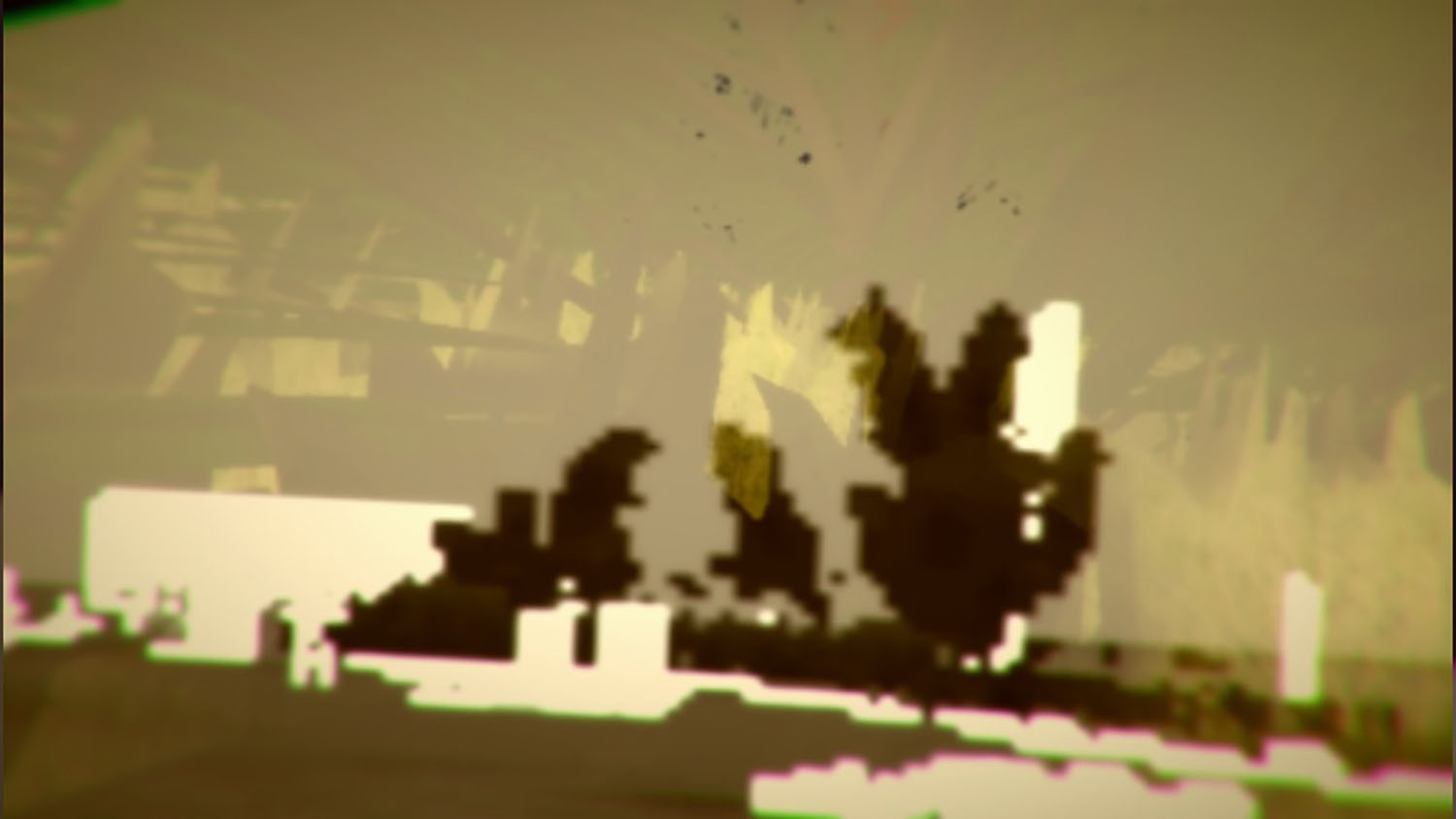
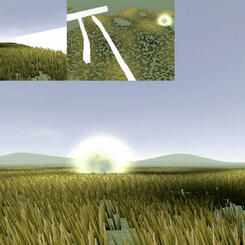
    Using a flashlight to reveal hidden shapes and beings.

  • 1,000 Heads Among the Trees screenshot 04
    1,000 Heads Among the Trees screenshot 04

    Layering a view of another area of the world on top of the current world (out of body experience).

  • 1,000 Heads Among the Trees screenshot 05
    1,000 Heads Among the Trees screenshot 05

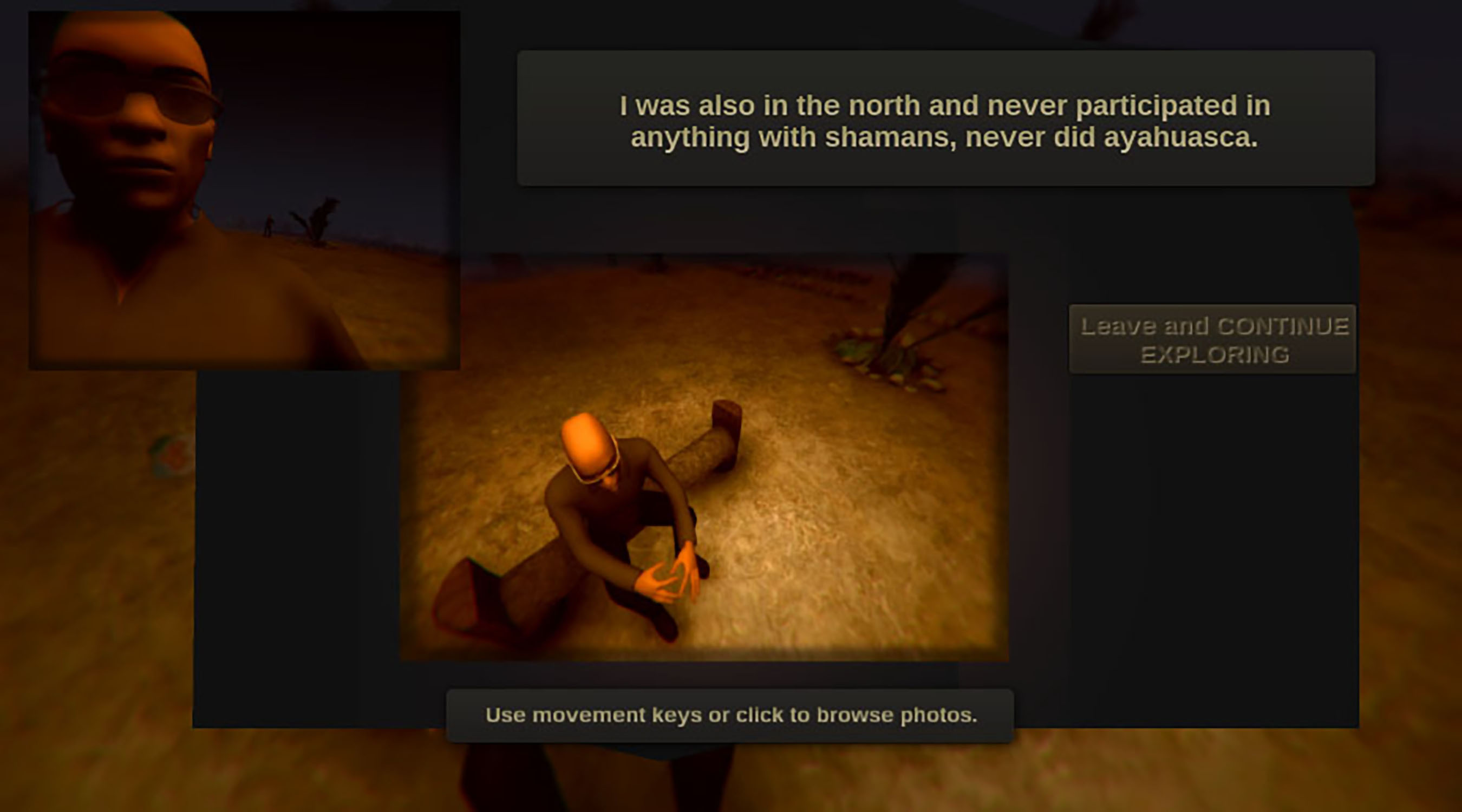
    Sharing photos with non-playable characters and reading their comments. Photos the player takes are given metadata based on objects or people within the sites of the camera. Characters might comment on these objects.

  • 1,000 Heads Among the Trees screenshot 06
    1,000 Heads Among the Trees screenshot 06

    A view of the character who represents Don Miguel Angel, the brujo I interviewed.

  • 1,000 Heads Among the Trees video documentation
  • An example of a 3D model in the game based on a photograph from the site
    An example of a 3D model in the game based on a photograph from the site

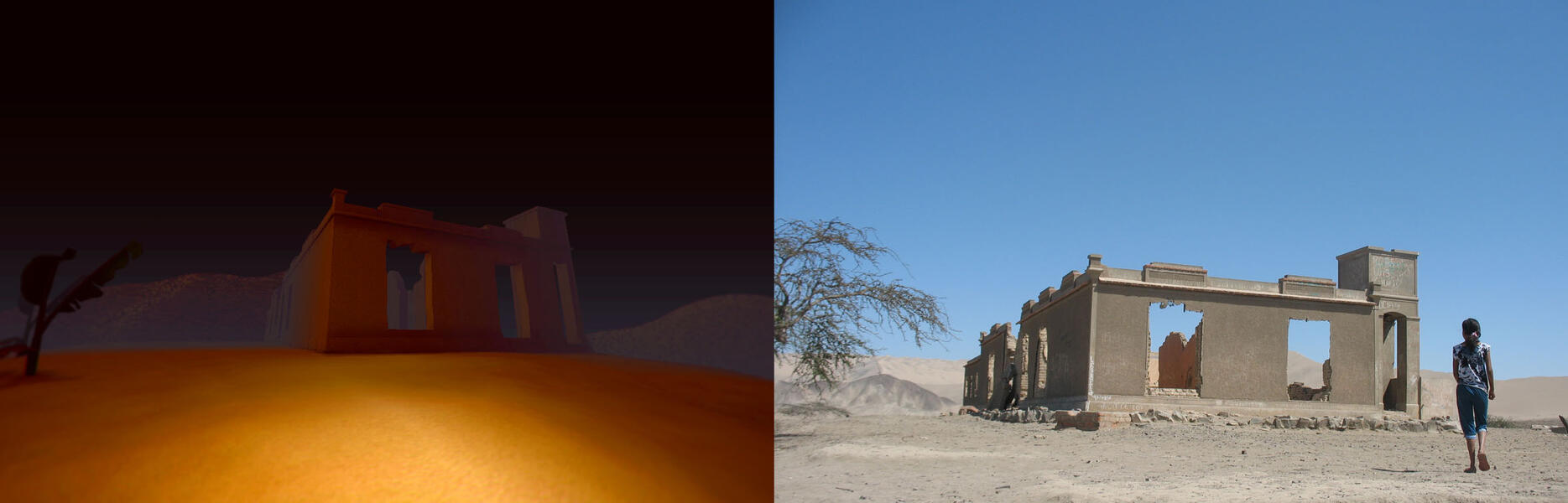
    This is a photo of a ruin on a hill that I modeled for the game.

  • Photo references
    Photo references

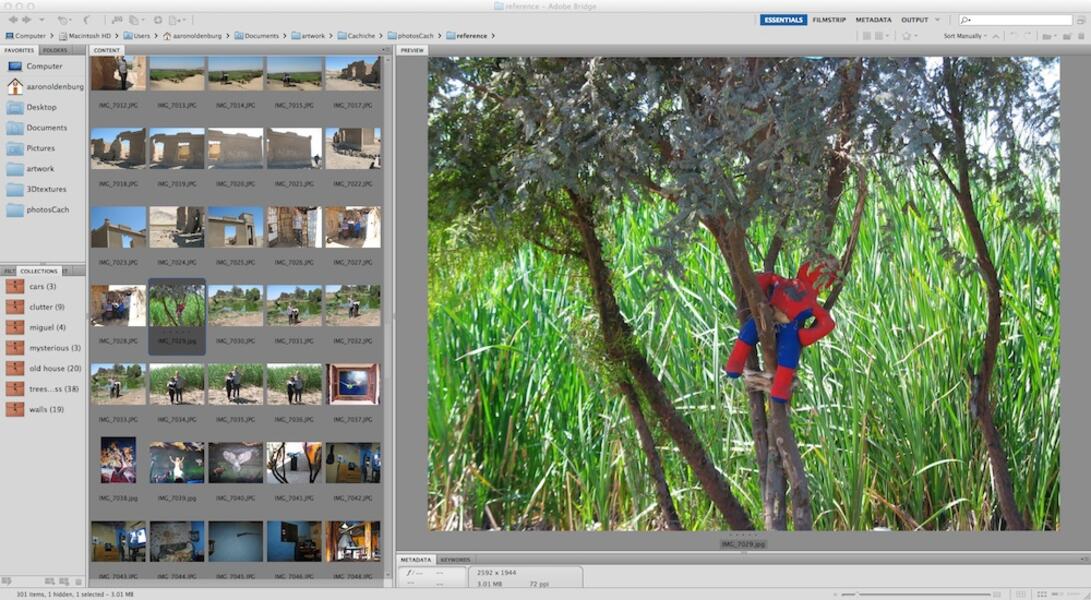
    Here is some of the library of original photo references I used to develop the space.

  • Don Miguel Angel
    Don Miguel Angel

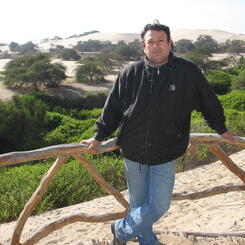
    An image of Don Miguel Angel taken in front of his retreat house. This was a source image for his character in the game.
Pieces of Jonestown and Towa Towa

video, 2010, and videogame, 2013

The video is of the empty field in Guyana that used to be Jonestown, where the Peoples Temple massacre occurred in 1978, as well as the surrounding towns and villages. The audio is composed of selections from interviews conducted nearby with local residents Wilfred Jupiter and Carlton Daniels in June, 2010.

---

I have had an obsession with physical, but often seemingly empty spaces with powerful histories. On an earlier visit to the Branch Davidian compound outside of Waco, Texas, I wondered how I could convey its essence now, the life and ghosts I felt there. They are feelings particular to historical places without official landmarks or agreed-upon ways of visiting and looking at them. I had an early interest in the multiple contradictory facets of the Peoples Temple story, the noble purpose of Jonestown eclipsed by the insanity of its end. As I am also fascinated by the blending of Western and traditional culture in parts of the developing world, it made sense to focus my research on the stories of Guyanese people who are actively participating in the living history of the place.

My project was to involve visiting the small towns around Jonestown, Guyana, and to interview residents about their memories of the community and how it affected their lives. The focus is on how the tragedy became a part of its surrounding environment, both culturally, through stories, and materially, through objects from Jonestown that were appropriated throughout the area. It is also a portrait of Peoples Temple from the perspective of their Guyanese neighbors. We know that they sold their crafts at local markets and competed in basketball tournaments in Georgetown. We rarely hear, though, the accounts of outsiders who were most geographically close.

---

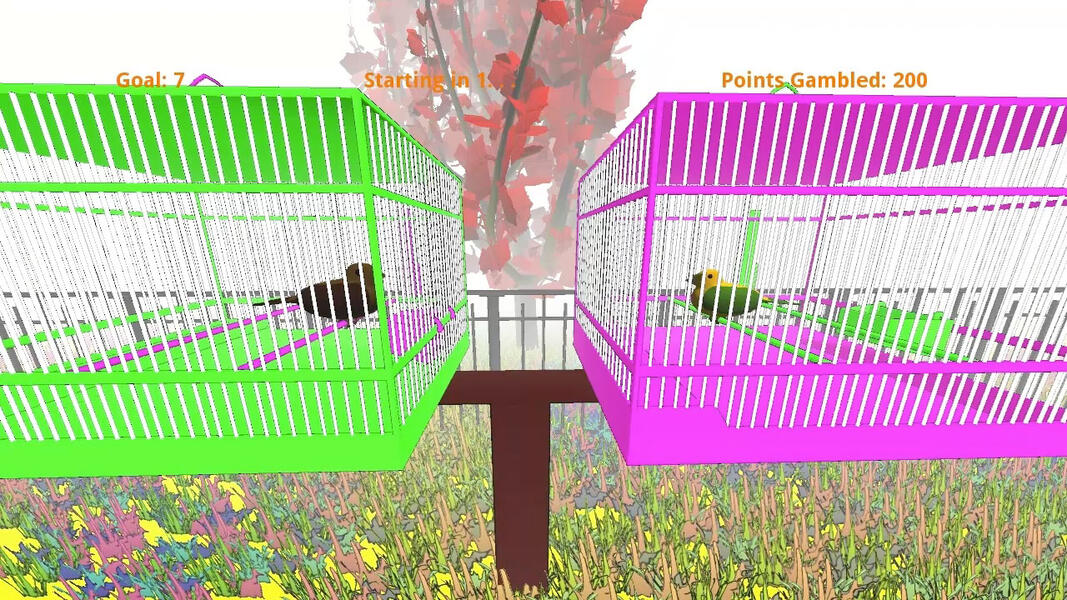
The process of creating this video led to my interest in creating documentary videogames. This began with a short work where I traveled to the Guyanese neighborhood of Queens to visit the bird racing community. This resulted in the game Towa Towa, where the player's task is to judge a race between two finches, the race being which bird arrives at a given number of tweets first.

  • Pieces of Jonestown still
    Pieces of Jonestown still
    Pieces of Jonestown still
  • Pieces of Jonestown still
    Pieces of Jonestown still
    Pieces of Jonestown still
  • Pieces of Jonestown
    Pieces of Jonestown
  • Towa Towa
    Towa Towa

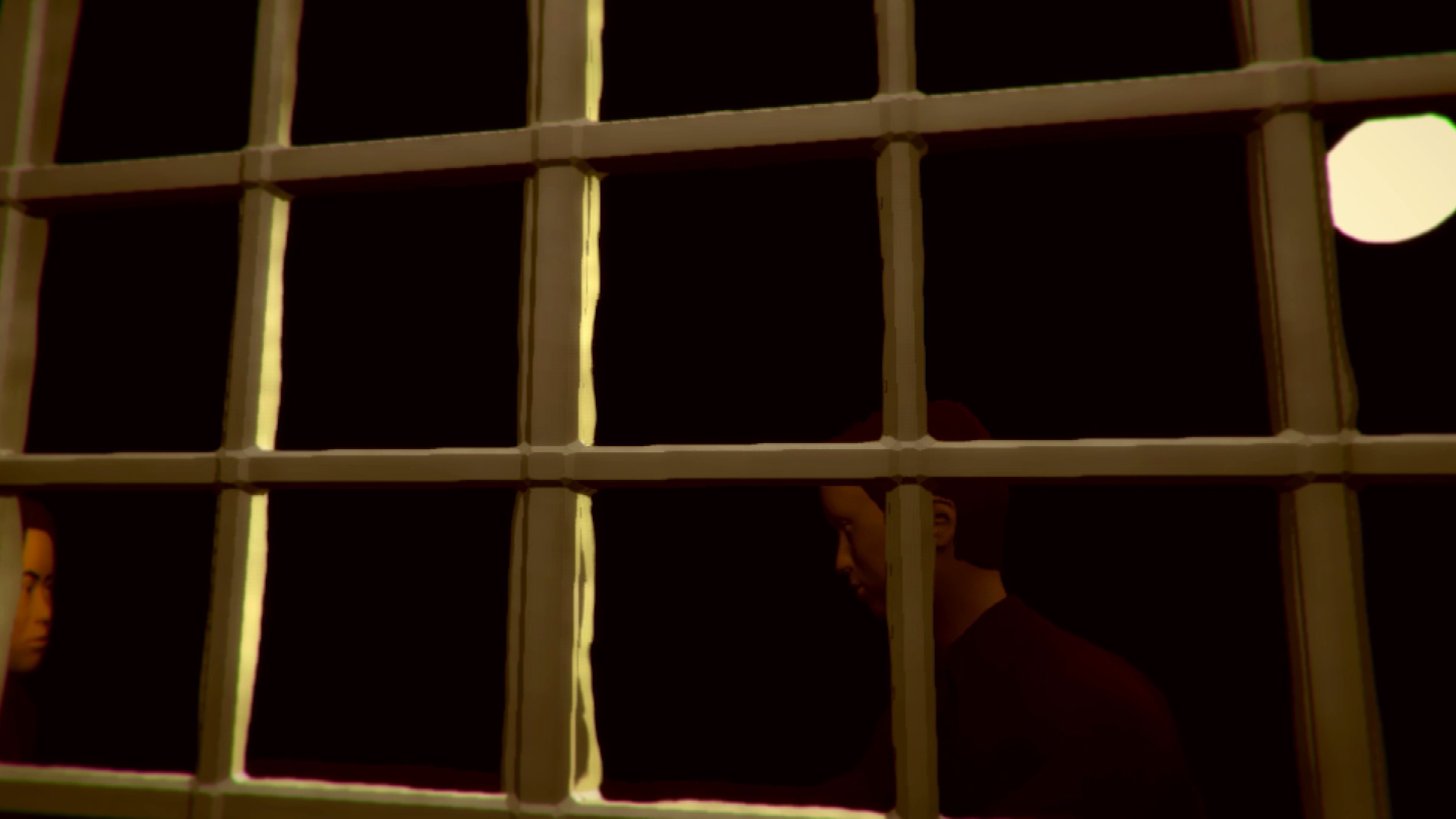
    A view of the two cages from the player's perspective. They hear tweets in their left and right ears and must keep track of the number in each.
After

videogame, 2010

This is a videogame about finding and then placing a loved one in the afterlife. The goal is to simulate an agnostic encounter with one's own belief system when dealing with death. The game begins with the death of a partner, and after, the player encounters obstacles in their life that can be overcome only by incorporating the imagined presence of their departed lover into their life.

Created in 2010 with Unity and MakeHuman. I 3D-modeled and textured the scenes and coded the interactions. Audio hum is my voice.

After has been featured in the net.works exhibition as part of Vector Game + Art Convergence in Toronto, in FILE RIO 2012 and FILE Media Art 2011 in Brasil, SIGHT.SOUND [INTERACTION] 6 in the Rosenberg Gallery at MICA, Baltimore, MD, as well as the D-Art2011 Online Gallery of Digital Art, part of the 15th International Information Visualisation Conference in London. It has also been written about in the book Playing with Religion in Digital Games.


Download here: https://aaronoldenburg.itch.io/after
 

  • After screenshot
    After screenshot

    Shot while the player is carrying the other character, before death.

  • After screenshot
    After screenshot

    An interior of the room. The other character is dying.

  • After screenshot
    After screenshot

    Wandering outside of the outside of the home, after the death.

  • After screenshot
    After screenshot

    Placing the image of the other character in the bed.

  • After screenshot
    After screenshot

    Wandering outside. Images of the other character have been released into the sky. The camera-captures in the top of the screen reflect the point of view of where the character landed.

  • After video documentation
    After video documentation

Flock of Suns (current work in progress)

One player inhabits a game on a flat screen, exploring a top-down forested world, carrying an axe. There are remnants of previous players as well as hints of a player in another world that poke through.

Another player inhabits a game in a VR device. The world is different than the one the other player is experiencing. However, the two are playing in the same room, and through their conversation begin to notice ways in which the worlds bleed through into one another, and how each player's actions may affect the other's reality.

 ---

Flock of Suns is a multiplayer game where players work to understand their relationship to one another. One is playing a top-down 2D game on a flat screen. The other is on a virtual reality (VR) headset. As they talk to one another in the shared space of the gallery, they begin to realize how their actions are affecting the other player.

The player on the flat screen is wandering a forested space with a mysterious black hole. They sometimes find unique objects in the world and drop them into this hole as offerings. These offerings change the world the VR player experiences.

The flat player may be caring for the VR player as a human baby, non-human entity, or an unusually vulnerable deity. Too much care can impede the progress of the VR player, however, and frustrate their chances of escape.

---

This is a playable work-in-progress. All described aspects are functional.

The world the players inhabit and some of the changes they make persist on a server, as do the remnants of previous play sessions. There is a daemon running on the server, making changes to the database of activity, and its actions manifest through the actions of a being in the VR space.

Previous players in the flat session show up in the last place they inhabited. After a while, the daemon turns them into trees. Future players may cut down these trees.

Often, players do not understand the full ramifications of their connected actions until they have switched roles. One play-tester said it provoked "profound thoughts about perspective-taking".  
 

The project has been through its first round of playtesting. It has an estimated release of late 2026 / early 2027.

  • Flock of Suns VR-player screenshot
    Flock of Suns VR-player screenshot

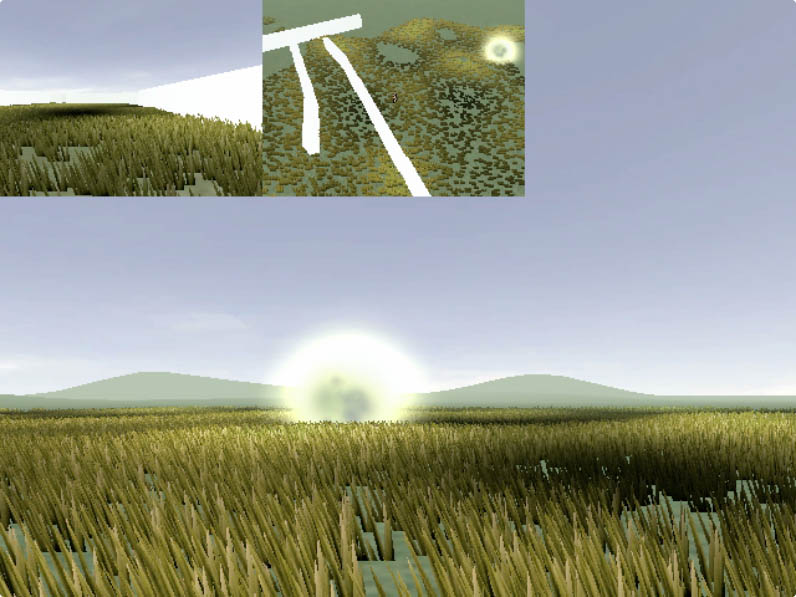
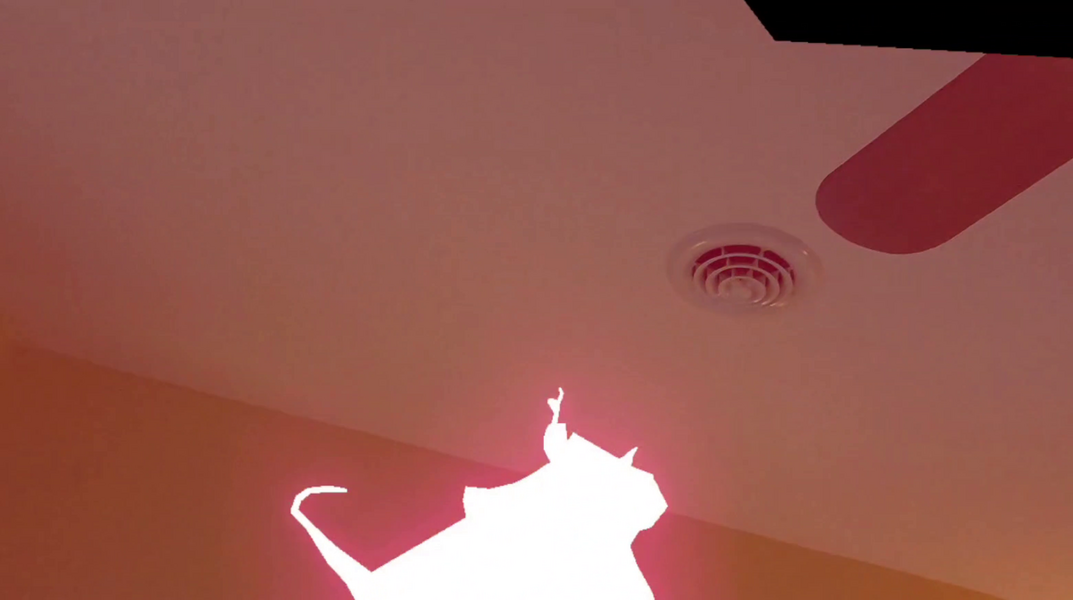
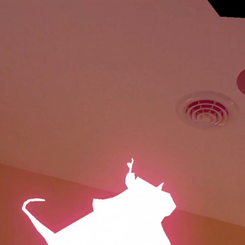
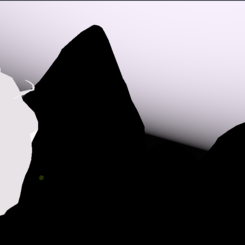
    An image from the POV of the VR player. A being they encounter is toward the bottom of the screen. They are viewing the scene in pass-through mode, and the real world is showing through (through the VR device's cameras). This is a moment of escape.

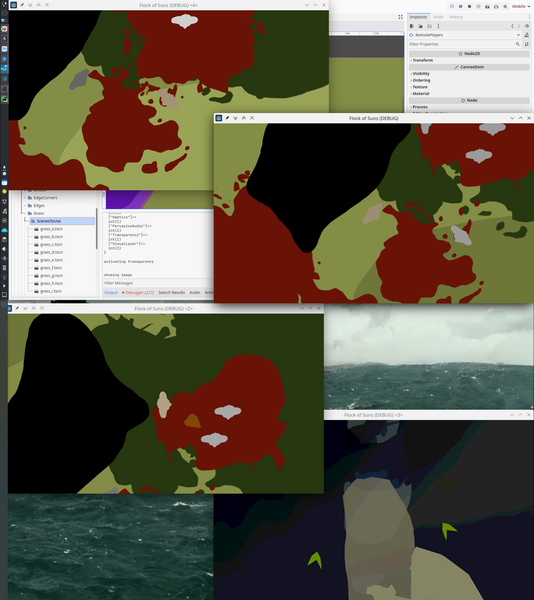
  • Several windows showing 2D/flat player world
    Several windows showing 2D/flat player world

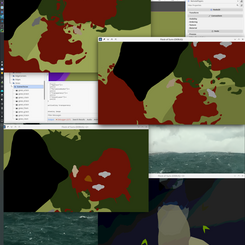
    These are some example windows of the flat player's view. Each player encounters instances of the other. Players who leave the game are eventually turned into trees (by an entity that inhabits the server space), which bleed when cut down.

  • Flock of Suns VR-player view example video

    This shows a brief look at one of the views of the VR player. There are several varying modes and environments.

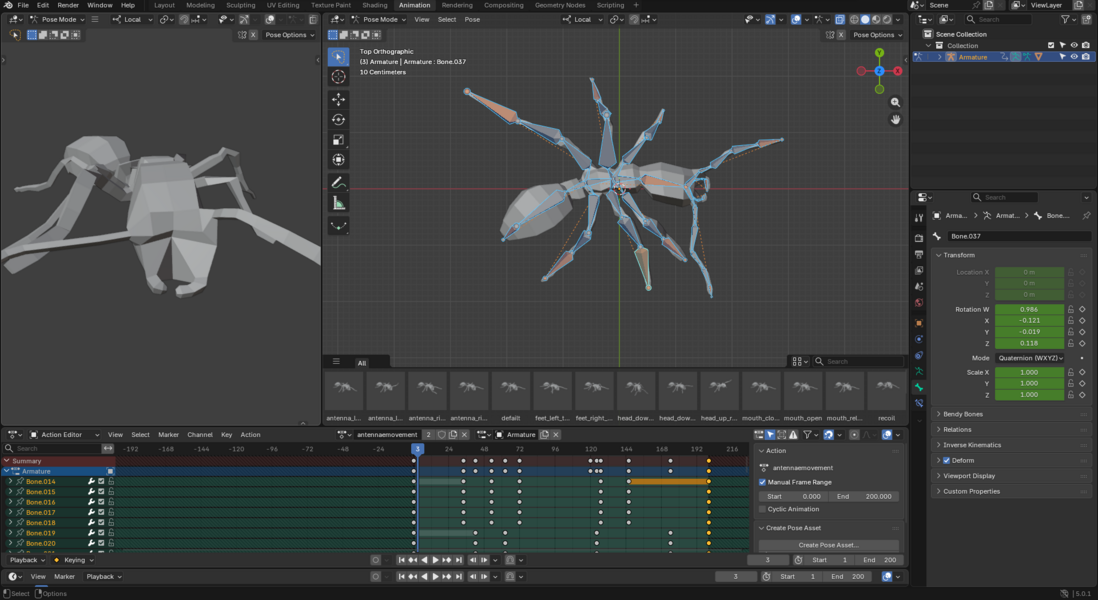
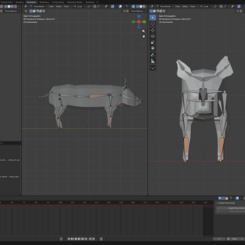
  • Modeling of being for VR player
    Modeling of being for VR player

    The VR player experiences several different perceptual variations made of changes to environment, visual filters, audio, and beings that are present in the environment and reacting to the player. This is the making of one example.

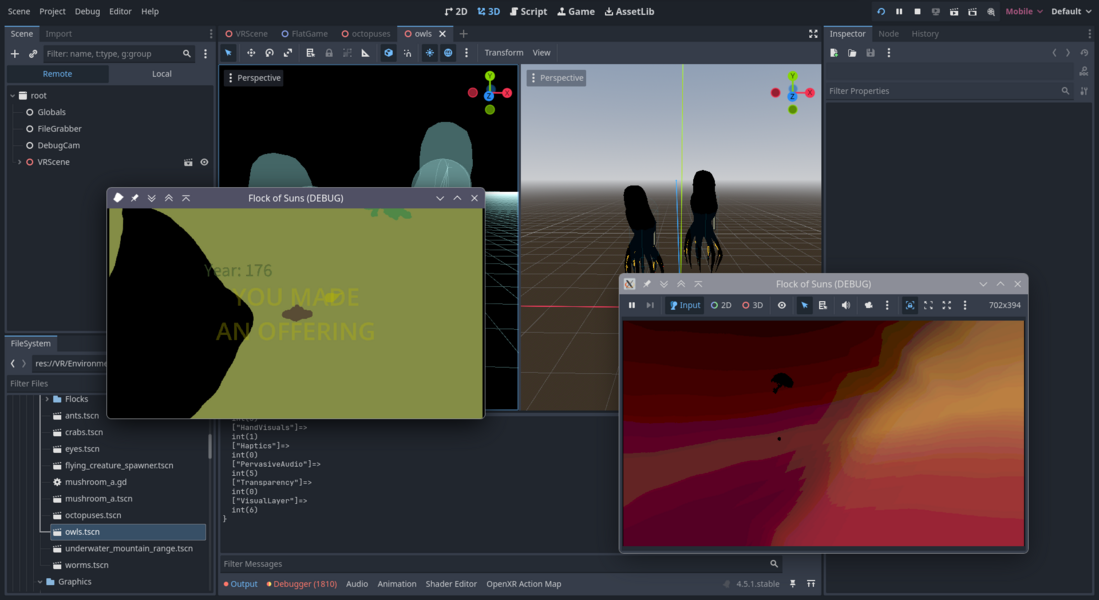
  • Work inside game engine
    Work inside game engine

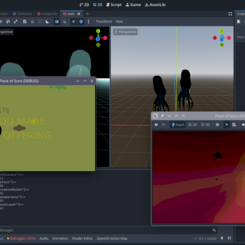
    Screenshot of a view inside the Godot game engine with two windows of gameplay running, one flat and one emulating the VR version.

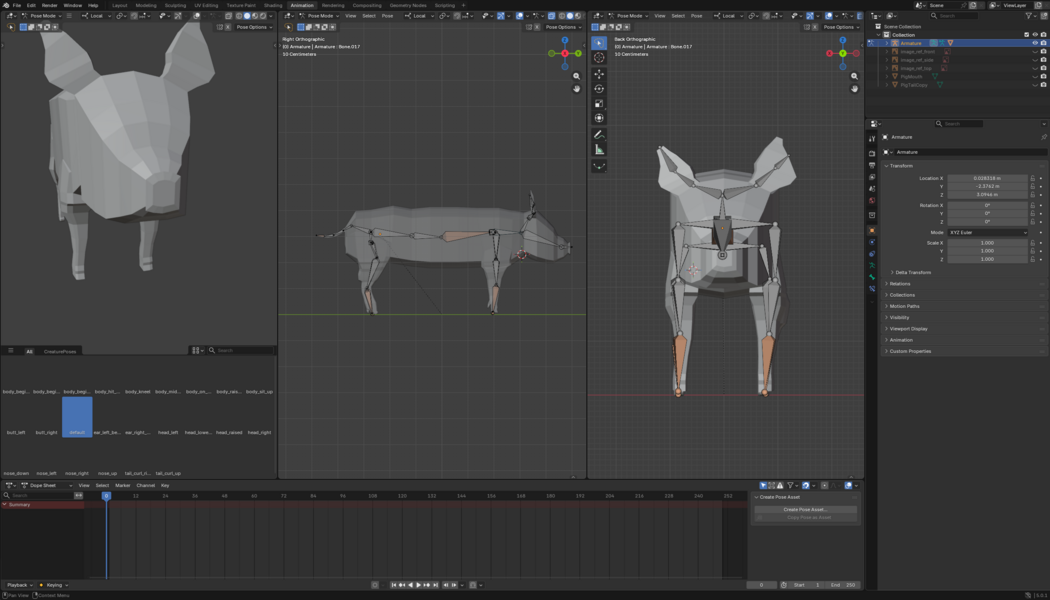
  • 3D modeling
    3D modeling

    Another being within the game.

  • Flock of Suns VR-player screenshot
    Flock of Suns VR-player screenshot

    A view of one of the perceptual variations. The entity to the left represents the actions of the server daemon via animations.

  • Flock of Suns VR-player screenshot
    Flock of Suns VR-player screenshot

    Some of the perceptual variations the VR player experiences destabilize their sense of space.

  • VR view sample

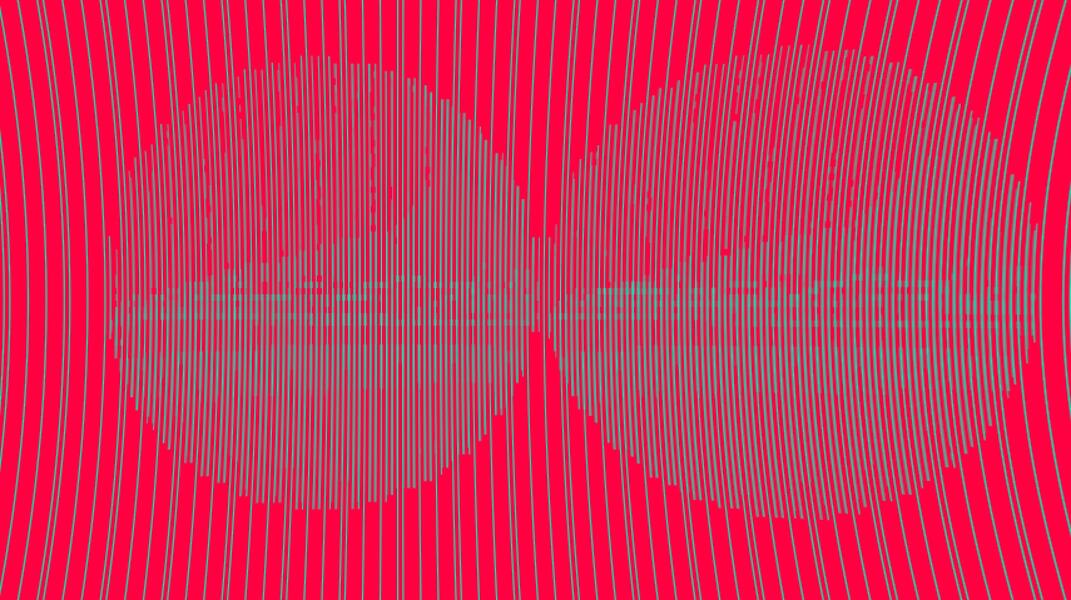
    I have been doing experiments with making certain elements visual in the left vs the right eye in VR. On the pulsing object, the red area is seen by one eye, the outer area seen by the other. The music is a combination of a loop with random spatialized audio interjected, all my own recorded music. 

    This is a view a player might have if they chose to focus on this particular object.