Work samples
-
Lilies with Scissors
This is an animated version of a painting found in the "Plasti-verse" project but also belongs to "Animated Paintings," a project that explores the differences between still photography and videos. The latter project examines how animation shapes meaning and viewer experience.
-
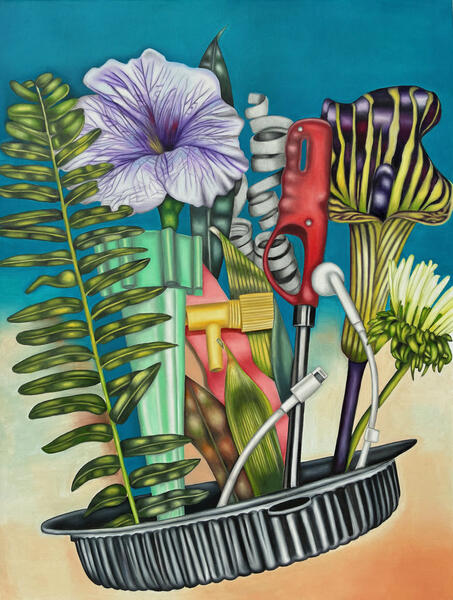 Jack-in-the Pulpit
Jack-in-the-Pulpit and an assortment of plants and faux flora hang together on a plastic, take-out tray. Oil on canvas, 36x48
-
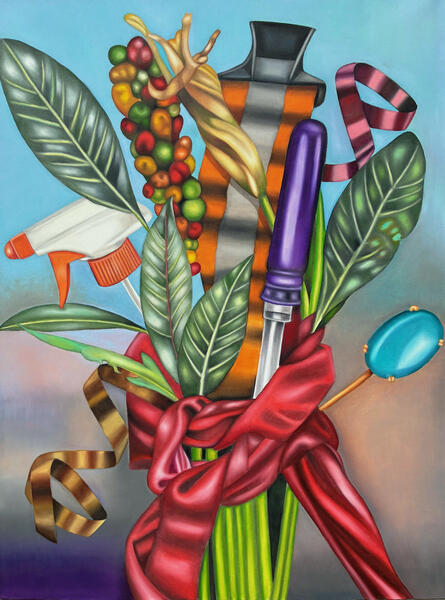 Plastic Purple Thing
When grouped together in a random assortment, some items diminish in significance, while others outshine their neighbors. What one finds in the woodlands evokes a wide range of emotions. Oil on canvas, 36x48
-
Three Buttons


About Cindy

Cindy's art--maximal and eclectic--reflects her experiences as a world traveler and her time spent living and exhibiting in such places as Spain, France, Japan, Morocco, Colombia, and Burkina Faso. This exposure to other countries and cultures has led her to embrace diversity and universal connectivity--two prevalent themes in her art. She has a BFA from VCU, an MA from Millersville University, and has won numerous awards throughout her long career.
.… more
Plasti-Verse
-
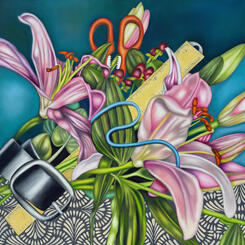
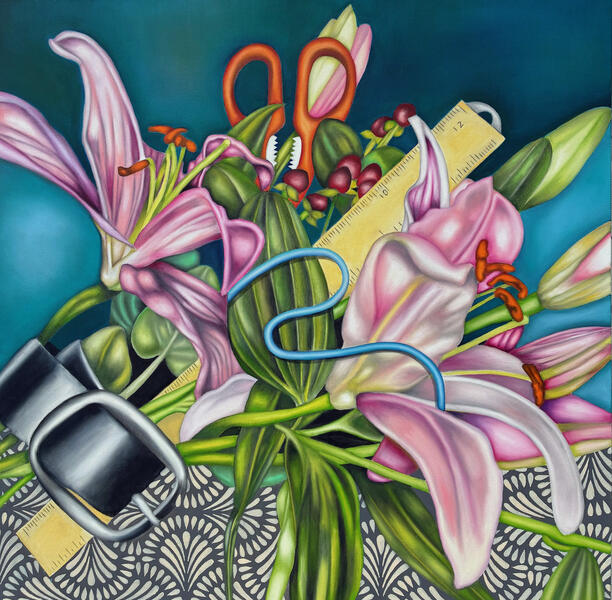 Lilies with Scissors
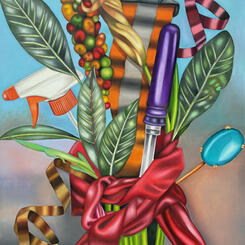
Lilies, scissors, and a ruler, held together by a belt, rest on a tablecloth--an unlikely bouquet. Objects associated with measurement, cutting, and restraint are juxtaposed with elements of spontaneous growth, thus heightening the divide between what nurtures and what controls. Oil on canvas, 36x36
-
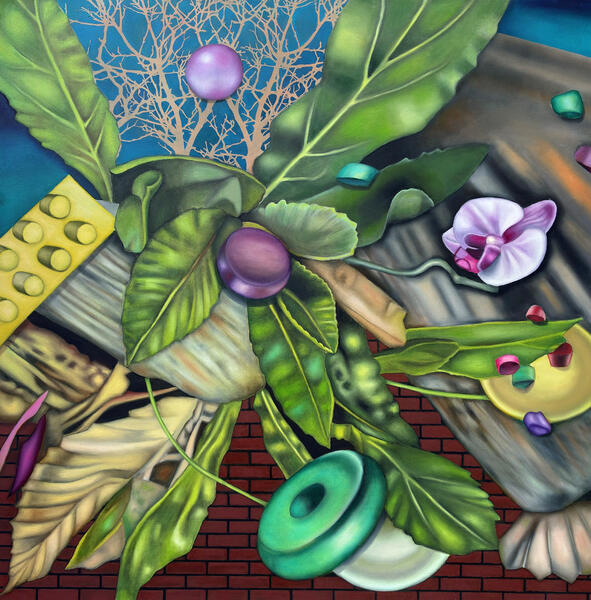 Bynum Run
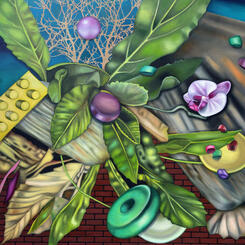
Bynum Run leaves behind an abundance of colorful plastic as it meanders through the valley and empties into the Chesapeake Bay. Not all plastic gets deposited on the shore; some goes on to feed the fish and other aquatic animals. In this painting an orchid emerges from a woodland floor strewn with plastic debris. This flower, often associated with fragility and cultivated beauty, becomes an anomaly within a landscape altered by human presence. Oil on canvas, 36x36
-
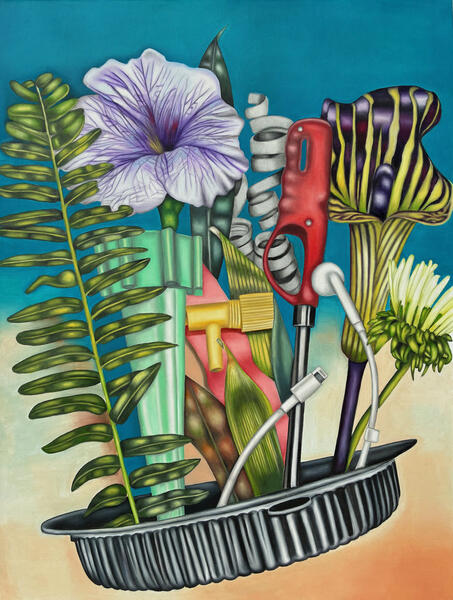 Jack-in-the-Pulpit
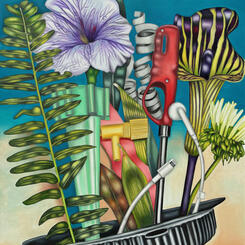
A Jack-in-the-Pulpit and an assortment of plants and faux flora hang together precariously on a plastic, take-out tray. The tray--an object designed for transport and disposal--becomes a temporary platform for organic and synthetic materials whose ultimate destination will underscore key differences in biodegradation. Oil on canvas, 36x48
-
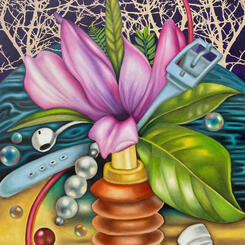
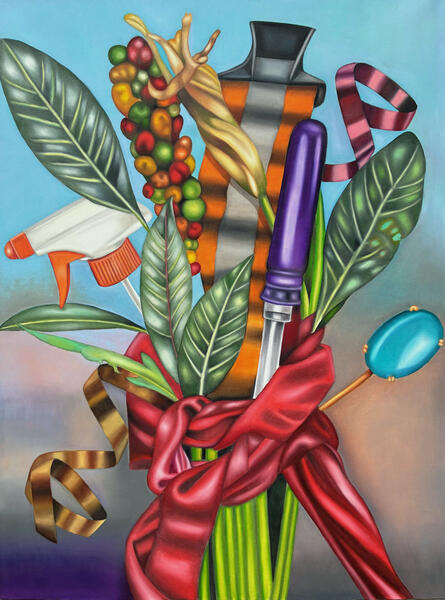 Plastic Purple Thing
Pictured here is an unlikely bouquet. This random grouping demonstrates how certain juxtapositions cause some items to fade in significance, others to elicit disgust, and still others to outshine their neighbors. In this painting all struggle to coexist as synthetic strips cinch tightly around them, evoking the act of strangulation. A single seedpod trapped at the center of this constriction faces a future of compromised growth. Oil on canvas, 36x48
-
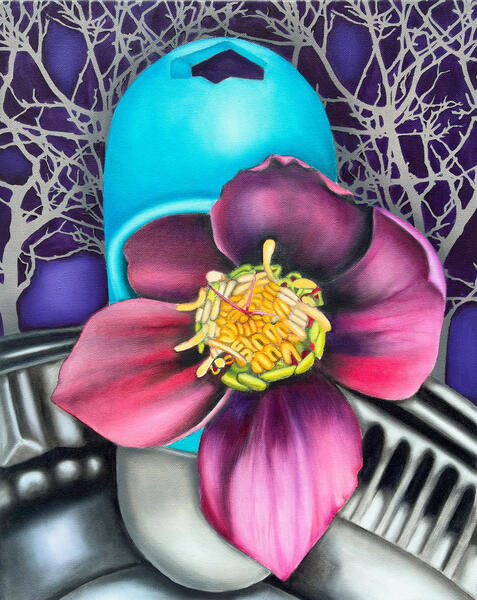 Blue Plastic Thing
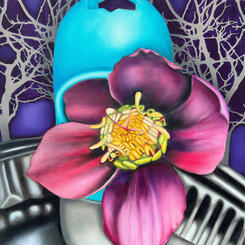
A forest in the background frames a scene in which a hellebore emerges from a cylindrical plastic container resting on a disposable plastic tray. An ominous, surreal mood prevails as the hellebore, a winter bloom often associated with hardiness and endurance, seems about to be devoured by its recipient. Oil on canvas, 16x20
-
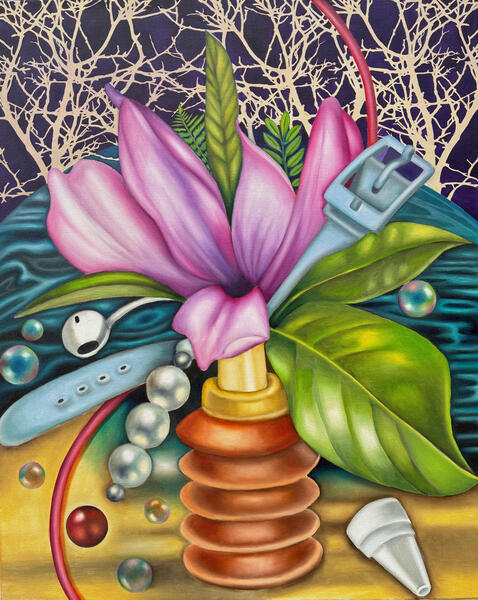 Orange Plastic Thing
A lily rests precariously in an orange, plastic vessel while scattered beads and earbud cords loop and drift without clear purpose. The lily, a symbol of purity, becomes defiled amidst this tangle of detritus, but its dominance in the foreground, along with the water and forest in the background, suggests continuity. Oil on canvas, 24x30
-
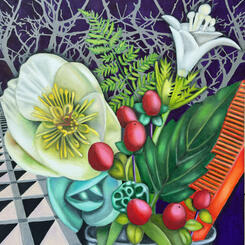
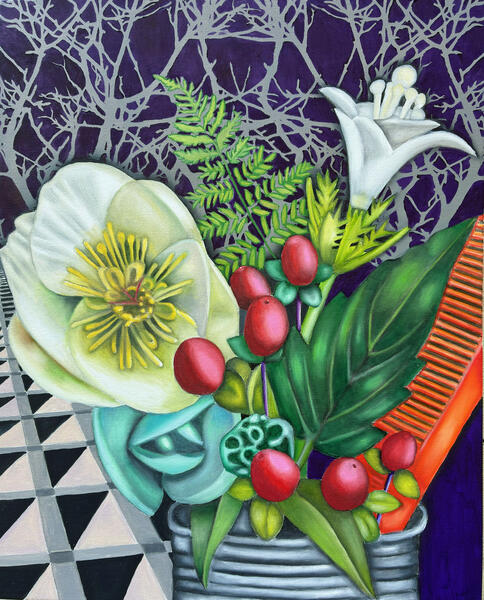 Canned Goods
Nestled in a tin can, random objects are clustered together, both real and artificial, their identities difficult to separate. A real lily is paired with an artificial one, a fake fern overshadows a real leaf. Manmade patterned tiling recedes toward a distant forest, linking the constructed environment with the organic world beyond. The comb suggests the act of searching the data more carefully. Oil on canvas, 16x20
-
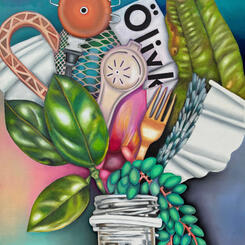
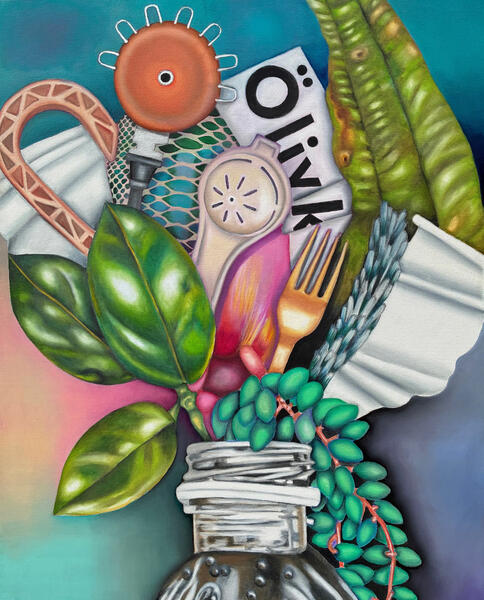 Yellow Fork
A common visitor to outdoor arenas--the plastic water bottle--serves a second-hand purpose as a repository for plants and plastics. The bottle appears to erupt with an accumulation of living and non-living items that feel at once generative and unstable. This jumbled assemblage emanates a feeling of chaos or uncertainty. Oil on canvas, 24x30
-
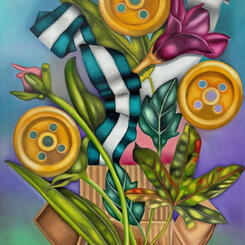
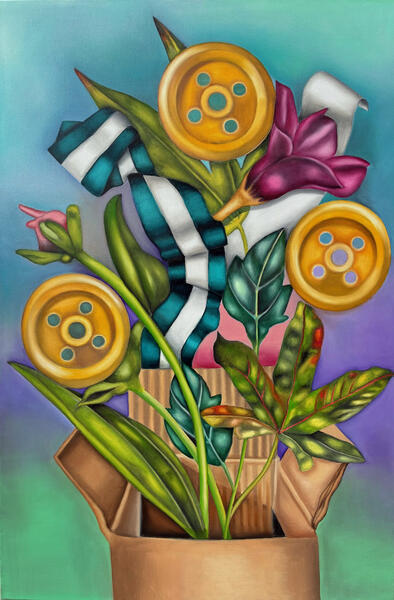 3 Buttons
3 Yellow Buttons--an aberration of the holy trinity or a playful take on the sunflower theme? A vibrant red flower blooms--not as a triumphant resolution, but as an insistence on continuation despite environmental anomalies. Oil on canvas, 24x30
-
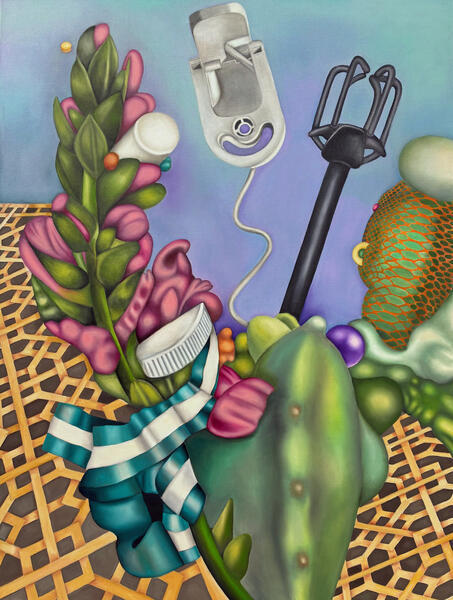 Tea Bag Tongs
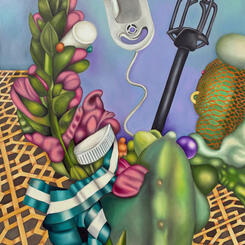
Upon research, one UPO (unidentified plastic object), turned out to be tea bag tongs--an unconventional choice of subject matter for a painting. The other object swirling out of the cactus remains unidentified. Both are attached to the cactus in unlikely pairings. Random plastic objects scattered in nature create comical associations that underscore their sense of displacement and incompatibility with the environment. Oil, 36x48


Animated Paintings

Rainbows
-
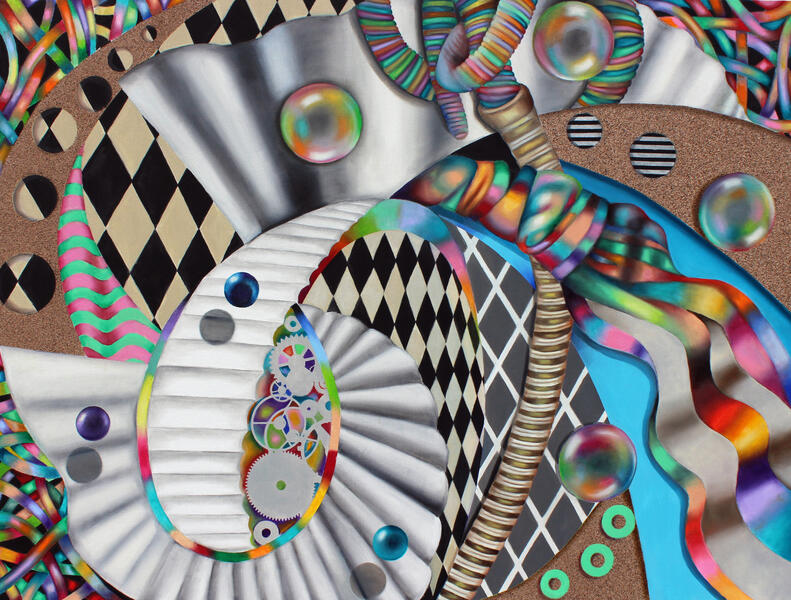 Rainbow Factory
oil, textured spray paint, metallic leaf on canvas, 48x36
In the course of crafting this painting, projecting random images onto the canvas, I conjured up the idea of a rainbow factory. This absurd concept freed me up to move in a new direction and inject a bit of whimsy into my art. I had fun with this painting.
-
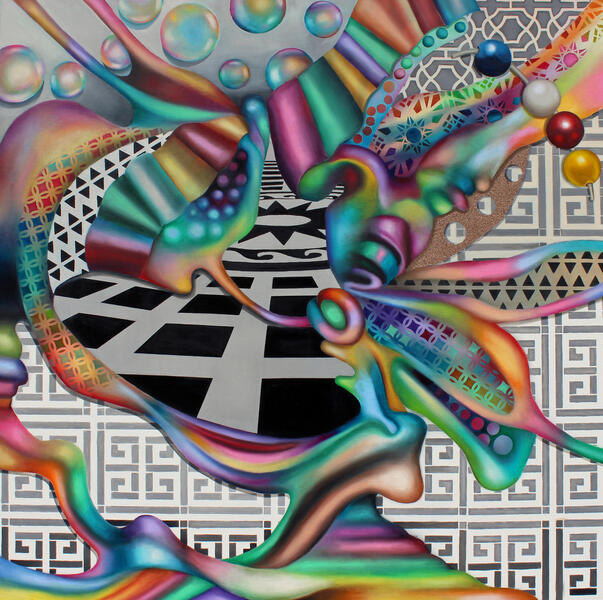 Metamorphosis
oil and enamel spray paint on canvas, 48x48
This painting involves a novel and somewhat laborious technique. I wanted my rainbow shapes to appear spontaneously created, so hand drawing them seemed like a contradictory experience. So first I covered the entire canvas in a multi-colored, turpentine wash, After drying, I used a large jar of rubber cement and quickly poured it over the entire canvas in large, sweeping gestures. I let it dry, sprayed the entire canvas with white primer, peeled off the rubber cement when the paint dried, and revealed the rainbow form underneath. I then went back in and touched up the rainbow, adding the stencil designs and bubbles. I was surprised when I saw a butterfly emerge.
-
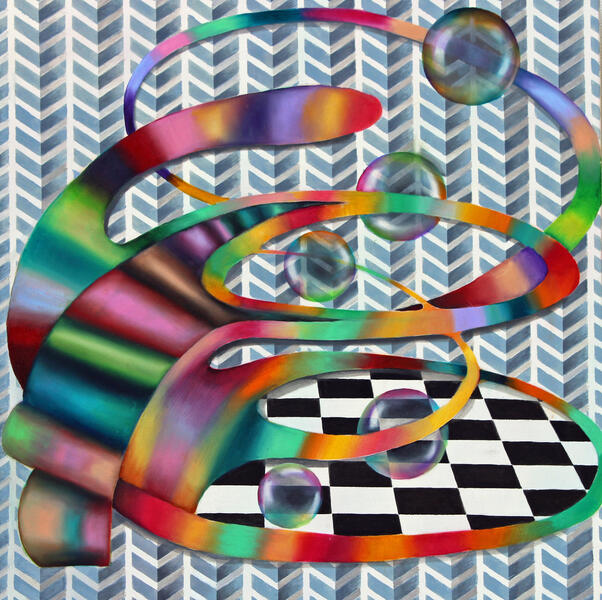 Dancing Bubbles
oil on canvas, 24x24
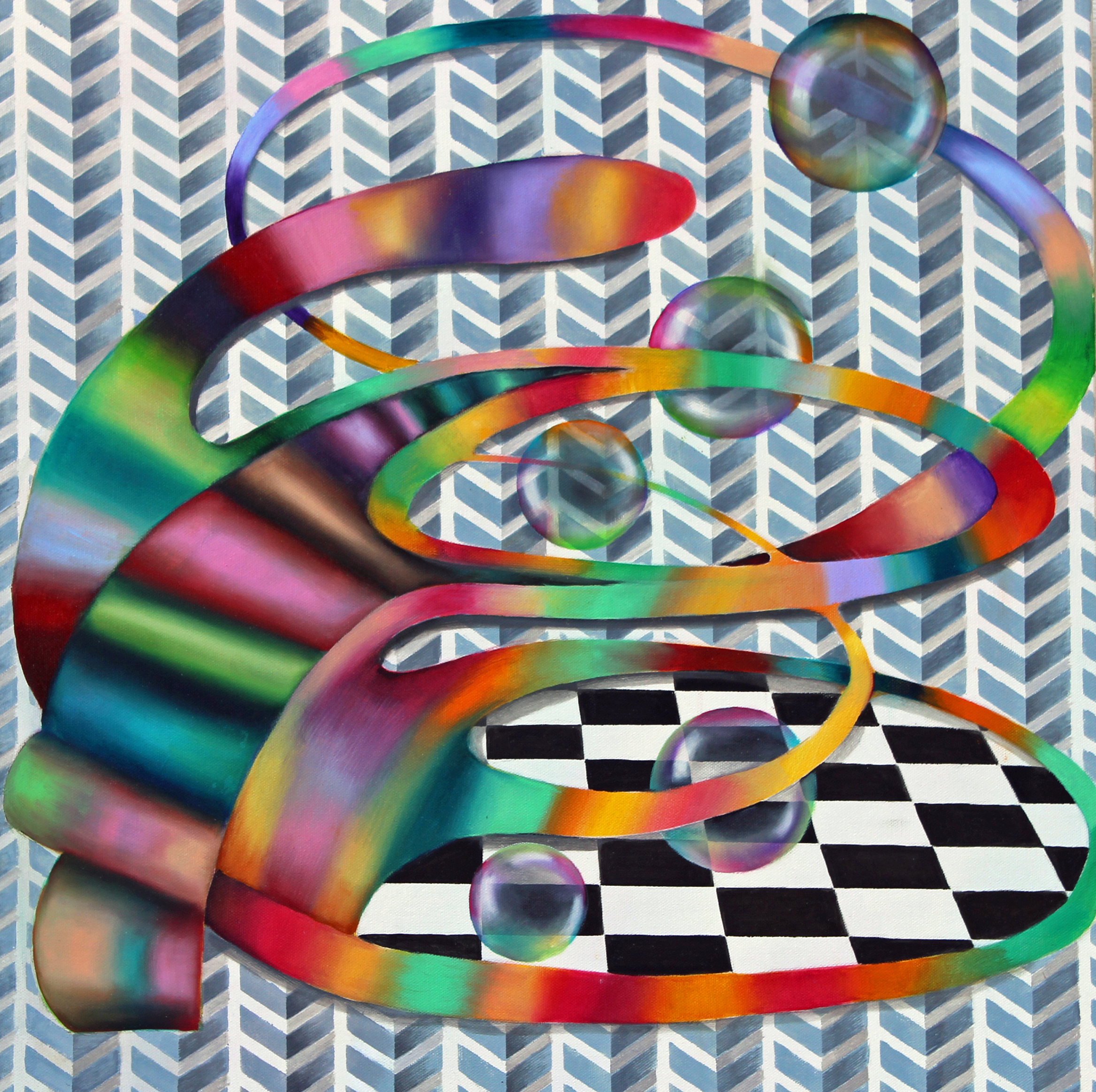
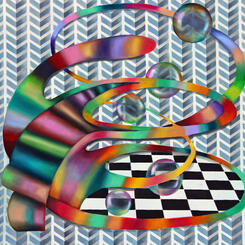
I begin by amplifying the initial abstract forms, allowing them to suggest ideas of their own--for instance, in this painting, a swirling shape evoked movement on a dance floor.
-
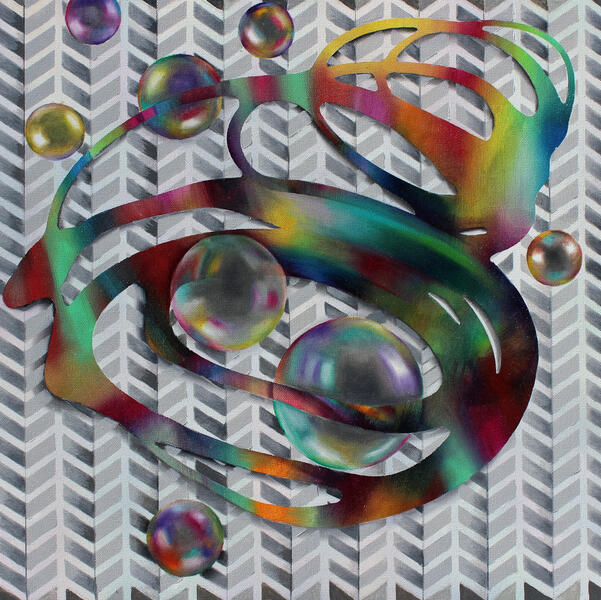 Emerging Rainbow
oil on canvas, 24x24
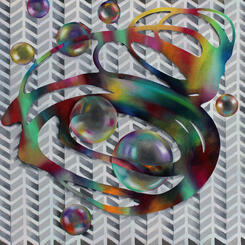
I experimented with different values for the rainbows and decided a more subdued palette was in order for this one.
-
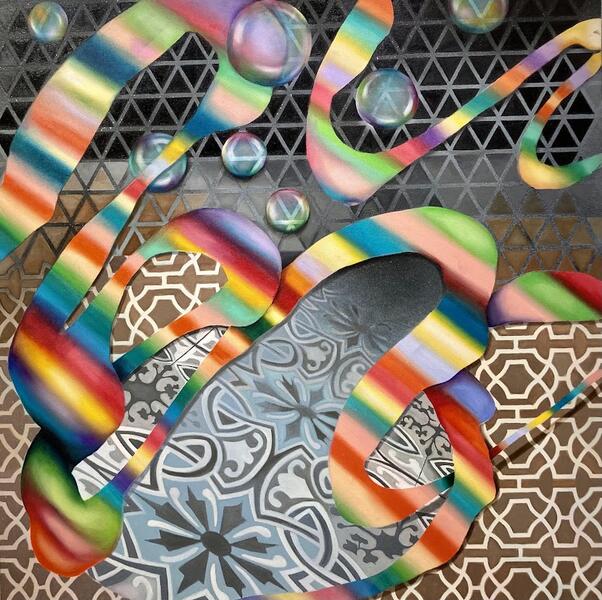 Raining Bubbles
oil and enamel spray paint on canvas, 36x36
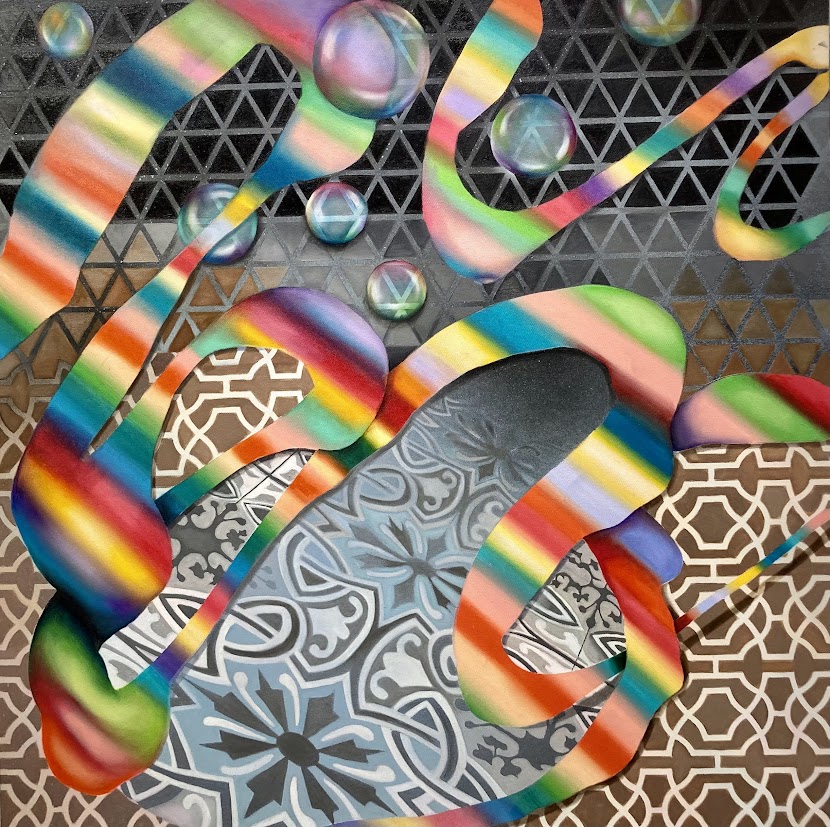
This painting was inspired by a photograph I took of a tile floor in a Vietnamese temple, and I used it to evoke feelings of spirituality in this painting.
-
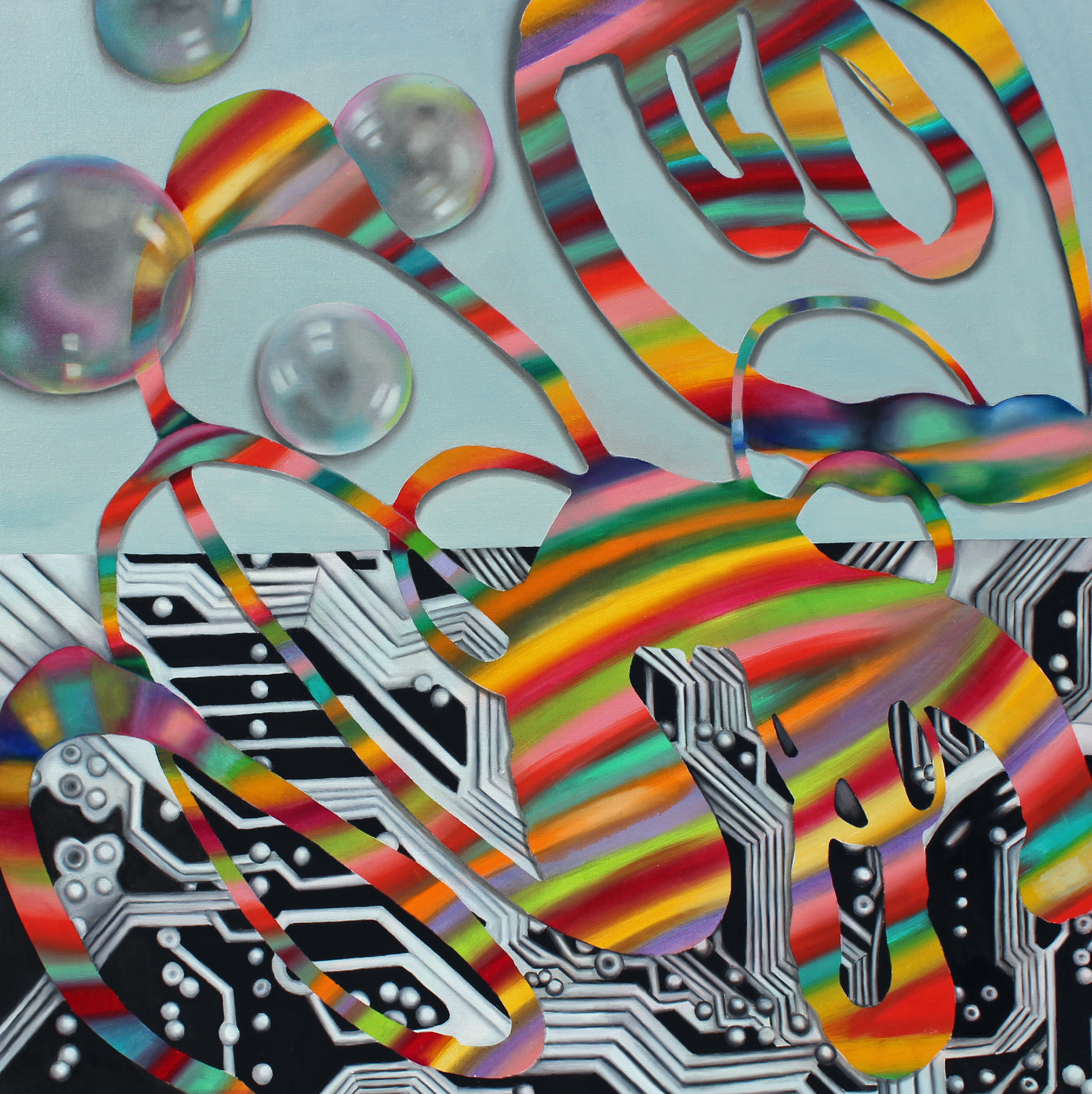
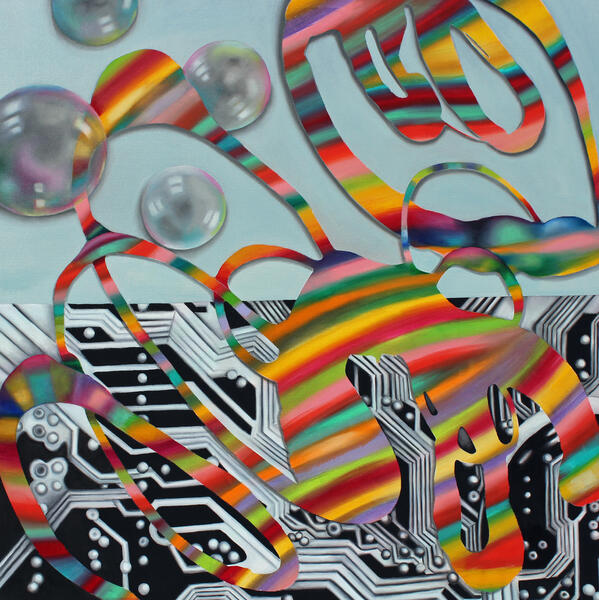 Electric Rainbow
oil, enamel spray paint, on canvas, 36x36
This brightly colored amorphous form emerges from a computer circuit board. I almost called this painting R-AI-NBOW.
-
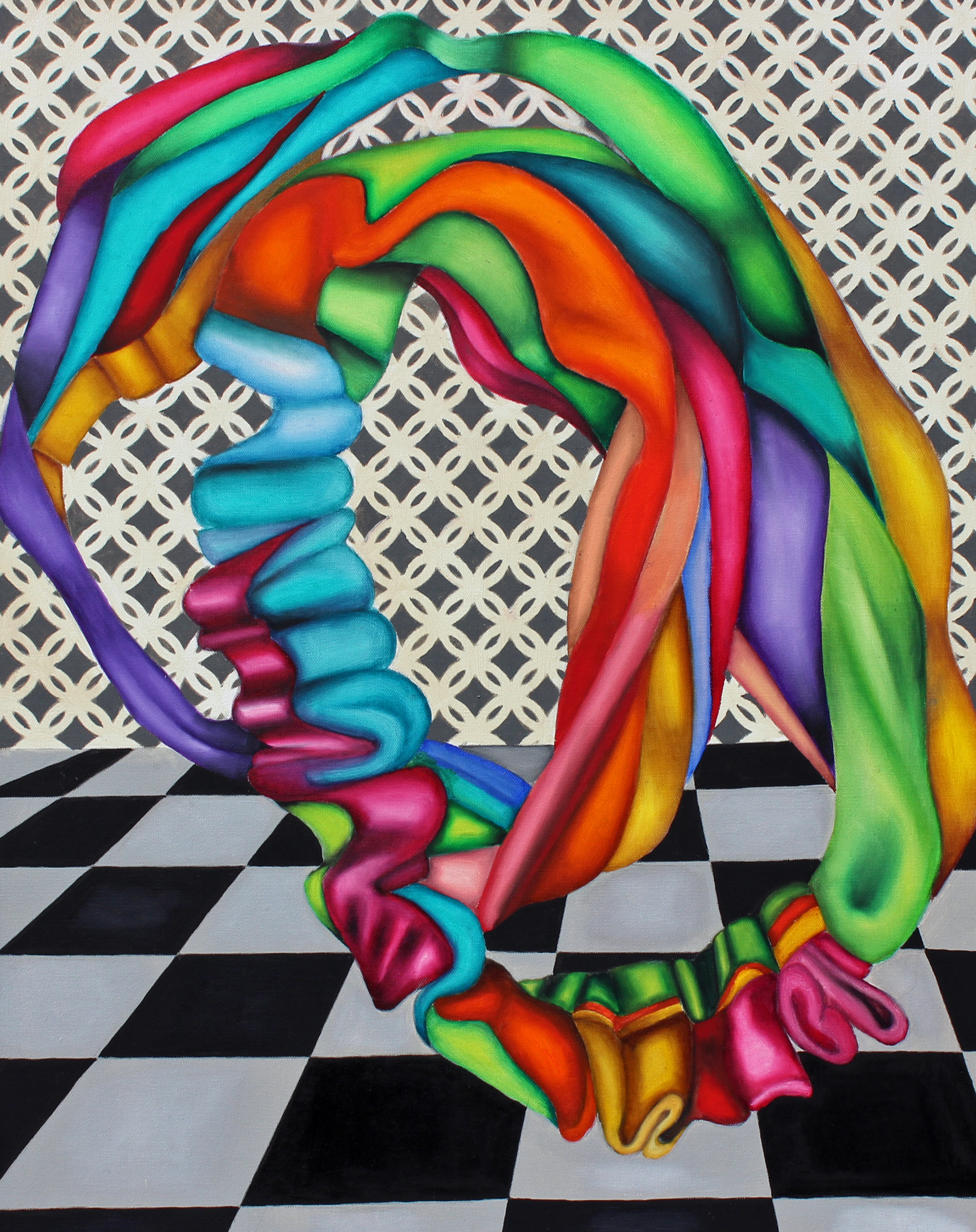
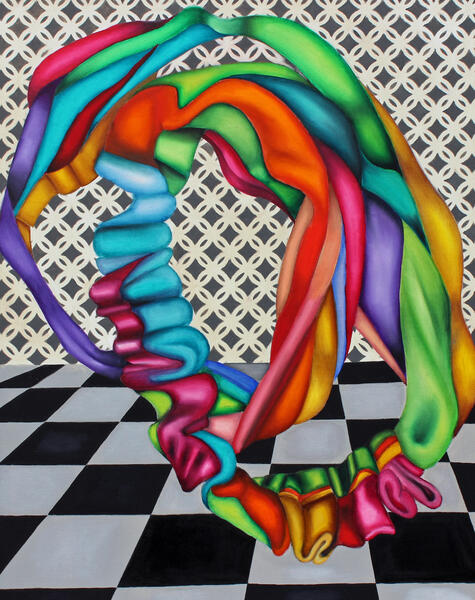 Headband
oil on canvas, 24x30
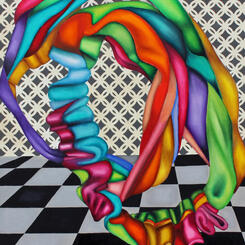
This painting is not the product of the spontaneous process used in other paintings. An actual rainbow-colored headband was the starting point. From there, it became larger than life, floating in an interior space.
-
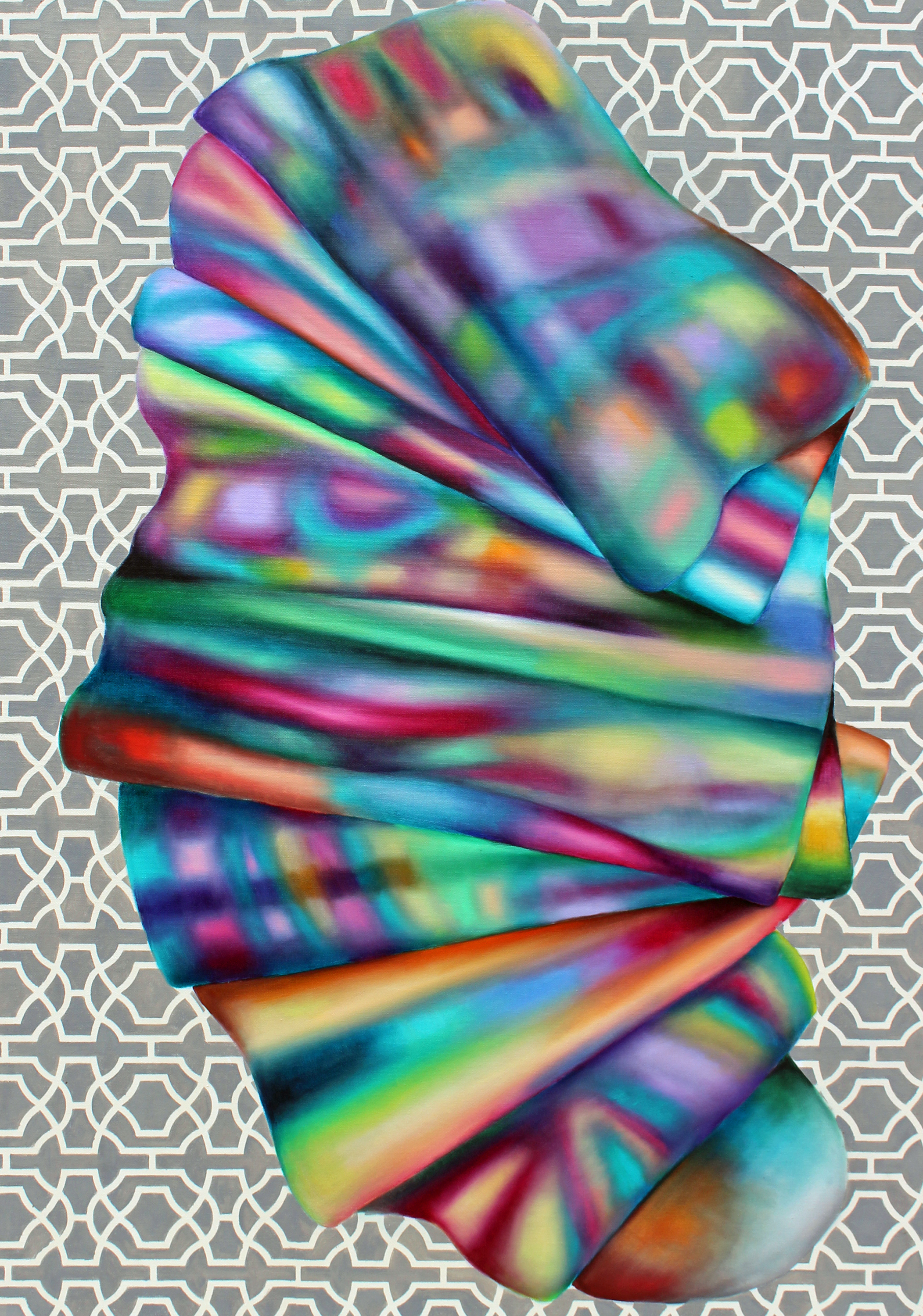
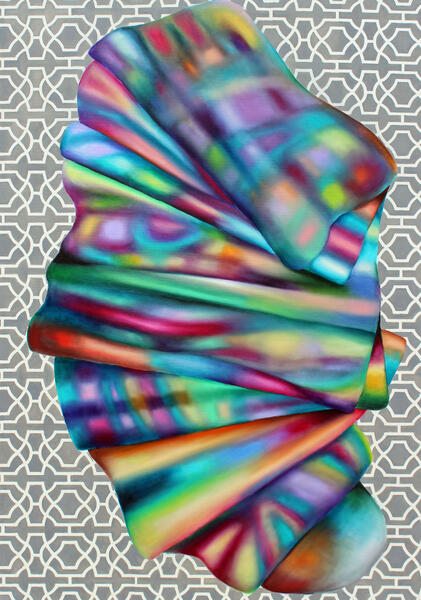 Unfolding
oil, enamel spray paint, on canvas, 36x48
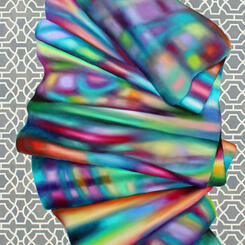
This is a brooch that belonged to my mother that is in fact about 3 inches long. Amplified against a grey and white stenciled backdrop, it seems to occupy a room.
-
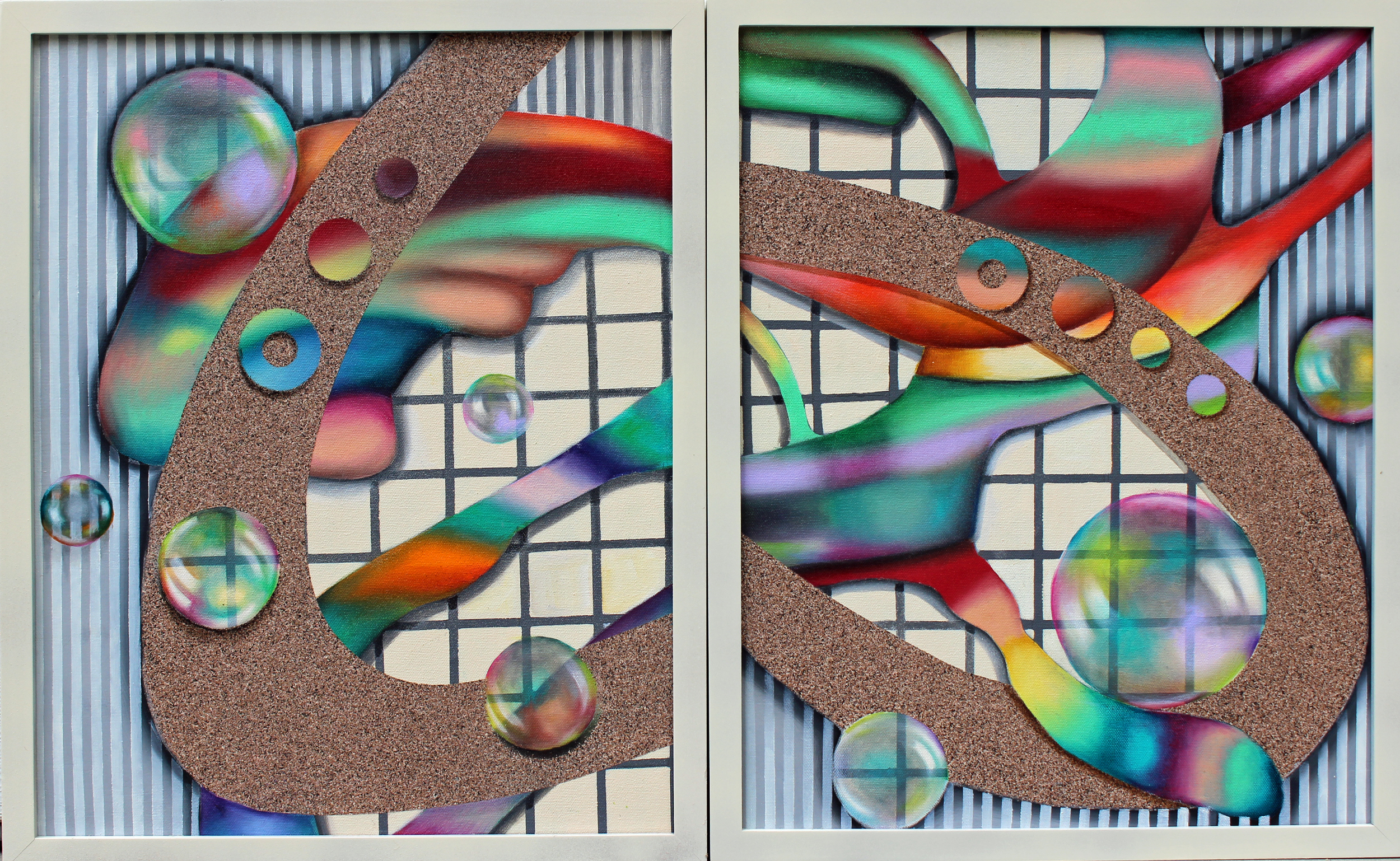
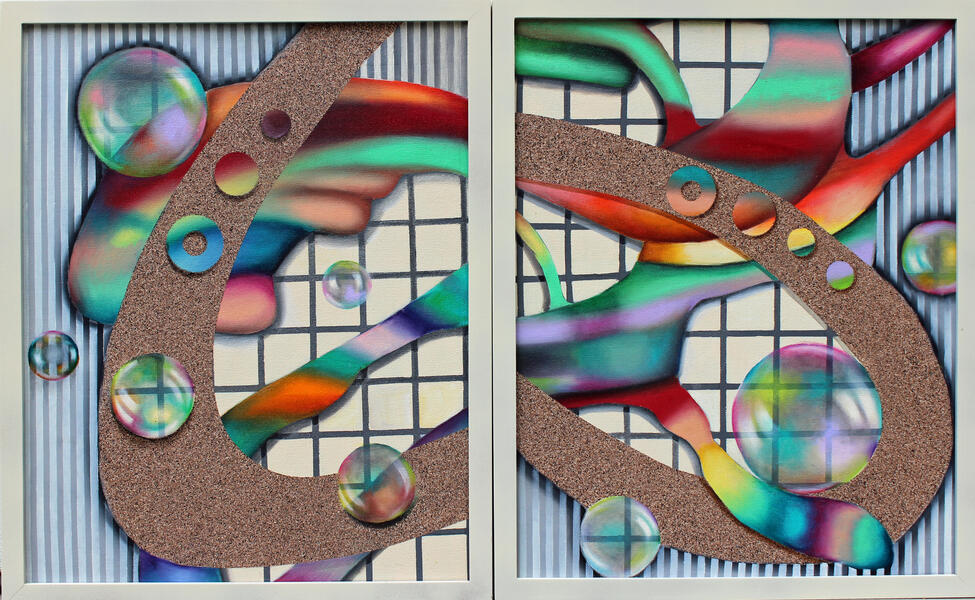 Pretzel
two-paneled painting, oil and textured spray paint on canvas, 24x42
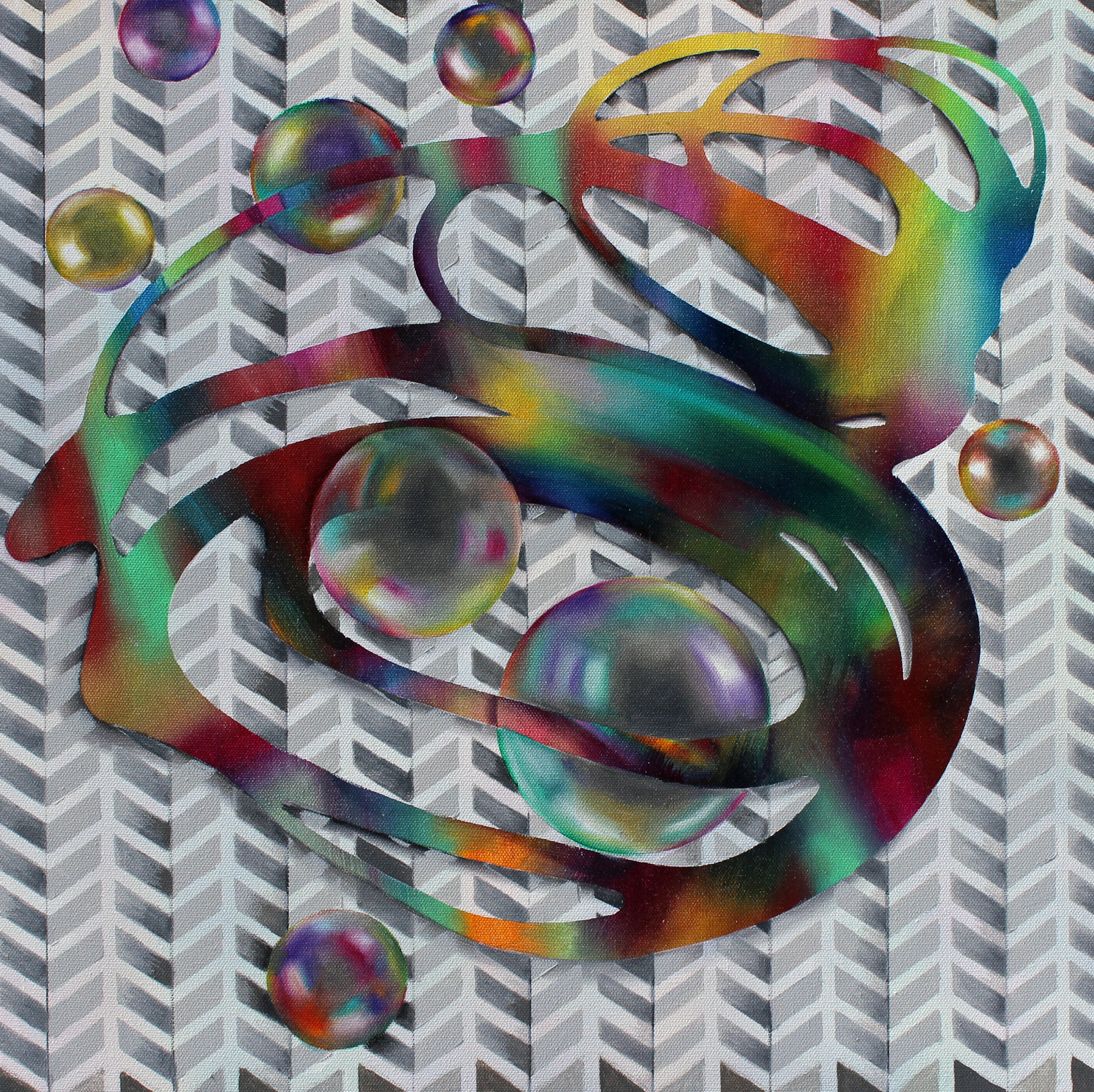
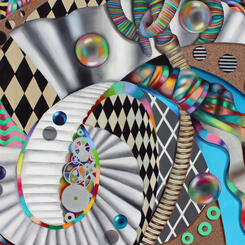
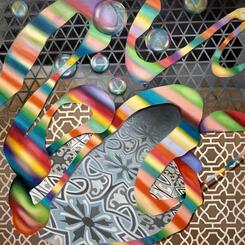
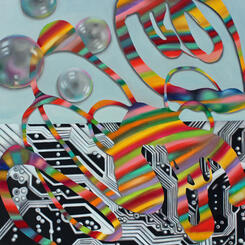
Bubbles and orbs punctuate sweeping textured and airbrushed surfaces, the format of the diptych breaking up the continuity of the forms.
-
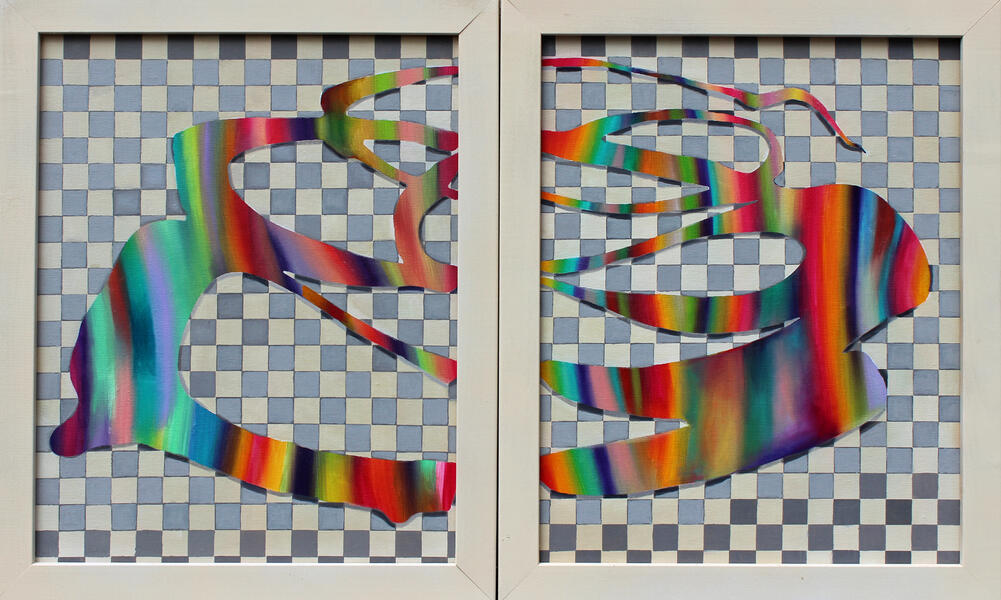 Embrace
oil on two-panel painting, 24x42
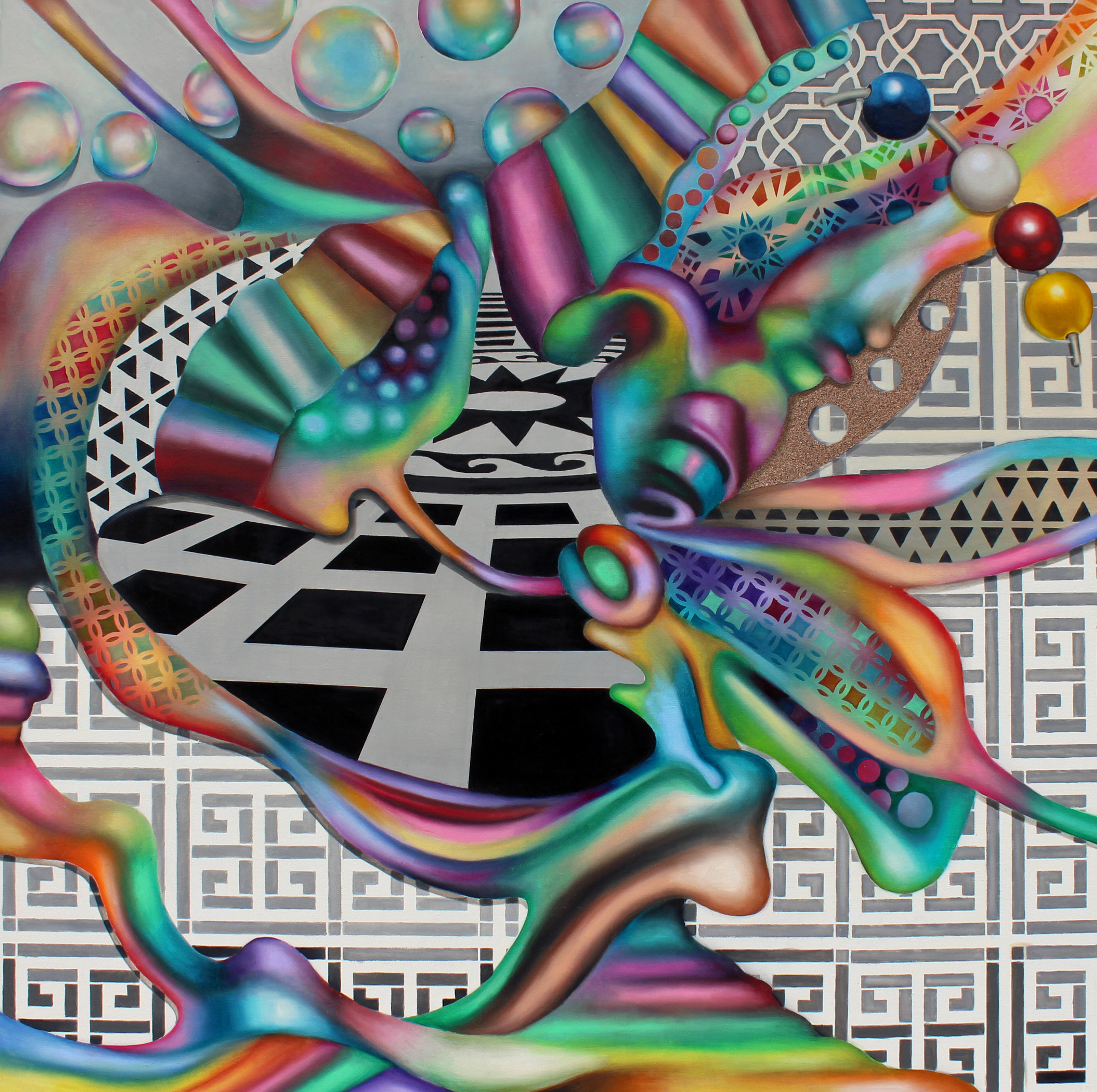
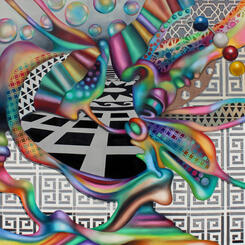
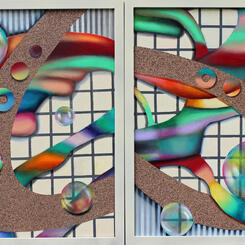
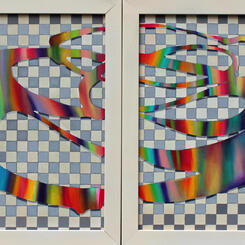
This diptych presents two fields of abstract, rainbow-colored forms that extend toward each other across a visual divide. The shapes appear to reach out in a gesture of connection, their movement driven by color and rhythm rather than representation. Despite this gesture, the edges of the canvas halt the forms before any contact can occur, underscoring both the longing for authentic connections and the pain of a thwarted embrace.
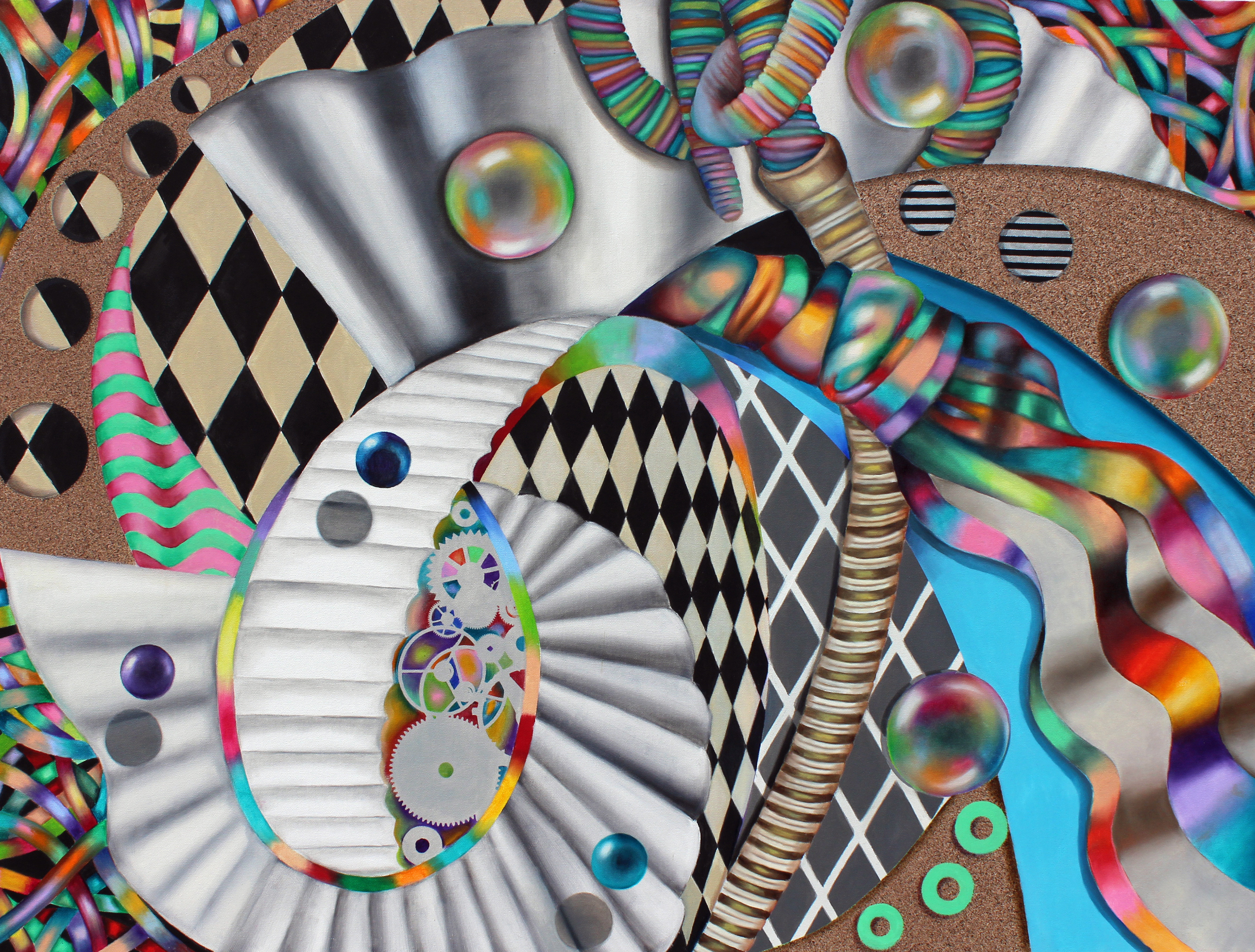

A Breath of Fresh Air
-
 Cyberspace
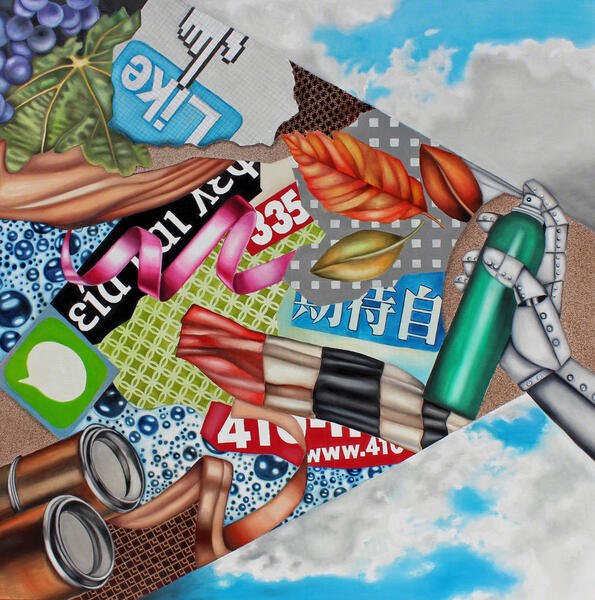
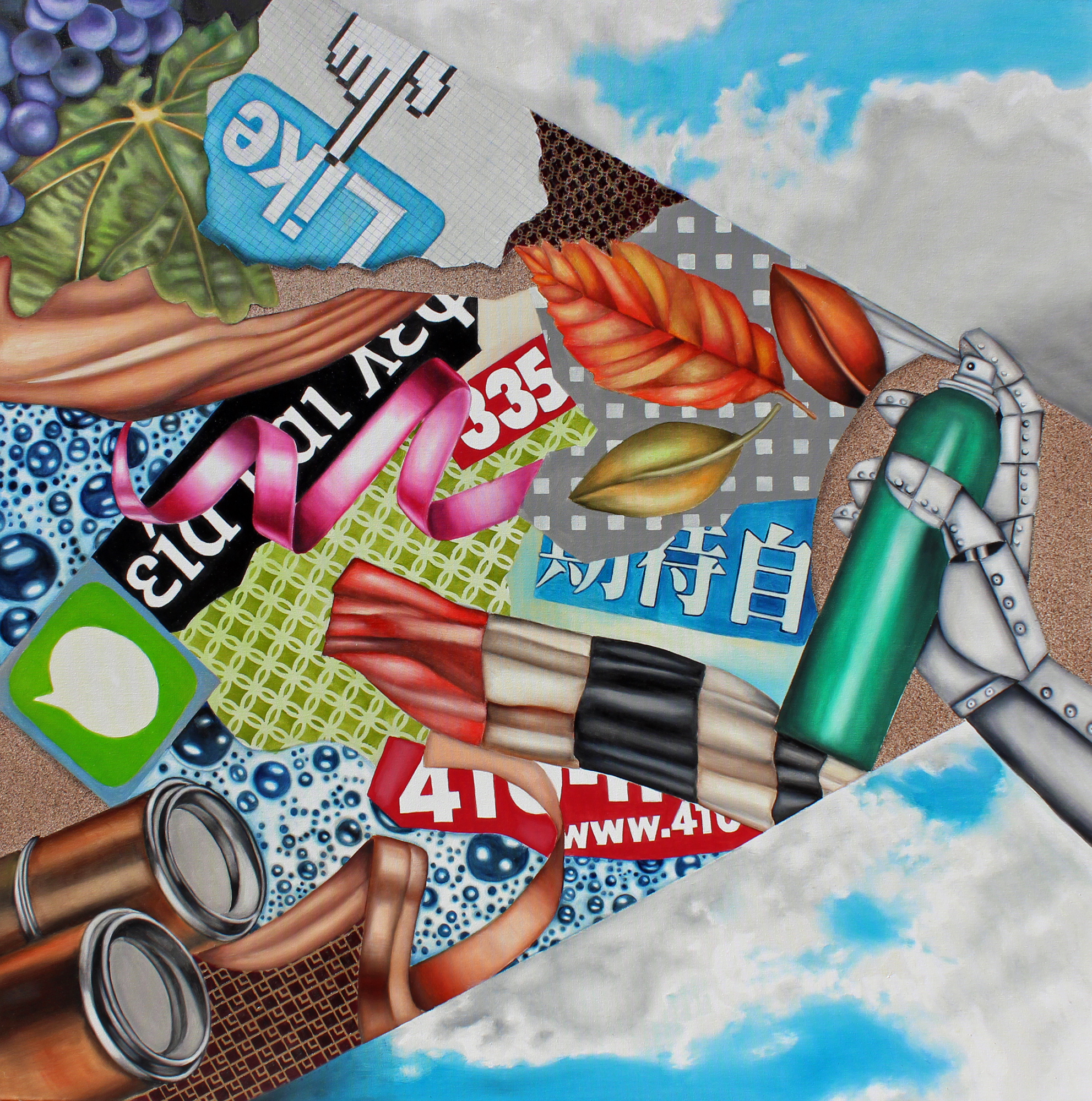
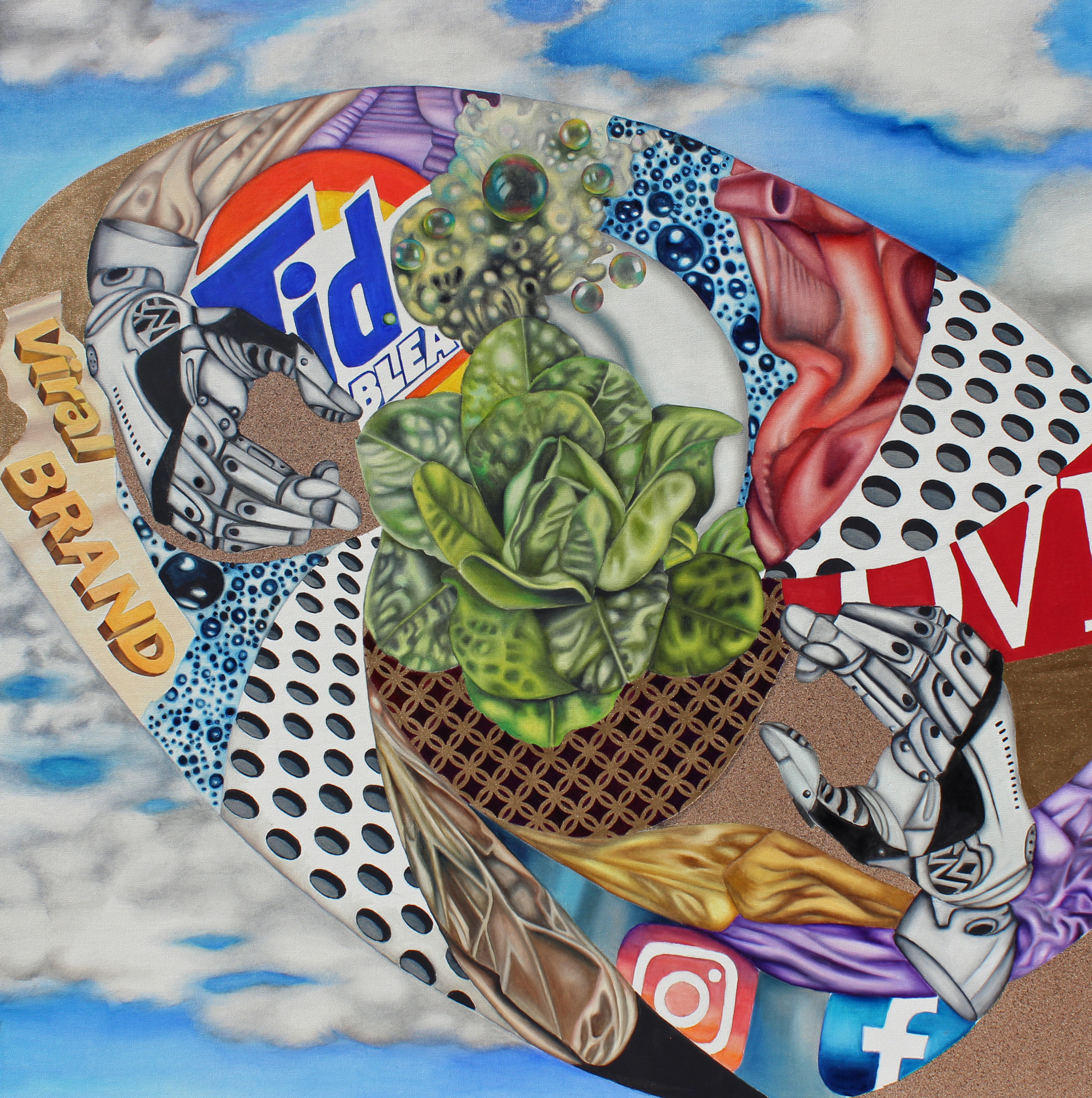
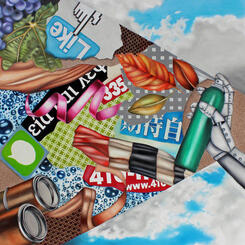
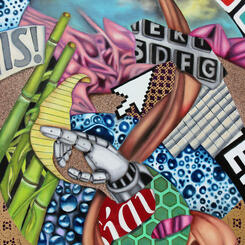
The fumes from a can of spray paint are toxic, as is the constant onslaught of media bombardment. Escape lies in the sky, outside this realm of exposure. Oil, textured spray paint, metallic leaf, ballpoint pen, on canvas, 48x48
-
 ICloud
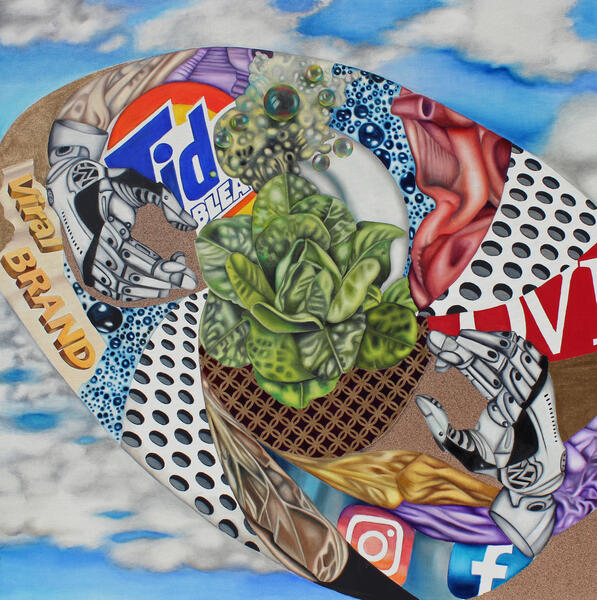
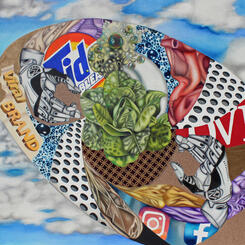
In this visual representation of an abstract concept, the I Cloud appears as an island in the sky, amidst the detritus of media bombardment. Oil, gold leaf, textured spray paint, on canvas, 48x48
-
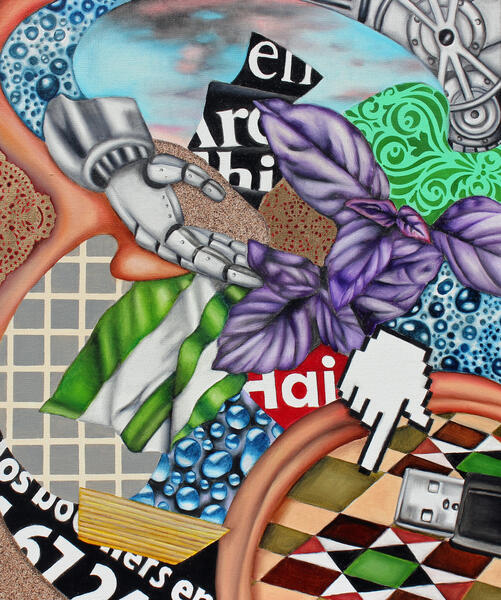 Patch of Blue
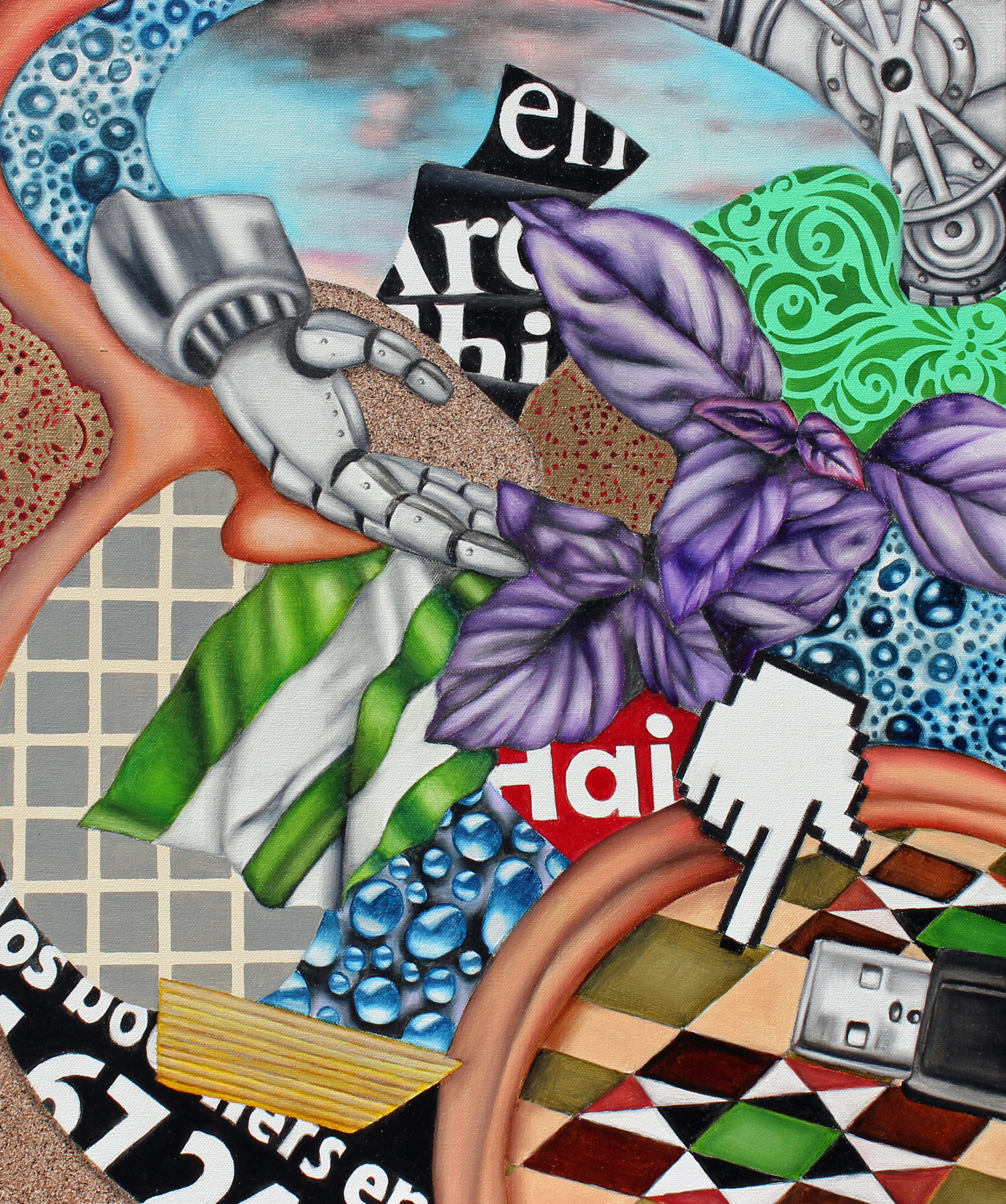
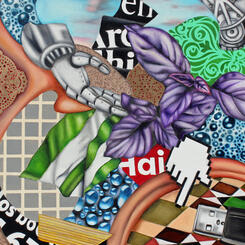
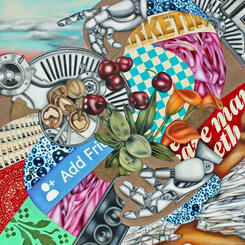
The robotic hand is almost nurturing as it gently caresses the purple leaves. Oil, gold leaf, textured spray paint, on canvas, 2024
-
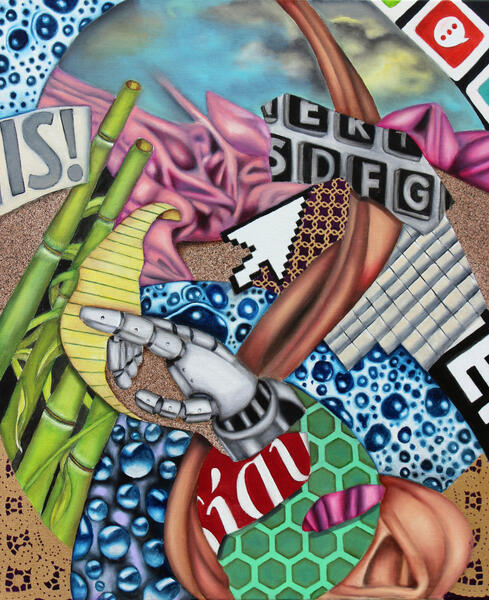 Space
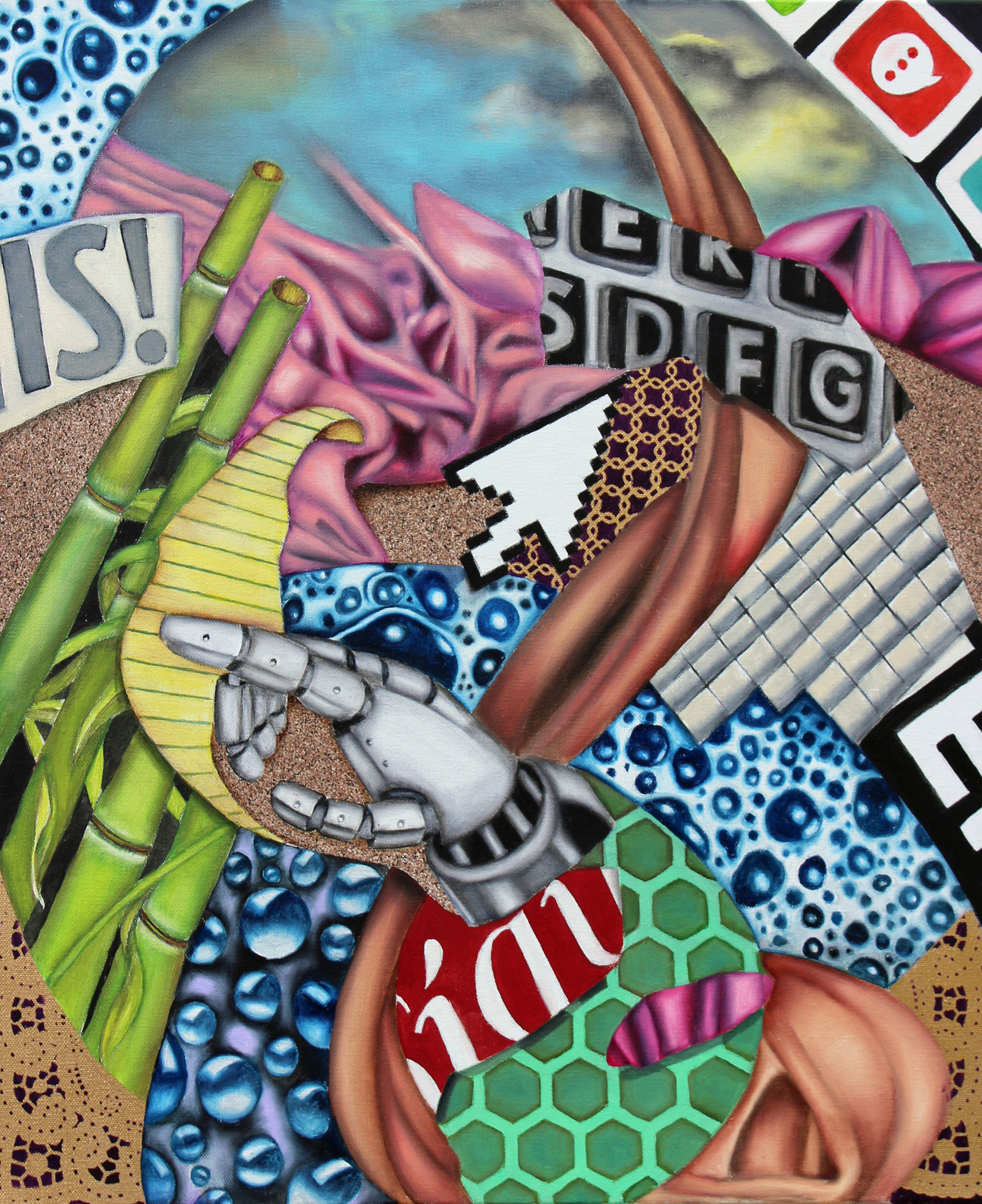
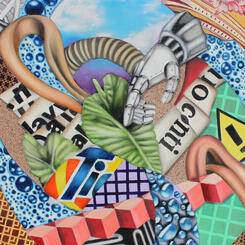
SpaceA robotic hand and an arrow indicate different ways out of a grab bag of visual non-sequiturs. Oil, gold leaf, textured spray paint, on canvas, 20x24
-
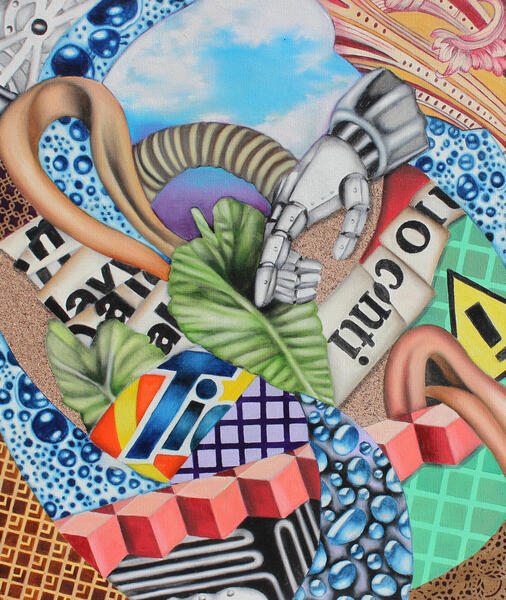 Escape
oil, gold leaf, textured spray paint, on canvas, 20x24
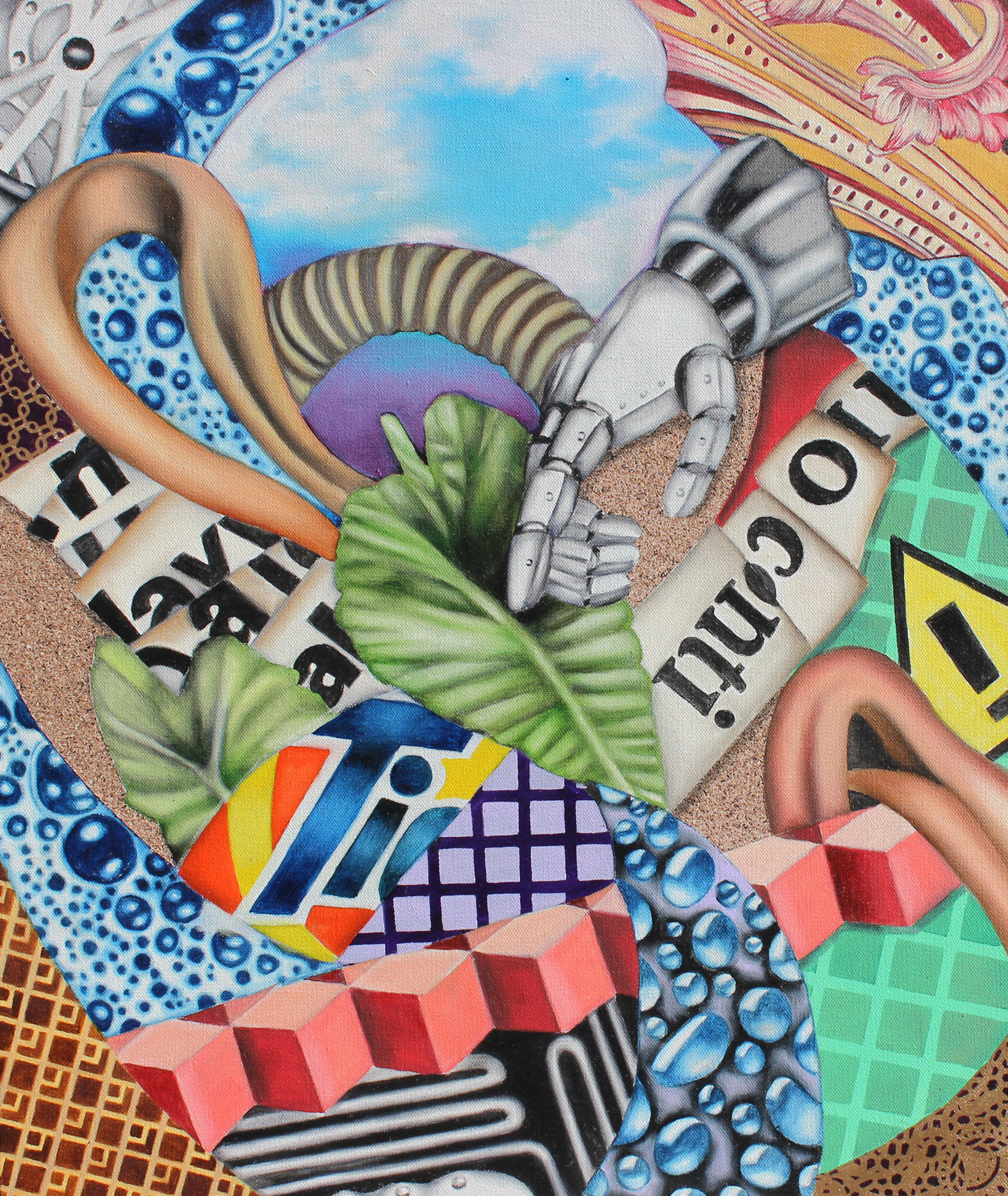
A robot hand points downwards to a chaotic assemblage with no common thread, as an alert sign lurks among the pile. Clearly the way out is to the patch of blue sky that hovers above. Oil, gold leaf, textured spray paint, on canvas, 20x44
-
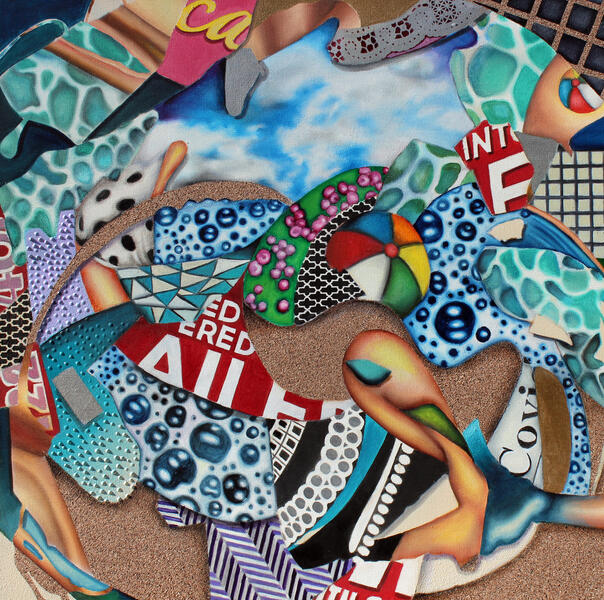 At the Beach
oil, textured spray paint, metallic leaf, enamel paint, pearl pen, on canvas, 24x24
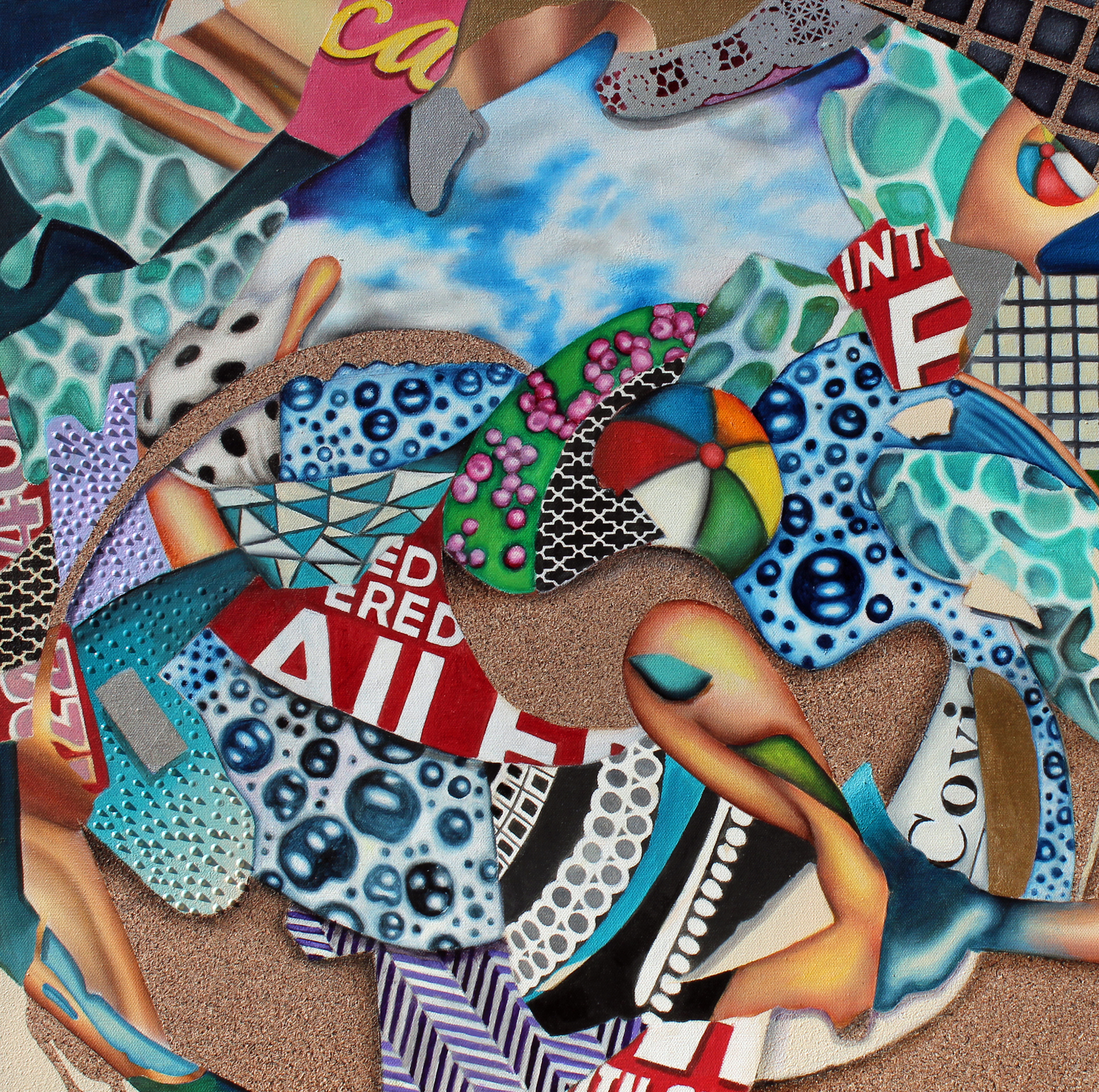
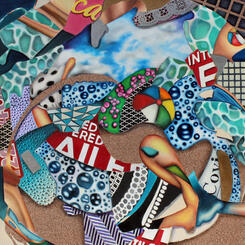
A whirlwind of debris encircles water, sky, and a beachball, a scene which suggests an escape from daily tedium and a return to leisure by connecting with sand, sea, and water. Oil, textured spray paint, enamel paint, metallic leaf, pearl pen, on canvas, 24x24
-
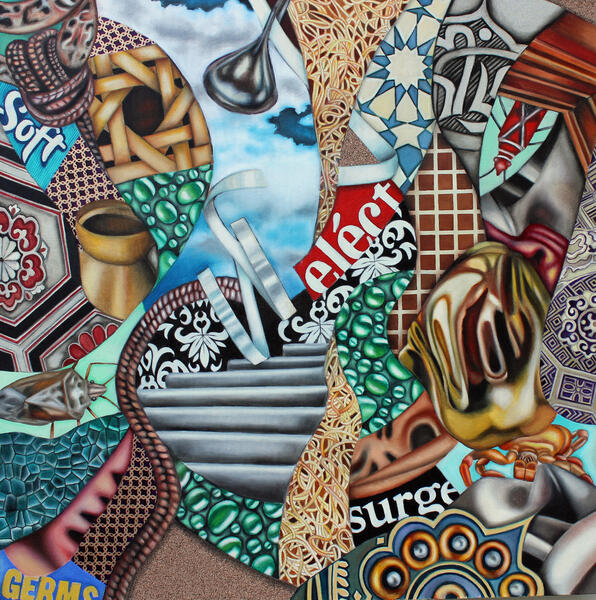 Bazaar
oil, textured spray paint, metallic leaf, on canvas, 36x36
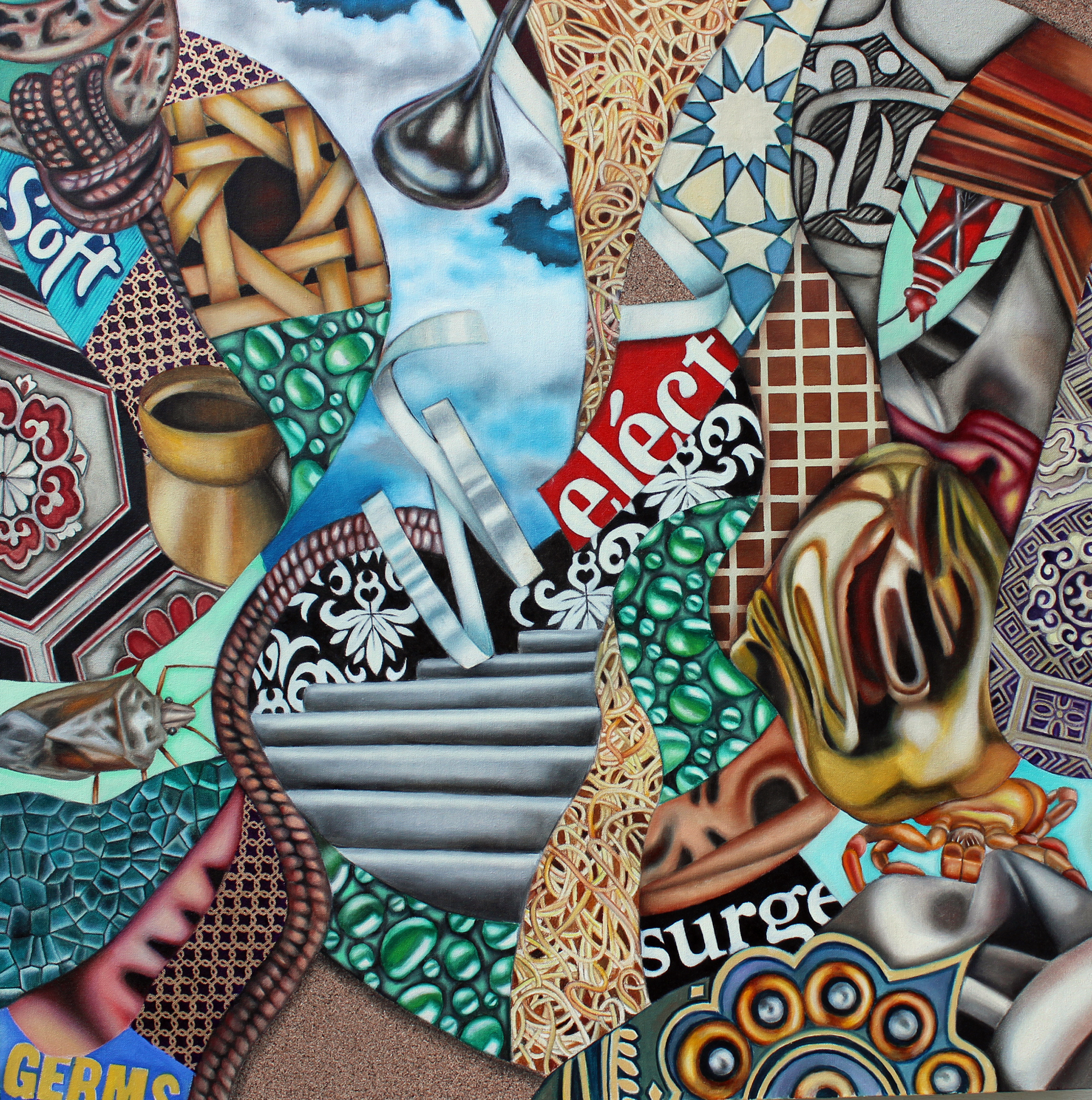
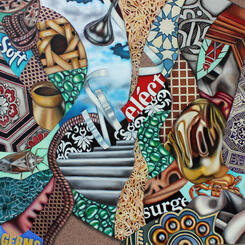
A sliver of sky appears between a random assortment of of treasures and items of lesser value that one might see in a bazaar. A pendulum hovers above, signaling the time-worn tradition of acquiring material wealth. Escaping through the narrow opening, looms as a remote possibility. Oil, textured spray paint, metallic leaf, on canvas, 36x36
-
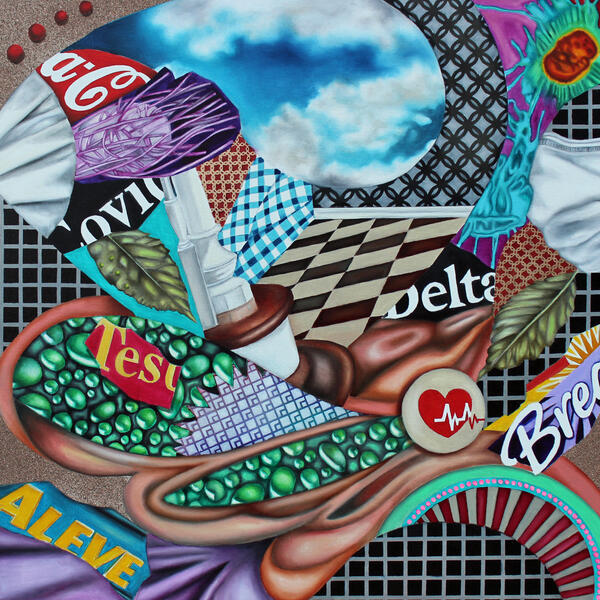 Aleve
Aleveoil, textured spray paint, metallic leaf, on canvas, 36x36
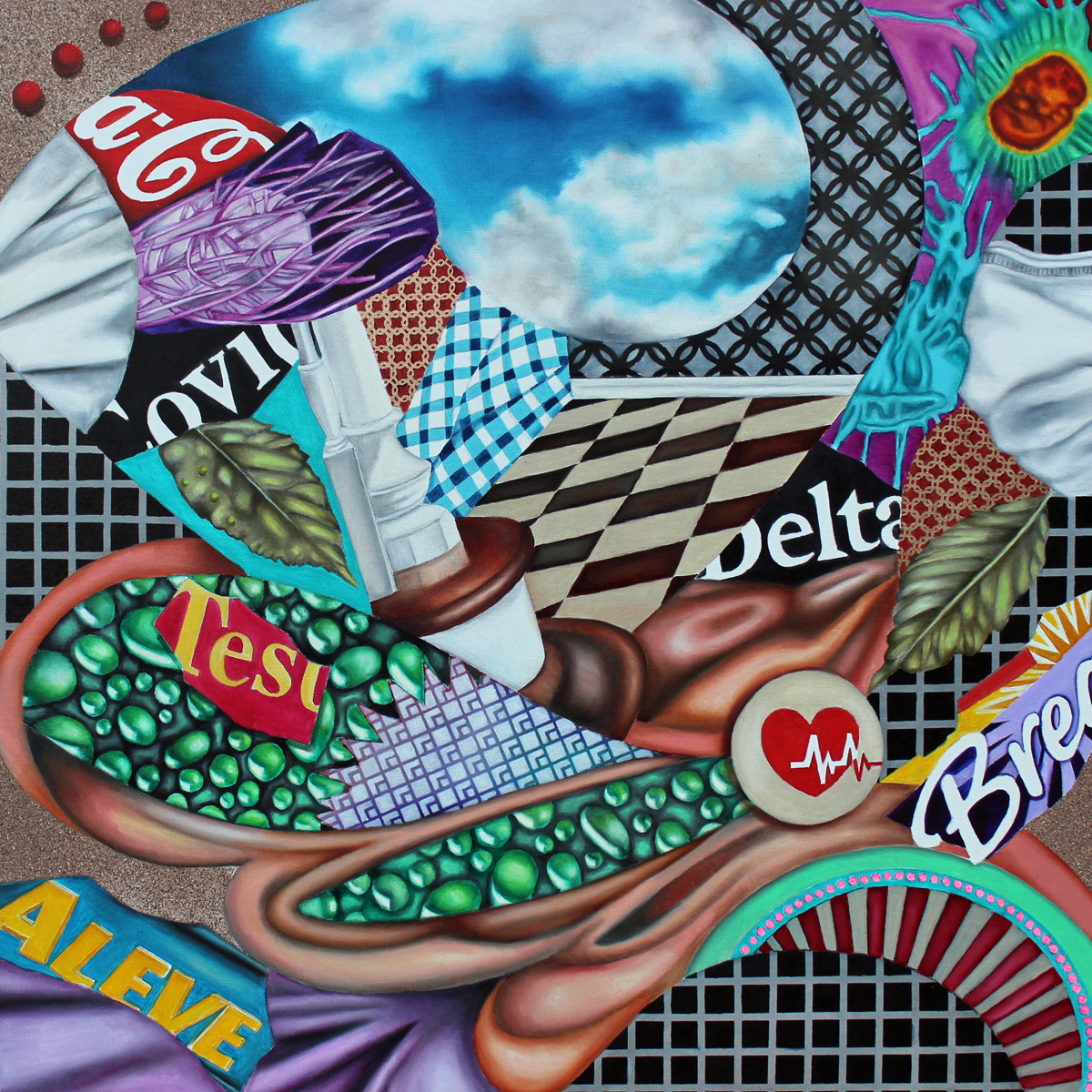
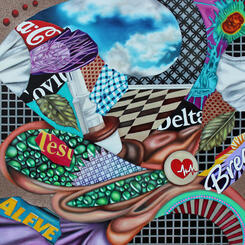
Surgical masks, a pulsating heart, bacterial growths, and medical labels all indicate the need for escape through the celestial portal. Oil, textured spray paint, metallic leaf, on canvas, 36x36
-
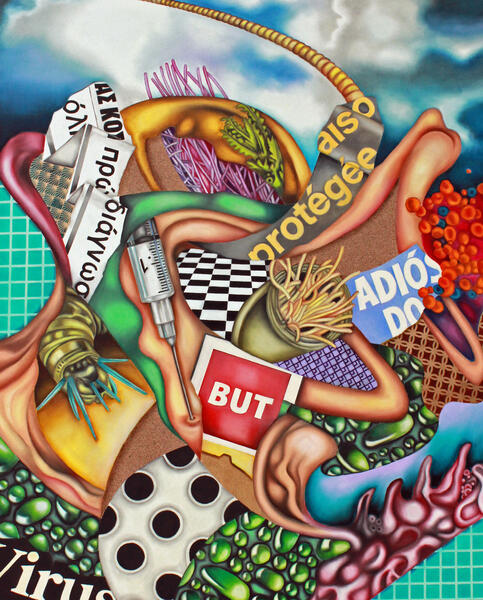 Adios
Adiosoil, textured spray paint, metallic leaf, on canvas, 48x72
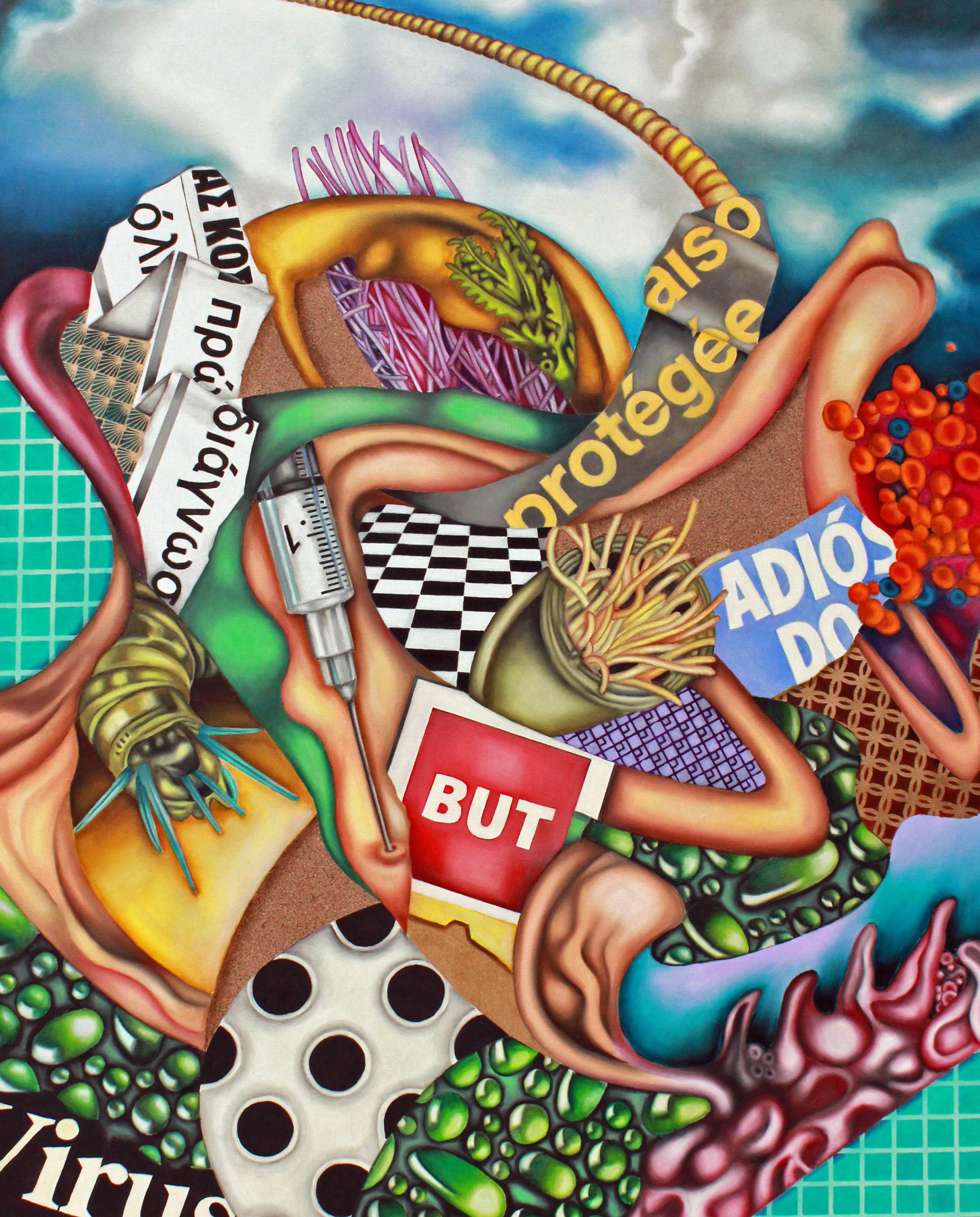
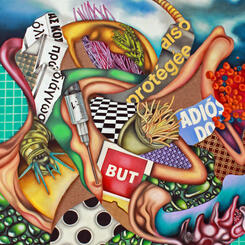
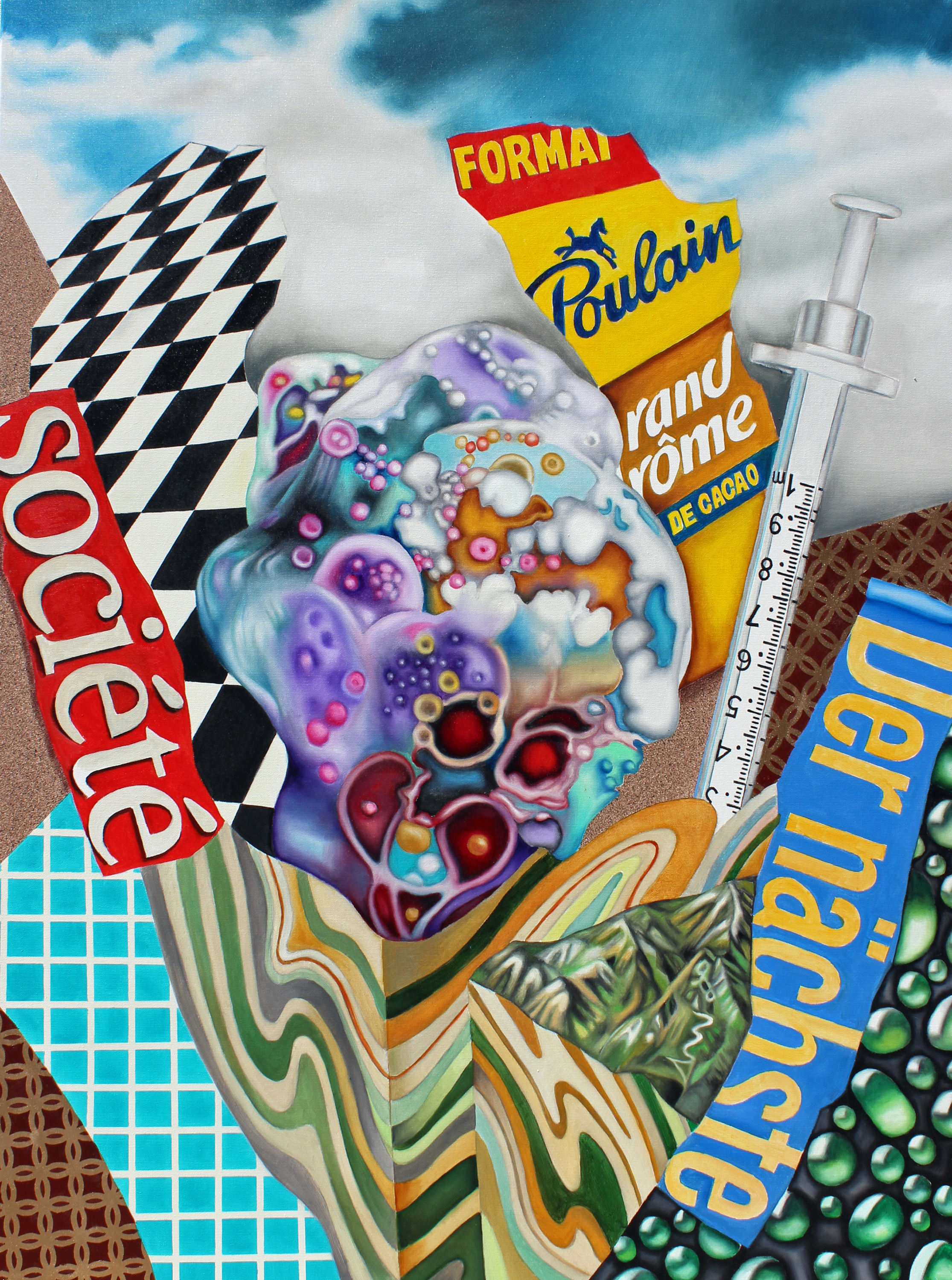
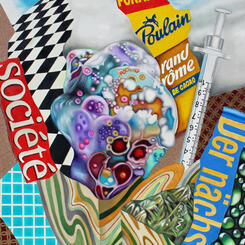
Universal media blitz, in the form of clippings from French, Spanish, and Greek magazines clutters the sky as parasites, viruses, an bacteria lurk amongst them, the collective chaos heightening the need for escape to the sky above .Is the surgical needle a vaccine that offers hope or a syringe that promotes addiction? Oil, textured spray paint on canvas, 48x48
-
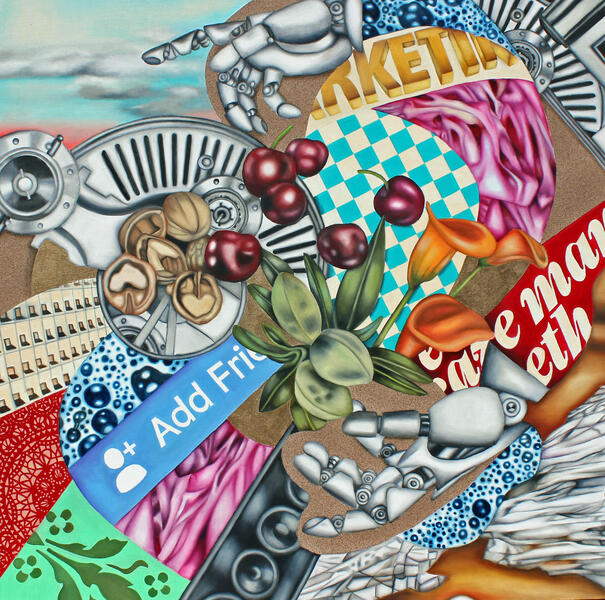 Cyberscape
Ironically, Silicon Valley was once known for its verdant farmland; nowadays it's a hub for technological advancements that have ultimately produced media glut. This transformation has reshaped the landscape from a place of genuine growth into a barren digital wasteland with a need for fresh air.
Oil, textured spray paint, on canvas, 48x48

Contagion
-
 Going Viral
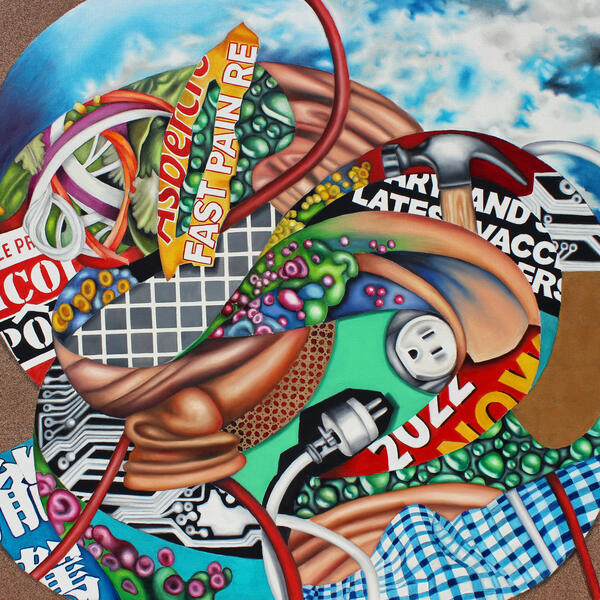
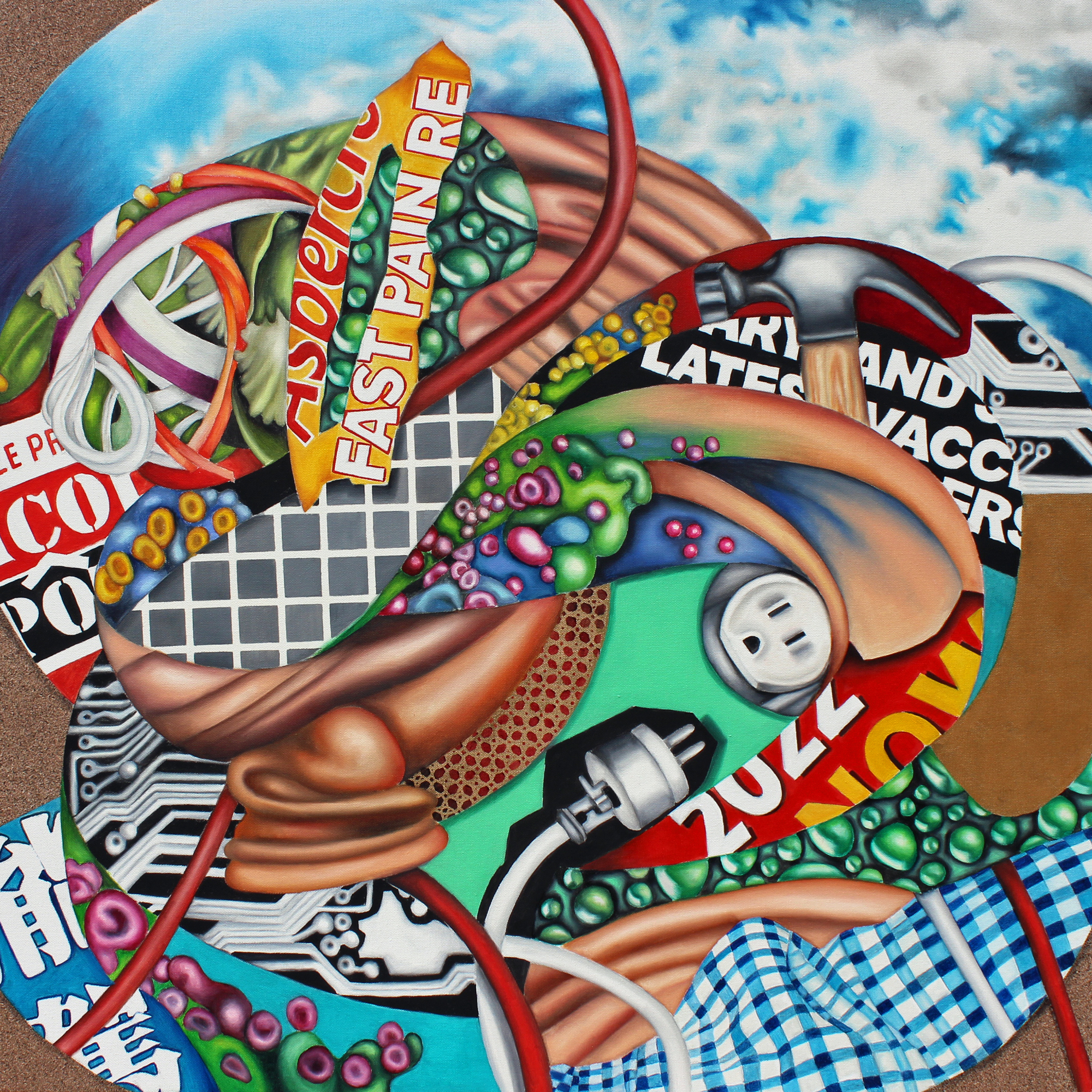
In a futile gesture, a hammer tries to pound on airborne threats lurking in the air. Oil, metallic leaf, textured spray paint, on canvas, 36x36
-
 Bugs
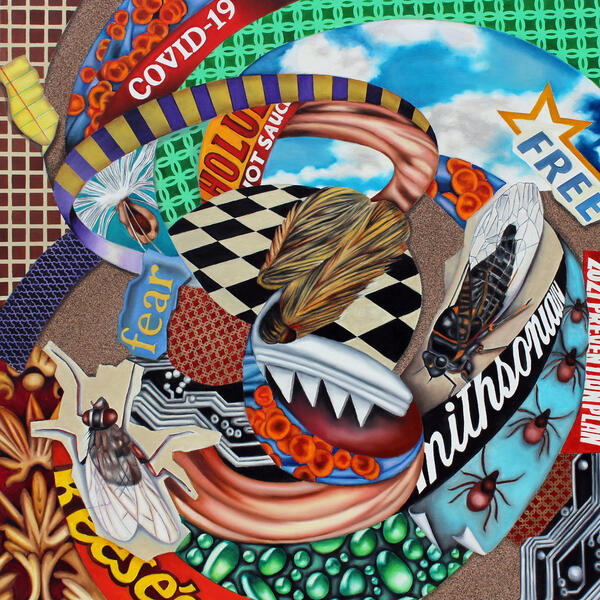
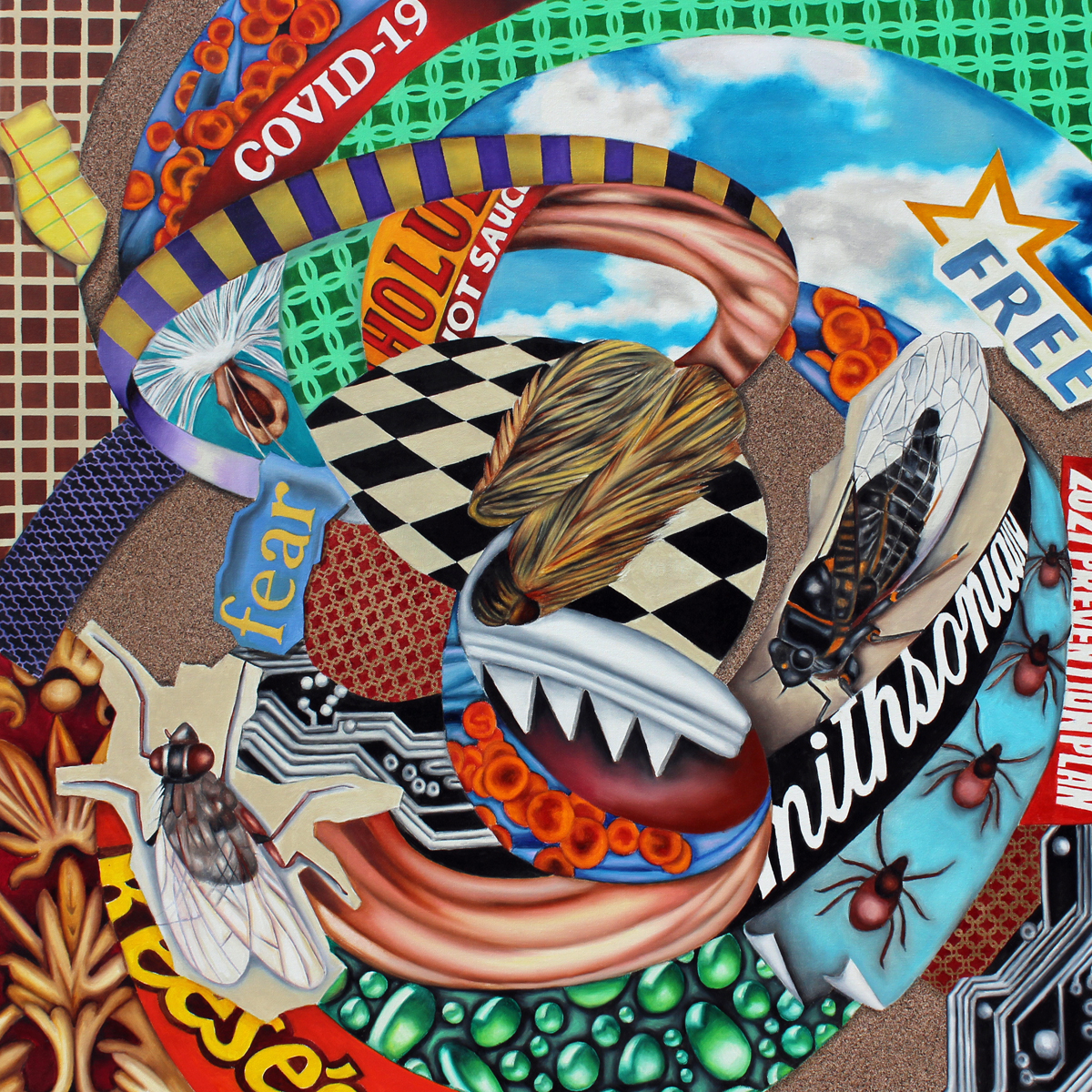
BugsIn addition to covid, stories about the 17-year-old cicadas and tick-borne diseases spread "fear" as they dominated the news in 2022 Oil, marker, metallic leaf, textured spray paint, on canvas, 36x36
-
 Airborne
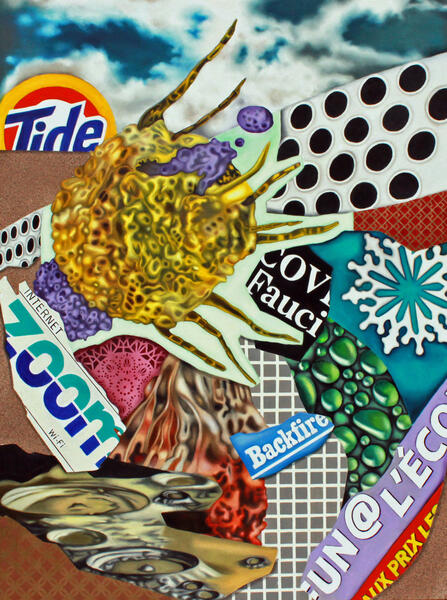
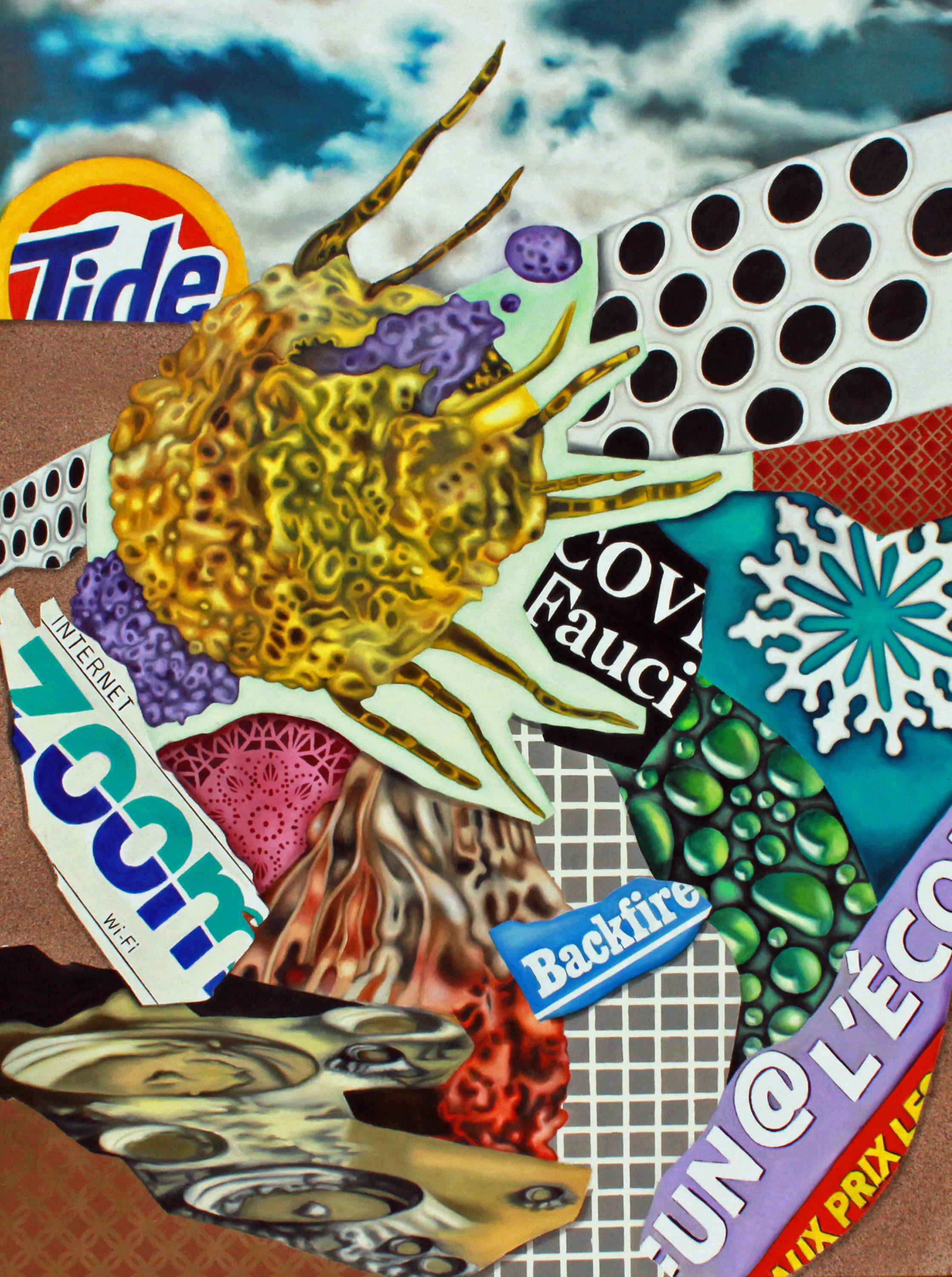
Zoom and cleaning products appeared as a remedies to airborne illnesses, but fear becomes the major vehicle of contagion, and Fauci becomes an arbiter of truth for some. Oil, textured spray paint, metallic leaf, marker, on canvas, 36x48
-
 Fallout
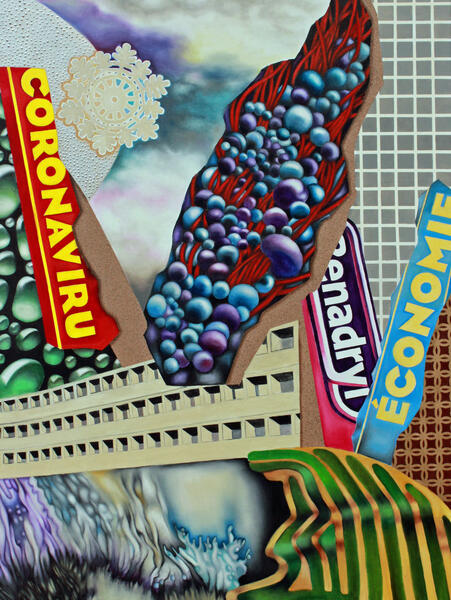
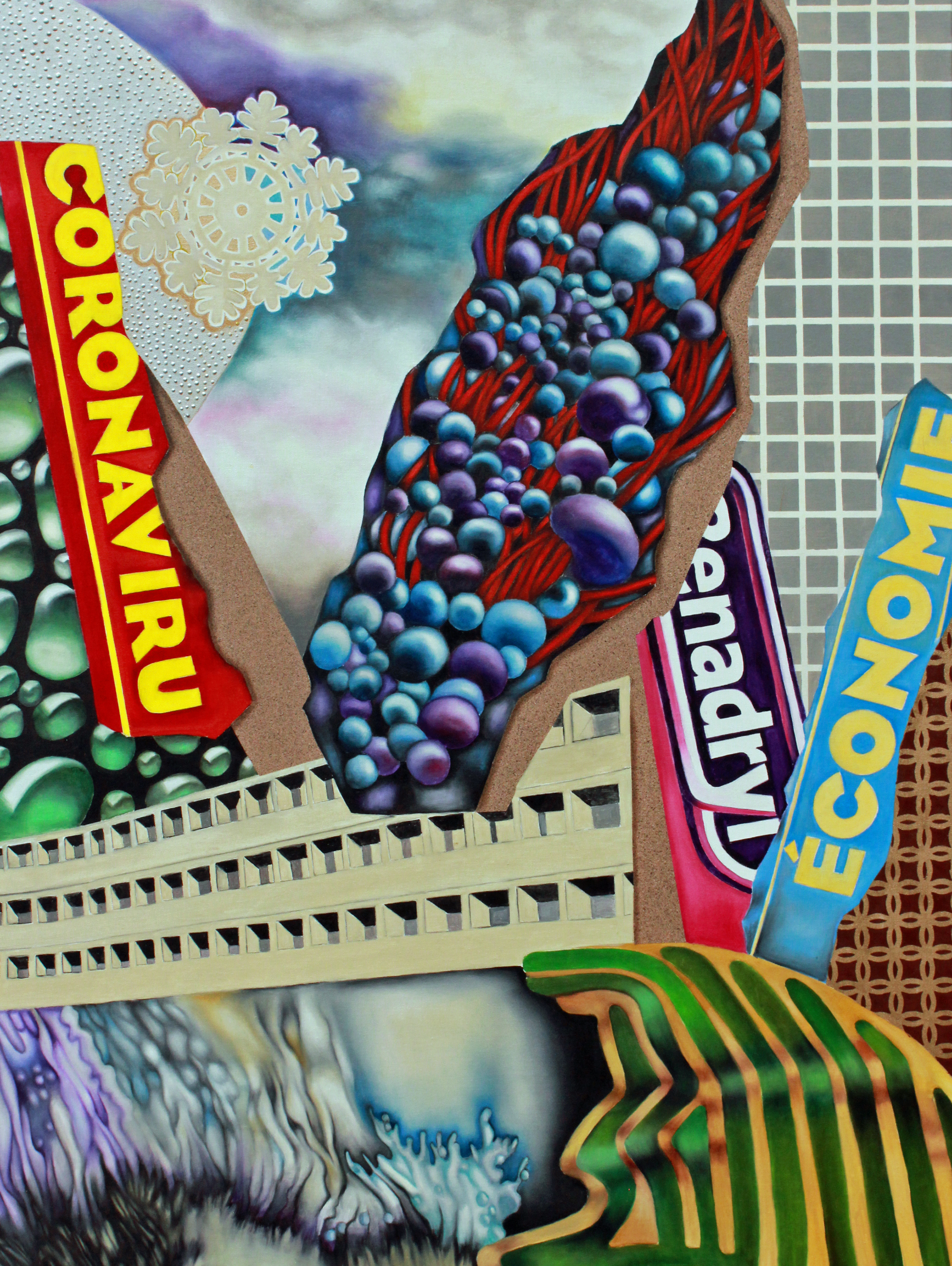
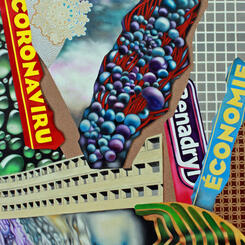
Threatening the economy, a cluster of bacteria cells descend like a bomb over a major government building, benadryl appearing as an ineffective deterrent. Oil, pearl pen, metallic leaf, textured spray paint, on canvas, 36x48
-
 Inoculation
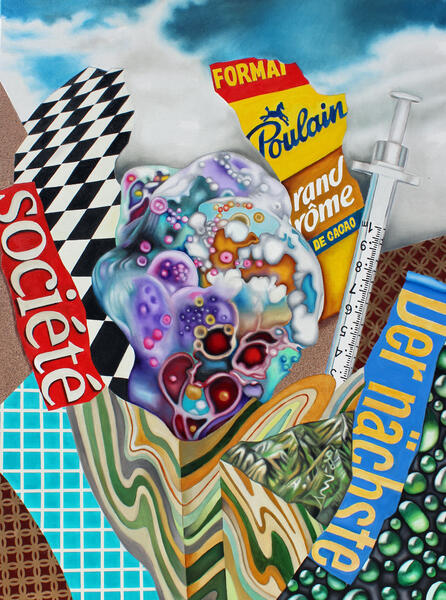
oil, textured spray paint, on canvas, 36x48
There's something about a syringe plunging into the skin that's a universally repugnant image, and people around the world weighed in on the pros and cons of the mandated vaccine.
-
 Clorox
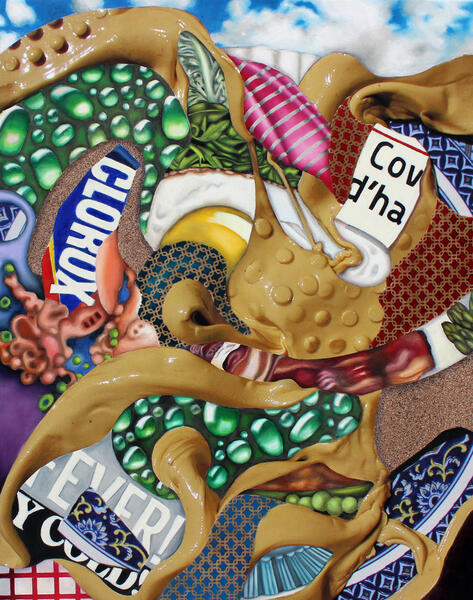
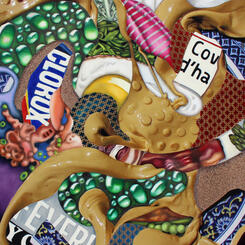
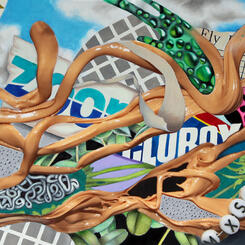
A fried egg rests at the center of the canvas as the virus swirls around it and the water droplets take on a sickly green hue. Clorox emerges as a cure all. Oil, metallic leaf, textured spray paint, archival ink printed on canvas, 24x30
-
 Helping Hand
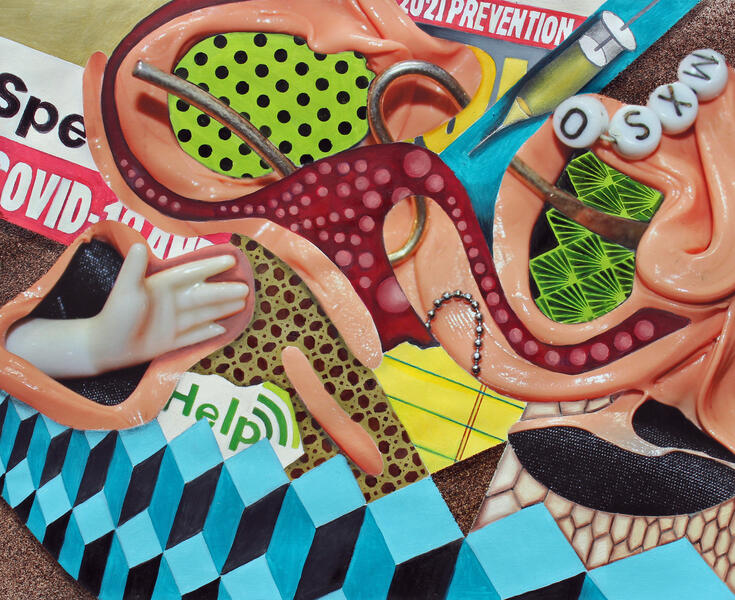
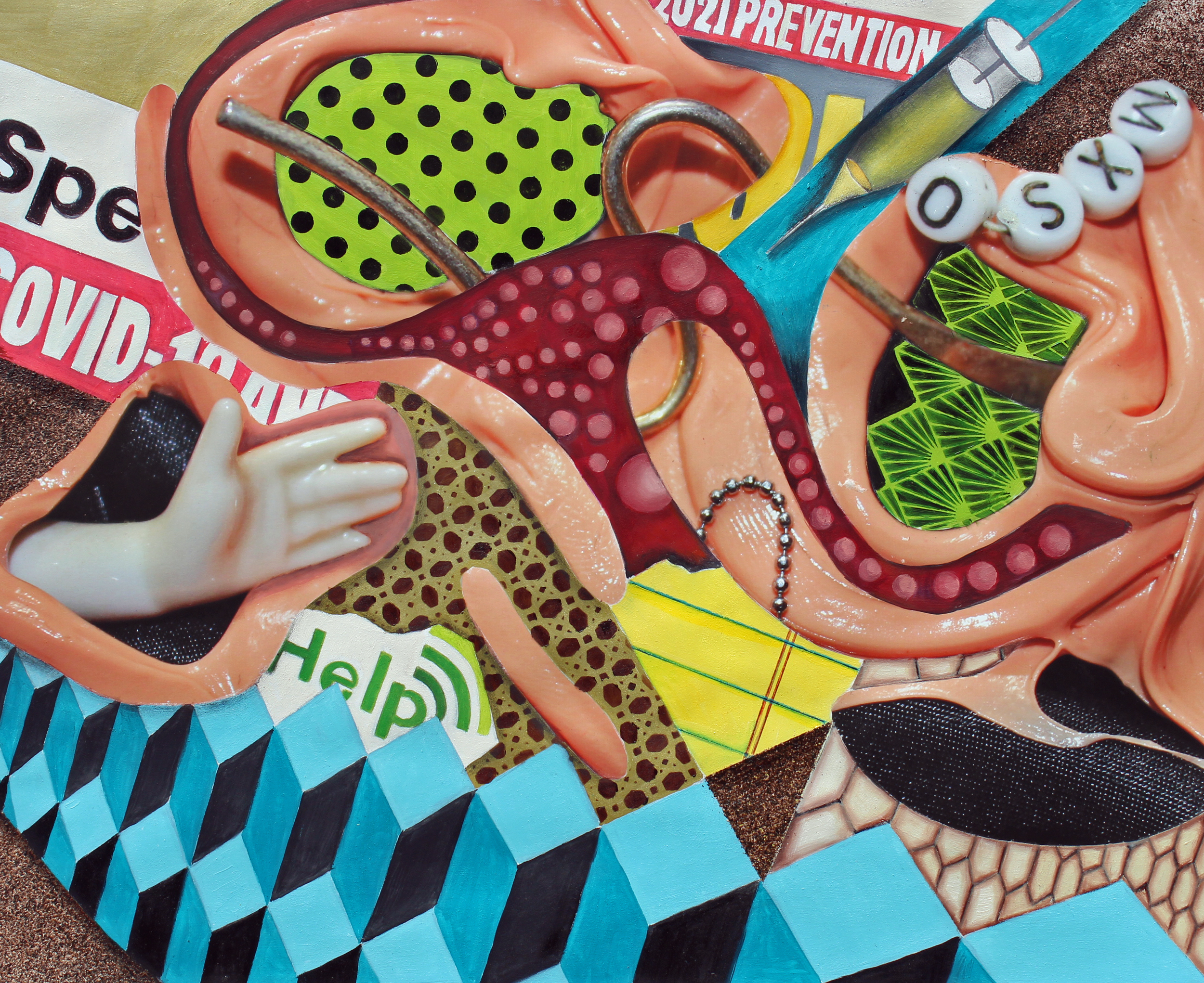
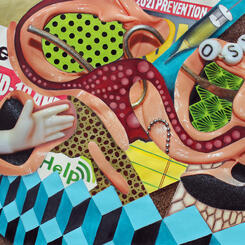
A helping hand emerges from a black hole escaping from the presence of covid and lunging toward a vaccination. In the top right corner is a piece of my baby bracelet, a reference to the innocence of youth. Oil, textured spray paint, metallic leaf, marker, colored pencil, graphite, archival ink photographic print on paper, 17x20
-
 Zoom
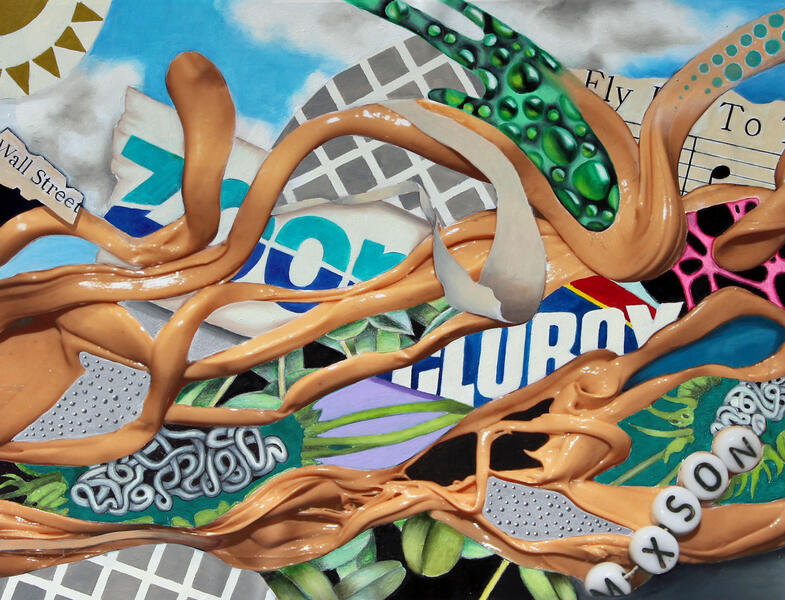
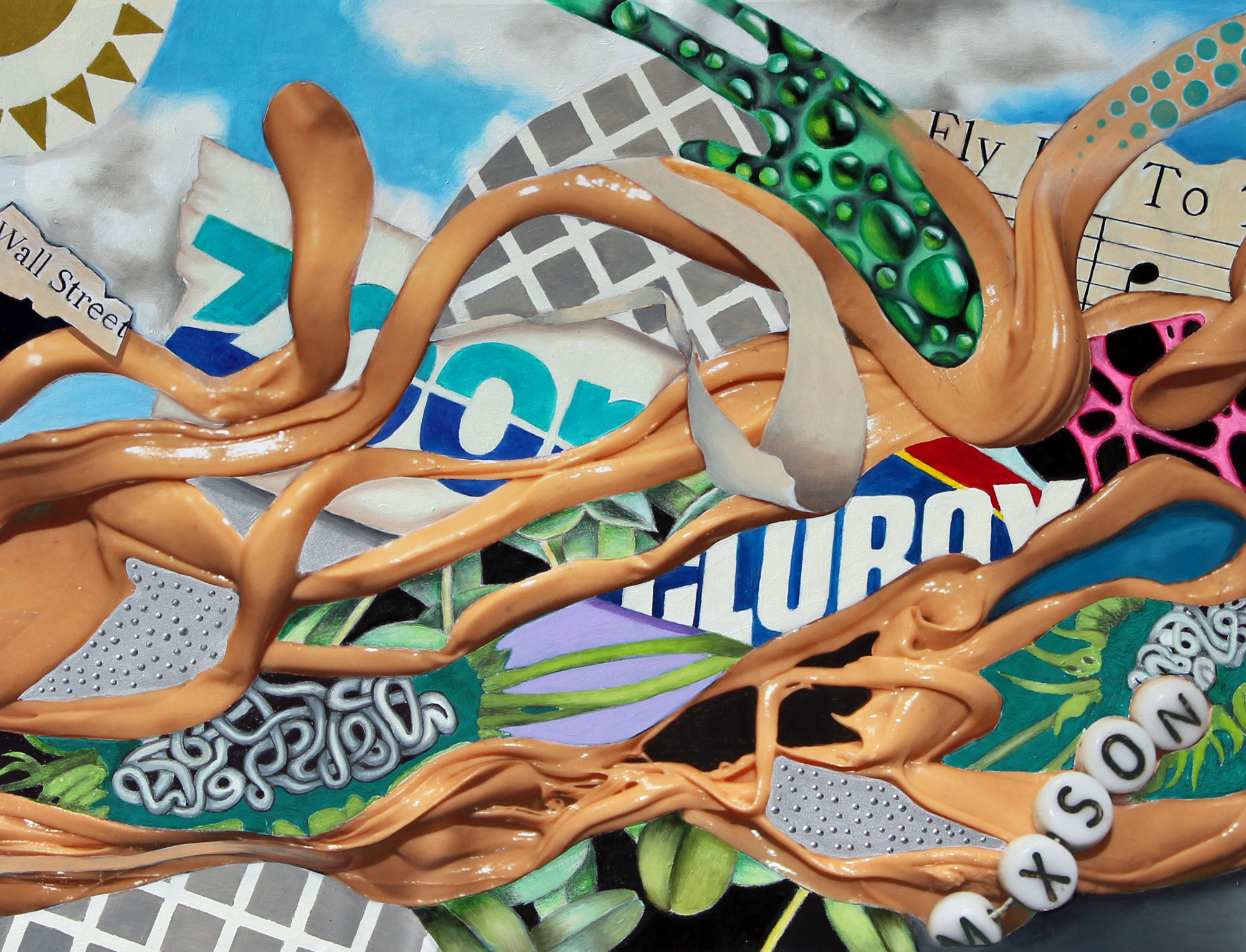
ZoomBacteria, toxic green water, Clorox and Zoom all collide together in futile combat. A fragment of my baby bracelet is in the bottom right corner. Oil, marker, graphite, metallic leaf, pearl pen, ballpoint pen, archival ink photographic print on paper, 16x20
-
 Bits and bots
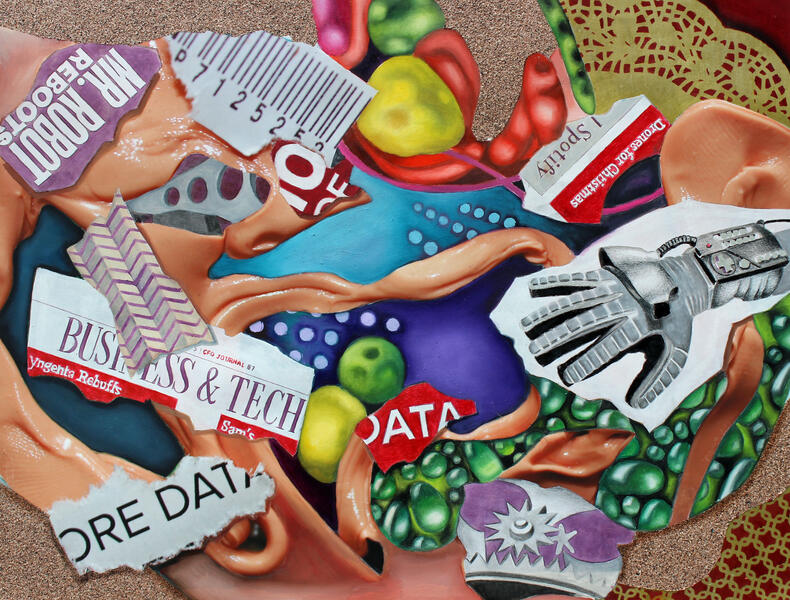
oil, textured spray paint, metallic leaf, colored pencil, marker, archival ink, on paper, 16x20
The "helping hand" in this drawing is that of a robot, thus symbolizing that the battle against contagion is beyond human control. Oil, textured spray paint, metallic leaf, colored pencil, marker, archival ink, on paper, 16x20
-
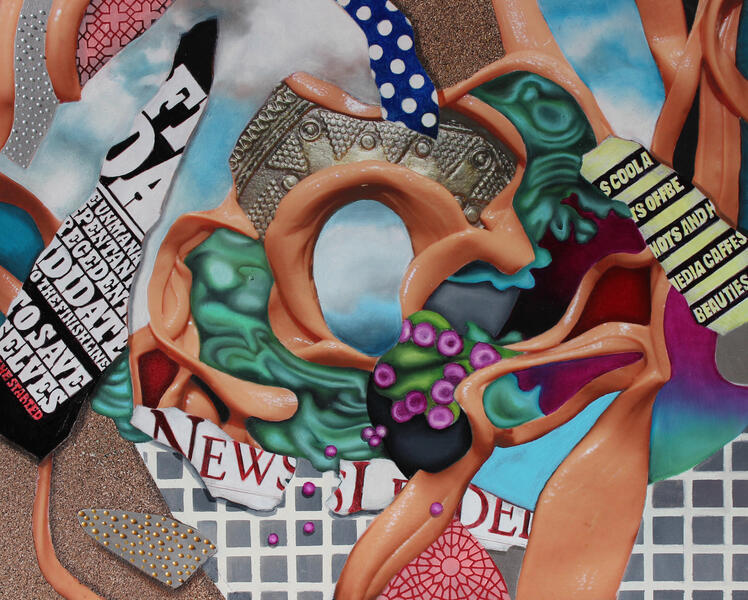 Viral Portal
A portal offers a breath of fresh air, an escape from the contagion. Oil, textured spray paint, metallic leaf, marker, archival ink photographic print, on paper, 16x20


Awash
-
 Up Cycle
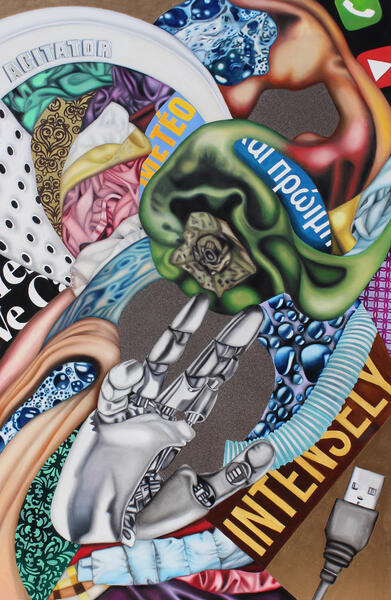
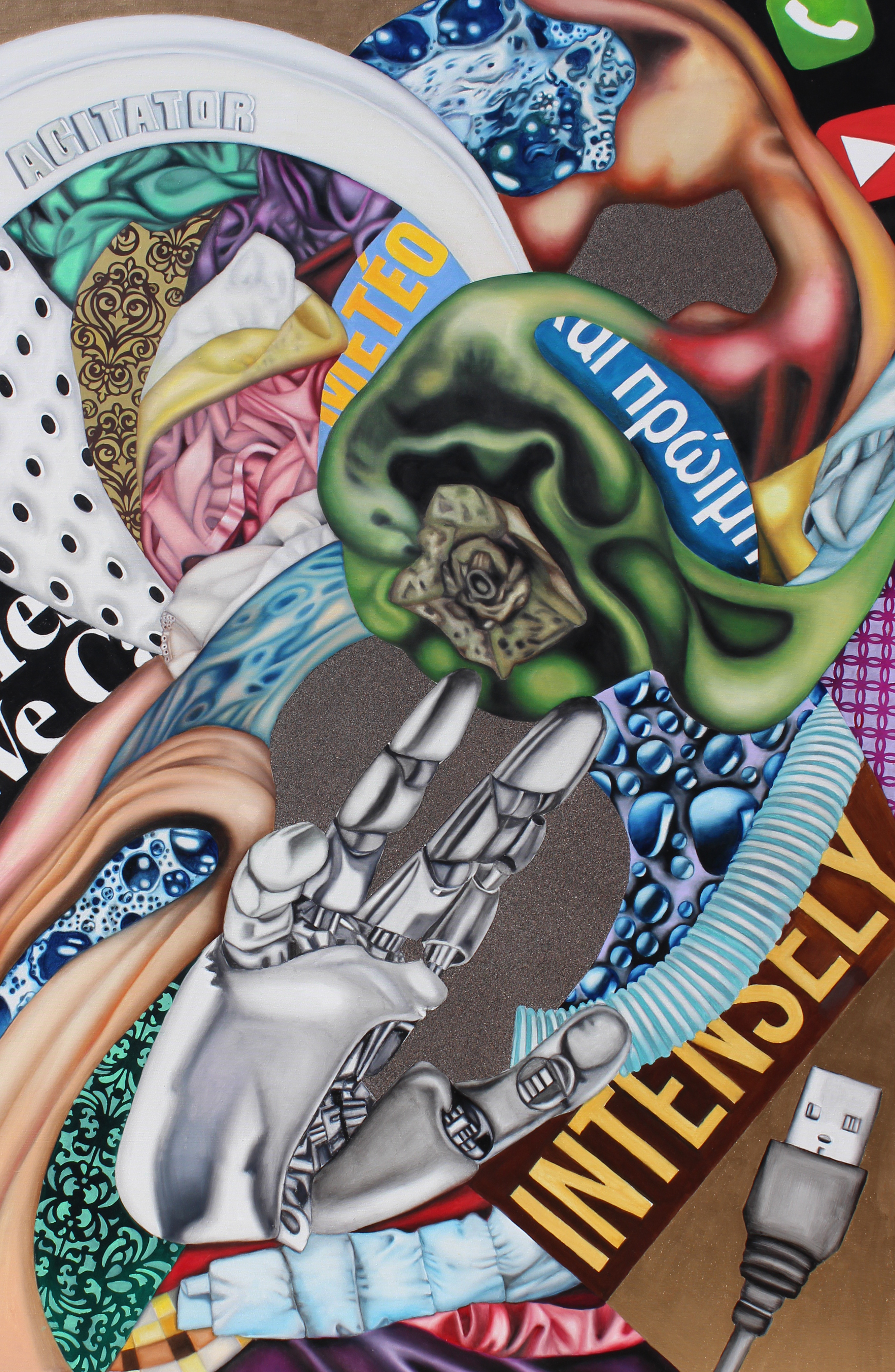
The idea for this painting emerged from the word "agitator" stamped inside a washing machine, where a swirling mix of unrelated objects formed an unexpected moment of harmony. Oil, textured spray paint, metallic leaf, on canvas, 48x72
-
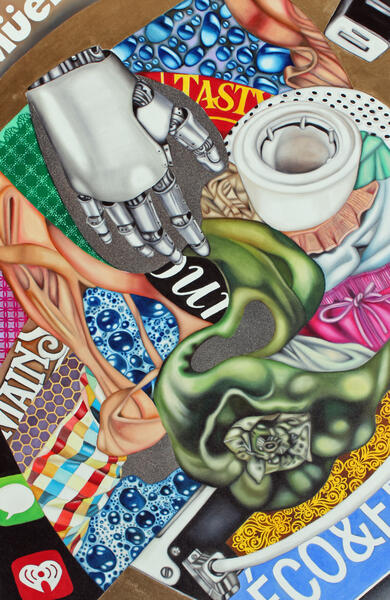 Down Cycle
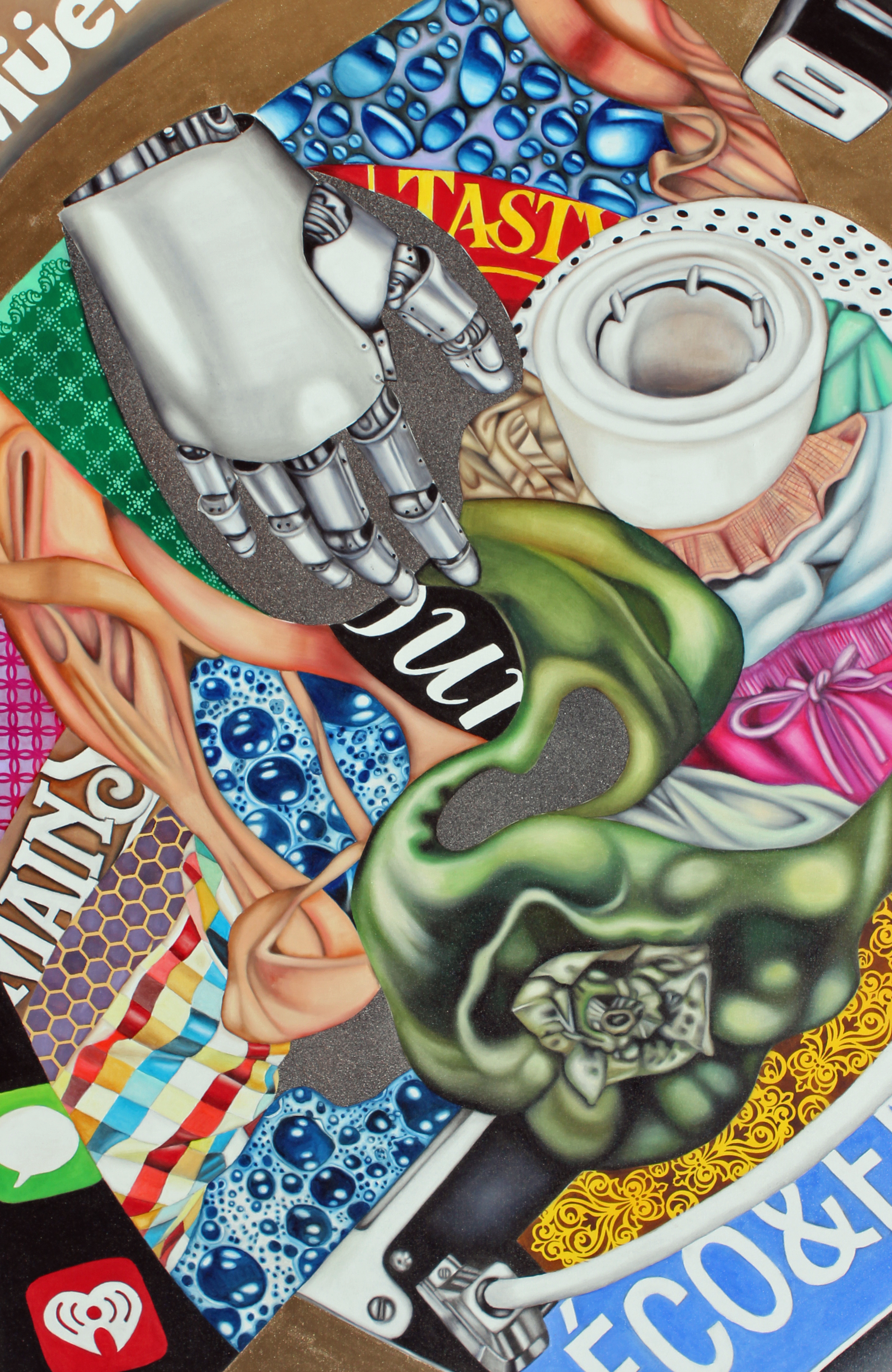
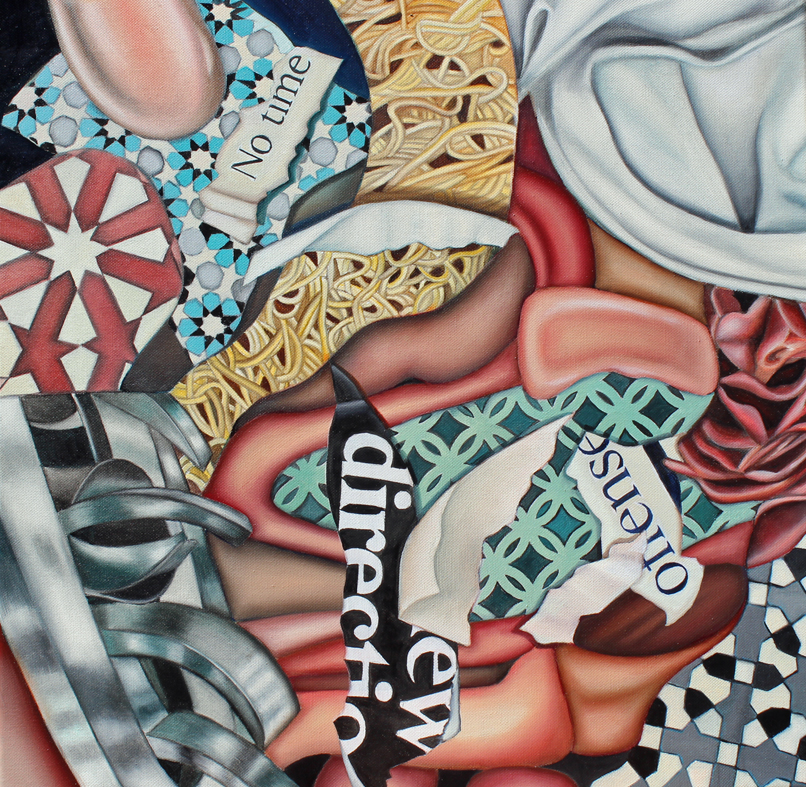
The swirling together of such random elements as a pepper, spaghetti, and magazine clippings suggests an uneasy cohesion. Oil, textured spray paint, metallic leaf, on canvas, 48x72
-
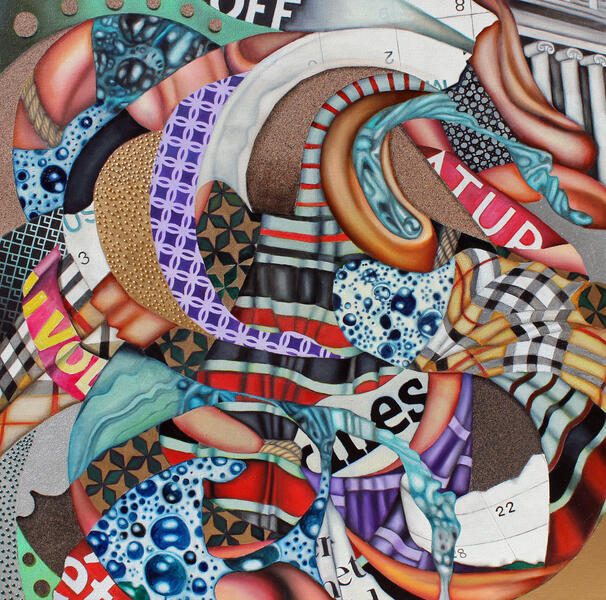 Cyclic
oil, textured spray paint, metallic leaf, pearl pen, glitter, on canvas, 36x36
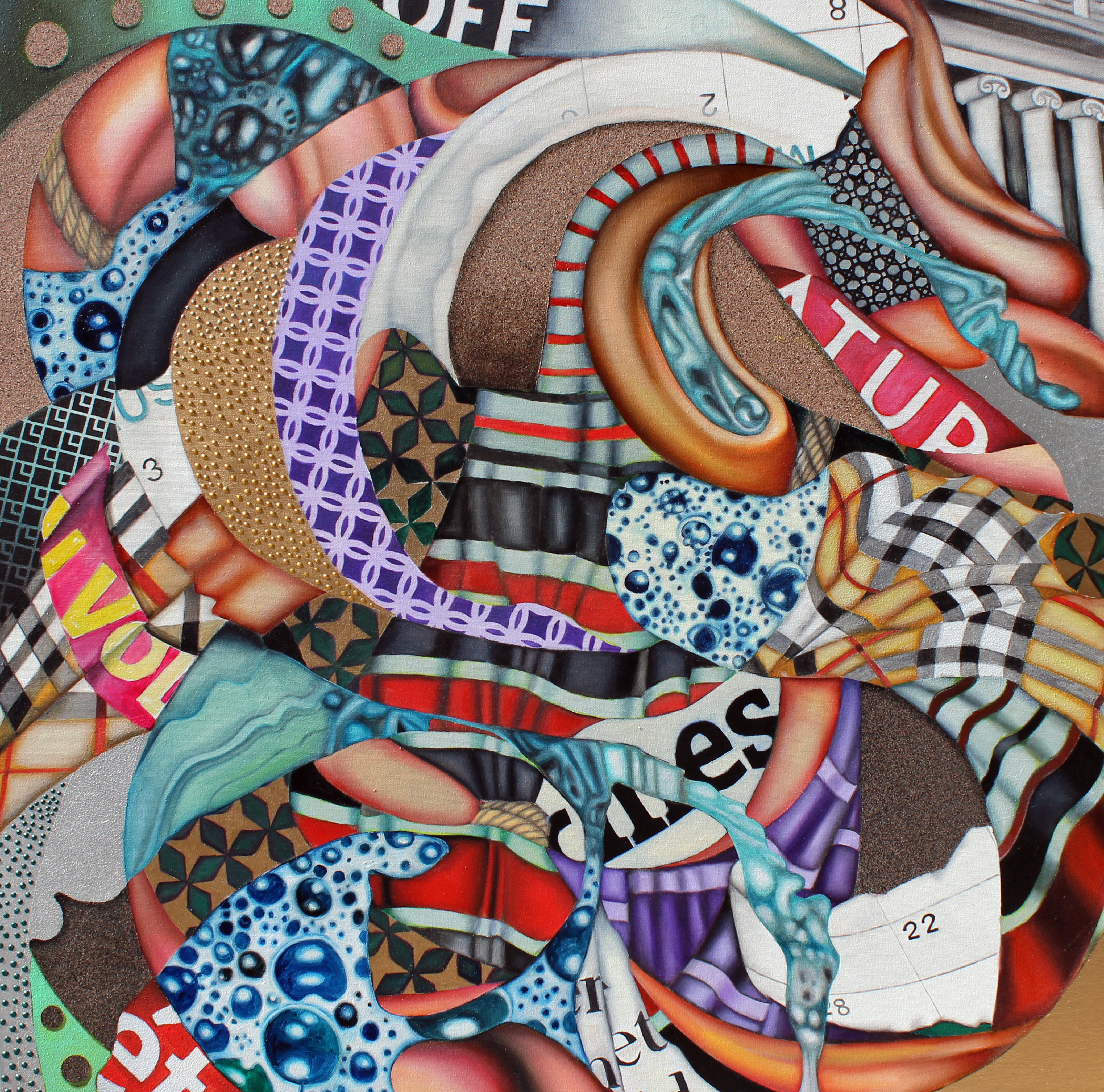
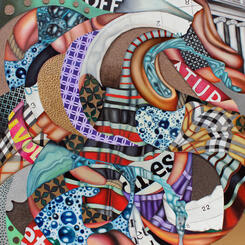
Fragments of patterns, textures, and calendar clippings revolve in a circular motion, suggesting the passage of time and cyclical repetition. Set against the fixed backdrop of a Greek temple--an emblem of permanence and order--the swirling elements disrupt classical stability, collapsing past and present into a single, restless moment. Oil, textured spray paint, metallic leaf, pearl pen, glitter, on canvas, 36x36
-
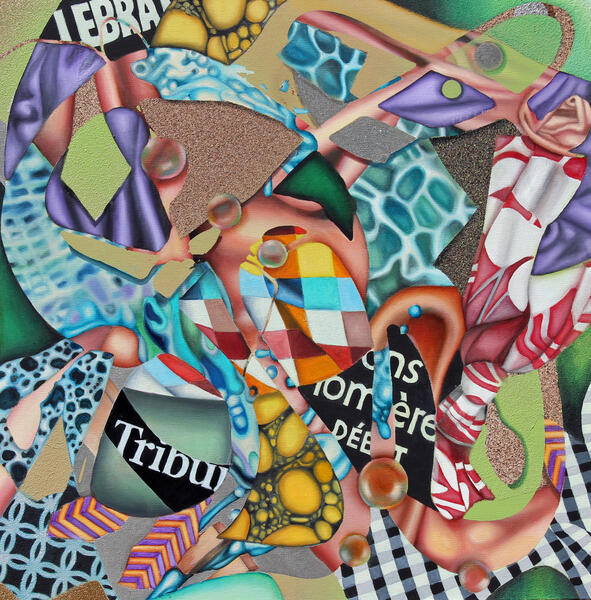 Bubbles
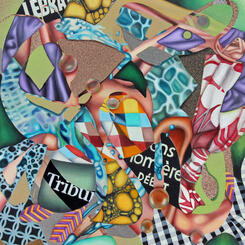
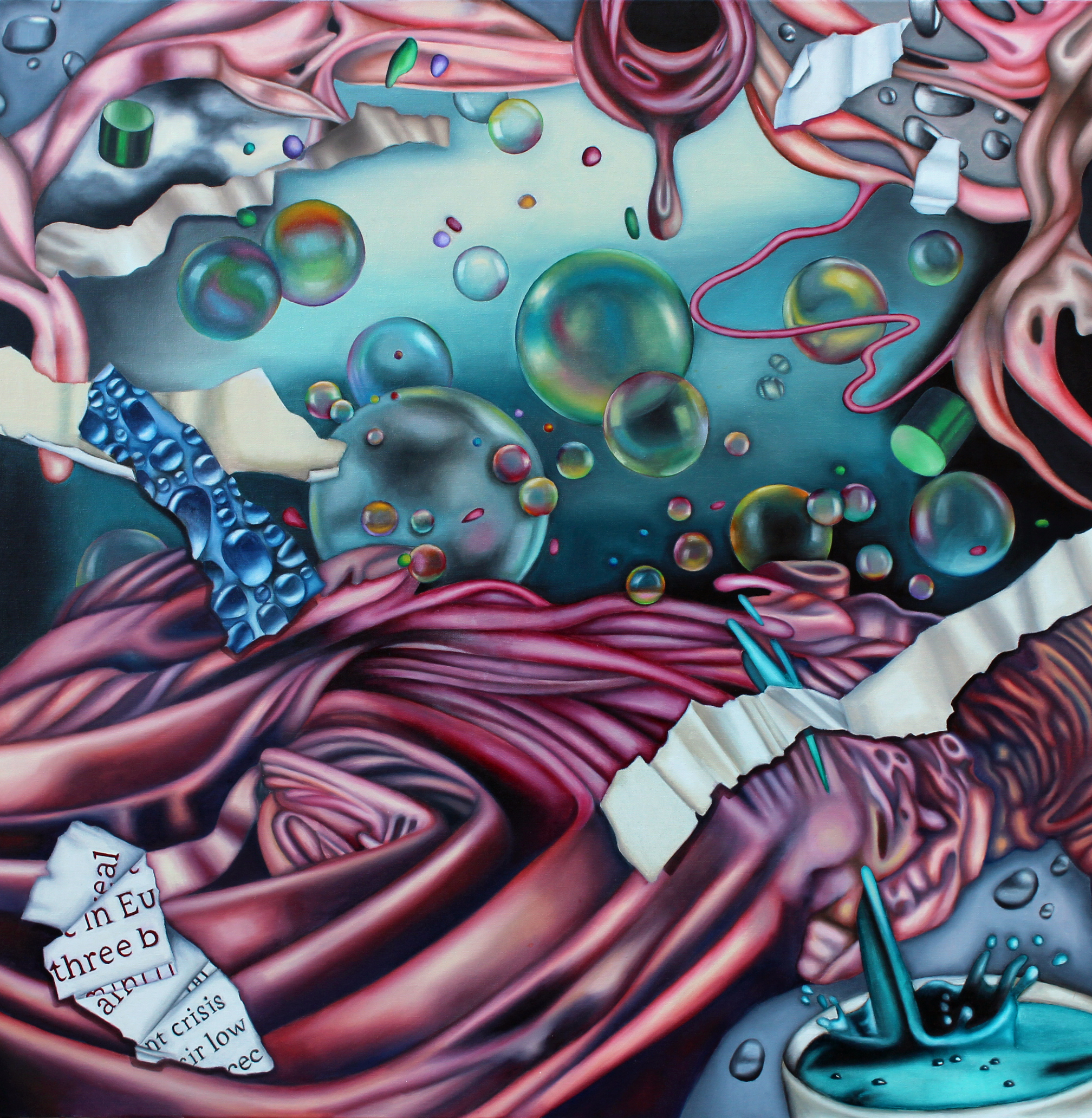
Bubbles rise from a circular convergence of fabrics, text, and amorphous shapes, unified by the movement of water. Oil, metallic leaf, textured spray paint, on canvas, 36x36
-
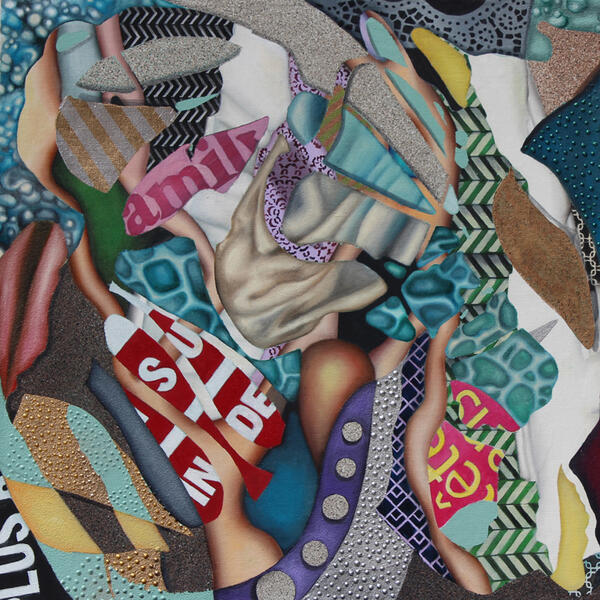 Colors and Whites
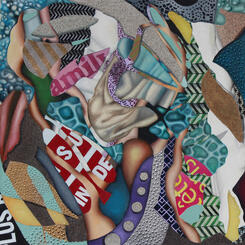
The random assortment of items in a washing machine suggests permeability and transition, where language and material dissolve, circulate, and transform. Oil, metallic leaf, pearl pen, textured spray paint, on canvas, 24x24
-
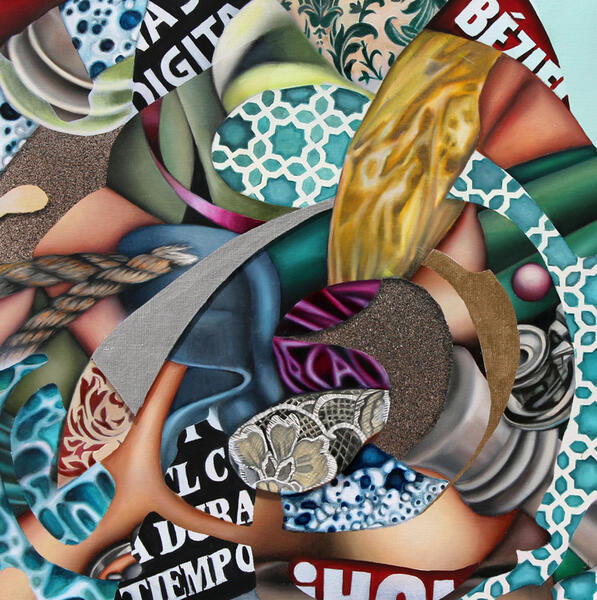 Cyclical
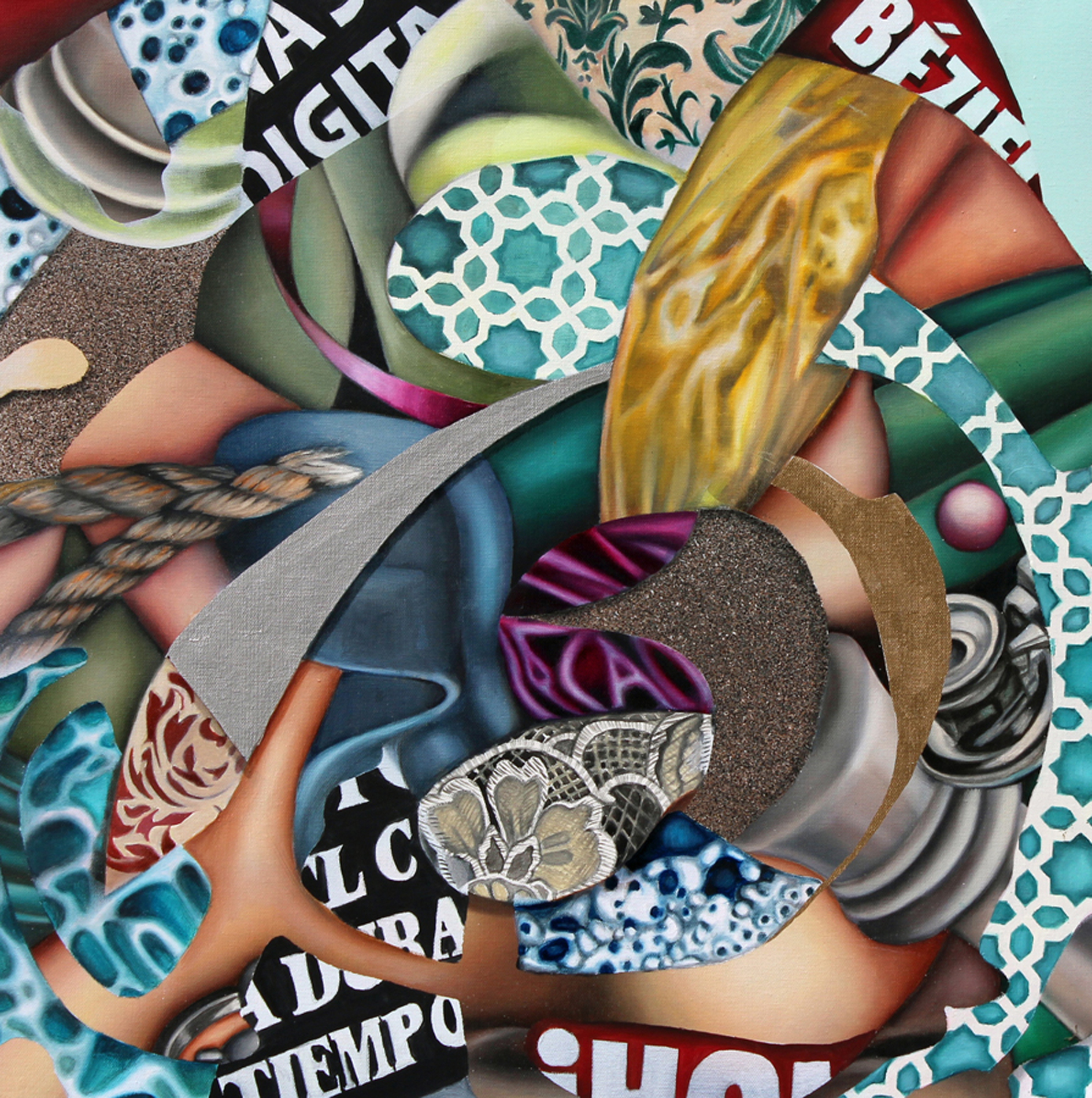
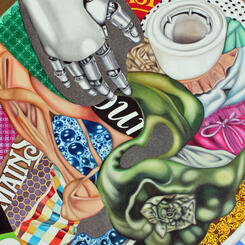
More aggressive circular movement in this painting suggests agitation and chaos. Spanish, French, and English words create a feeling of universality. This painting also includes chess pieces--a universal symbol of rational thinking--perhaps a way out of the chaos. Oil, metallic leaf, pearl pen, textured spray paint, on canvas, 24x24
-
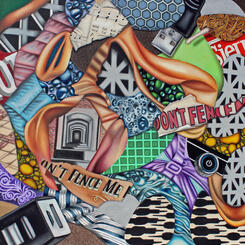
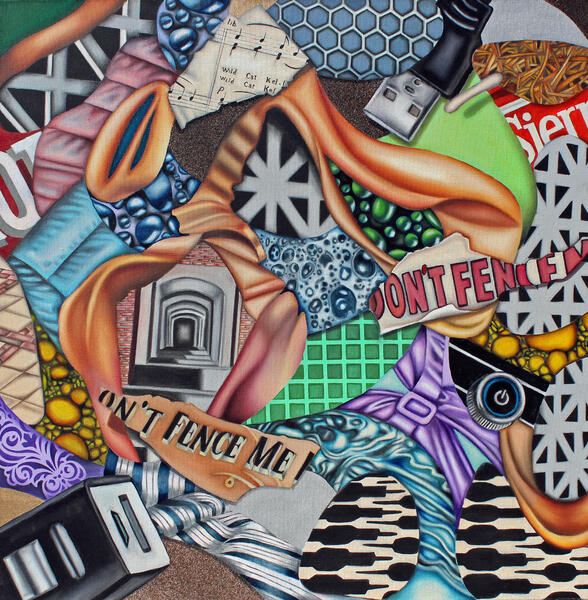 Don't Fence Me In
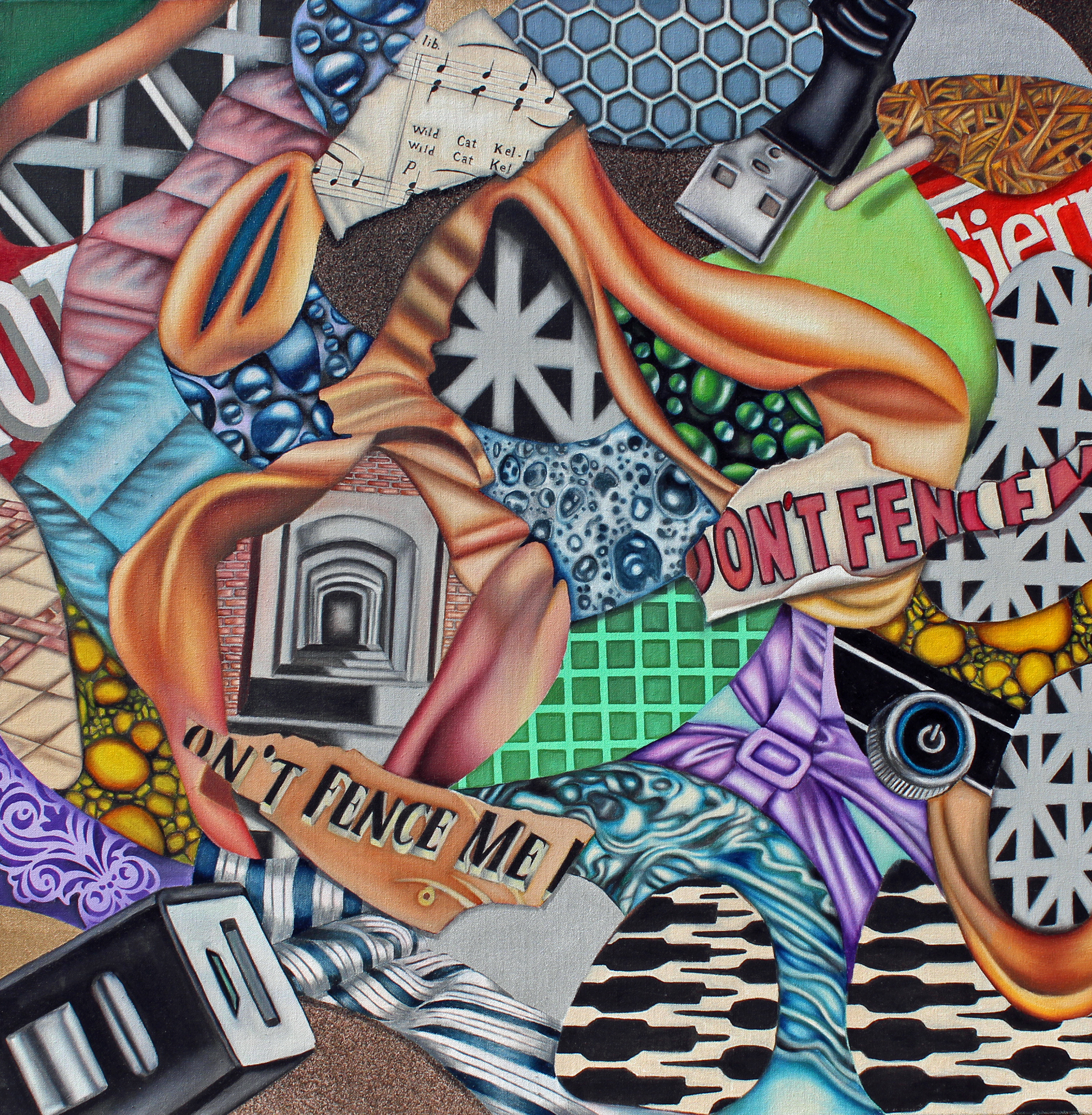
A refrain from the song "Don't Fence Me In" echoes amidst receding architectural structures, highlighting a need for escape. At the same, a computer cord searches for a power source, suggesting the need to connect. Oil, textured spray paint, oil on canvas, 36x36
-
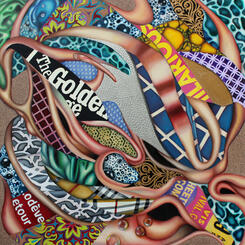
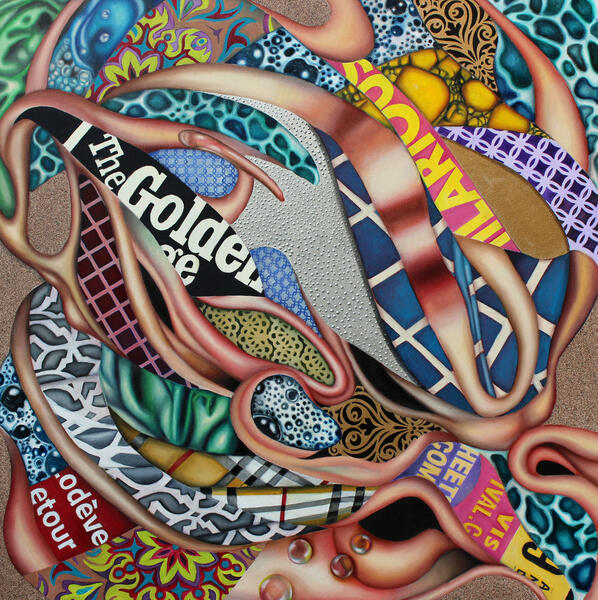 Fabrics
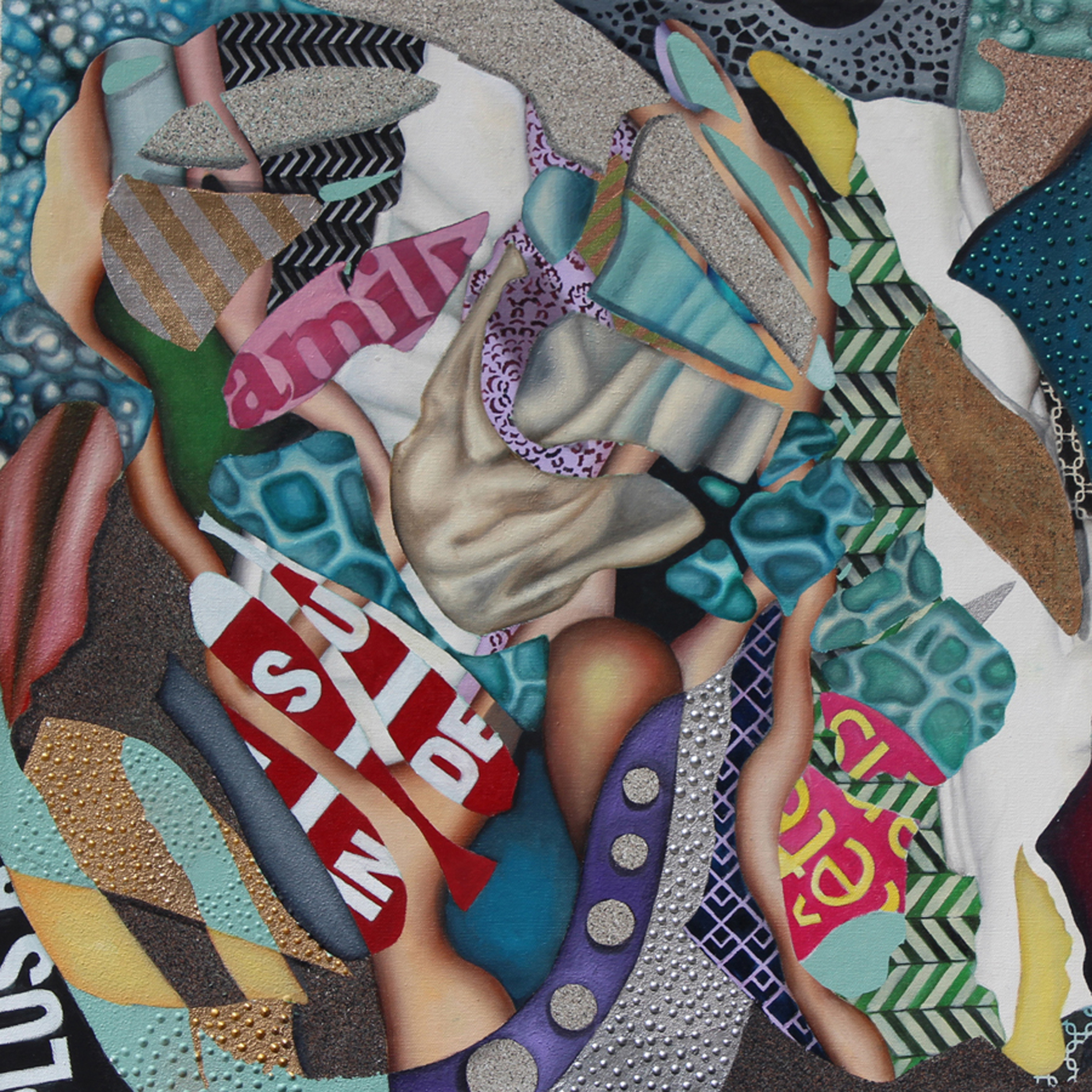
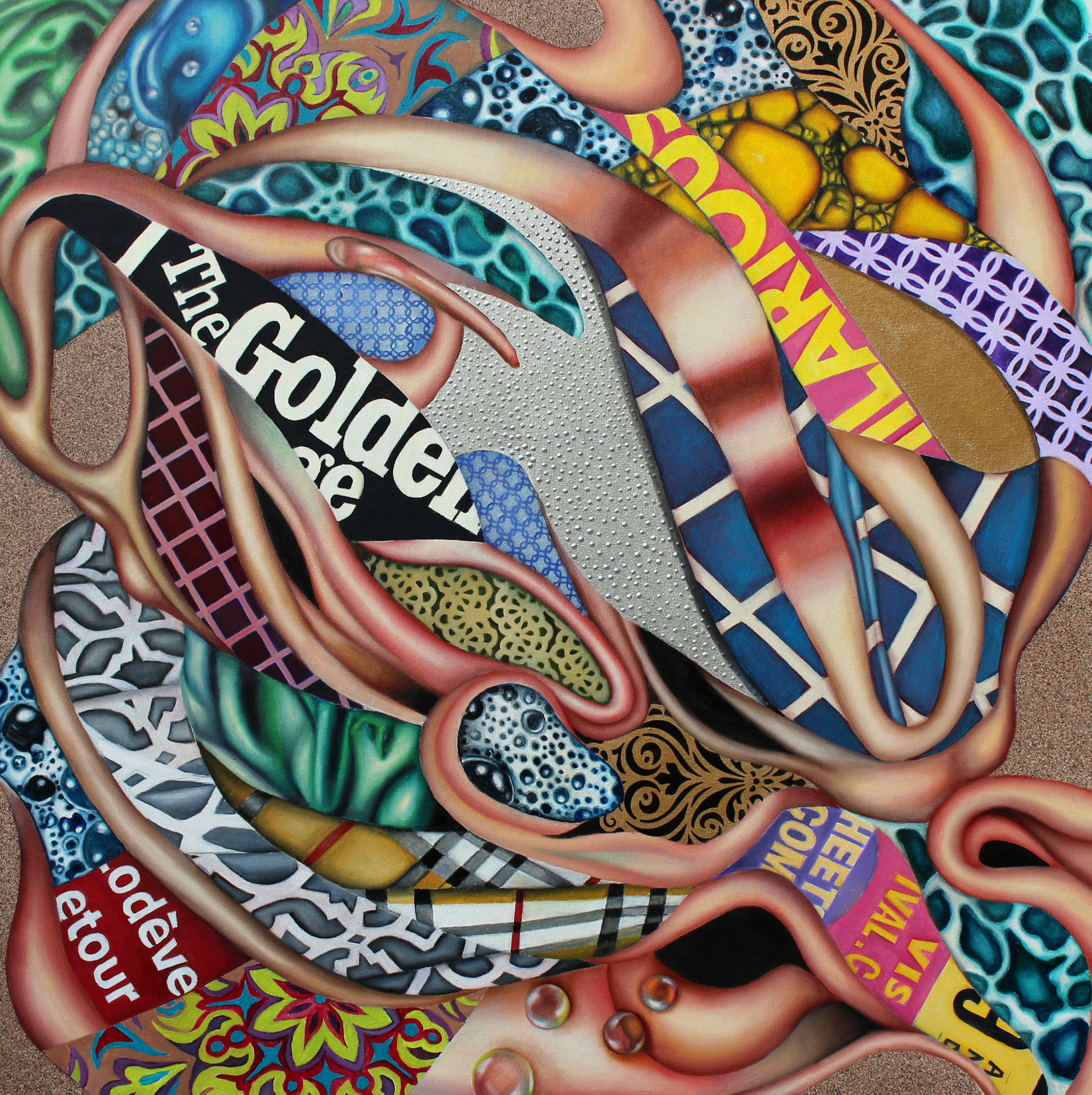
Somewhat ironically, the key word "golden" emerges in a whirlpool of endlessly shifting scenarios, thus highlighting the fleeting nature of daily life cycles. Oil, silver leaf, gold leaf, pearl pen, textured spray paint, on canvas, 36x36
-
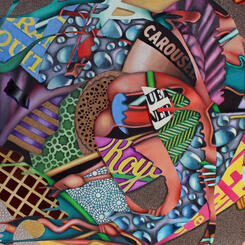
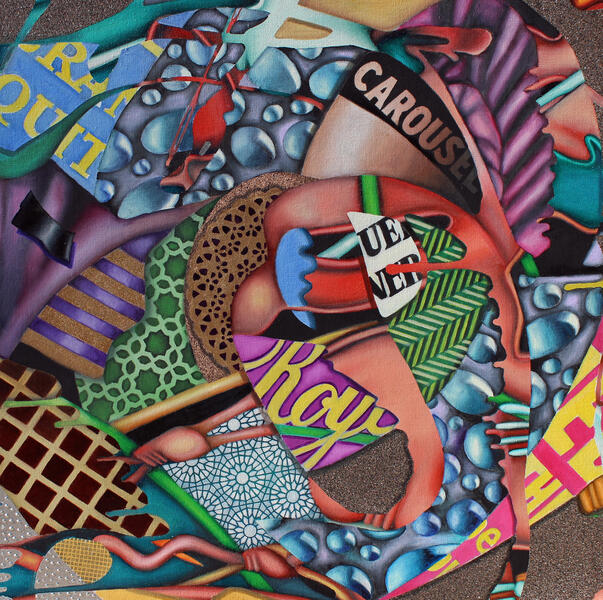 Carousel
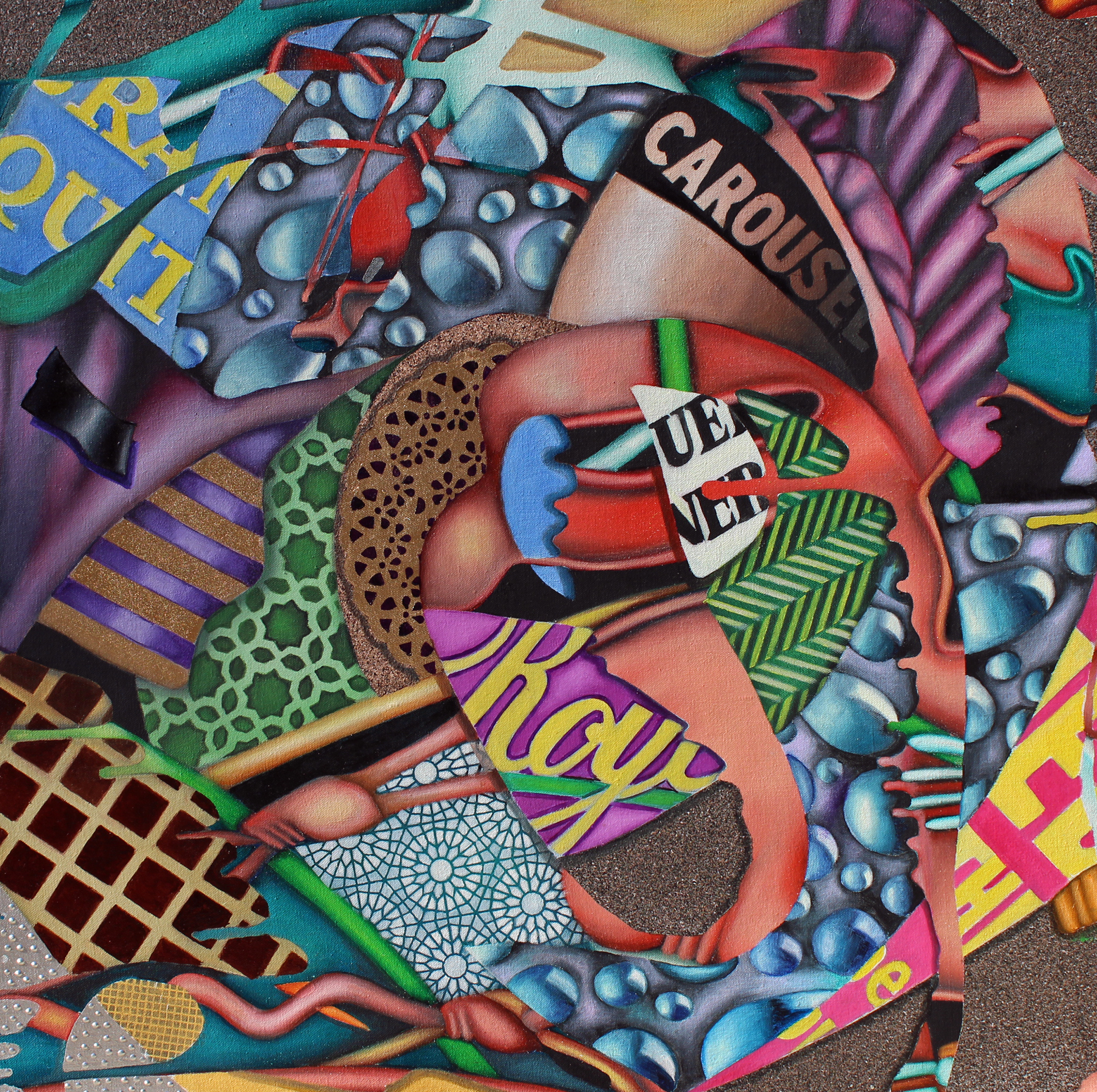
The inner and outer circles are almost dizzying, like a carousel. Oil, textured spray paint, metallic leaf, pearl pen, on canvas, 24x24
-
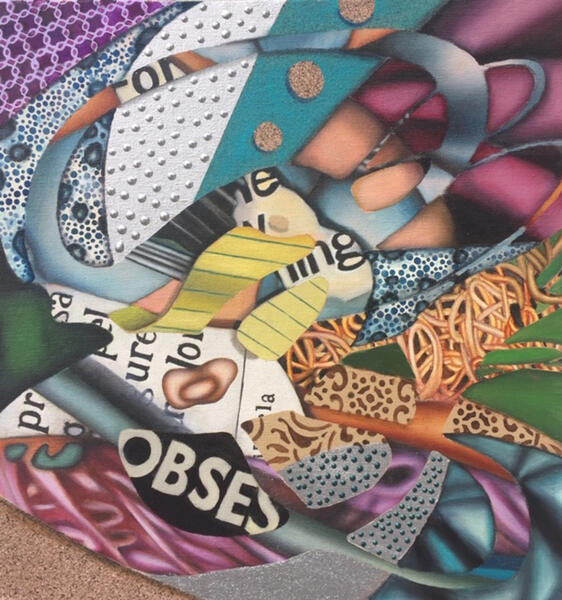 Obsession
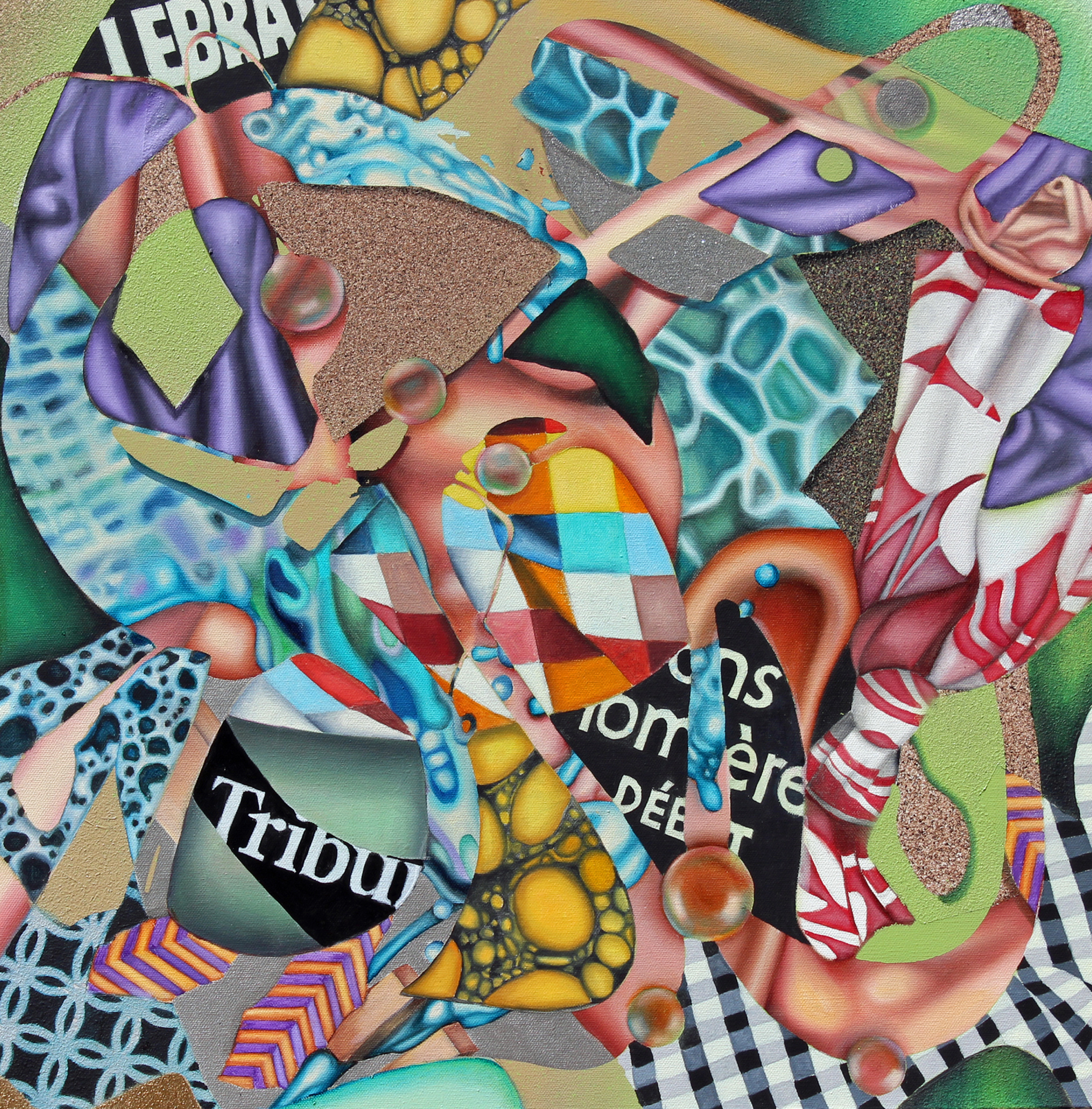
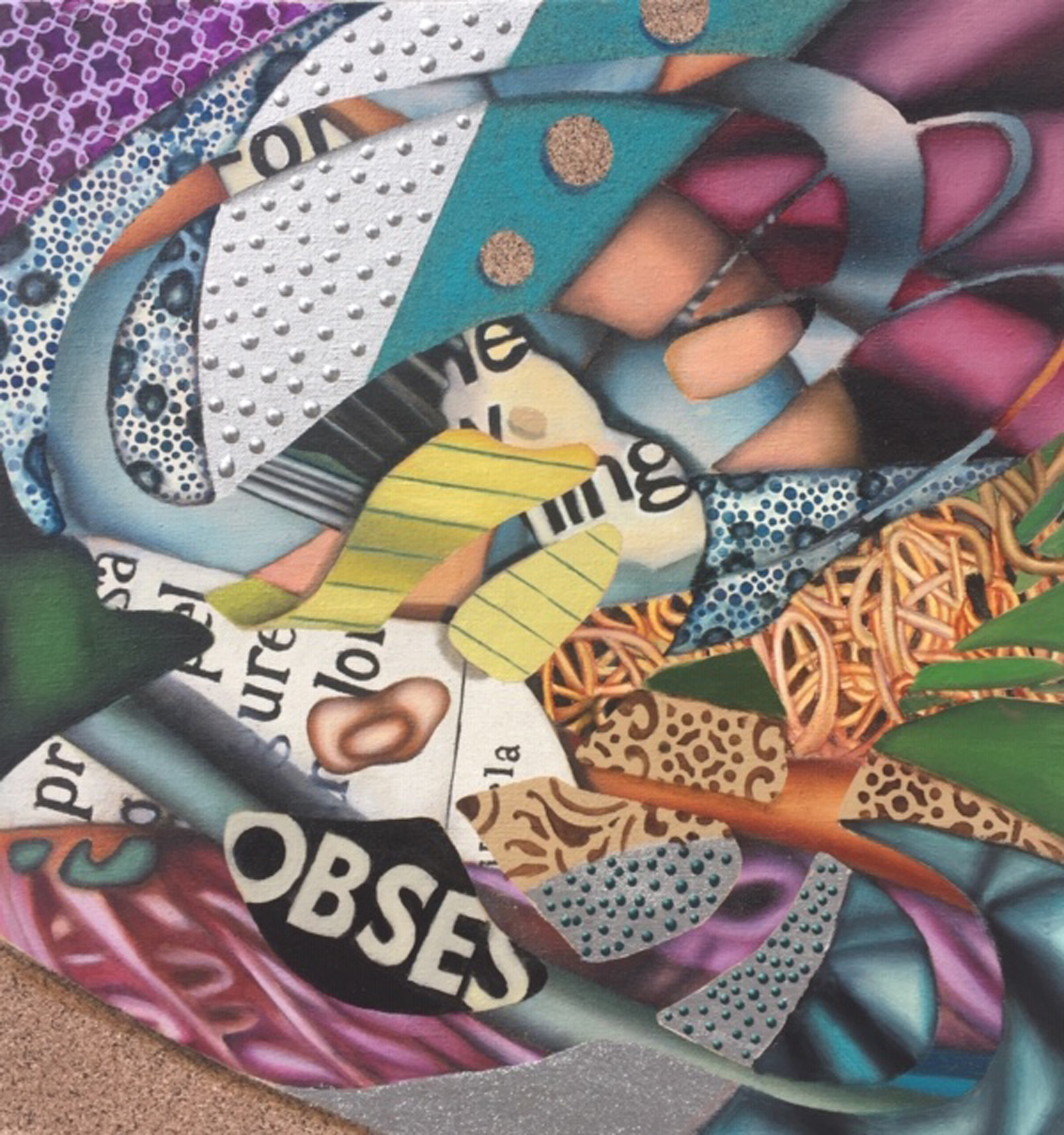
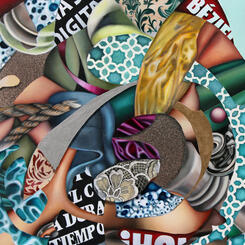
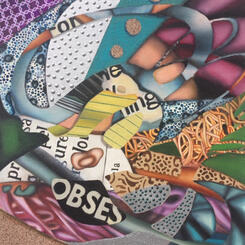
This small painting is awash with a variety of media. Oil, textured spray paint, metallic leaf, pearl pen, marker, colored pencil, on canvas, 20x20
Celebrations
-
 Effervescence
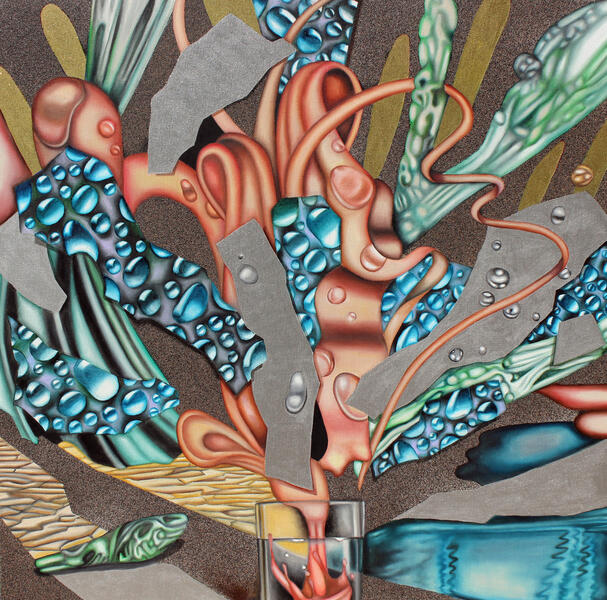
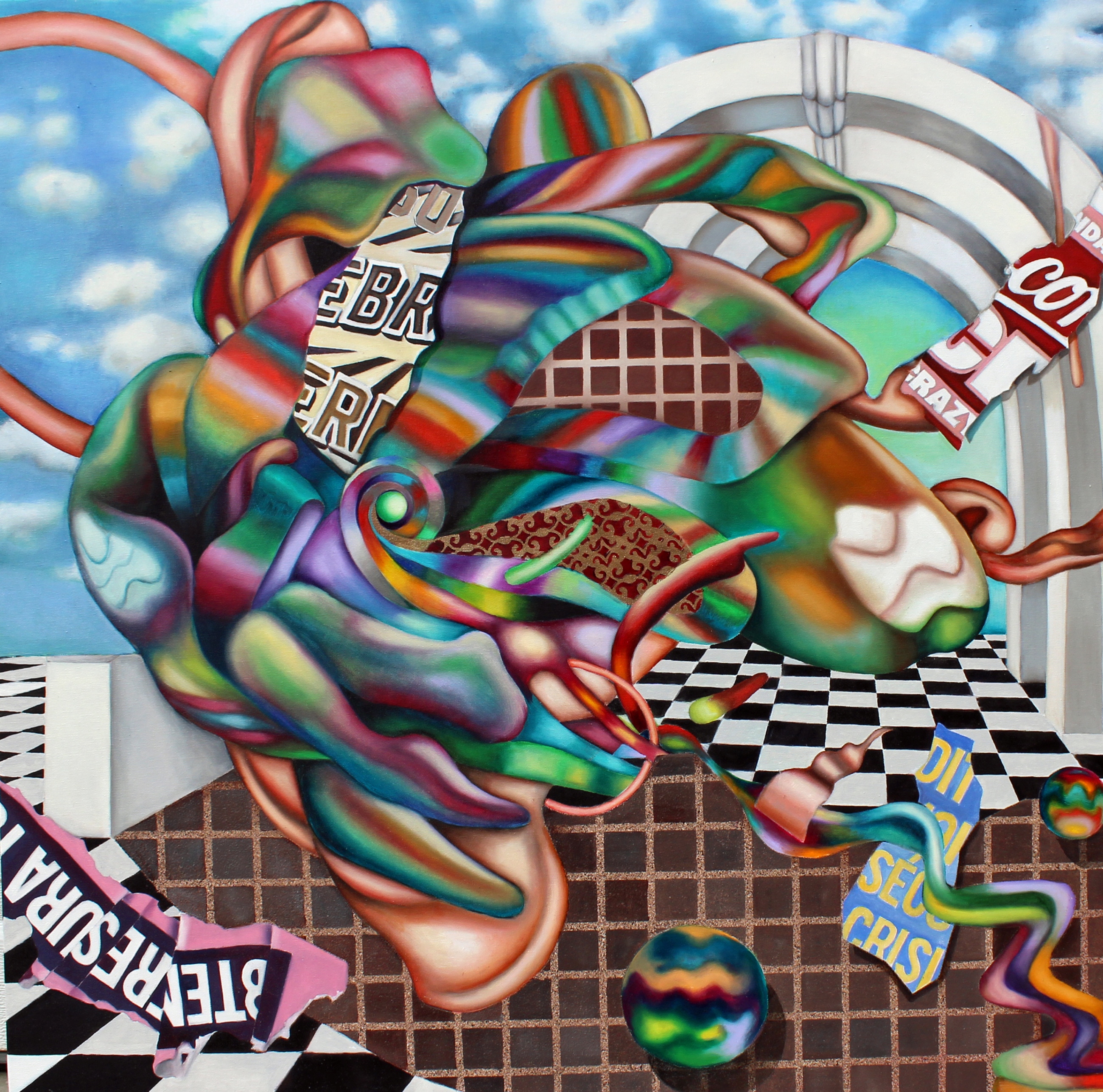
An explosion of textured forms burst out of a glass of water, illustrating that a glass of water in the desert is truly something to celebrate. Oil, metallic leaf, glitter, textured spray paint, on canvas, 36x36
-
 Celebration
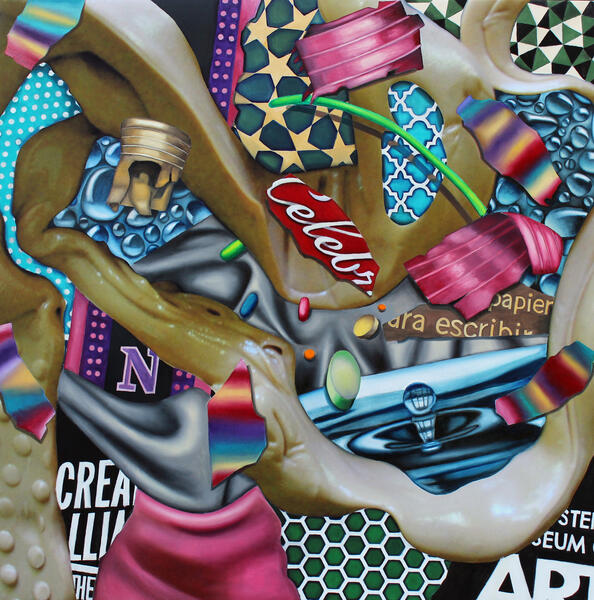
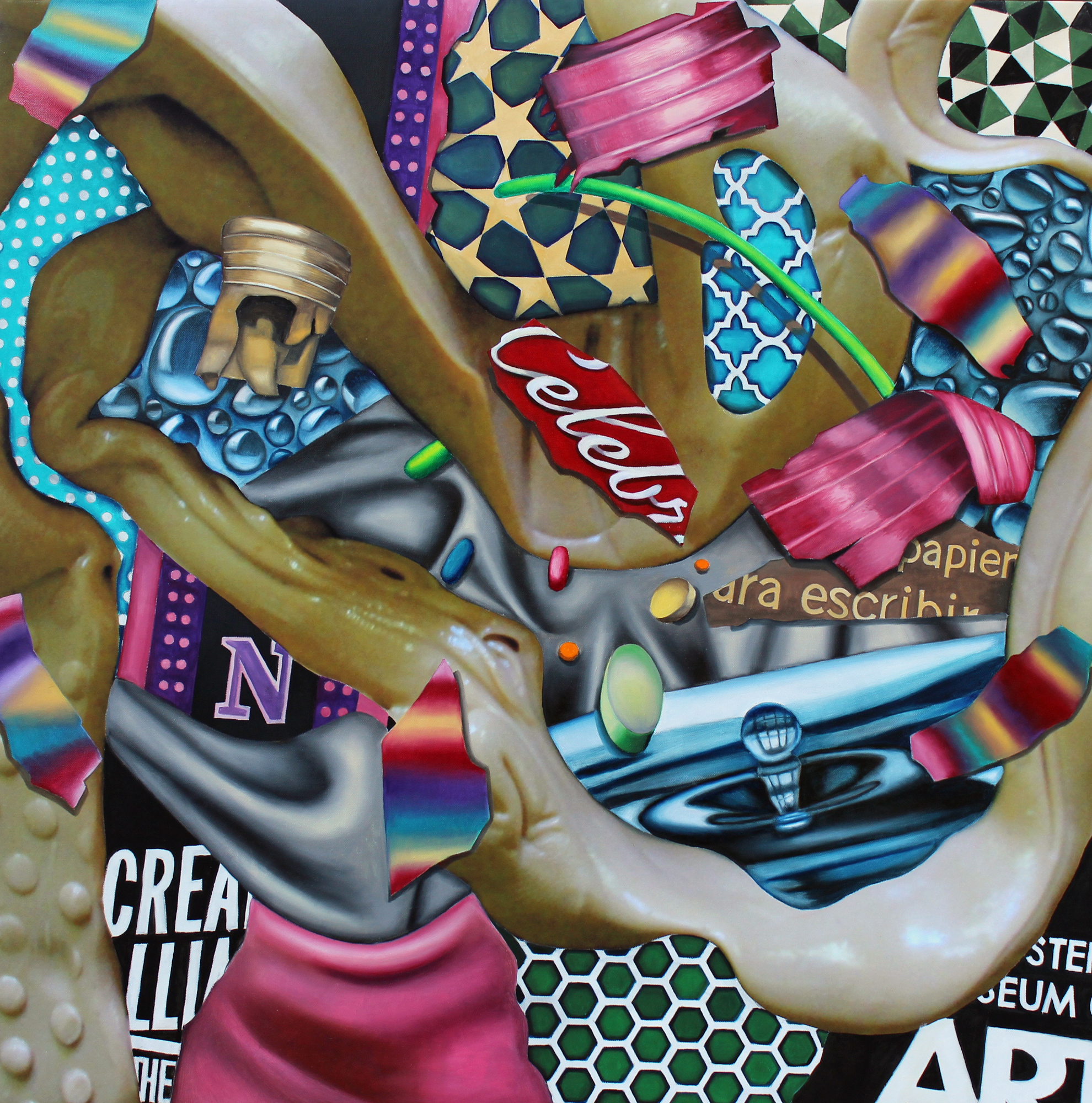
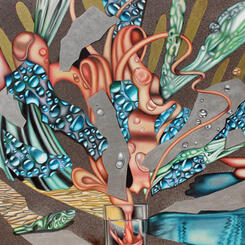
This large photographic print on canvas that has been blocked out with gesso and "garnished" with oil-painted scraps, some of which came from remnants of images from the Creative Alliance. The painting is a tribute to the creative process itself. Oil, archival ink, metallic leaf, acrylic, on canvas, 36x36
-
 Rainbow Splash
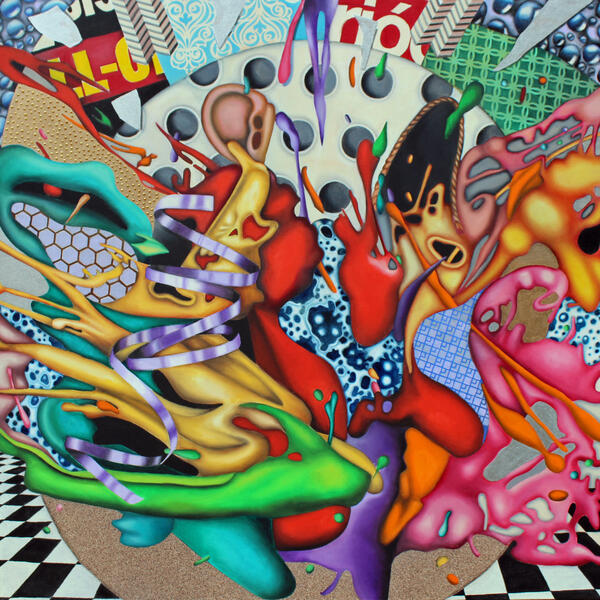
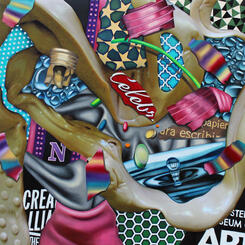
This painting, with explosive rainbow colors, was originally inspired by the massacre that took place in the Pulse nightclub, albeit not a cause for celebration, but a nod to the underlying concept of a celebration of diversity. Oil, metallic leaf, glitter, pearl pen, textured spray paint, on canvas, 36x36
-
 Party
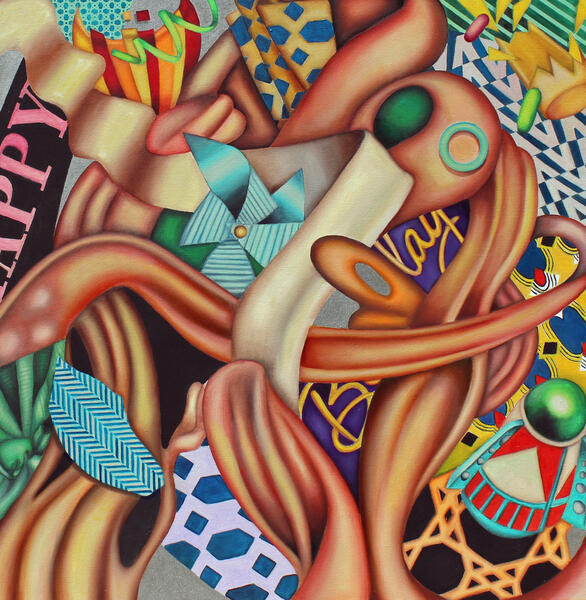
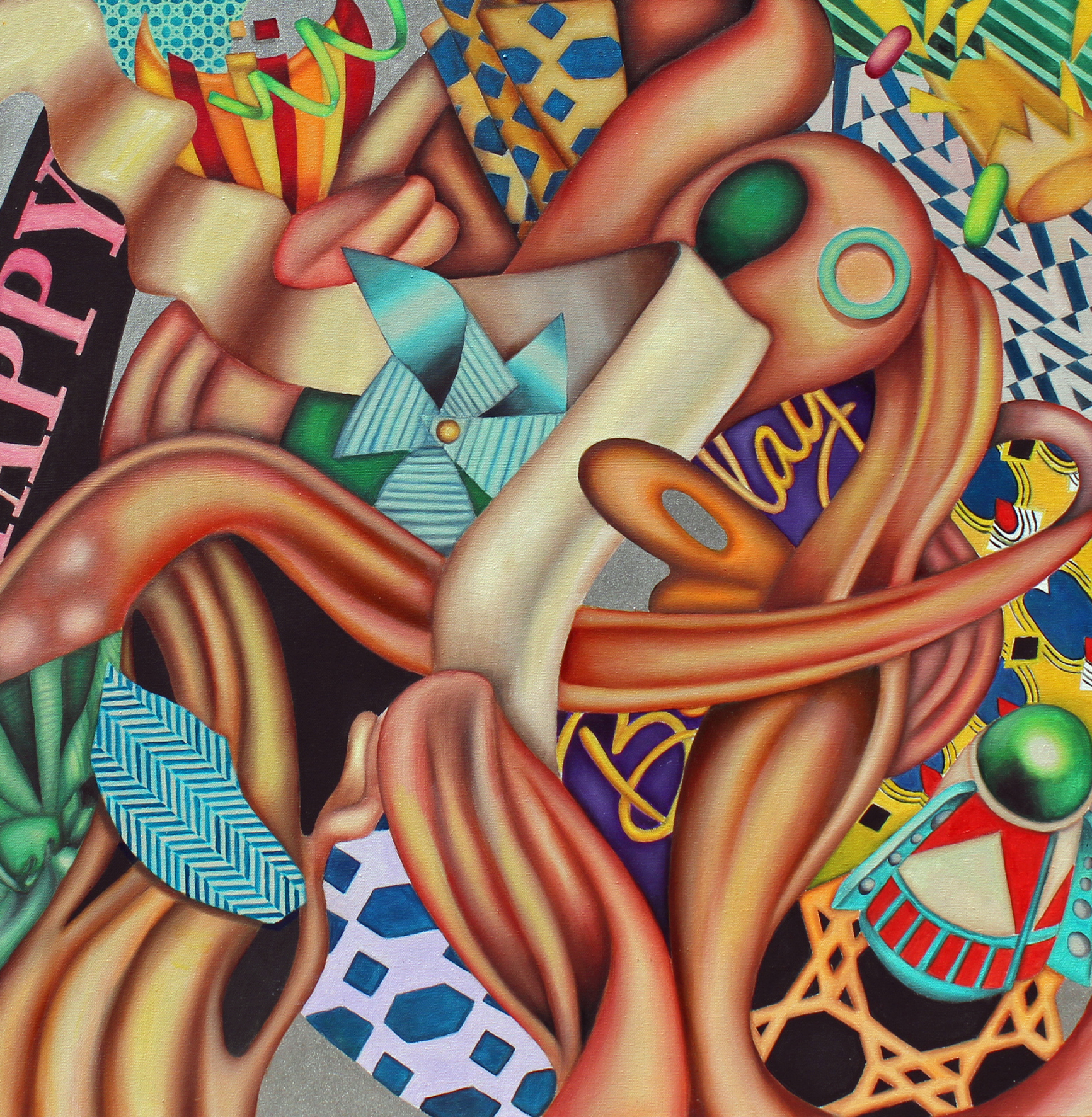
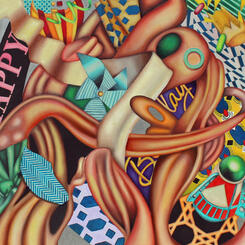
PartyA birthday party, complete with pinwheels, ribbon, wrapping paper, and remnants of birthday cards, all bound together by flesh-colored forms symbolic of the human connection, captures a quintessential celebration. Oil, metallic leaf, glitter, on canvas, 36x36
-
 Rainbow Unleashed
.
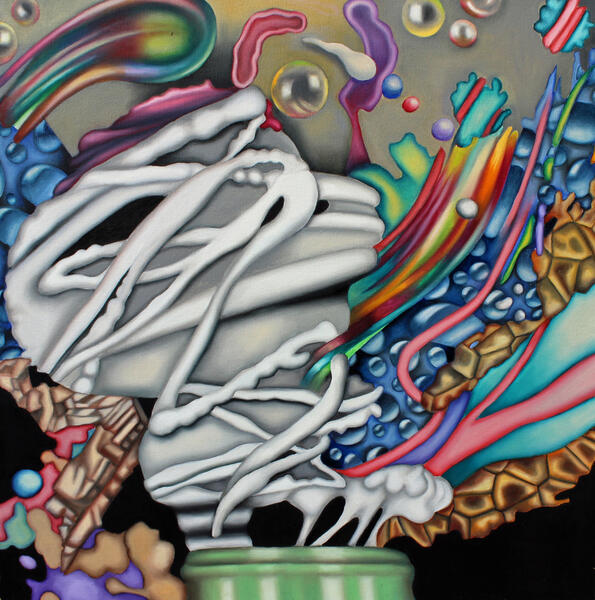
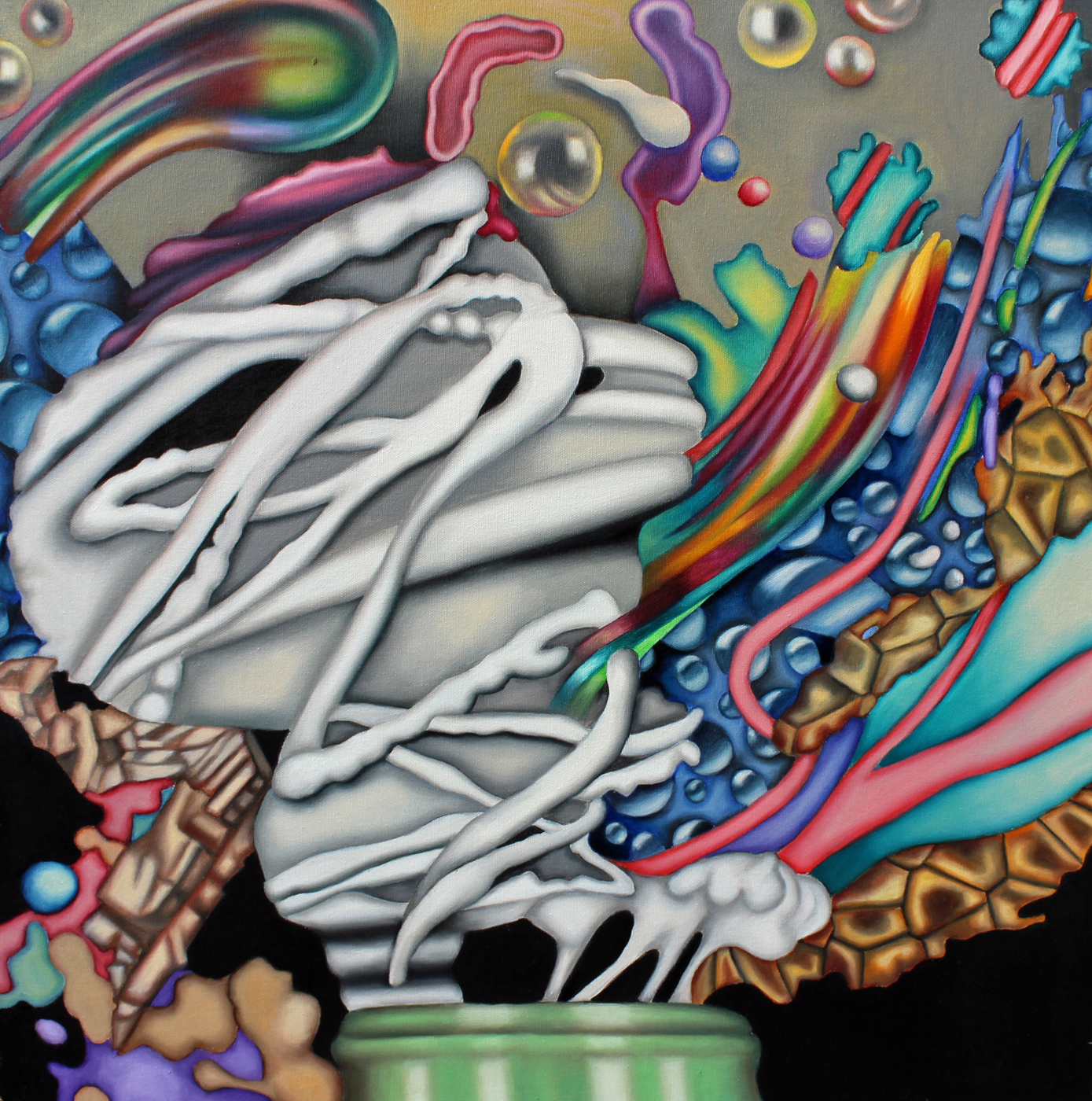
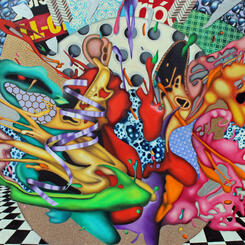
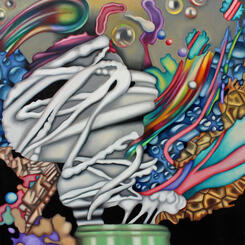
Iridescent bubbles and amorphous rainbow shapes explode out of a jar unleashing pent-up emotions that simulate the creative process and extol diversity. Oil, metallic leaf, on canvas, 24x24
-
 Housewarming
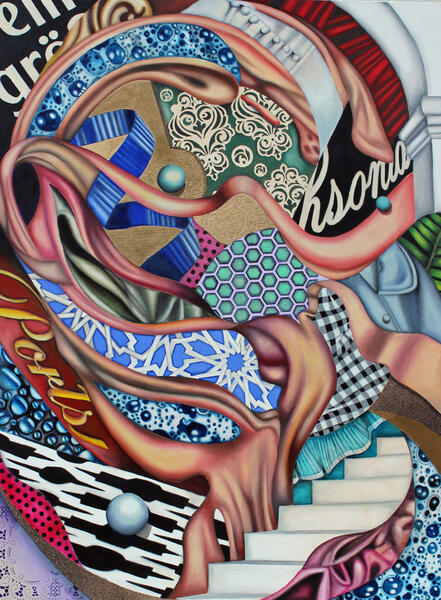
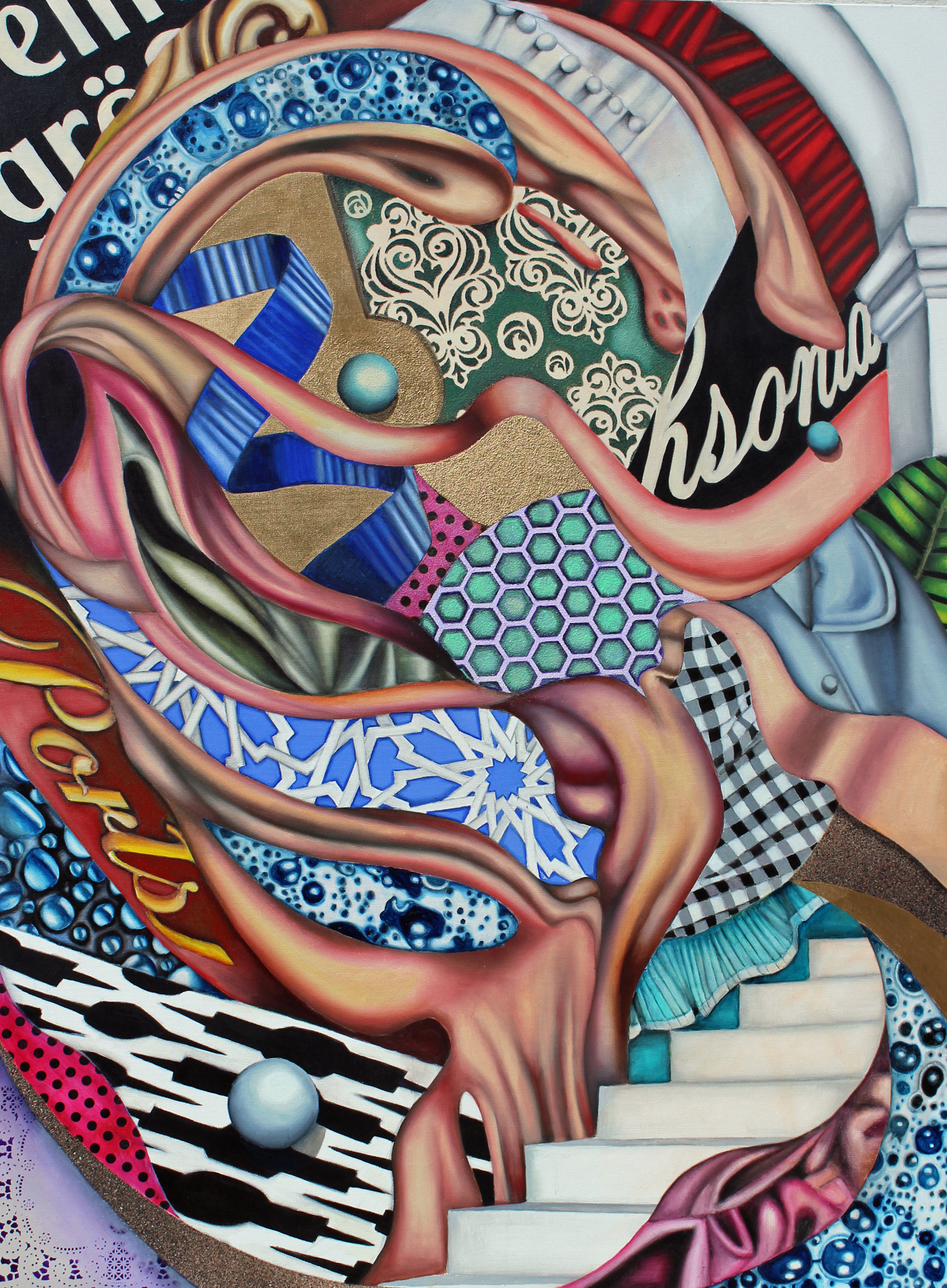
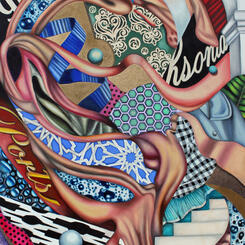
Arabic tiles, upholstery, archways, marble stairs--a splash of elegance in a house awaiting a grand opening. Oil, gold leaf, textured spray paint, on canvas, 36x48
-
 Thrills and Spills
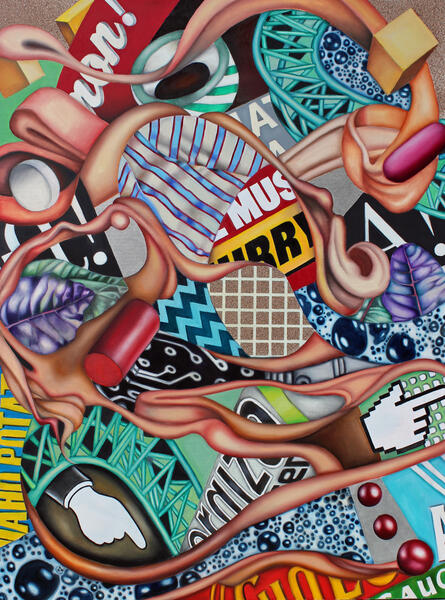
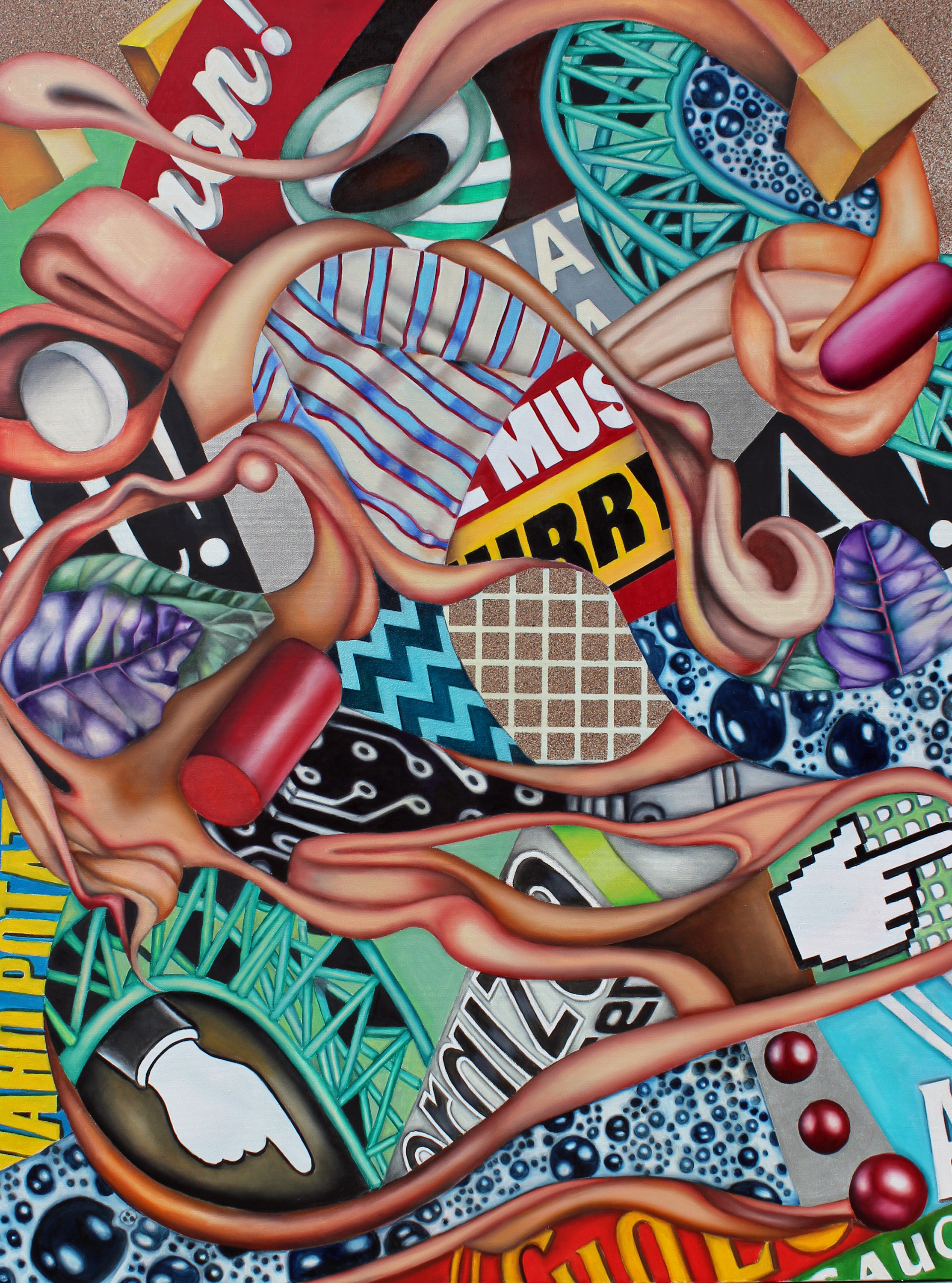
Capturing the exhilaration of an amusement park ride, this painting celebrates fleeting moments of joy. Oil, textured spray paint, on canvas, 36x48
-
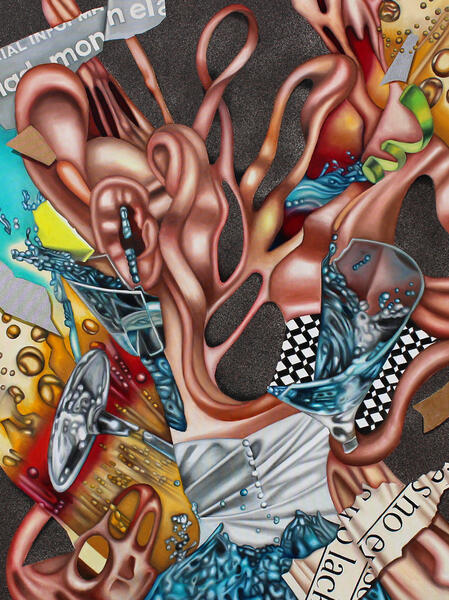 Bridal Bash
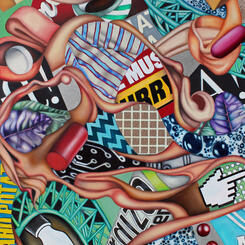
The backside of a button-down bridal gown seems to erupt with festivity as a glass shatters, suggesting the dangers of over-exuberance. Oil, textured spray paint, metallic leaf, glitter, on canvas, 36x48
-
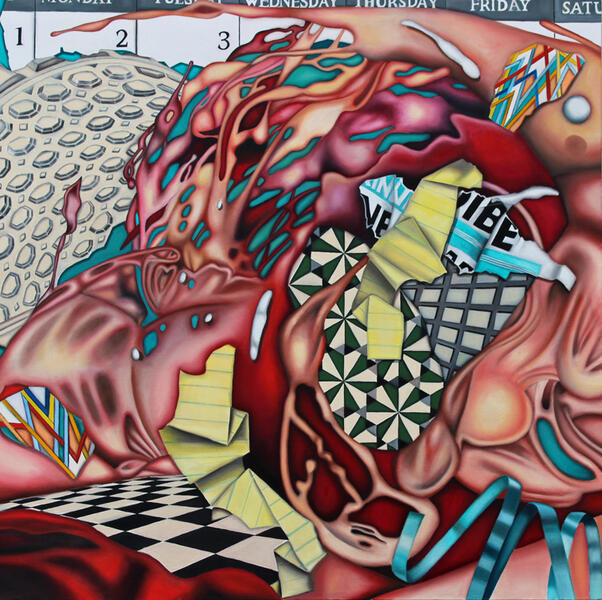 Epiphany
Sometimes it's hard to break through an existence bound by the cyclical routine of calendars and the mundane tedium of legal pads. Pictured in the background is the ceiling of the Pantheon, a symbol of self-reflection and spiritual light, and the source of a sudden, profound, moment of insight. Epiphanies are fleeting manifestations of joy and wonder. Oil on canvas, 48x48
-
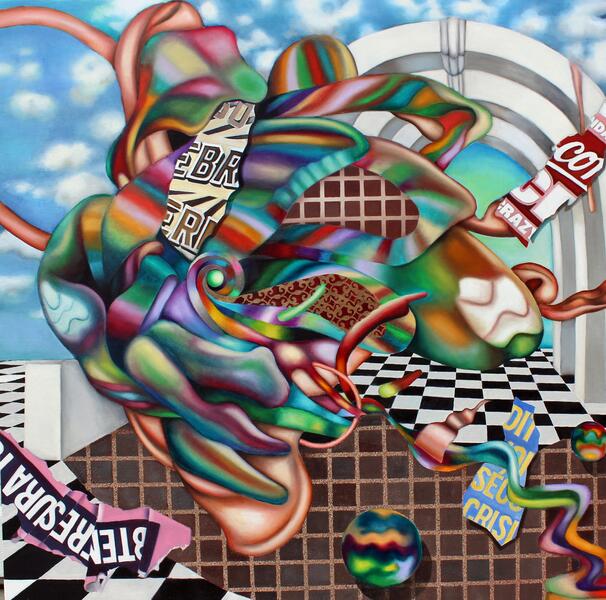 Dancing Rainbow
A rainbow shape with multi-colored ballet slippers seems to dance above a brown grid as it floats up to the sky, conveying a feeling of exhilaration and escape from the mundane. Oil, textured spray paint, metallic leaf, on canvas, 36x36




Un-Escapes
-
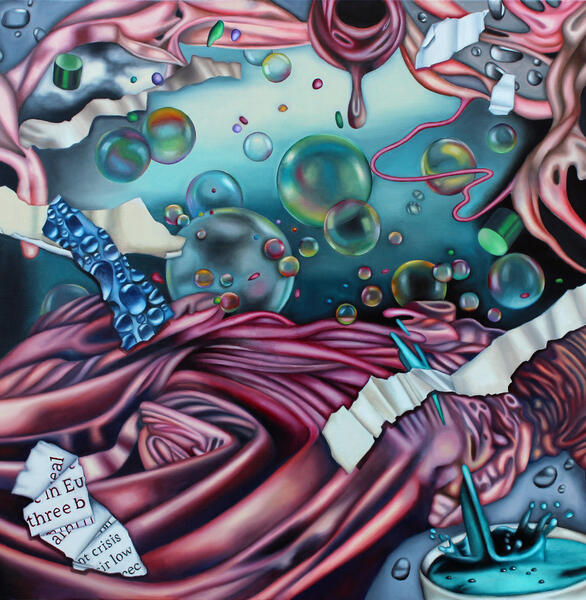 Storm
StormOil on canvas, 36 X 36
Not only does this painting refer to a storm, but it is also refers to a recent volcanic eruption in the Volcanic National Park in Hawaii. As liquid continues to pour forth, lava hardens in the foreground of an apocalyptic scene. Bubbles rise from the surface, suggesting the fleeting nature of such a disaster. Oil on canvas, 36x36.
-
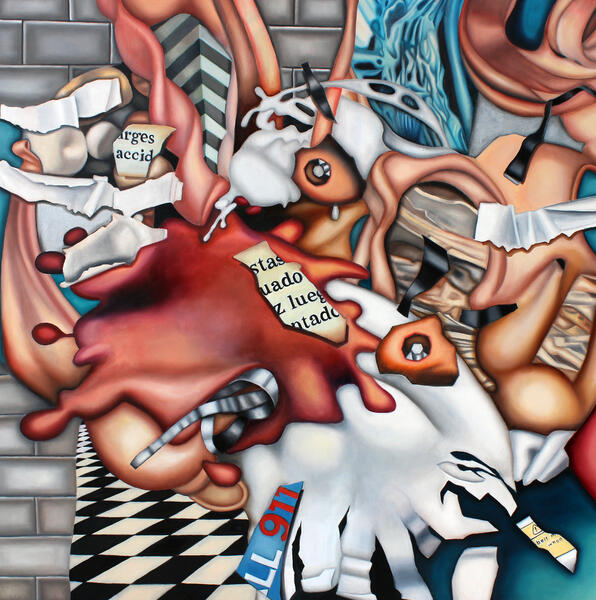 Crash
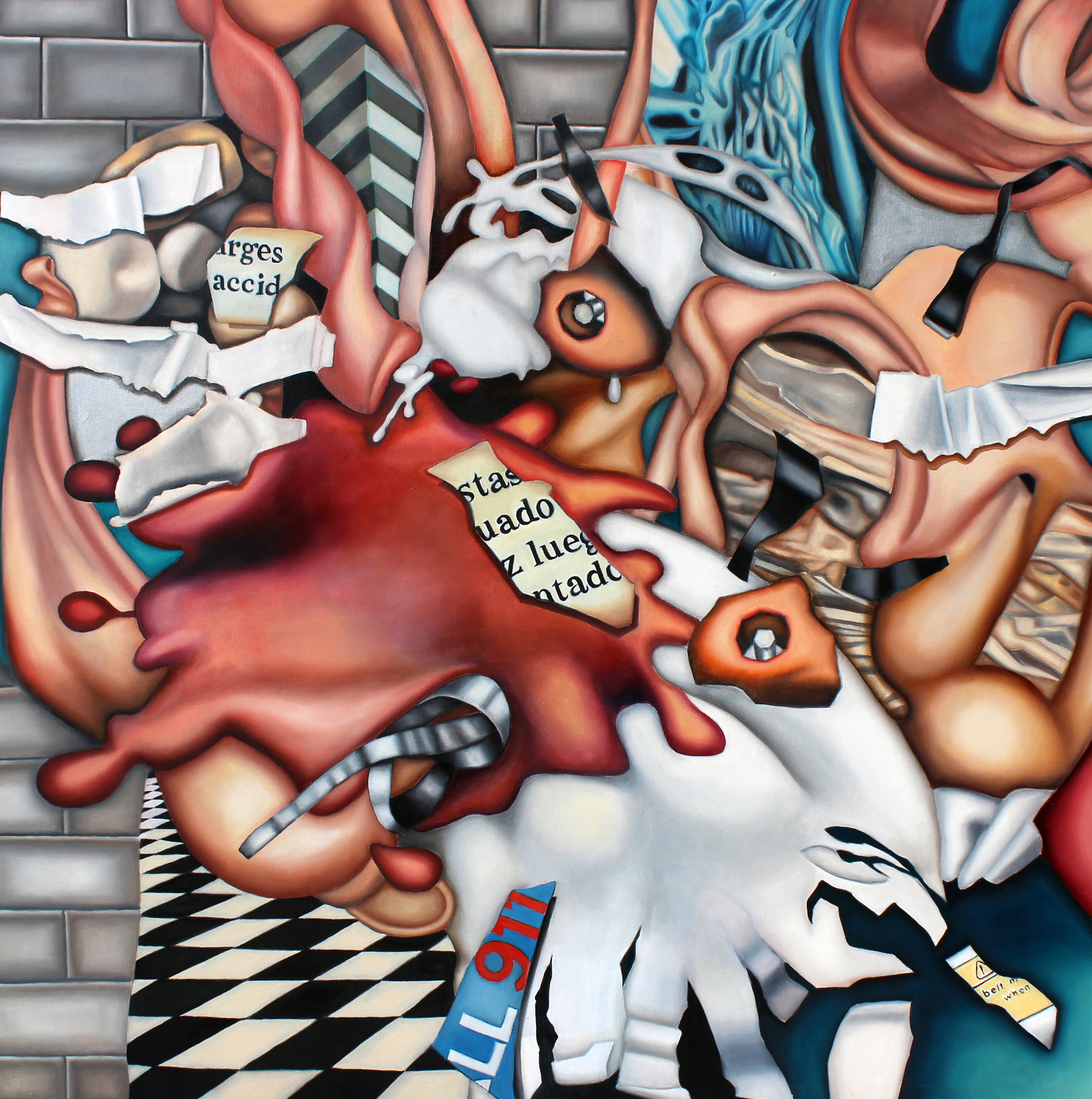
CrashDepicted here is a test crash with exploding airbags, pieces of a crash dummy, and other debris. Oil on canvas, 36x36
-
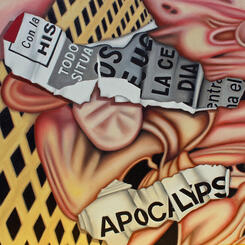
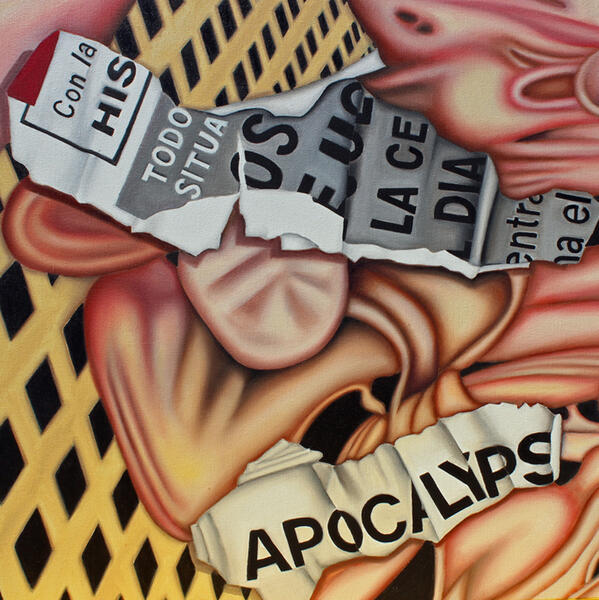 Apocalypse
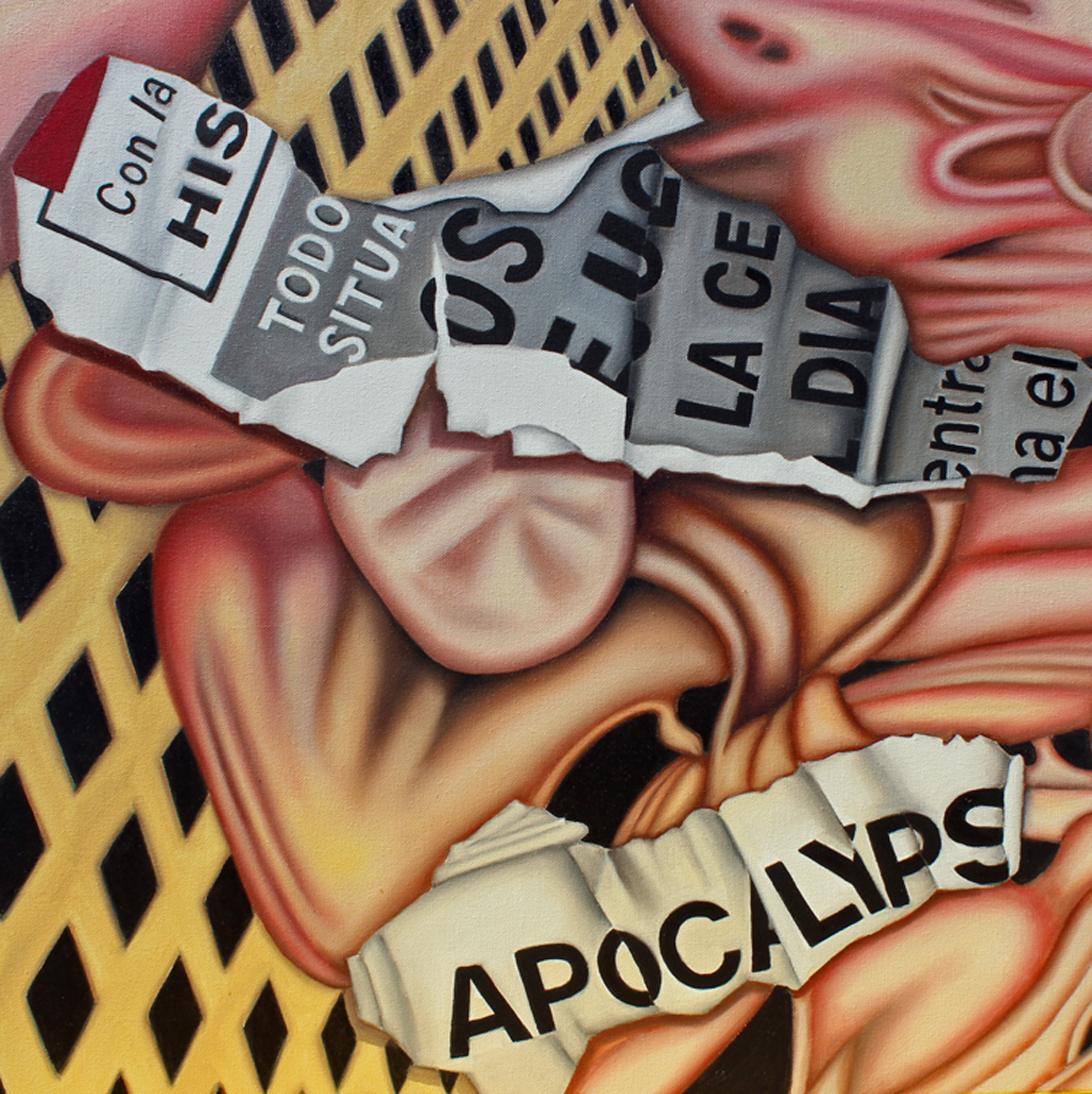
The insidious spilling forth of toxic liquids on our structured surfaces is reminiscent of urban blight. Oil on canvas, 24x24
-
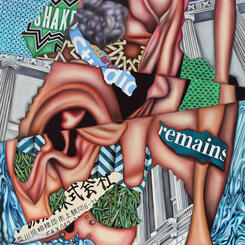
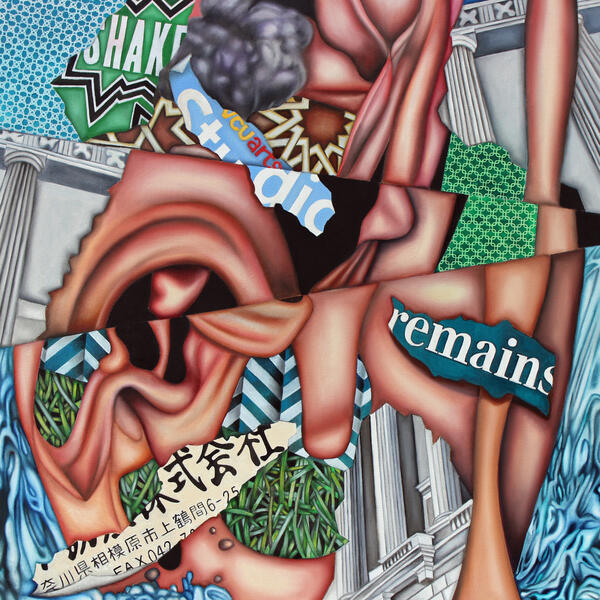 Earthquake
The three divisions and subsequent mis-alignments depicted in this painting emulate the shifting of tectonic plates that one experiences in an earthquake. Oil on canvas, 36x36
-
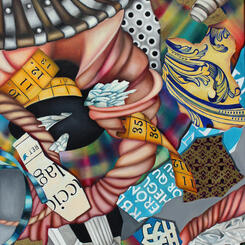
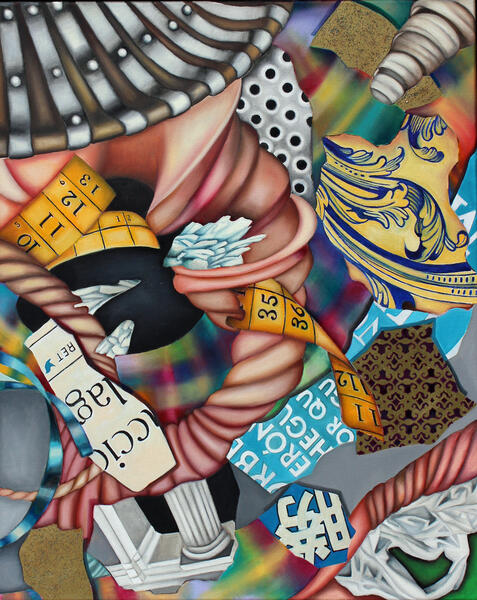 Twister
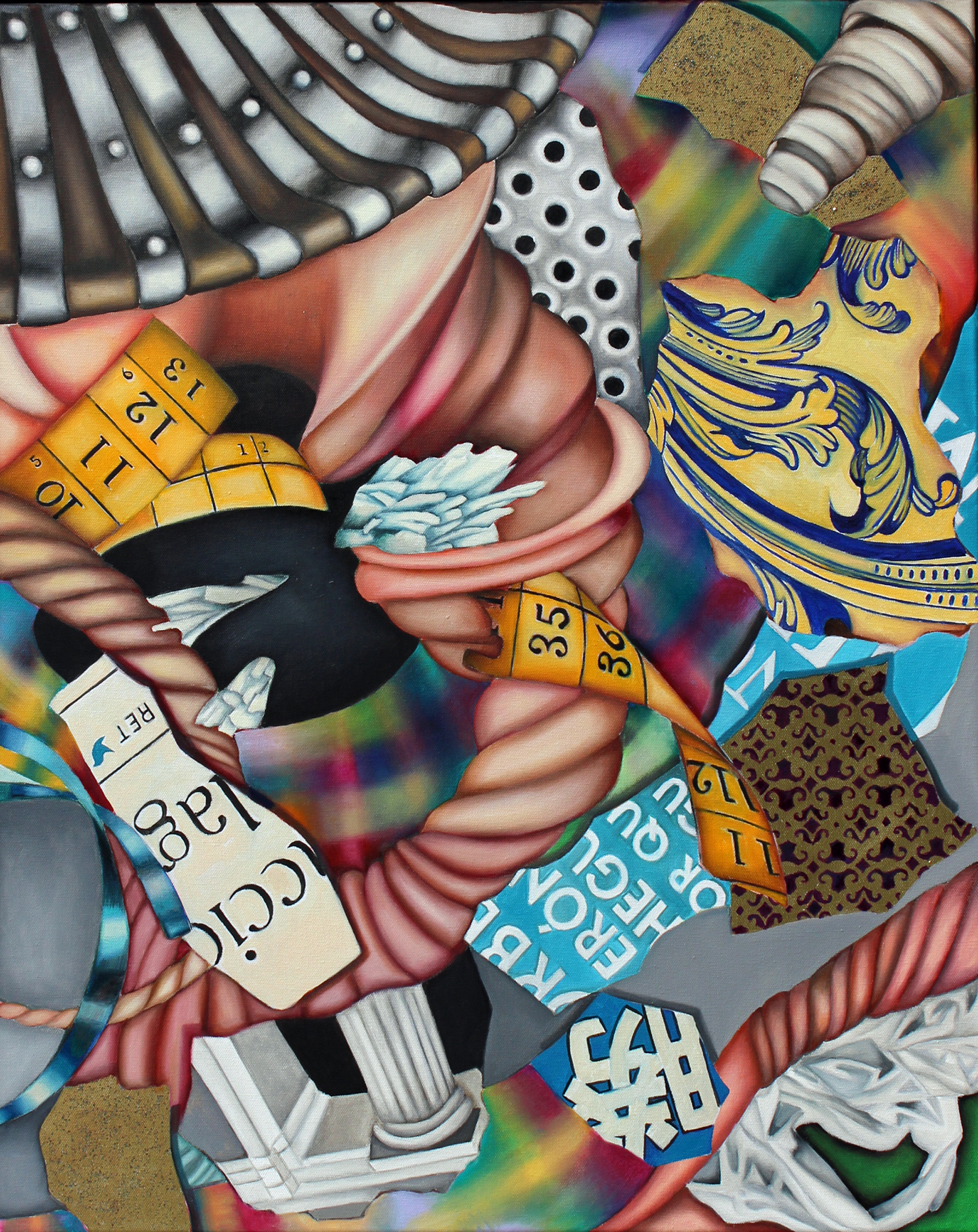
The writhing blend of random elements suggests the random and unpredictable nature of a twister disaster. Oil, metallic leaf, on canvas, 24x30
-
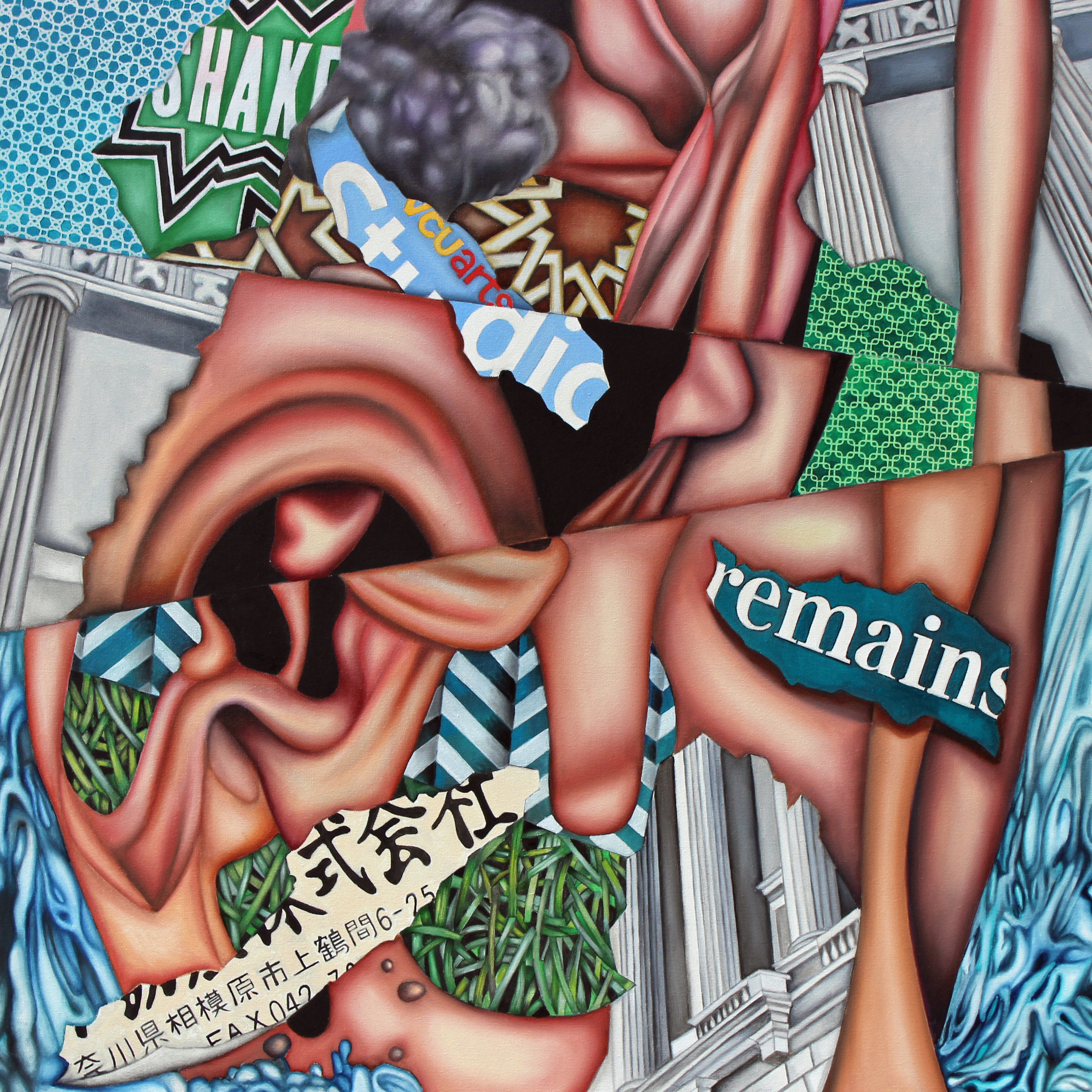
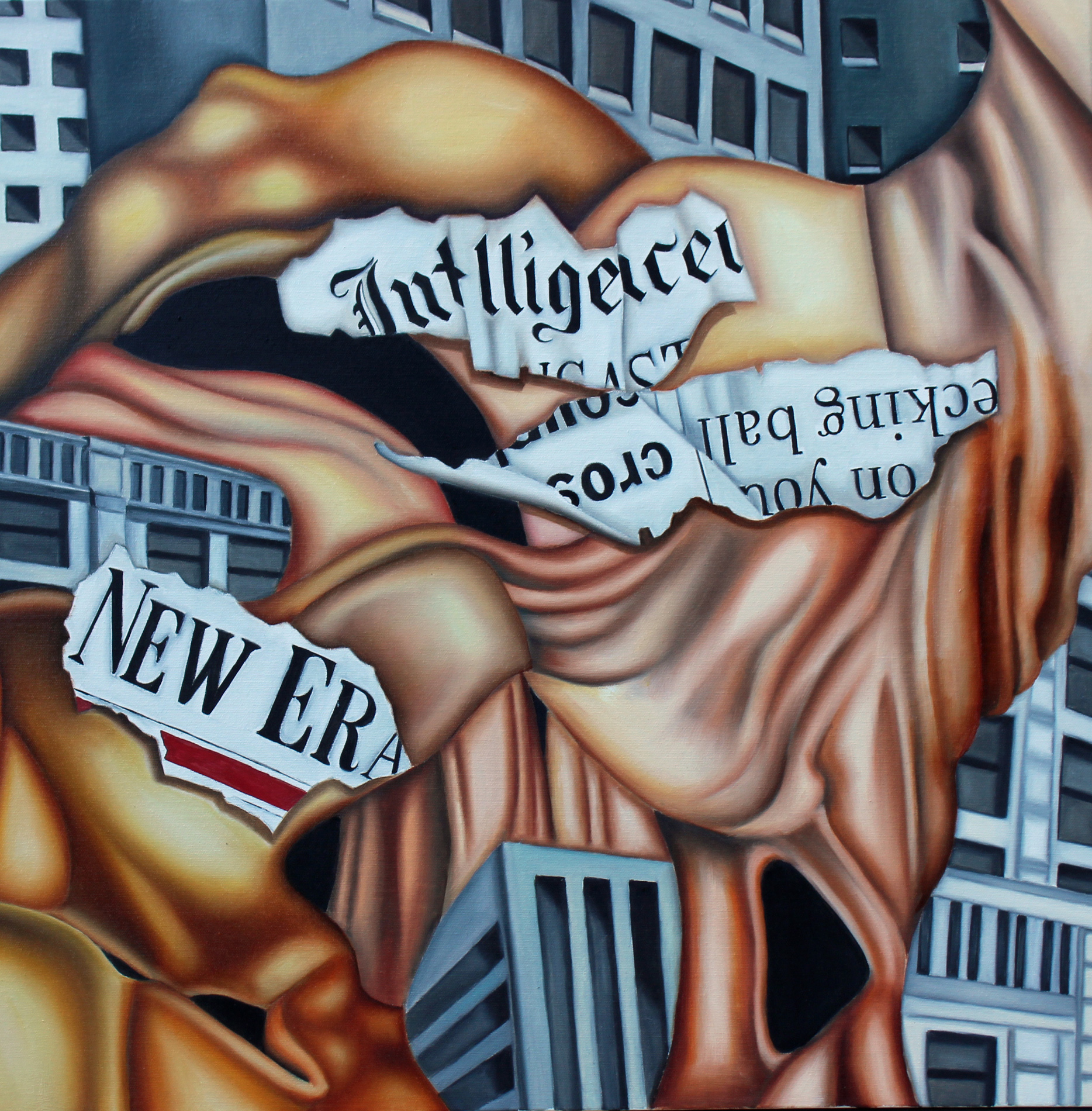
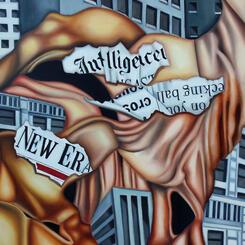
 Wrecking Ball
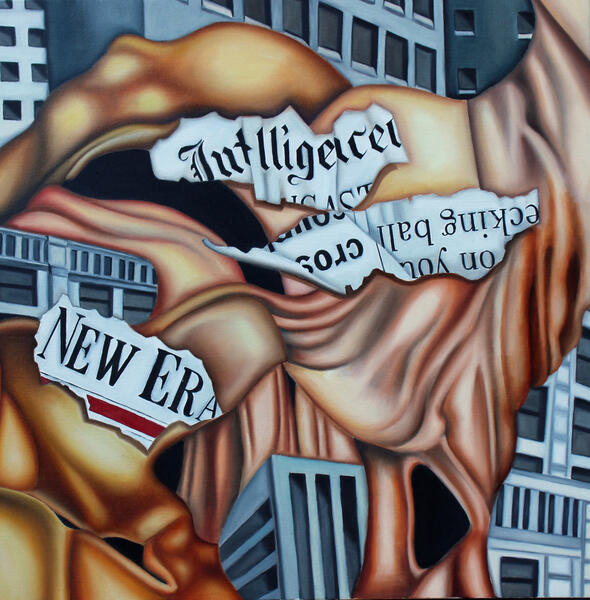
The headlines in two Lancaster, Pennsylvania newspapers--The New Era, and The Intelligencer Journal--featured a local building being destroyed by a wrecking ball. The following year the urban scenery was revamped, and a "phoenix" rose from its ashes. Disasters also allow for the possibility of new growth. Oil on canvas, 24x24
-
 Blitz
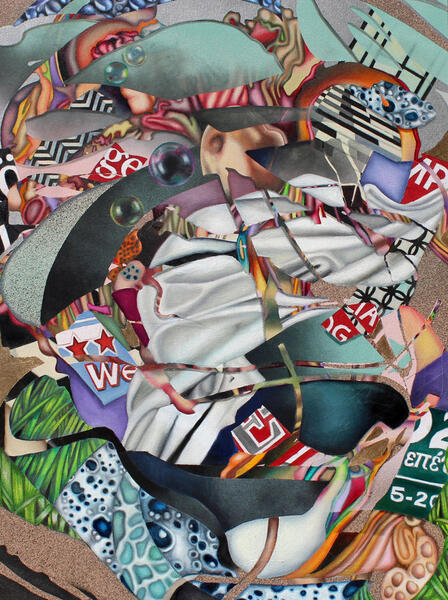
BlitzChaos and confusion is the aftermath of many disasters. The white sheet at the center functions as a winding cloth perhaps covering a victim of continual warfare. Oil, textured spray paint, metallic leaf, chalkboard paint, spray enamel paint, pearl pen, on canvas, 30x36
-
 Clogged Drain
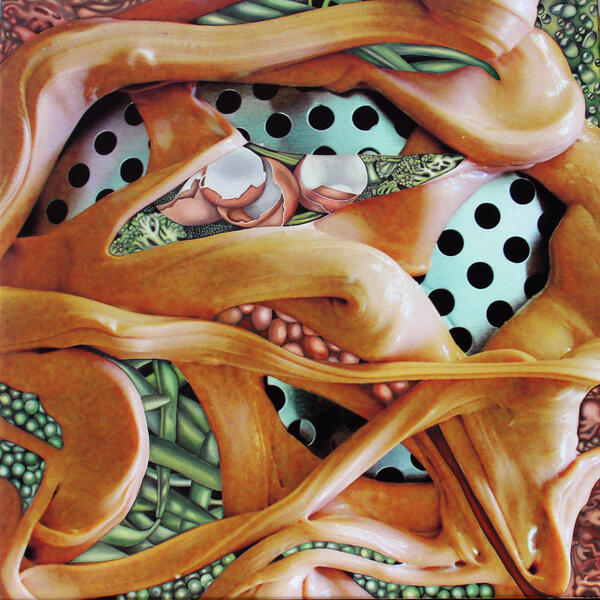
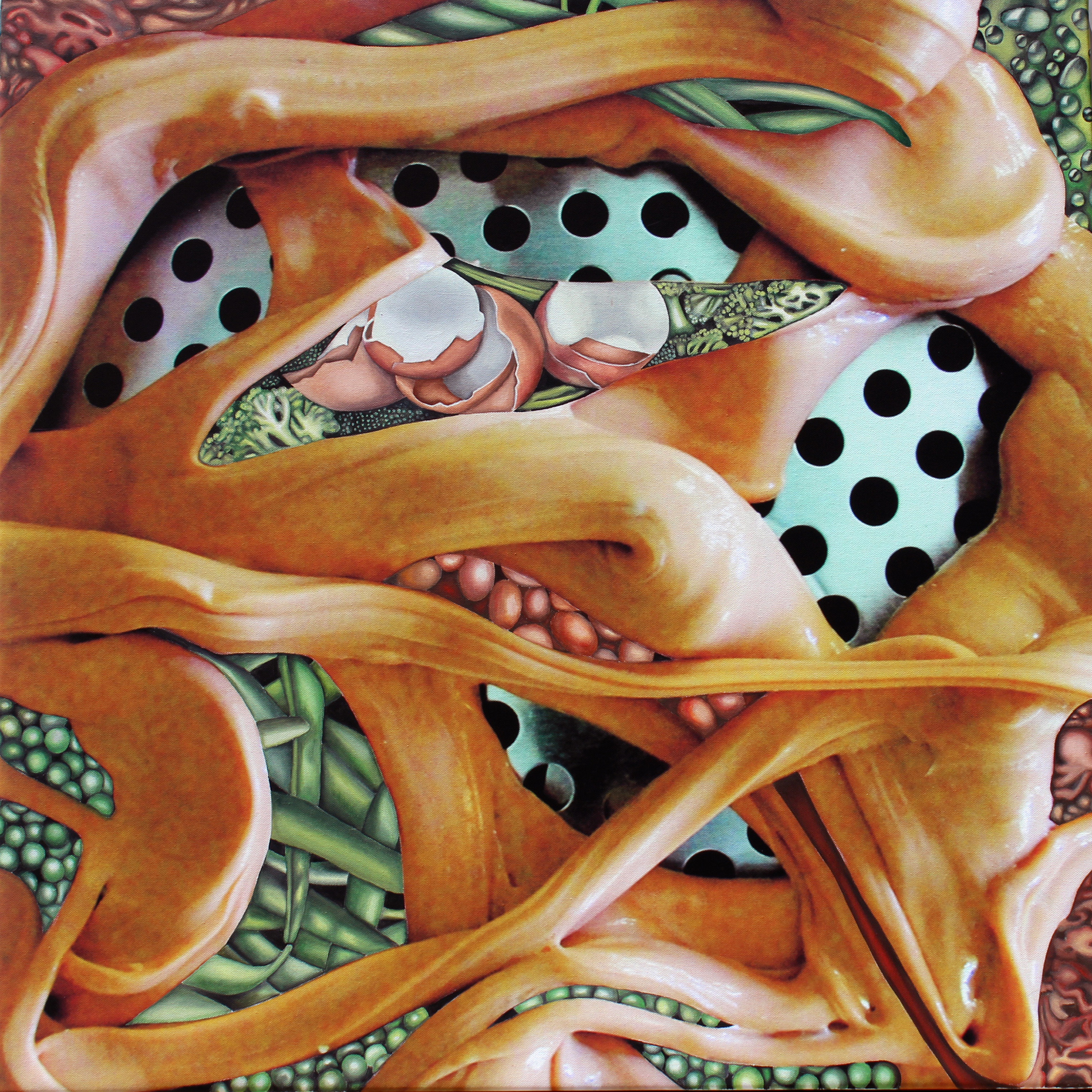
oil paint on archival ink print, 36x36
Yes, a drain clogged with grease, egg shells, and the remnants of uneaten food, does constitute a domestic disaster. Oil on photographic canvas print, 36x36
-
 Barriers
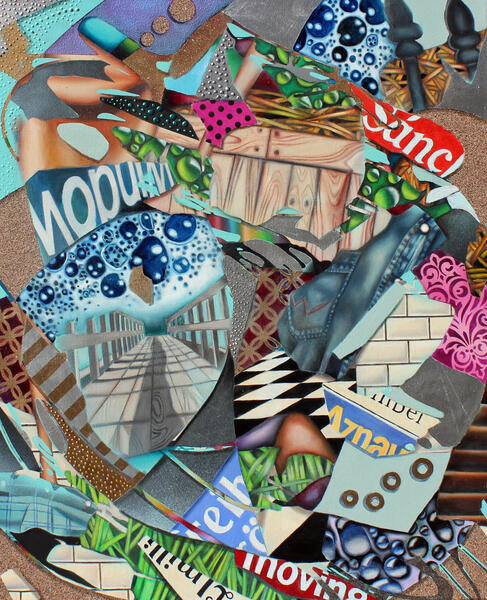
The inescapable event here is more of a psychological one--the feeling of being overwhelmed and needing to flee, the lure of suicide, or the fear of venturing into the unknown. Oil, enamel paint, metallic leaf, pearl pen, textured spray paint, on canvas, 30x40
-
 I Pad
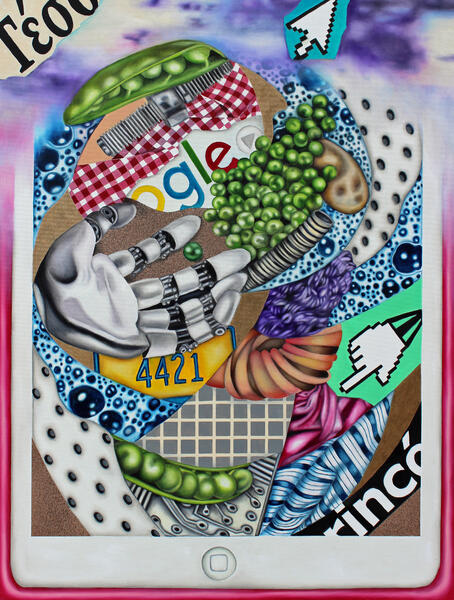
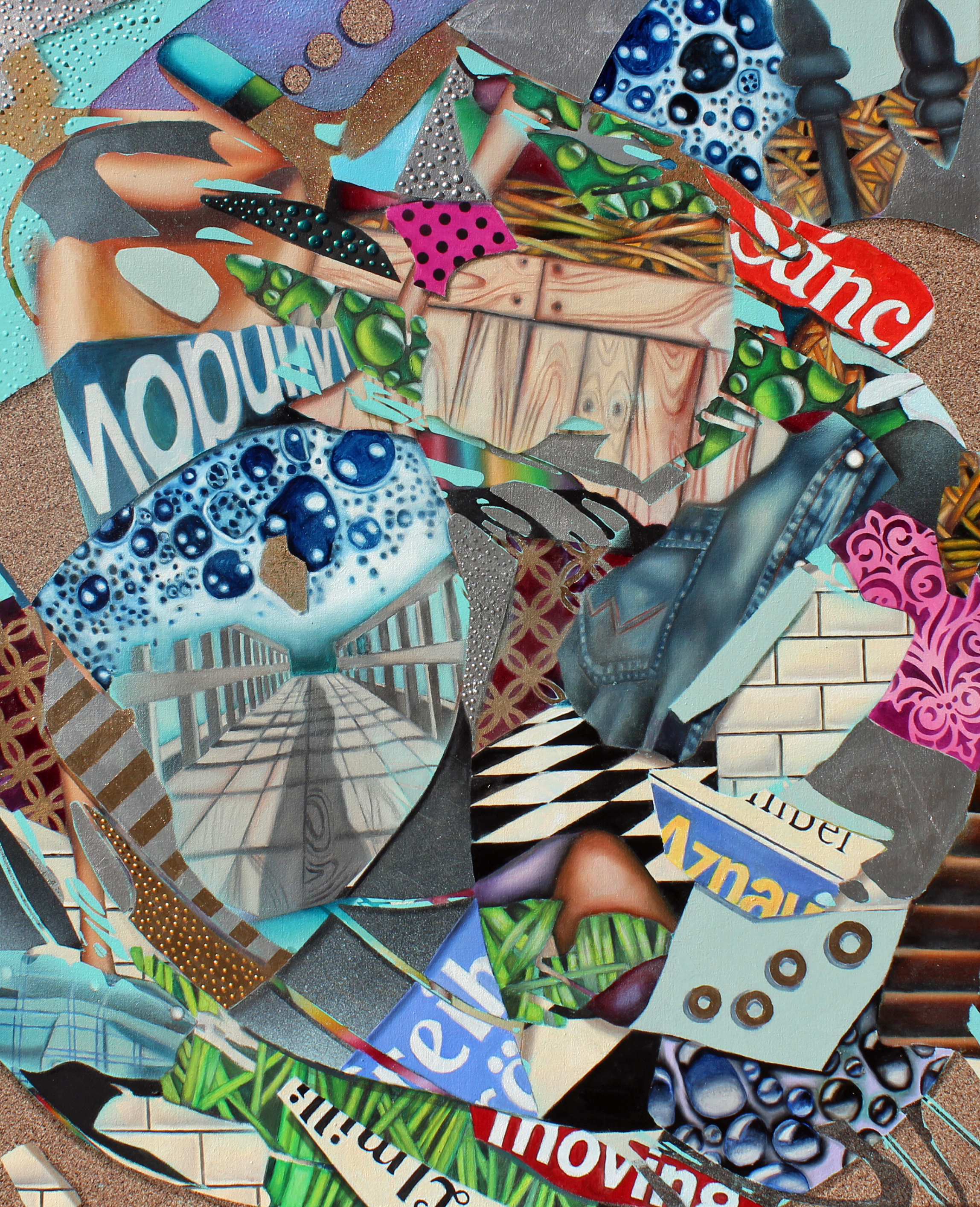
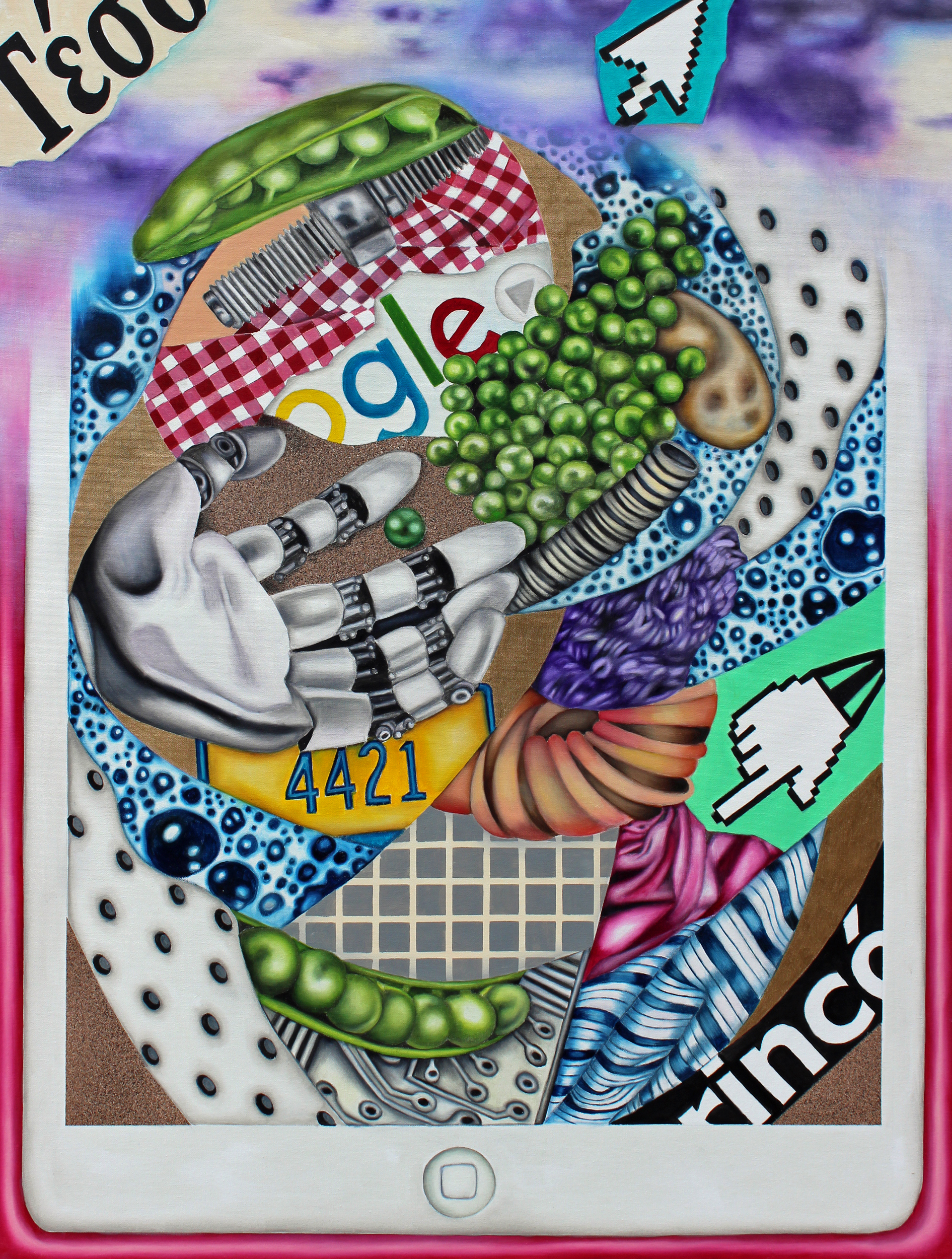
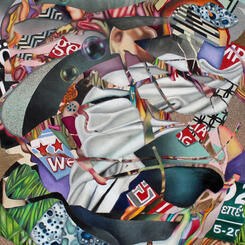
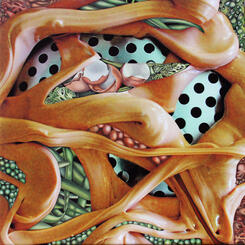
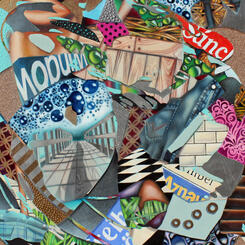
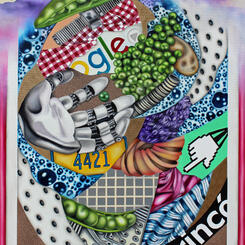
I PadUnavoidable, is the growing reliance on technology and media-driven devices. Pictured here is a robotic "helping hands," suggesting that humans are no longer in control. A vacuum hose sucks the viewer into the scene as the IPad dissolves into the ICloud. Oil, textured spray paint, metallic leaf, on canvas, 36x48

Interior-Scapes
-
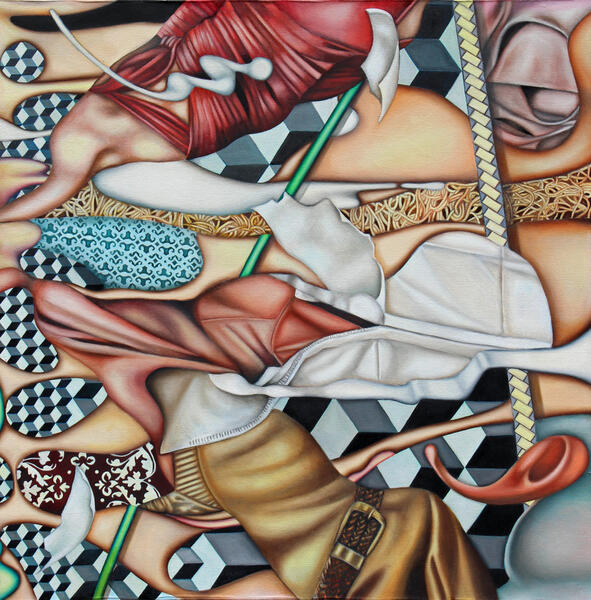 In the Closet
oil on canvas, 39 X 39
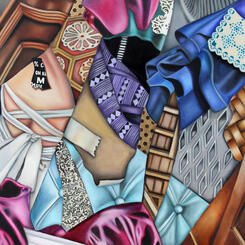
The closet depicted here shows a jumble of assorted garments and scraps of patterned paper, all showing a lack of spatial or sequential organization. Oil on canvas, 39x39
-
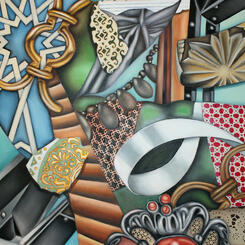
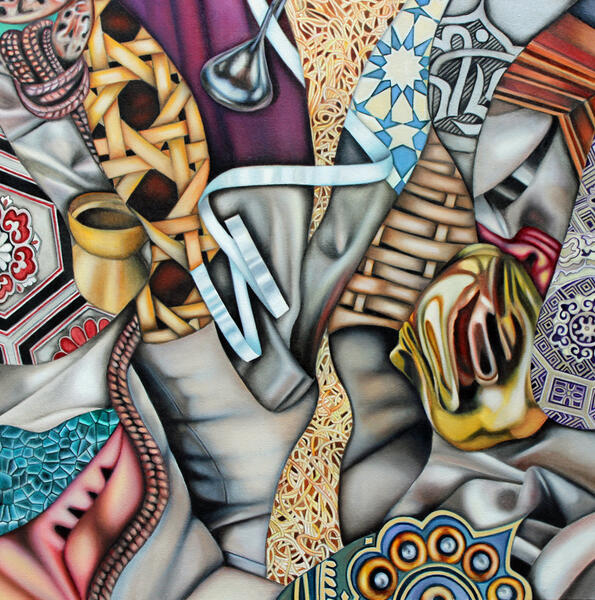 Bazaar
This painting depicts a random assortment of items bought at souks in Morocco, recycling shops in Japan, and flea markets in America--all distant echoes of the time-worn archetype of the marketplace, and its historical inception on the Silk Road. Oil on canvas, 36x36
-
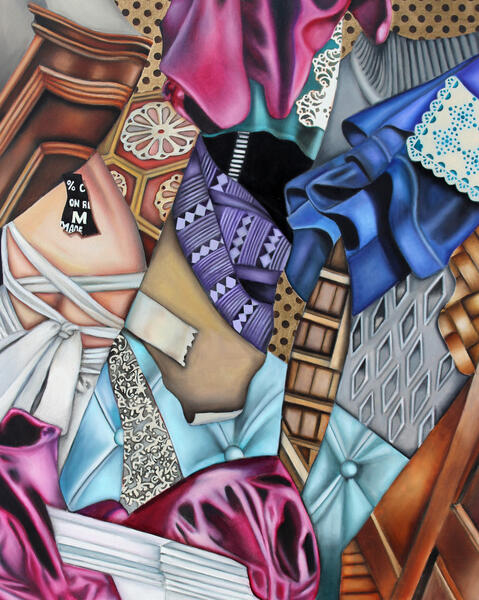 Dressing Room
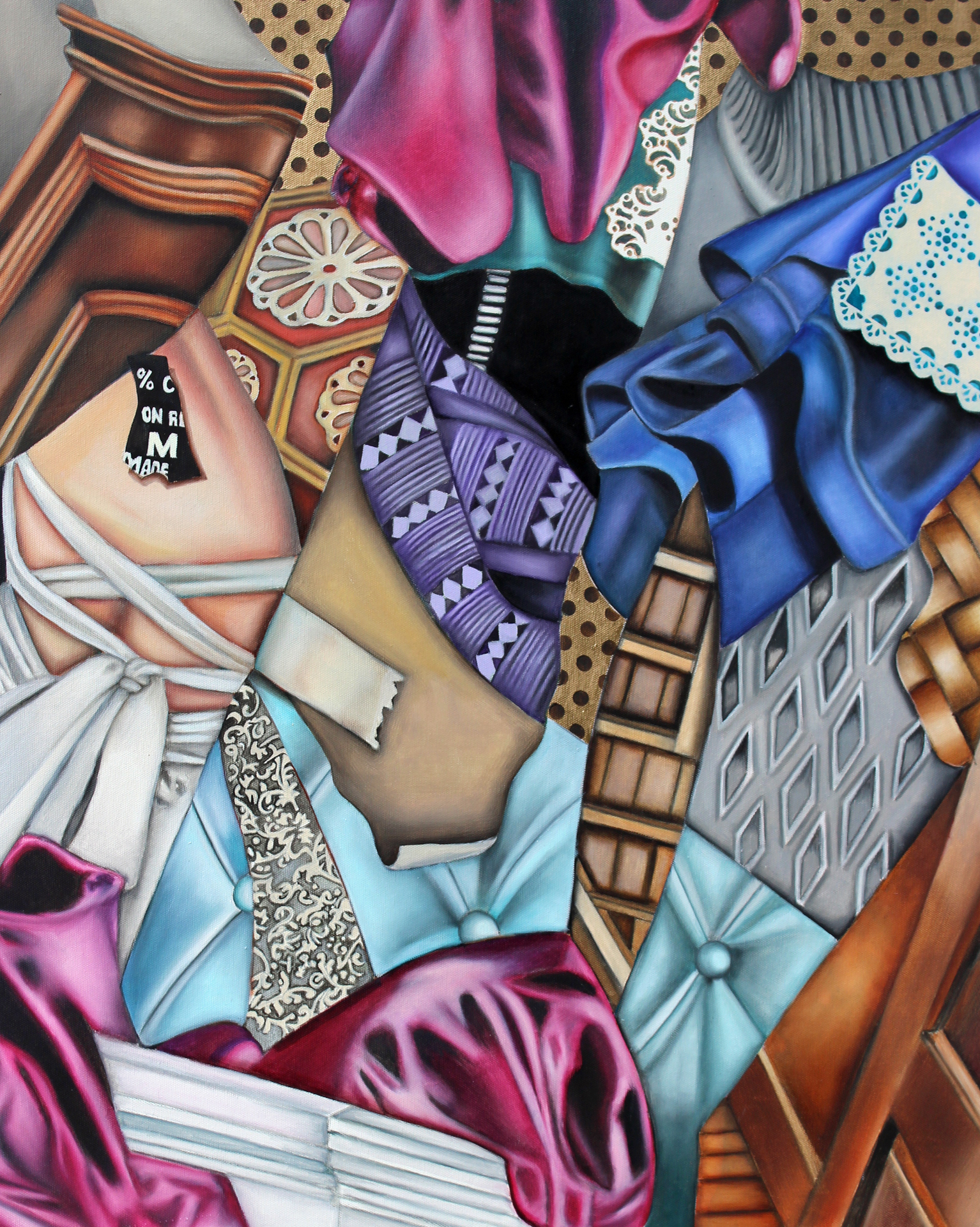
This painting offers a furtive glimpse into the haphazard interior of a dressing room, the tag still on one of the garments. Oil and gold leaf on canvas, 24x30
-
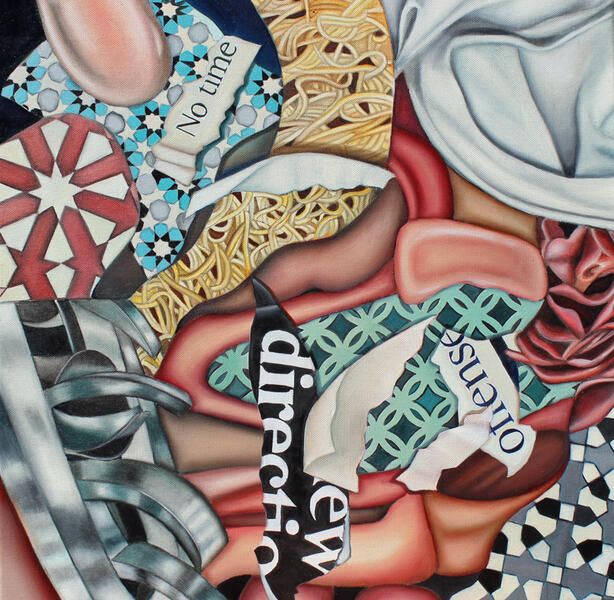 On the Table
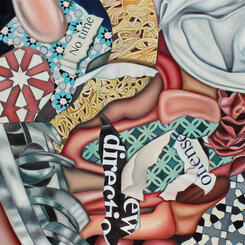
At any given moment, an abundance of photographs, scrapbook paper, magazine clippings adorn my studio table, all becoming regular fodder for my paintings. Oil on canvas, 24x24
-
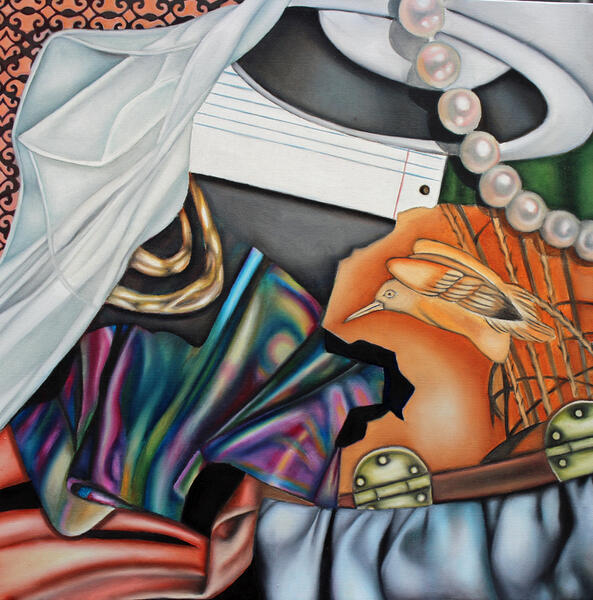 In the Bedroom
Objects inside and outside bedroom drawers all become exposed in this scene. Oil on canvas, 24 X 24
-
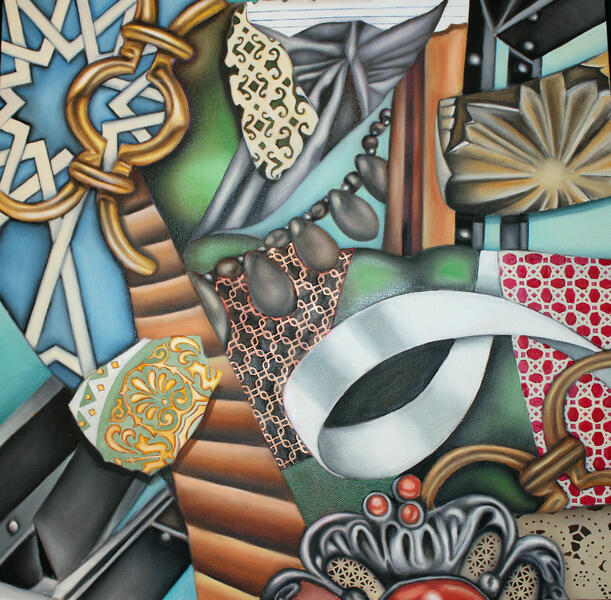 In the Jewelry Box
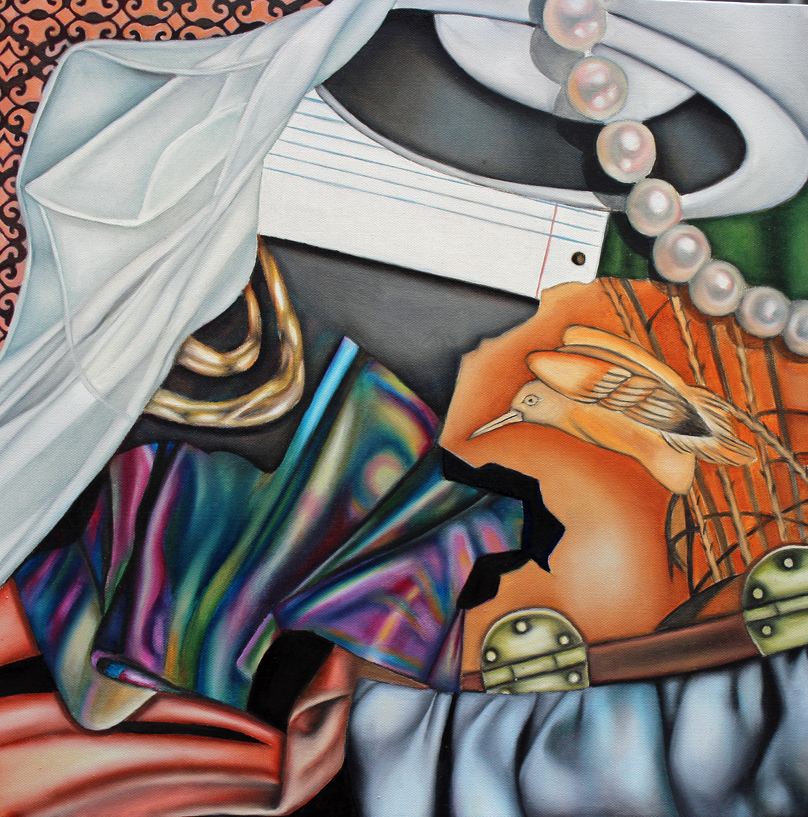
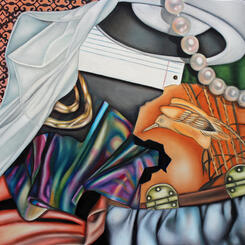
Items inside and outside a jewelry box occupy the parameters of this painting. Oil, metallic leaf, on canvas, 24x24
-
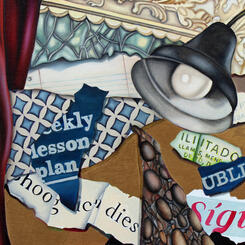
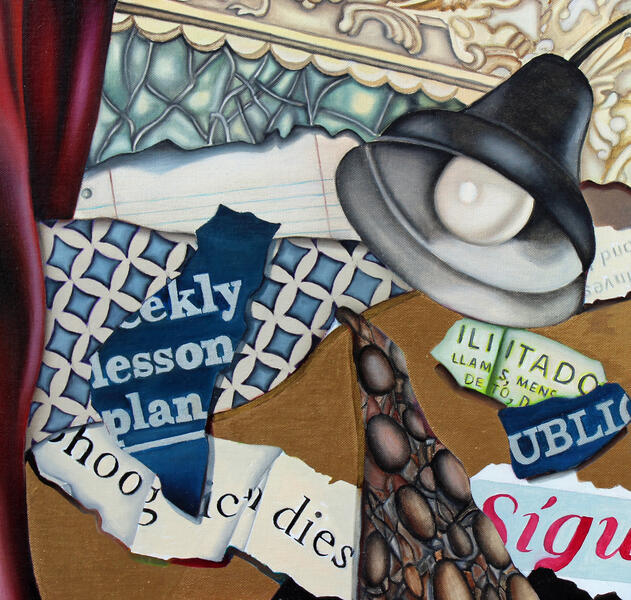 Office Space
oil, metallic leaf, on canvas, 20x20
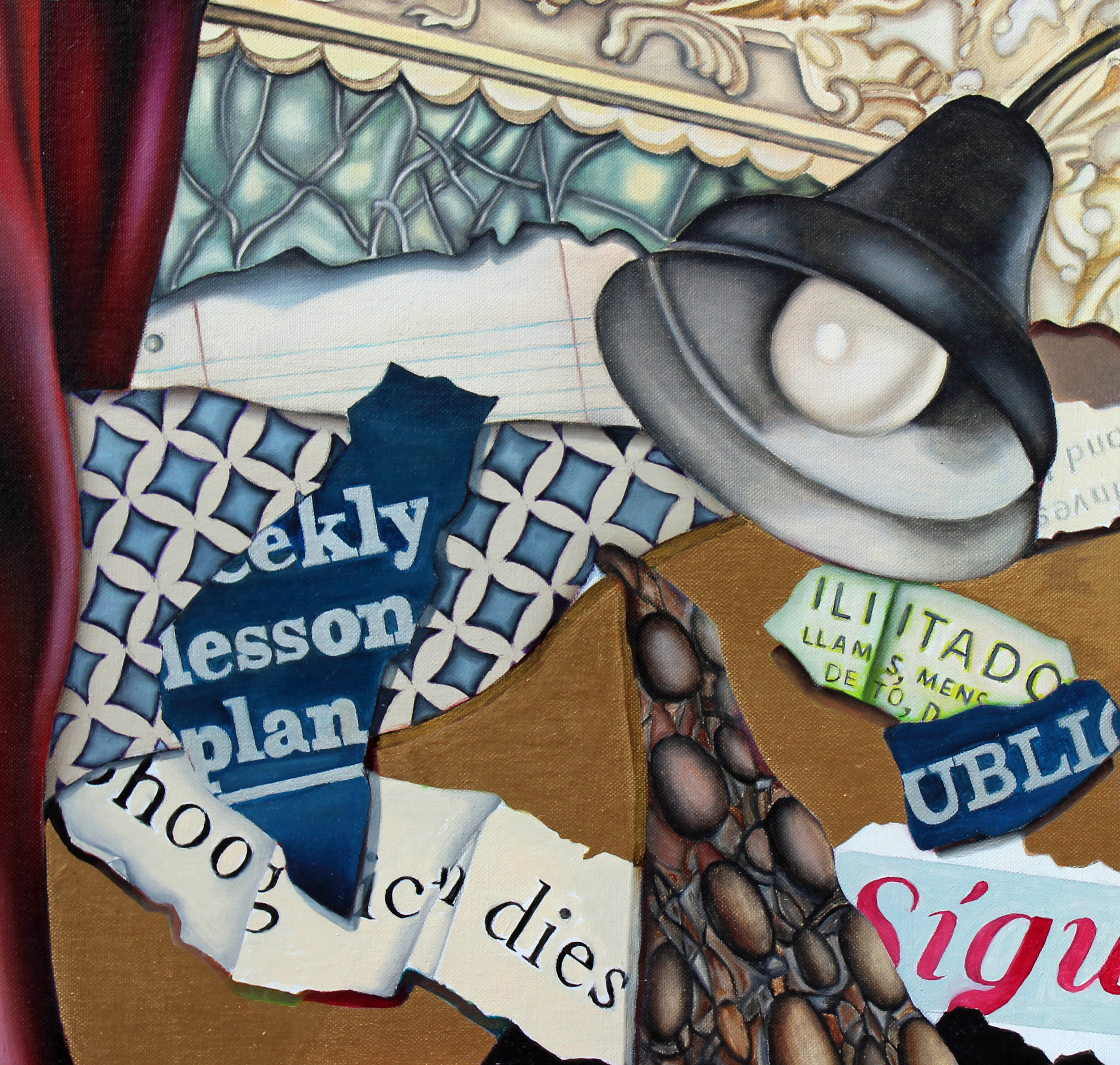
Sunday night in bed, a common scene unfolds: burning the midnight oil under the light of a stand-up lamp, in a rush to complete daily lesson plans. Oil, metallic leaf, on canvas, 20x20
-
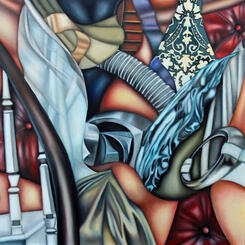
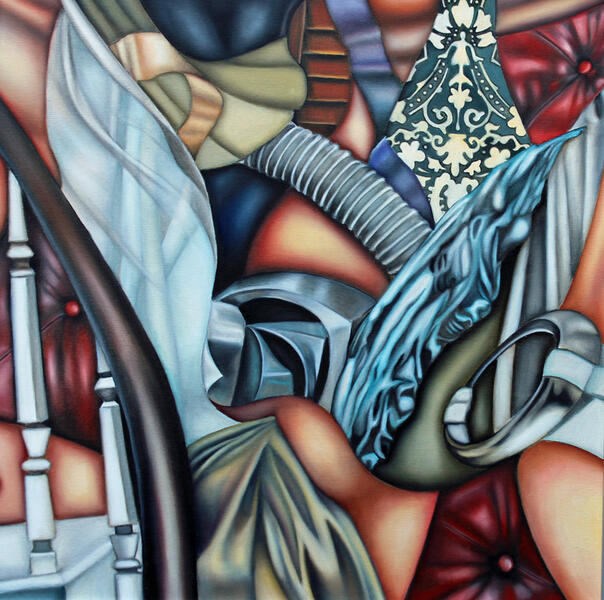 Hallway
oil on canvas 24 X 24
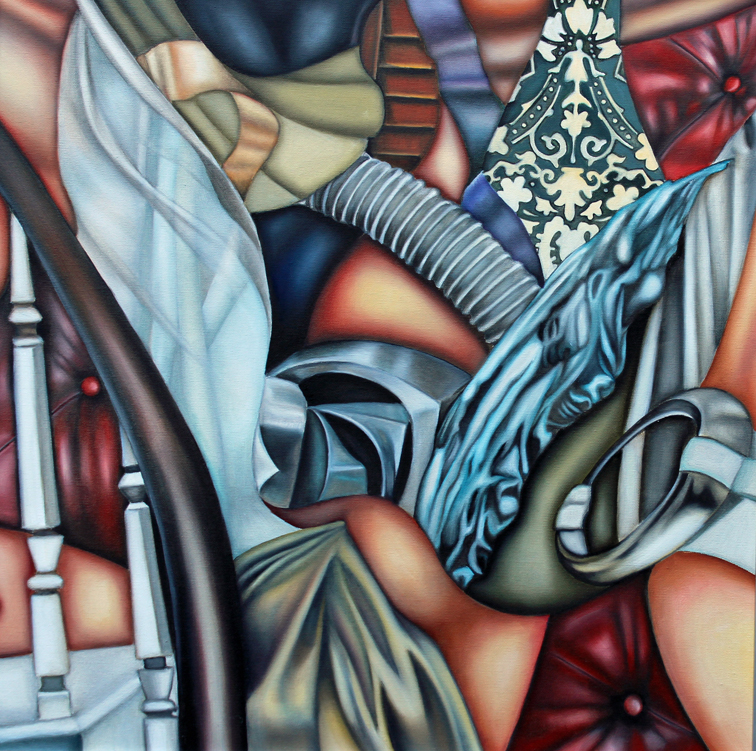
A vacuum is cleaning up the clutter in a hallway that leads up a stairs.
-
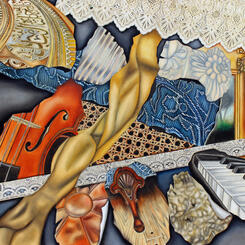
 Living Room
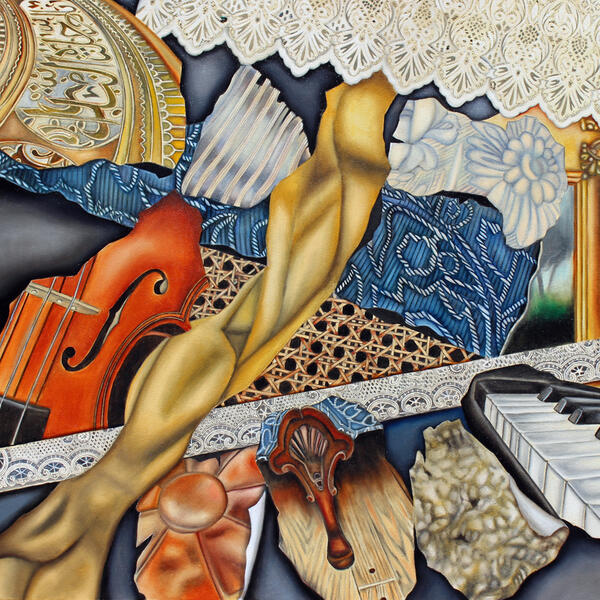
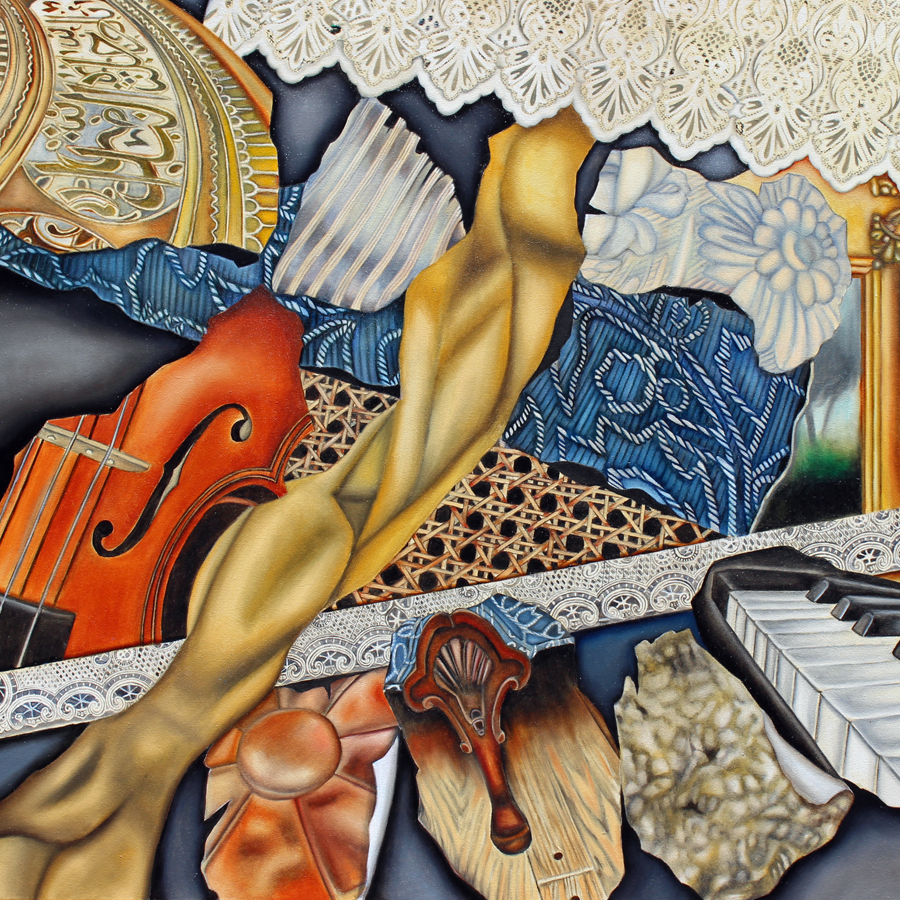
Remnants of a violin and piano occupy this space that also doubles as a music room. Oil on canvas, 36x36
-
 Dining Room
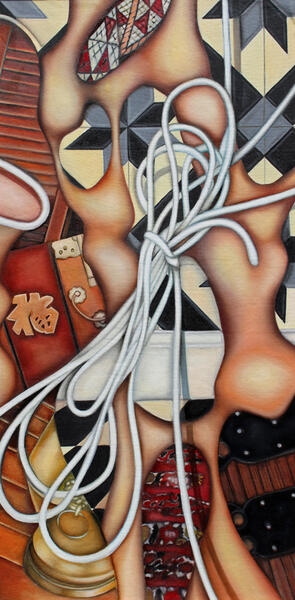
oil on canvas panel, 18x36
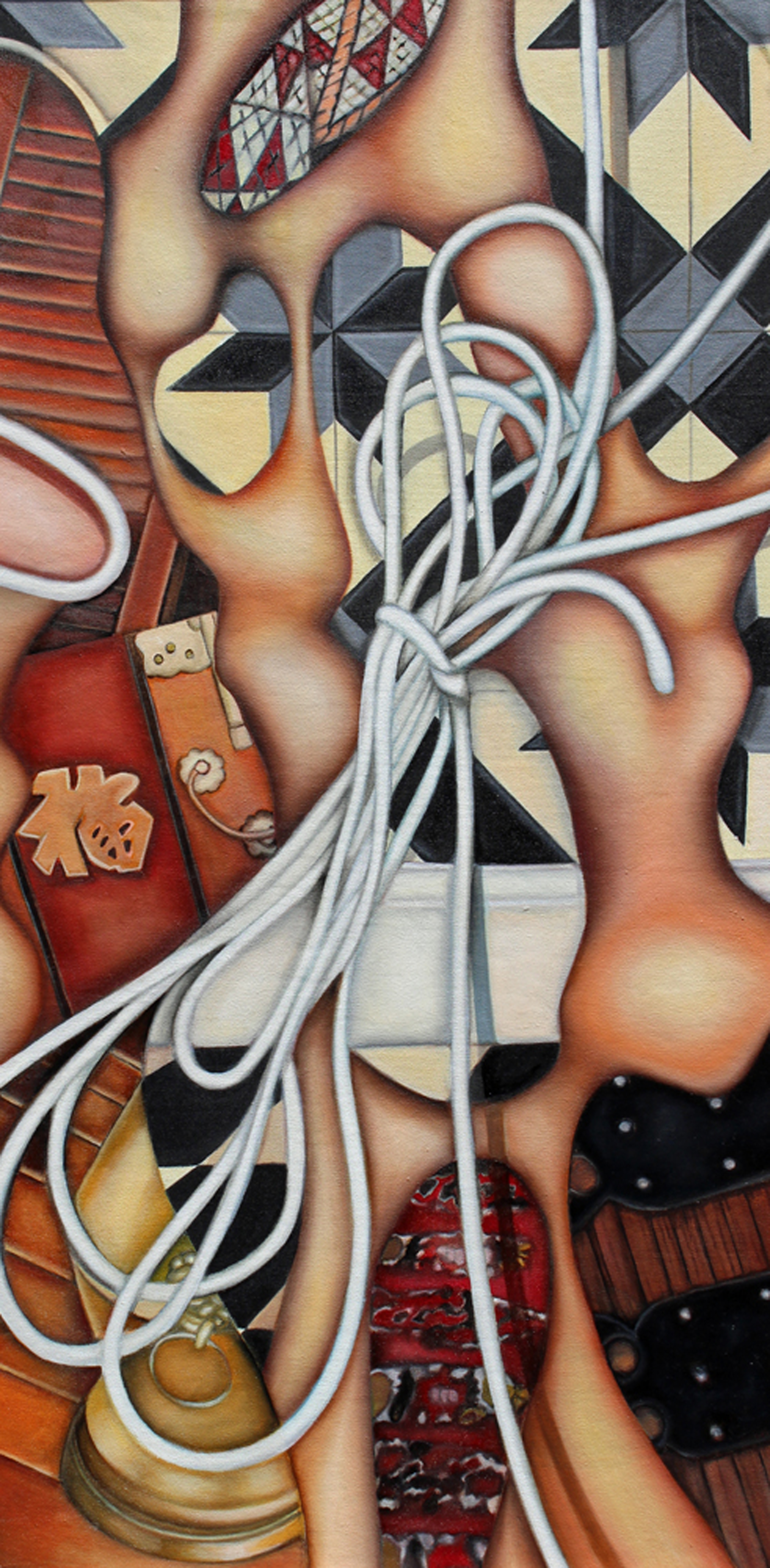
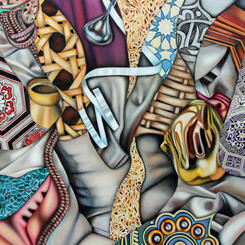
This painting replicates exact items found in my dining room: Japanese/Korean furniture, Moroccan tiles and carpets, louvered doors, and a brass vase. Oil on canvas panel, 18x36

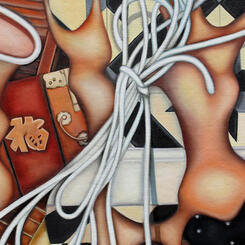
Remnants
-
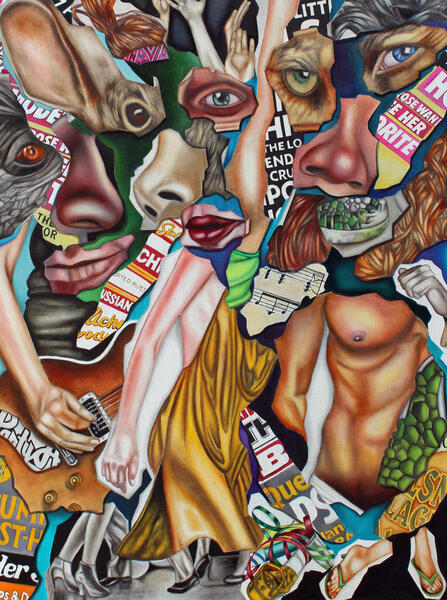 Party Animals
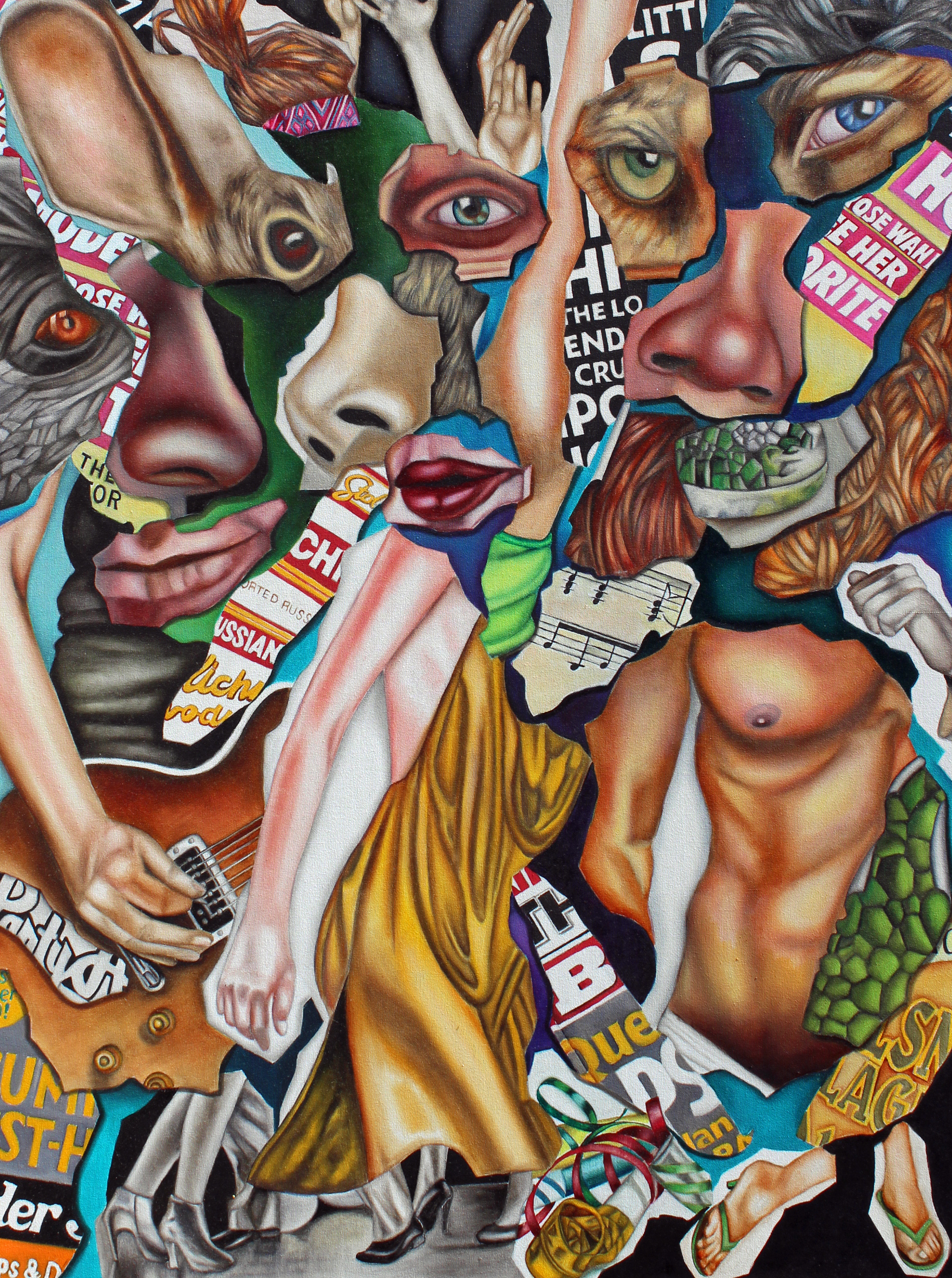
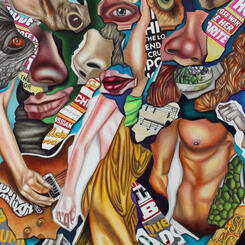
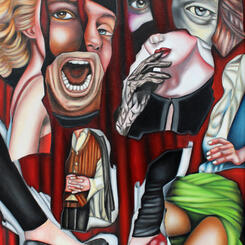
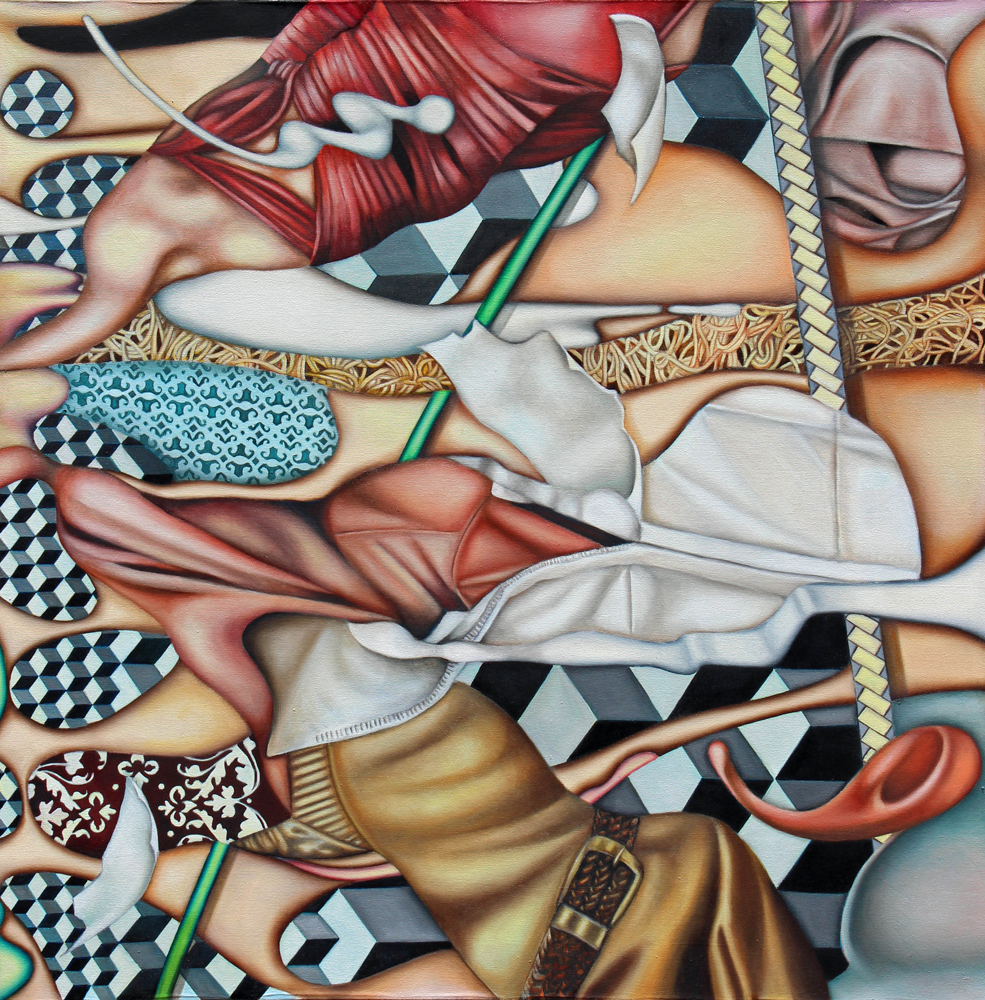
The movement on the composition parallels the movement in a musical composition. The band is a motley assortment of human and animal fragments. This painting exemplifies my early technique. Oil on canvas, 36X48
-
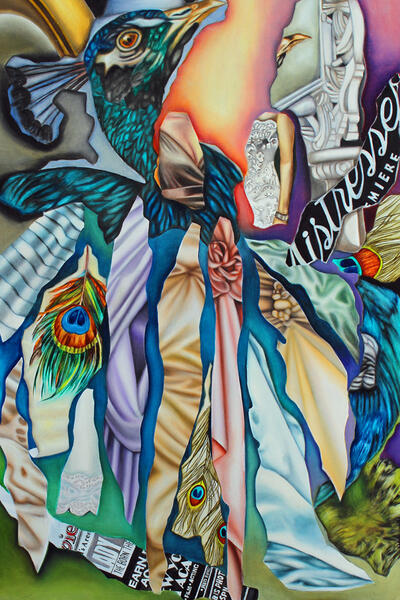 Peacock
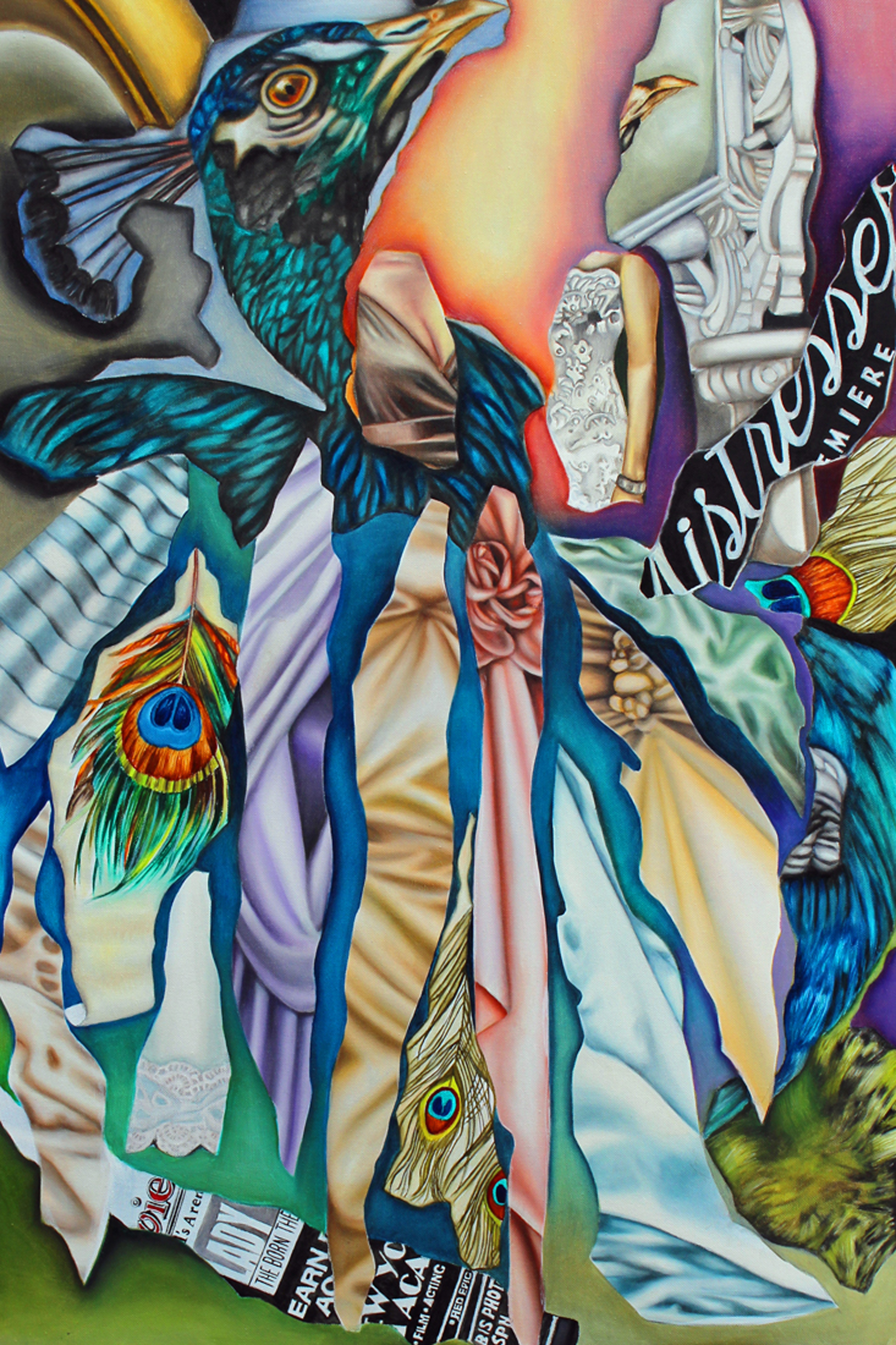
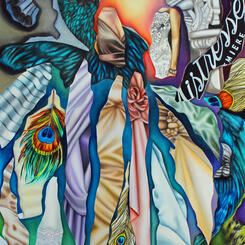
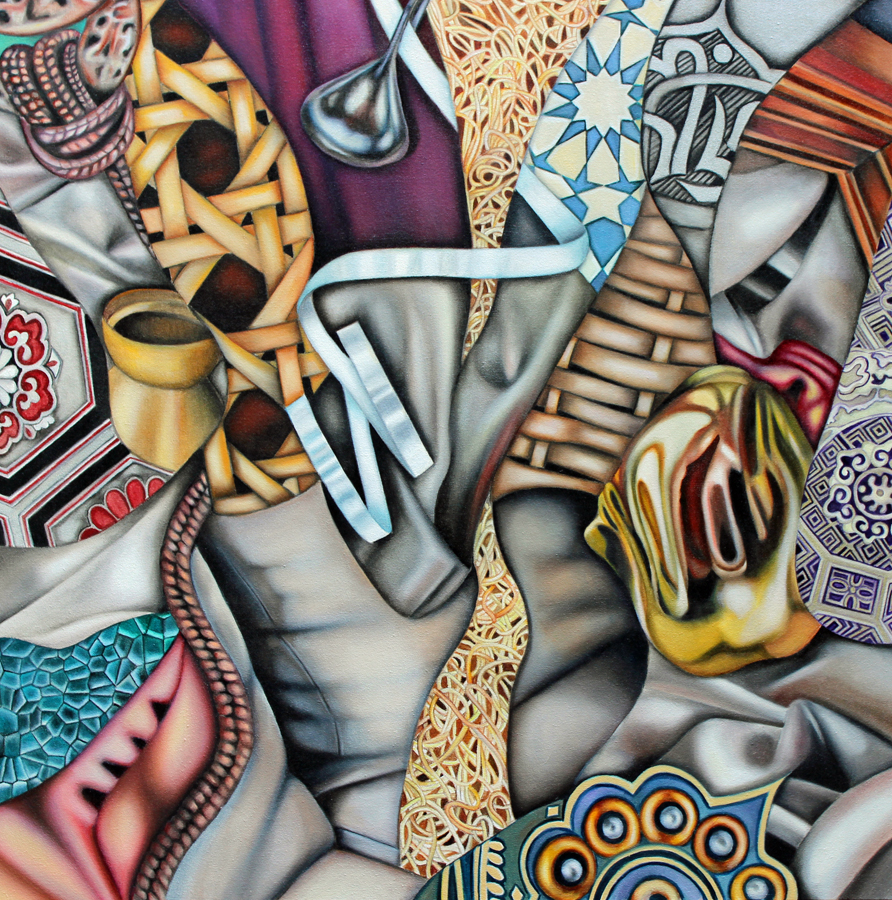
In this painting the peacock admires her "feathers," snippets of high-end fashion, in a mirror and thus becomes a symbol of vanity. Oil, 24x36, on canvas
-
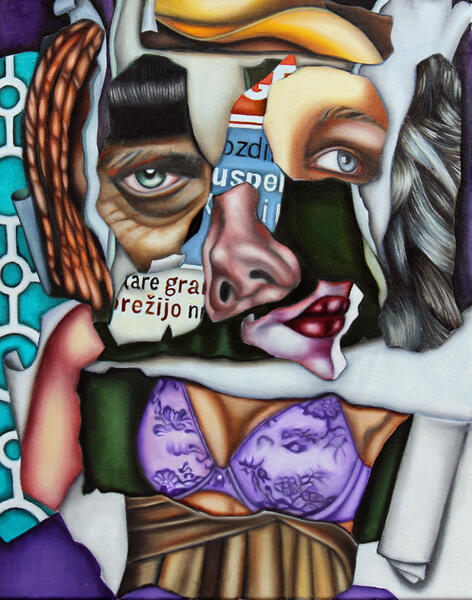 Aborigine
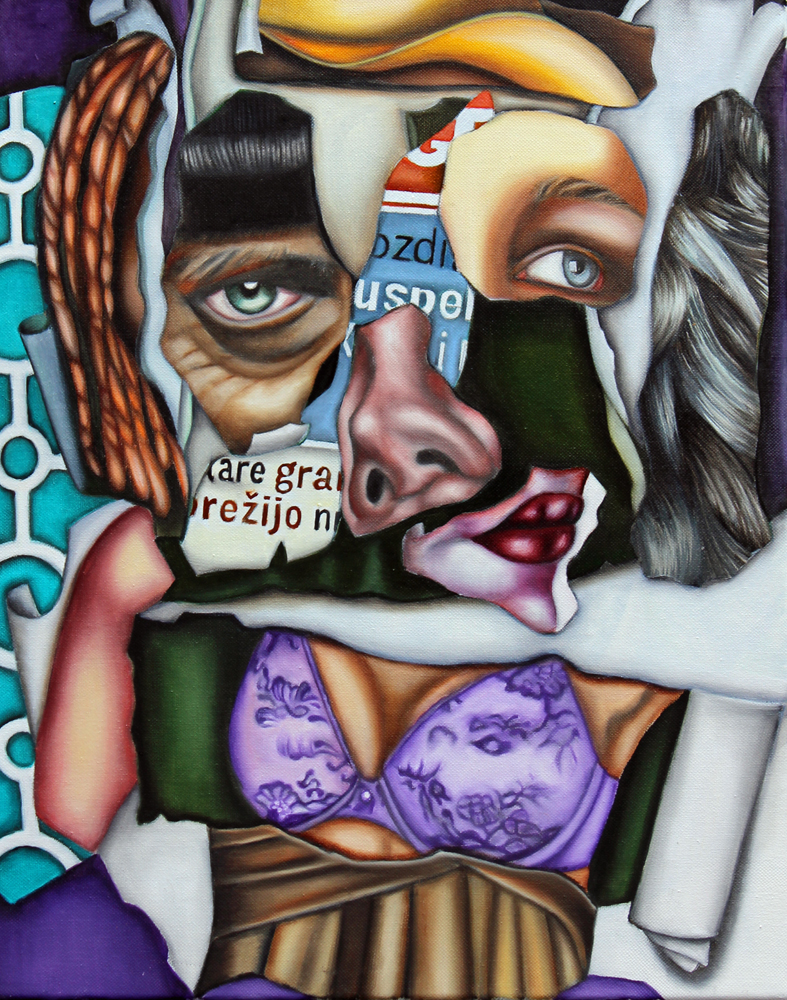
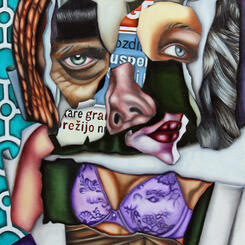
A portrait is not a static thing, but should peal away layers of the subject's personality, which are composites of a multitude of thoughts and feelings. Aborigine contrasts masculine/feminine, inner/outer personas, indigenous and acquired identities, and race. Oil, 16x20, on canvas
-
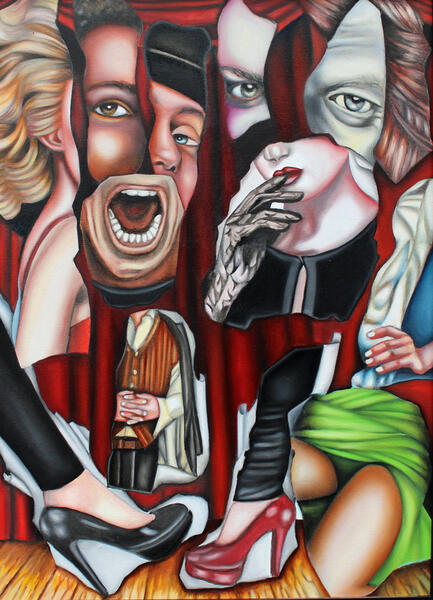 Broadway
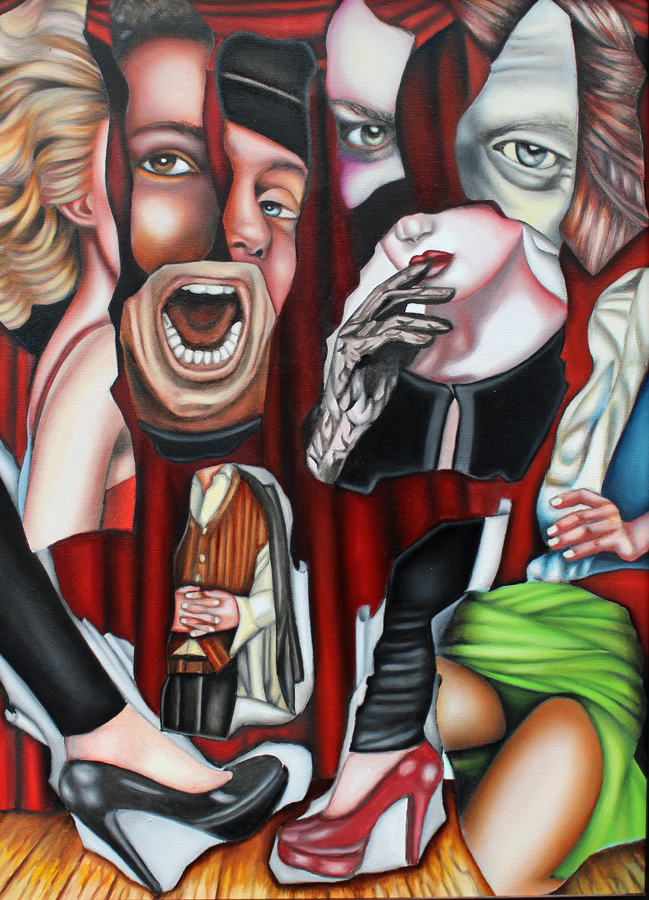
Broadway depicts different aspects of theatrical productions--singing, dancing, gestures, expressions, humility and spunk. Oil, 18x24, on canvas
-
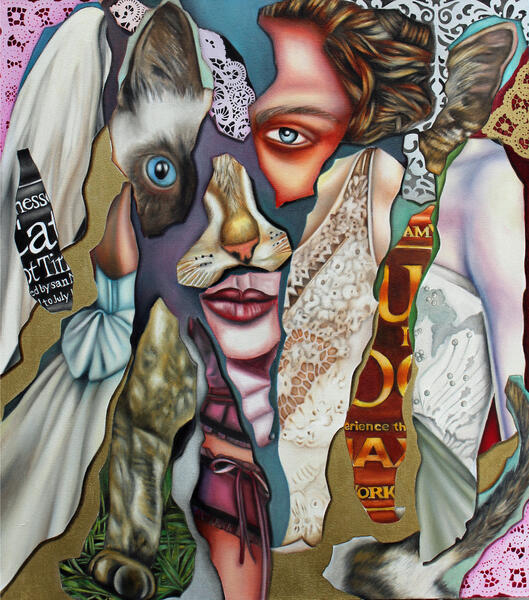 Cat Woman
oil, metallic leaf, on canvas, 32x40
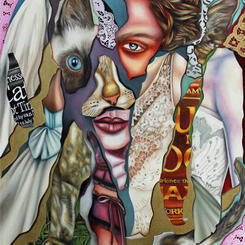
If this woman could speak, what would she say? Would she purr or roar? The Jungian archetype of the cat suggests mystery and independence. In the painting, wild cats are juxtaposed with domesticated cats, and there's a virginal bride on the outside and Victoria's secret on the inside. The clippings from Cat on a Hot Tin Roof suggest another interpretation.
-
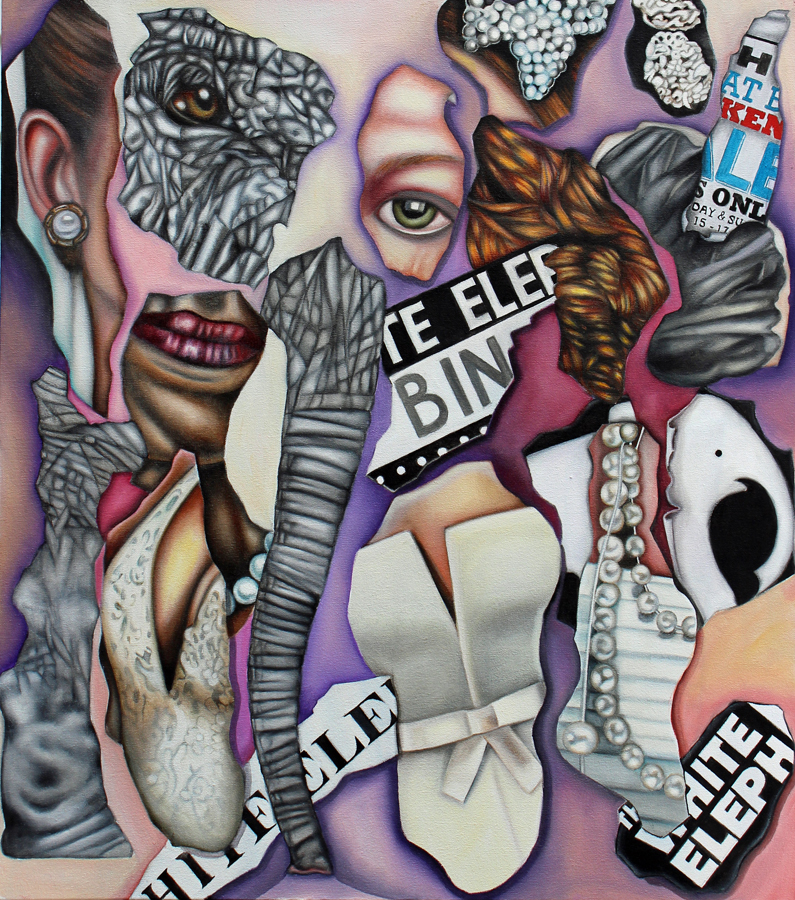
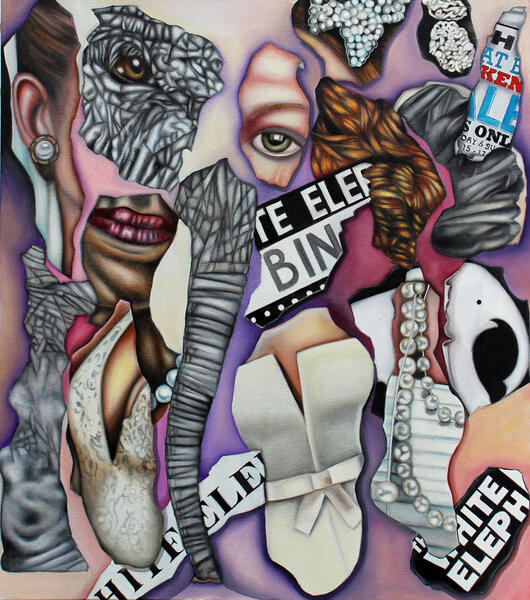 Elephant in the Room
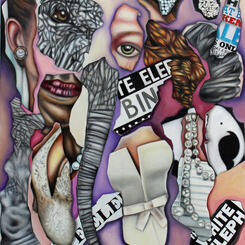
Remnants need to be pieced together to form understanding. For example, is there literally an elephant in the room? Does the bride look like an elephant, or is there something glaringly obvious in this scene that no one wants to discuss? Is the meaning related to the phrase "white elephant" and suggestive of something expensive but without equivalent value? Oil on canvas, 32x40
-
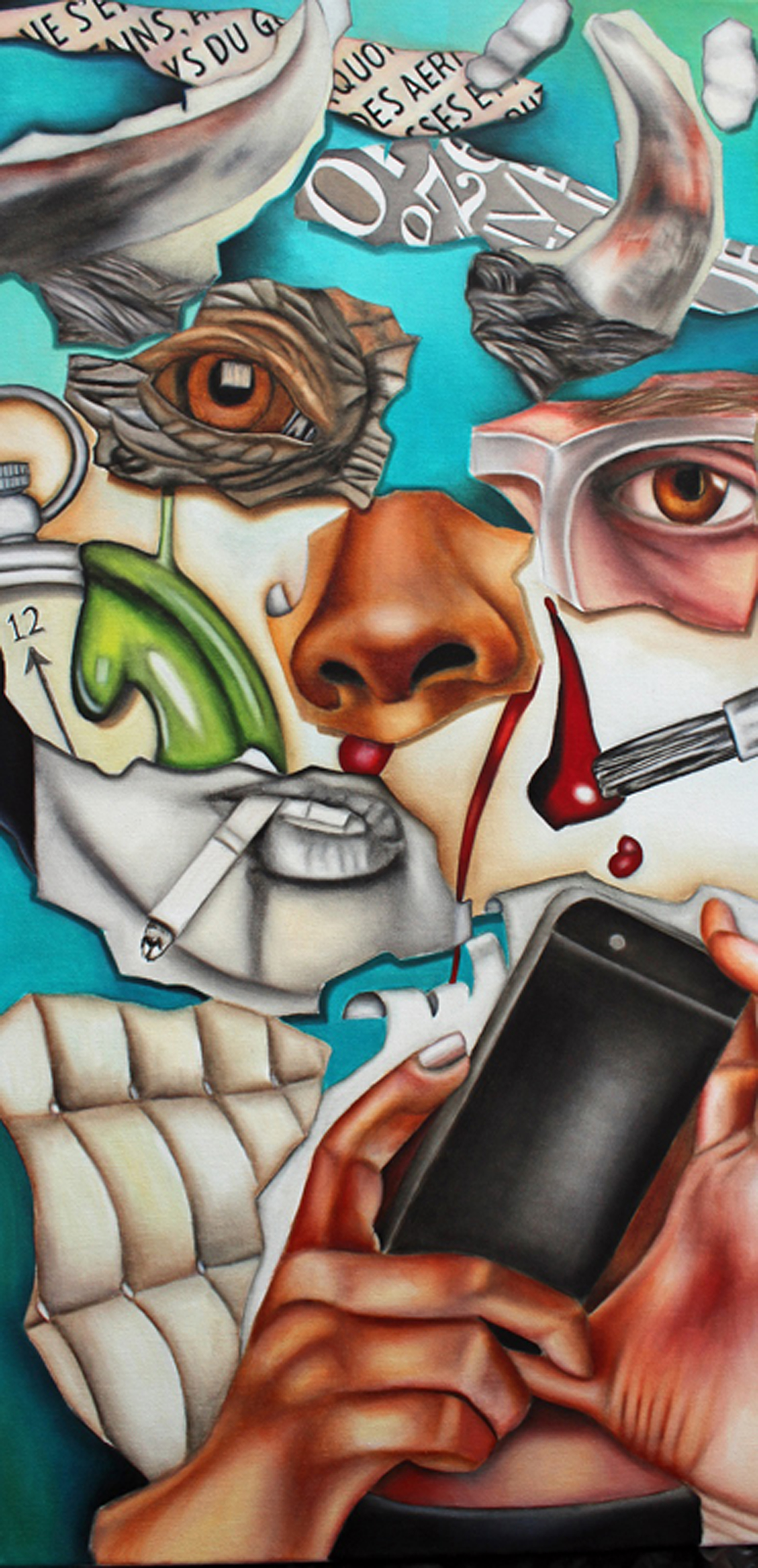
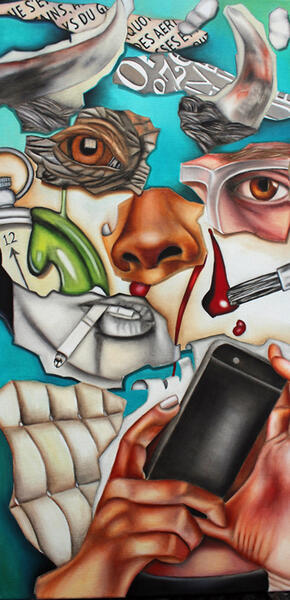 Bully
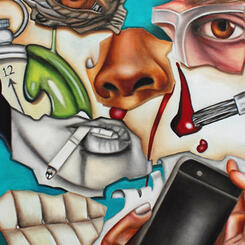
BullyThe bull is an interesting archetype. In the ancient Sumerian epic Gilgamesh, the bull is a symbol of strength. but in the context of Wall Street, it means something quite different. The figure in this painting is like a minotaur, yet he holds a cell phone and smokes a cigarette. The cell phone, glasses, and red fingernail polish do not conform to the stereotype of the bull. Meaning can be derived by making sense of the paradox. Oil on canvas, 18x36
-
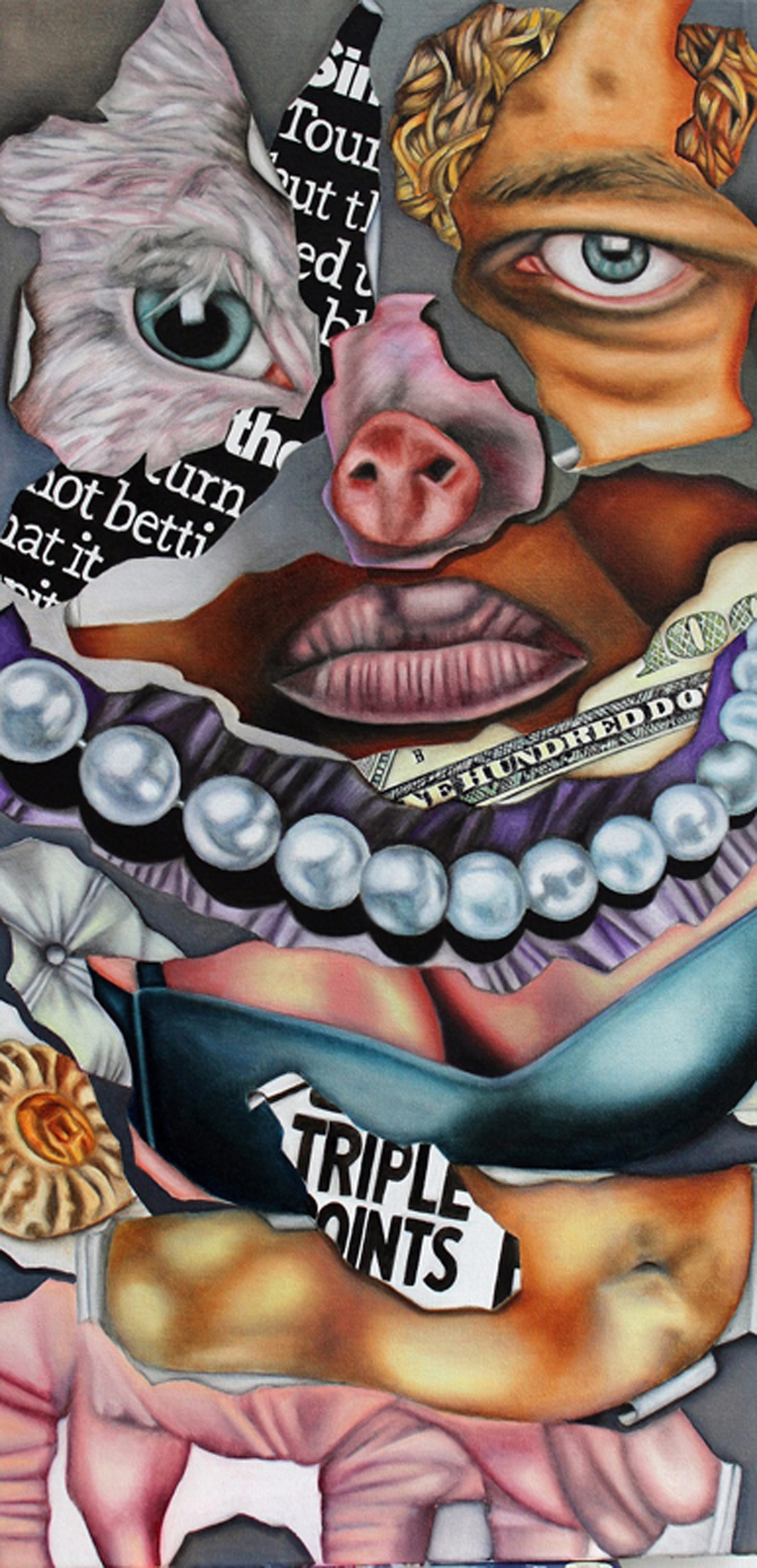
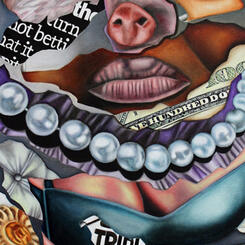
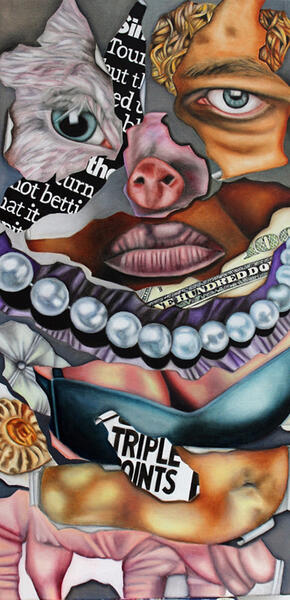 Pig
Pigoil on canvas, 18x36
Corpulence, money, pearls, pig legs--metaphorically or literally--all suggest greed. Oil, on canvas, 18x36
-
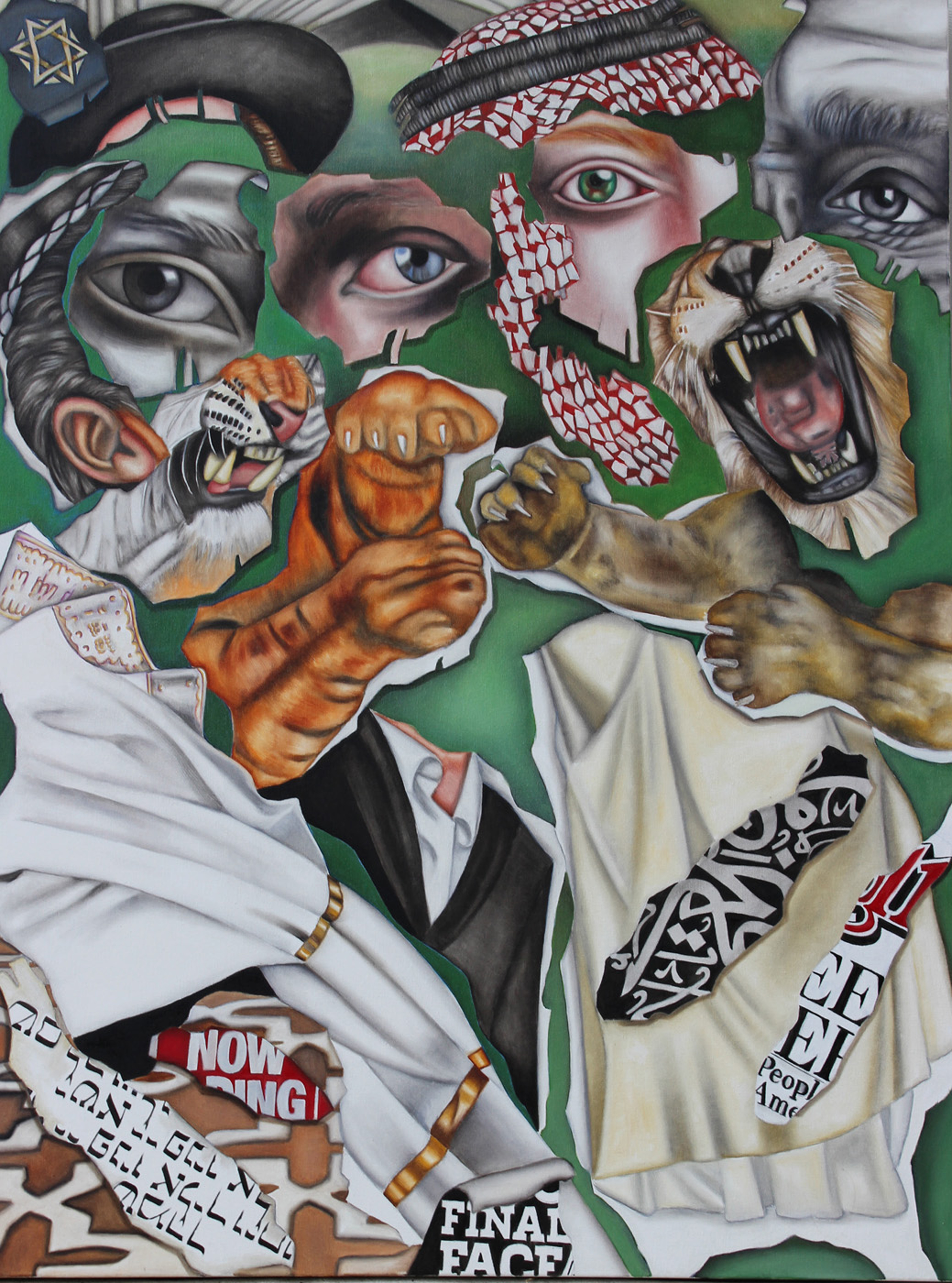
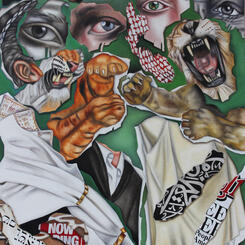
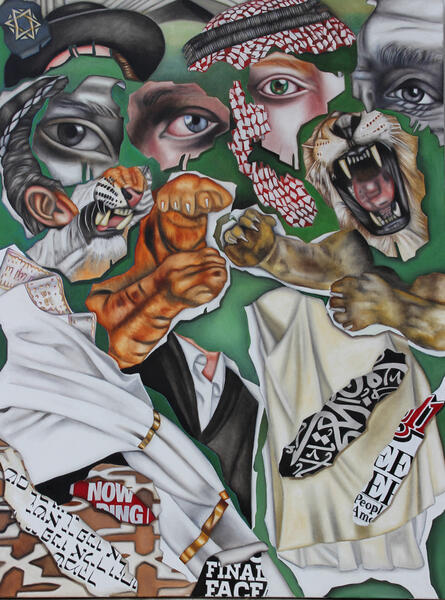 Lion and Tiger
The lion and tiger are two animals that vie for dominance in the animal kingdom, and in this painting they represent the ongoing warfare between Palestine and Israel. Despite the religious garments and scripture which would indicate a higher moral authority, there is not a peaceful co-existence between these two entities. Oil, on canvas, 36x48
-
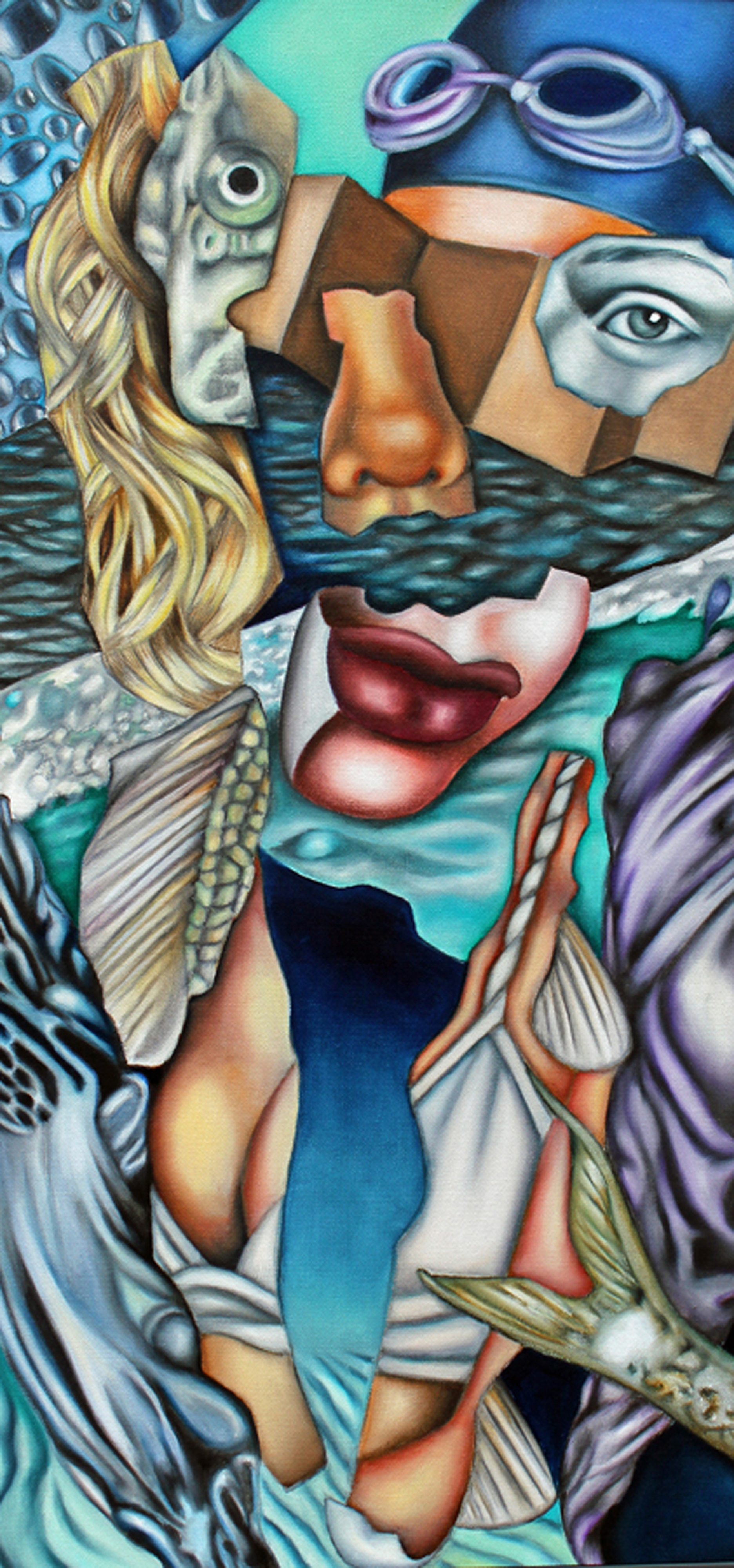
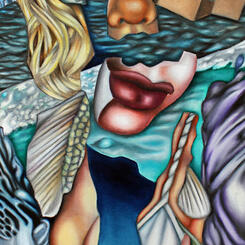
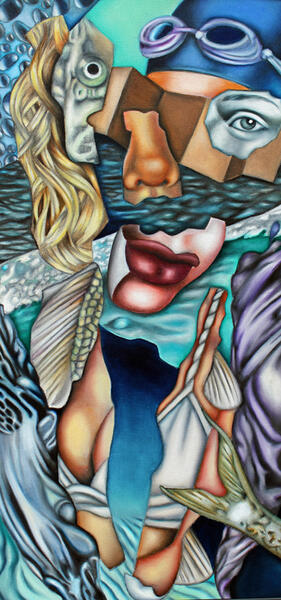 Mermaid with Goggles
The mermaid is the vamp archetype. Interestingly, this vamp is half submerged, straddling the conscious and unconscious realms, engaged in the seemingly pragmatic task of swimming, as suggested by the goggles on her head. Oil, on canvas, 15x30