-
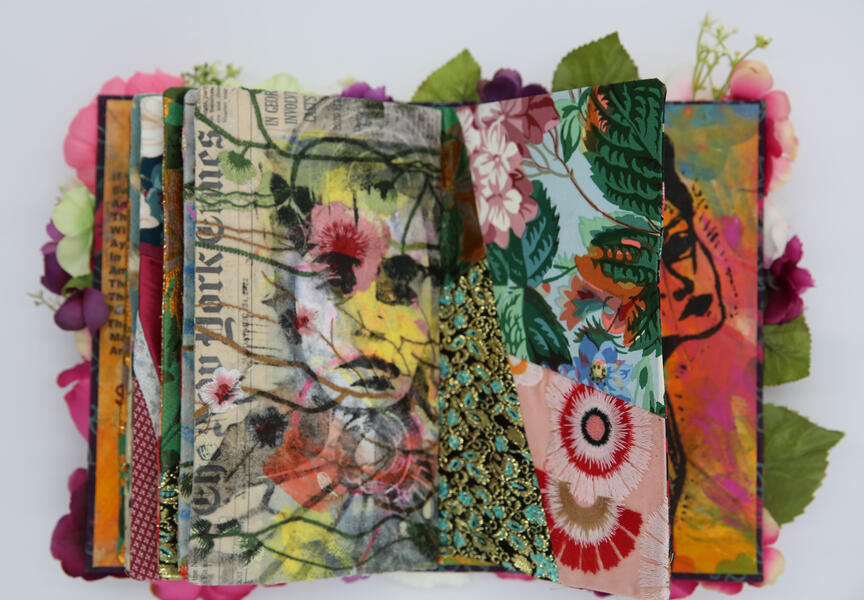 In Things of Great Receipt
If thy soul check thee that I come so near
Swear to thy blind soul that I was thy Will
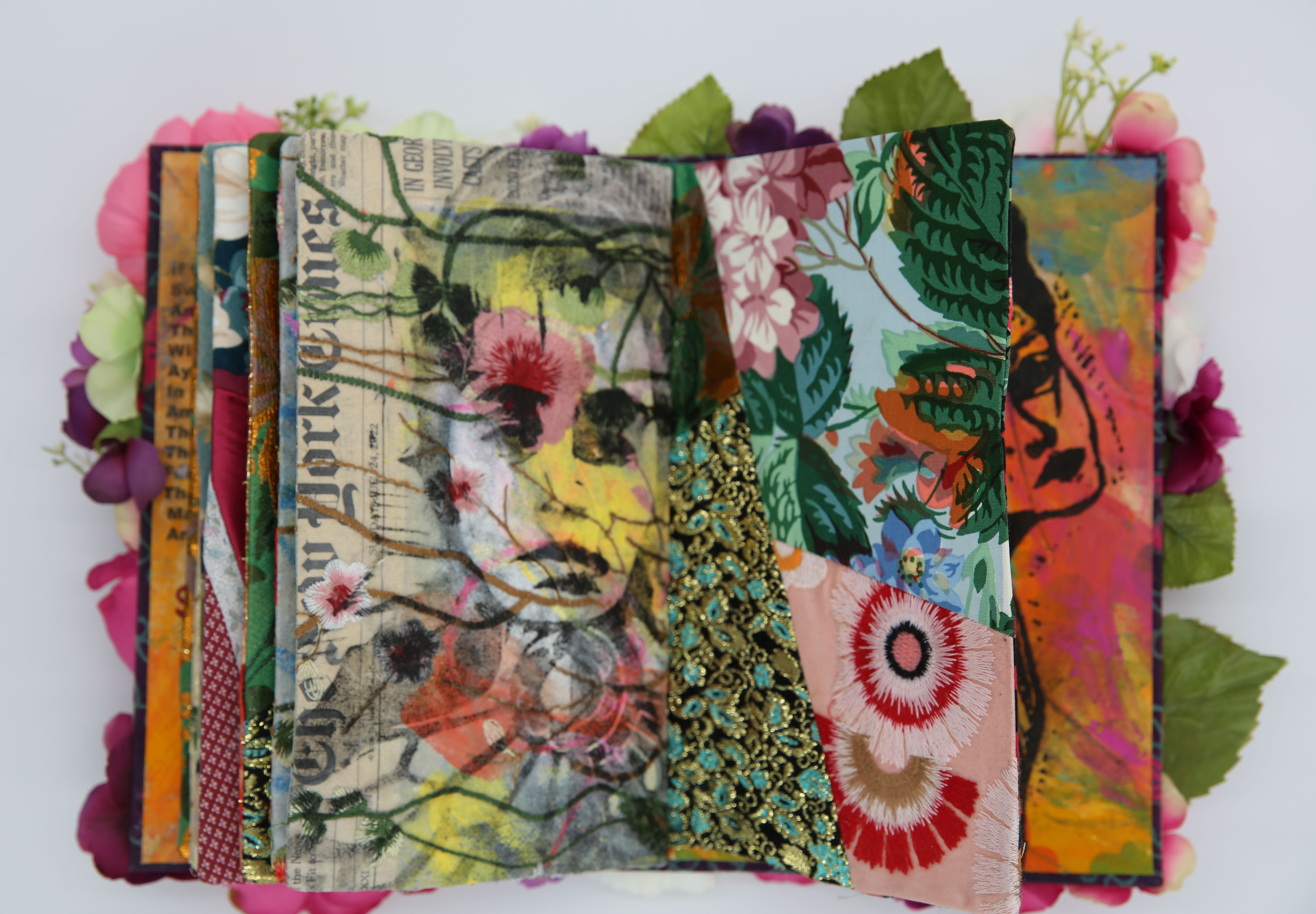
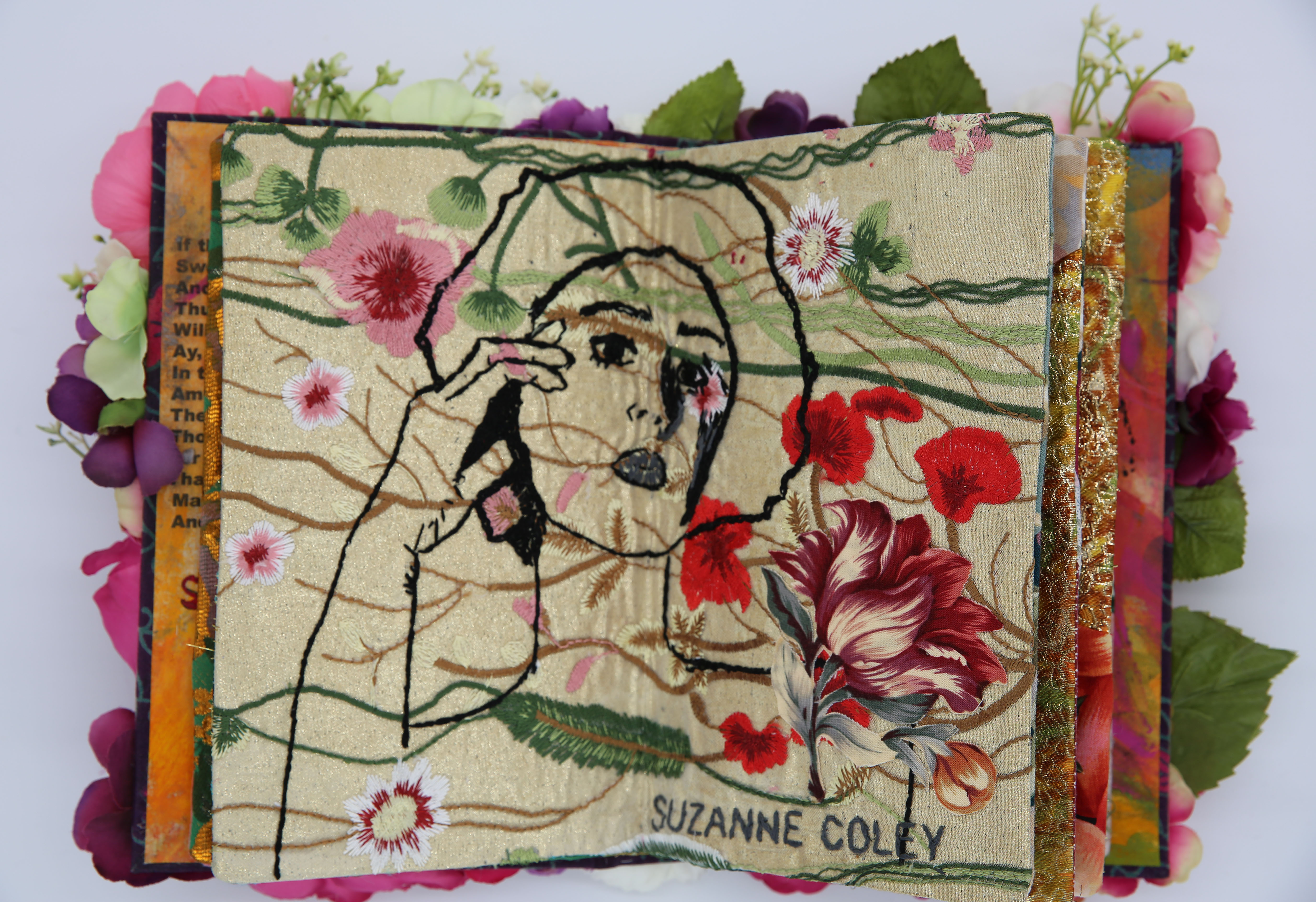
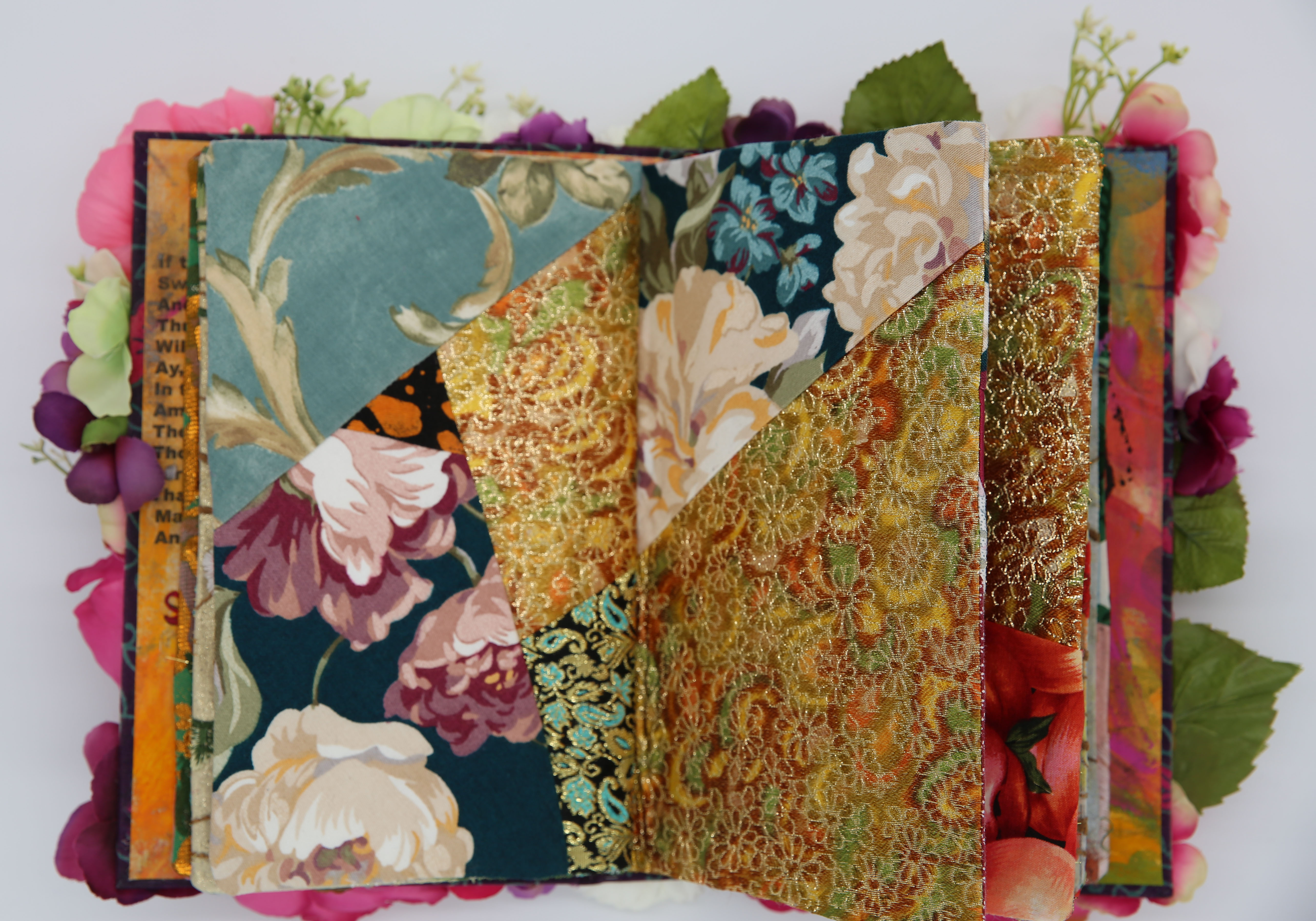
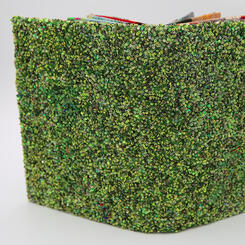
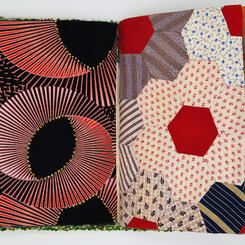
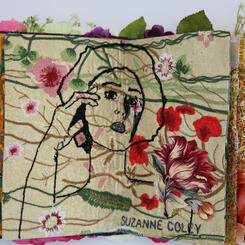
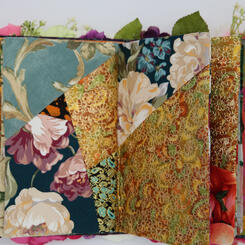
This book opens with bold, graphic pages that combine traditional quilting principles with contemporary fabric manipulation. Upcycled 1960s brocade and damask evening dresses are paired with modern embroidery and hand-worked couture techniques.By bringing bookmaking into conversation with couture dressmaking, the pages become precise, deliberate, and materially charged. The result is a textile book in which structure, surface, and ornament carry the psychological intensity of Shakespeare’s lines.
-
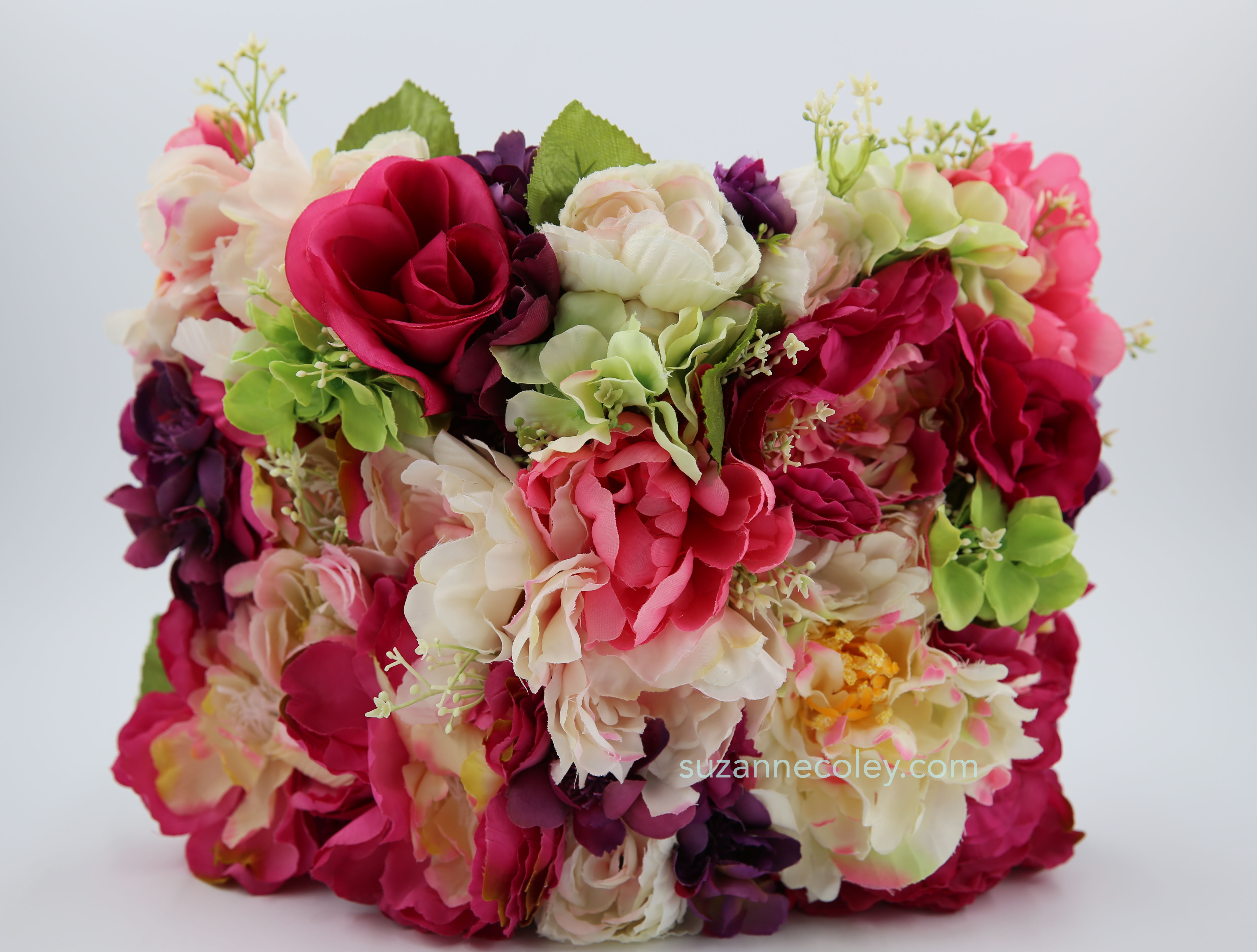
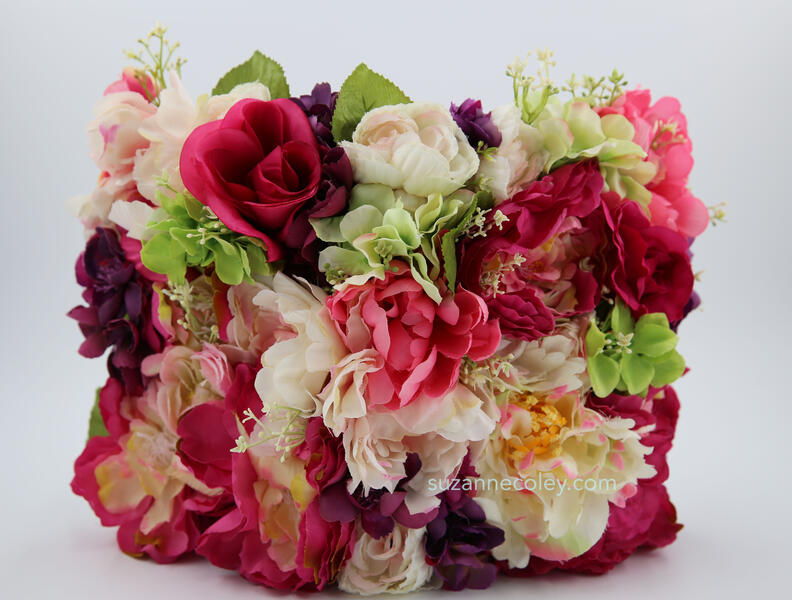 Soul Check 136 by Suzanne Coley
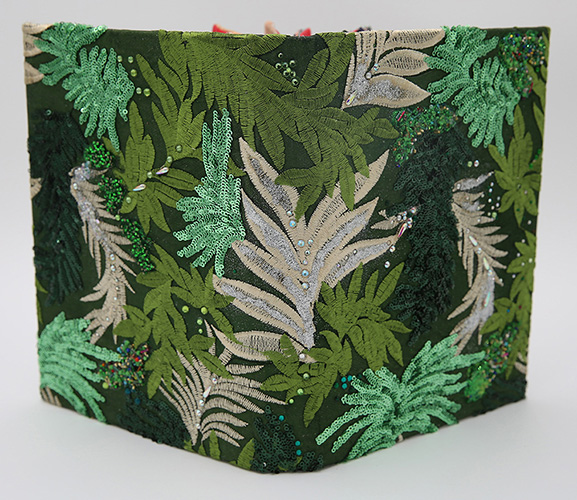
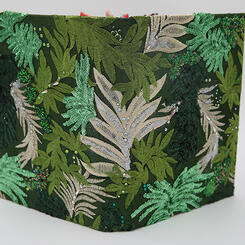
Inspired by Shakespeare's Sonnet 136, the bright floral cover of this book invites the reader to open it and read the contents. Cover was created with traditional heavy weight binders boards, painted cotton fabrics, and over 60 custom made polyester, plastic, and vinyl florals.
-
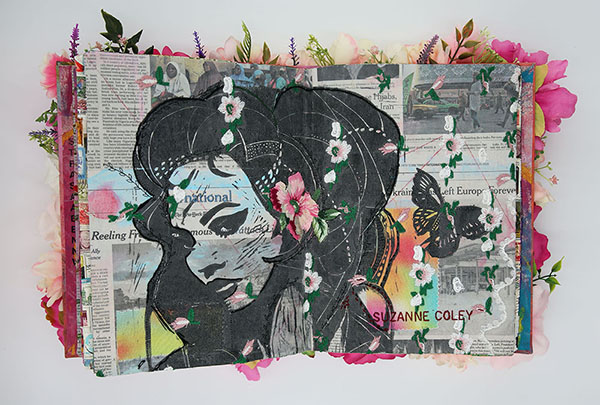
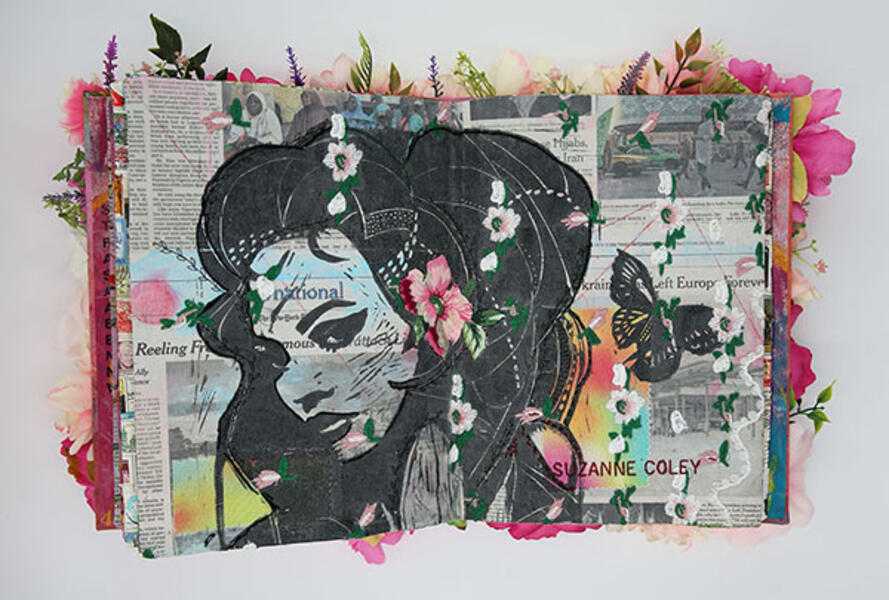 In Bloom, center page
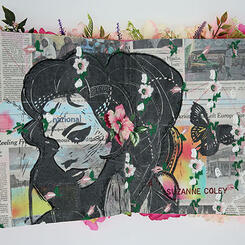
Hand carved linocut printed on newspaper and cotton with embroidery. This is a center page from the handmade textile book In Bloom. This page is in response to the following lines 2-4 in Shakespeare's Sonnet 18:
Thou art more lovely and more temperate.
Rough winds do shake the darling buds of May,
And summer’s lease hath all too short a date.
-
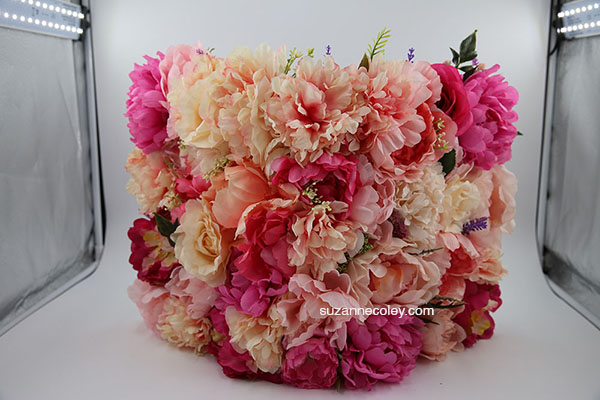
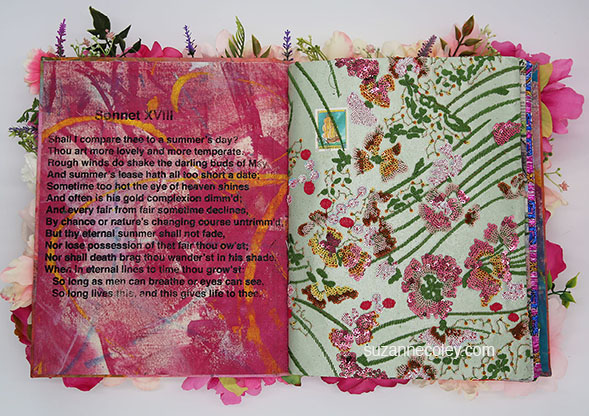
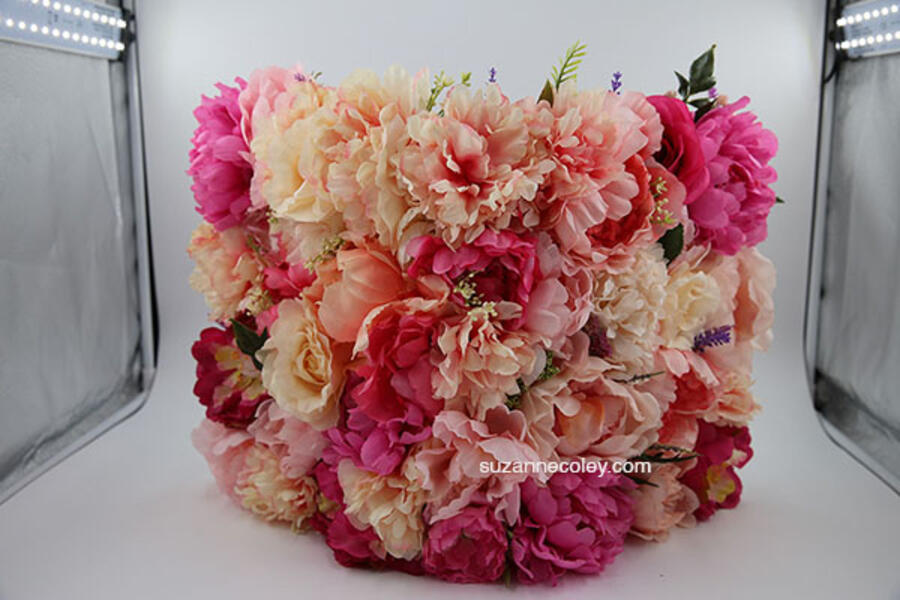 In Bloom
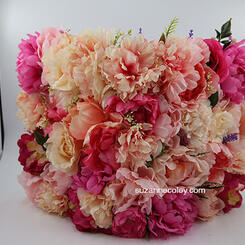
Handmade book inspired by Shakespeare's sonnet 18, Shall I compare thee to a summer's day. The pink floral cover, made entirely from textiles, reminds us of the beauty of Spring and rebirth. Creating flowers from fabric, although beautiful and meticulously crafted, reminds us of the brief life of real blooms and life. Like the seasons, nothing lasts forever.
-
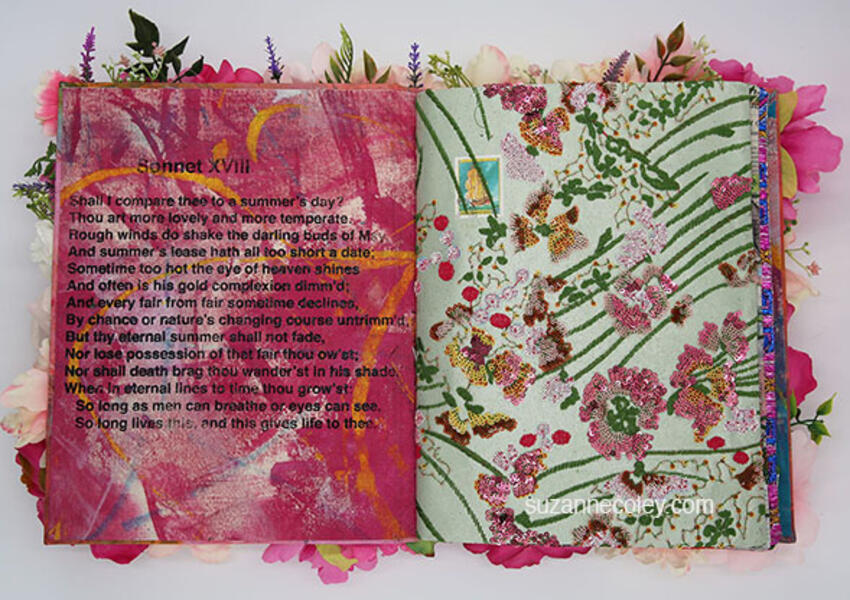 In Bloom, page from textile book
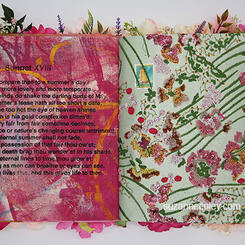
Hand painted wedding dress with silkscreen. Hand painted cotton page appliquéd with embroidery and postage stamps. This page is in response to Shakespeare's Sonnet 18, lines 8 and 9:
By chance, or nature’s changing course, untrimmed;
But thy eternal summer shall not fade, -
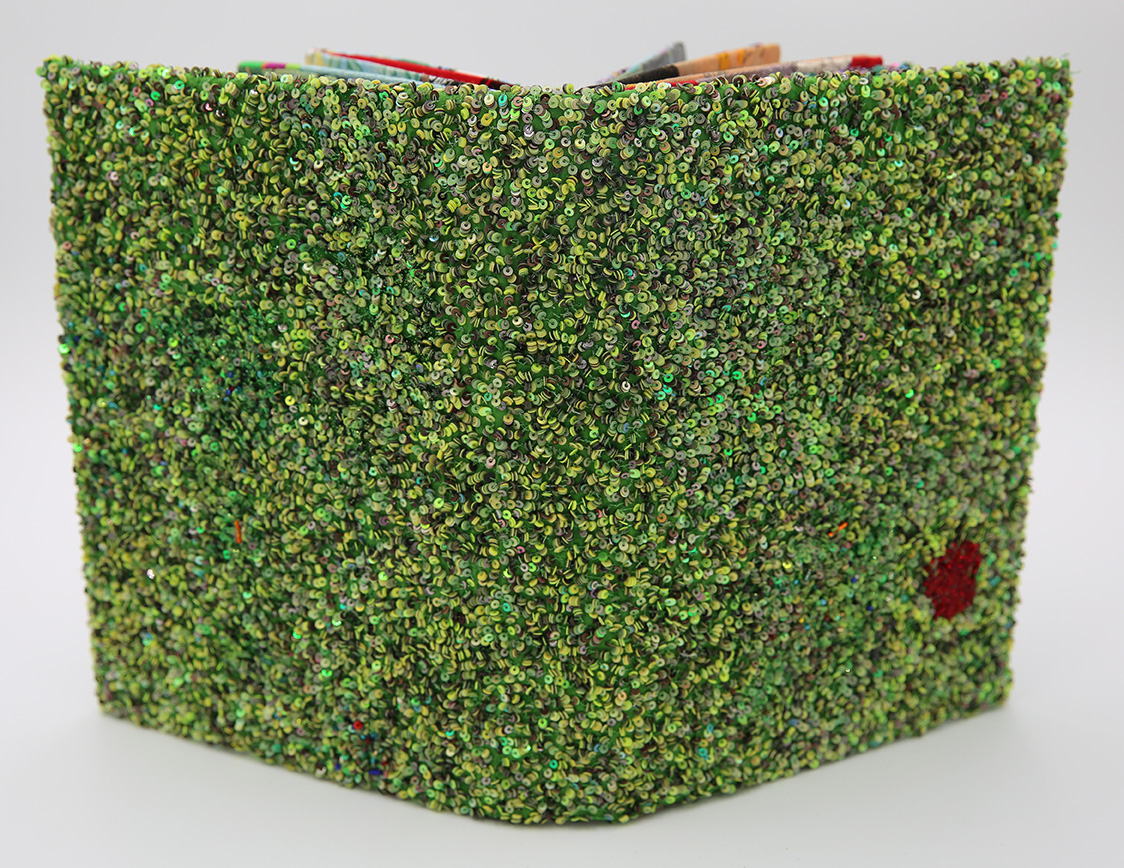
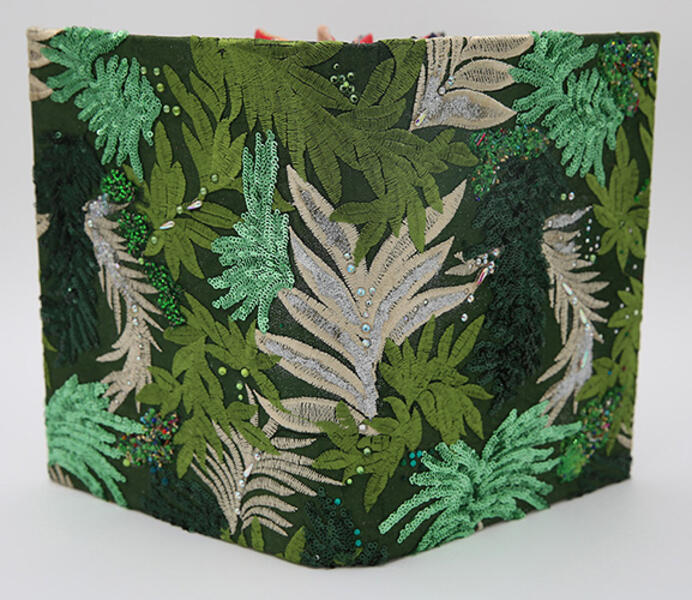 Love's Not Time's Fool, Tier 1 Cover
"In 2025 I created three embroidered books in response to Shakespeare's Sonnet 116, compelled by the poem's layered intricacies and understand complexities. This volume constitutes the first installment of the series. While Sonnet 116 is frequently read as a clear and declarative assertion, the process of translating its language into visual and material form revealed a text of far greater interpretive density.
"Through illustration, stitching, and constructing the books, I encountered multiple strata of meaning. These strata are the subtleties, hesitations, and semantic shifts that often recede in conventional readings. However, they have a profound significance of how visual meaning is constructed.
"Working across three discreet volumes enabled me to trace these nuances both materially and visually. This allowed me to illuminate dimensions of the sonnet that are easily obscured by more straightforward interpretations. For more details about this series of books and images please visit my website: suzannecoley.com."
Suzanne Coley
-
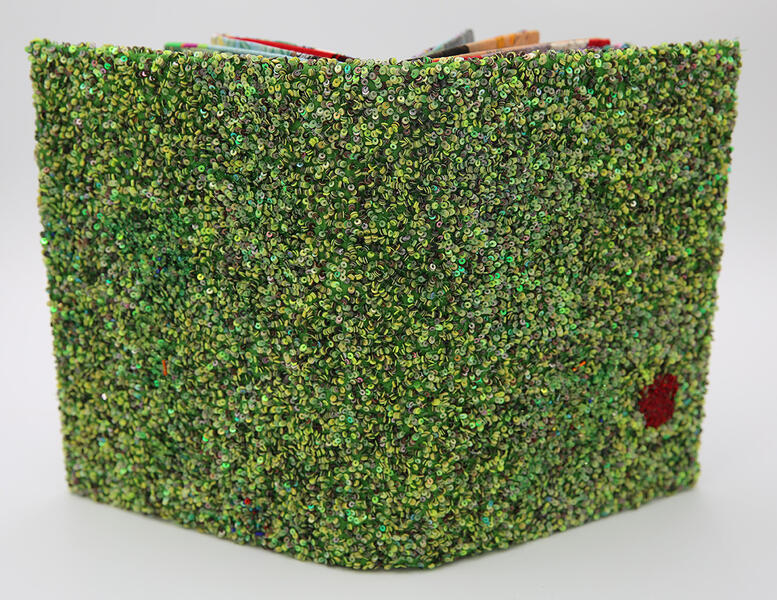 Love's Not Time's Fool, Tier 2 Cover
"In 2025 I created three embroidered books in response to Shakespeare's Sonnet 116, compelled by the poem's layered intricacies and understand complexities. This volume constitutes the second installment of the series. While Sonnet 116 is frequently read as a clear and declarative assertion, the process of translating its language into visual and material form revealed a text of far greater interpretive density.
"Through illustration, stitching, and constructing the books, I encountered multiple strata of meaning. These strata are the subtleties, hesitations, and semantic shifts that often recede in conventional readings. However, they have a profound significance of how visual meaning is constructed.
"Working across three discreet volumes enabled me to trace these nuances both materially and visually. This allowed me to illuminate dimensions of the sonnet that are easily obscured by more straightforward interpretations. For more details this series and images please visit my website: suzannecoley.com."
Suzanne Coley
-
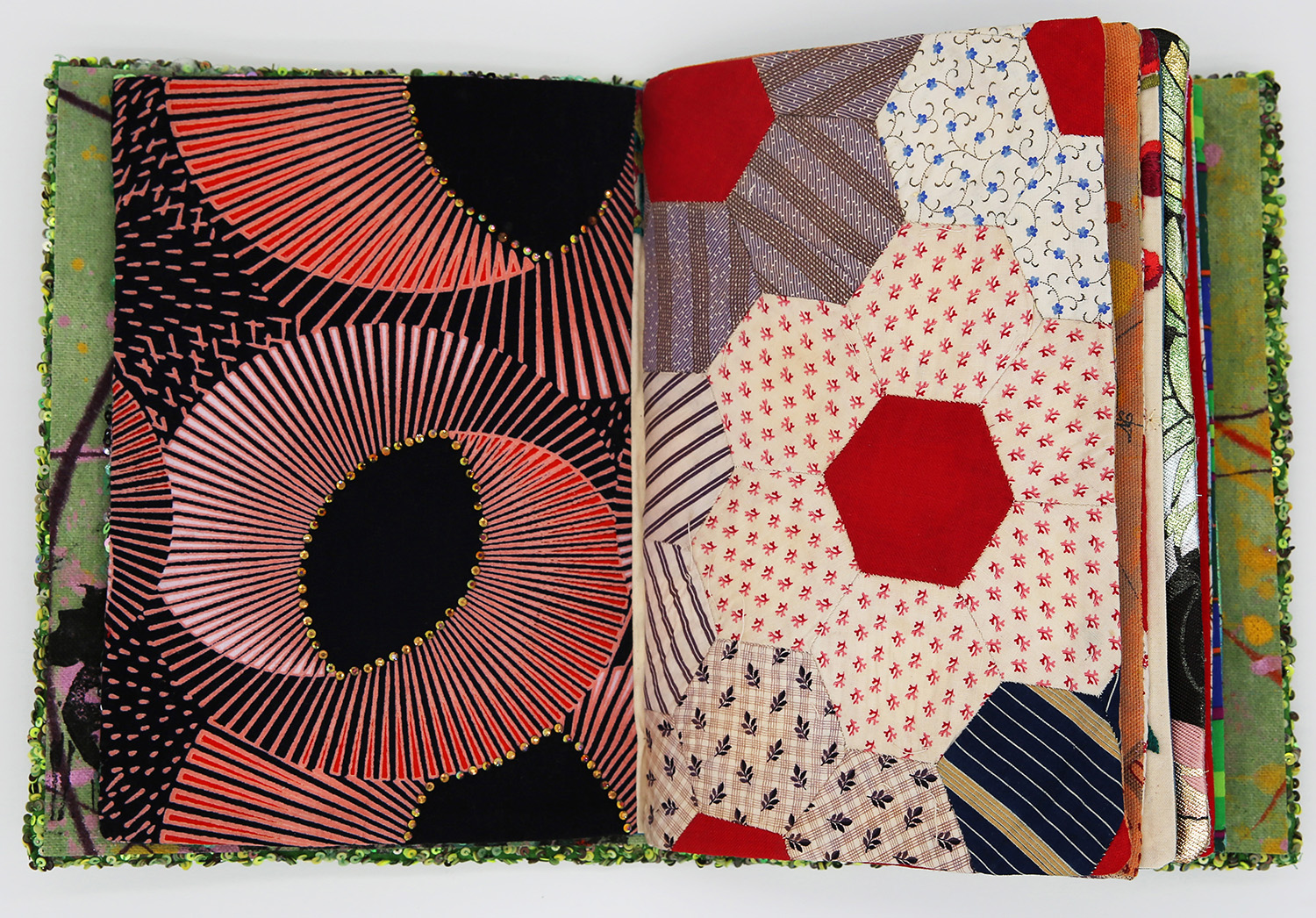
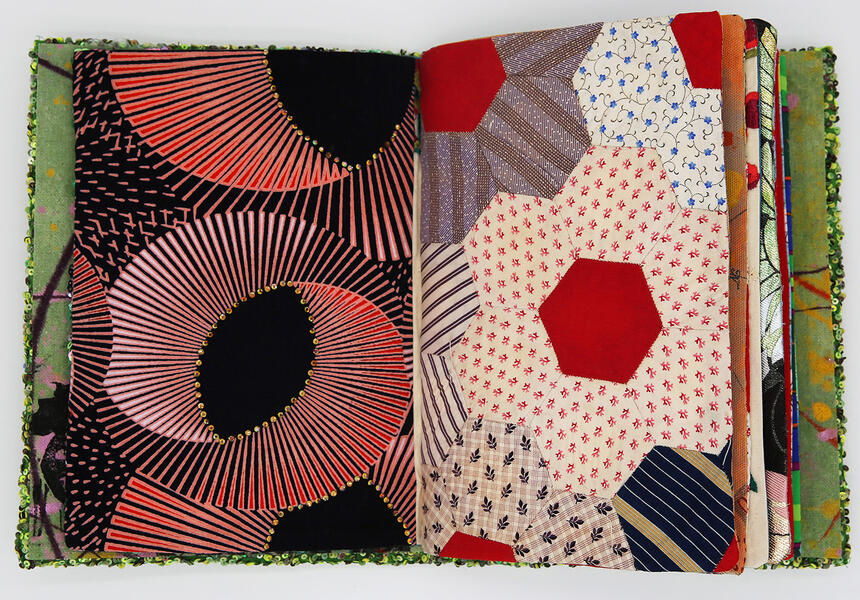 Love's Not Time's Fool, Page spread
Pages from Love's Not Time's Fool, 2025
-
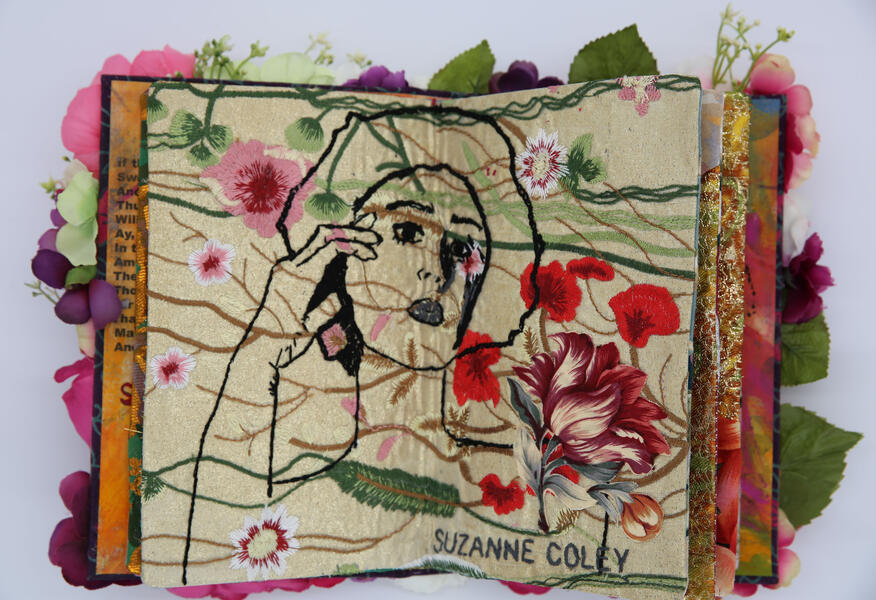 For Nothing Hold Me1960s gold lame fabric handed down to me from a nonagenarian African American seamstress, was hand embroidered. Other techniques used were broderie perse and appliqué.
 -
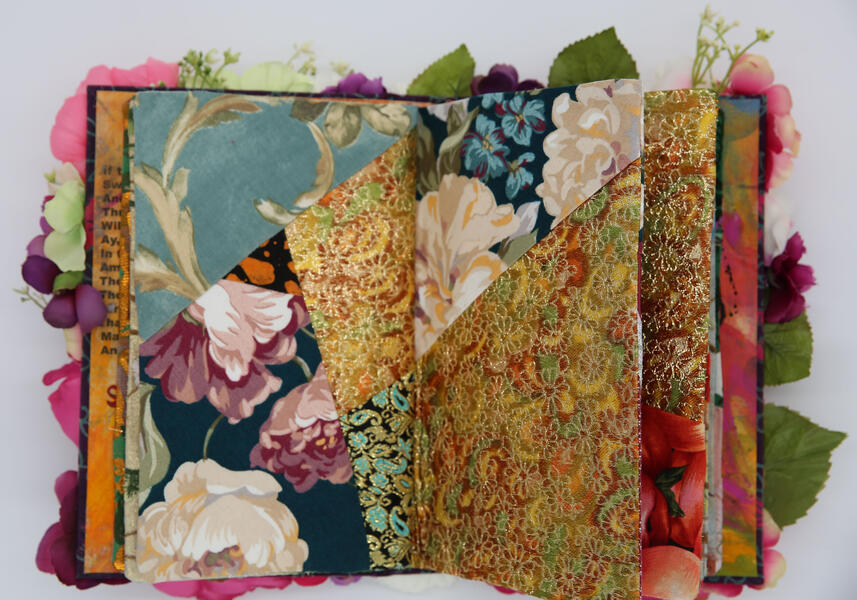 Among A Number One Is Reckoned None
Vintage 1960s damask textiles are combined with muted floral textiles in a patchwork design inspired by "Sharecropper" quilting techniques by African American sewers from North Carolina. The larger damask textile, on the lower right hand page, was handed down to me by a nonagenarian African American seamstress in 2018.