-
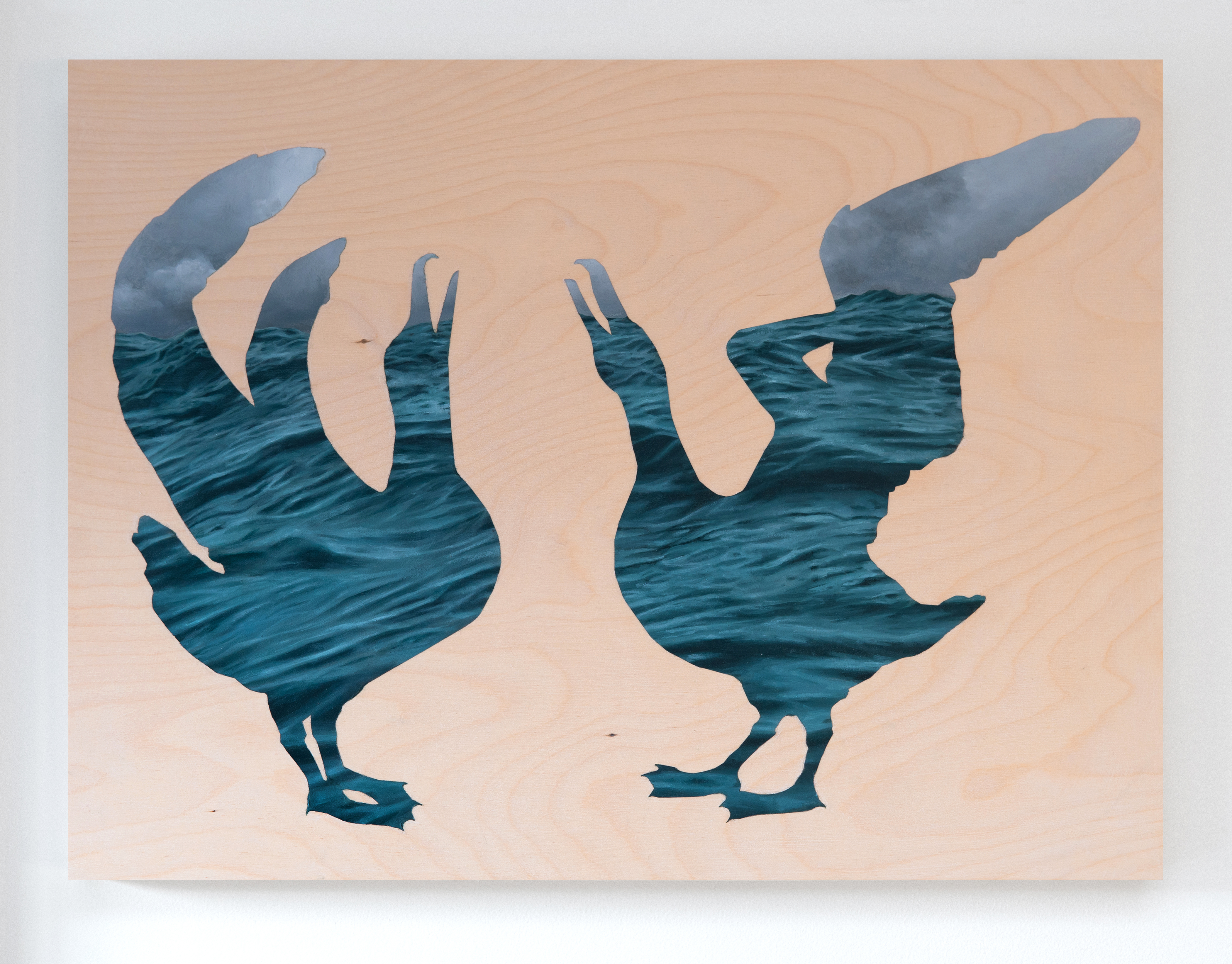
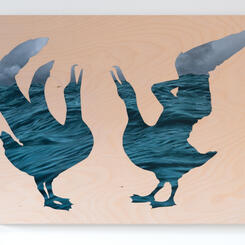
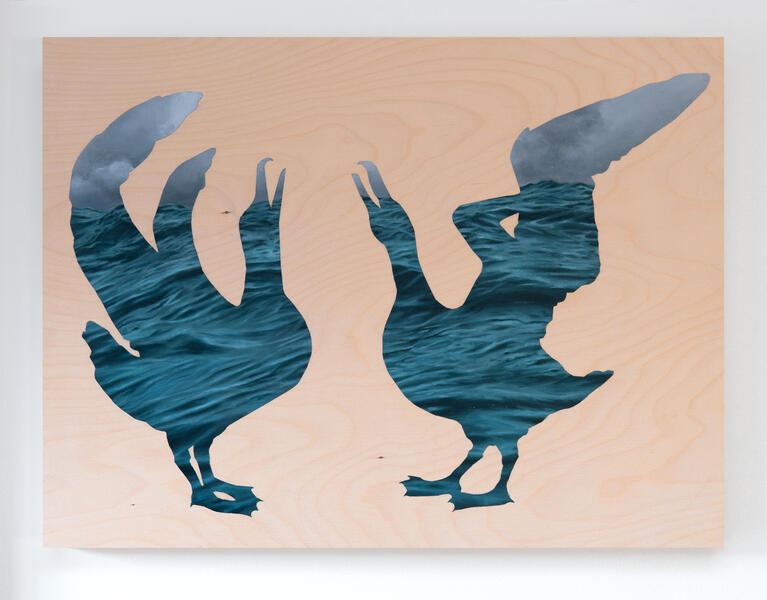 Sky Call (Albatross)Oil on wood, 18x24", 2020. Since I first learned about the dances of albatrosses (from David Attenborough, who else), I’ve had an admiration for the way these birds conduct their relationships. Though they spend months apart from each other traveling vast distances alone over the seas, when they reunite on land they greet each other by dancing. Each couple has their own unique sequence of head-bobs, beak-clacks, and wing-spreading flourishes which they have choreographed together. Albatross dances change and evolve throughout the course of their life-long partnerships, which can last for 50 years, depending on the species. I was inspired to create a series of paintings exploring the complex web of relationships in the ocean after attending a lecture by environmental artist Stacy Levy. Water has unique properties that make it the fundamental source of life on Earth, and through my paintings I explore how it looks, how it moves, and the complex ways in which it connects our world.
 -
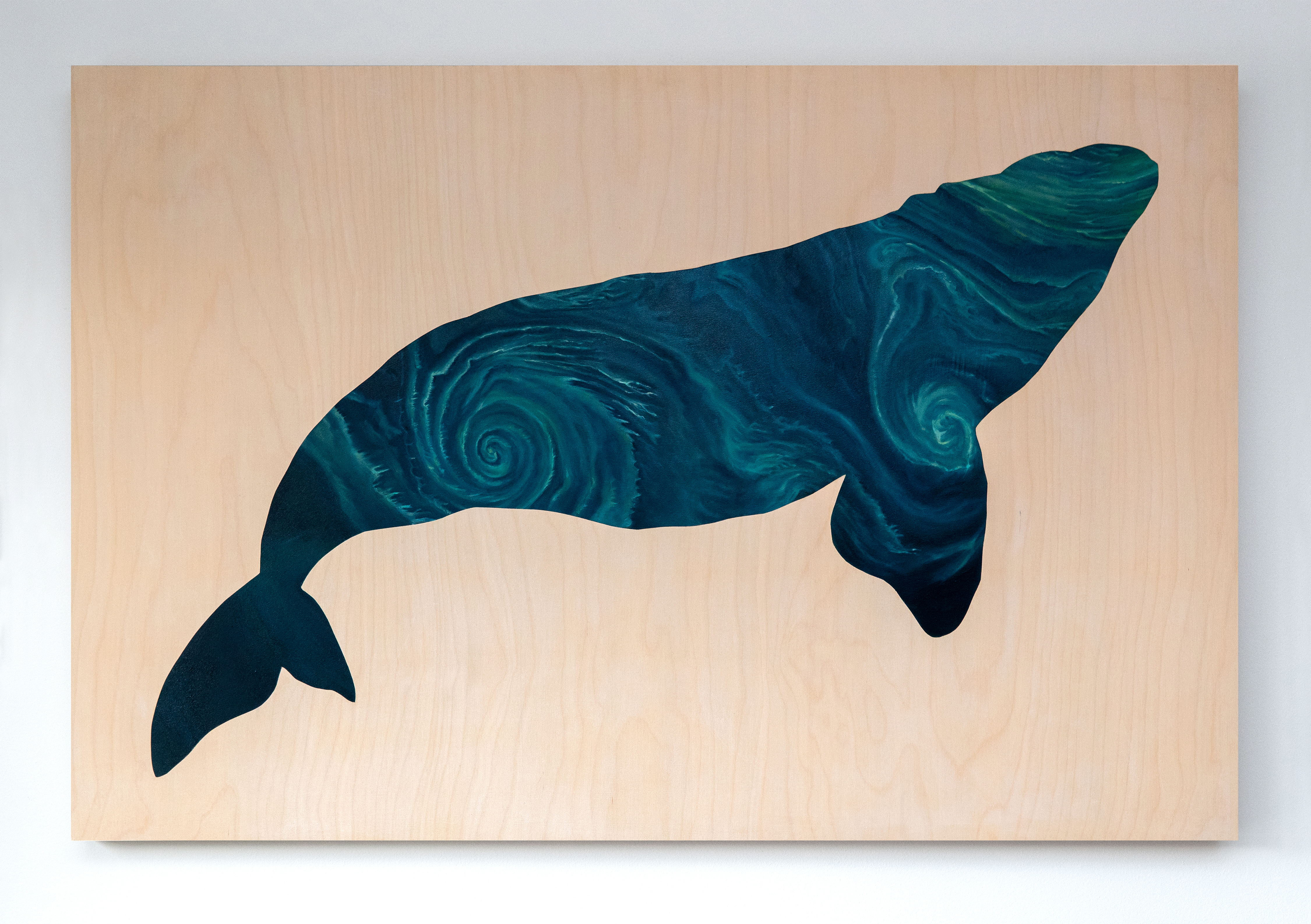
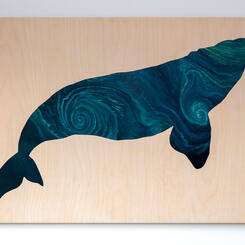
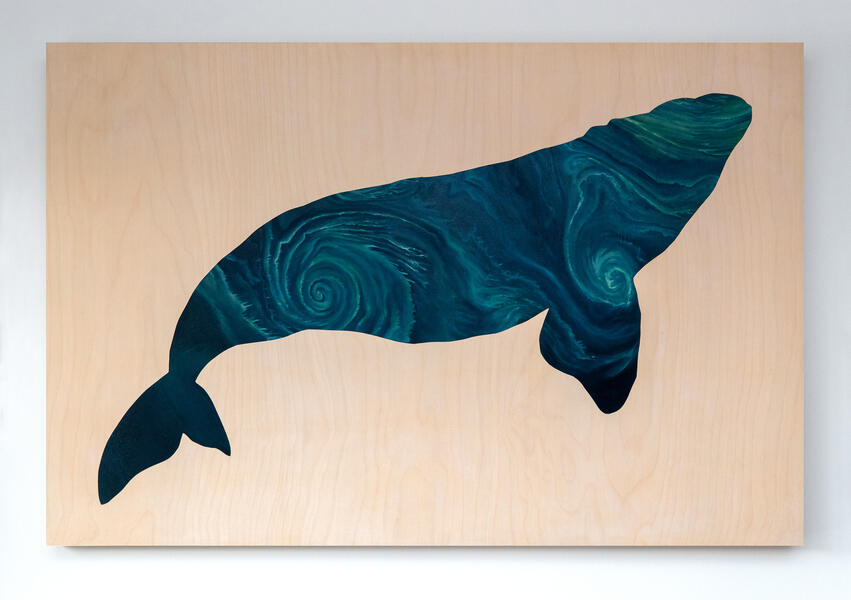 Right Whale (Eubalaena glacialis)Oil on wood, 24x36", 2020. There are only about 400 North Atlantic right whales left in the world. They’ve been protected from whaling since 1935, but their population has never recovered from when they were hunted for their baleens and oil. They got their name from whalers who called them the “right whale” to hunt because they tend to swim slowly and near the surface. Today, these whales’ biggest threats are being struck by ships or entangled in commercial fishing gear. 85% of them show signs of having been entangled in fishing gear at some point in their lives. They are also threatened by ship noise and sonar testing. They live along the coasts of North America and (increasingly rarely) near European coasts. Their distribution is shifting as their food sources move to adapt to changes in the ocean. Their primary source of food is a tiny 2mm crustacean, a copepod species called Calanus finmarchicus. Due to changing temperatures and salinity levels, the density and distribution of C. finmarchicus is changing, forcing the small population of right whales to try to quickly adapt. Meanwhile, giant algae blooms like the one inside this whale’s silhouette, are on the rise. These blooms are comprised of tiny phytoplankton like diatoms, dinoflagellates, and cyanobacteria, and are a yearly occurrence in many places. Due to warming waters and phosphorus runoff from sewage and agriculture, they are becoming more frequent and intense, disrupting marine ecosystems. Large blooms can threaten other life dependent on the waters they bloom in by releasing toxic substances or depleting the water of oxygen, creating “dead zones” in the ocean. Some blooms can also cause illness in humans, and harm coastal economies. I was inspired to create a series of paintings exploring the complex web of relationships in the ocean after attending a lecture by environmental artist Stacy Levy. Water has unique properties that make it the fundamental source of life on Earth, and through my paintings I explore how it looks, how it moves, and the complex ways in which it connects our world.
 -
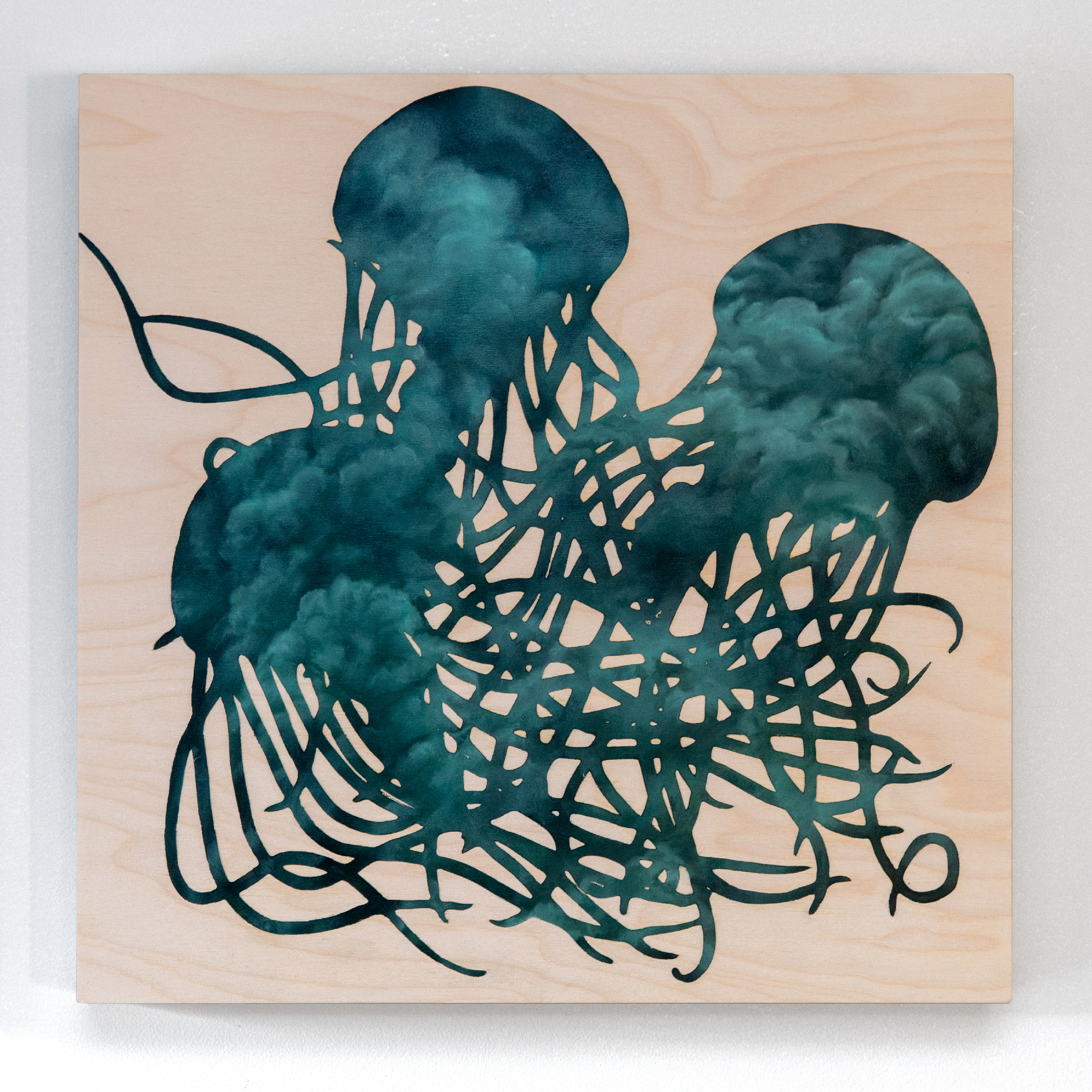
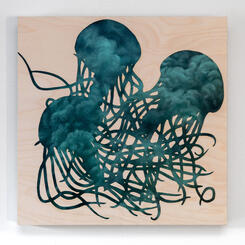
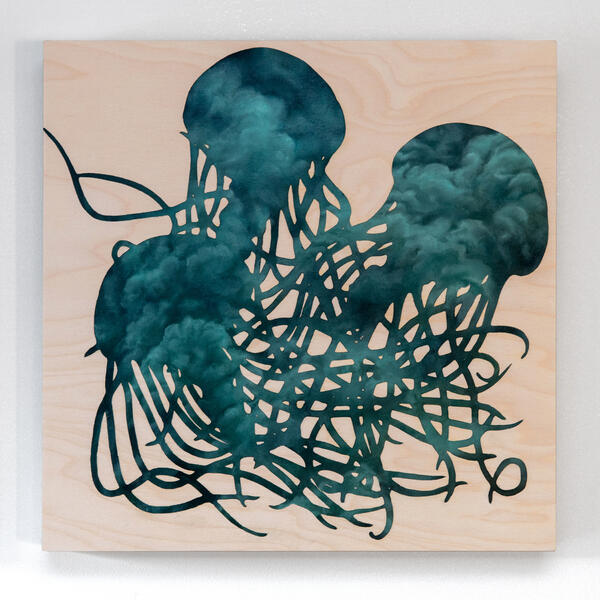 MedusaeOil on wood, 18x18", 2020. These are jellyfish in the medusa stage. Their complex life cycle is part of what makes jellyfish so resilient to changing water conditions such as warming and acidification. They begin their lives as a polyp, which can survive for many years until conditions are right—then they bud into a strobila, a stack of jellyfish clones that grows off the polyp. Each strobila at the top of the stack will eventually break off, and then feed until they turn into medusae. The medusae reproduce sexually, their sperm and eggs combining to form planktonic spores which turn into more polyps once they attach themselves to a surface. When other marine species are threatened, jellyfish often take over. Many species of jellyfish are extremely resilient; they can regenerate their flesh, survive for long periods without food, reproduce in staggering numbers, and often thrive in warming waters. (One species, Turritopsis dohrnii, is considered biologically immortal). They also have a low nutritional value, and in some ecosystems have few known predators. Many creatures that do eat jellyfish, including albatrosses, tuna, swordfish, and sea turtles, are now considered threatened species due to overfishing and climate change. I was inspired to create a series of paintings exploring the complex web of relationships in the ocean after attending a lecture by environmental artist Stacy Levy. Water has unique properties that make it the fundamental source of life on Earth, and through my paintings I explore how it looks, how it moves, and the complex ways in which it connects our world.
 -
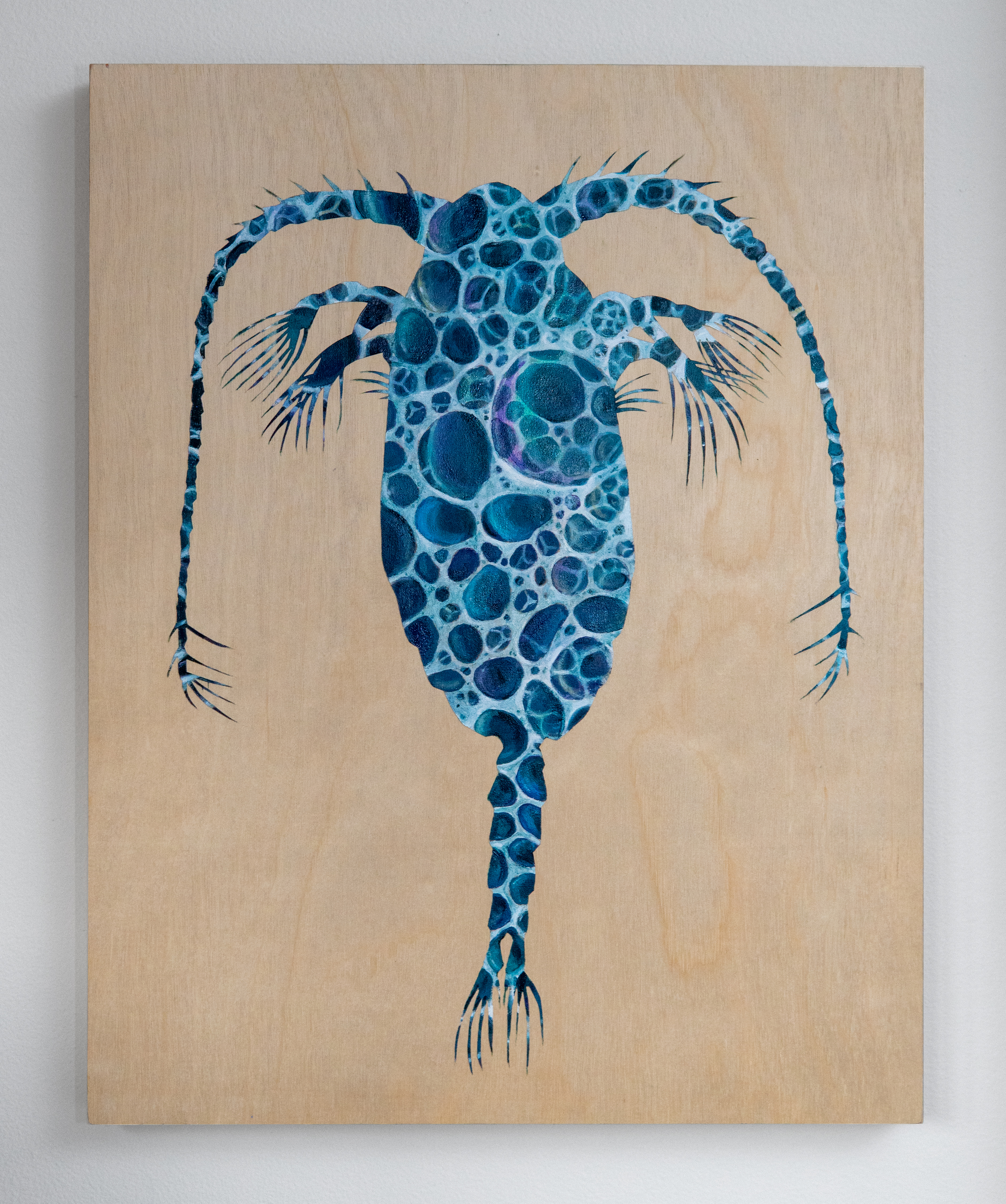
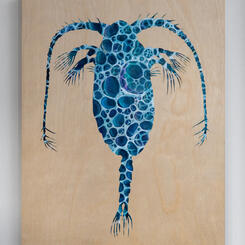
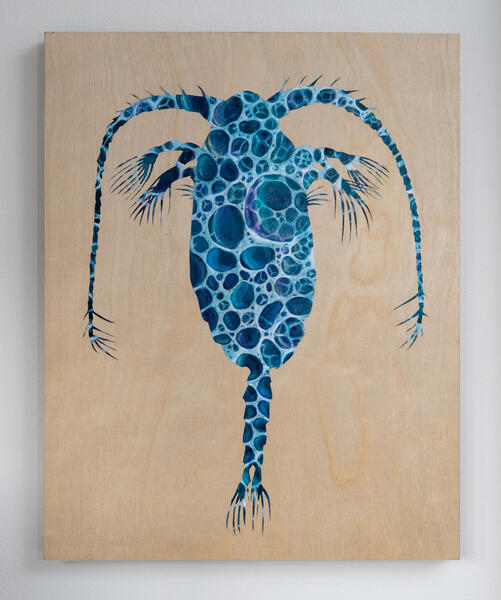 Copepod (Calanus finmarchicus)Oil on wood, 14x11", 2020. This is Calanus finmarchicus, a species of copepod (tiny marine crustacean) that is the primary food source for North Atlantic right whales. Only about 2mm long, they feed on diatoms, dinoflagellates, and other microplankton. They dwell in the North Atlantic from the Gulf of Maine to the Norwegian Sea, but can be adaptable to a wide variety of conditions; they have survived periods of climate change in the past by migrating and overwintering in deeper waters. Their biomass in the North Sea has declined by 70% since 1960. Scientists may be able to better understand some of the current changes in climate by tracking shifts in copepod populations’ distribution over time. I was inspired to create a series of paintings exploring the complex web of relationships in the ocean after attending a lecture by environmental artist Stacy Levy. Water has unique properties that make it the fundamental source of life on Earth, and through my paintings I explore how it looks, how it moves, and the complex ways in which it connects our world.