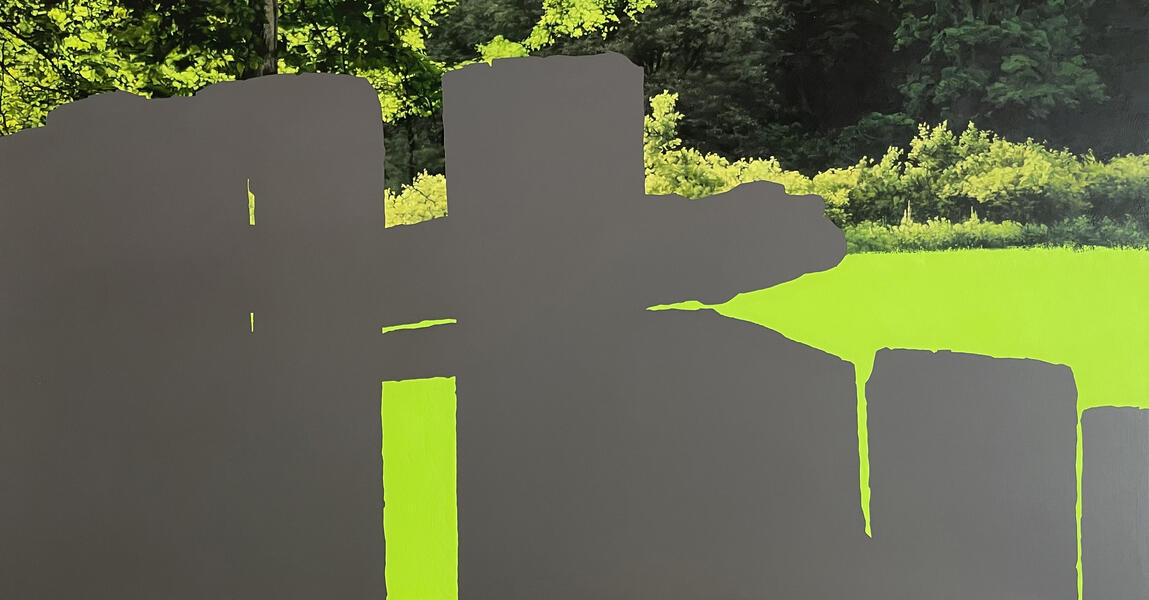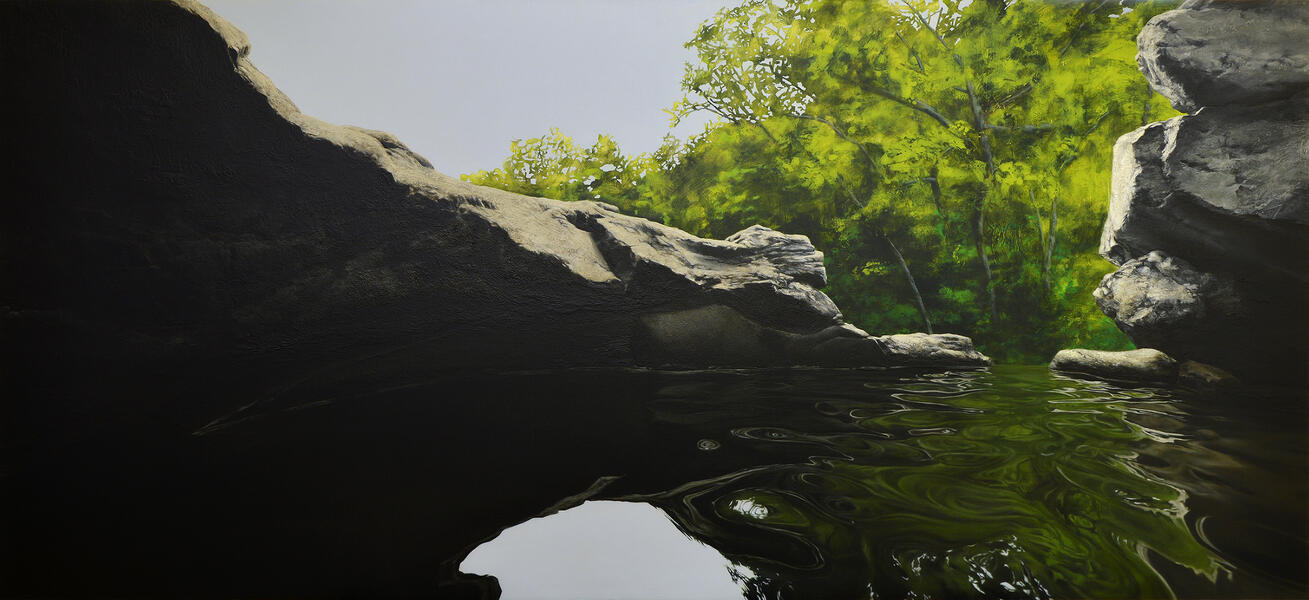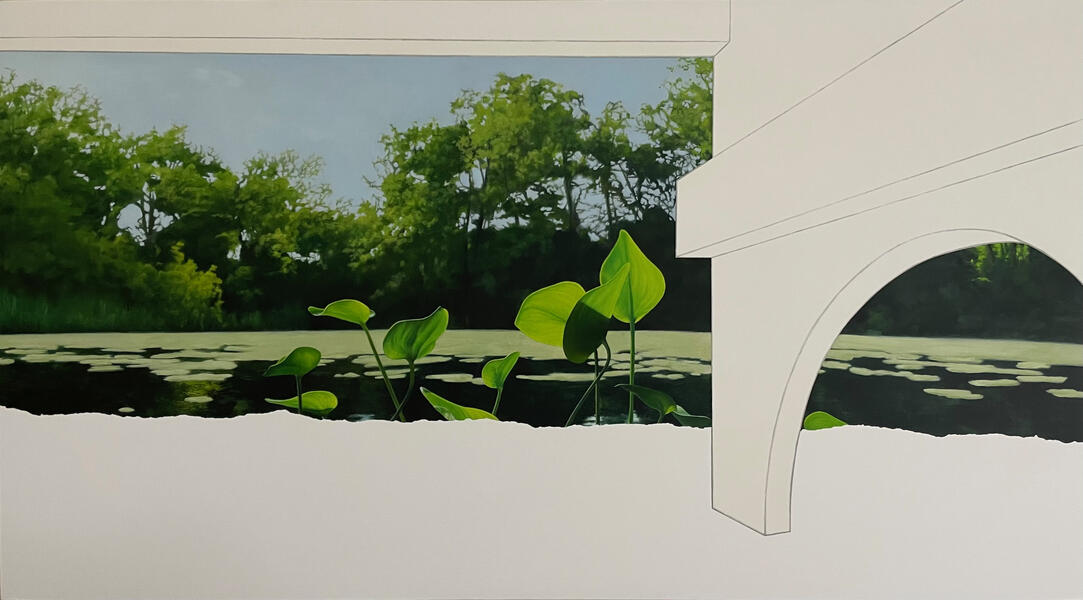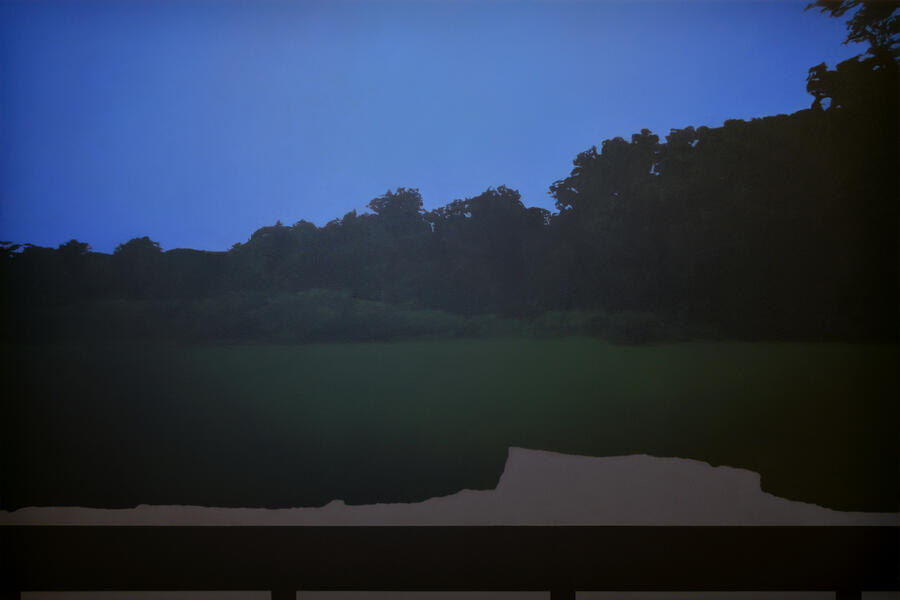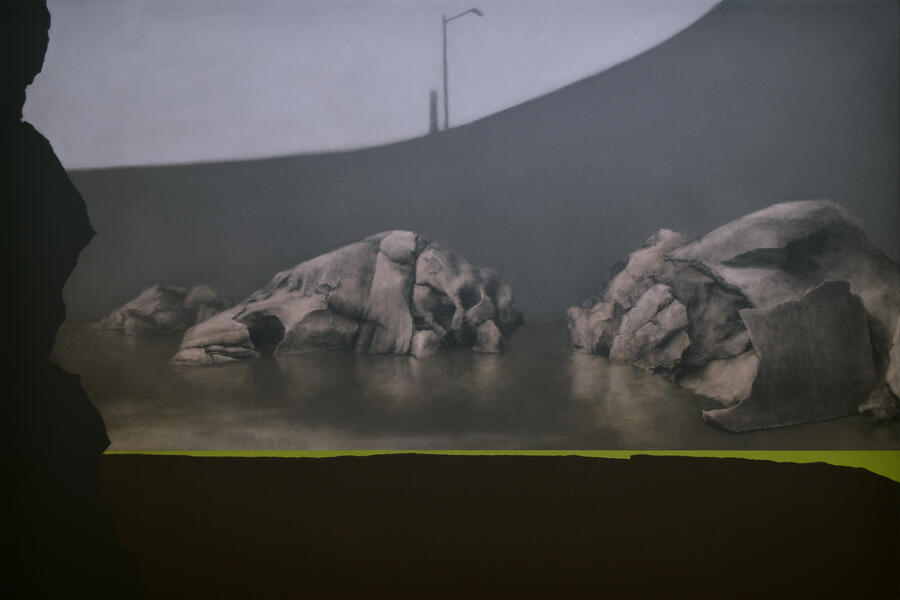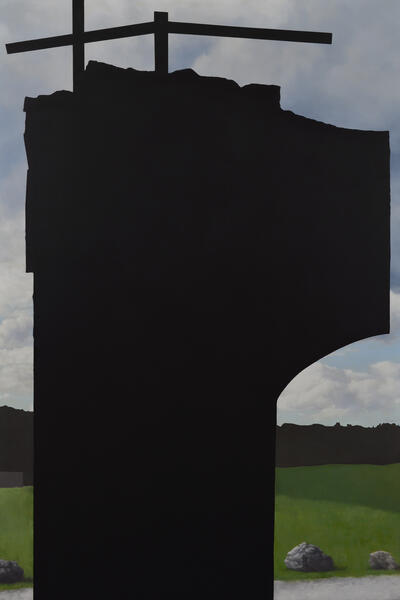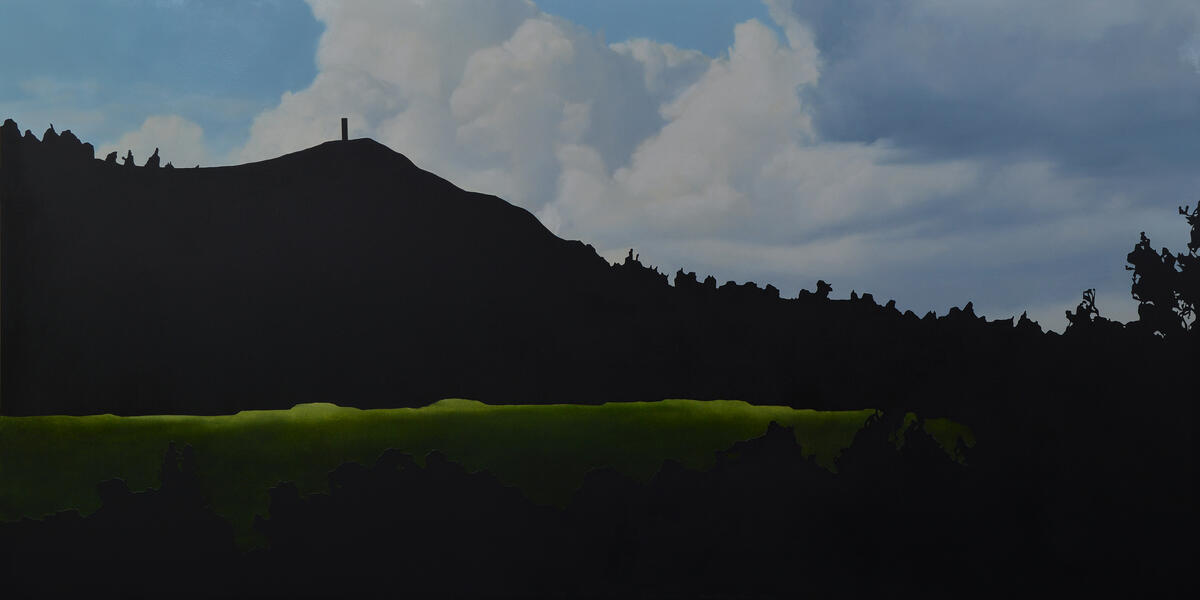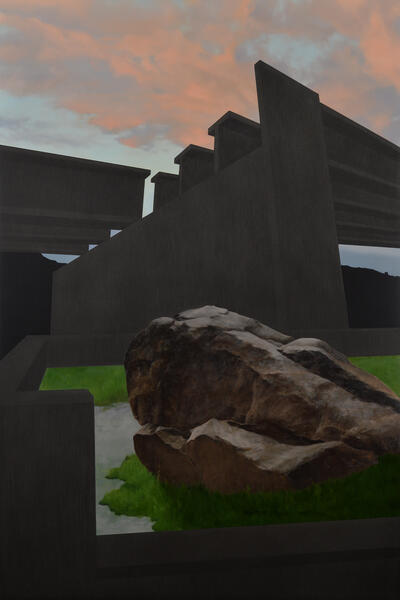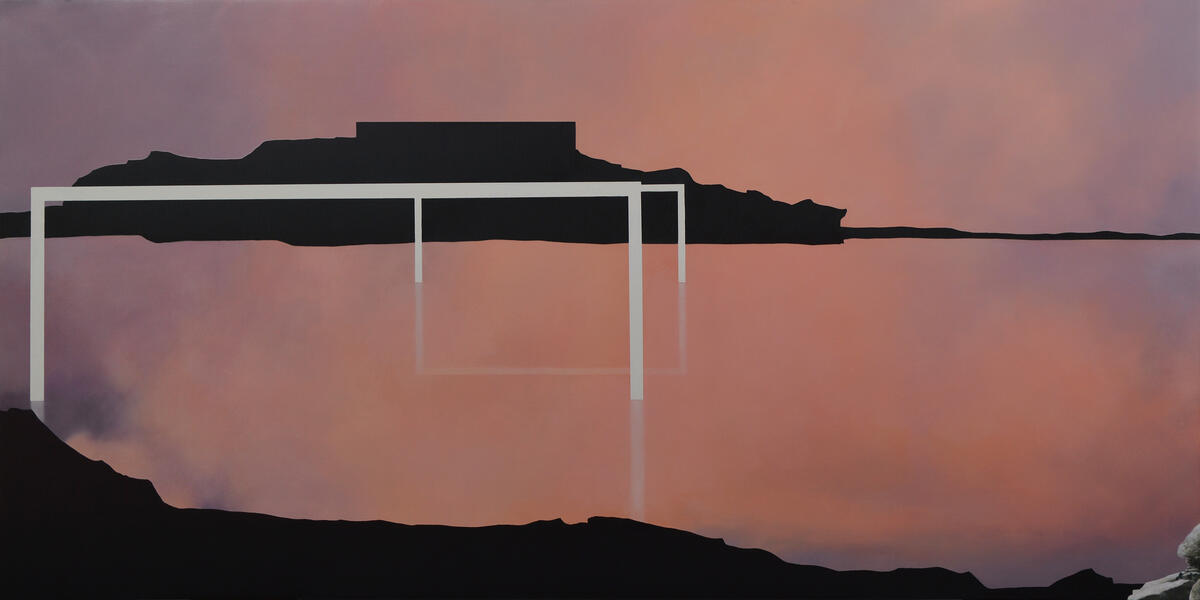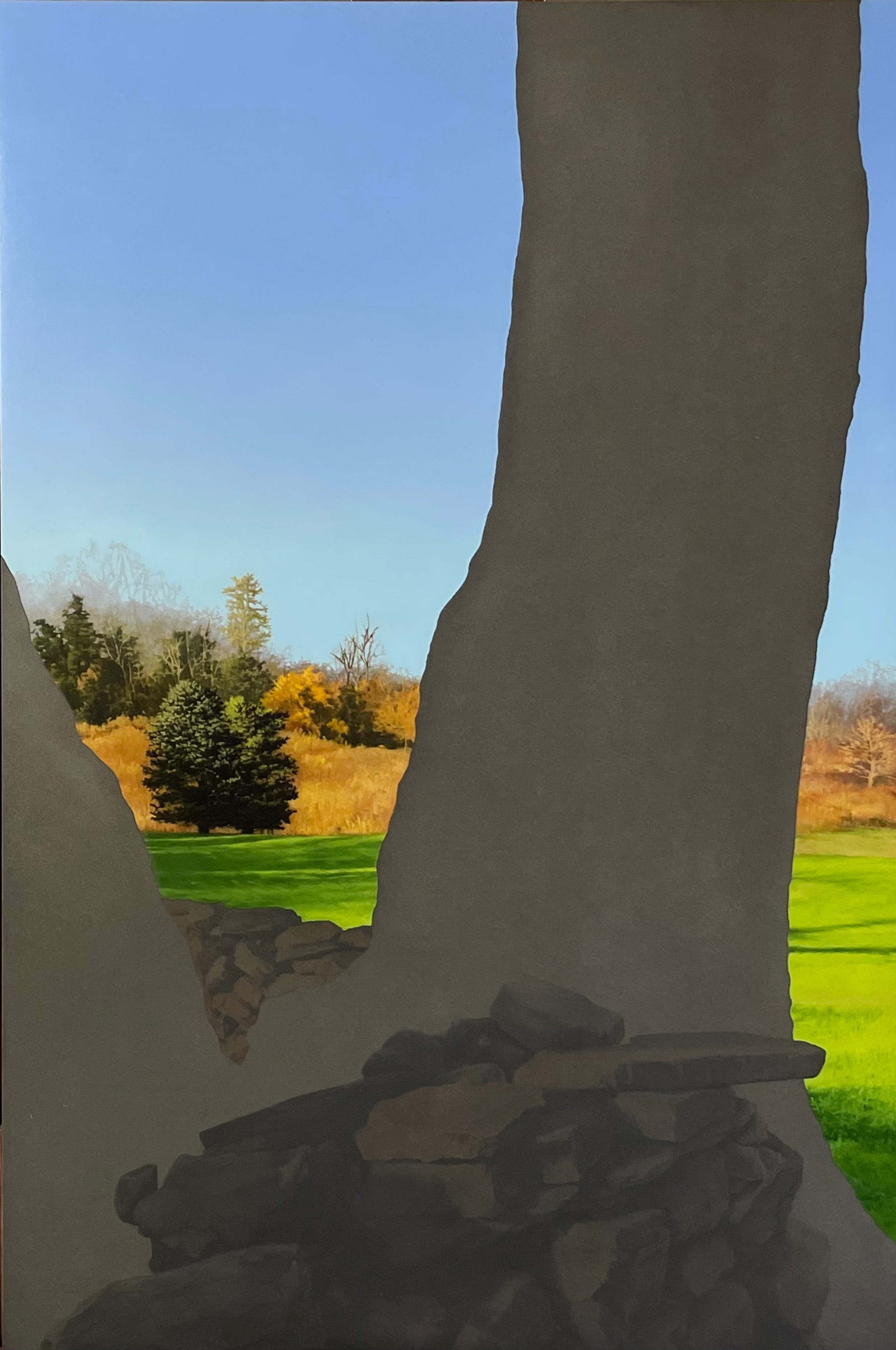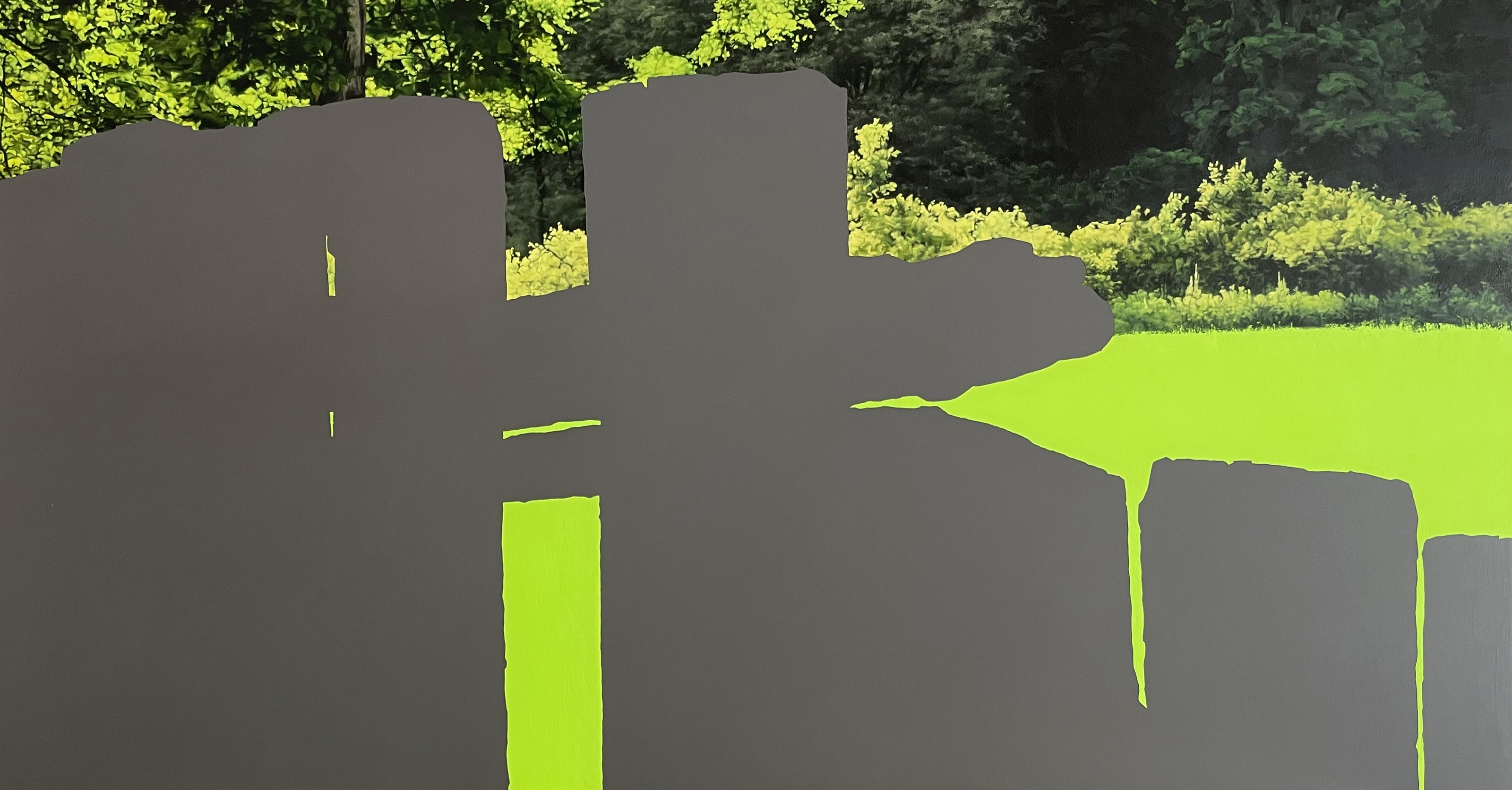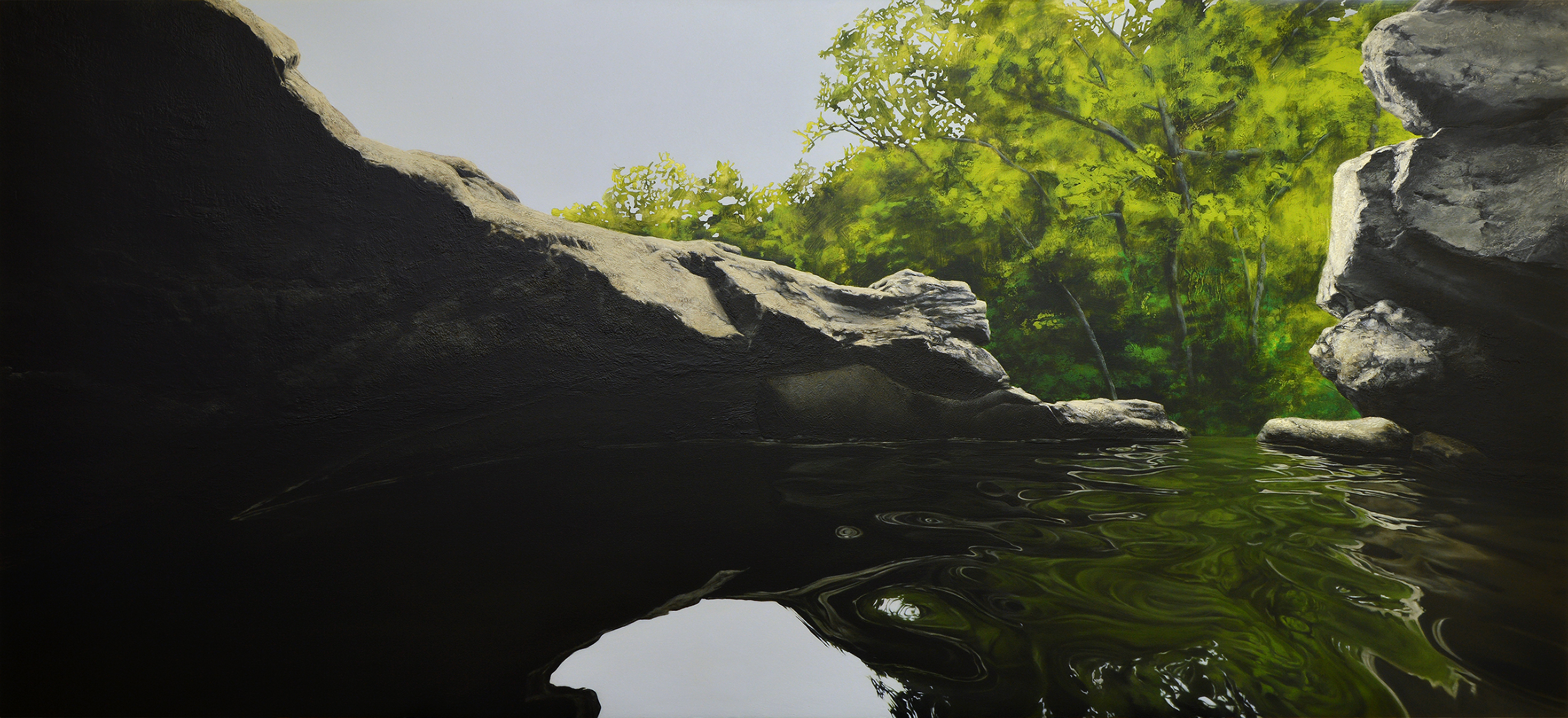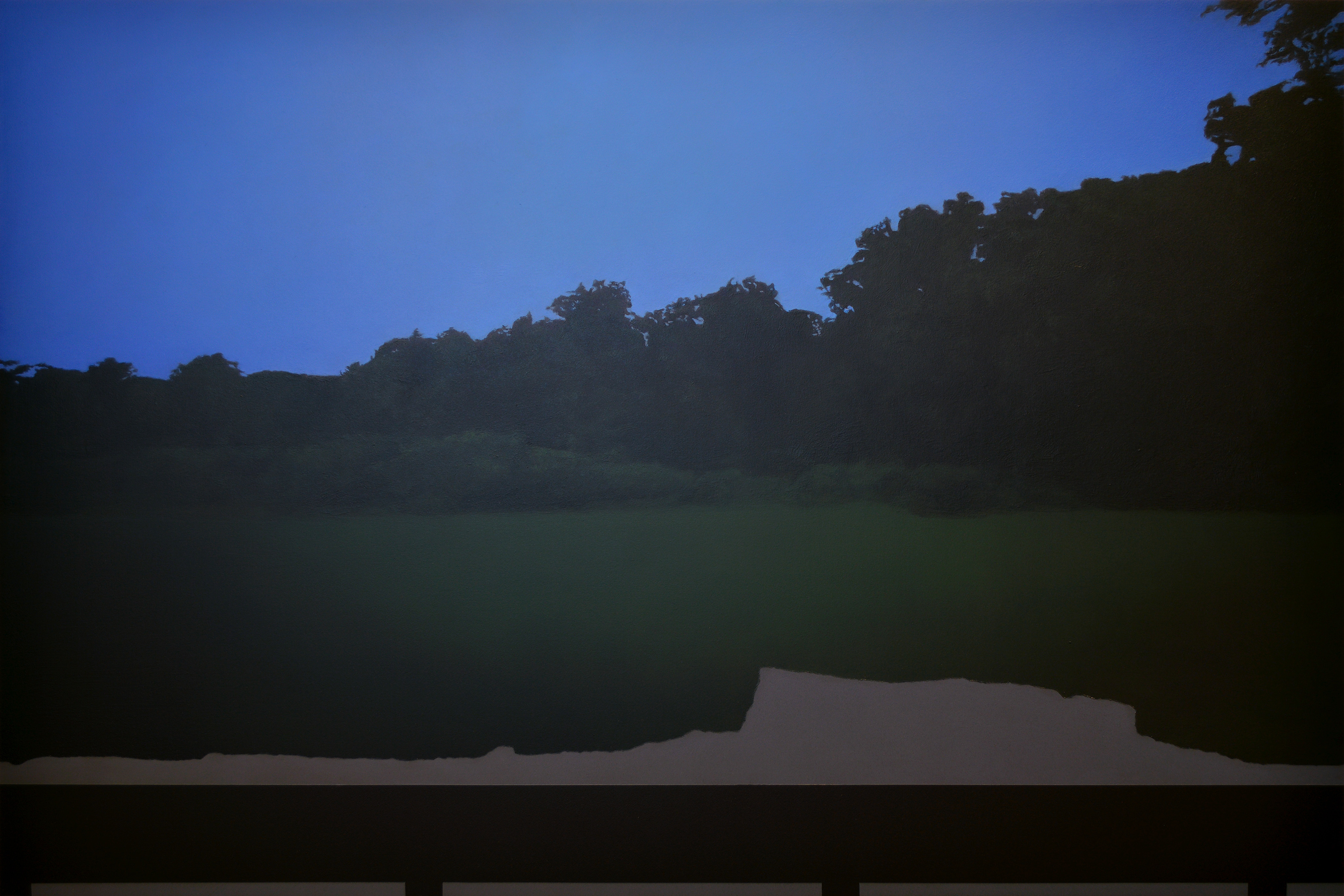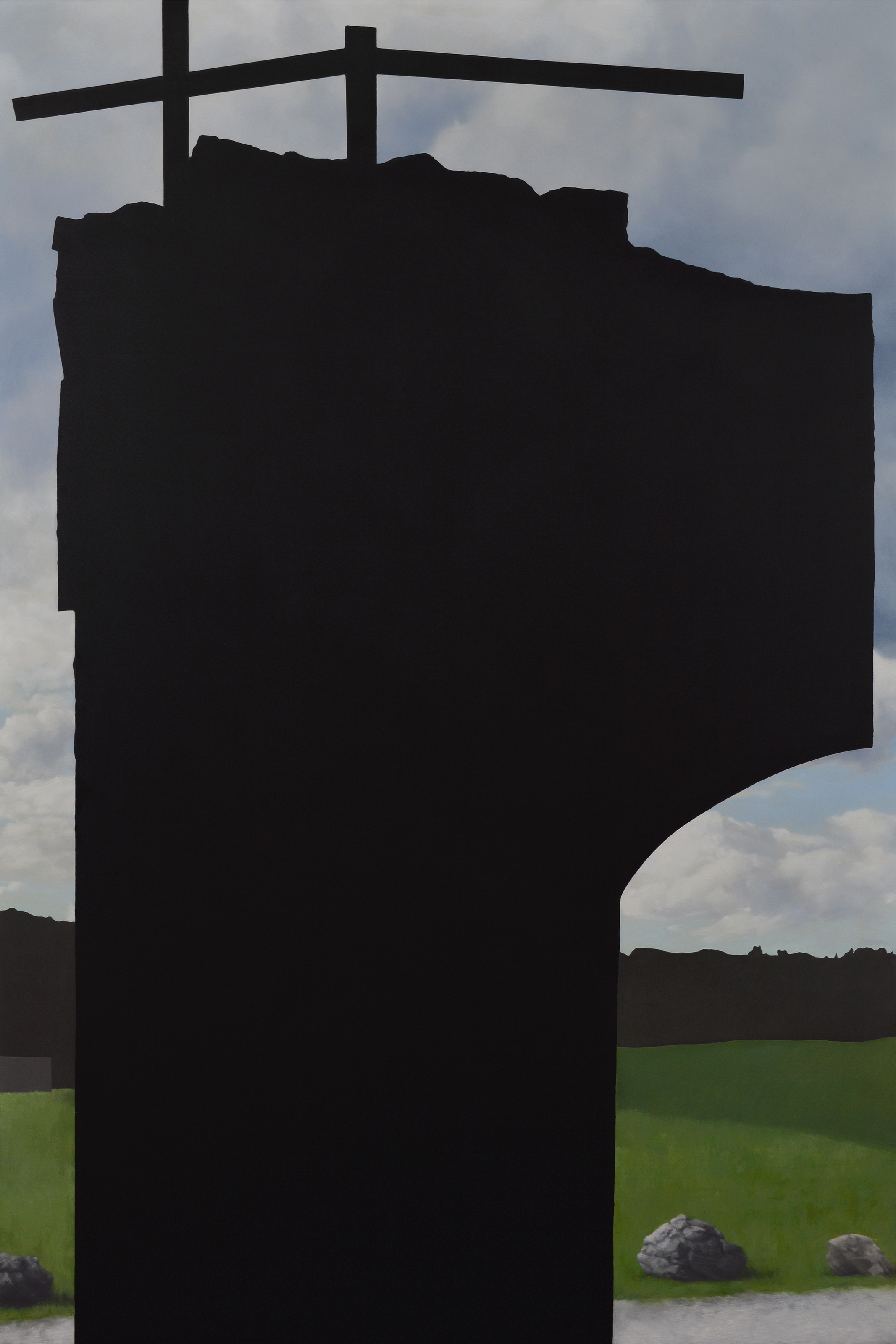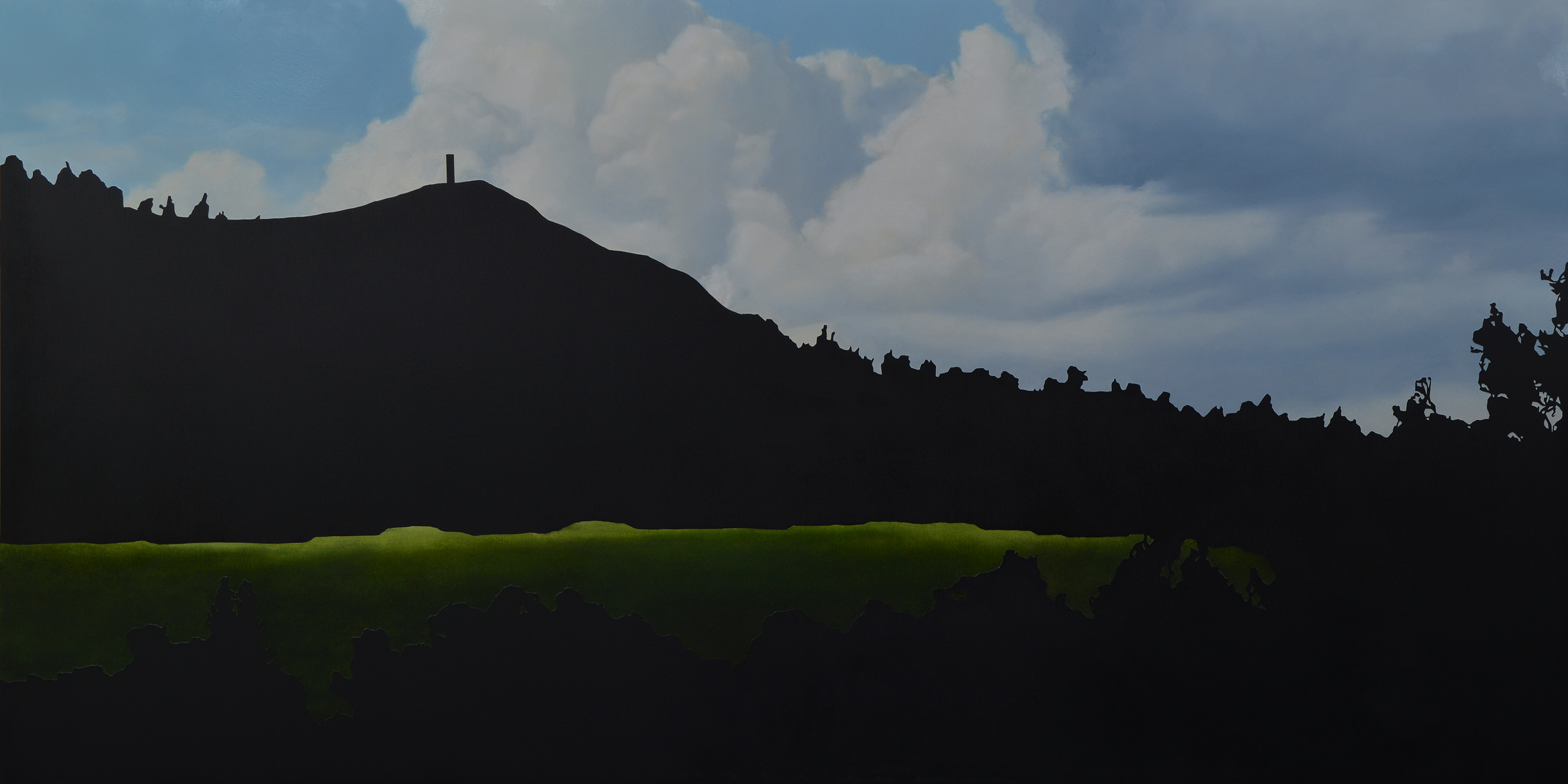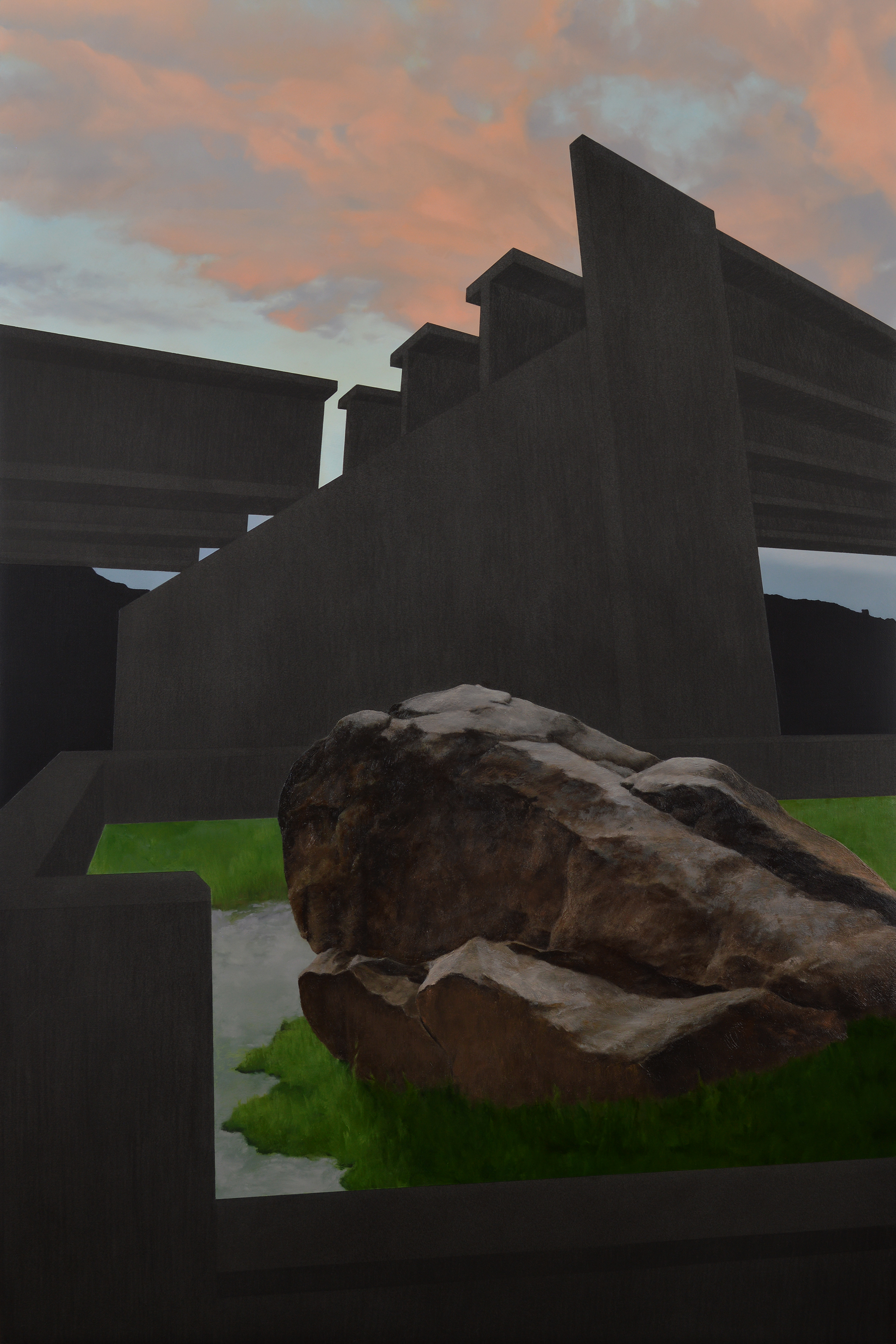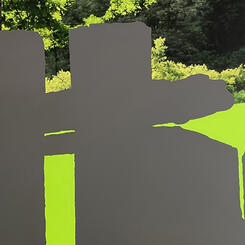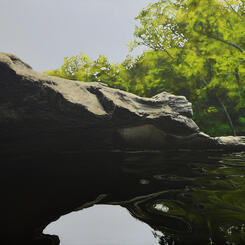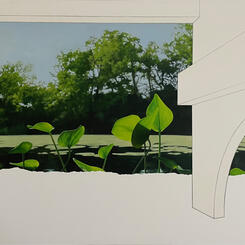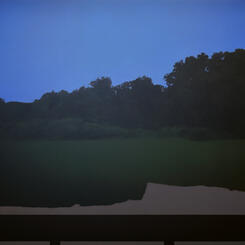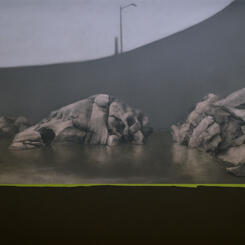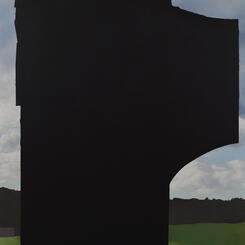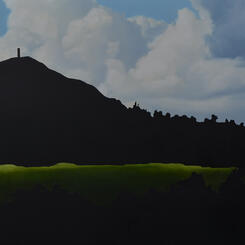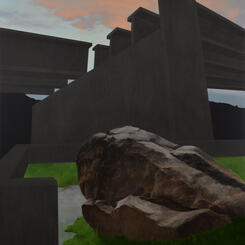
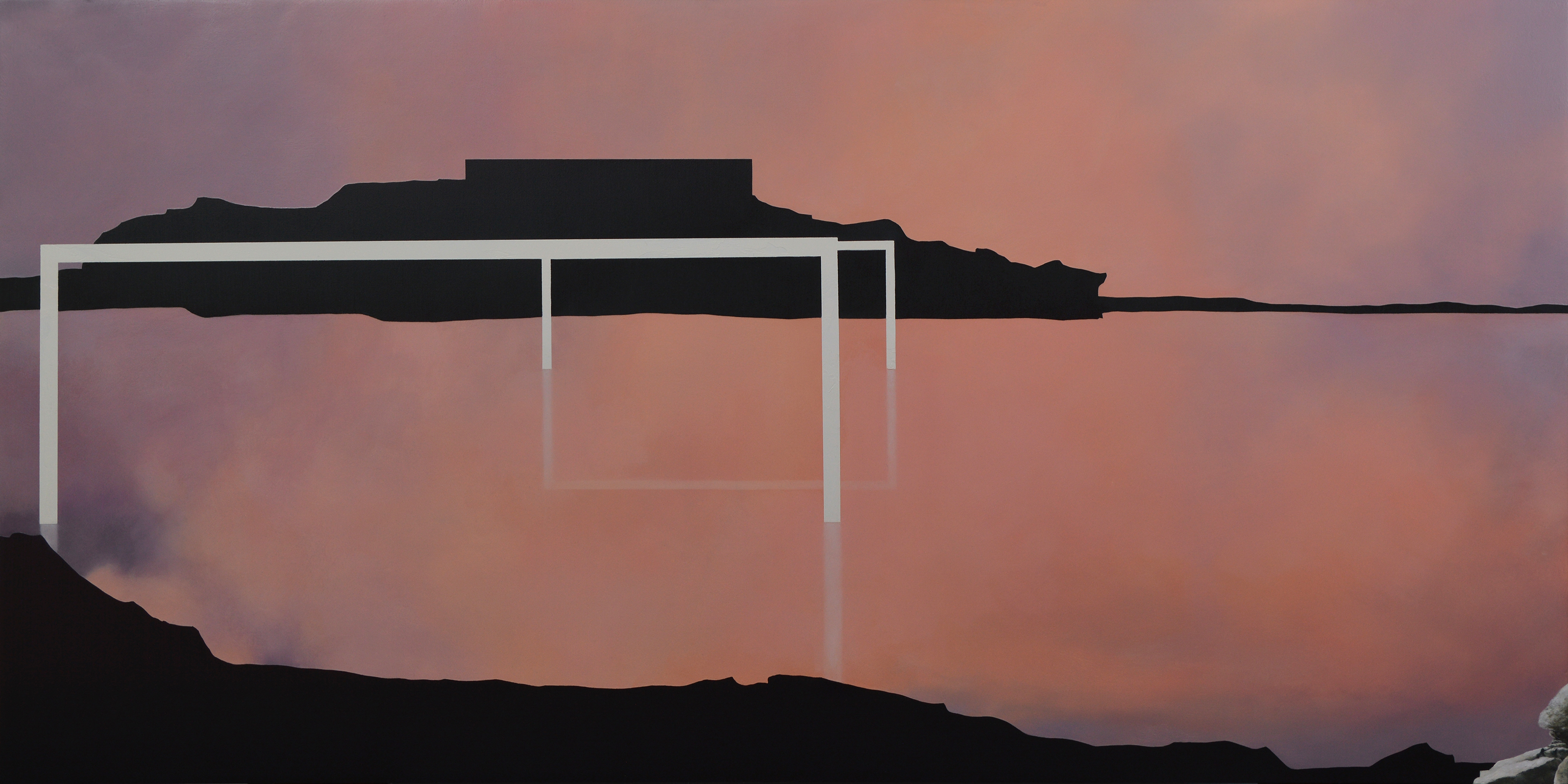
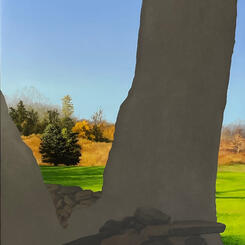
These paintings begin as encounters in landscapes, particularly those marked by geological “deep time.” They bear witness to human interventions in the landscape, and to our interactions with the non-human world. Such interventions reify systems of control and speak to notions of access — specifically, who has access to nature. Portions of the picture plane seem to be torn away or excised, revealing flat passages of chromatic grays, blacks, and browns. These interruptions and barriers prevent the viewer from fully entering or navigating the space. Competing visual languages and surfaces reflect our experience of the land we inhabit, our interactions with what is considered "wild," and the varying degrees to which our encounters with nature are mediated. Given the rift between human and non-human worlds, how should we proceed? How might we live well within these disrupted spaces? Part meditation, part metaphor, part elegy, these landscapes explore the anxiety, despair, terror, and joy which characterize our shared precarity.

We interface with the natural world everywhere. I'm interested in the variety of ways in which our experience of nature has been mediated by others — from wilderness preserves to city centers. These paintings reflect ways in which the landscape is an active, living participant in the events of our time, as well as a record of time itself. 

Increasingly, my sketchbook practice informs my finished studio paintings. This influence is sometimes obvious, as when sketches are scaled up and redrawn in finished work. At other times, the studies exert a more basic influence: many recent compositions are more inspired by on-site drawings than they are by my photographs. 

I am currently poised between two modes of thinking and making. Moving away from static source material toward direct observation of the living landscape represents a transformative shift in my practice. Drawing is a form of thinking. A richer exploration of place is possible when this drawing/thinking is undertaken within the landscape itself. Sitting before the world to draw it—listening to insects, noticing light shifts on a leaf, smelling plants baking under the sun or drinking in the rain, growing stiff while perched on a rock—this is a qualitatively different experience to that of working from a photograph. This embodied practice of looking encodes a sense of place in the self and in the drawing, both of which influence the finished painting. 

  • we will not know how long they will last
    we will not know how long they will last
    Oil and pastel pencil on Dibond panel, 22" x 33", 2022
  • a force that keeps finding a way
    a force that keeps finding a way
    Oil on Dibond panel, 20" x 38", 2022
  • reciprocal action
    reciprocal action
    Oil on Dibond panel, 22" x 48", 2022
  • we possess only this moment
    we possess only this moment
    Oil and pastel pencil on Dibond panel, 20" x 36", 2022
  • the tender gravity of kindness
    the tender gravity of kindness
    Oil on Dibond panel, 24" x 36", 2021
  • when it stops haunting you
    when it stops haunting you
    Oil and graphite on wood panel, 20" x 30", 2021
  • trying to remember something too important to forget
    trying to remember something too important to forget

    oil on Dibond, 30" x 20", 2021

  • to desire everything and nothing at once
    to desire everything and nothing at once

    oil on Dibond, 20" x 40", 2021

    Available for Purchase
  • here, witnessing, now
    here, witnessing, now

    oil and pastel pencil on Dibond, 36" x 24", 2021

    Available for Purchase
  • slowly and then all at once
    slowly and then all at once

    oil on Dibond, 18" x 36", 2021

    Available for Purchase