Work samples

  • Superhuman, by Kian Ravaei

    Commissioned by icarus Quartet for the 2023-24 iQ Tests 

    “Drawing on my background as an electronic dance music (EDM) producer, much of my recent work has embraced the musical language of EDM, incorporating its incisive timbres, syncopated beats, and pop sensibility. Superhuman takes this idea a step further by featuring an ensemble composed entirely of electronic instruments, combining human expression with the superhuman soundworld of electronic music. This soundworld includes “vocal chops”—fragmented vocal samples continually arranged in different configurations; “supersaws”—a common synthesizer sound with a characteristic buzzing quality; and an “808 bass”—one of the most iconic bass sounds in hip-hop and EDM. Despite the eclectic mix of electronic sounds, Superhuman is still a work of chamber music; therefore, I tried to create a large-scale architecture rarely found in radio-ready dance music tracks. Ultimately, this piece was born from a curiosity with two questions, both

  • Big Things, by Michael Laurello

    icarus Quartet invites you inside the studio for their title track single release from their debut album, BIG THINGS

    “The original version of Big Things was one of the first pieces I composed using a process of recording and improvisation, rather than traditional notation. I started with a rhythmic pattern outlined by an electric guitar (played by marimba in this new version for icarus Quartet), and then improvised other instruments over the top. I recorded most of the instruments myself, section by section, editing each part in my recording software as I went. With this method, I felt free to experiment without worrying about what it might look like on the page. There were a few happy accidents, too: In one section, I made a copy-paste error, and the music ended up displaced by a sixteenth-note. It sounded interesting when I listened back, so I kept it. Once I was satisfied with the recording, I transcribed the music and created the score and parts for live performance. When I played

  • Quartet, by Steve Reich

    "Quartet, when mentioned in the context of concert music, is generally assumed to mean string quartet. In my case, the quartet that has played a central role in many of my pieces (besides the string quartet) is that of two pianos and two percussion. It appears like that or in expanded form with more pianos or more percussion in The Desert Music, Sextet, Three Movements, The Four Sections, The Cave, Dance Patterns, Three Tales, You Are (Variations), Variations for Vibes, Pianos and Strings, Daniel Variations, Double Sextet, and Radio Rewrite. In Quartet, there is just this group alone: two vibes and two pianos. The piece is one of the more complex I have composed. It frequently changes key and often breaks off continuity to pause or take up new material. Though the parts are not unduly difficult, it calls for a high level of ensemble virtuosity. The form is one familiar throughout history: fast, slow, fast, played without pause. The slow movement introduces harmonies not usually found

  • Entrelac, by Natalie Dietterich

About icarus

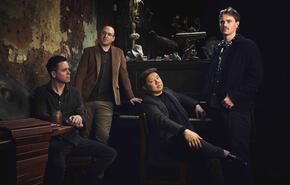
Like the mythological figure from which it draws its name, the half piano/half percussion icarus Quartet dares to fly towards the sun, aspiring to new heights of artistry. Following their Carnegie Hall debut, composer Paul Lansky simply remarked, “This is music making of the highest order.” The Wall Street Journal praised icarus Quartet’s 2022 album, BIG THINGS, for the group’s “virtuosity, precision and unflagging energy,” applauding the release as “a beautifully immersive recording… an… more

Wilderness Suite

Located in central Idaho, the Frank Church River of No Return Wilderness (FCW) is the largest federally protected wilderness area in the contiguous United States. Because of legislation passed in 1980 which prevents human development and the use of most mechanical equipment, the Wilderness’ protected 2,361,767 acres tell a unique story of “anti-development” that illuminates the effects of limiting human activities within a space. 

Piano-percussion ensemble icarus Quartet (iQ), composer Ruby Fulton, geographers Teresa Cavazos Cohn and Micaela Petrini, and a team of video artists set out to create an intermedia counterpart to a rephotography project conducted in the FCW. Rephotography is a technique used in many disciplines to examine change over time by comparing old photographs to current photographs in the same places. Wilderness Suite uses these images, set into motion by filmmakers and animators, along with live music and pre-recorded electronics to examine the impression of humankind on the spaces it inhabits. This interdisciplinary collaboration pairing science and art will incite real communication on the challenging yet pressing questions posed by the impact of human-environmental relationships. 

Fulton’s composition for piano four-hands, marimba, vibraphone, and unpitched percussion evokes these images and evolutions through soaring lines, stark dynamic contrasts, and grooves that mimic topographic shapes before distorting and taking on new forms. Cohn and Petrini’s geographic study captured recorded interviews with various stakeholders about their experience of and ideas about environmental change in the area, including outfitters, recreationists, members from the Nez Perce Tribe, private landowners, and US Forest Service employees. Fulton sampled and morphed recordings of these individuals’ voices to create Wilderness Suite’s electronic trackVideo artists Benjamin James, Stephanie Barber, Meg Rorison, Rohan Pathare, Karen Yasinsky, Maiko Kikuchi, Sabrina Nichols, and Xuan each created original videos to sync with the live and pre-recorded sounds, setting the old and new rephotography samples into motion using their unique approaches to visual storytelling. This pseudo-documentary work, using a combination of data, stories, and music, will bring science to people in an artistic and emotional way, encouraging meaningful discourse about the topic.

Climate change is arguably the number one threat to humankind, and while activists lobby for green policies just as scientific data becomes more prominent in mainstream media and the public awareness, icarus Quartet believes that art has the potential for deeper and more prolonged impact than facts and numbers. Furthermore, Ruby Fulton’s music is wrought with joy, and this rephotography study tells a story of human restraint and ecological regeneration. While scientific findings and art about climate change often feature reminders of what civilizations have already destroyed paired with common warnings of what horrors lie ahead, the trajectory of the FCW serves as an optimistic outlier. This project shines a light on an example of a nuanced evolution taking place as a result of humankind’s well-meaning intentions and subsequent action.

  • Wilderness Suite poster
    Wilderness Suite poster
  • Wilderness Suite, III. CAT
  • Wilderness Suite, IX. Your attention expands

Bartók Rebórn

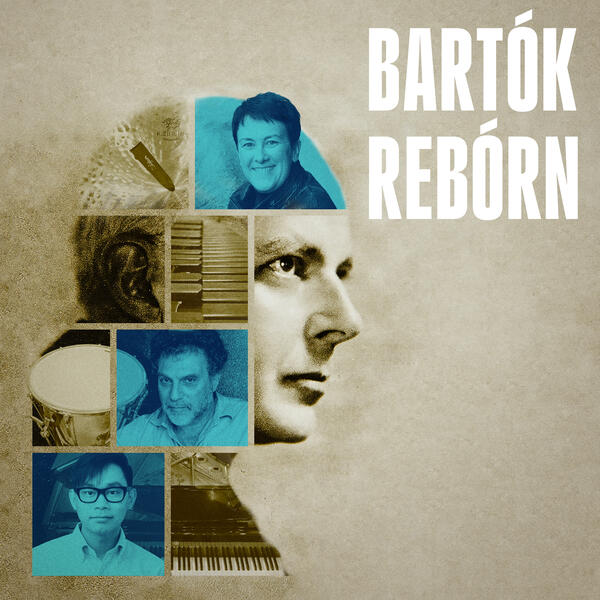
The history of icarus' instrumentation begins with Bartók's Sonata for two pianos and percussion. In "Bartók Rebórn," this seminal 1937 work is paired with a virtuosic caprice from fellow European titan Lutosławski, and followed by three brand new approaches to its "orchestral" setup from living legends with vastly different musical aesthetics. "Bartók Rebórn" was generously commissioned by Wake Forest University’s Secrest Artist Series, with the debut performance – including the three world premieres of Bartók companion works by Martin Bresnick, Viet Cuong, and Jennifer Higdon – opening their 2024-25 concert season on September 30, 2024 to a sold out Brendle Recital Hall and a lauded reception: “The performance was about as perfect as one could ask for: superior musicality with nuance, and a commitment to music-making as expressive as possible." – Cultural Voice of North Carolina

  • Bartók Rebórn program art, design by Katie Blank
    Bartók Rebórn program art, design by Katie Blank
  • Cloak of Night, by Viet Cuong (world premiere recording)
  • Variations on a Theme by Paganini, by Witold Lutoslawski, arranged by iQ (live at PFW March 2025)

iQ Tests

icarus Quartet’s annual iQ Tests program for college-enrolled composers gives two winning Scholars the opportunity to collaborate on a new piece with the Quartet. Launched in spring 2020 for the 20-21 concert season, the iQ Tests prize package has expanded to include a $1,000 commission honorarium, up to $500 in travel funding to attend workshops and/or performances, mentorship from an internationally renowned guest composer and pedagogue, inclusion on at least two of icarus’ live concert appearances, and a professionally recorded music video for each Scholar. icarus takes these promising students through the detailed collaboration process behind all of their new works and embarks on a professional relationship beginning with the cultivation, presentation, and documentation of their new works for pianos and percussion.

Beginning with the second edition in 2021-22, icarus has augmented iQ Tests with a guest Scholar Mentor, enlisting a preeminent creator and pedagogue each year to offer guidance to the Scholars in alternation with their collaborative sessions with the Quartet. Past Scholar Mentors are Amy Beth Kirsten (Composition Faculty at The Curtis Institute and The Juilliard School), Viet Cuong (Assistant Professor of Music Composition and Theory the University of Nevada, Las Vegas, Composer-in-Residence for the Pacific Symphony, 2020-23 Young American Composer-in-Residence for the California Symphony), Martin Bresnick (Professor of Composition at the Yale University School of Music, recipient of inaugural Charles Ives Living Award from the American Academy of Arts and Letters), and Christopher Theofanidis (Chair of Composition at the Yale University School of Music, Composer-in-Residence and Co-Director of the composition program at the Aspen Music Festival).

  • Home Portraits, by Che Buford
  • Superhuman, by Kian Ravaei

    Commissioned by icarus Quartet for the 2023-24 iQ Tests 

    “Drawing on my background as an electronic dance music (EDM) producer, much of my recent work has embraced the musical language of EDM, incorporating its incisive timbres, syncopated beats, and pop sensibility. Superhuman takes this idea a step further by featuring an ensemble composed entirely of electronic instruments, combining human expression with the superhuman soundworld of electronic music. This soundworld includes “vocal chops”—fragmented vocal samples continually arranged in different configurations; “supersaws”—a common synthesizer sound with a characteristic buzzing quality; and an “808 bass”—one of the most iconic bass sounds in hip-hop and EDM. Despite the eclectic mix of electronic sounds, Superhuman is still a work of chamber music; therefore, I tried to create a large-scale architecture rarely found in radio-ready dance music tracks. Ultimately, this piece was born from a curiosity with two questions, both

  • Ocean Moons, by Sam Wu
  • Spark, by Matiss Cudars
  • [AL]PATRÓN, by Christian Quiñones
  • forgetting, by Lila Meretzky
  • The sky, paler than yesterday, by Stephen Downing
  • Unread, by Yiyang Wang

BIG THINGS album

BIG THINGS was released in 2022 on the Furious Artisans record label. Recorded at Sono Luminous in VA, the album was engineered and mastered by Mike Tierney, mixed by Michael Laurello, and produced by Elaine Martone, who included the record on her bid for Classical Music Producer of the Year for which she received a GRAMMY nomination in 2023. BIG THINGS received great critical acclaim in outlets including the Wall Street Journal, Whole Note Magazine, and Gramophone UK.

  • Big Things, by Michael Laurello

    icarus Quartet invites you inside the studio for their title track single release from their debut album, BIG THINGS

    “The original version of Big Things was one of the first pieces I composed using a process of recording and improvisation, rather than traditional notation. I started with a rhythmic pattern outlined by an electric guitar (played by marimba in this new version for icarus Quartet), and then improvised other instruments over the top. I recorded most of the instruments myself, section by section, editing each part in my recording software as I went. With this method, I felt free to experiment without worrying about what it might look like on the page. There were a few happy accidents, too: In one section, I made a copy-paste error, and the music ended up displaced by a sixteenth-note. It sounded interesting when I listened back, so I kept it. Once I was satisfied with the recording, I transcribed the music and created the score and parts for live performance. When I played

  • Textures, by Paul Lansky
  • Tangents, by Brad Lubman

Little Flyers

Little Flyers is icarus Quartet's educational series for elementary and middle school students! Their virtual field trips provide students with fun, interactive experiences centered around contemporary classical music. Episode 1, Breaking the Rules of Classical Music, teaches students about concepts such as Chamber Music, Contemporary Composers, Percussion and Rhythm, and Extended Techniques. Available for 30-day rentals (at no cost to Baltimore City public school programs), the videos are accompanied by a Teacher Handbook, Student Activity Worksheets, and Extended Activity suggestions for further learning and exploring.

  • Little Flyers Episode 1 Trailer
  • Little Flyers excerpt: Percussion Activity
  • Little Flyers excerpt: Guess the Sound!