Context-sensitivity refers to the proposition that there exists a disparity between understanding a concept in isolation and understanding the same idea or object when used in context.
Ex. A vast difference exists between a golden bamboo rhizome's beauty when employed as the model for a sculpture and that of planting that same rhizome in your garden. Golden bamboo rhizomes are beautiful to look at but invasive and highly destructive in the environment
I was introduced to bulbs 40 years ago when I ordered a few from a catalog as a new woodland gardener. Anxiously awaiting the latest additions to my garden, when the box arrived, my initial reaction wasn't, "I can't wait to see a river of daffodils next spring." Instead, my first reaction was, these bulbs are beautiful sculptural forms. The architecturally abstract corms, bulbs, tubers, and rhizomes provided an immediate jump-start to my sculptural basket making, which up to that point hadn't strayed too far from traditional basketry forms.
Brief background:
Bulbs, corms, tubers, and rhizomes all fall under the scientific umbrella of geophytes.
True bulbs are layered like an onion.
Corms are solid, appearing in nature as a swollen, underground plant stem.
Tubers, a potato is a tuber, are solid with multiple budding points commonly referred to as eyes. If you plant an individual bud (eye), you can grow a new plant. This ability to divide a tuber when creating new plants is not shared with either corms or bulbs.
Rhizomes are modified, swollen stems that extend horizontally from the parent plant. Rhizomes look roots but aren't. Like a tuber, a rhizome can be divided to create new plants. Any small piece of a rhizome can, in most instances, grow into a new plant.
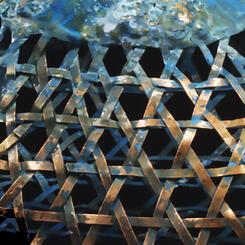
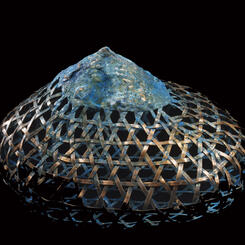
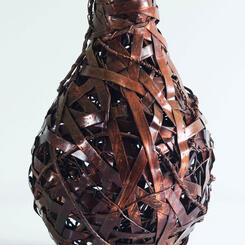
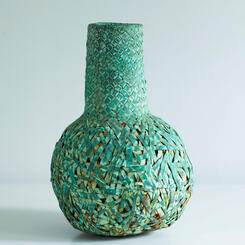
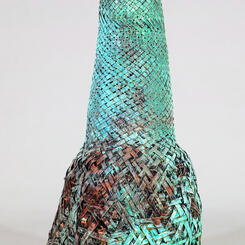
The layered construction and the curvaceous outlines of bulbs, corms, and tubers are ideal for the slow, progressive layering utilized with the plaiting and twinging of traditional basketry techniques. Additionally, geophytes' colors harmonize with the soft, naturally developed patinas inherent in traditional patina techniques.
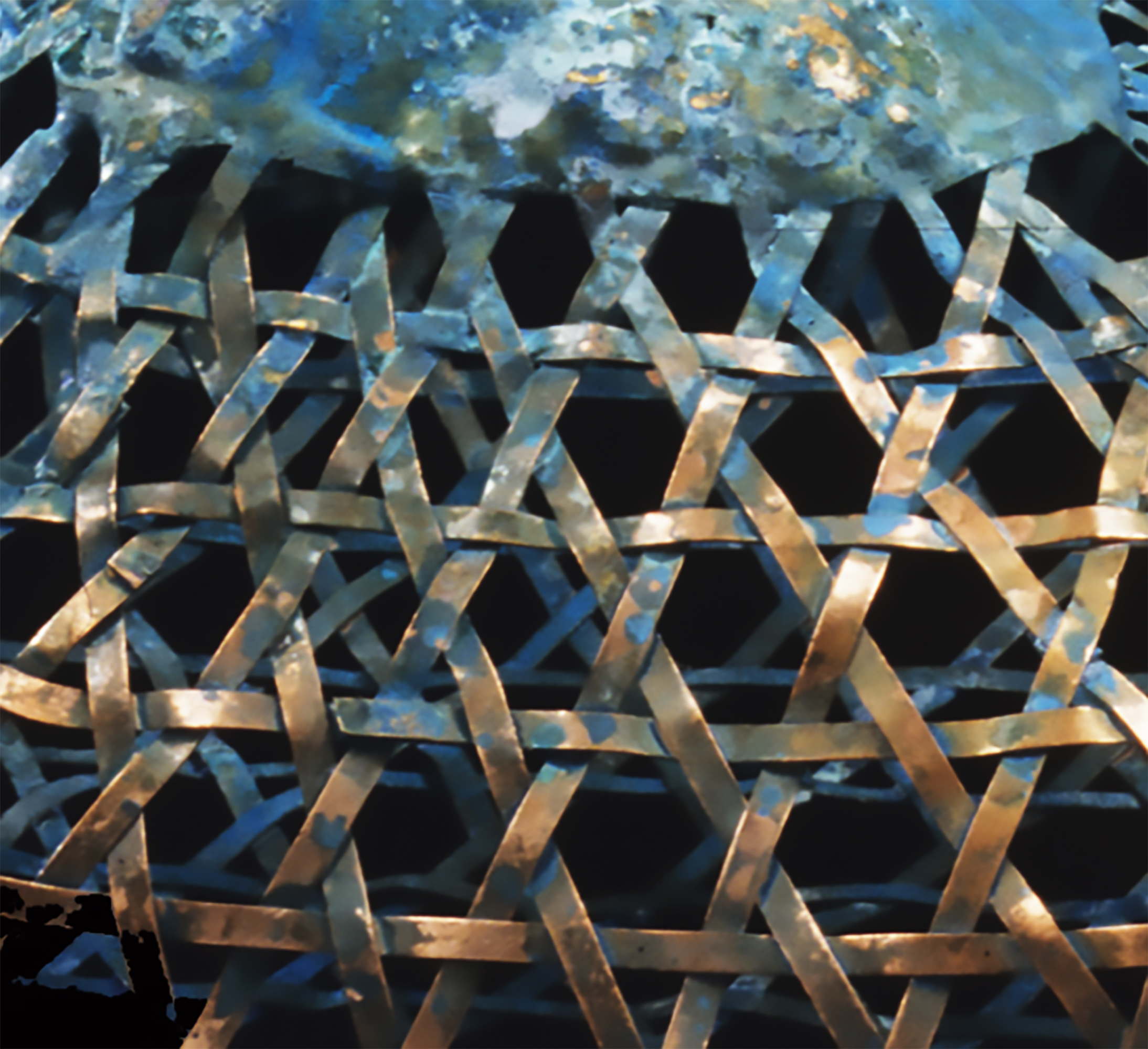
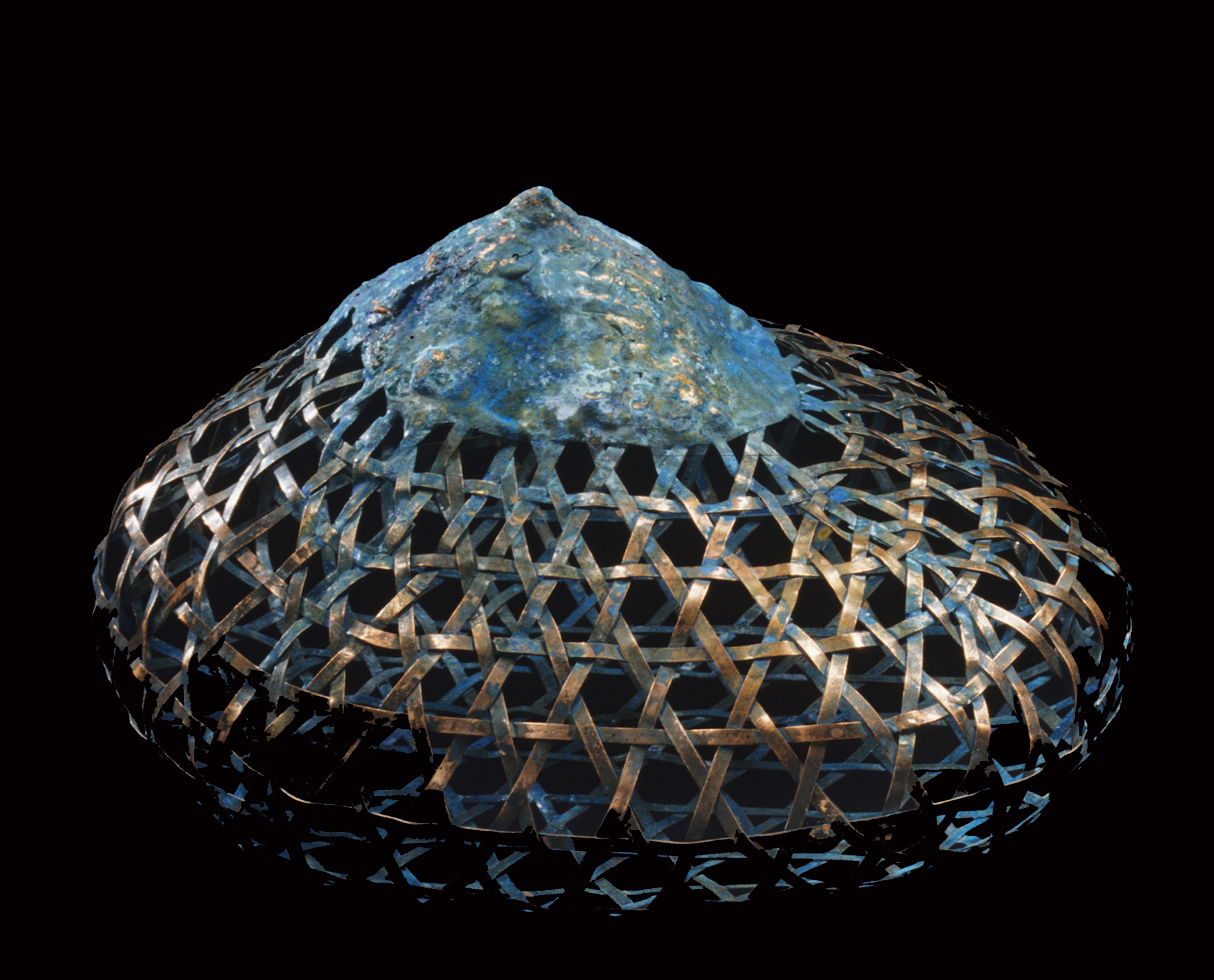
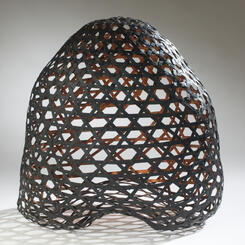
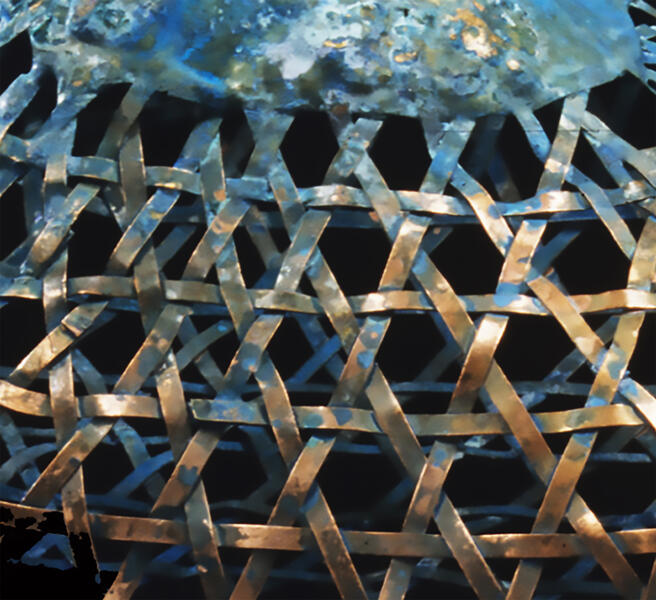 Tulip Bulbdetail-Tulip Bulb plaited copper, six-unit diagonal hex weave, chemical patina, ammonia fuming 9.5" x 9" x 5"
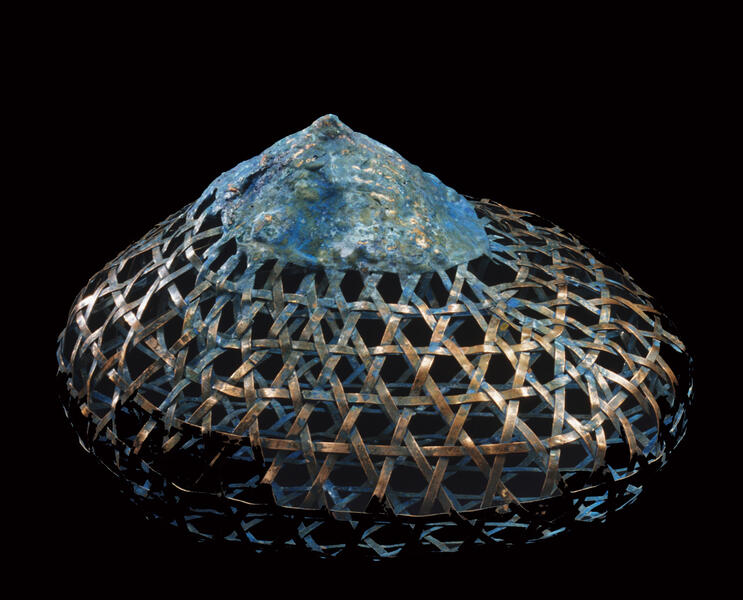 Bulb-TulipI love the shape of a tulip bulb. A tiny tagine of genetic power built of layer upon layer of nutritional material all encased in a paper-brown wrapper. Perfection. Plaited copper, six-unit diagonal hex weave, chemical patina, ammonia fuming 9.5" x 9" x 5"
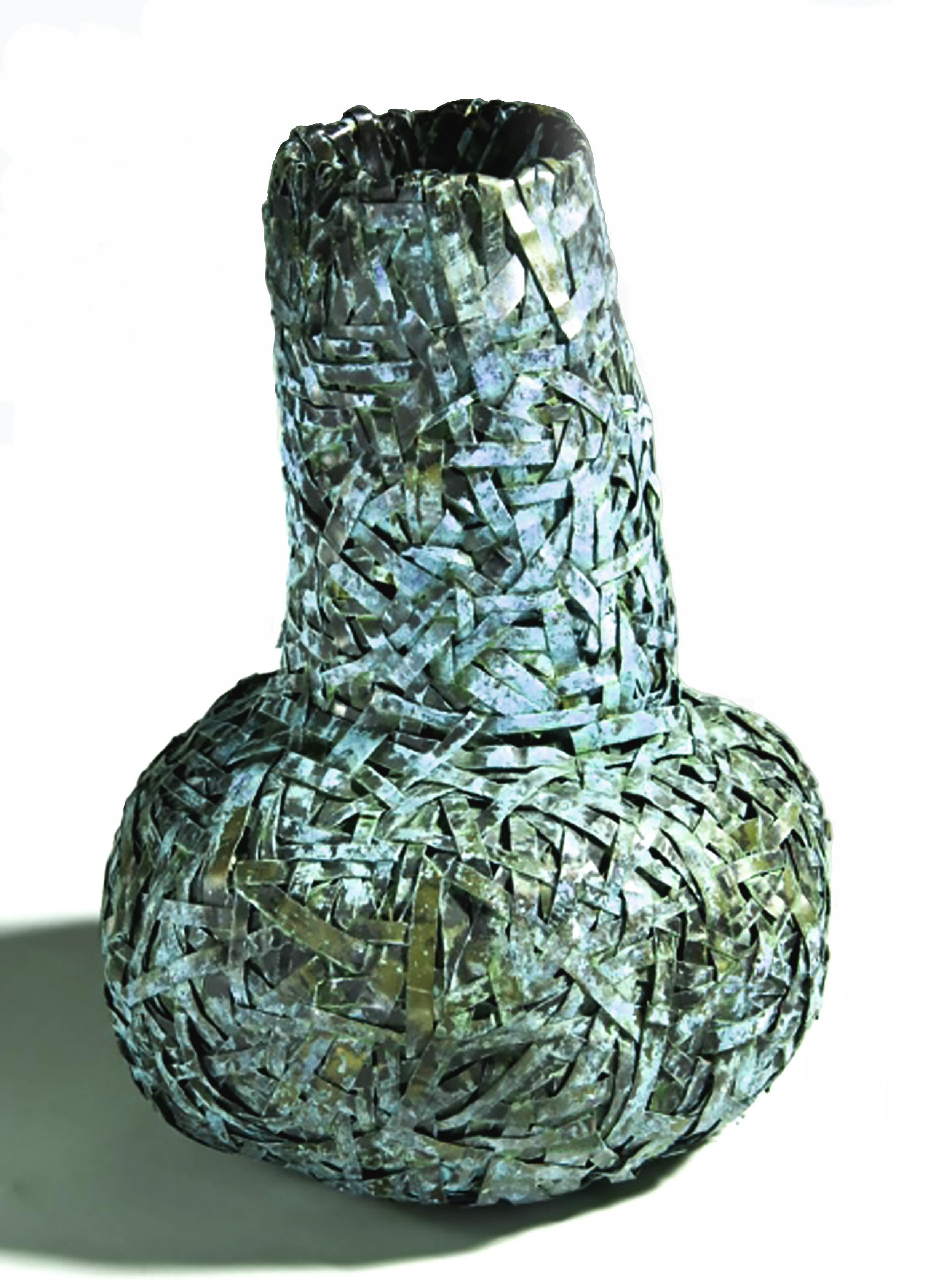
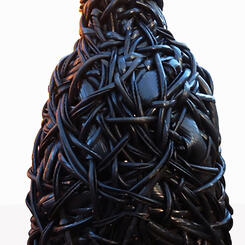
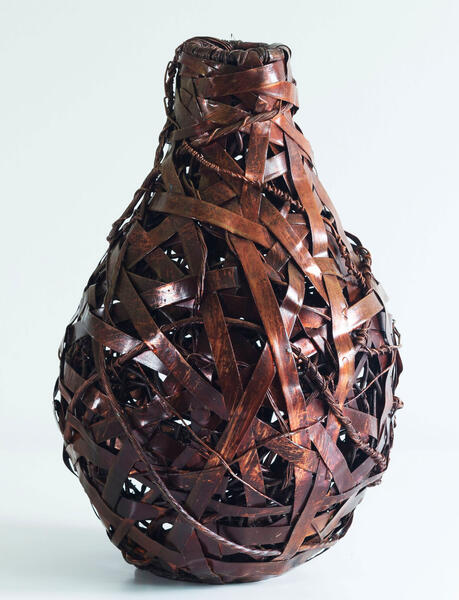 Tangled Root BulbImagine trying to transplant a large group of established geophytes that have lived in one location for several years. Multiplying, they have grown large, packing themselves like sardines in a tin, surrounded by fibrous roots, inconveniently situated rocks, and invasive rhizomes. Plaited copper, chemical patina 13.75" x 8.5" x 8.5."
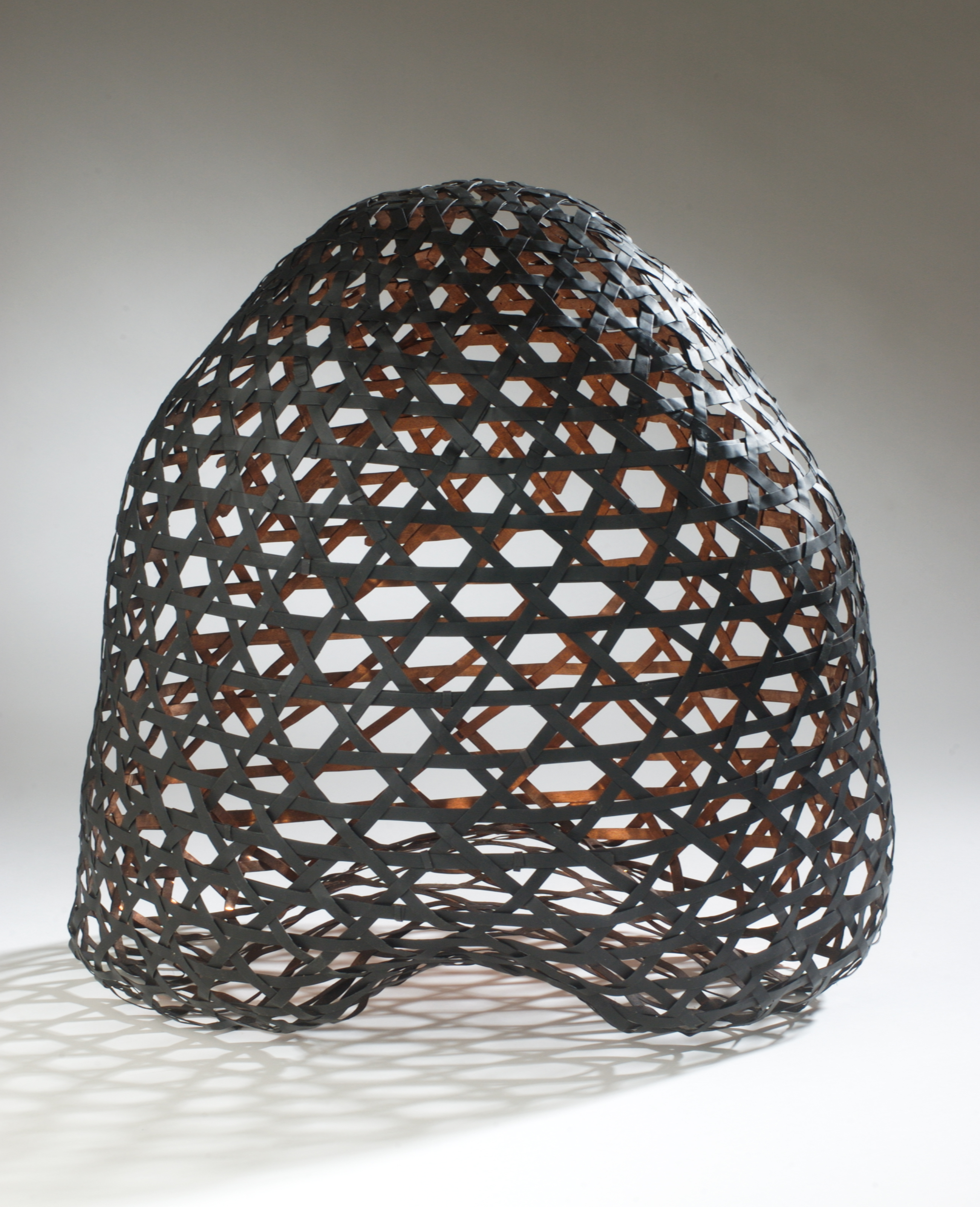
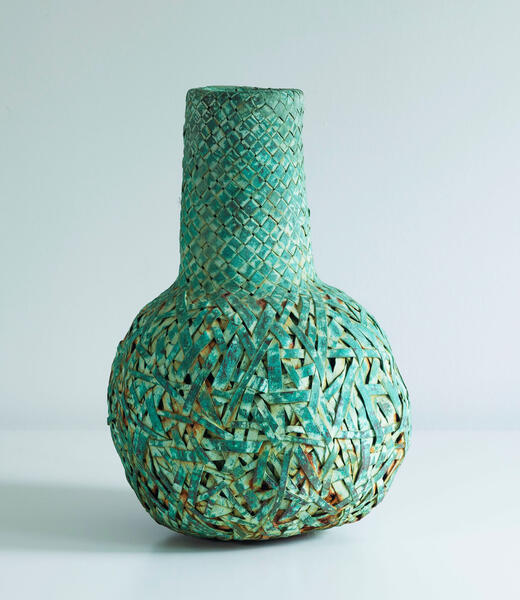 Bulb No.2Six unit, hexagonal plaited steel with over weave of copper strip, segued to diagonal plaited copper form. Chemical patina 13.50" x 9" x 9"
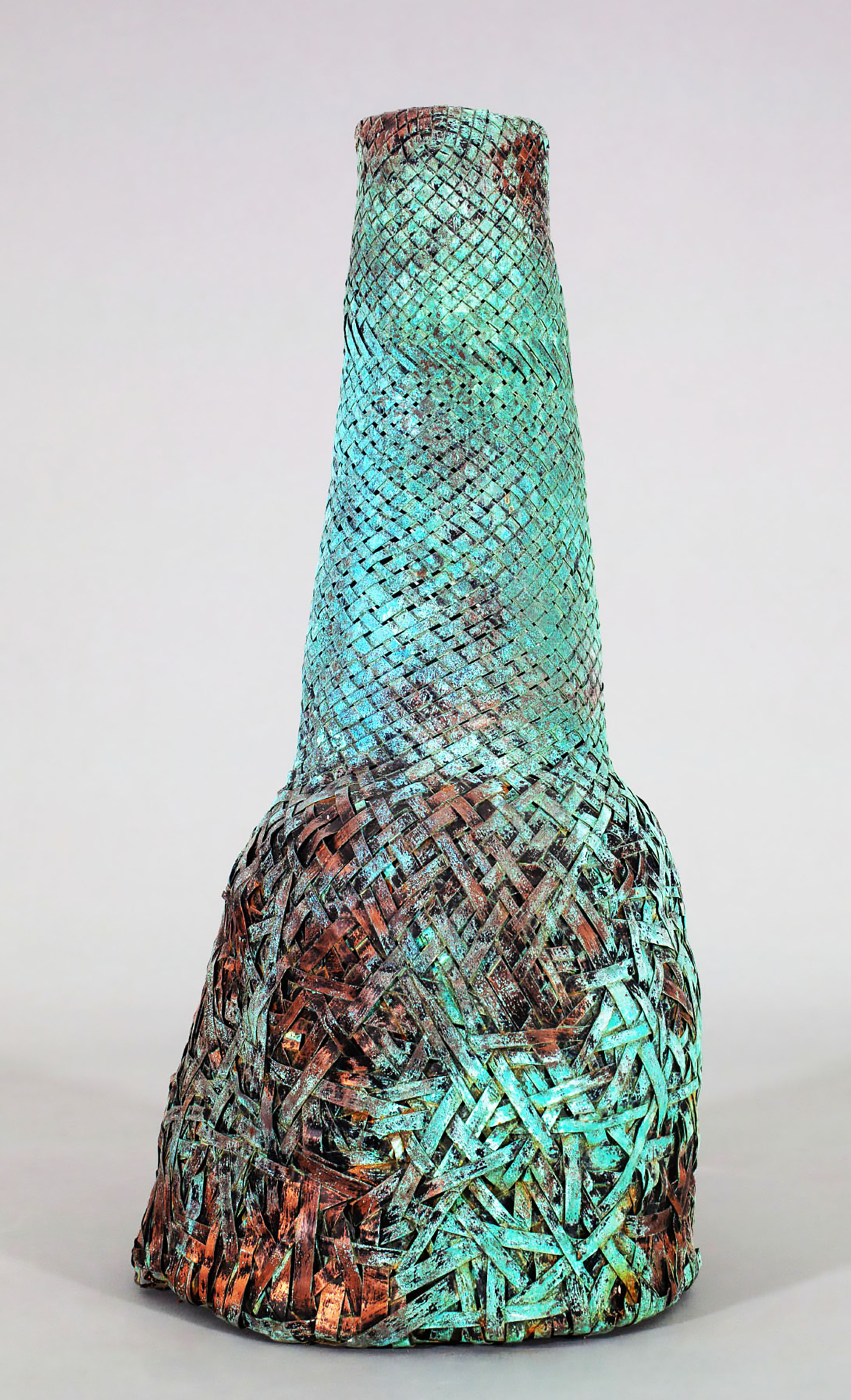
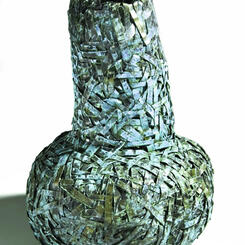
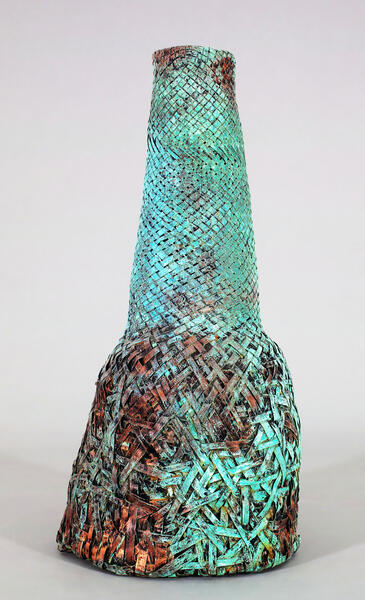 RampA ramp is a deliciously odiferous member of the onion family. A bulb at its base a ramp throws up green stalks with broad leaves that eventually unfurl. Smaller than a scallion, with a pungent garlic-onion taste and smell, I thought they would be perfect on a south-facing slope, partially shaded, with good drainage in my new woodland. Unfortunately, unlike sculpture, where I can exercise some control over my materials, plants don’t always cooperate. Plaited copper, 6 unit hex weave ( encased in copper strips) transformed into a diagonal weave. Chemical patina 21” x 13.75” x 14.50.”
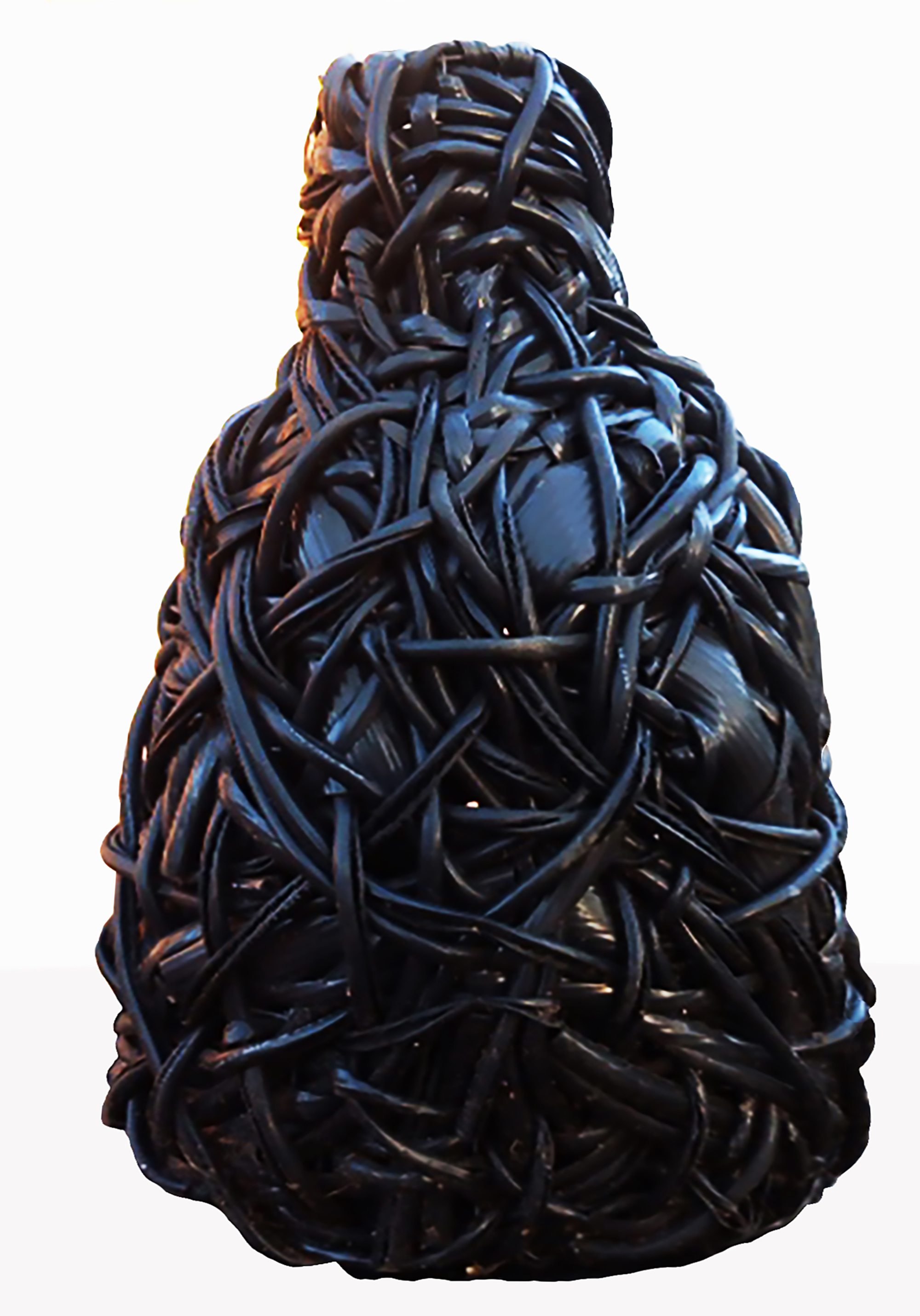
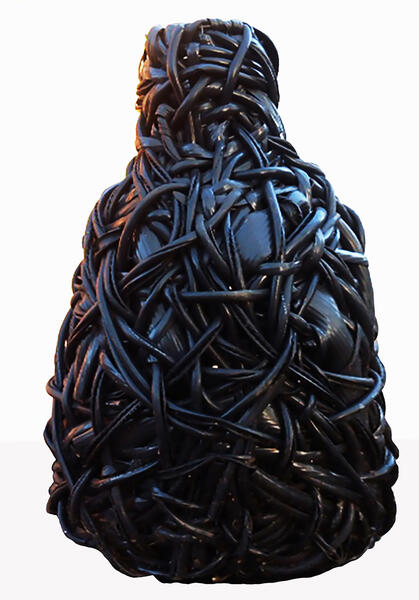 Black Bulb -TulipSix unit hex weave in steel overlaid with plaited telephone wire sheathing 19" x 13" x 12"
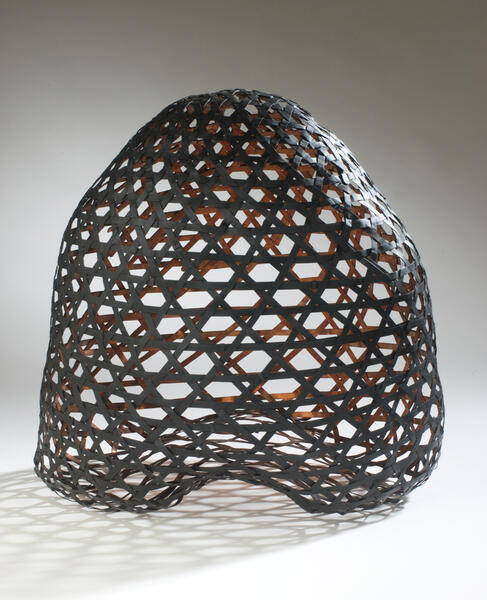 Sunchoke TuberA Sunchoke is a beautiful plant that sends up strong stems several feet in the air with yellow daisy like flowers. The tuber at its base is pale brown, varied shapes and sizes, deliciously edible, and appears, at least to me to have a hexagonal webbing on its surface. Six unit, hexagonal weave. Chemical patina. 20" x 20" x 15"
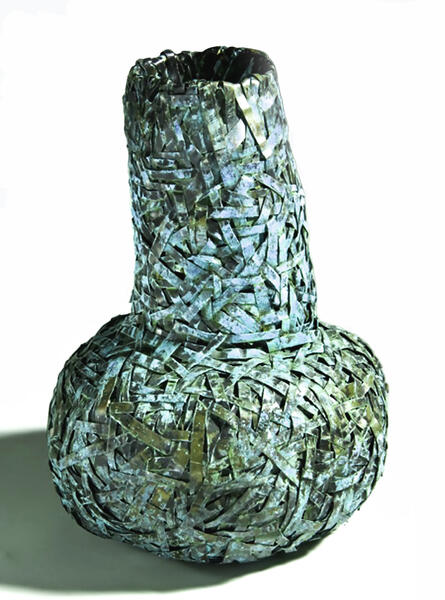 Bulb- NarcissusSix unit hexagonal weave in steel with over-weave of recycled copper 1/4" strips and wire. Chemical patina with Liver of sulfate fuming. 21" x 14" x 13.5"
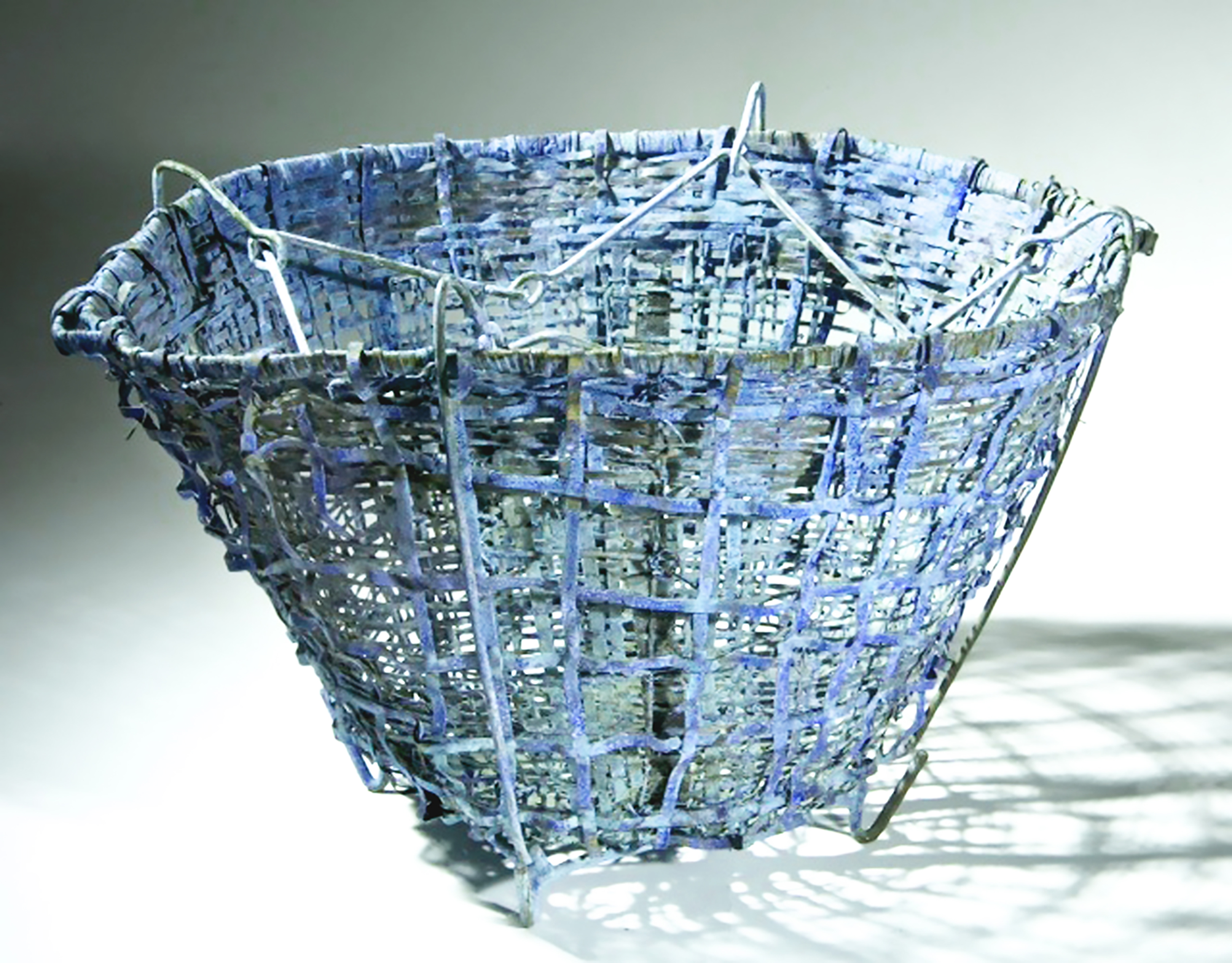
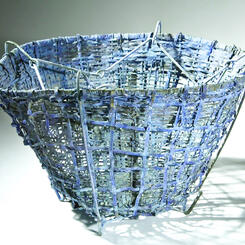
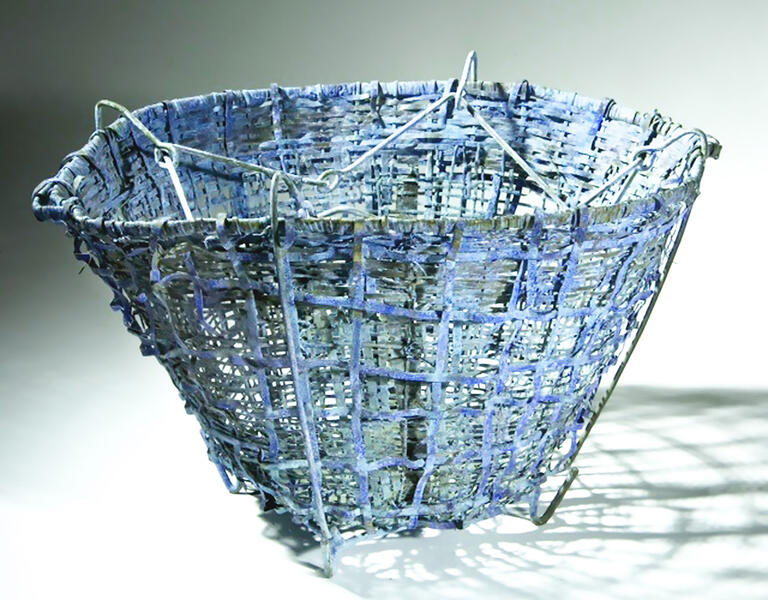 Bulb BasketTraditionally we placed bulbs in recycled, strip wood farm baskets but a grower told me a wire basket would provide more airflow and might be preferable for preserving the bulbs. So I created my own basket based on one I had seen on the Eastern Shore of Maryland. Ours is now is officially retired from bulb work and holds recycling in the winter. flowers in the summer. Bronze framework with woven copper, chemical patina fumed with ammonia 24" x 19" x18"