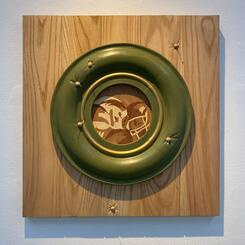
Work samples
-
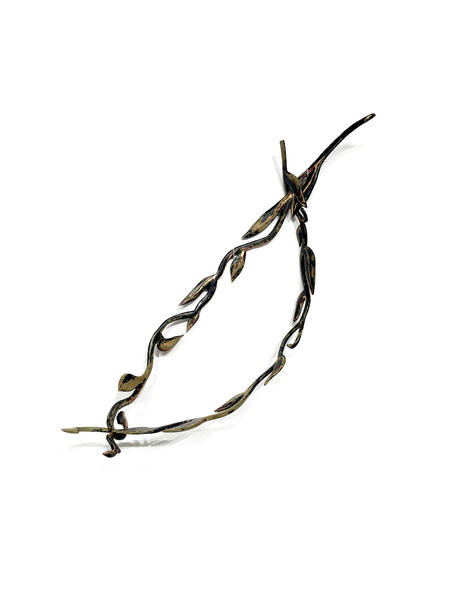 Bravo Zulu
2024
Steam-bent ash, milk paint, acrylic paint, gold leaf, waxBravo Zulu questions our symbols of victory.
A laurel wreath, here in mournful repose, is typically a symbol of triumph, but any act of war demands loss: of life, of territory, of safety, and of innocence and potential. The burden of these losses are shouldered by far more than a conflict’s “winners and losers.” The facade of victory is a clever deception which masks the true cost of military aggression.
-
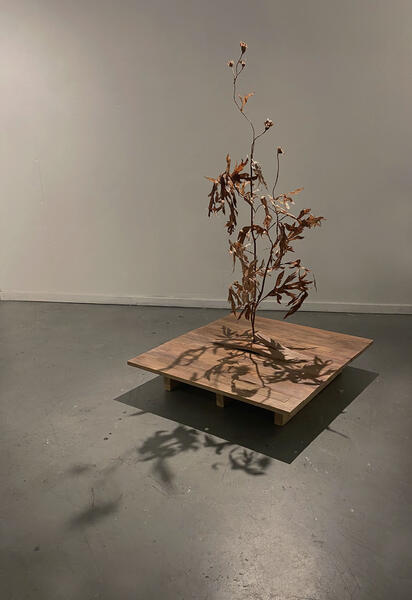 I Dreamt of Invasion
2025
Paper, cotton thread, natural dyes, oak, washing soda, found materials, audio
Last night, I dreamt of a field of compass plants checkering an unobstructed horizon. I dreamt they swayed together, reaching towards the open sun. This morning, I woke to the breeze of the ceiling fan above me and the roar of masses below. Thaksin Ok Bpai! Thaksin Ok Bpai! Distant, thunderous voices beamed into my living room through a rusted satellite dish in my yard. I have heard many things through the floorboards of my room. Tonight, I will dream that I am a compass plant somewhere along the horizon. I will dream that I’ve grown tall and that my roots have grown deep. Tonight, I will dream of the open sun.
Silphium laciniatum is a species of flowering plant commonly known as the compass plant. It is native to the prairies of North America. The compass plant grows a deep, anchoring taproot and can grow up to 8 feet tall. New emerging leaves will grow in random directions, but within a few weeks, they turn to point either north or south. The direction of early morning light is believed to affect the plant’s growth orientation. ¹
¹ Jurik, T. W., et al. (1990). Ecophysiological consequences of non-random leaf orientation in the prairie compass plant, Silphium laciniatum. Oecologia 82(2), 180-86.
-----------------------
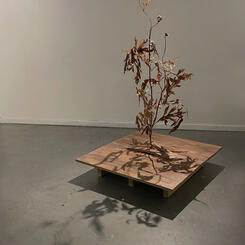
What appears to be a dried compass plant emerges from a wood floor. The plant shakes to the sound of a protest, a lullaby, and a sung Buddhist sutra.
-
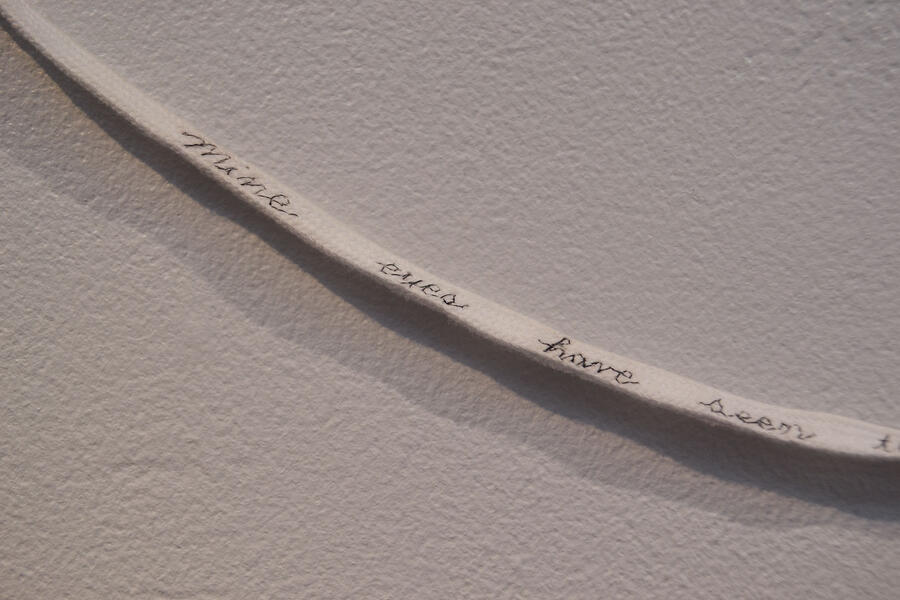 Glory, Hallelujah
2025
Cotton shoelace, human hair -
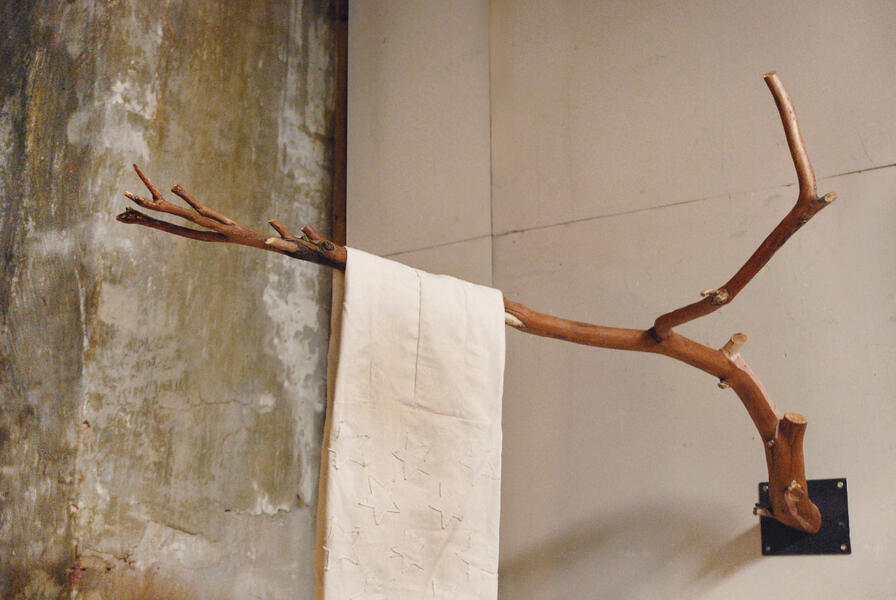 Friendly Fire
2024
Juniper branch, canvas
-------------------
Without Man's intervention, a tree will spend its entire life in one location. It quietly records in each ring every triumph and every catastrophe that transpires around it. Like a tree, a flag is a collector: colored and stained by each victory and atrocity.Colorless, the United States flag hangs upon a stripped and amputated juniper branch, mourning the inescapable past while it contemplates a future free from unearned honor and the hubris of Man.
Half-Staff is born out of two simple gestures: 1) composing and 2) decomposing. Scraps of canvas are sewn together to resemble the US flag. A branch is cut from a tree, pruned, and debarked. They envelop each other and hang high overhead. With these gestures, I question how far an object can stray from its physical and conceptual source while retaining its original meaning. What makes a flag “a flag” rather than an expanse of cloth? What makes a branch “a branch” rather than a bit of wood?
Is it color?
Or origin?
Or Maker?
Somewhere in this gray area, within the inexplicable power of symbols, we will be forced to confront what it means to be a Nation. Half-Staff speculates that this power is not intrinsic but assigned.


About Catherine
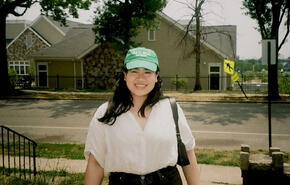
Catherine Khamnouane (b. 1996, Dallas) is a Baltimore-based interdisciplinary artist and educator. She received a BFA in Interdisciplinary Sculpture from the Maryland Institute College of Art (MICA), where she returned as a faculty member. She is currently pursuing an MFA in Studio Art at Towson University.
________________
My father was born in a country that never existed. Its name has been mangled and its borders have been redrawn. Its villages were rebuilt into specters of… more
Pax Americana
-
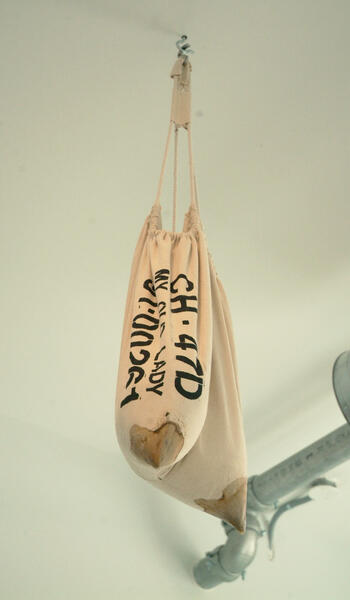 Pax Americana
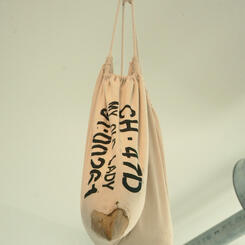
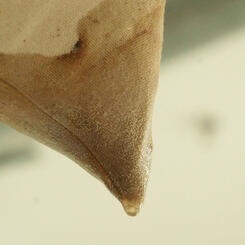
A canvas sack hangs from the ceiling. CH-47D/ MY OLD LADY/ 91-0026 is printed in black on the side of the sack. What appears to be soiled water drips from two "breasts" at the bottom of the sack.
-
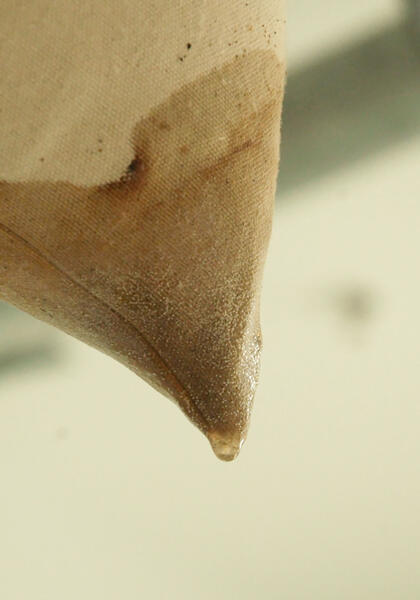 Pax Americana
Detail of liquid collecting at the bottom of the sack
-
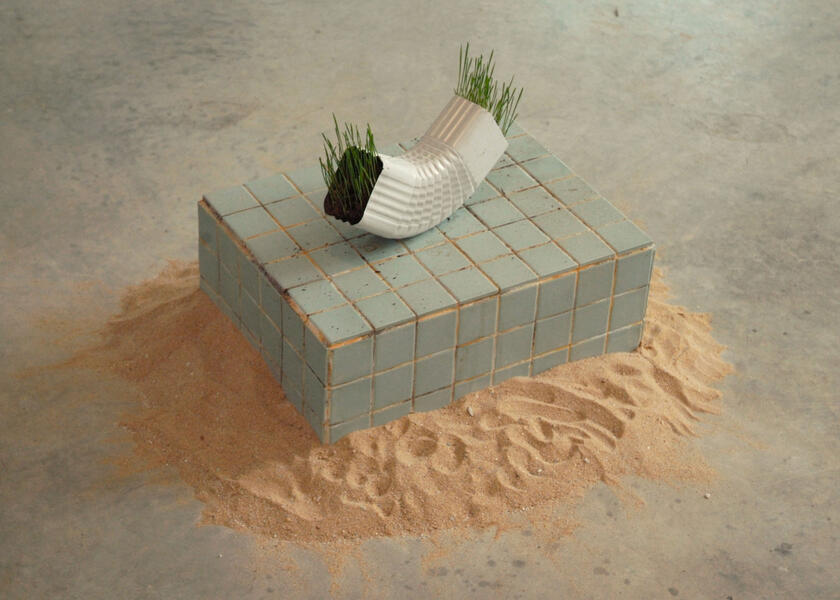 Pax Americana
The state of the installation at the opening reception
-
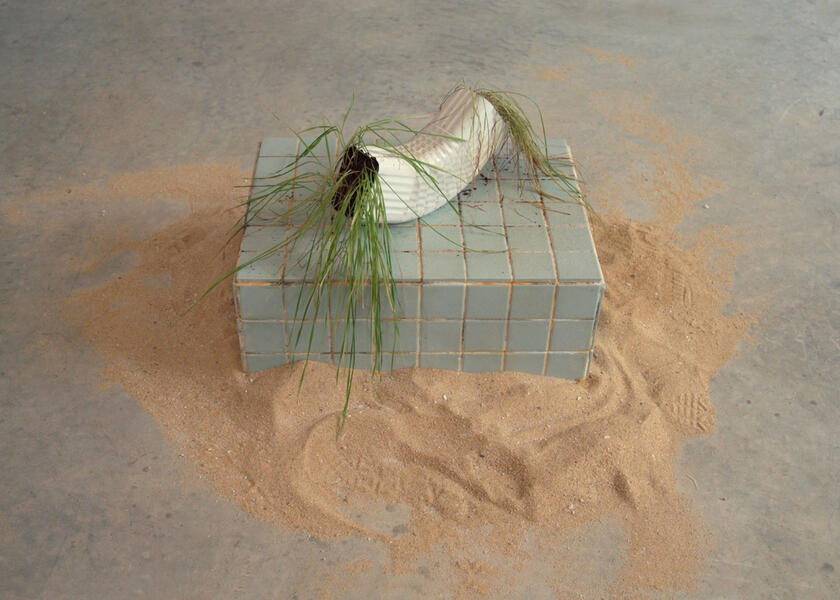 Pax Americana
The state of the installation at the end of the exhibition


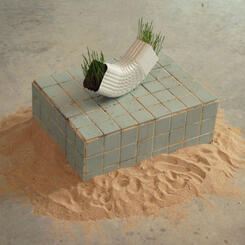
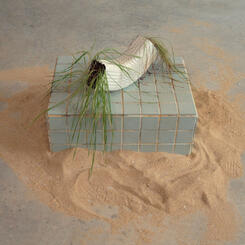
I Dreamt of Invasion
-
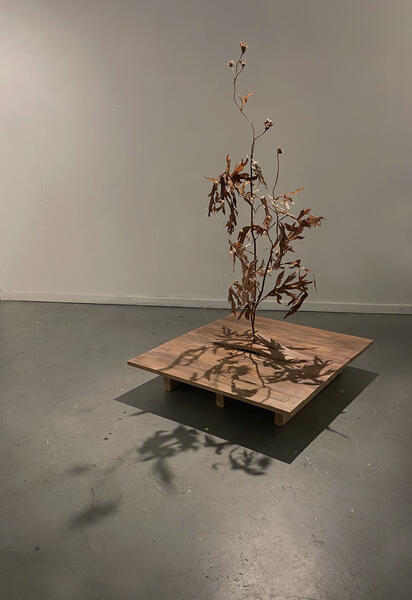 I Dreamt of Invasion
What appears to be a dried compass plant emerges from lifted boards from an elevated wood floor.

Friendly Fire
-
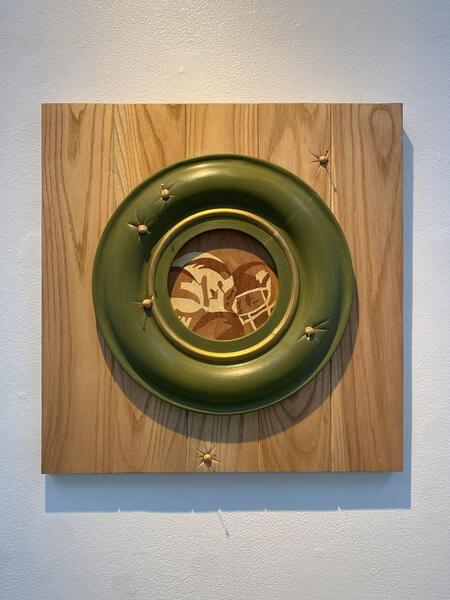 Friendly Fire
2024
Black ash, poplar, milk paint, cherry pits, sewing pins, assorted veneer
16” W x 16” H x 3” D