-
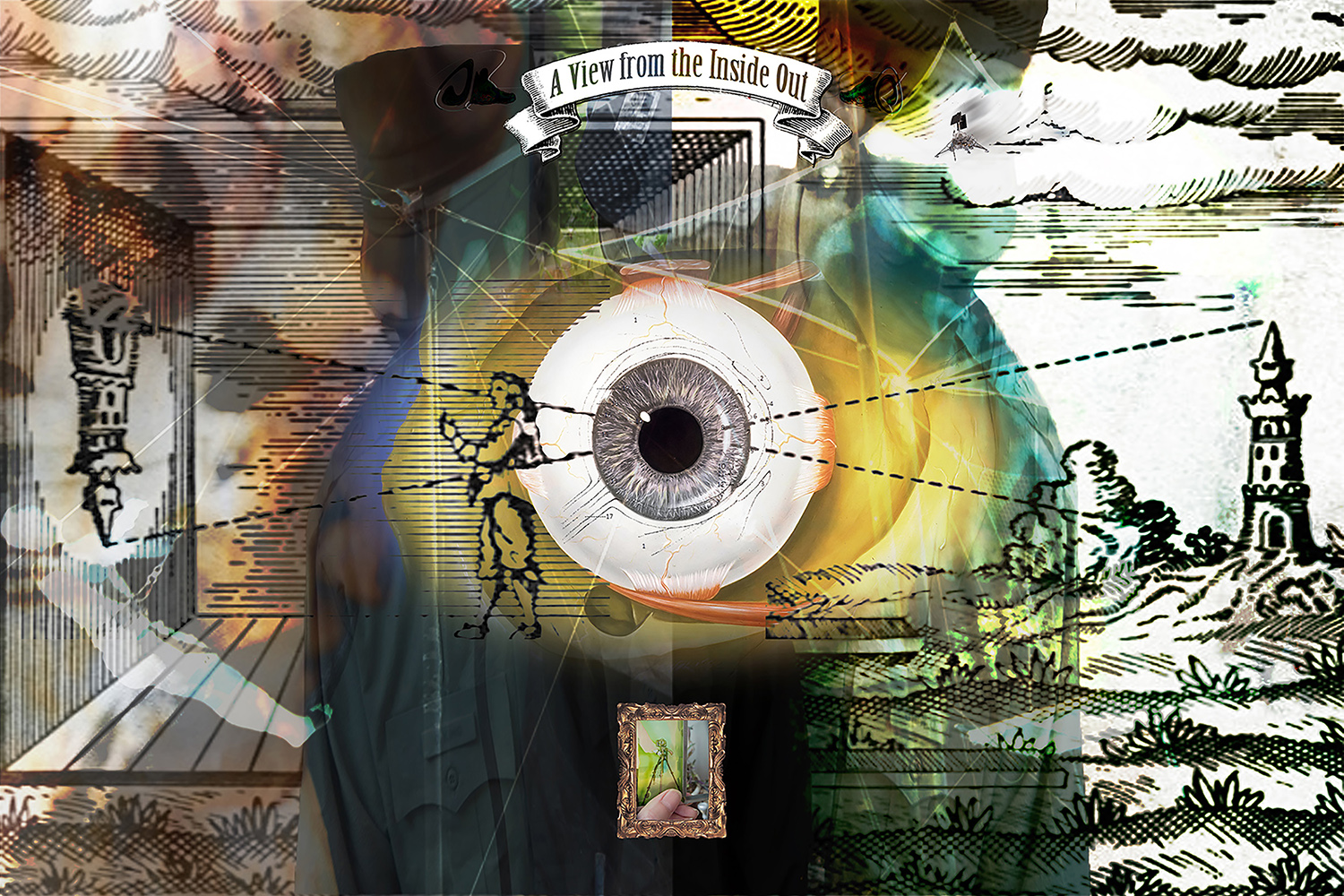
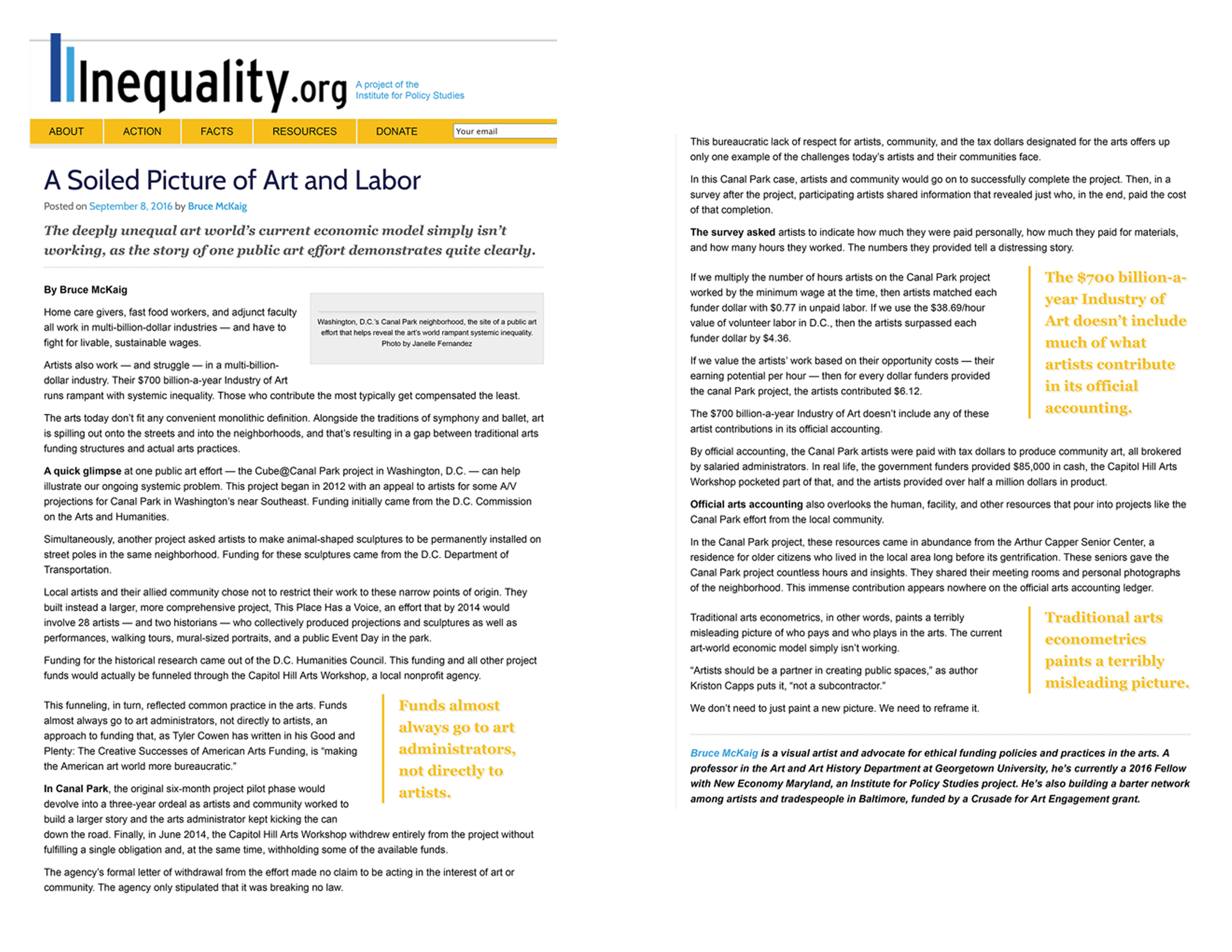
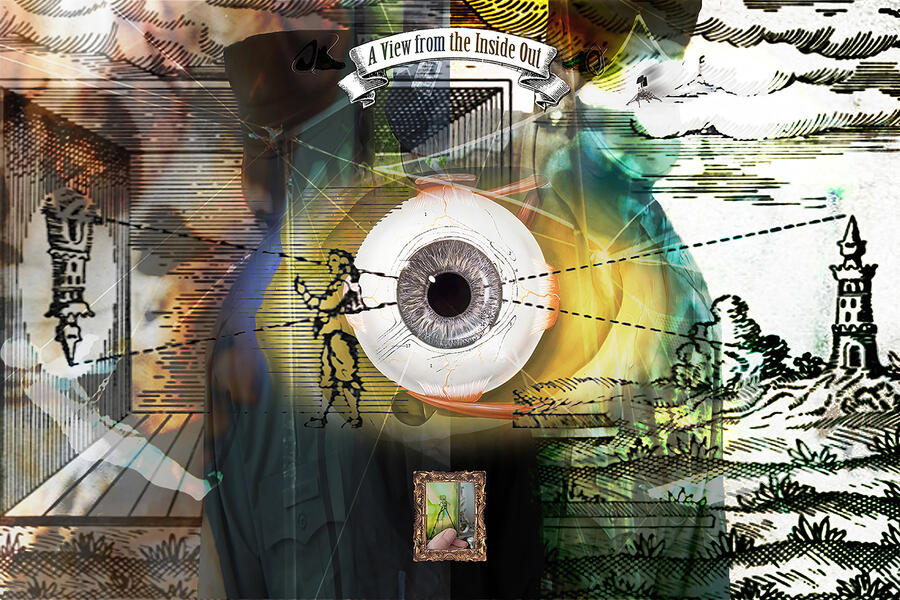 A View from the Inside OutThe ABCs of A View include: A. Advocating for healthier labor policies and practices, B. Building stronger communities through participatory decision making, C. Connecting artists with Baltimore residents for one-on-one mentor sessions. I pursue this work because the current divisive environment will not self-correct in a world of increasing anti-intellectualism. The costs of this systemic imbalance are unacceptable: anxiety, eating disorders, loneliness, and suicide are at record highs in the USA. 36" x 48" digital print on foam-core (pierced in the pupil as the aperture for a camera obscura) 2019
 -
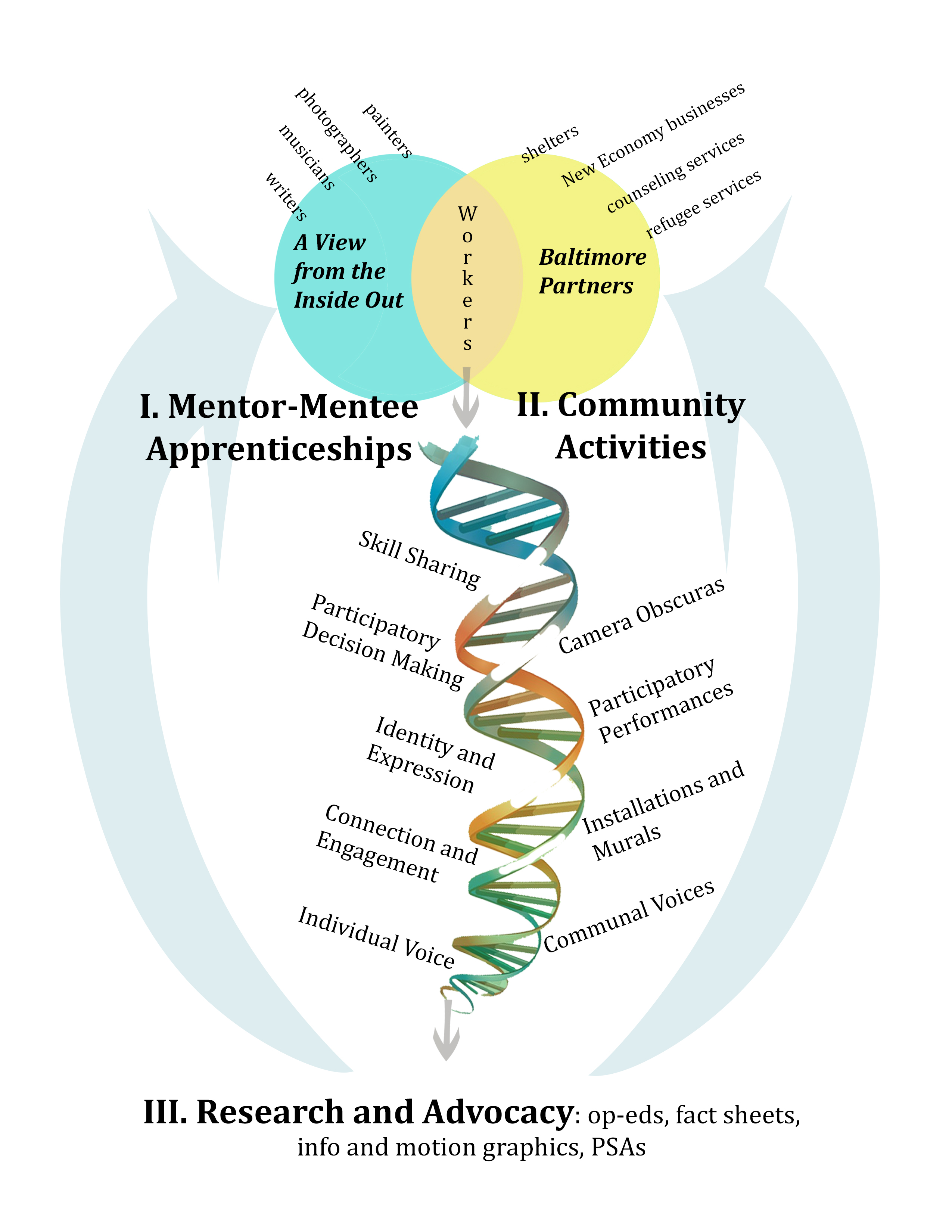
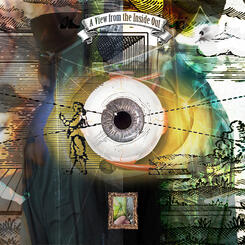
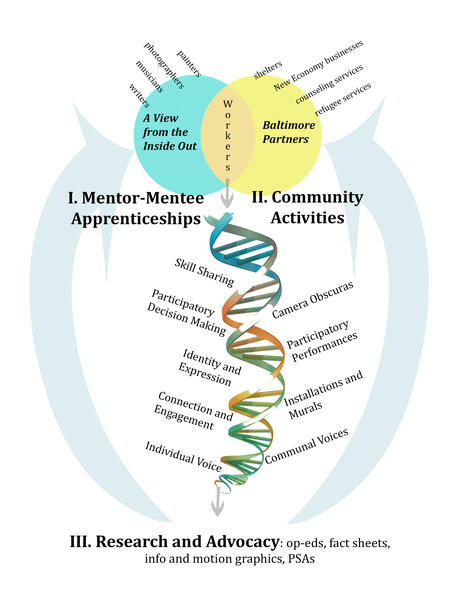 A View: informational diagramThis diagram illustrates how the mentor-mentee sessions, the community activities, and the advocacy work are interdependent and self-reinforcing. The mentor-mentee sessions focus on skill sharing. The mentee eventually becomes a Teaching Assistant and after another cycle of sessions becomes the teacher to a new mentee. Participants do more than sit and watch. They have a voice in decision making and develop new skills for making, eventually teaching, art, while building self-worth and communal connections. The teams of two work independently, and meet in plenary gatherings to identify, discuss and plan community activities open to the general public, neighbors, colleagues, family. The activity could be a participatory performance, mural, kinetic installation, exhibition, or publication in print or on the Web. Artists, mentees, and community share thoughts and examples of identity and their work experiences throughout the activities. These qualitative insights drive subsequent research on the economics of the involved industries. The research helps illustrate how individual experiences fit into the bigger picture of community and the economy. Research is shared as op-eds, info/motion graphics, policy statements, round table discussions. As well as sharing research with all participants, the material is shared with policy makers and other advocacy groups.
 -
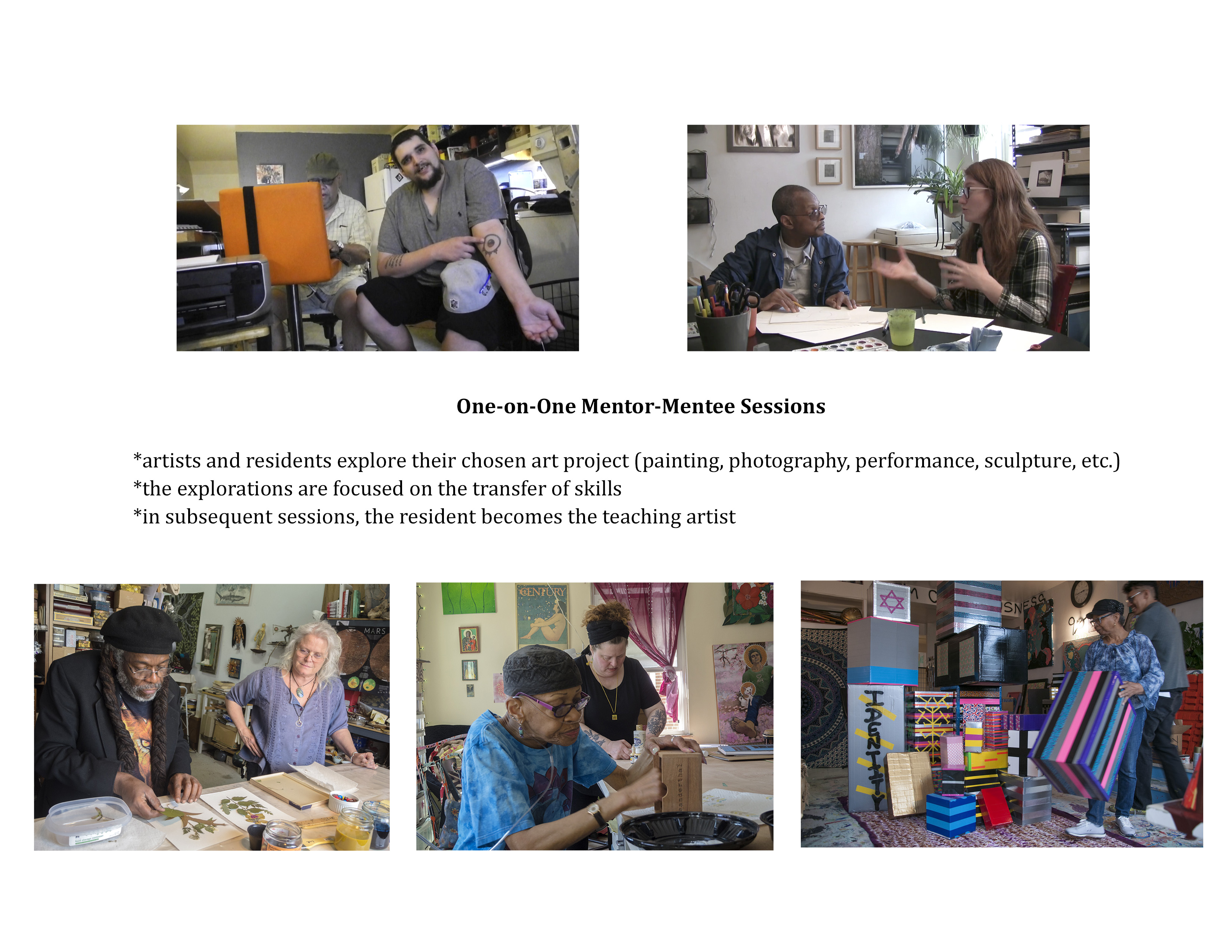
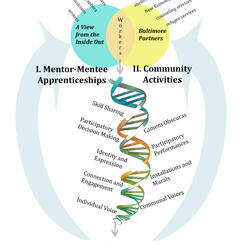
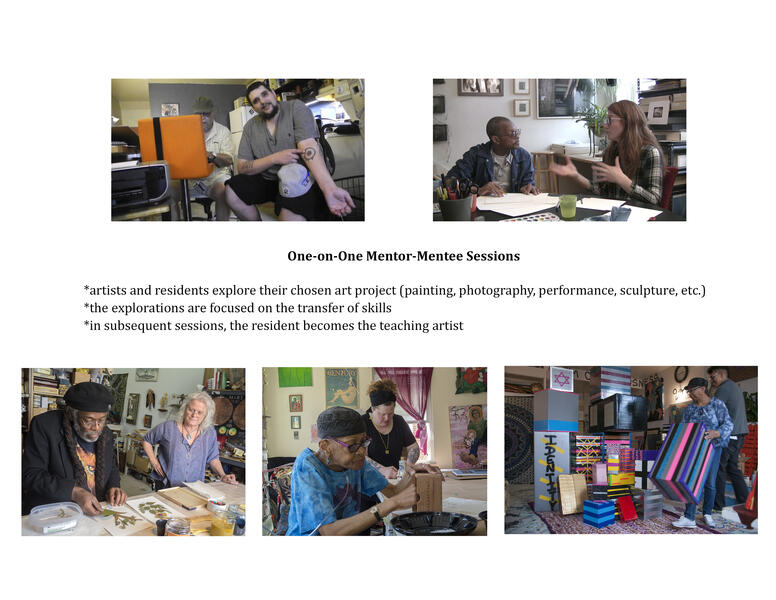 A View: Mentor - Mentee TeamsThe mentor-mentee program is premised on building sustainable relationships through the quality of one-on-one face time. As mentees cycle through the sessions, they acquire the skills to become Teaching Assistants and eventually teachers to new mentees. Collaborating artists teach diverse media: photography, painting, sculpture, drumming, tattoos, animation, etc. A View welcomes mentees' thoughts on what media to explore and tries to match their preference with an appropriate artist.
 -
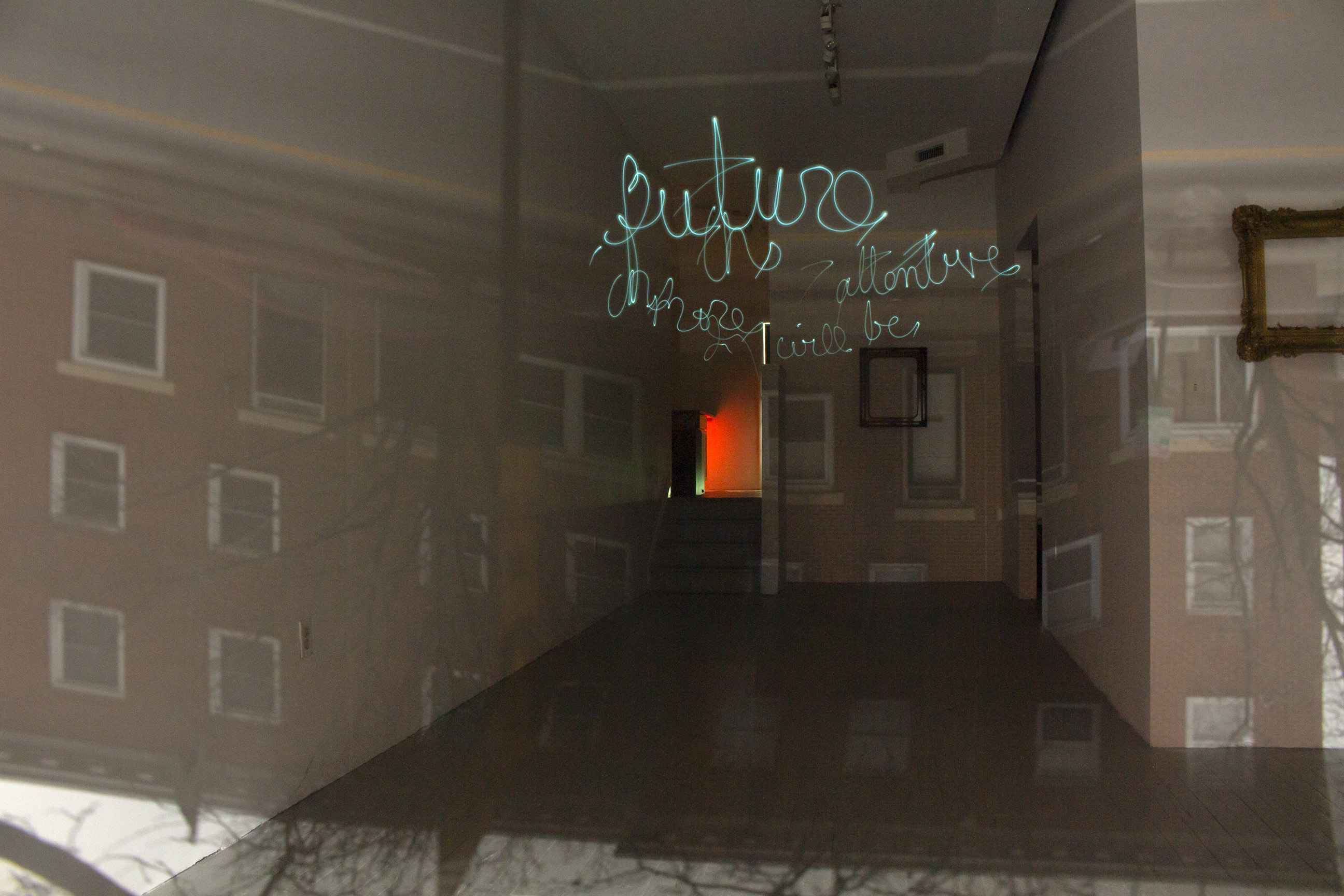
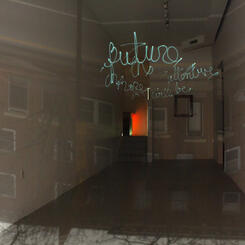
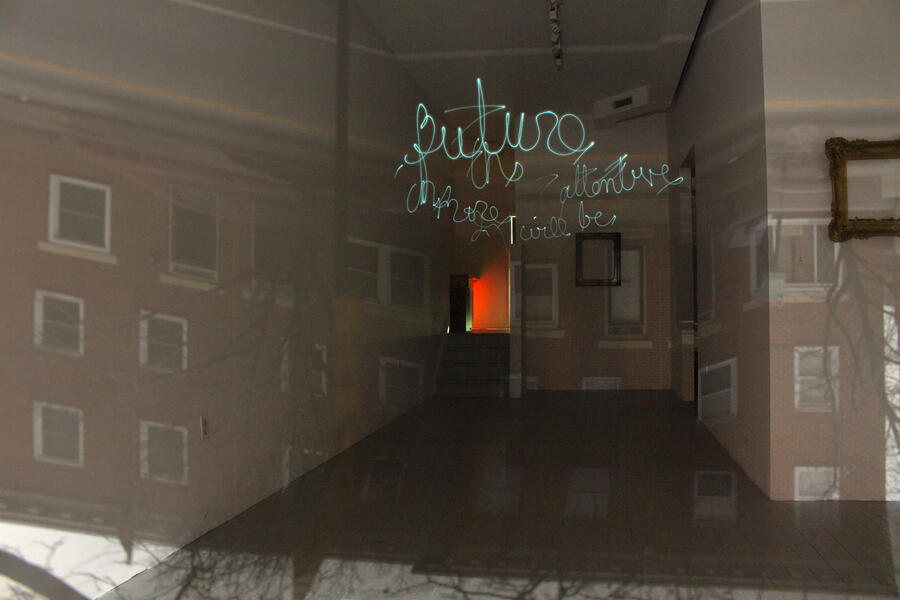 I will be more attentive_camera obscuraOne possible community activity is a room size camera obscura. In April 2019, IA View installed a camera obscura in Gallery 1448 in East Baltimore. Silence or discussion was shared in the room illuminated only by the outside world projected upside down over the walls. I invited small groups and individuals to experience the installation and express themselves through drawing or writing with lights in the air. One homeless neighbor wrote, "Next time, I will be more attentive." 18" x 24" digital print (4 minute exposure)
 -
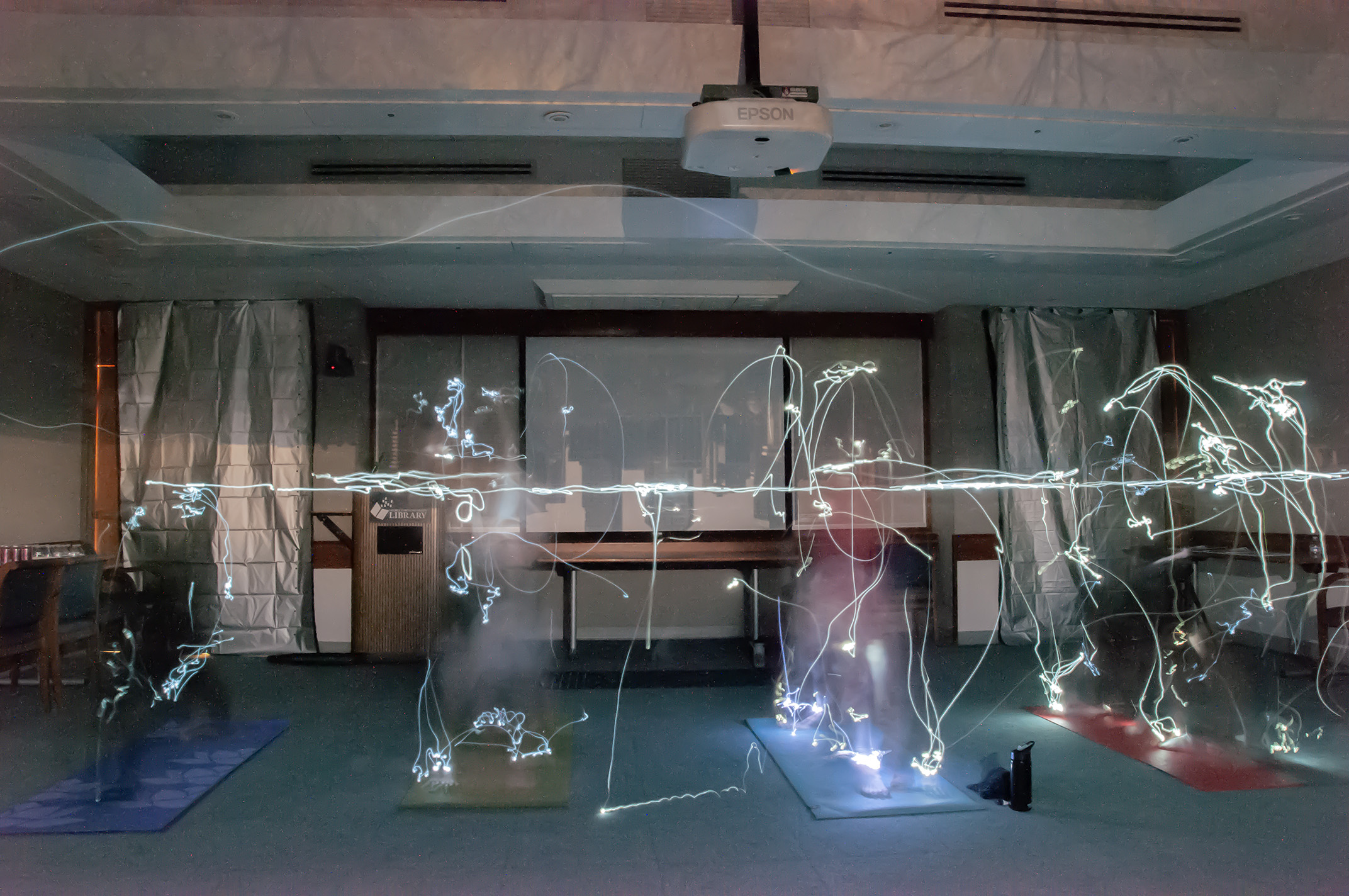
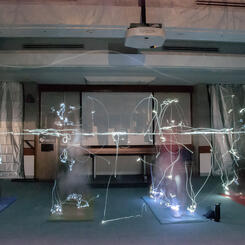
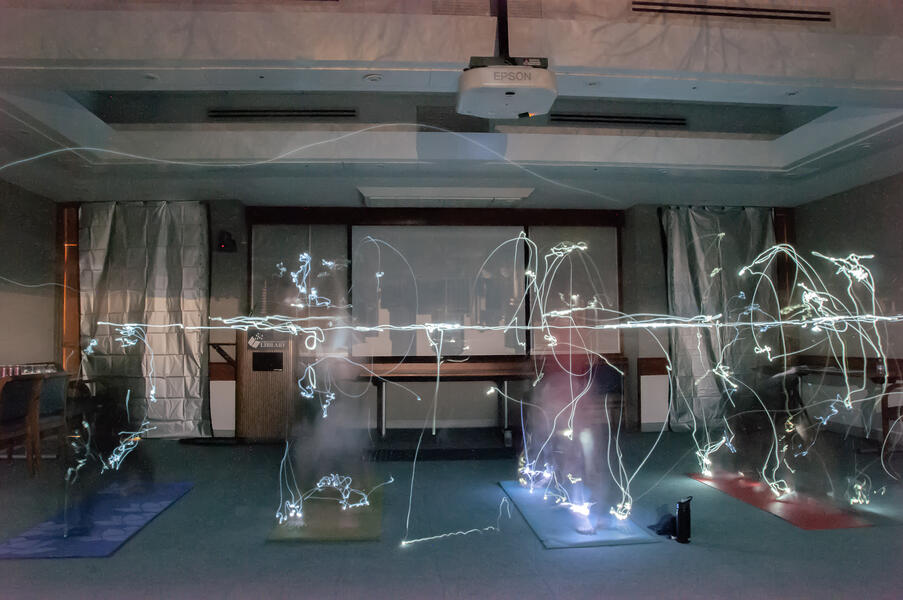 Camera obscura installation: yoga classSometimes a camera obscura can include additional activities. This installation in the library at Georgetown University 2019 hosted numerous activities, including a yoga class. Participants clipped lights to their clothing and were photographed during their practice. 18" x 24" digital print (6 minute exposure)
 -
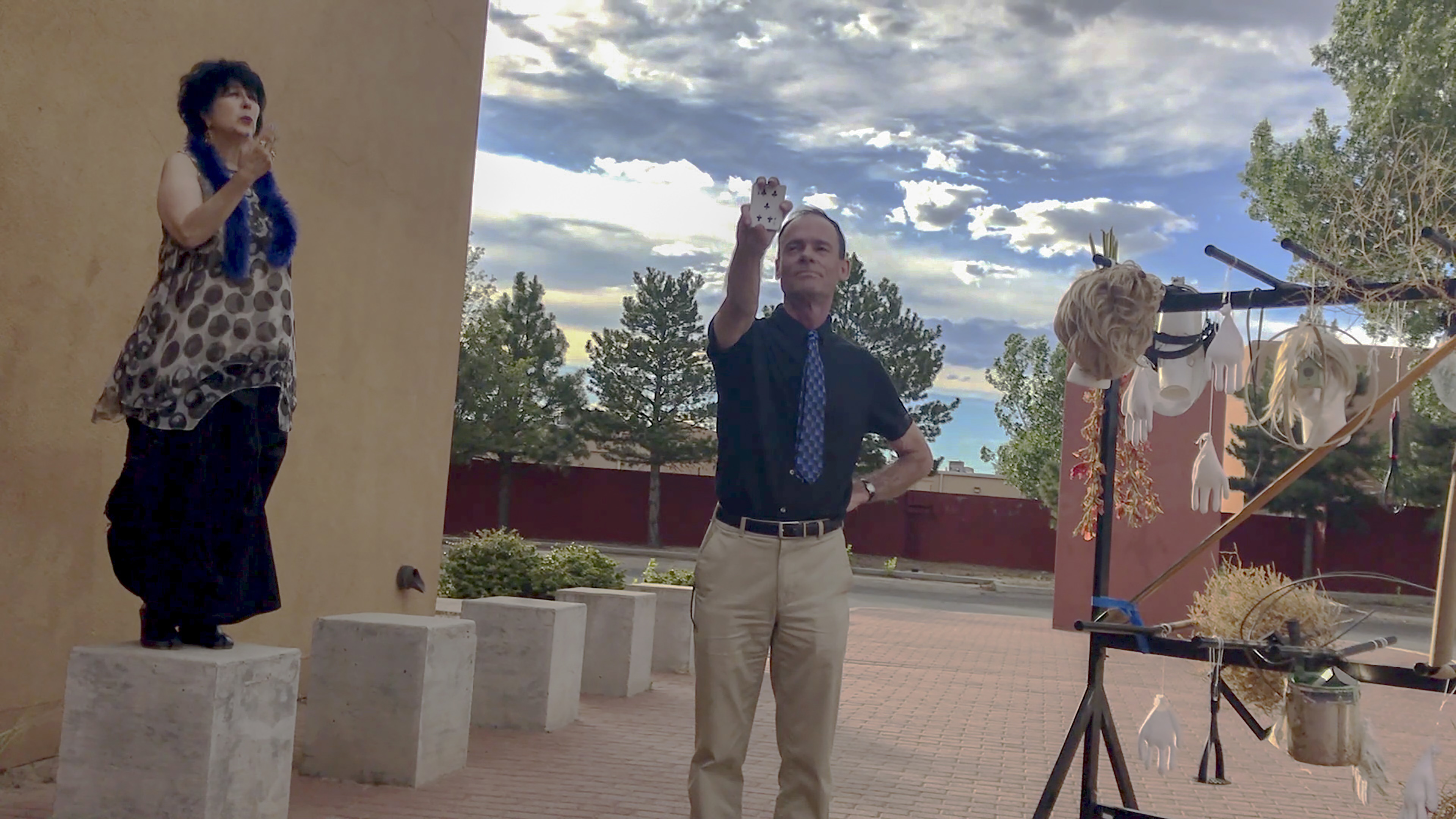
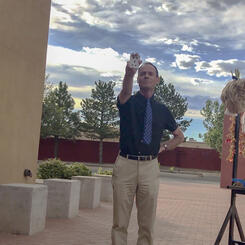
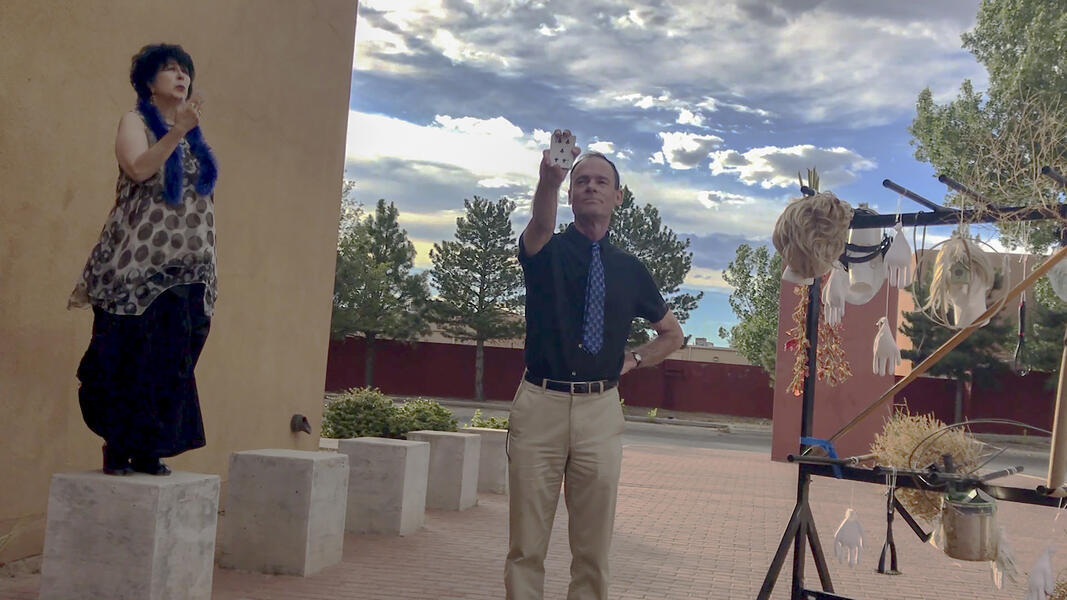 The Measured Step: magic, labor, complicityCommunity activities can include participatory performances. A Measured Step was a performance that guided people through a series of magic tricks and chats on how we measure the value of work. The tour visited installations I had dispersed over a recently abandoned campus. The tour guide was opera singer Cyndie Bellen-Berthezene. This was part of my work at The Santa Fe Art Institutes Equal Justice Residency 2018. participatory performance (45 minutes)
 -
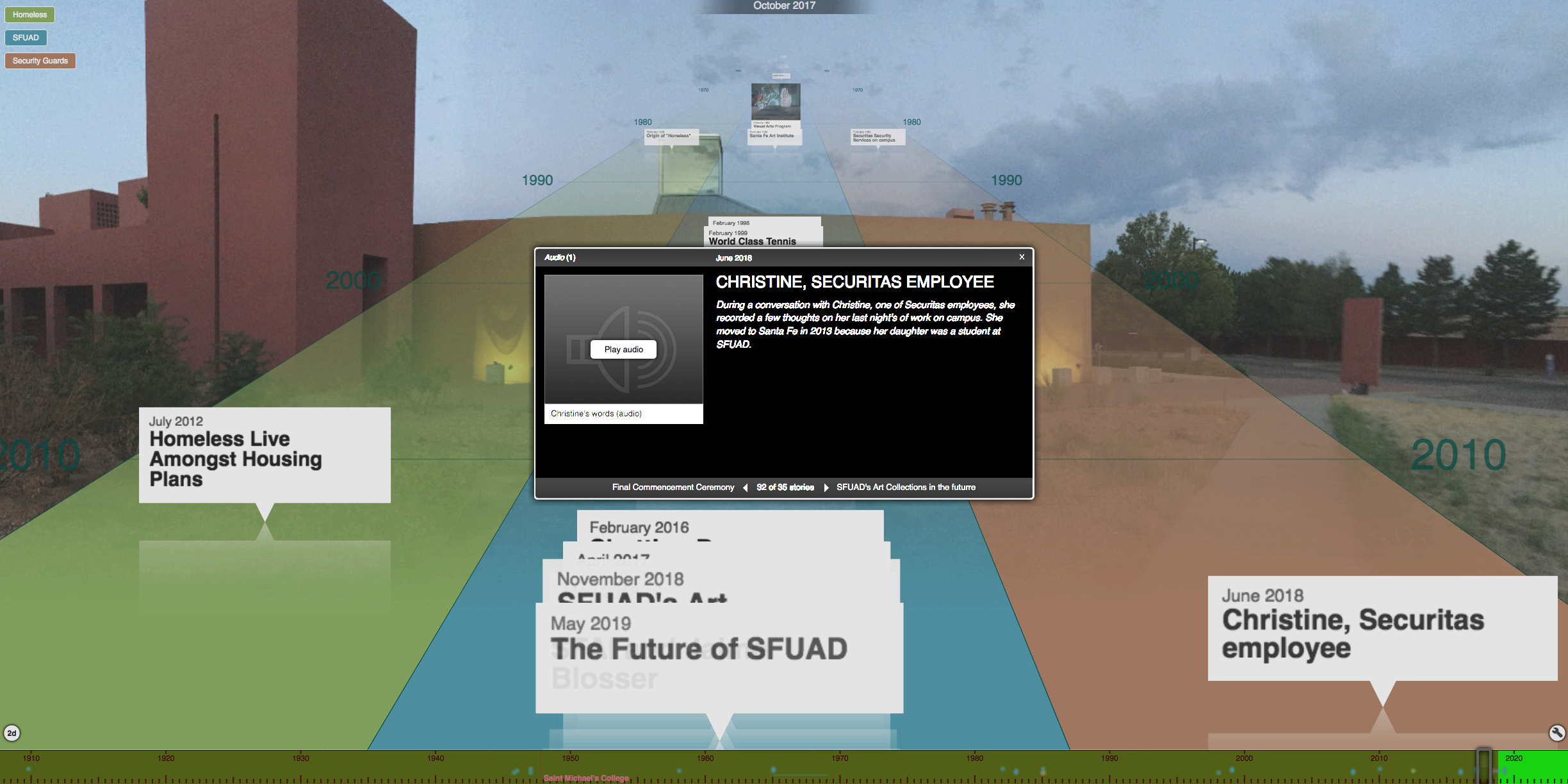
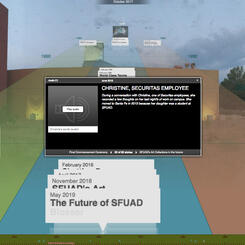
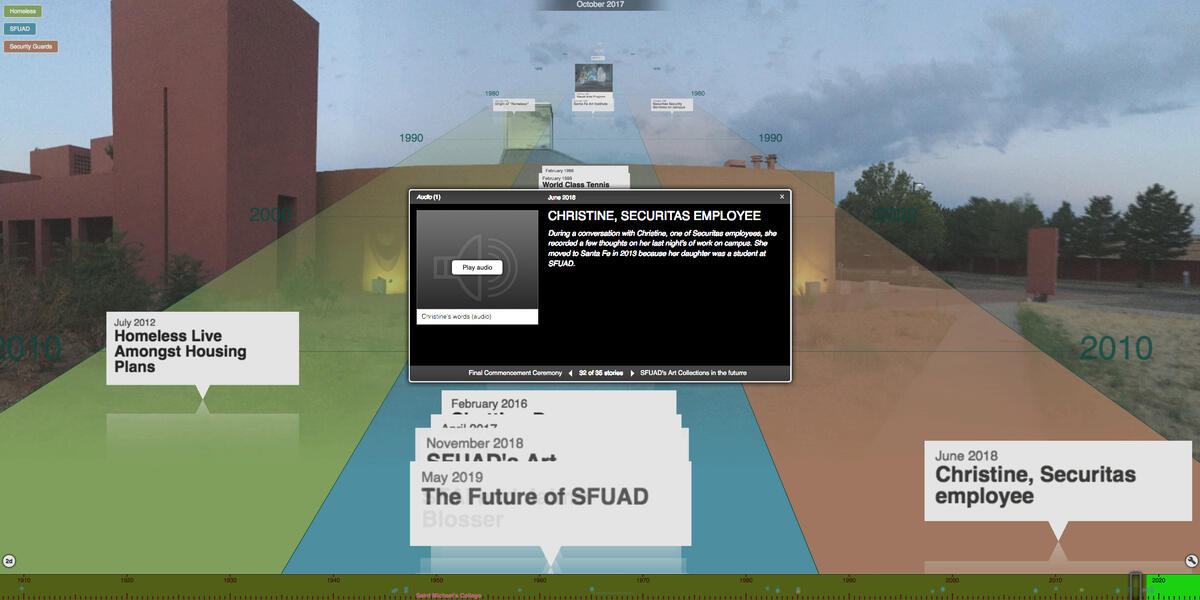 The Measured Step: interactive timelineThe Measured Step is also an interactive timeline that plots developments from the 1600s to 2018 for three demographics: homeless residents, security guards, substance challenged residents. The three demographics were geographically linked on the recently (2018) abandoned campus of the University of Art and Design at Santa Fe. The timeline includes interviews, press articles, legal developments that affect all three groups. The current version of the timeline is available at: https://www.tiki-toki.com/timeline/entry/1135855/The-Measured-Step-in-progress/ interactive timeline 1600s - 2018 (Tiki-Toki)
 -
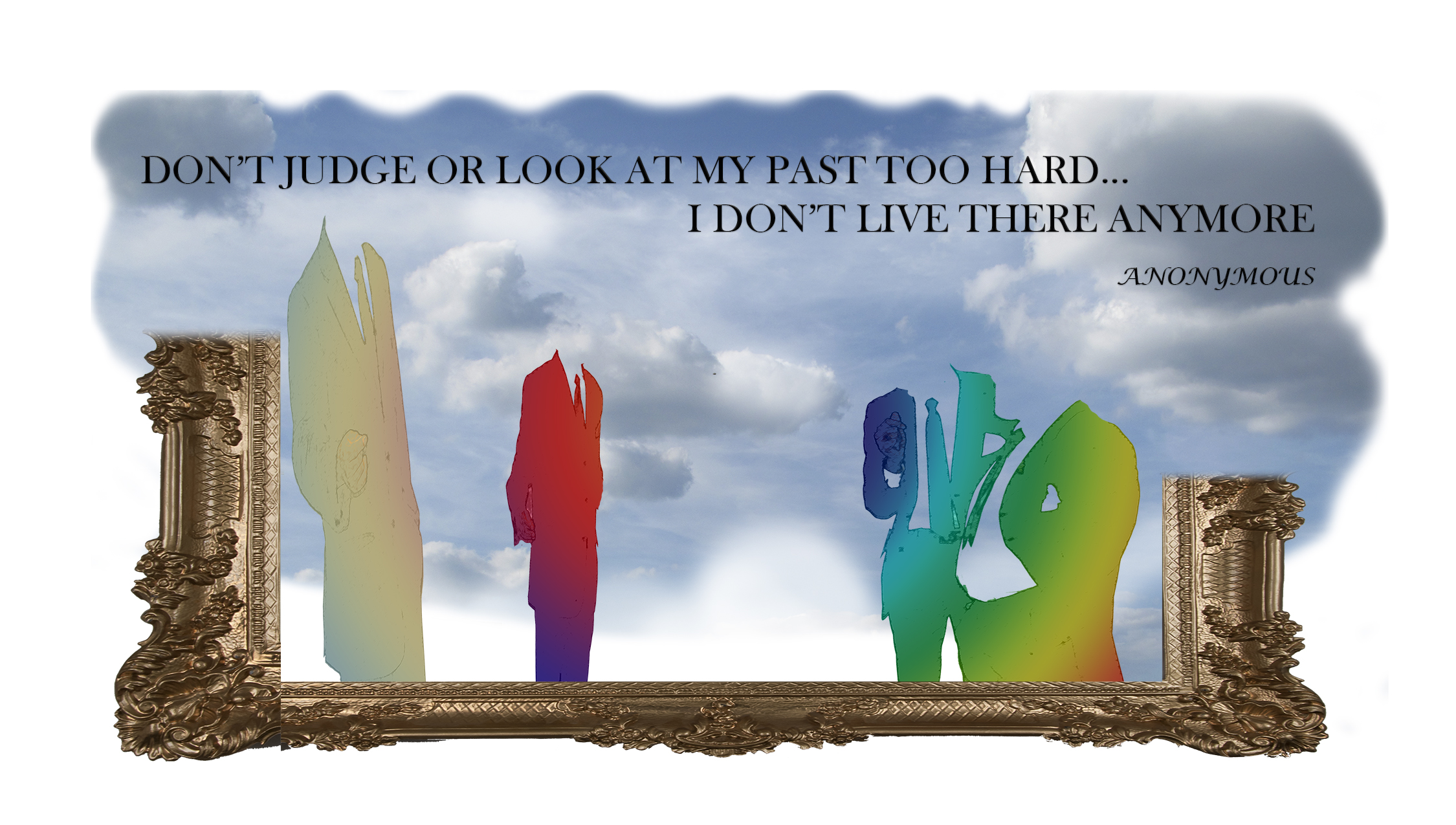
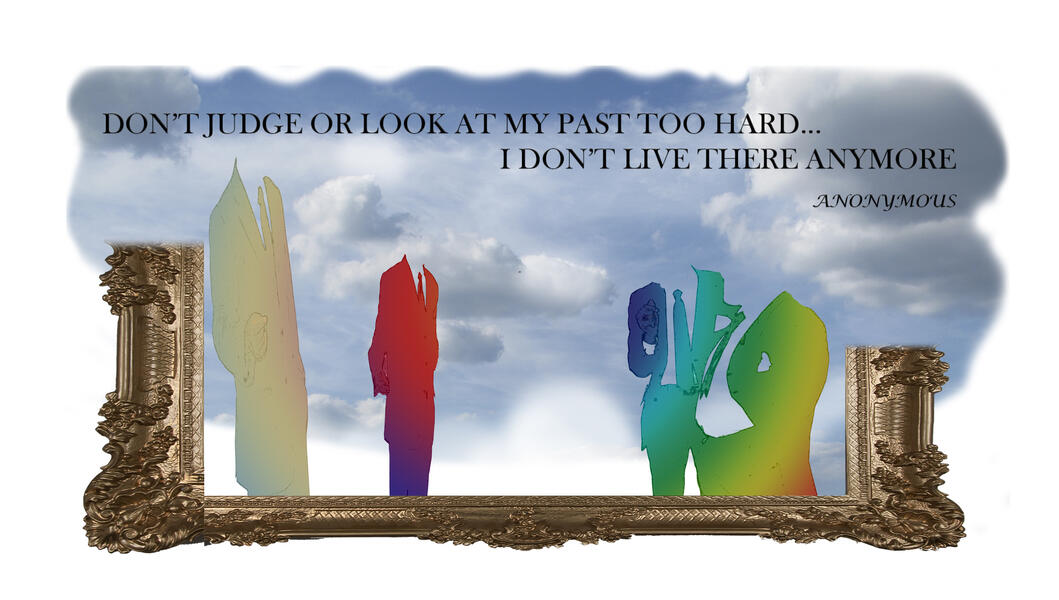 A View: Earl's Place mural design draftCommunity activities can include murals. This mural design is in collaboration between A View and Earl's Place, a men's transitional housing shelter in East Baltimore. We are currently seeking funding to install the mural which, by design, will be up-dated once a year by new artists and residents at Earl's Place. A View has collaborated with Earl's Place on numerous projects. mural proposal (paint, 6' x 14')
 -
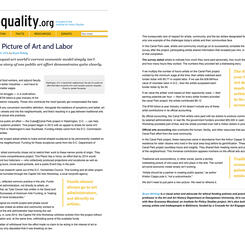
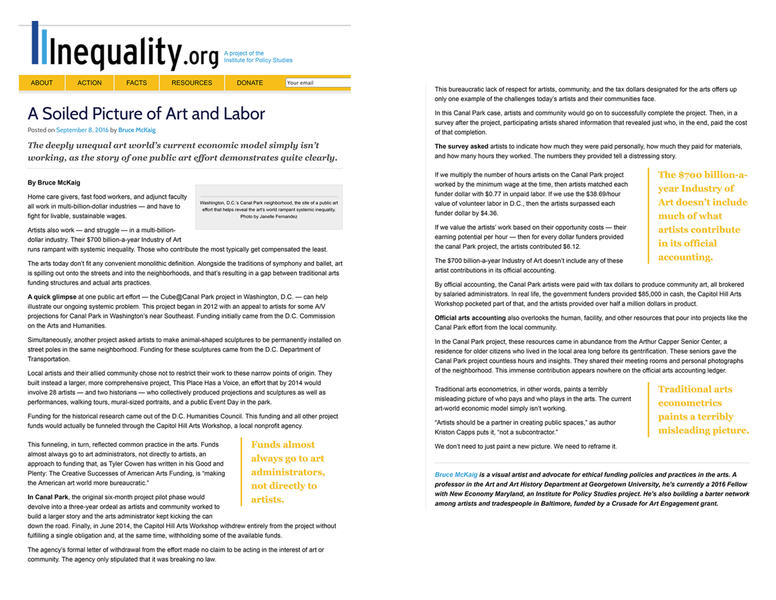 A Soiled Picture of Art and LaborThis op-ed was published in Inequality.org, as part of my work with the New Economy Maryland at the Institute for Policy Studies. It discusses ethics in funding practices in the arts, with reference to other industries (fast food workers, contract labor, adjunct faculty, etc.). op-ed (700 words)