Work samples
-
Vondel Mahon's Video Portfolio
This video represents the breadth of my work and skill set. I completed these projects over a two-year period in the Art as Applied to Medicine Program at the Johns Hopkins University School of Medicine. The demo showcases a wide range of art forms, illustration styles, and subject matter. It includes 2D illustration and animation, 3D modeling and animation, and interactive media for web and iOS. The latter two projects were coded in JavaScript and partially in C#.
-
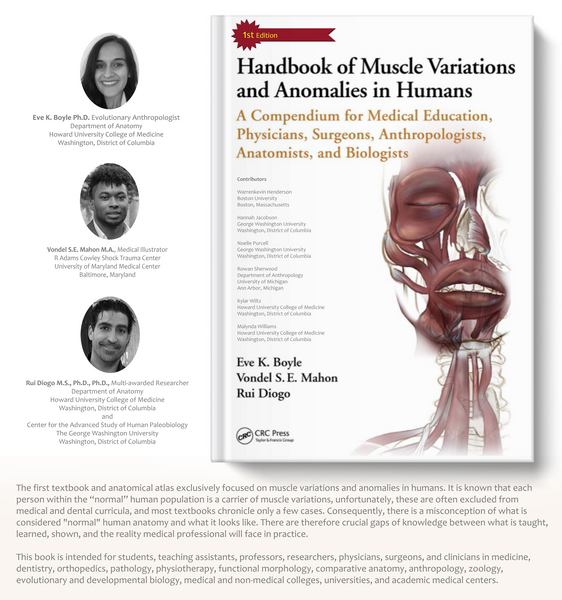 Authors Cover Page: Handbook of Muscle Variations and Anomalies in Humans
This was a three-year project in which I served as the sole medical illustrator. I collaborated with anatomy researchers at Howard University to create and complete a new human anatomy textbook. The work presents many muscles visually for the first time, shown in context and alongside one another rather than in isolation.
The central thesis is that “normal” anatomy is more variable than commonly assumed. Just as people differ externally, there is also meaningful and natural variation beneath the skin—variation that is normal by virtue of its prevalence within the human population.
The book is valuable to any field involving human muscle anatomy: https://www.amazon.com/Handbook-Muscle-Variations-Anomalies-Humans/dp/0367538628
-
Screw-Home Mechanism of the Knee Joint Animation
This model began as a Medical grade DICOM dataset, manually converted into a clean, anatomically accurate, and educational 3D model and animation. The animation shows the ligaments associated with the knee joint, in 3D, and phases of the multi phased "Screw Home Mechanism." This is shown at the medial and superioposterior views. This is a very complex concept to grasp, which is why it is visually broken down into stages unlike the more fluid and natural motion of the knee. This video, without any audio or any fancy animation, has surprisingly been my most viewed video. What I learned from this video is that getting to the point sometimes matters more than how beautiful you make things. It has inspired me to focus a lot more on "the point" in many later works.
-
Concept of VectorWeb a mosquito surveillance system innovation
My aim as a medical illustrator is to collect, digest, deduce, and communicate complex information. This was a 2D animation of a mosquito surveillance system concept. This was done to help a team with their competition. The visual challenge I aimed for here was to create a 2D world that also feels 3D. I was limited by the 2D medium, however I used many 3D and film techniques as possible to make the scene feel three-dimensional--which was a want more than a need. This was a massive three-month project with hundreds of 2D assets. The project began with research and knowledge collection. A holistic and recyclable style was selected so that I could reuse as many assets as possible. On a visual level, the aim here was also to make the scenes seamless—to take the user/viewer from the beginning to the end without them realizing where they had been traveling. Ultimately, this was used to tell a compelling story about a new emerging tech.

About Vondel

Vondel is originally from the Caribbean, St. Andrews, Grenada. Growing up amidst decorative fauna, prismatic lifeforms and celestial landscapes, he developed a deep appreciation and fascination towards understanding nature through science. Alongside this curiosity, he became deeply immersed with Art. At a critical crossroad, where he was expected to choose one of two paths, he chose the option of not choosing at all. That choice allowed him to follow his interests until they were both… more
Virtual Reality

Gas Exchange in the Lung: How we Breathe
Handbook of Muscle Variations and Anomalies in Humans
-
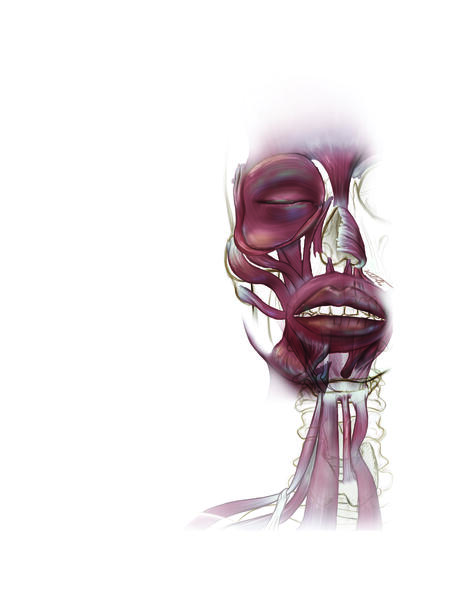 Text Book Cover Art
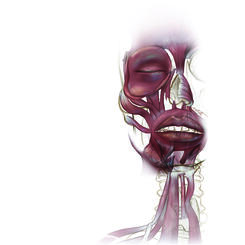
This was the face I chose for the textbook. It is about inclusion, reflection, and truth. It is a face I see every day, a face that needs visibility, yet one I rarely see represented in the same space. I see my reflection there—but not everywhere.
I wanted the cover to be eye-catching, graphic, yet elegant. It is a collage of at least two illustrations, built from the same skeletal framework. I wanted it to feel both alive and dead, because existence contains both. I also wanted it to appear normal and abnormal, because the “normal” human body in reality is abnormal.
-
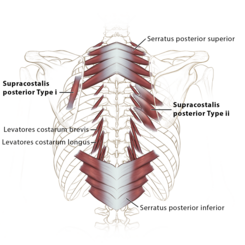
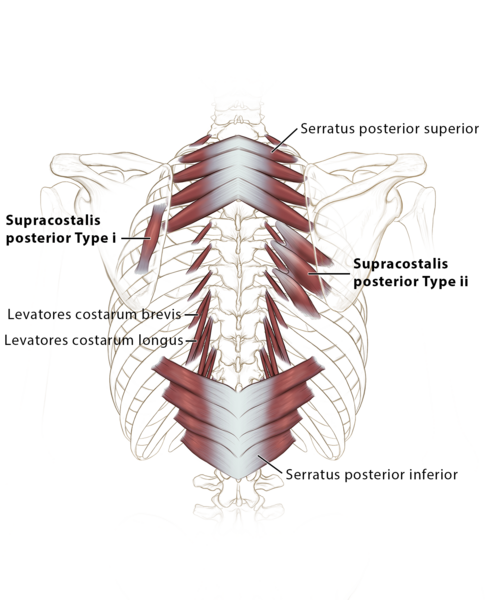 Supra Costalis Type 1 and Type 2 Muscles
Supra Costalis Type 1 and Type 2 Muscles
-
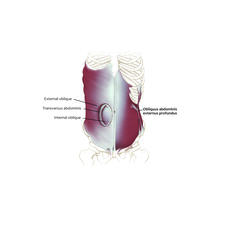
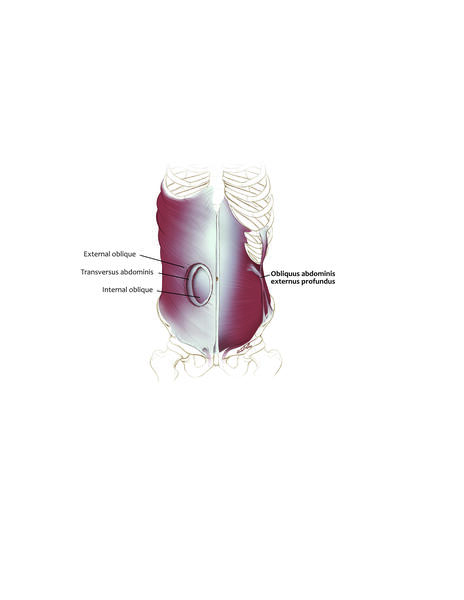 Obliquus Abdominis Externus Profundus Muscle
Obliquus Abdominis Externus Profundus Muscle with unique cannon ball hole cut out
-
Handbook of Muscle Variations and Anomalies in Humans Video(SAMPLE WIP)
This is a work in progress for a textbook video advertisement. While still in development, the project serves as an experiment in how medical textbooks might be marketed through video. Textbooks are typically not advertised in this way, so—given the medical nature of the content—I chose to draw inspiration from prescription drug advertisements, as well as from how novels are marketed through video. These influences were combined to explore a unique visual style for textbook advertising.