Work samples
-
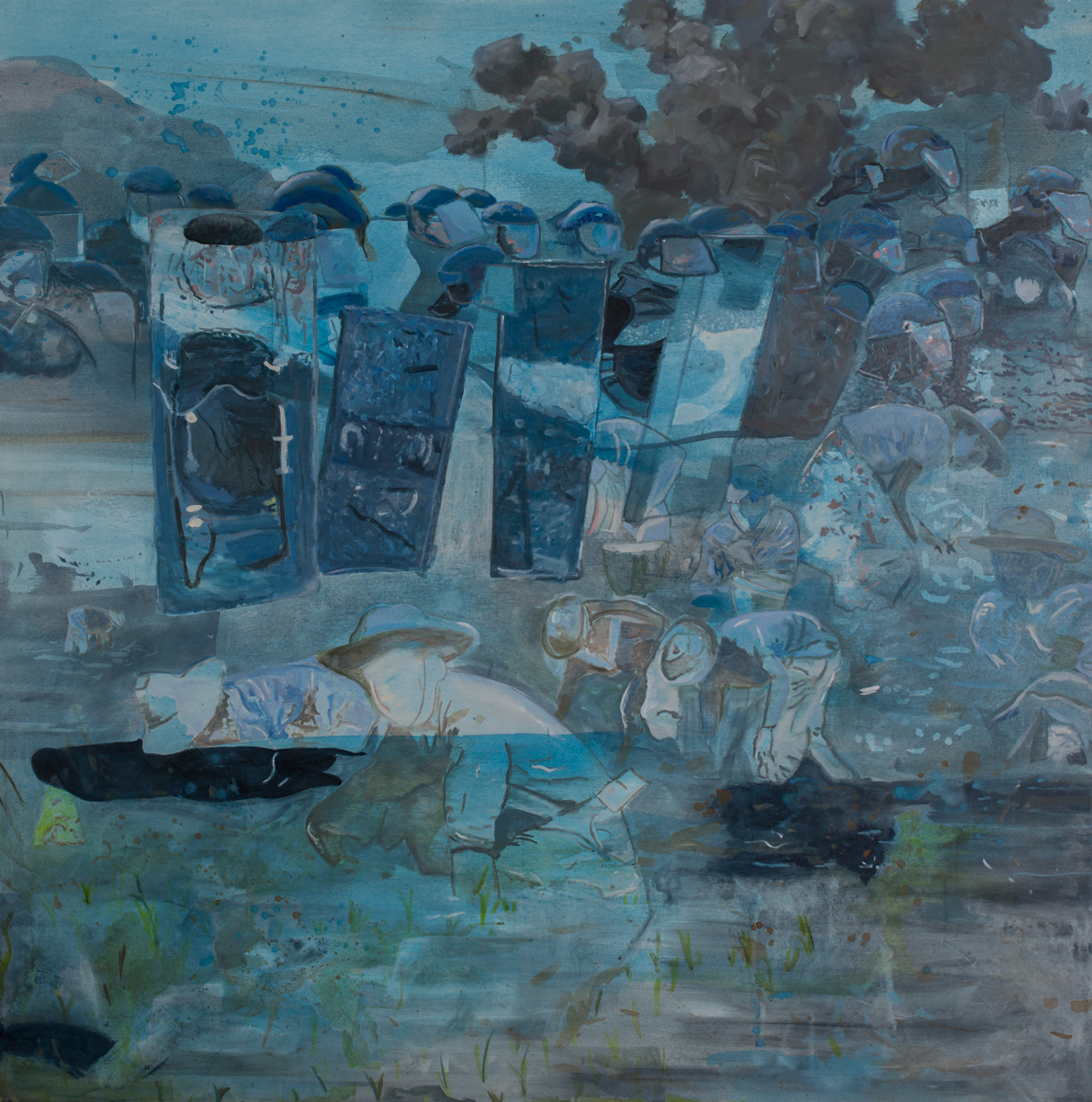
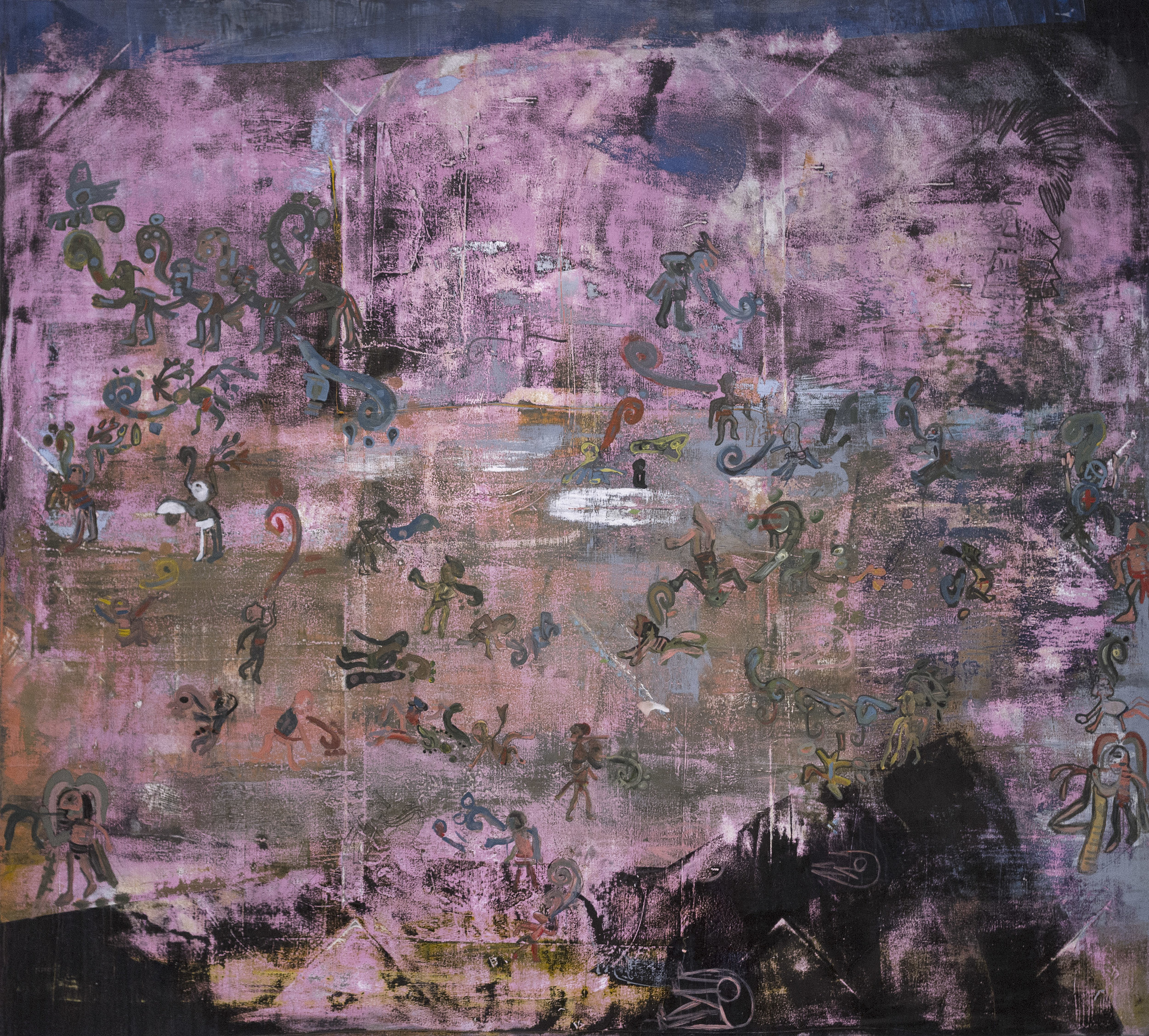
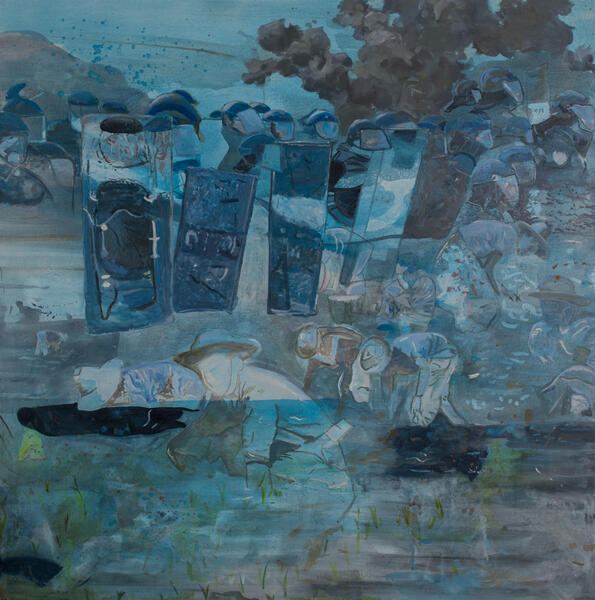 The Wall
Acrylic pigments on canvas, 72 x 72 inches, 2018
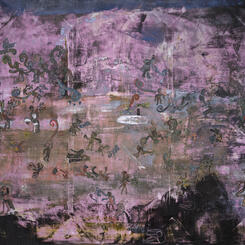
The Wall emerges as a depiction of societal suffering, and the profound weight of oppression experienced amidst the turmoil in my newfound home of Baltimore. The canvas captures a visceral response to the city engulfed in flames, unveiling the depths of discrimination against people of color, an intensity I had never encountered before. As chaos ensued, those with the means fled, leaving the others behind to pick up the shattered fragments. The city then fell under emergency lockdown, compounding the already overwhelming sense of isolation and despair.
The figures portrayed within this piece appear as if melting into a lagoon of tears–a metaphor for the heavy burden of sorrow and the relentless weight of underpaid labor. They are hunkered down, stayed by an oppressive system, struggling to survive beneath the weight of societal injustice. A profound separation between two distinct classes is evident. The working class submerged in their toils and the imposing presence of law enforcement as an unmoving concrete wall, serving as a stark representation of the systematic divisions perpetrated within our society.
The canvas’ genesis is in witnessing Baltimore’s turmoil firsthand; the city ablaze, revealing the depth of oppression once again faced by people of color. The genesis behind this artwork is the pervasive detachment witnessed within society, a disconnection from genuine human connections, a scarcity of both empathy and sympathy among us. It reflects our collective detachment, urging our introspection.
The Wall serves as a mirror, reflecting the disparity and anguish experienced by marginalized communities -- seen in the painting through the removal of the figures' faces, while also calling for a reckoning. It implores viewers to confront the layers of societal constructs, empathize with the suffering depicted, and unite in dismantling the oppressive walls that perpetuate division and sorrow.
-
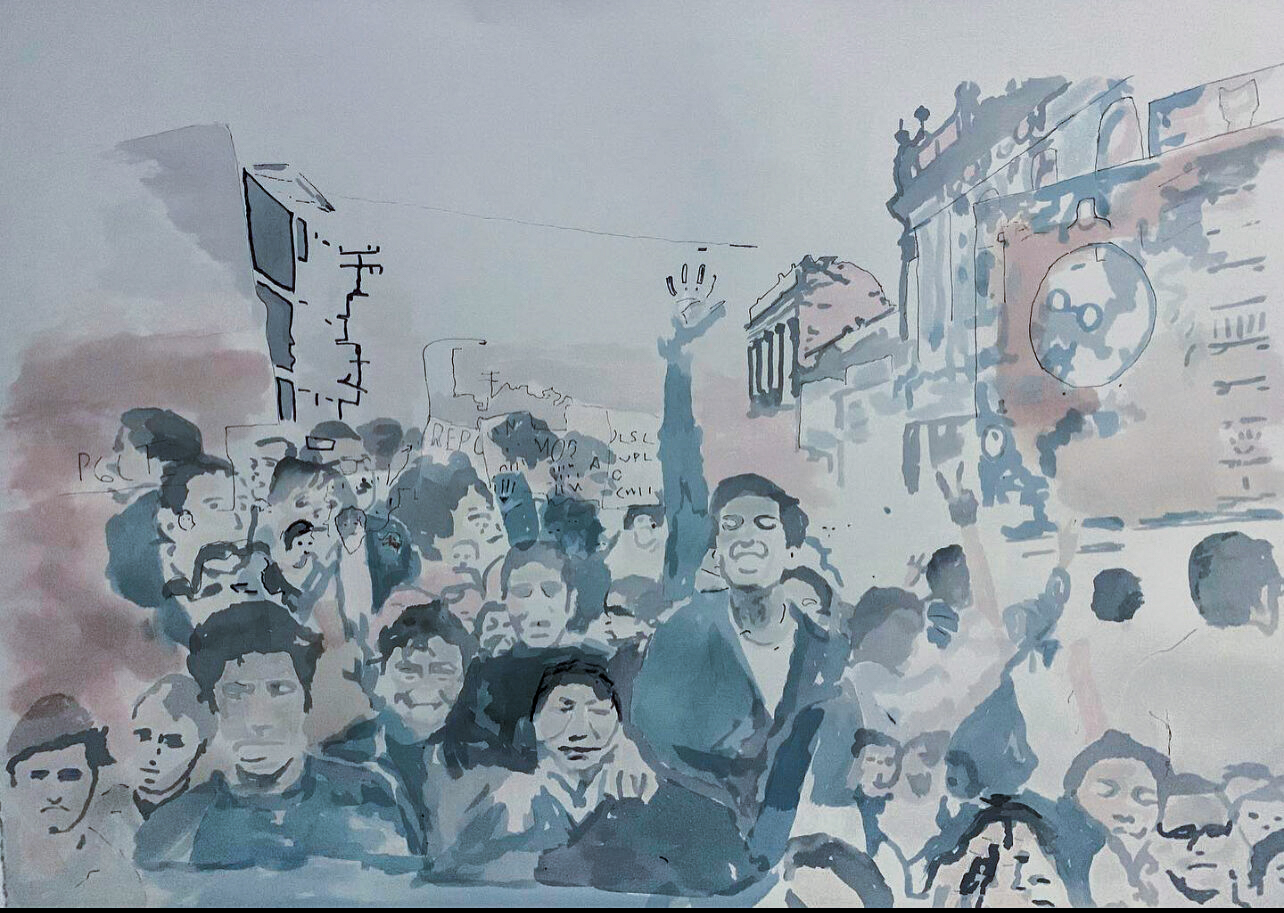
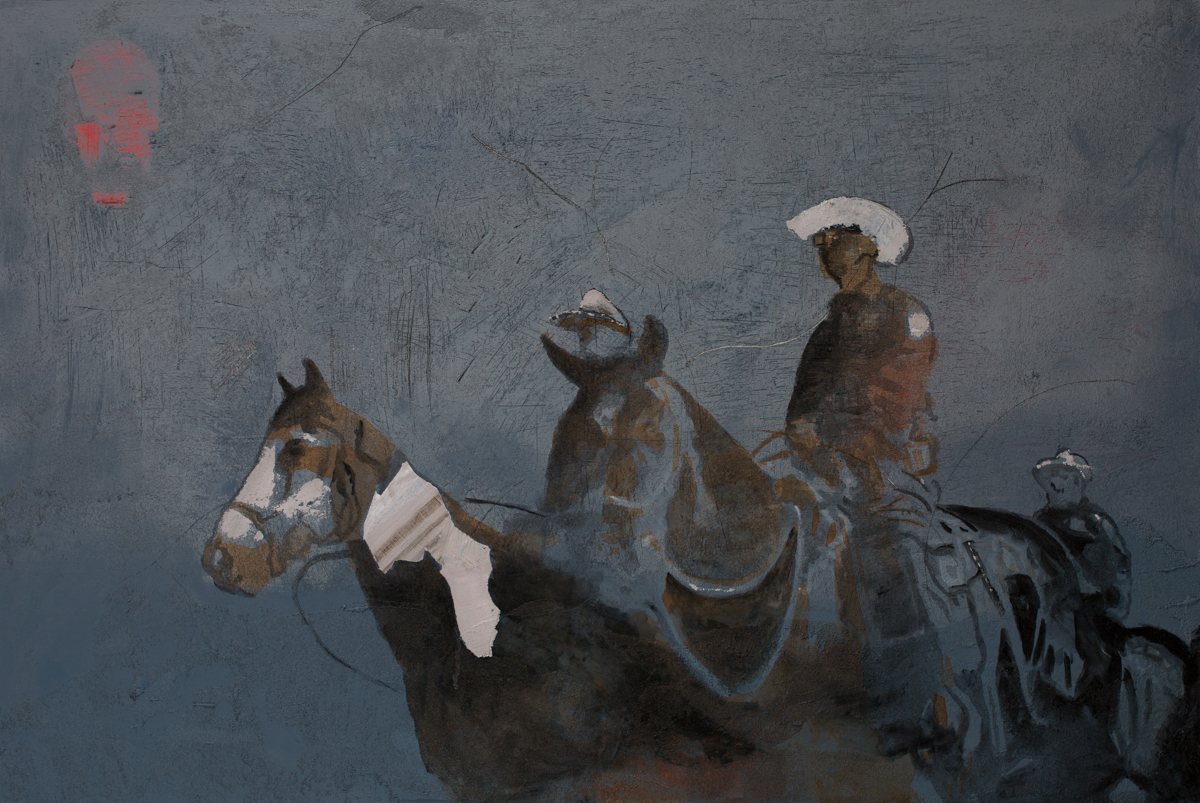
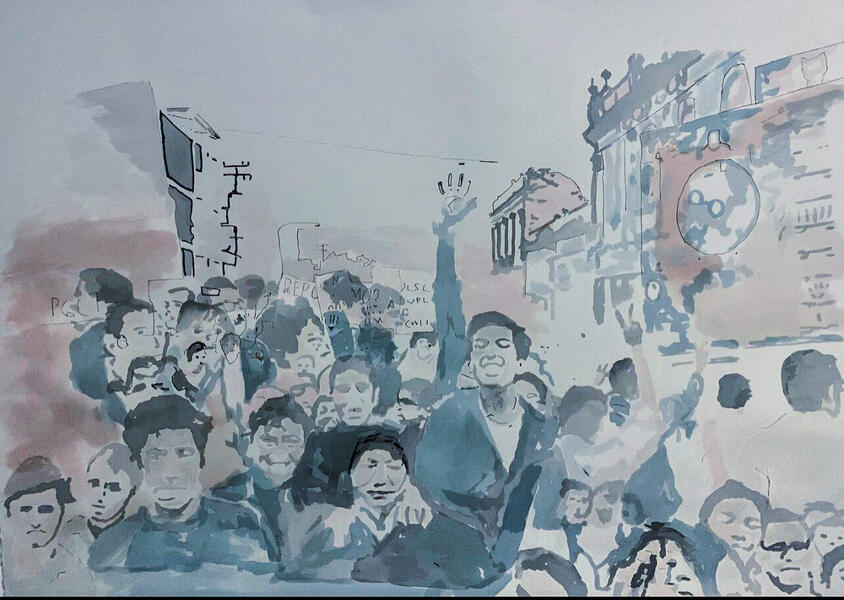 Una Cultura del 68
Acrylic pigment on Bfk paper & oil pastel, 30 x 22 inches, 2020
-
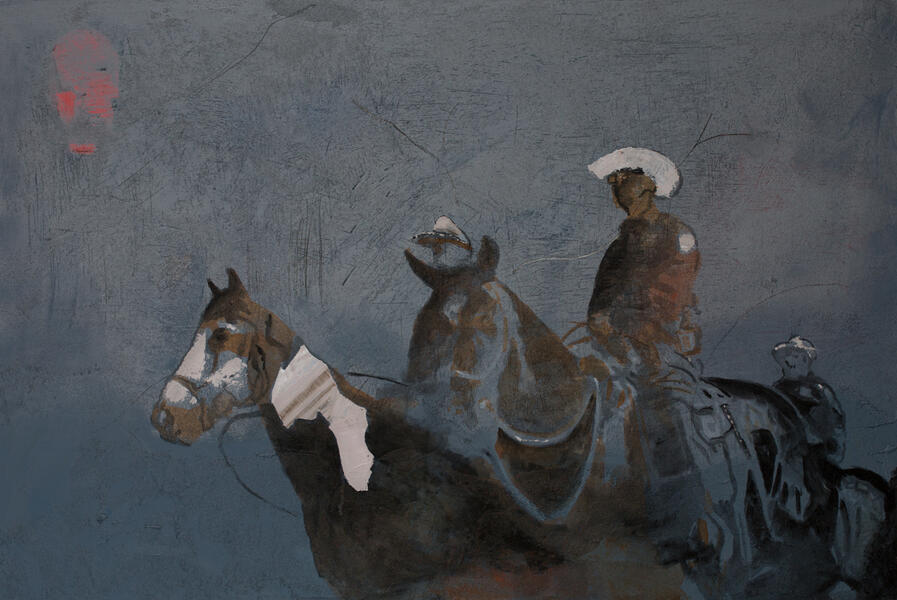 Hunted
Acrylic pigments on canvas, 48 x 32 inches, 2019
-
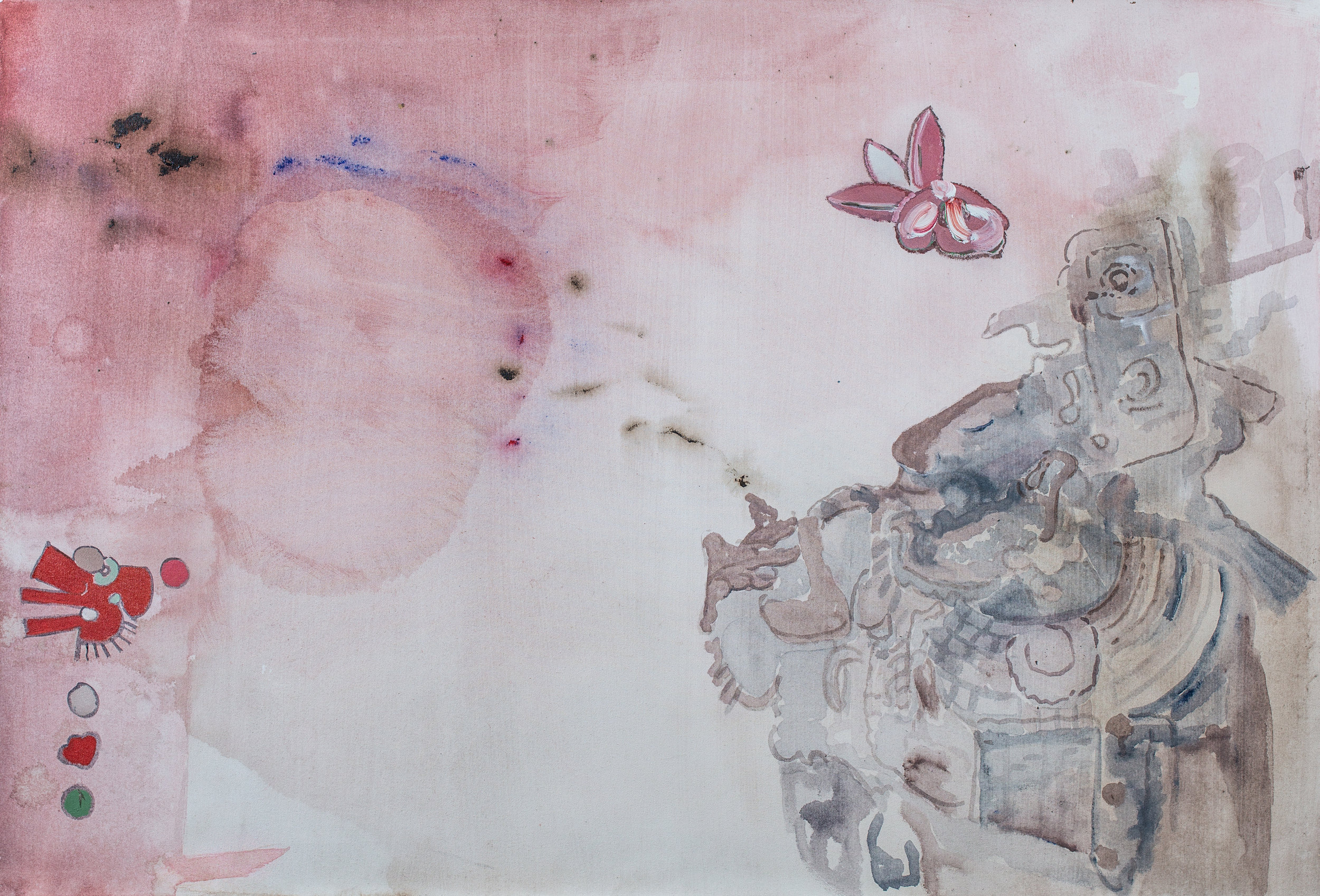
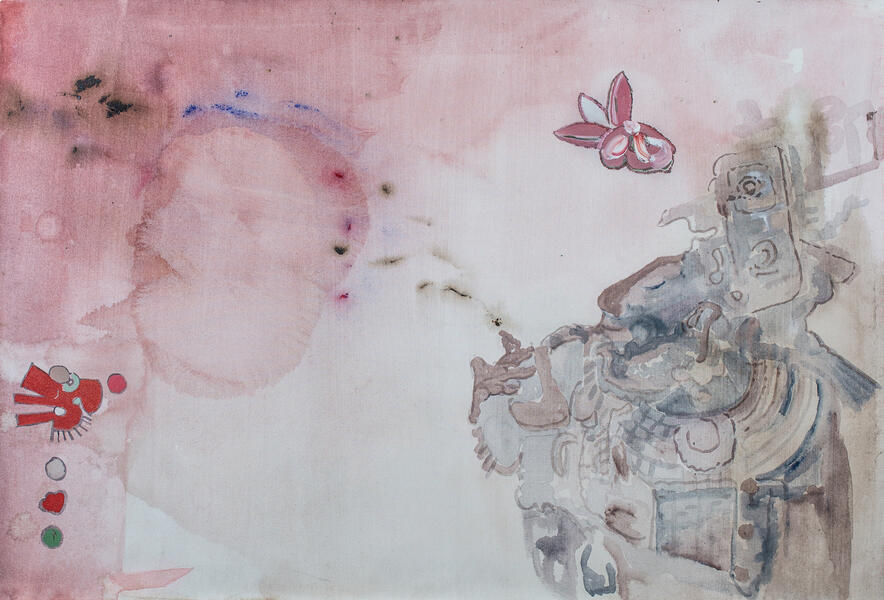 Sueño
SueñoAcrylic pigments on canvas, 48 x 32 inches, 2019
About Alfonso
Alfonso Fernandez is a visual artist whose work explores memory, identity, and historical rupture through the shifting space between abstraction and figuration. Born in Mexico City and based in Baltimore, his practice is rooted in Indigenous and Mexican heritage, personal experience as an immigrant, and a deep engagement with material as carrier of history and meaning.
Fernandez received his BFA in Painting and Printmaking from the University of… more
1968
-
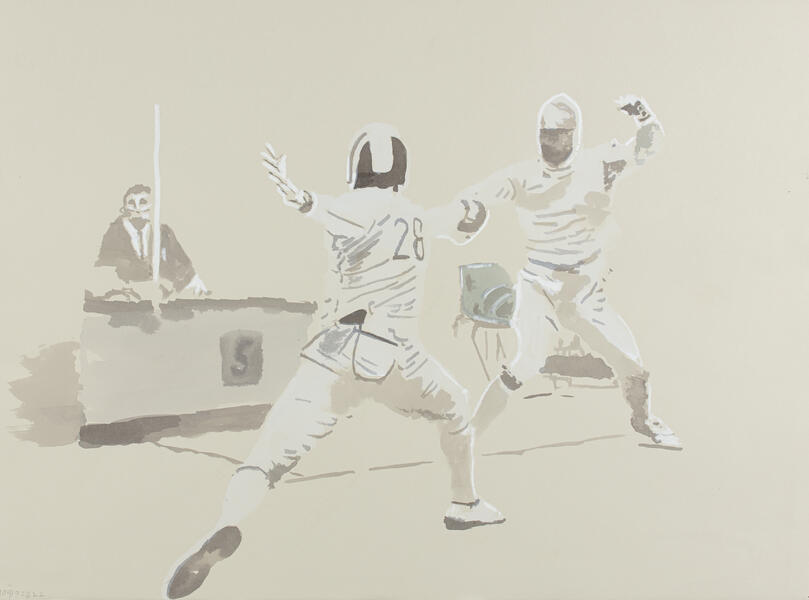 Talking
 -
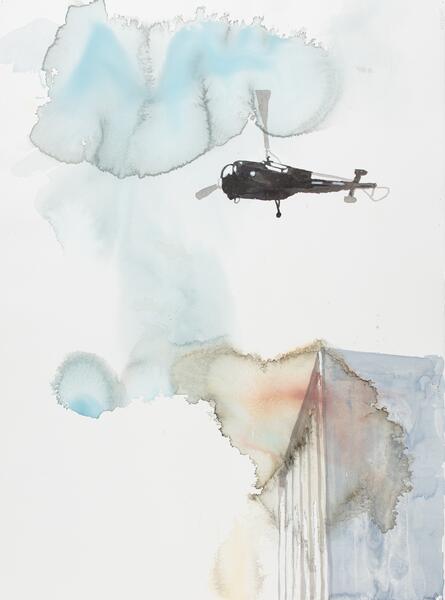 Birds of 68
 -
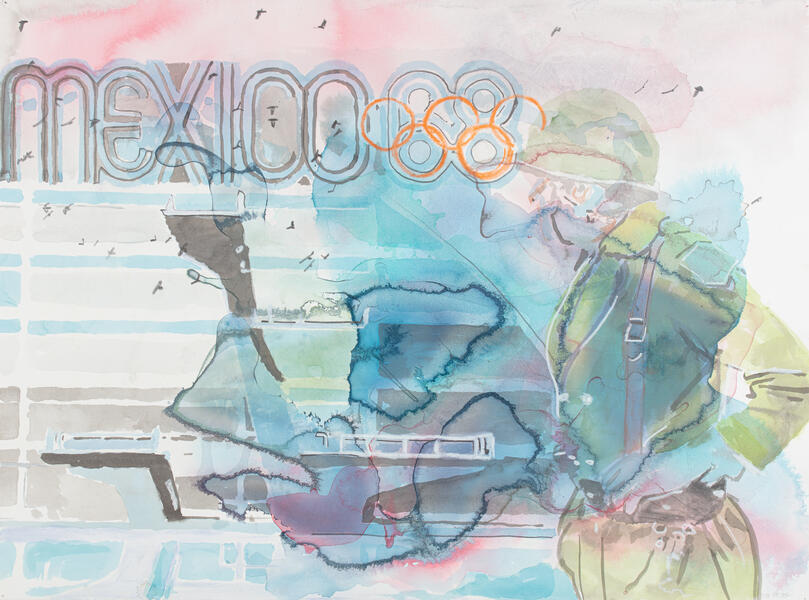 Diving 68
 -
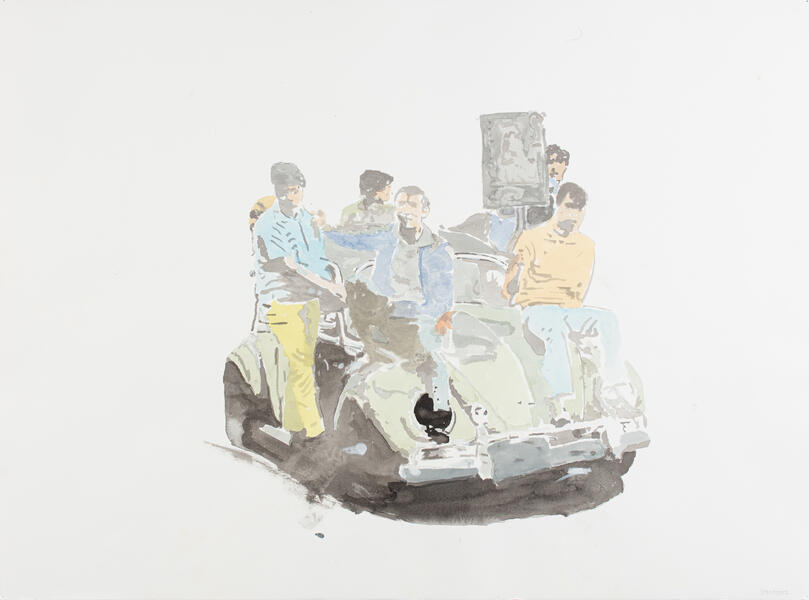 Remember Us
 -
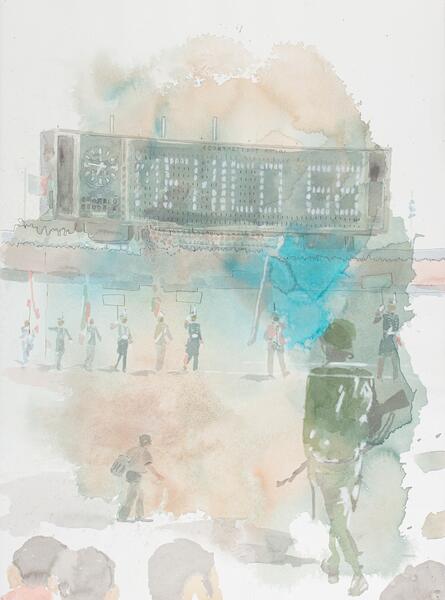 Mirrors
 -
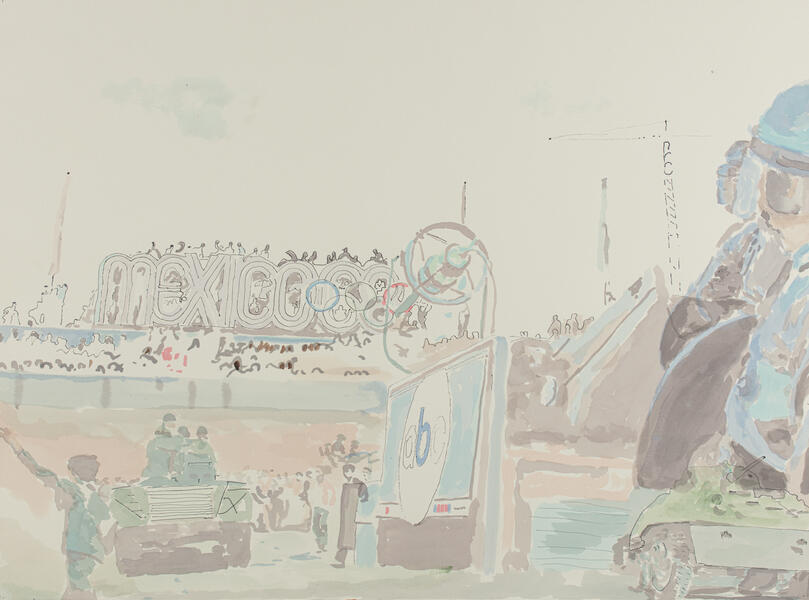 Our Games of 68
 -
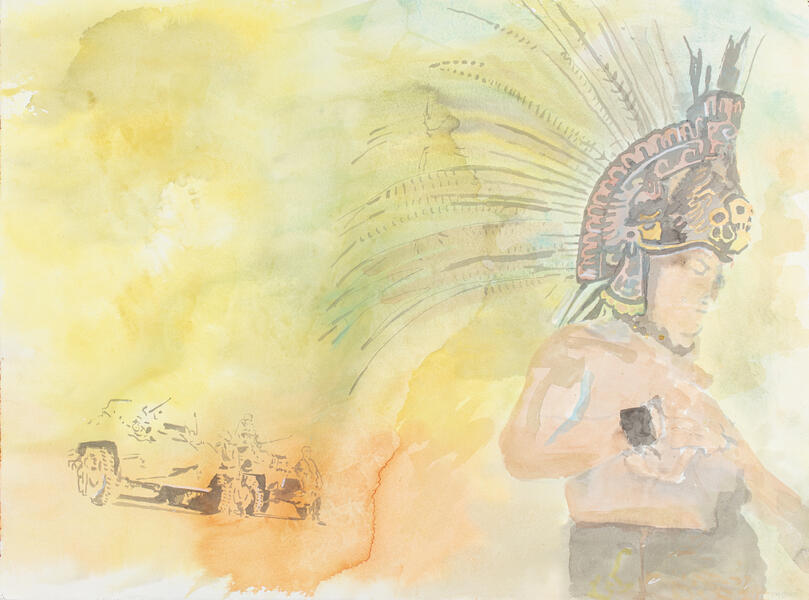 Untitled
 -
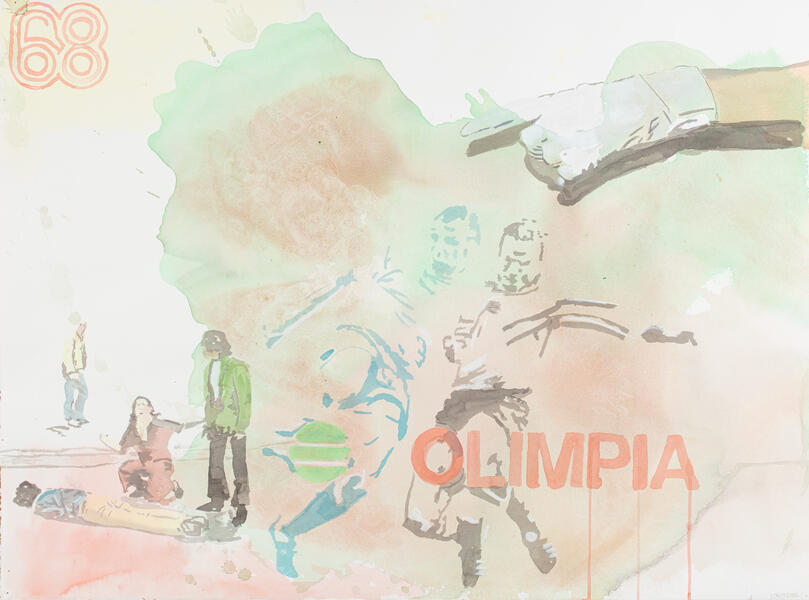 The Game of Our Lives
 -
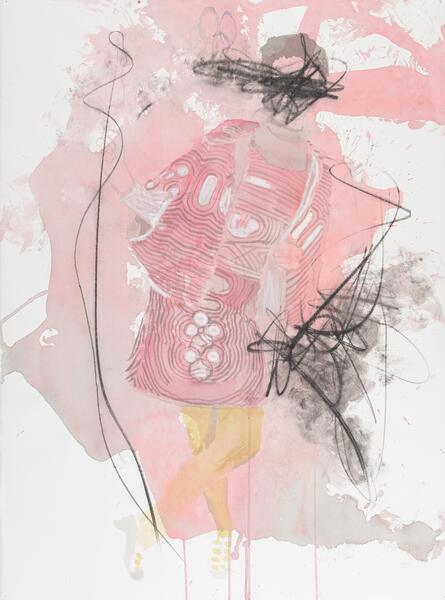 The Groundbreaking Design, 1968
 -
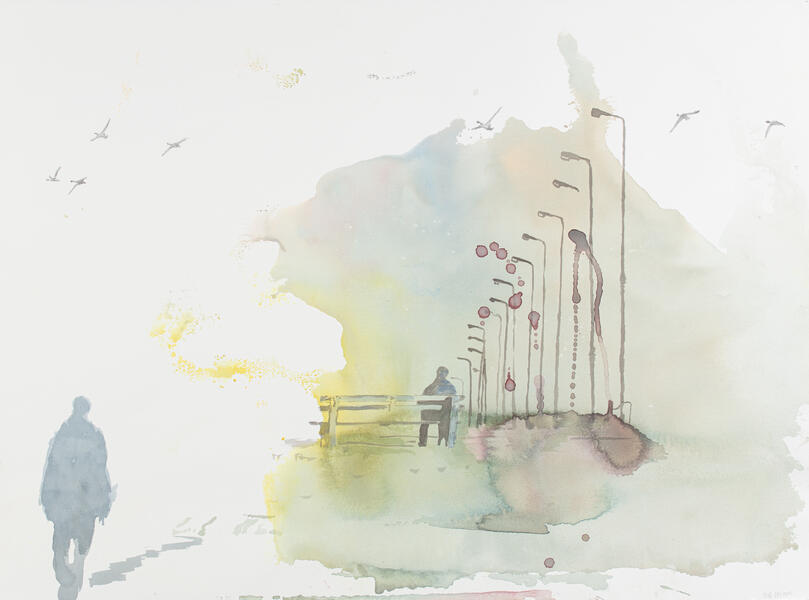 Sunday of 68


The Border
-
 Camouflage Under The Moonlight
 -
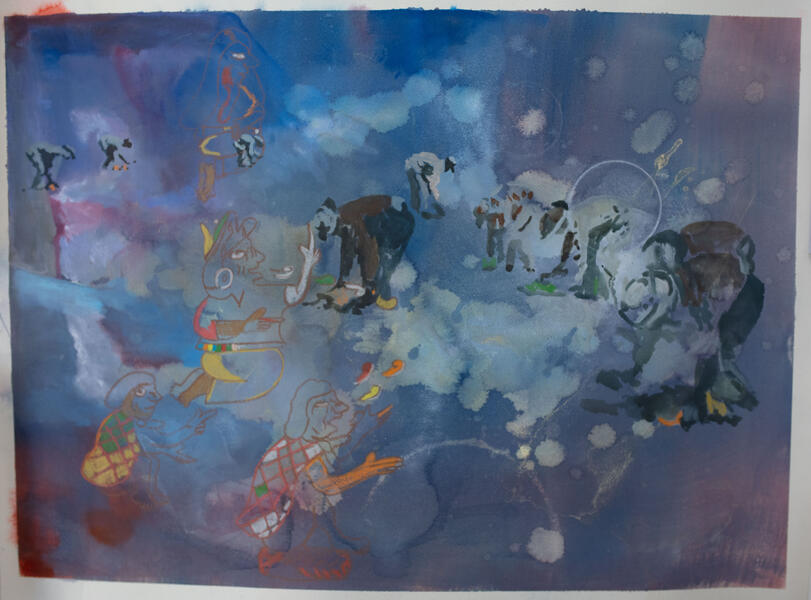 Untitled
 -
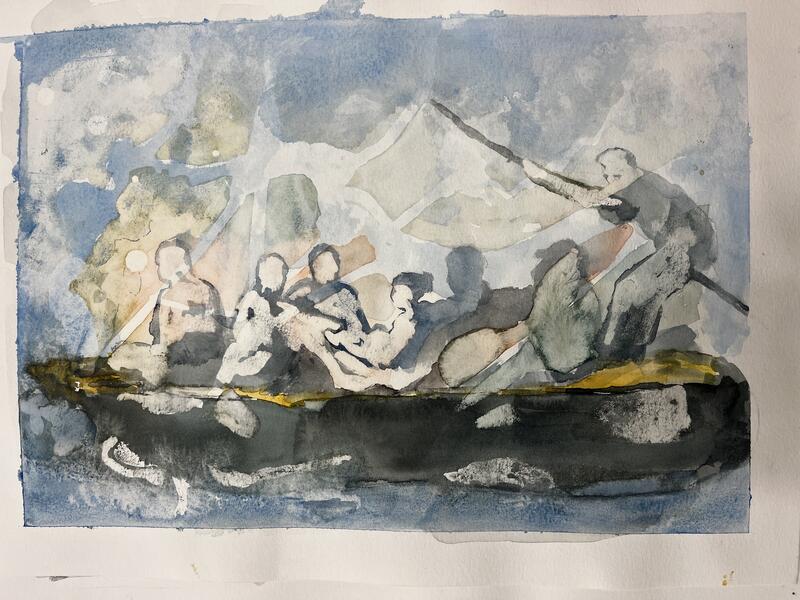 Those Who Arrived
 -
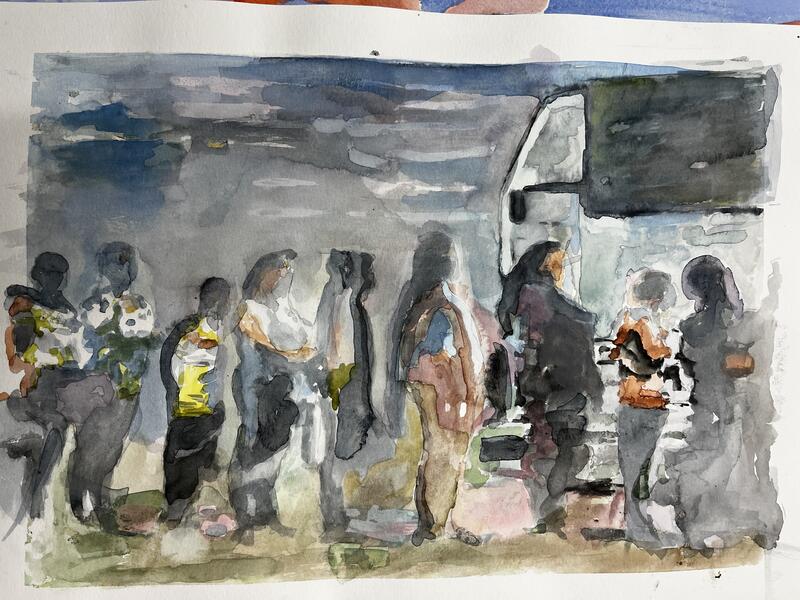 Arrive In Silence
 -
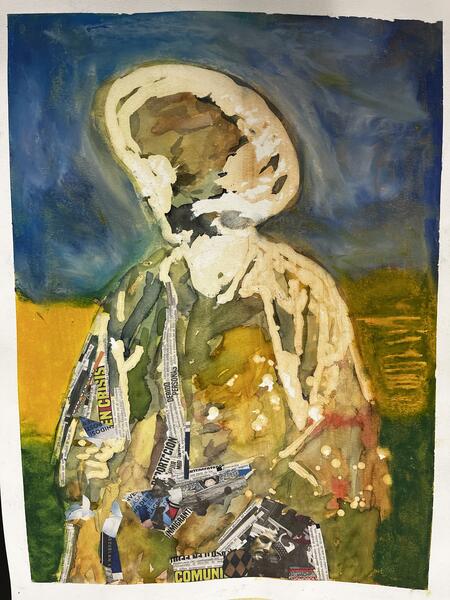 Abuelo
 -
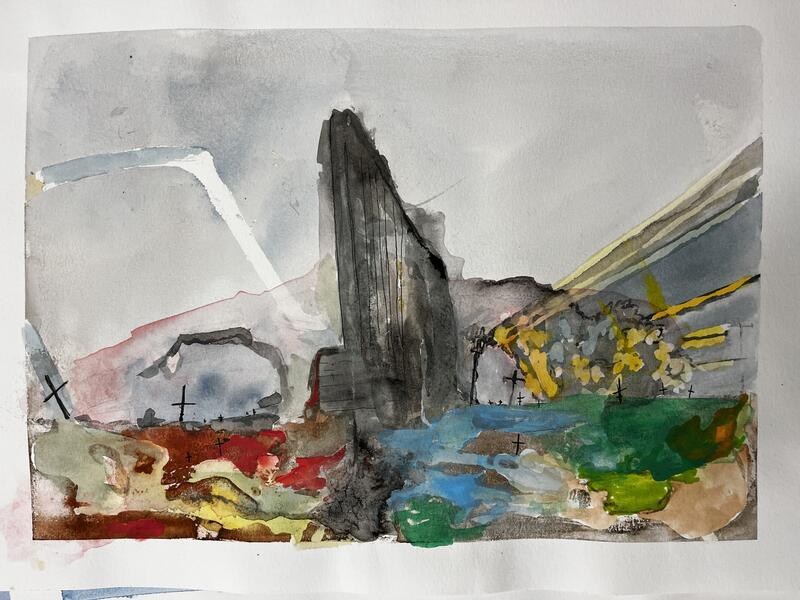 We Promised to Comeback
 -
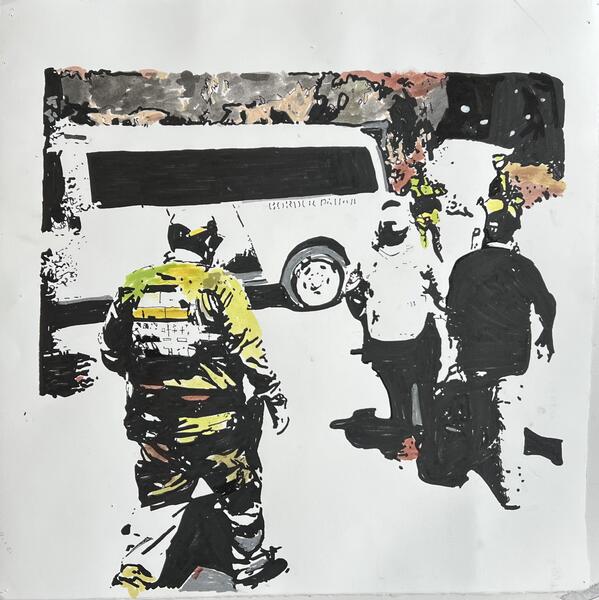 They Intended For Us To Retire
 -
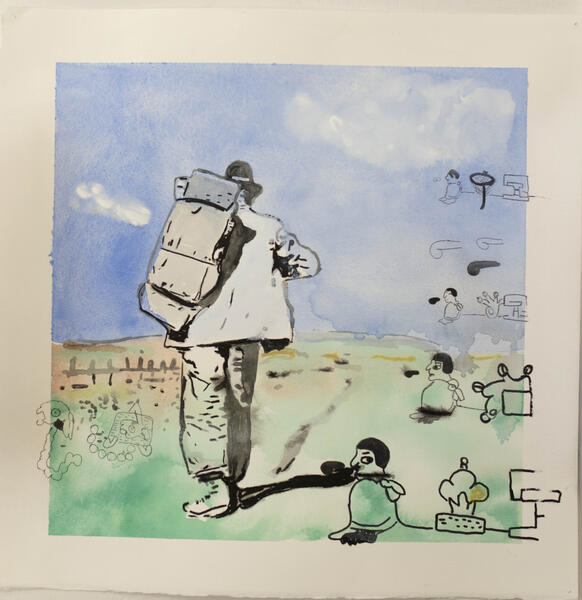 Pilgrimage of 1942
 -
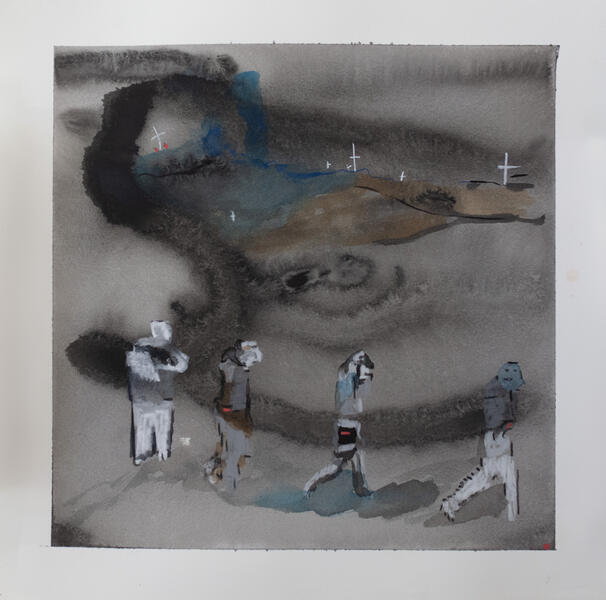 Surveillance of Phantasm


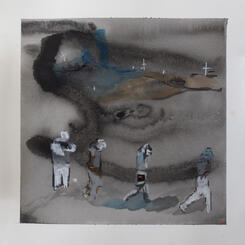
Machismo
-
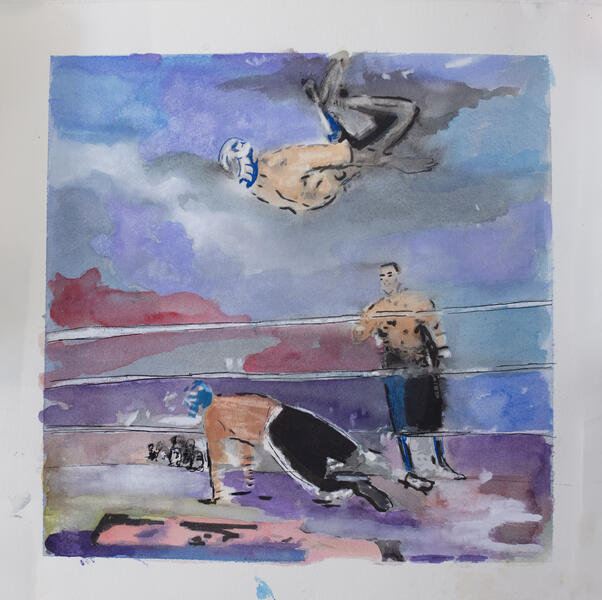 Untitled
 -
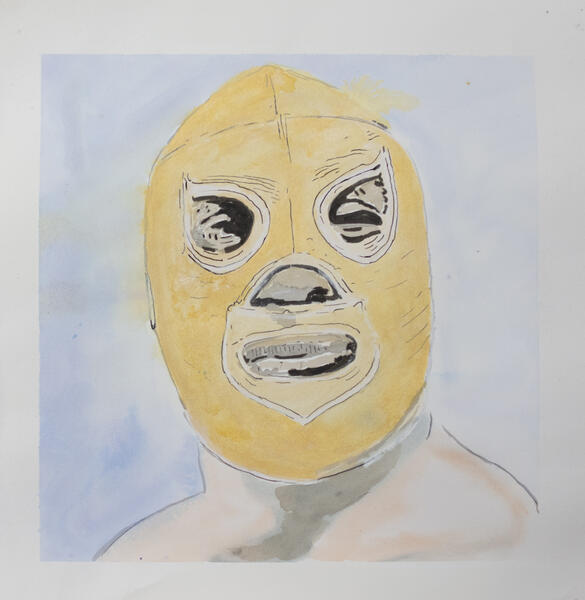 Idol
Idol -
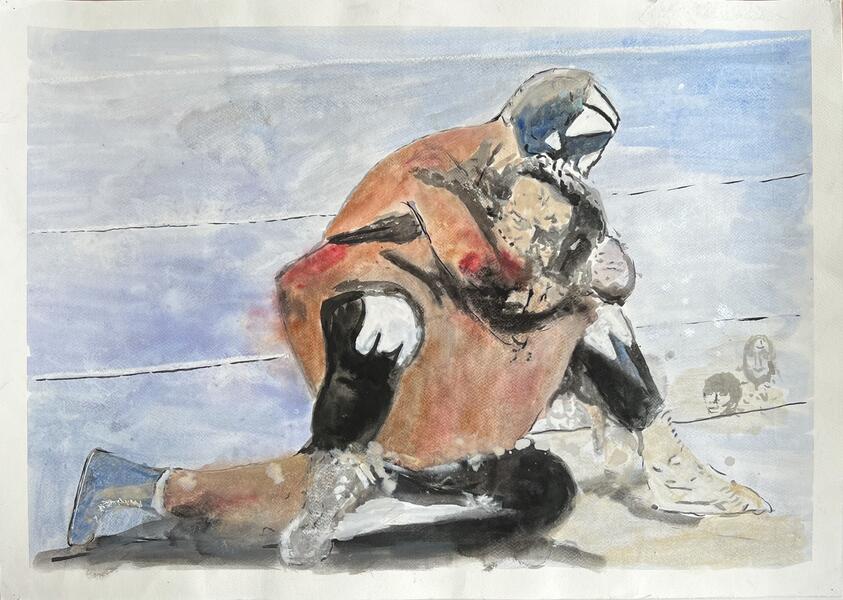 We Are In This Together
 -
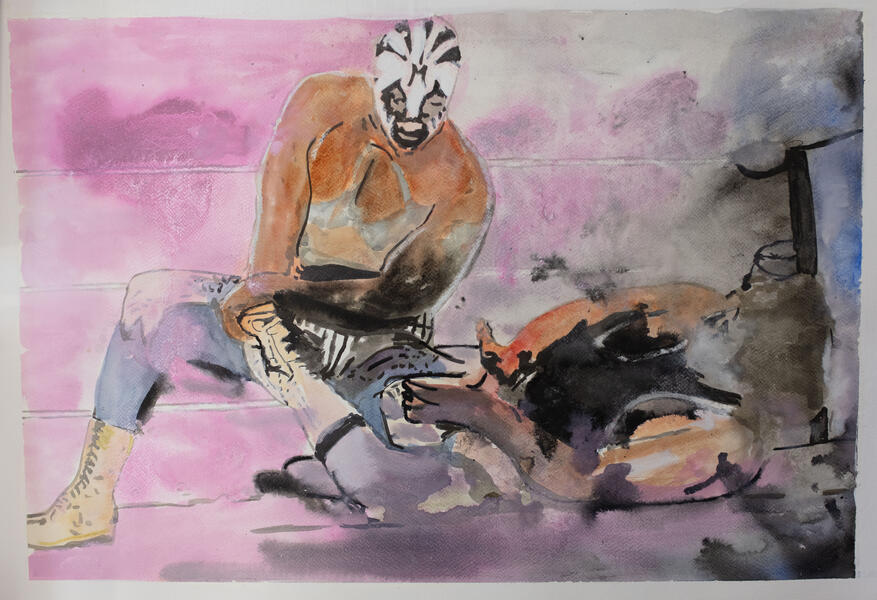 When We Come Together In Bed
 -
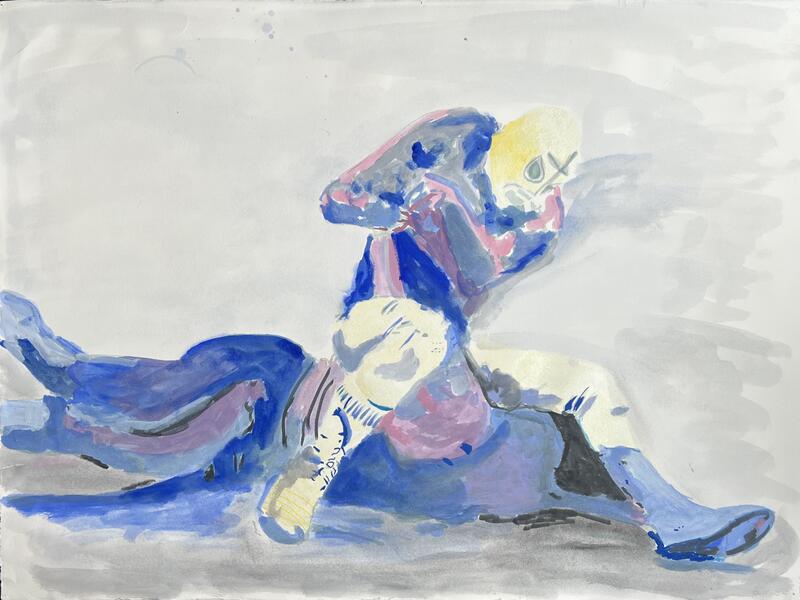 Would You Take My Hand


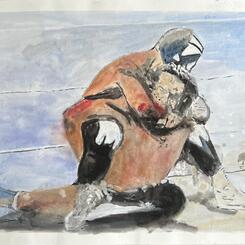
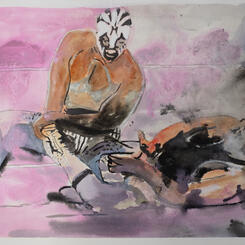
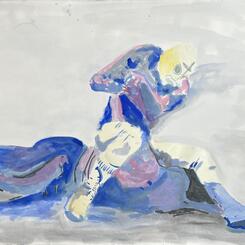
Reflexiones De Una Cultura
-
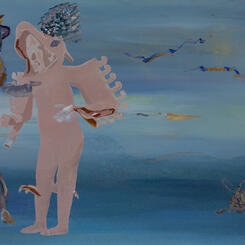
Sueño
Acrylic pigments on canvas, 48 x 32 inches, 2019
-
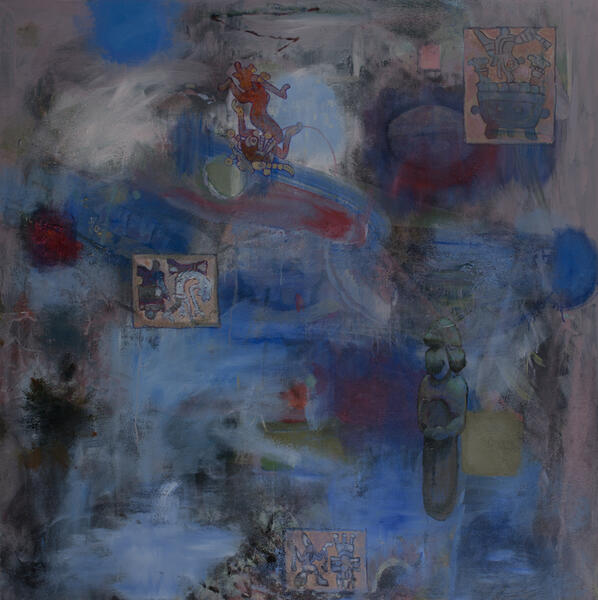 El Pozo
 -
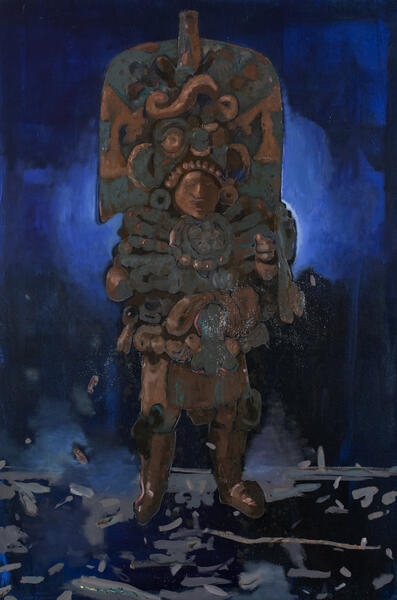 Guerrero
Acrylic pigments on canvas, 48 x 32 inches, 2019
-
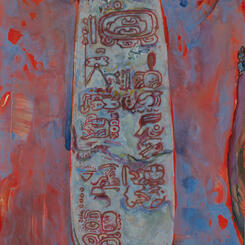
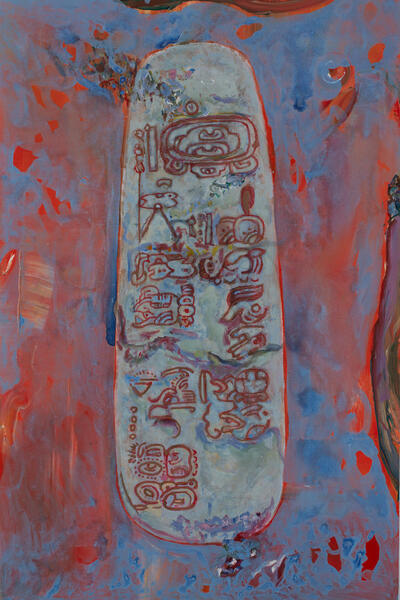 God’ Tablet
Acrylic pigments on canvas, 48 x 32 inches, 2019
-
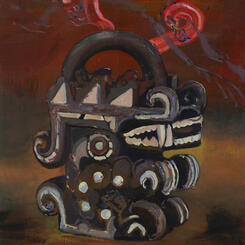
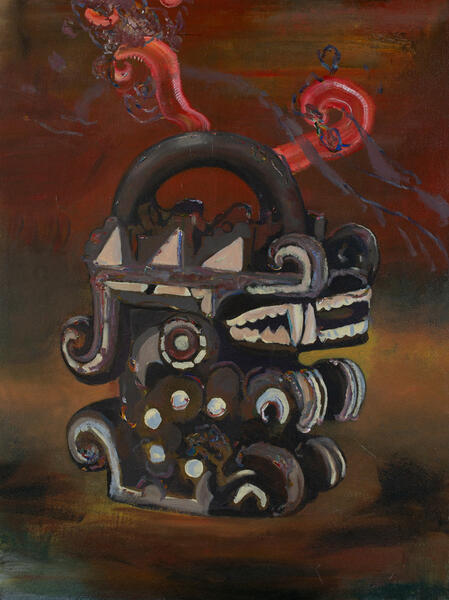 Ocelot
Acrylic pigments on canvas, 30 x 40 inches, 2019
-
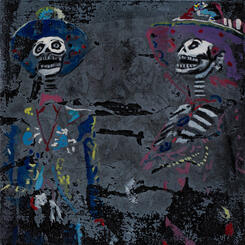
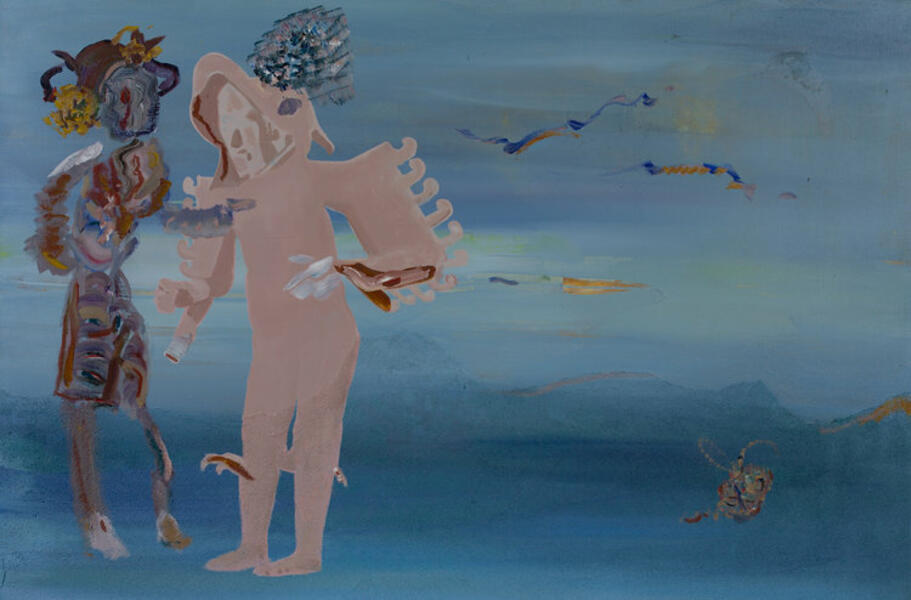 Los Bailarines
Acrylic pigments on canvas, 48 x 32 Inches, 2019
-
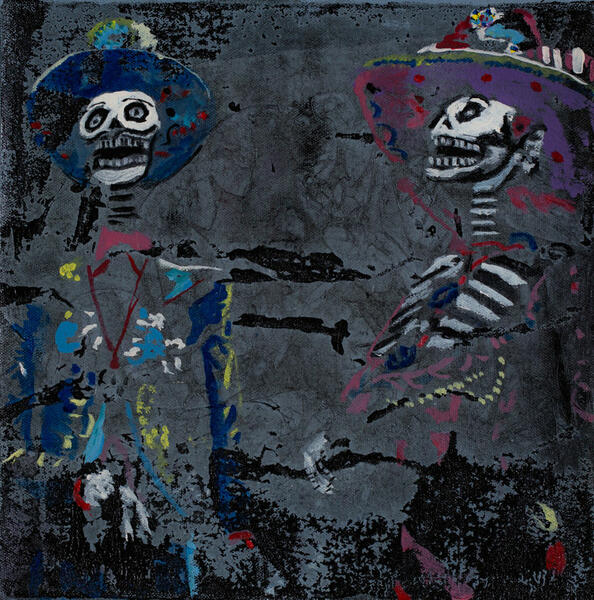 Los Enamorados
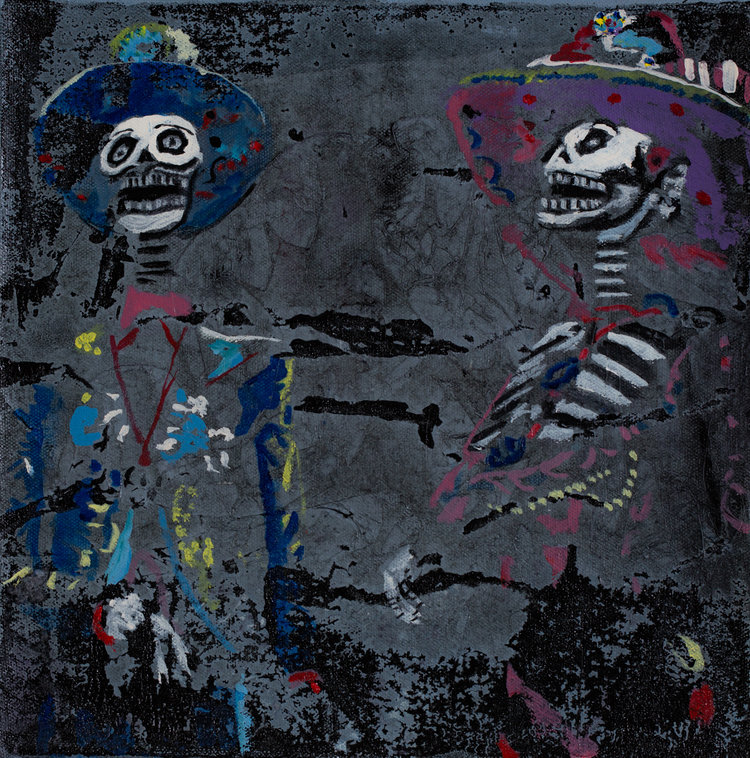
Acrylic pigments on panel, 10 x 10 inches, 2019
-
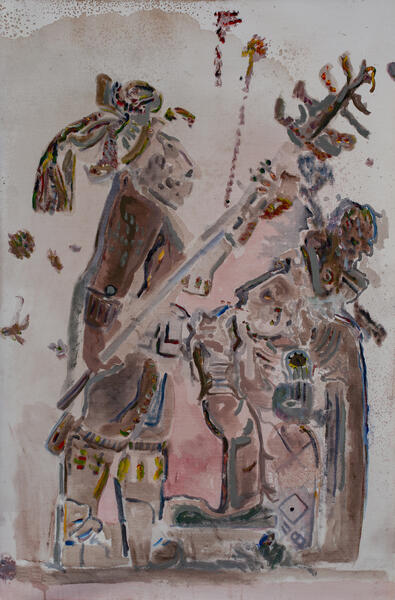 El Mural
 -
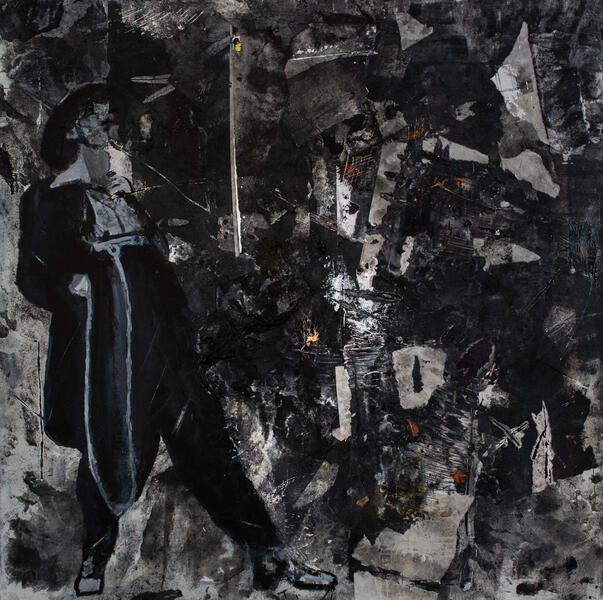 El Suave
 -
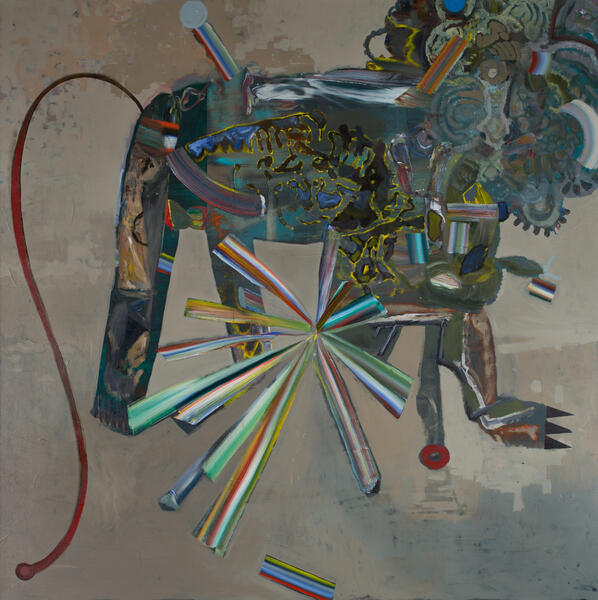 Mixcoatl

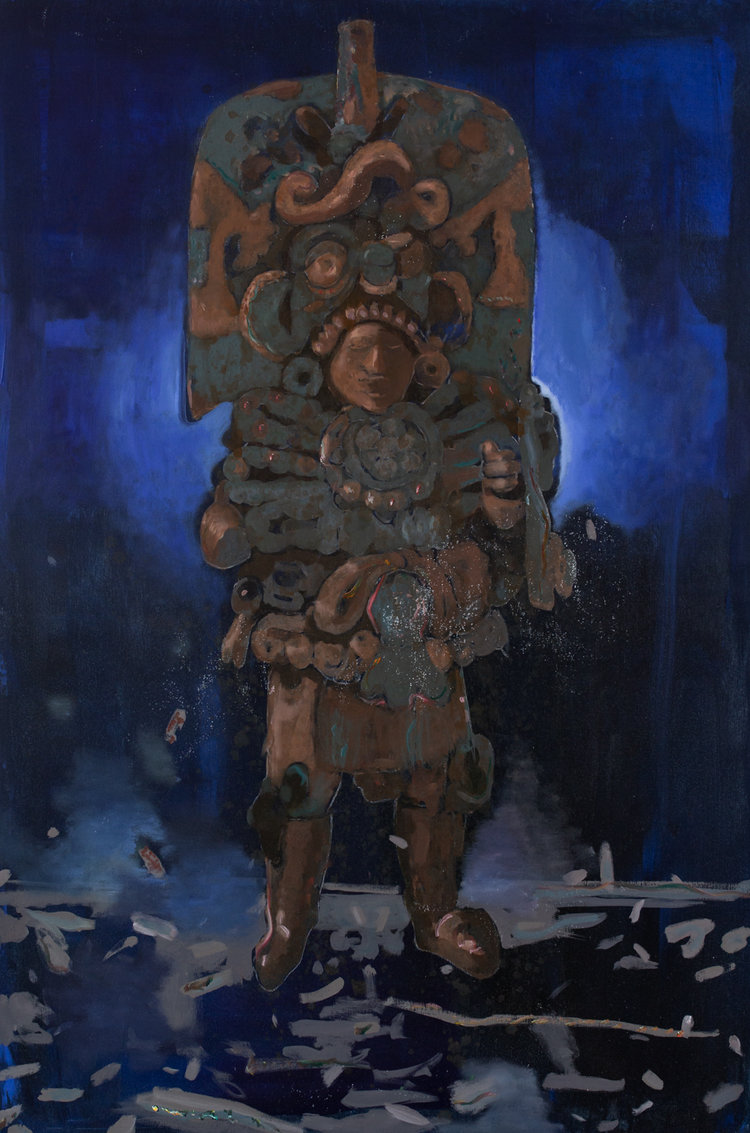
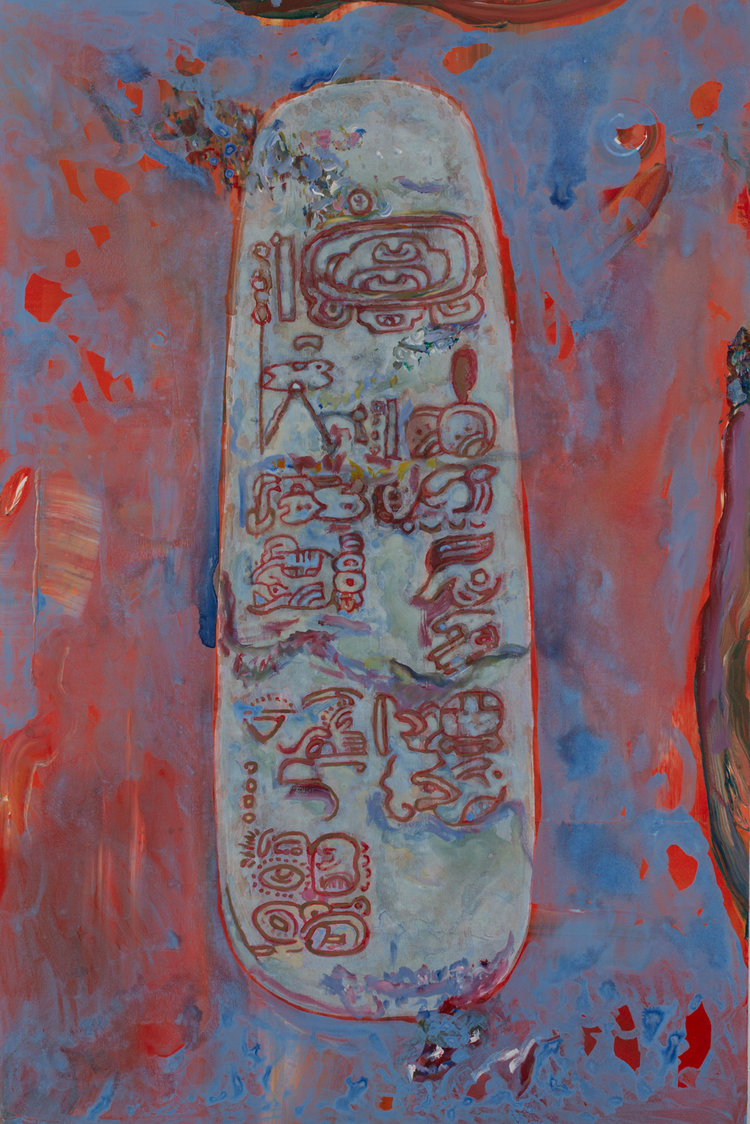
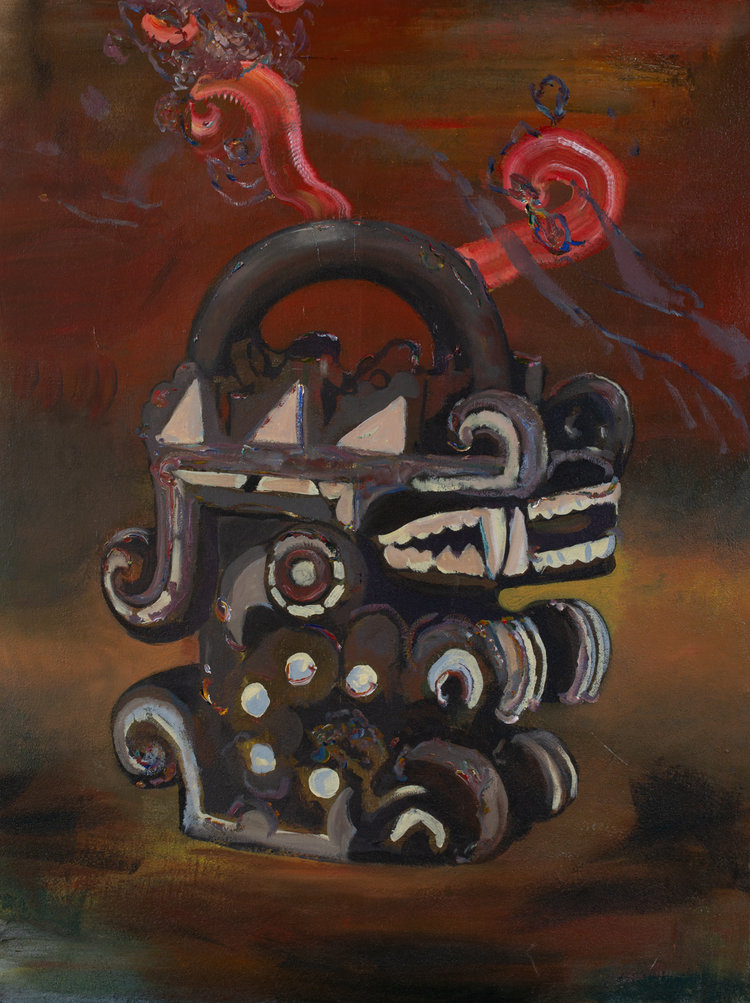
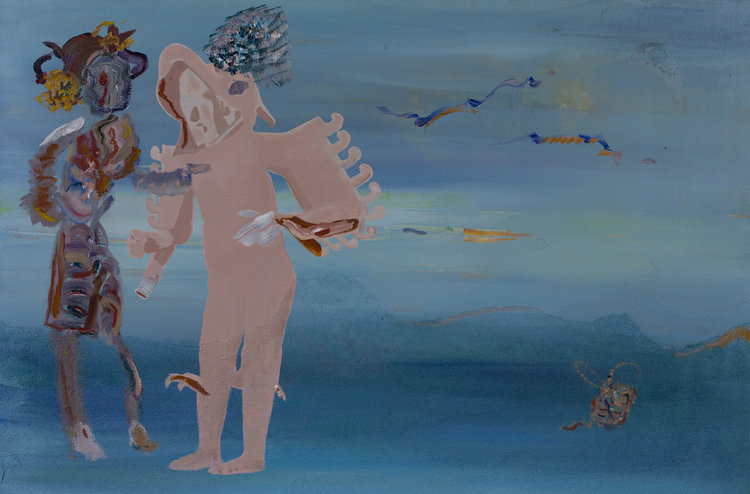


Entranced
-
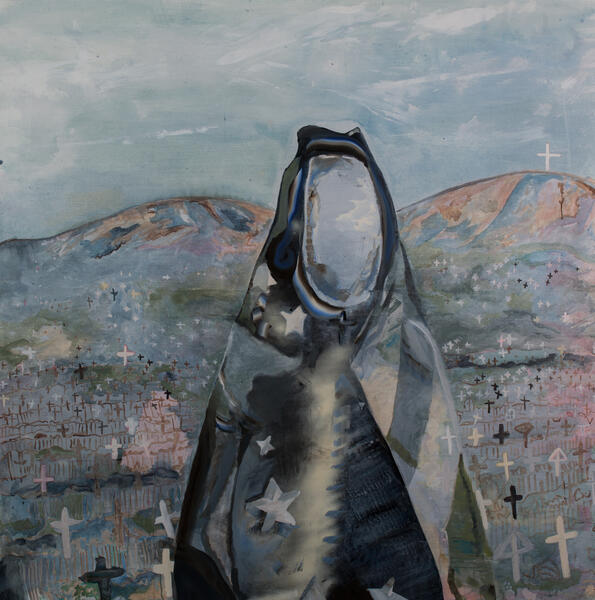 All of Those That Made It
Acrylic pigments on canvas, 72 x 72 inches, 2018
"All of those that made it" stands as a somber reflection within the series "Entranced", providing a commentary on the intersection of US politics and the life-and-death consequences faced by immigrants, particularly under the lens of the Trump administration.
The canvas features a faceless figure draped in the American flag, paradoxically symbolizing both the aspiration for the American dream and the harsh reality of its politicized decisions.
The rows and hills of crosses, resembling a cemetery, starkly illustrate the human cost of policy decisions made callously, often driven by ignorance or indifference to the plight of immigrants from South and Central America. Each cross represents a life lost or irrevocably altered, a consequence of decisions made in the name of politics.
The faceless figure draped in the American flag symbolizes the dehumanization of those affected by these policies, emphasizing the disconnection between the political rhetoric and the human toll. The flag, traditionally a symbol of freedom and unity, becomes a stark reminder of the contradictions within the political landscape.
"All of those that made it" serves as a powerful visual critique, urging viewers to confront the consequences of political decisions that impact lives so profoundly. Through this piece, the intention is to prompt reflection on the need for empathy, awareness, and a reevaluation of policies that carry life-and-death implications for those seeking refuge and a better life on American soil.
-
The Wall
Acrylic pigments on canvas, 72 x 72 inches, 2018
The Wall emerges as a depiction of societal suffering, and the profound weight of oppression experienced amidst the turmoil in my newfound home of Baltimore. The canvas captures a visceral response to the city engulfed in flames, unveiling the depths of discrimination against people of color, an intensity I had never encountered before. As chaos ensued, those with the means fled, leaving the others behind to pick up the shattered fragments. The city then fell under emergency lockdown, compounding the already overwhelming sense of isolation and despair.
The figures portrayed within this piece appear as if melting into a lagoon of tears–a metaphor for the heavy burden of sorrow and the relentless weight of underpaid labor. They are hunkered down, stayed by an oppressive system, struggling to survive beneath the weight of societal injustice. A profound separation between two distinct classes is evident. The working class submerged in their toils and the imposing presence of law enforcement as an unmoving concrete wall, serving as a stark representation of the systematic divisions perpetrated within our society.
The canvas’ genesis is in witnessing Baltimore’s turmoil firsthand; the city ablaze, revealing the depth of oppression once again faced by people of color. The genesis behind this artwork is the pervasive detachment witnessed within society, a disconnection from genuine human connections, a scarcity of both empathy and sympathy among us. It reflects our collective detachment, urging our introspection.
The Wall serves as a mirror, reflecting the disparity and anguish experienced by marginalized communities -- seen in the painting through the removal of the figures' faces, while also calling for a reckoning. It implores viewers to confront the layers of societal constructs, empathize with the suffering depicted, and unite in dismantling the oppressive walls that perpetuate division and sorrow.
-
Hunted
Acrylic pigments on canvas, 48 x 32 inches, 2019
-
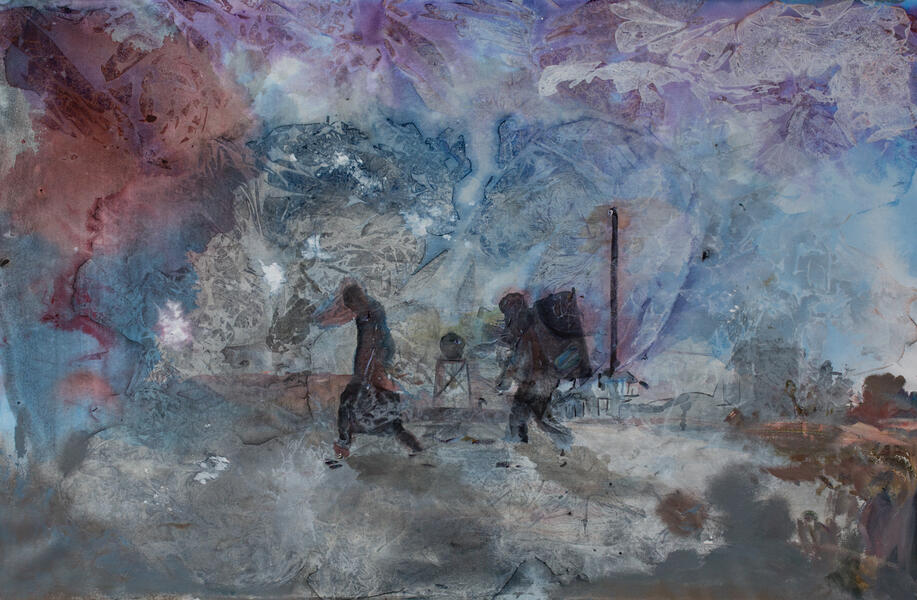 During the Night
Acrylic pigments on canvas, 48 x 32 inches, 2019
-
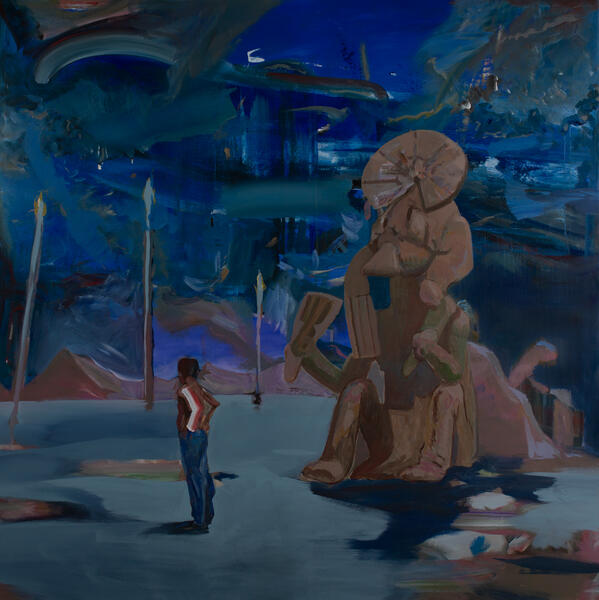 Luna Llena
Acrylic pigments on canvas, 72 x 72 inches, 2018
-
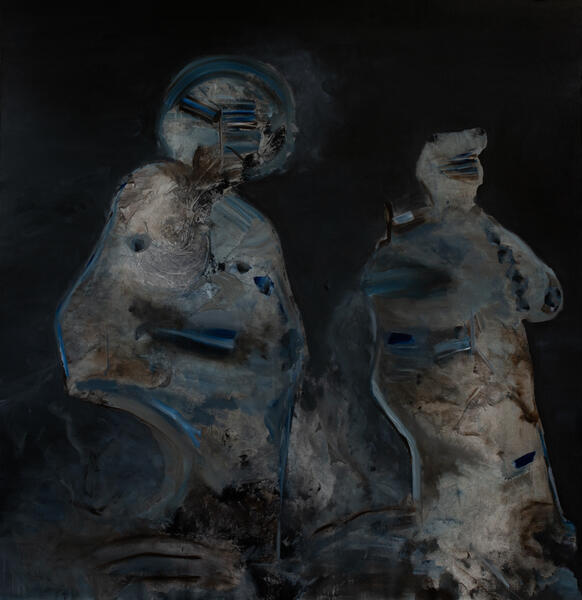 Perceiving
Acrylic pigments on canvas, 62 x 62 inches, 2019
-
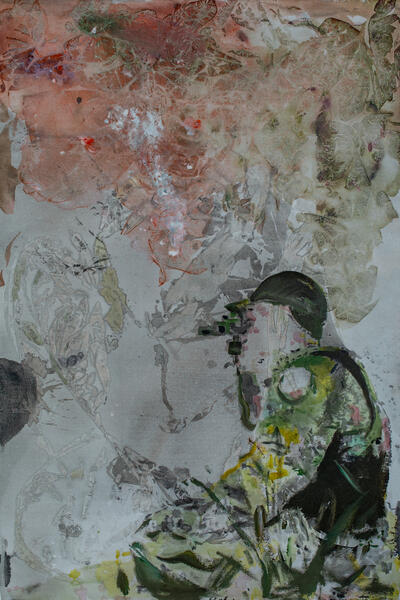 Cover
Cover -
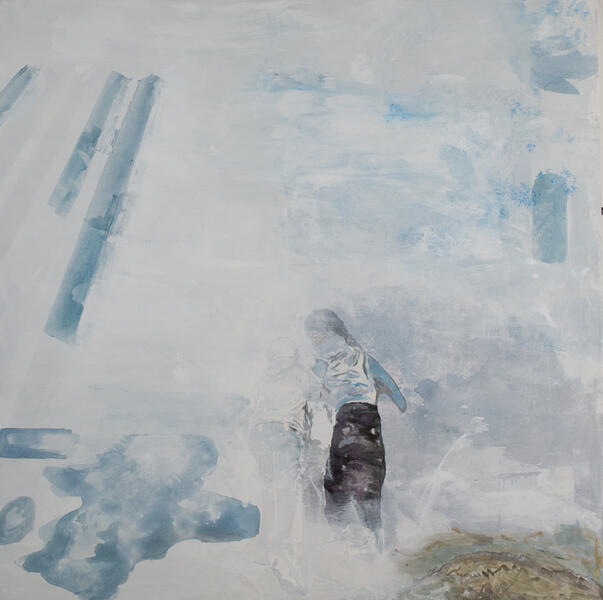 Dream of the Border
Acrylic pigments on canvas, 72 x 72 inches, 2019
-
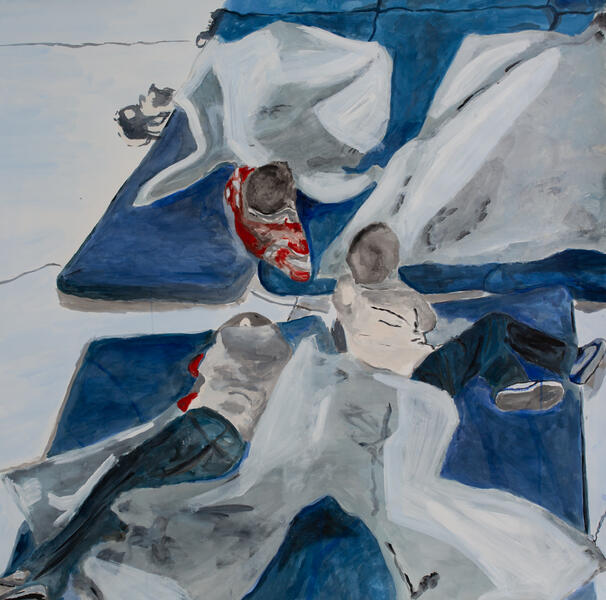 Dreaming
Acrylic pigments on Bfk paper, 48 x 48 inches, 2019
-
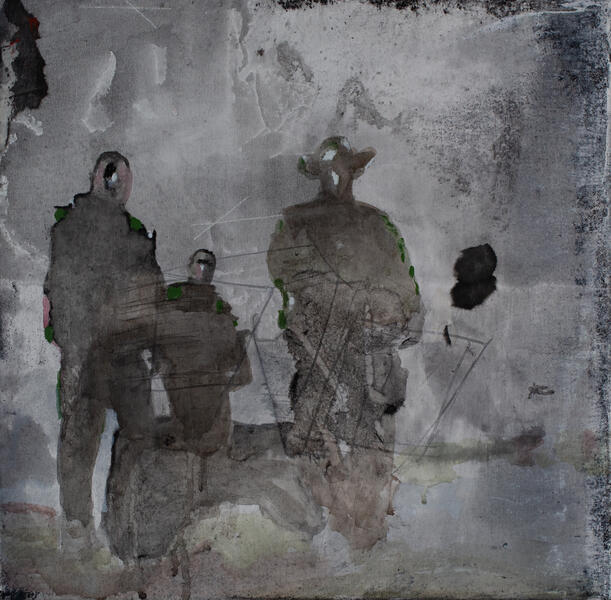 Looking
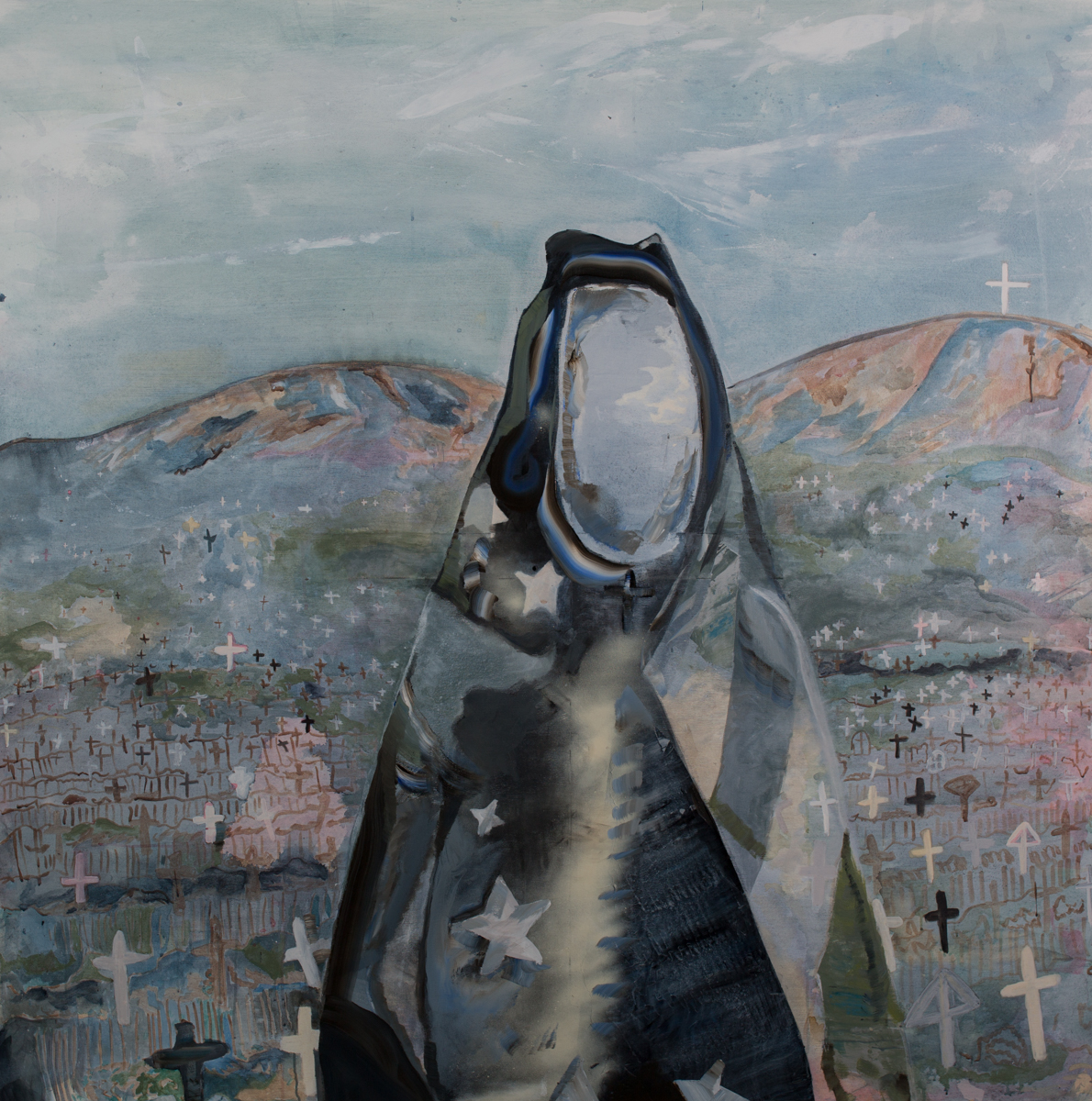


Fathom
-
 Come With Me, I said ,and No One Knew
Mixed media and acrylic pigment on canvas, 48 x 32 inches, 2017
-
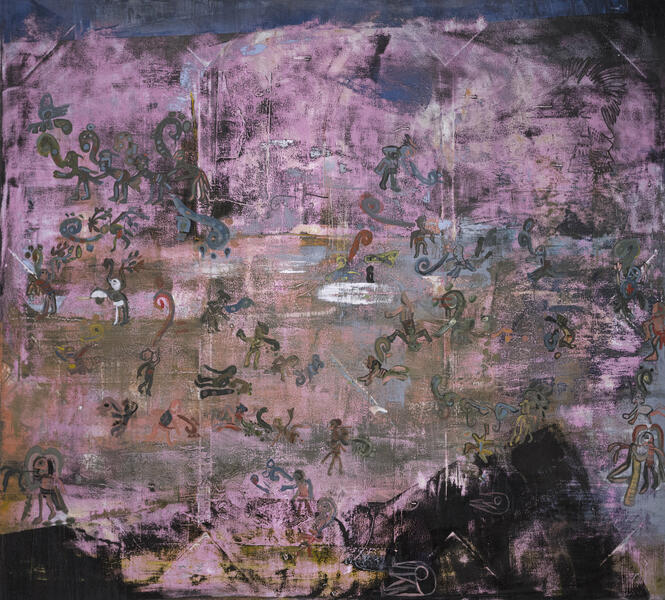 The Last Mural of My Memories
Mixed media and acrylic pigment on canvas, 80 x 90 inches, 2017
-
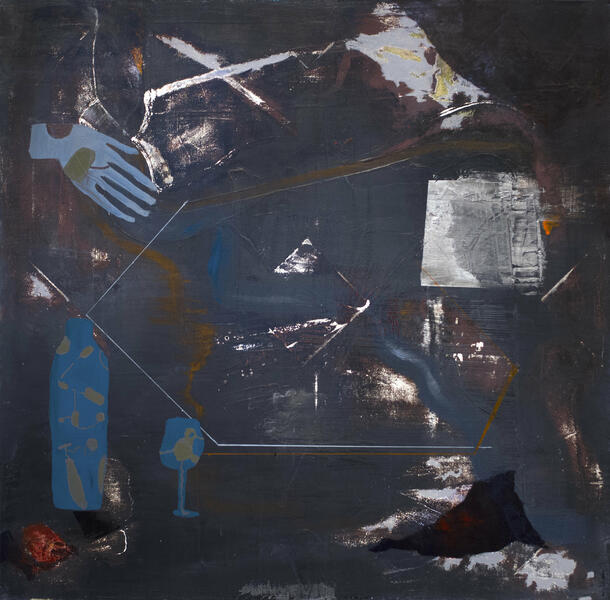 The Simple Things
Mixed media and acrylic pigment on canvas, 48 x 48 inches, 2017
-
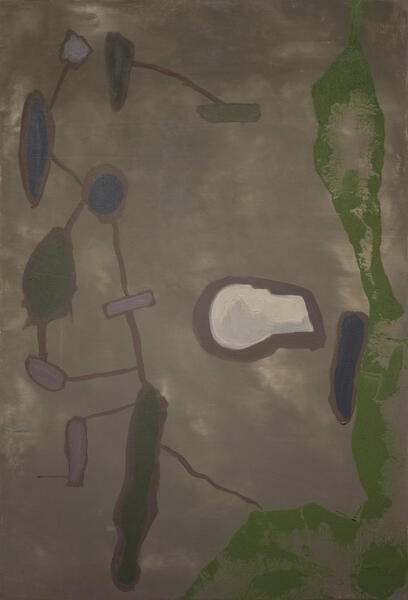 Enigma with Flowers
Mixed media and acrylic pigment on canvas, 48 x 32 inches, 2017
-
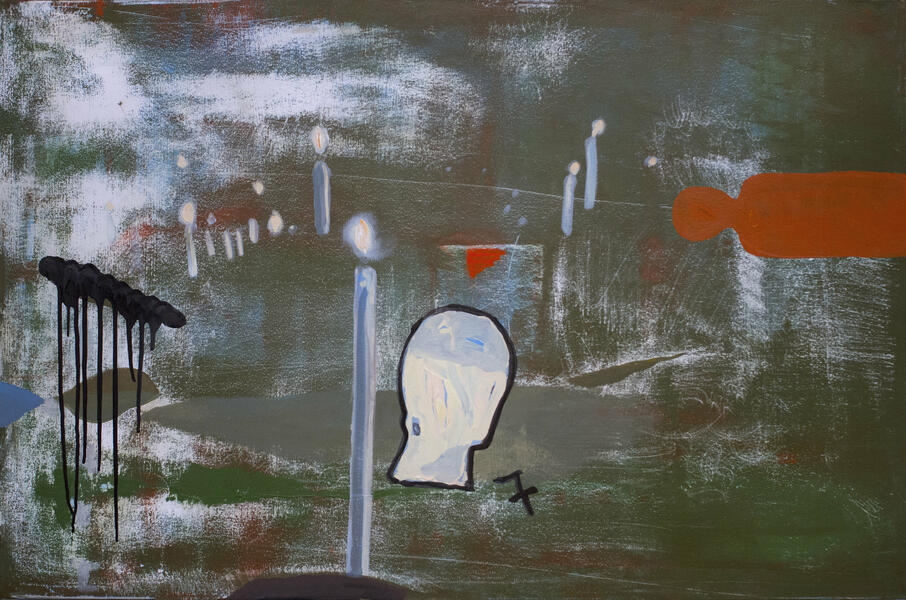 Goodbye From Us
Mixed media and acrylic pigment on canvas, 48 x 32 inches, 2017
-
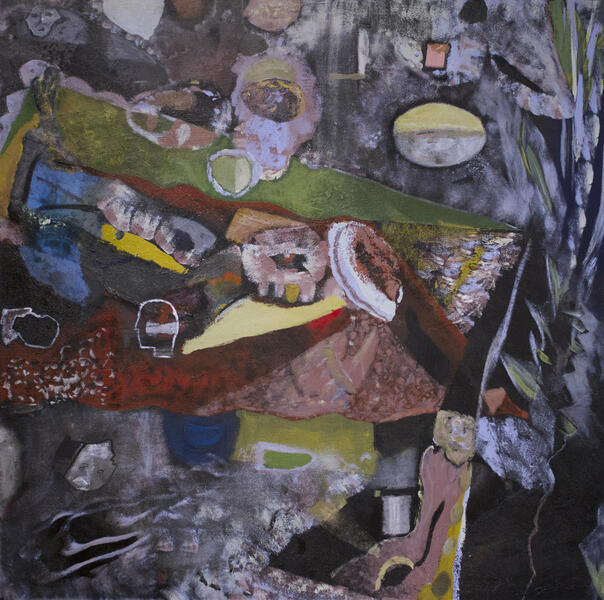 The Violent Season
Mixed media and acrylic pigment on canvas, 62 x 62 inches, 2017
-
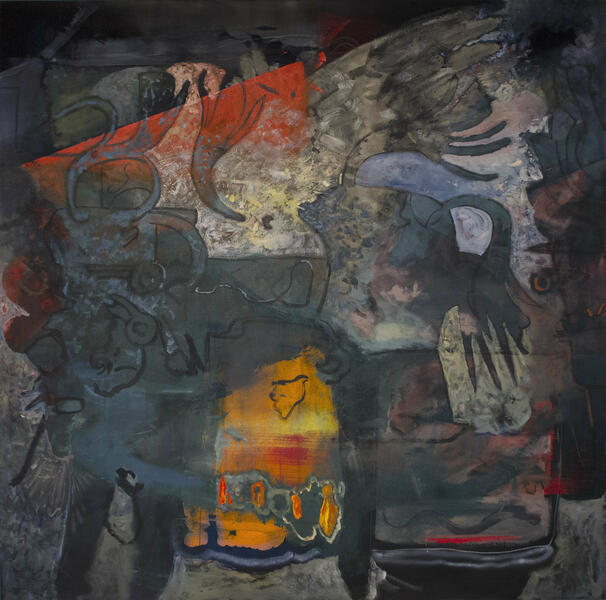 The Last Quetzalhuitzilin In My Mind
Mixed media and acrylic pigment on canvas, 72 x 72 inches, 2017
-
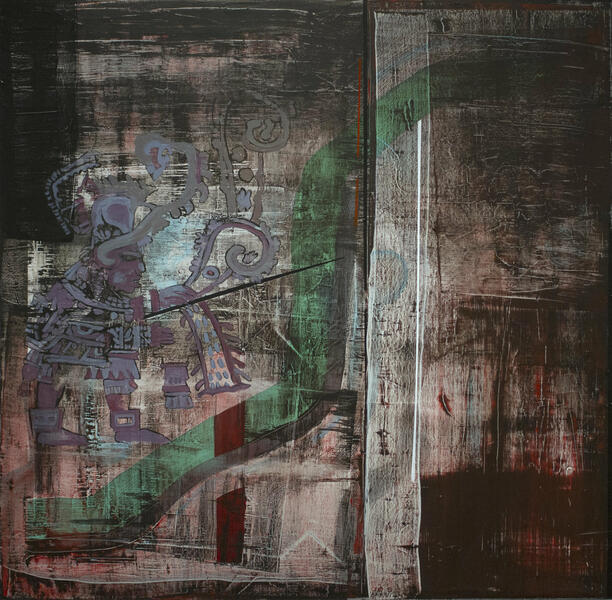 Forgotten Heritage
Mixed media and acrylic pigment on canvas, 48 x 48 inches, 2017
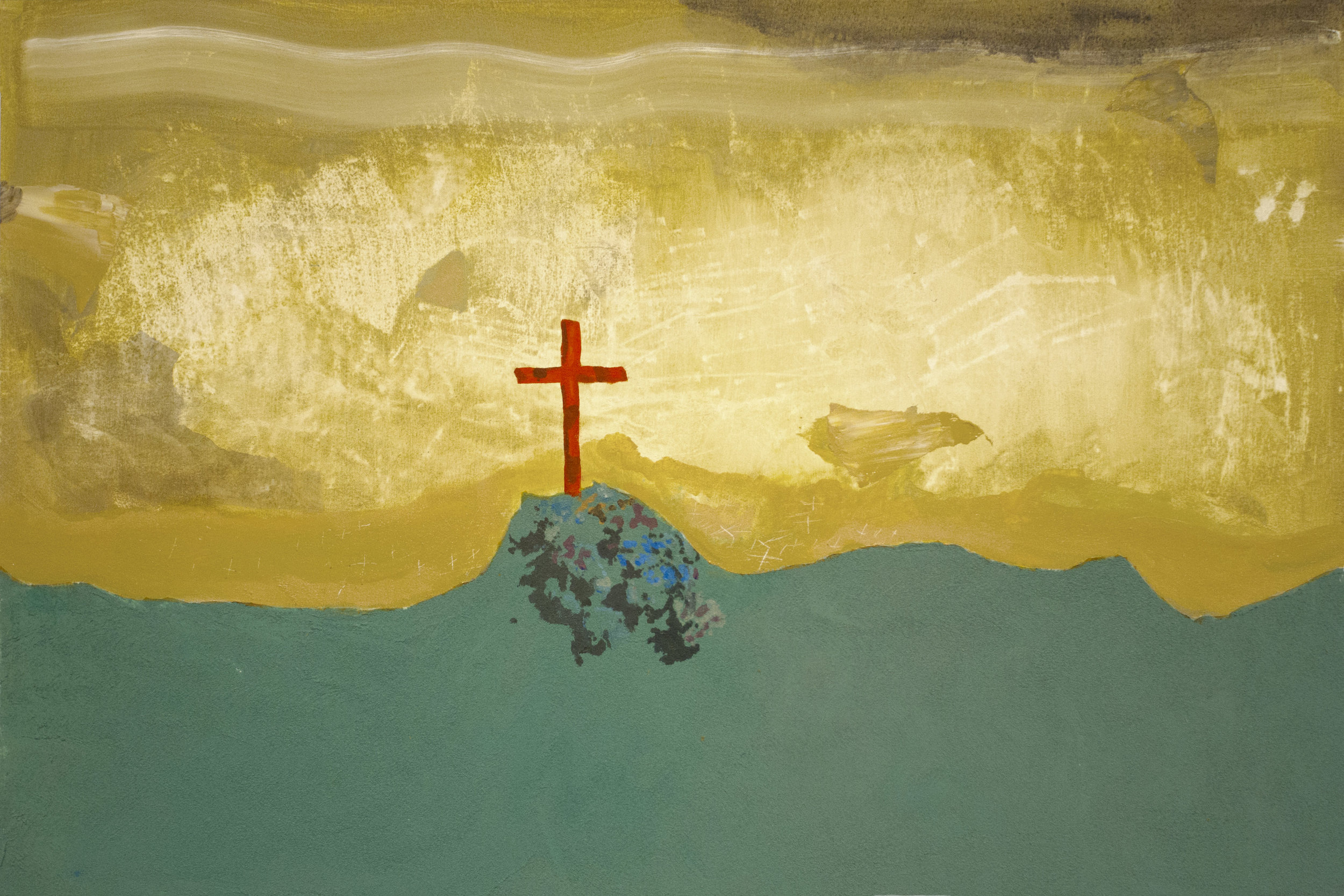
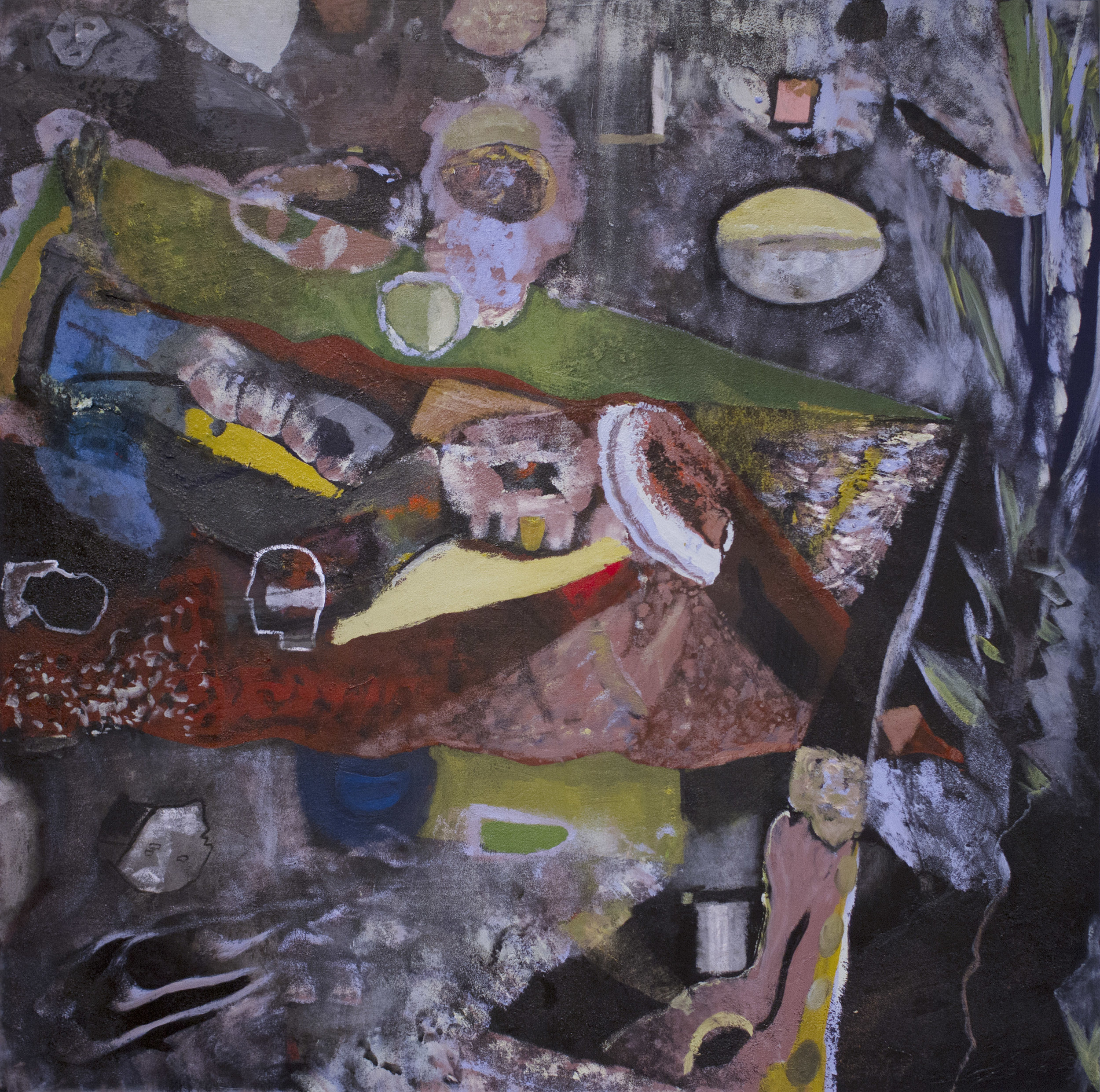
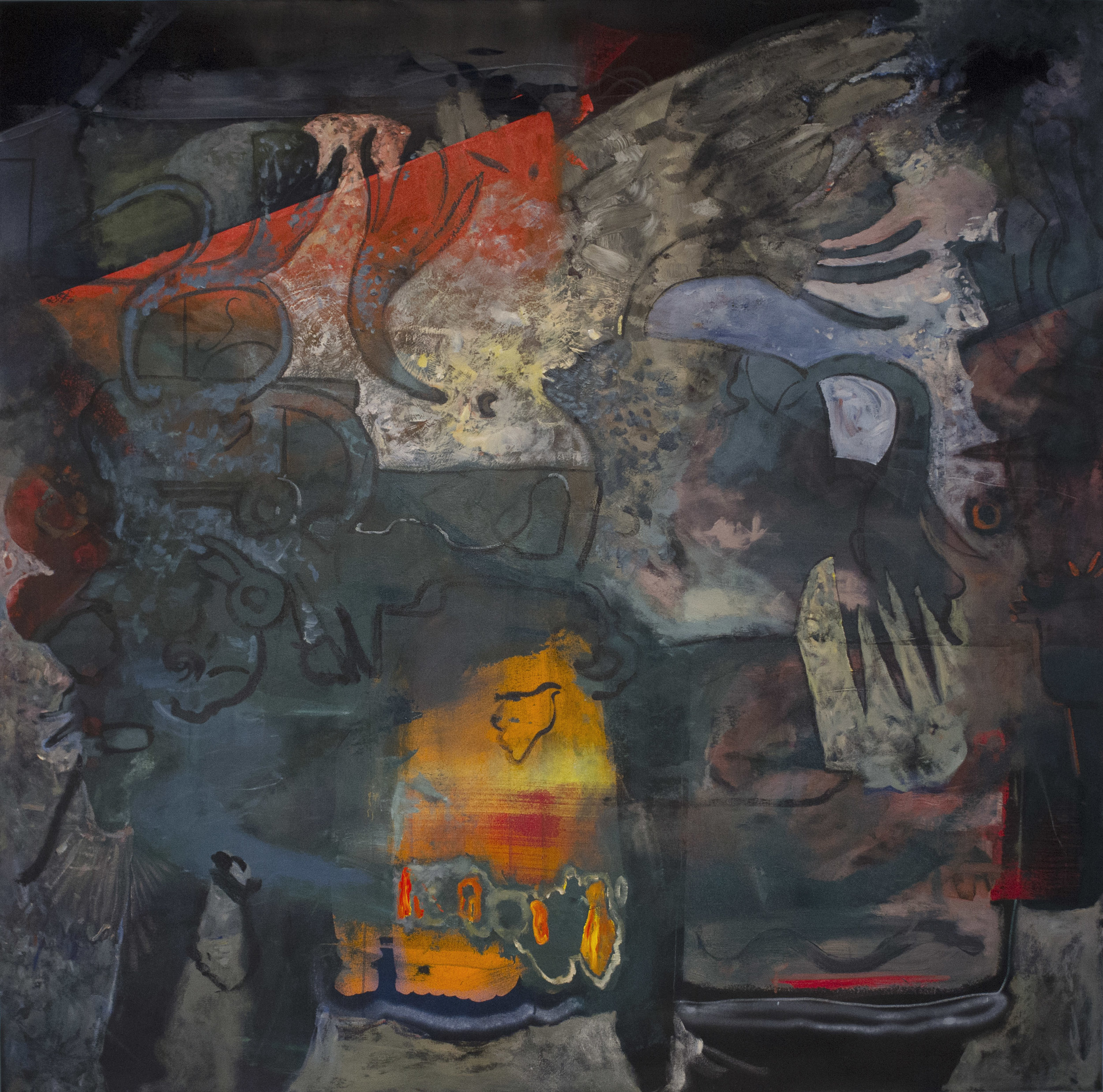
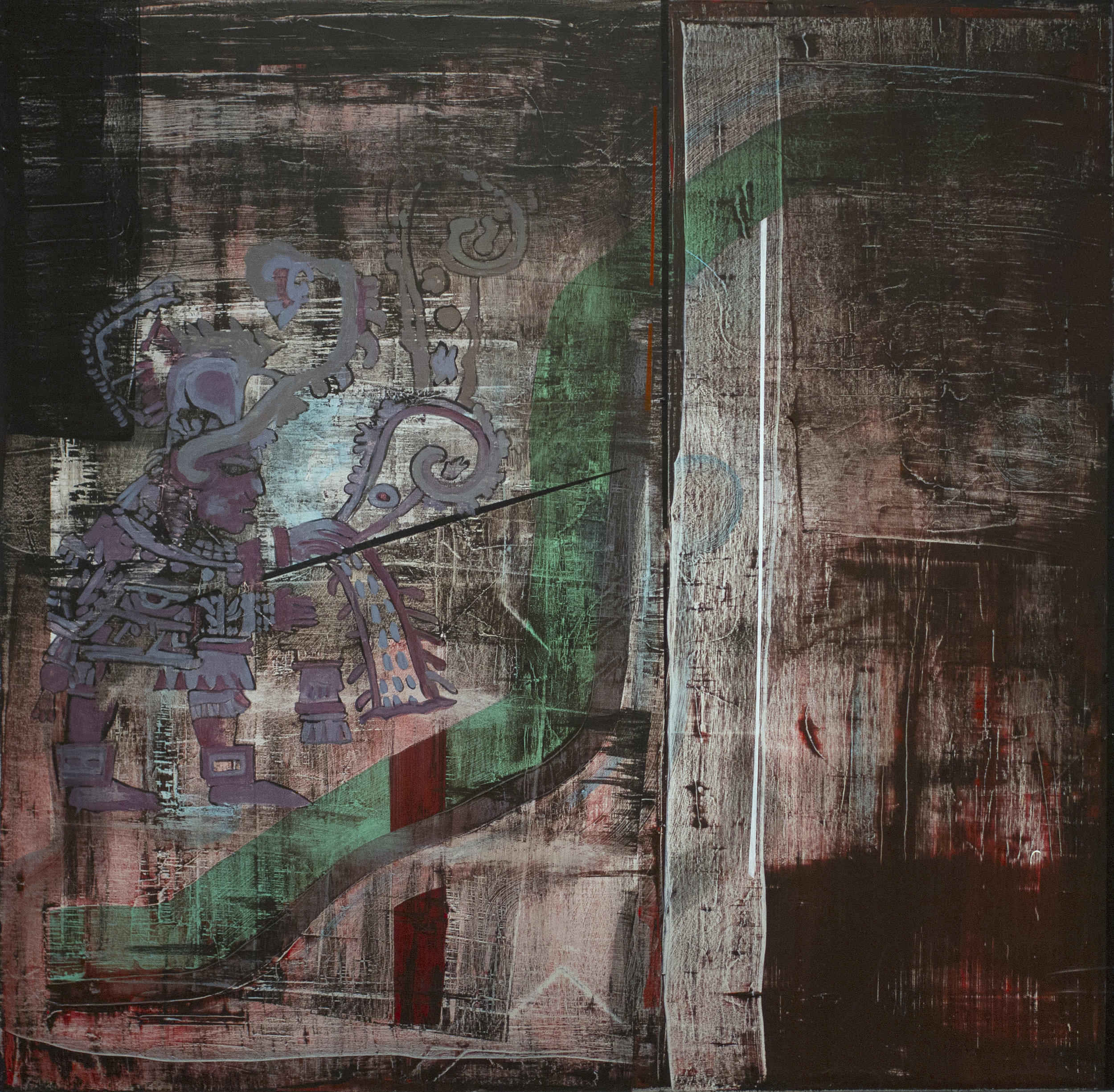
We Were Ones
-
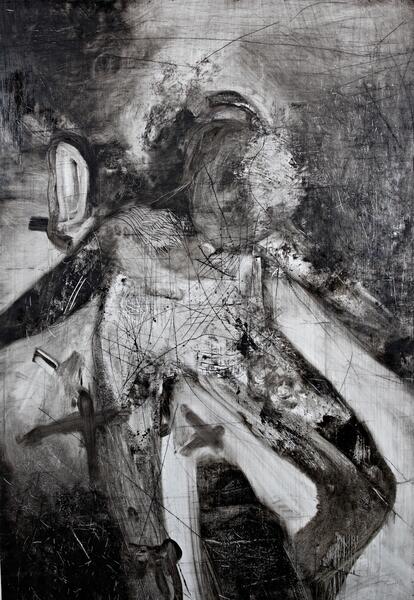 Somewhere Deep in My Soul
Oil paint, marble dust, black sand, on panel, 48 x 33 inches, 2016
-
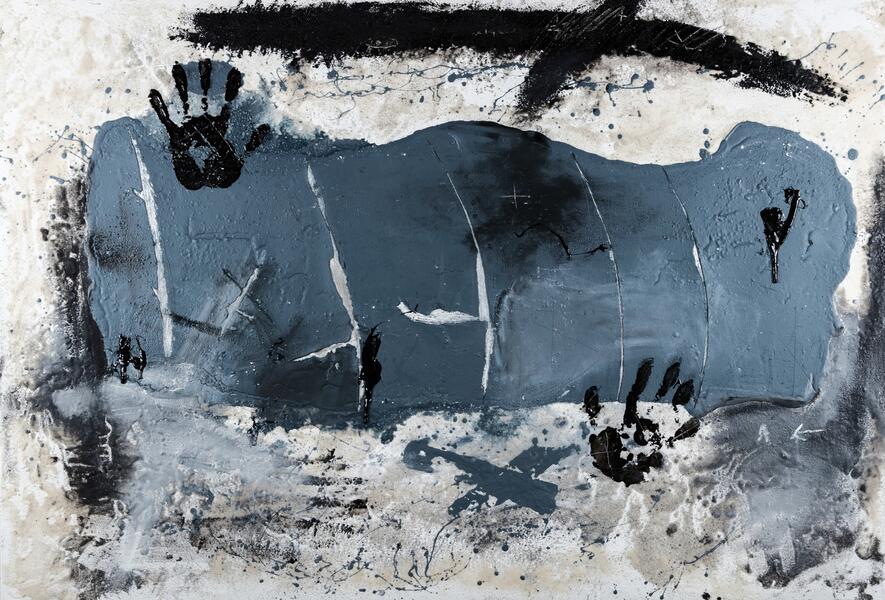 Think of Me
Oil paint, marble dust, black sand, on canvas, 48 x 33 inches, 2016
-
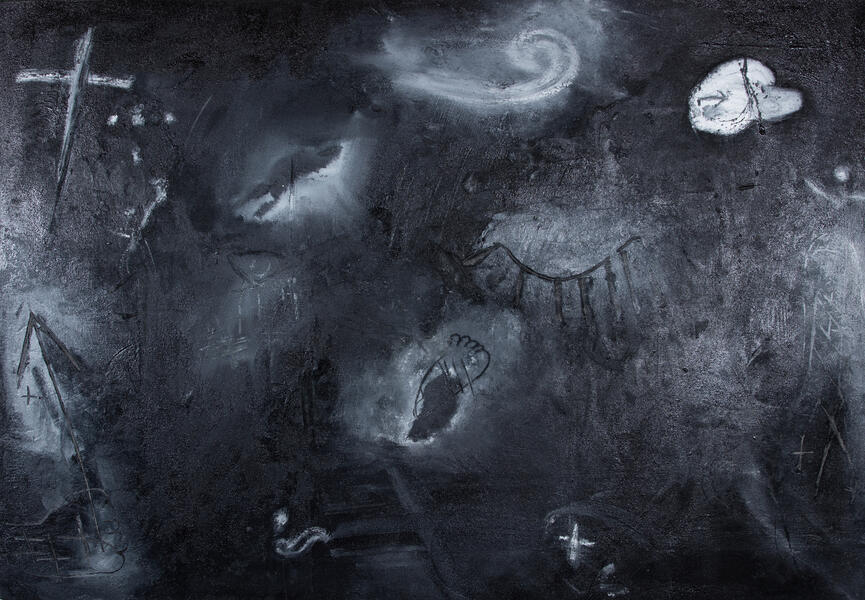 If You Forget Me
Oil paint, marble dust, black sand, on canvas, 48 x 33 inches, 2016
-
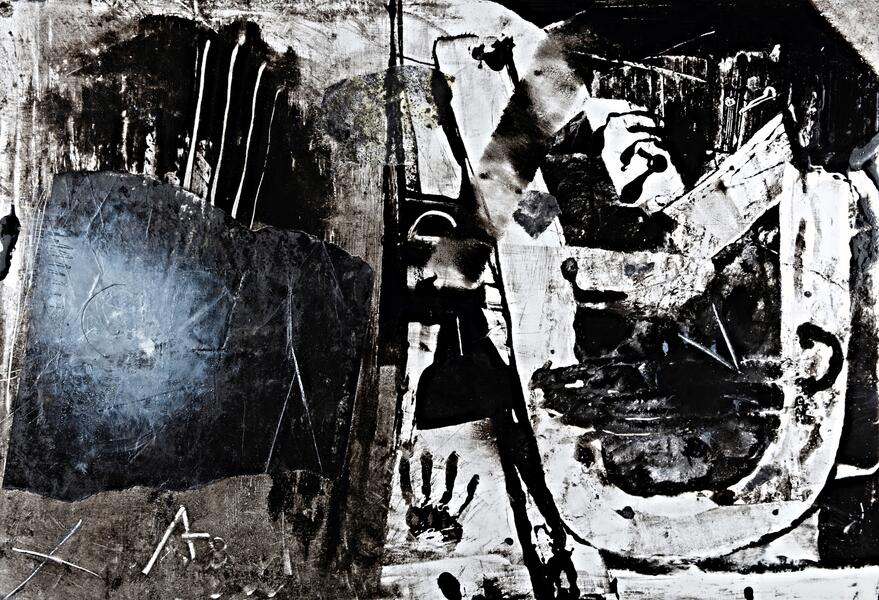 We Both Lost
Oil paint, marble dust, rice paper, black sand, on canvas, 48 x 33 inches, 2016
-
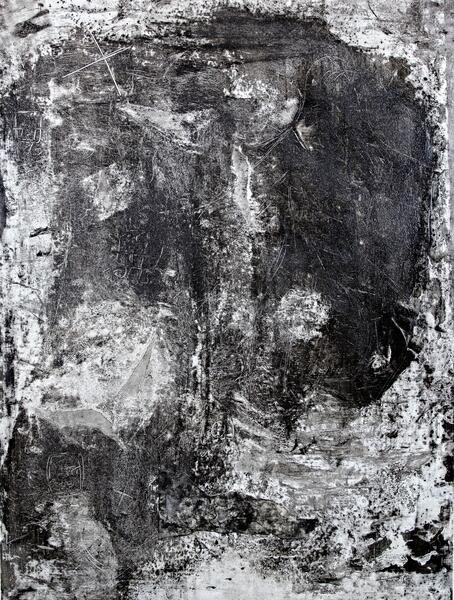 A Strange World
Oil paint, marble dust, black sand, rice paper, on panel on canvas, 40 x 30 inches, 2016
-
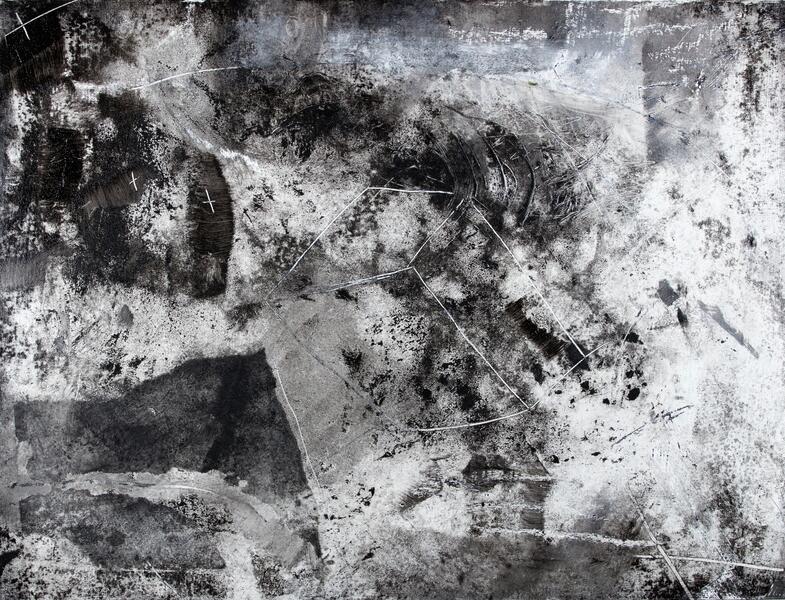 Don’t Go Far Off
Oil paint, marble dust, rice paper, black sand, on panel on canvas, 32 x 24 inches, 2016
-
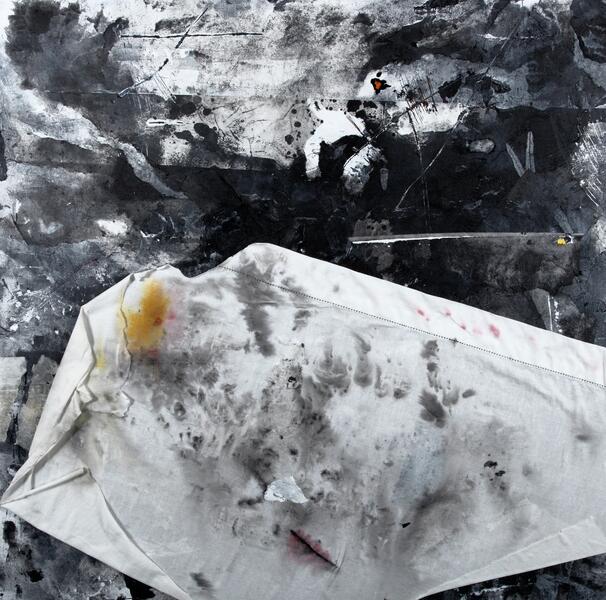 Only Once
Oil paint, marble dust, black sand, rice paper, on panel, 40 x 40 inches, 2016
-
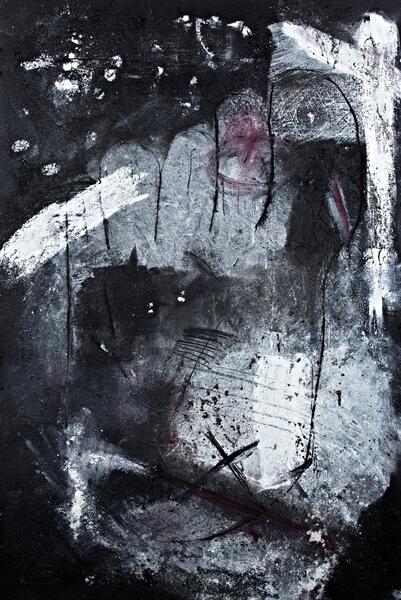 The Night-Rounds
Oil paint, marble dust, black sand, on canvas, 48 x 33 inches, 2016
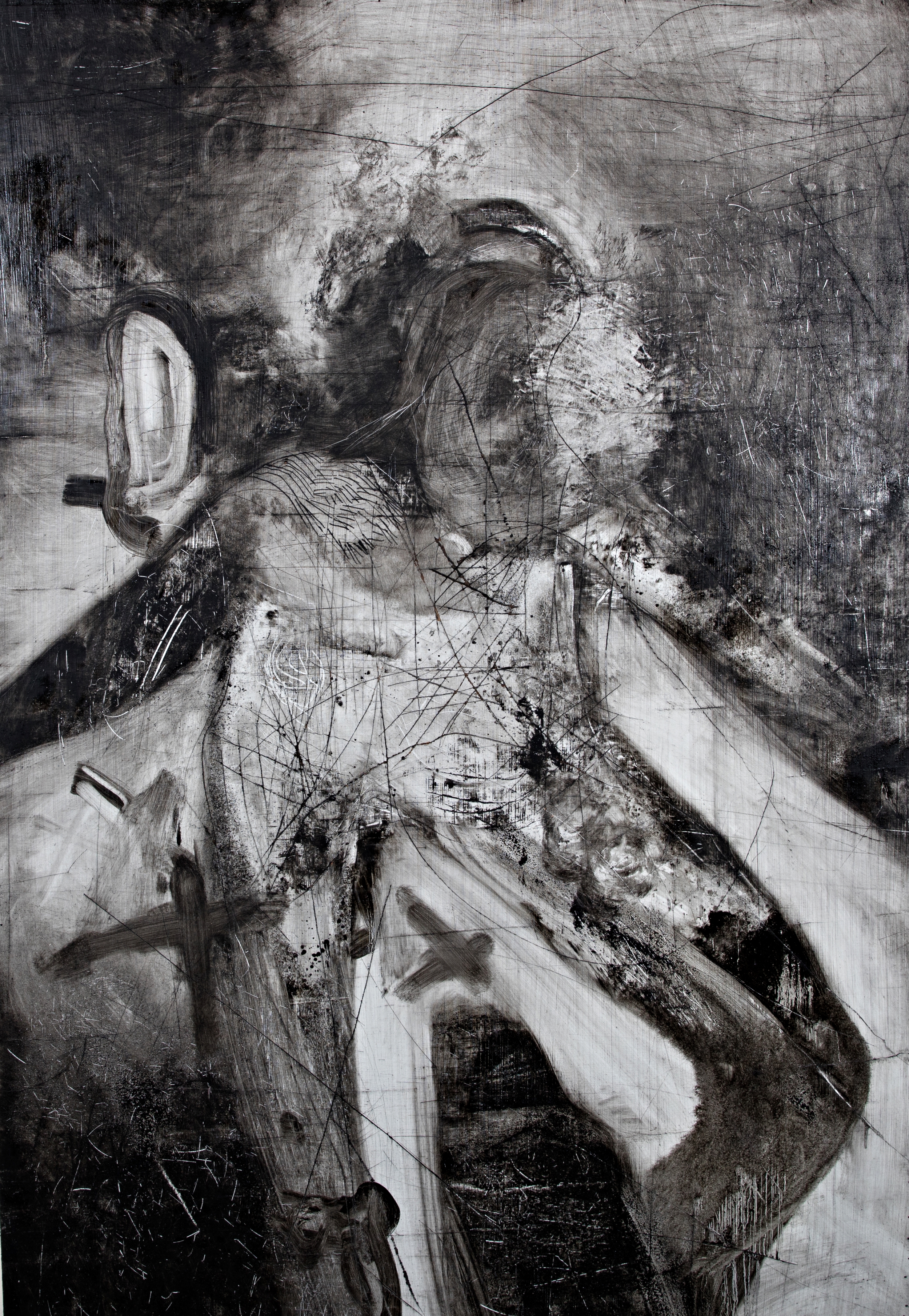
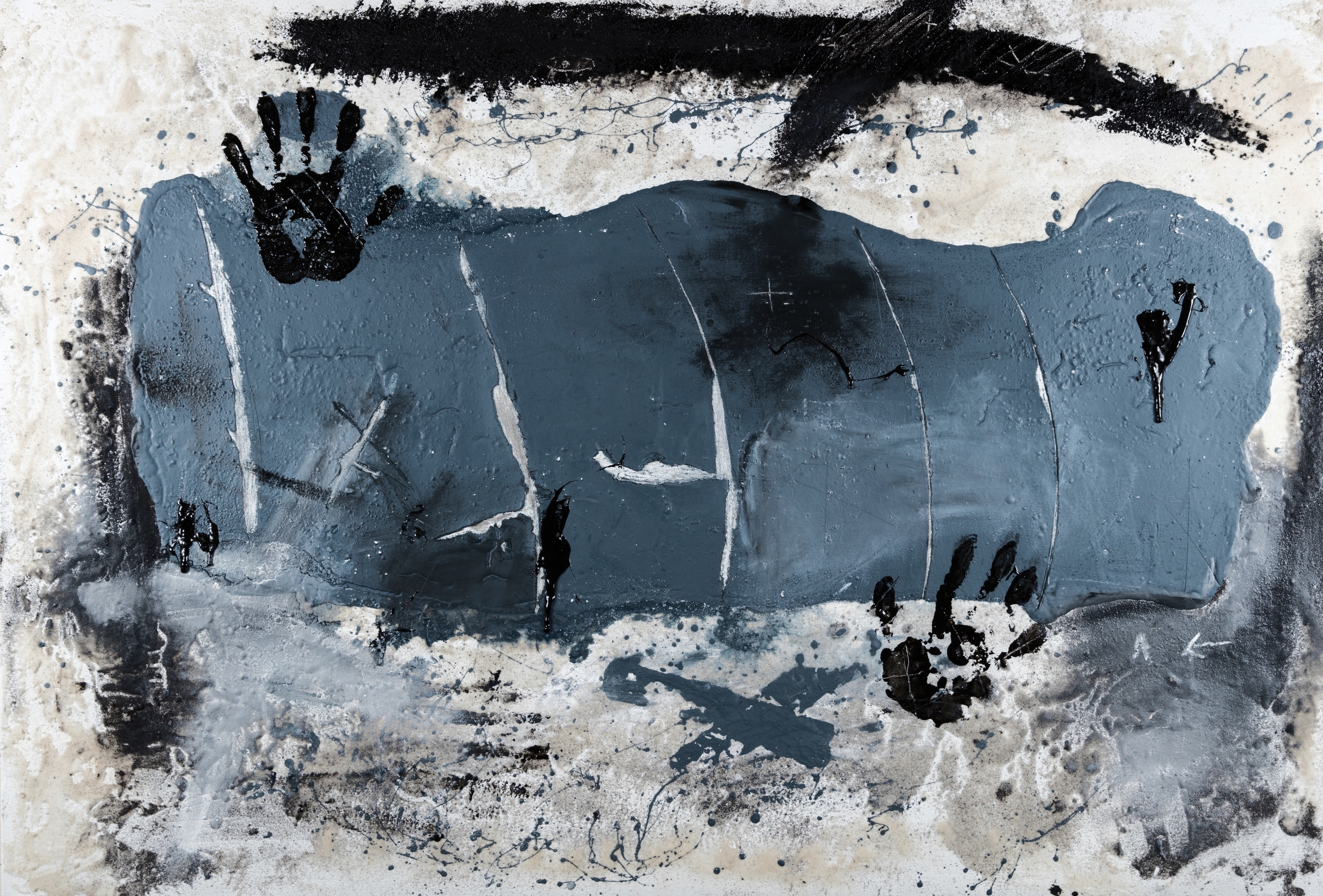
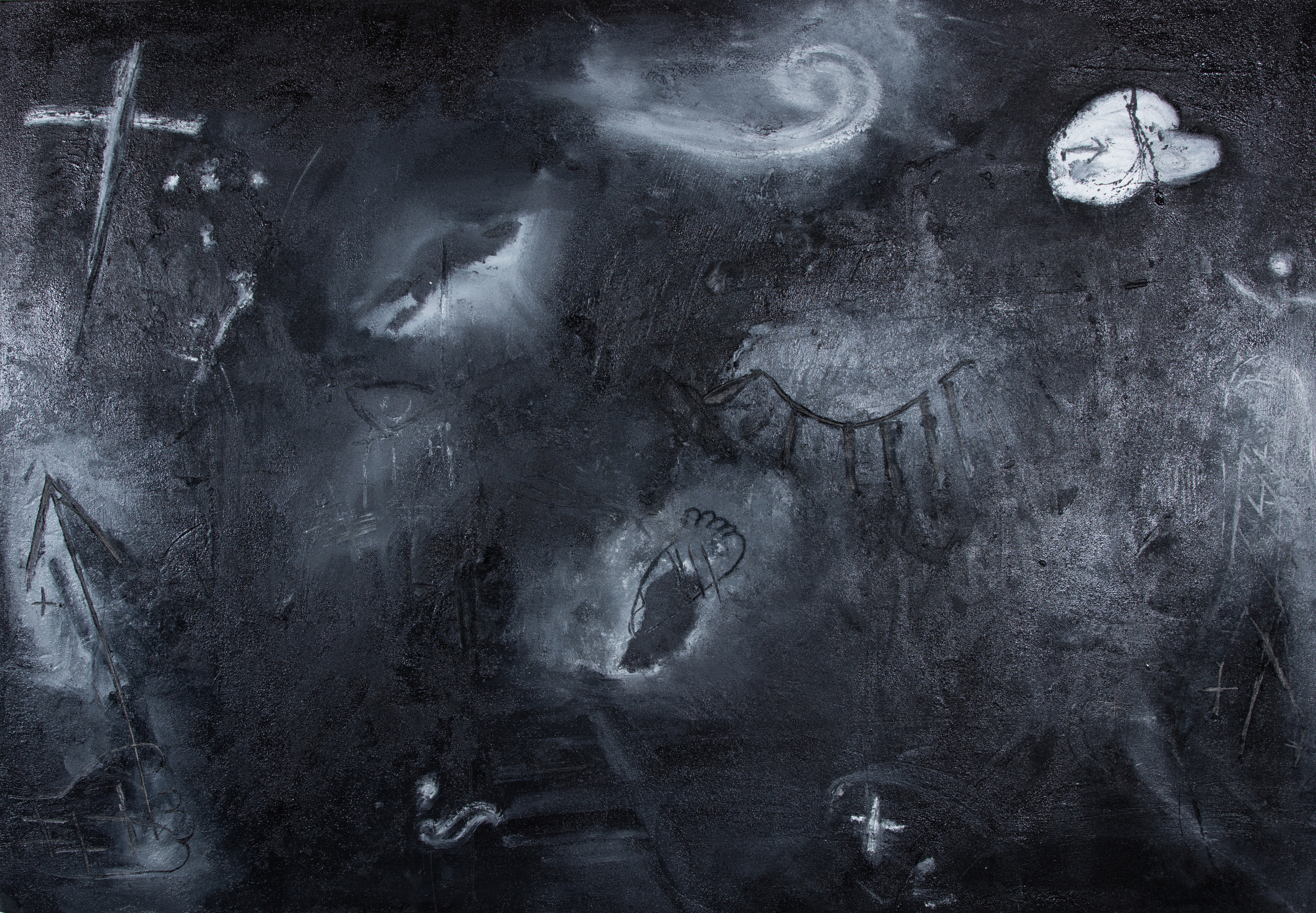
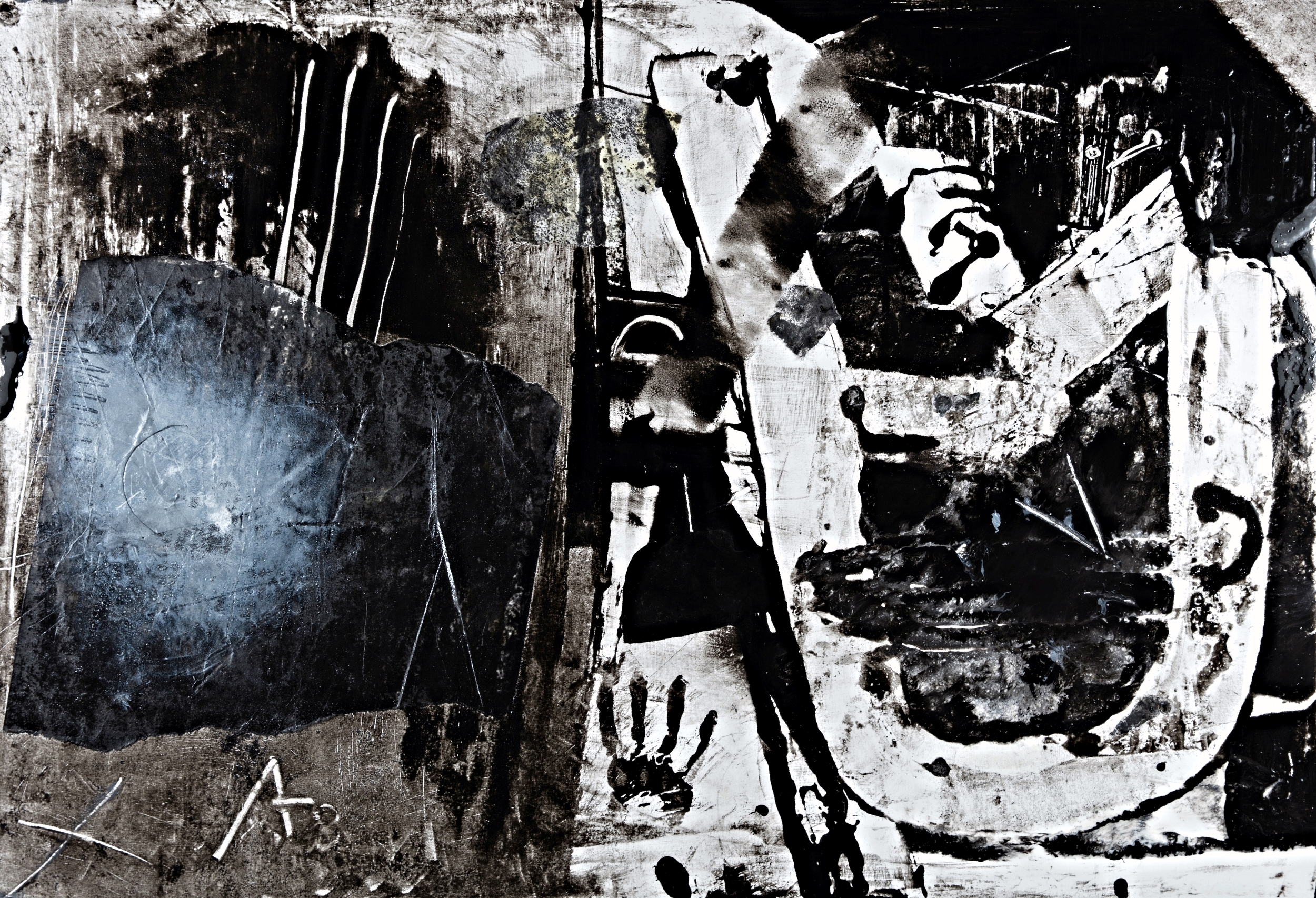
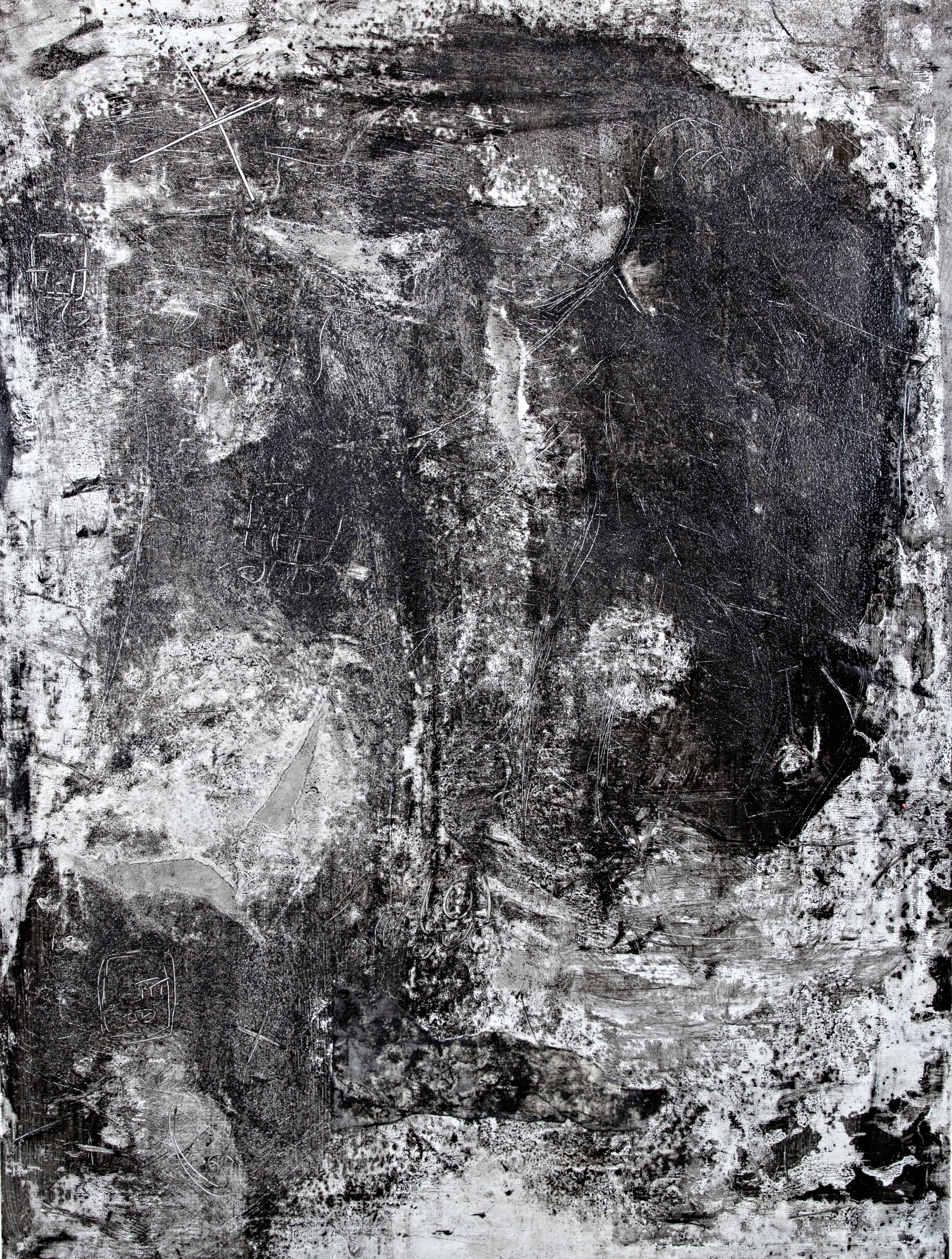
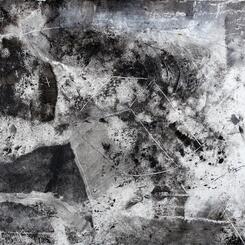
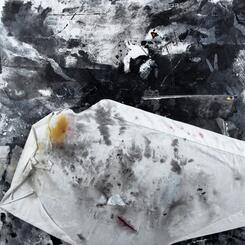
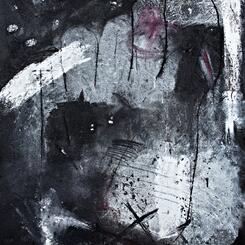
Memories that Remember Us
-
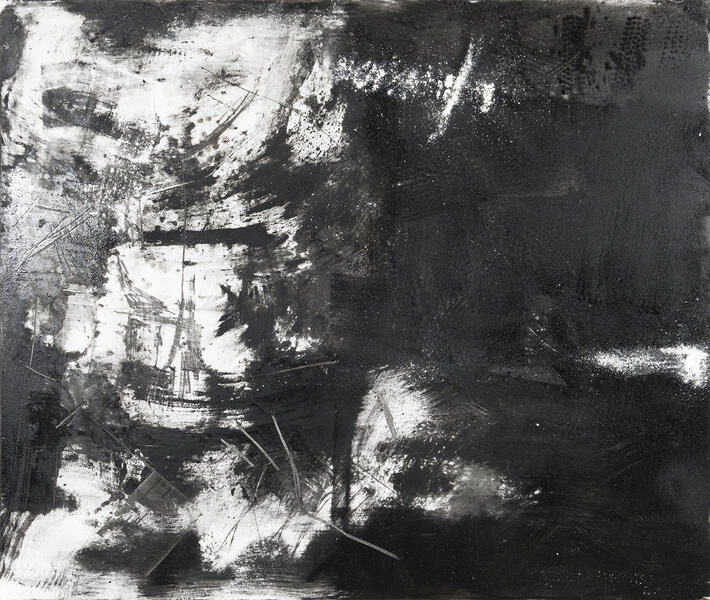 Los Recuerdos que se Acuerdan de Nosotros
Oil paint, black sand, marble dust, 7 x 6 feet, 2016
-
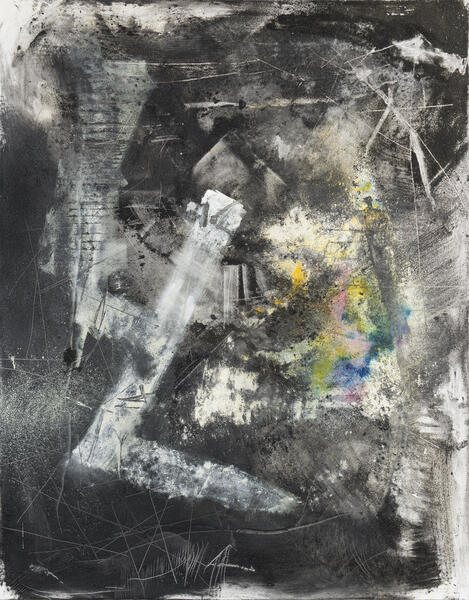 La Calle
Oil paint, black sand, marble dust, color pigments, 76 x 56 inches, 2016
-
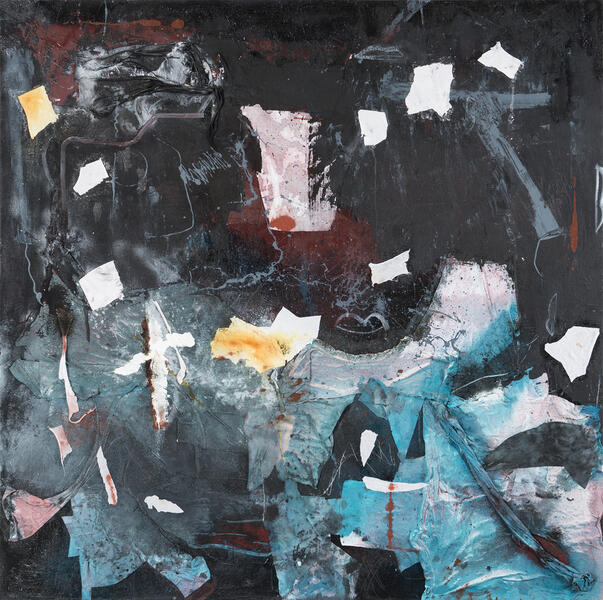 La Vida Sencilla
Acrylic paint, black sand, marble dust, ink, fabric collage, house paint, 48 x 48 inches, 2016
-
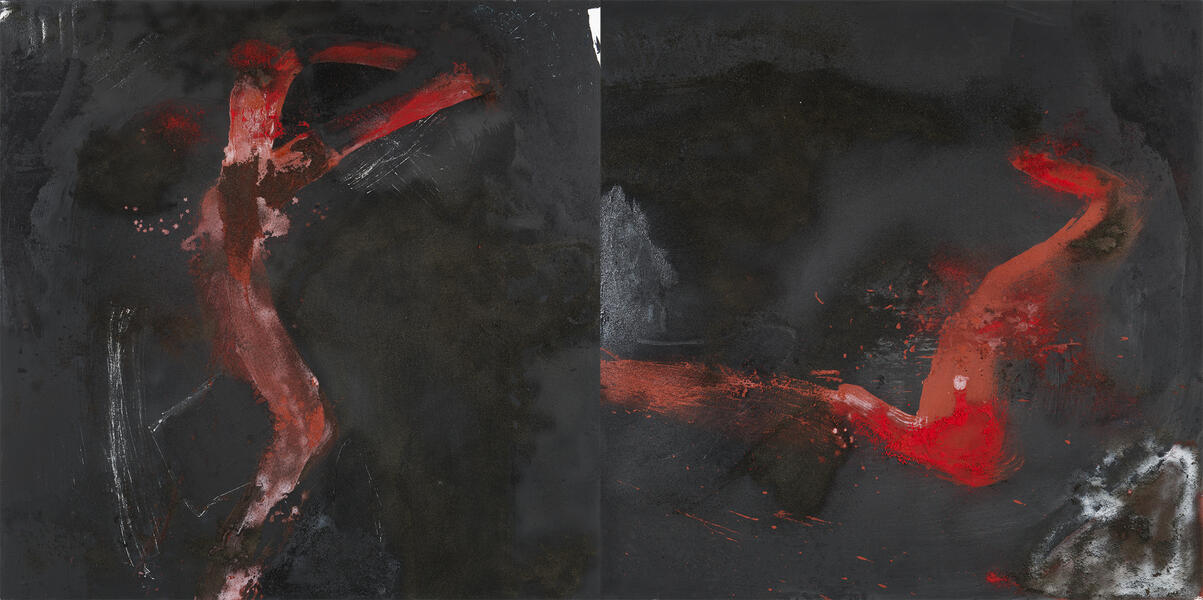 Dos Cuerpos
Acrylic paint, auto body paint, black sand, Diptych: 104 inches, 2016
-
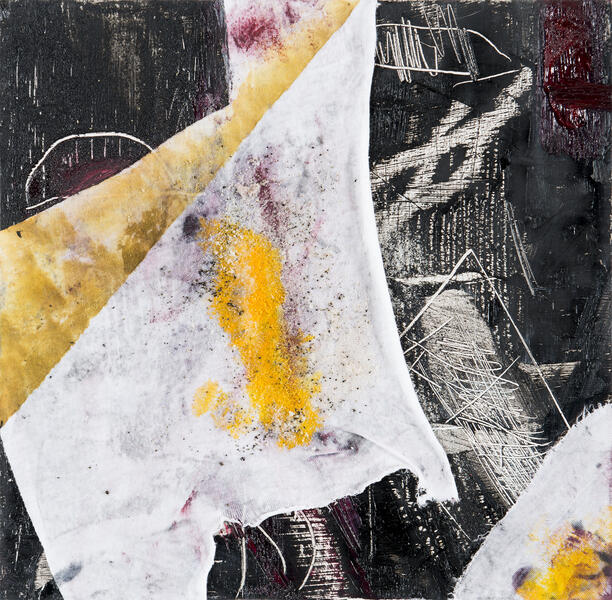 Bajo tu Clara Sombra
Oil paint, black sand, marble dust, fabrics collage,12 x 12 feet, 2016
-
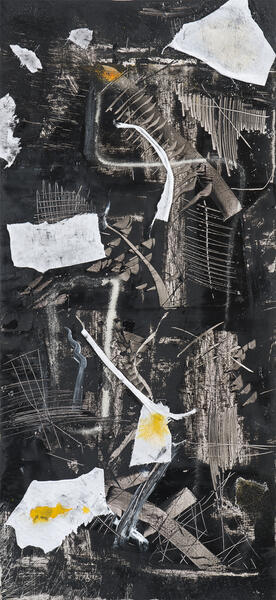 Misterio
Oil paint, black sand, marble dust, fabric collage,15 x 22 inches, 2016
-
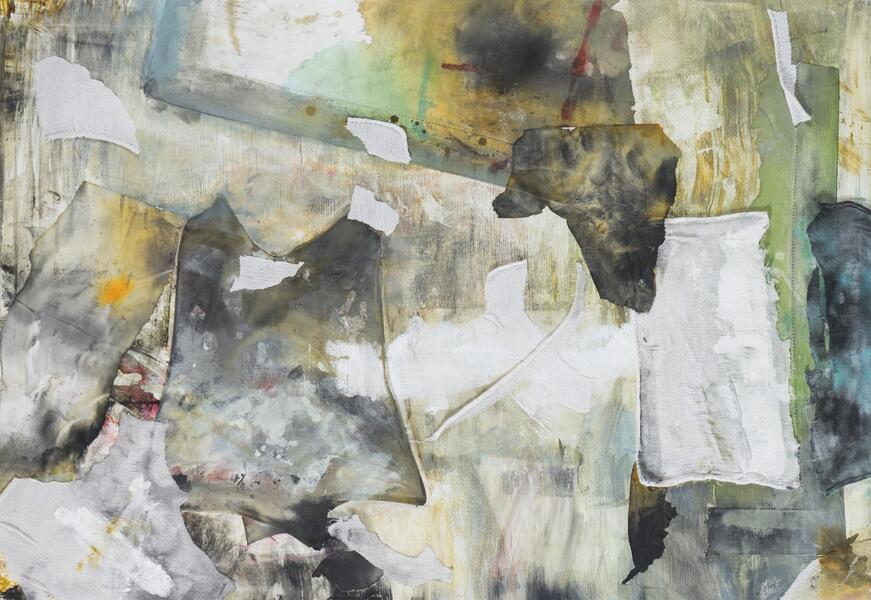 Frente Al Mar Durante El Otoño
Acrylic paint, ink, fabric, collage, 33 x 48 inches, 2016
-
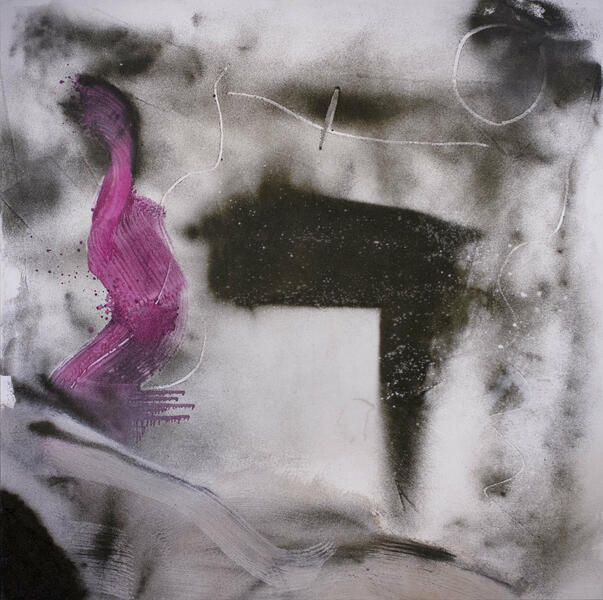 Entre el ir y venir
Pigment, black sand, marble dust, 84 x 84 inches, 2016
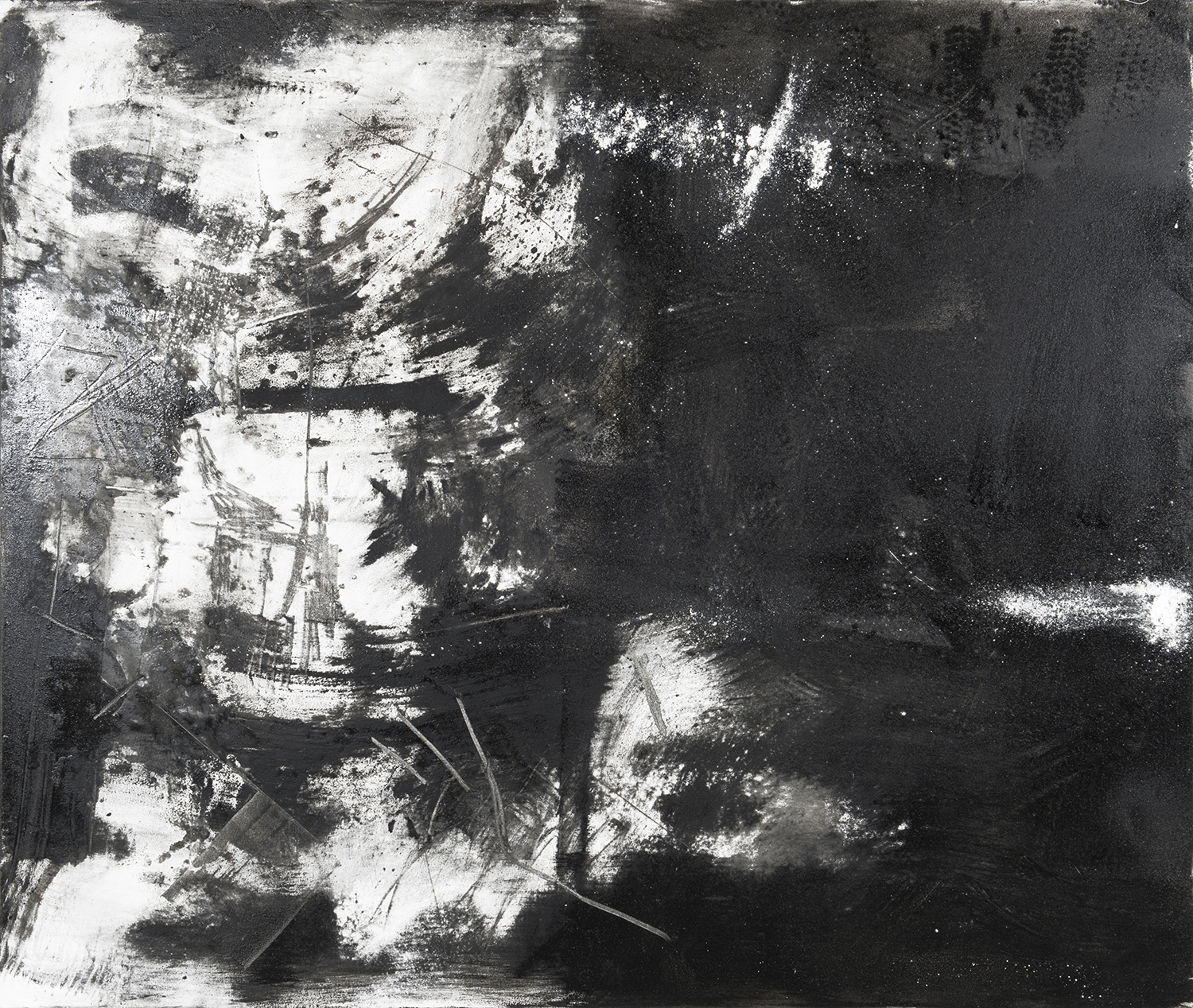
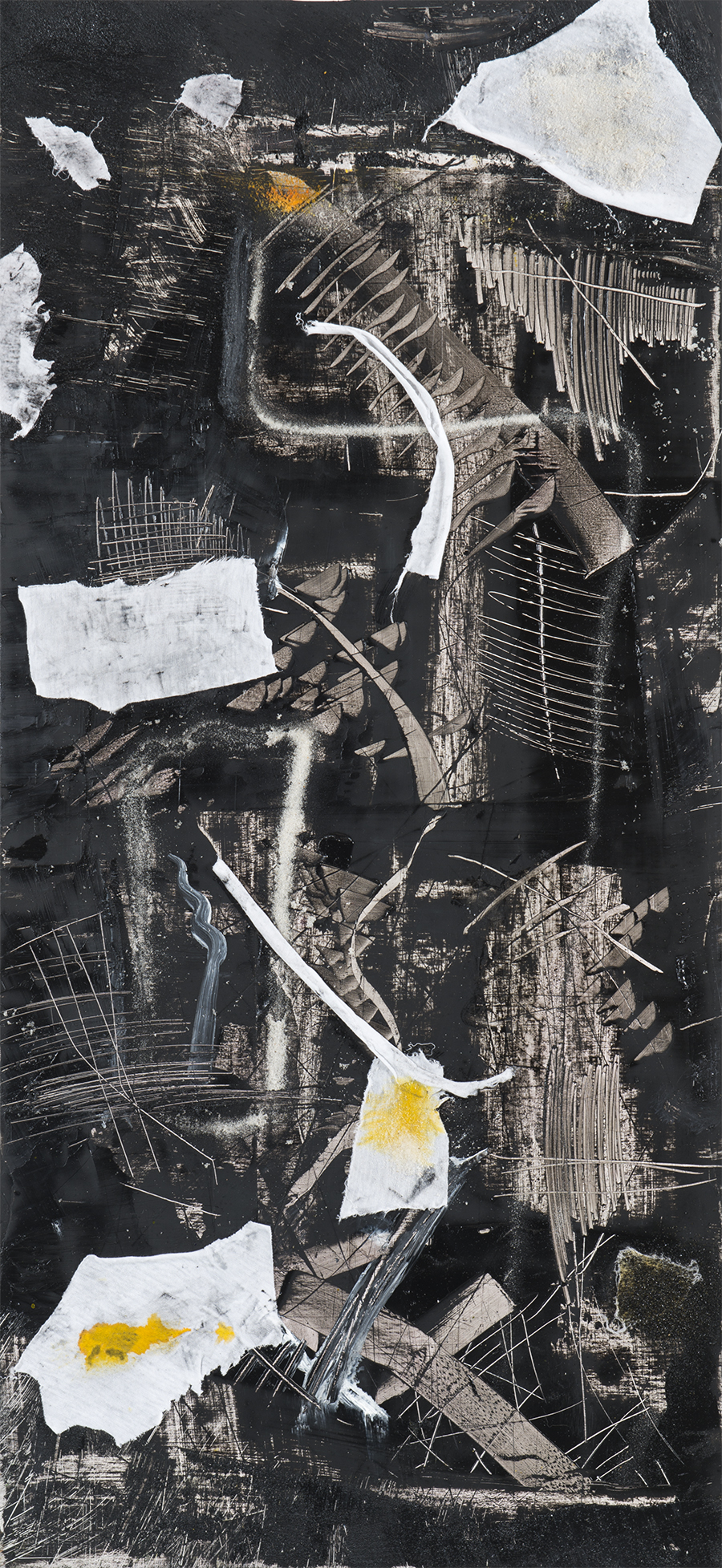
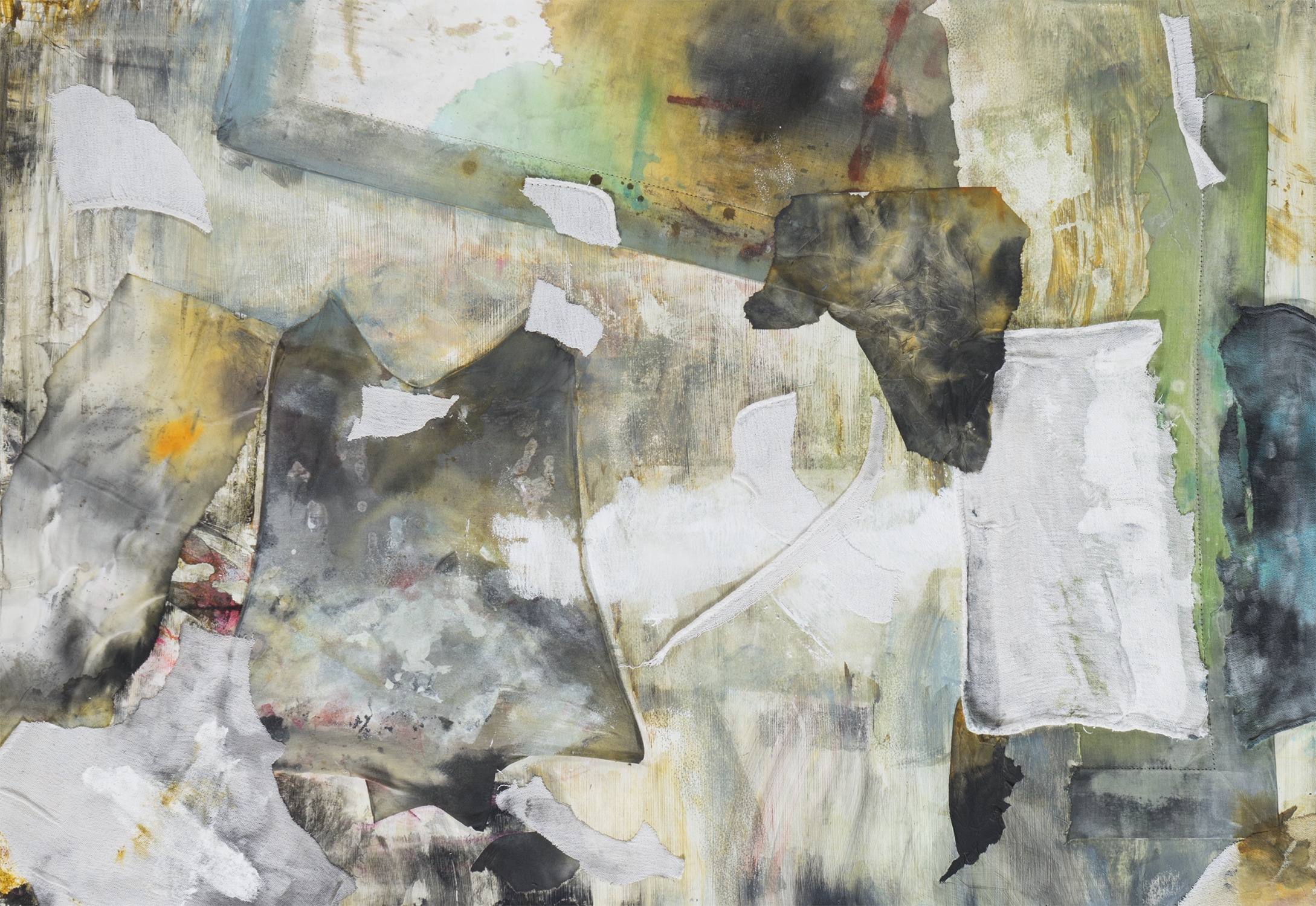
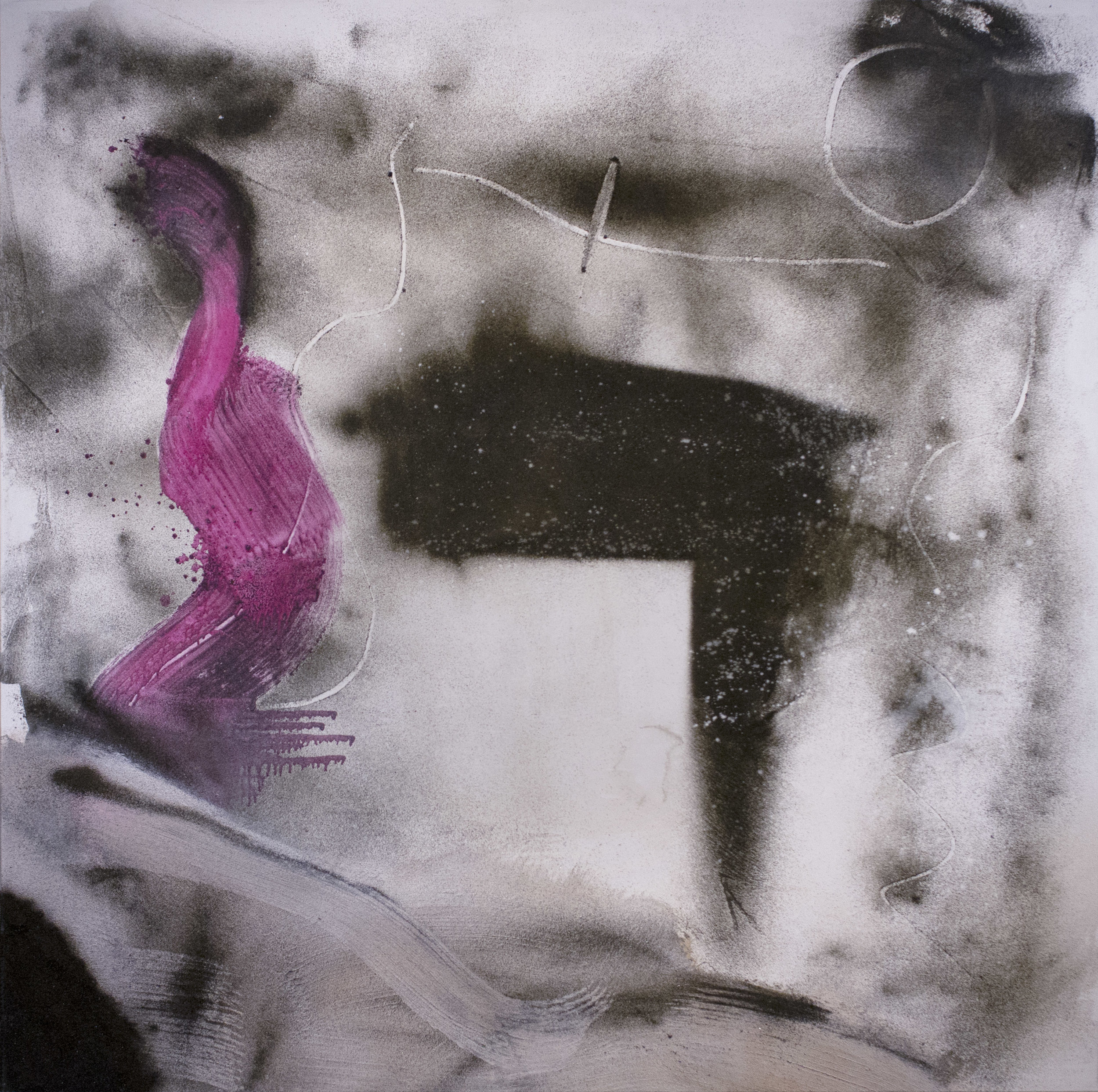
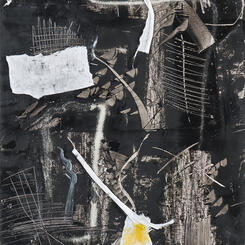
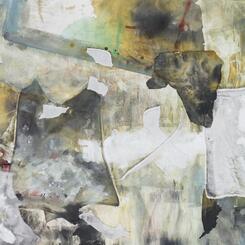
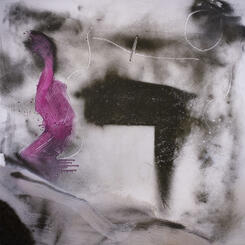
Moments Away
-
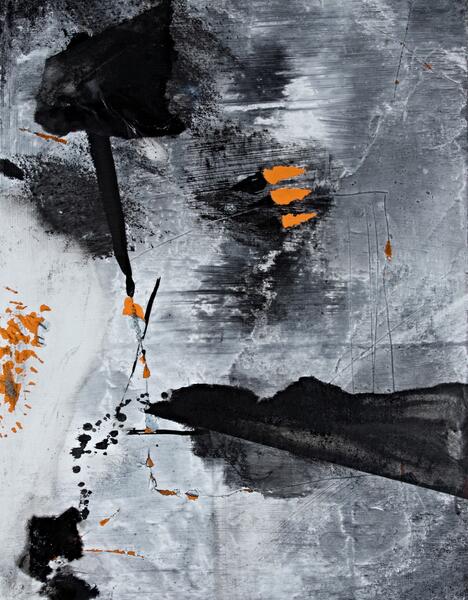 El Muro de los Lamentos
Oil paint, Japanese ink, rice paper, natural pigments, on panel, 18 x 23 inches, 2016
-
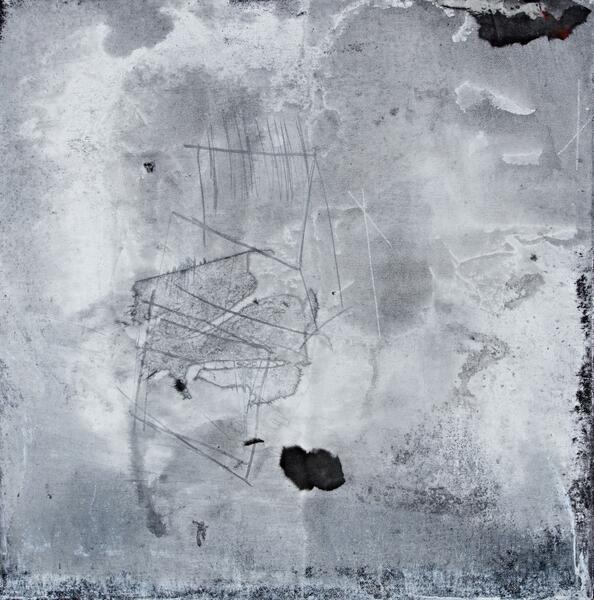 Relámpago en Reposo
Oil paint, Japanese ink, rice paper, natural pigments, on panel, 12 x 12 inches, 2016
-
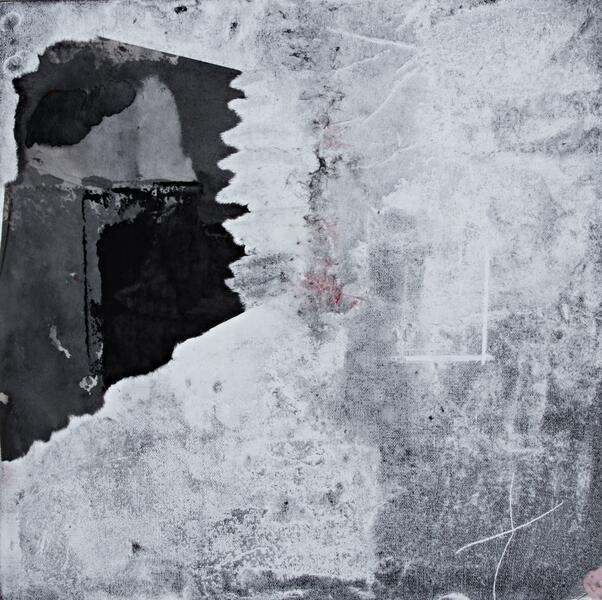 Las Paredes
Oil paint, Japanese ink, rice paper, natural pigments, on panel, 12 x 12 inches, 2016
-
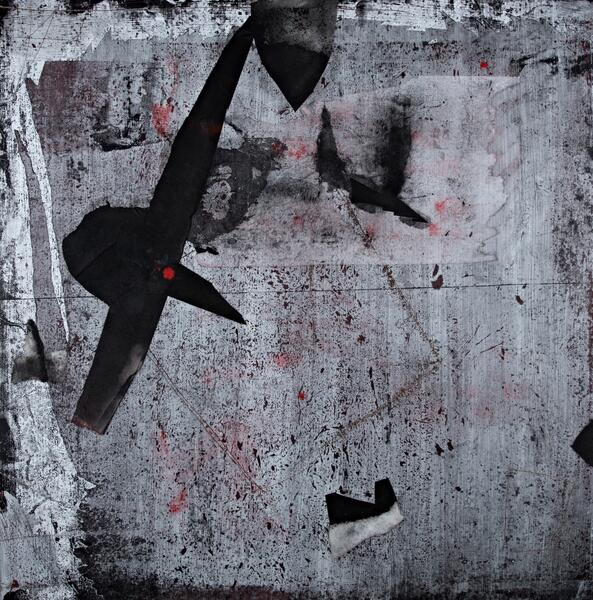 Los que nos Visitan
Oil paint, Japanese ink, rice paper, natural pigments, on panel, 28 x 28 inches, 2016
-
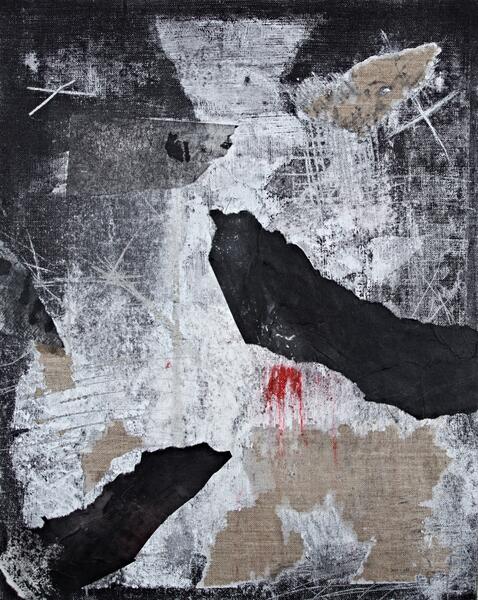 El Cántaro Roto
Oil paint, Japanese ink, rice paper, natural pigments, on panel, 18 x 23 inches, 2016
-
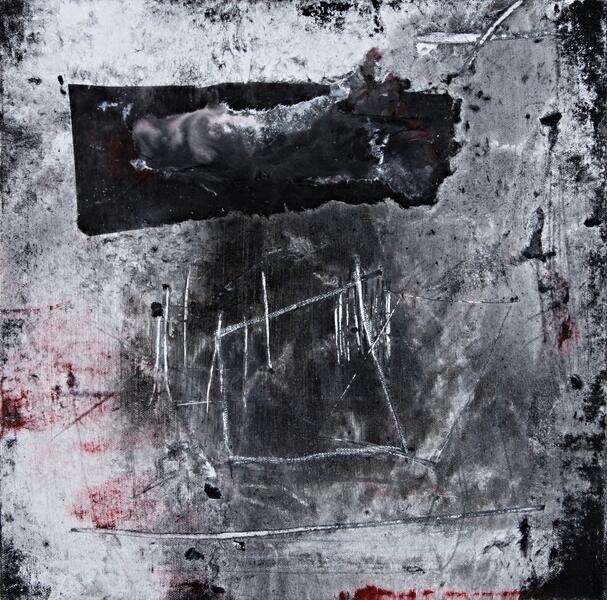 El Pozo
Oil paint, Japanese ink, rice paper, natural pigments, on panel, 12 x 12 inches, 2016
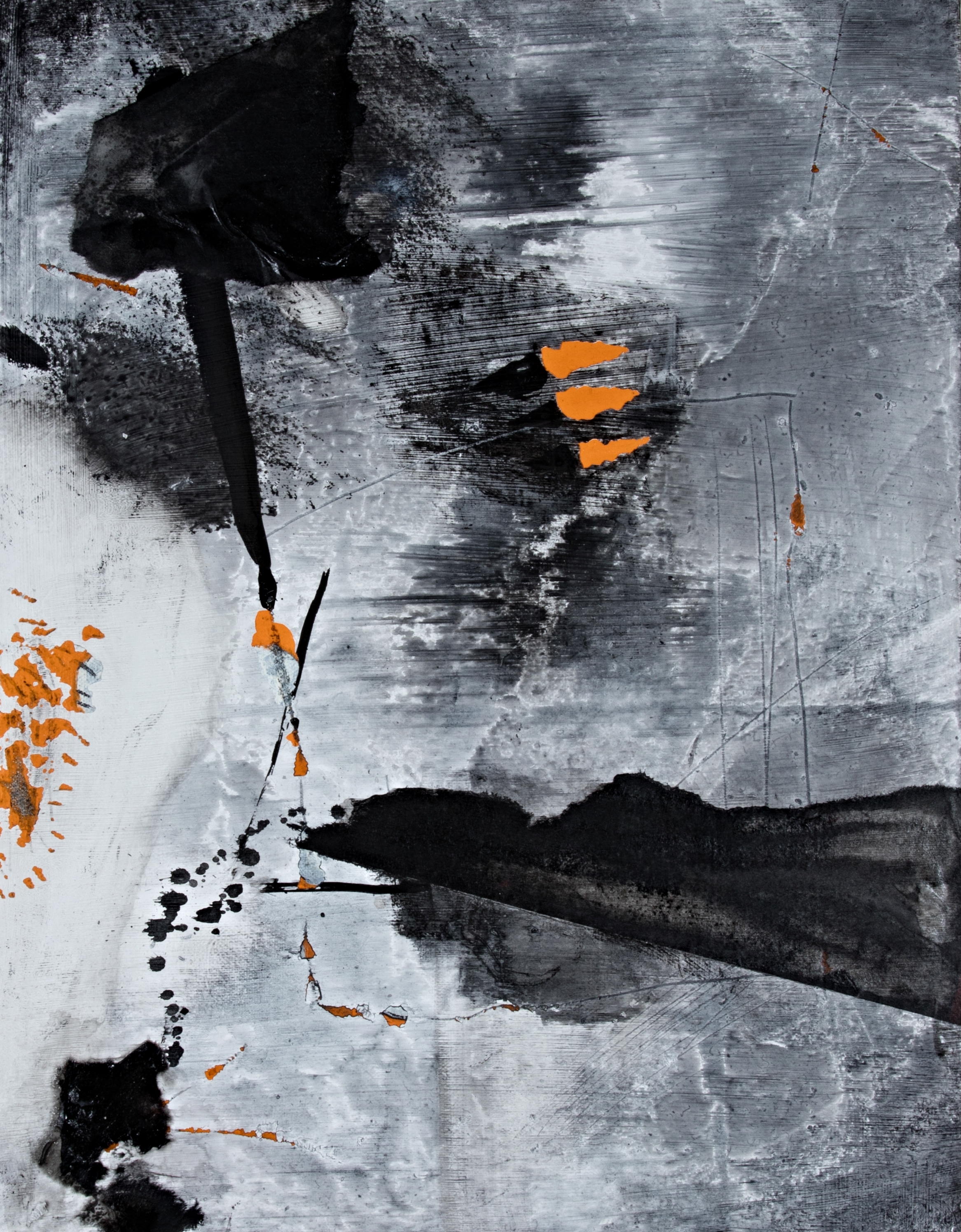
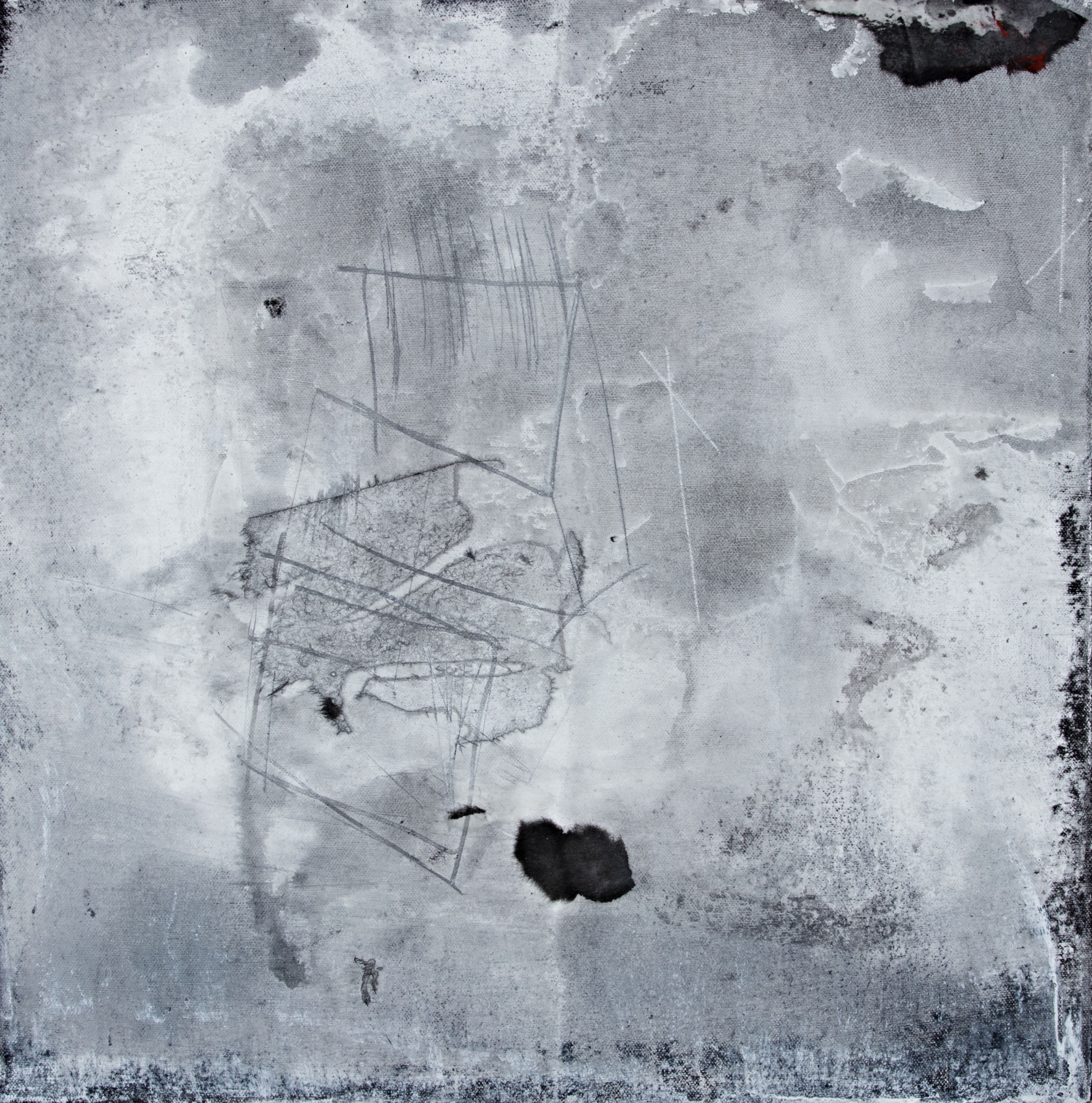
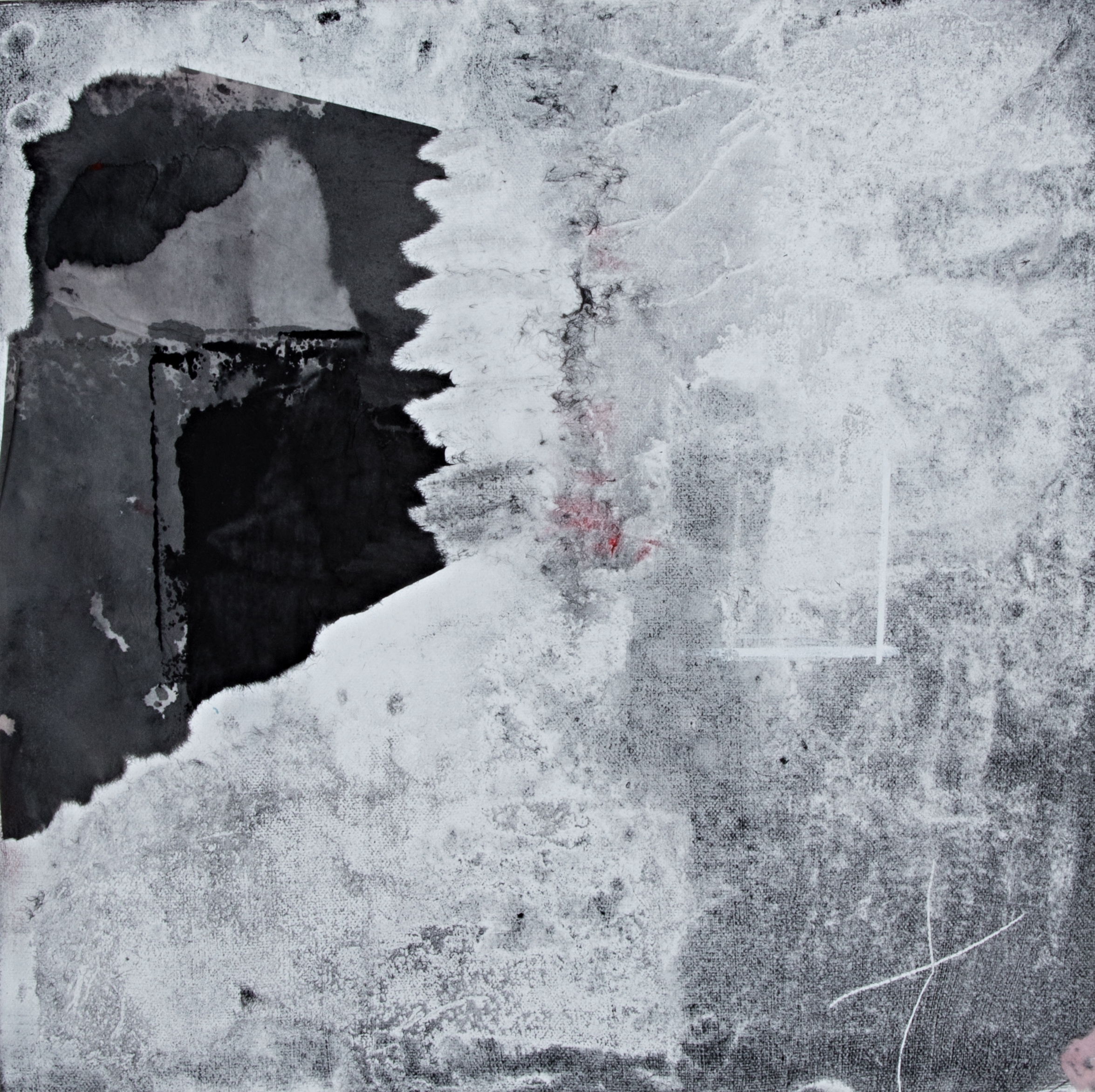
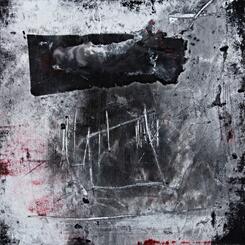
The Point in Space
-
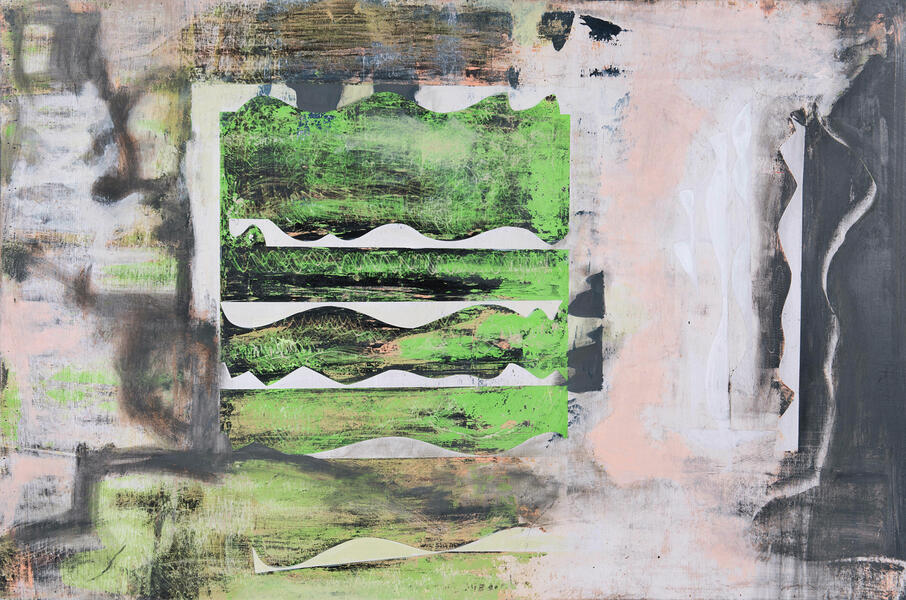 Urban Crops
Acrylic pigment on panel, 33 x 48 inches, 2015
-
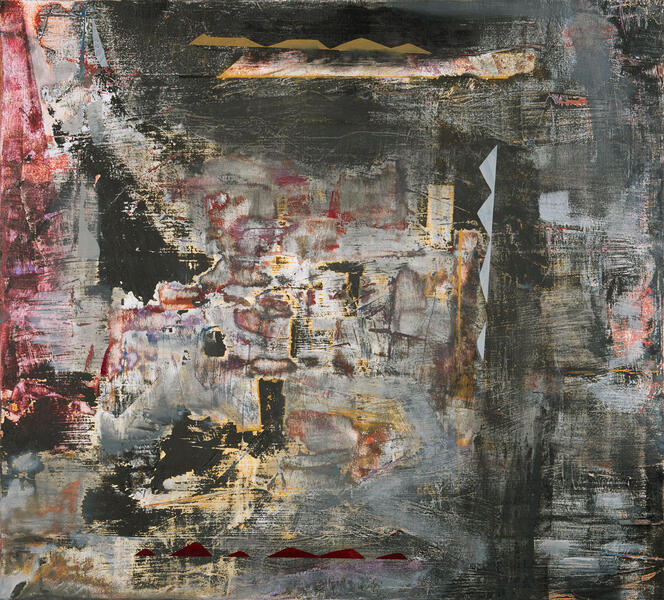 Decimation
Acrylic pigment on panel, 40 x 40 inches, 2015
-
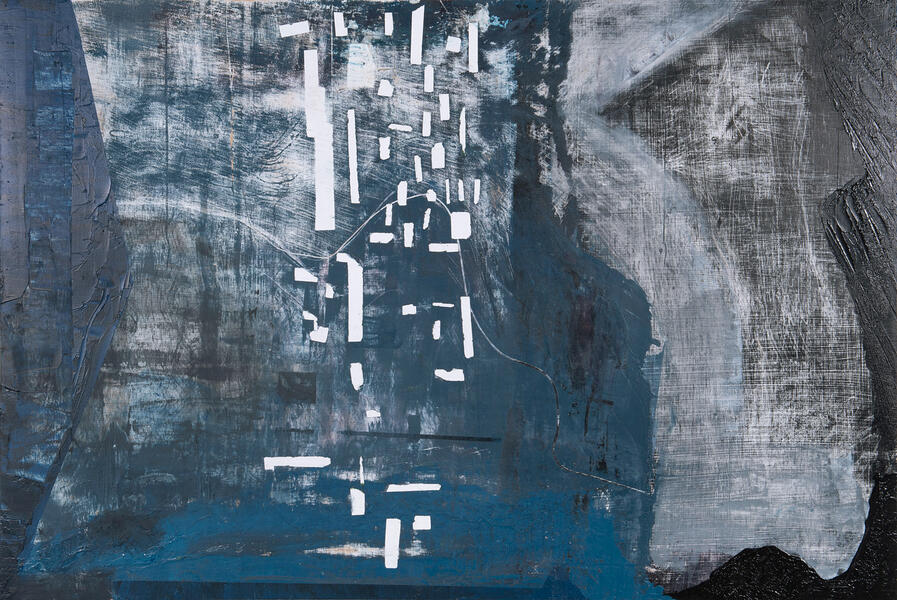 Shadows on the Wall
Acrylic pigment on panel, 33 x 48 inches, 2015
-
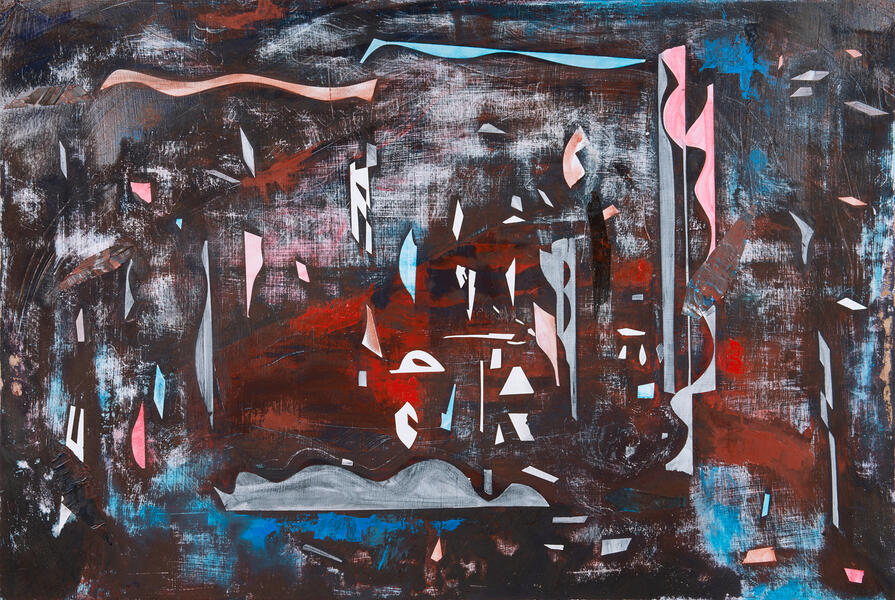 Rhythm in a Lost Space
Acrylic pigment on panel, 33 x 48 inches, 2015
-
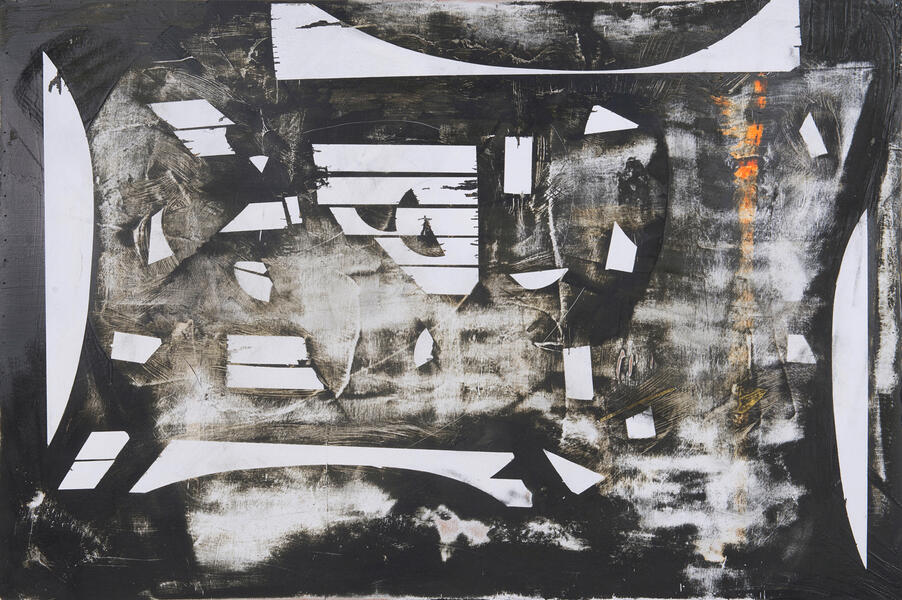 Metro
MetroAcrylic pigment on panel, 33 x 48 inches, 2015